A&P Aircraft Mechanic Jobs in Indiana
Cities in Indiana with Aviation Schools:
- Anderson
- Avon
- Bloomington
- Brownsburg
- Carmel
- Clarksville
- Columbus
- Crown Point
- East Chicago
- Elkhart
- Evansville
- Fishers
- Fort Wayne
- Franklin
- Gary
- Goshen
- Granger
- Greenfield
- Greenwood
- Hammond
- Highland
- Hobart
- Indianapolis
- Jeffersonville
- Kokomo
- La Porte
- Lafayette
- Lawrence
- Logansport
- Marion
- Merrillville
- Michigan City
- Mishawaka
- Muncie
- Munster
- New Albany
- Noblesville
- Plainfield
- Portage
- Richmond
- Schererville
- Seymour
- Shelbyville
- South Bend
- St John
- Terre Haute
- Valparaiso
- West Lafayette
- Westfield
- Zionsville
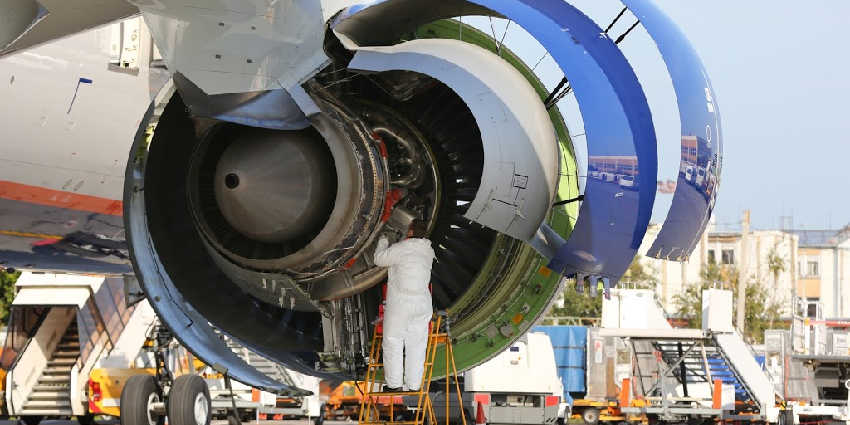
Aircraft Mechanic Jobs Indiana
What's the Job Outlook for A&P Mechanics? Aircraft mechanic jobs in Indiana should continue to grow, according to the Bureau of Labor Statistics. Their study suggests that the number of people working in aviation mechanic jobs will increase by 7% between 2008 and 2018.
This growth will be primarily caused by an increase in air traffic due to growing worldwide populations, economies, and increased desire for travel. As the airlines and associated industries expand, the need for A&P Mechanics will go up accordingly. Read more about aviation maintenance technician salaries.
In the coming years, many job openings will be created by retiring A&P Mechanics and others leaving the industry to work in related jobs like auto and diesel repair. If you become an aircraft mechanic, you can rest assured knowing your trade crosses over to many other industries.
A&P Mechanic Jobs in Indiana
A&P mechanic jobs are in high demand in Indiana. The highest paying aircraft mechanic jobs in Indiana are found at the major airlines. As can be expected, competition for these jobs is also huge. However, you're most likely to get a job at a regional airline or discount airline, because these types of carriers are growing quickly. But don't expect the same pay and benefits as the majors.
How to get your license, training requirements, eligibility, and links to more info. To earn your A&P License, you must attend a Federal Aviation Administration (FAA) certified AMT school OR have at least 30 months of relevant civilian or military work experience (supervised by a certified aviation mechanic). The FAA issues the A&P certificates (airframe and powerplant), and mechanics can get either an airframe rating or a power plant rating or both--most mechanics get both. Those who want a certificate with just a single rating and who base their application on practical experience must demonstrate 18 months of work experience applicable to the chosen rating. Learn more about the training and experience requirements to become an aircraft mechanic.
After your education or training qualifications are met, you'll be eligible to take the required oral, practical, and written tests. You must pass all these tests within 24 months. The tests cover 43 technical subjects. Typically, tests for one certificate--airframe or power plant--take about 8 hours. (Get more details about the A&P Mechanics Tests.) When you pass, you will have earned your FAA mechanic license with airframe and/or powerplant certificates (A&P license), and you'll be on your way to a successful career in aviation maintenance! Learn more about aviation maintenance technician training now.
A&P License Currency
Although your A&P certificates don't expire, you must remain "current" by meeting several criteria, including completing a minimum of 1,000 hours of hands-on work experience during the previous 24 months (or completing a refresher course) and completing at least 16 hours of additional training every 24 months. The additional training requirement is usually satisfied by attending manufacturer events or training with outside contractors hired to conduct the training.
Avionics Technician Specialty Training
As an A&P mechanic, if you have the training, qualifications, and tools, the FAA will allow you to work on avionics as well. Avionics technicians are not specifically required to have FAA certification if they received their avionics training in the military or from working for an avionics manufacturer.
A&P Mechanic Training: Using Veteran's Benefits
Your veteran's benefits, especially the Post 9/11 GI Bill, are one of the best sources of funding available to pay for A&P mechanic training. With the Post 9/11 GI Bill, you can be reimbursed for up to 100% of your aviation mechanic training expenses. This is a sizeable amount of funding that goes a long way toward making you an A&P mechanic, but there are a few things to consider before taking the leap.
A&P mechanic training expenses can be covered up to $10,000 dollar per academic year. Qualified veterans can use Post 9/11 GI Bill benefits to cover 100% of their training costs up to $10,000 dollars per academic year. Depending on the program, this is a big portion of the expense of aviation mechanic training. While it is worth noting this limitation, it is hardly causing alarm since it covers or severely reduces the costs of most A&P mechanic courses.
Aviation mechanic training programs require VA approval for reimbursement. An arguably more important consideration before beginning your A&P mechanic training is whether a particular training provider is approved by the VA. The good news is there is a pretty standard process and it isn't a secret whether a school is approved.
The only potential catch is that the VA must also approve individual courses before they will reimburse your flight training costs. This means that while a school may have approval, every course they offer isn't necessarily covered by your Post 9/11 GI Bill benefits.
Aviation mechanic training is improved by the approval process. The requirements for receiving an A&P mechanic certificate are standardized, but there is still a lot of variation in training programs. Since the VA mandates a fairly stringent approval process and there are ongoing paperwork requirements, most schools have a VA representative who is very familiar with the system.
This representative, the approval process, and the paperwork have a net effect of improving the quality of your aviation mechanic training by weeding out weak training courses and keeping you active in your training. Once you start training, most of the paperwork can be managed for you, allowing you to focus on your A&P mechanic training.
In fact, this is the most important takeaway. The stringent requirements of the Post 9/11 GI Bill create better-equipped schools, more efficient training courses, and save you money during your aviation mechanic training. For more information and to verify your eligibility, call 1-888-GIBILL-1 or check out the GI Bill website
FAA - A History of Aircraft Structures Facts for Indiana
The work of all of these men was known to the Wright Brothers when they built their successful, powered airplane in 1903. The first of its kind to carry a man aloft, the Wright Flyer had thin, cloth-covered wings attached to what was primarily truss structures made of wood. The wings contained forward and rear spars and were supported with both struts and wires. Stacked wings (two sets) were also part of the Wright Flyer.
Helicopter Main Rotor System
The rotor system is the rotating part of a helicopter which generates lift. The rotor consists of a mast, hub, and rotor blades. The mast is a cylindrical metal shaft that extends upwards from and is driven, and sometimes supported, by the transmission. At the top of the mast is the attachment point for the rotor blades called the hub. The rotor blades are then attached to the hub by any number of different methods. Main rotor systems are classified according to how the main rotor blades are attached and move relative to the main rotor hub. There are three basic classifications: rigid, semirigid, or fully articulated.
Aircraft Mechanic Jobs Indiana
An aircraft mechanic is a hot career! The A&P Mechanic industry is in need of trained A&P mechanics right now. Whether you want to work for the airlines, a smaller corporate operation, or for yourself as an independent A&P, we offer the following training resources to help you get started. Learn more about A&P Mechanic Technician Training
What is the typical A&P Mechanic Technician salary? Aircraft Maintenance Technicians (AMTs) can make a comfortable living repairing and performing scheduled maintenance on aircraft, with top earners at major airlines earning well over $70,000 a year.
According to 2012 data from the Bureau of Labor Statistics, most AMTs make somewhere between $16.92 and $36.86 per hour, with median income at $26.55 per hour or $55,210 a year. The middle 50% earned between $45,670 and $65,750. At the lowest end of the scale, 10% of AMTs earned less than $35,190, while the top 10% earned more than $76,660.
As you might expect with aircraft mechanic jobs in Indiana, the positions with the highest aircraft maintenance salary are in the major airline and federal government sectors, where A&P mechanics typically work on large jet aircraft. (In the U.S., AMTs usually refer to themselves as A&Ps, which stands for airframe and powerplant mechanics. In Canada, Australia, and New Zealand, the equivalent of an AMT is an aircraft maintenance engineer.) Learn more about A&P Mechanic Technician Training
When compared to other professional technicians (such as auto mechanics, electricians, electro-mechanical technicians, and heavy vehicle service technicians), AMTs tend to earn a higher salary. In fact, AMTs' median annual income is typically between $4,000 and $18,000 higher than these technical professions. Get more info about aircraft mechanic jobs in Indiana.
A&P Mechanic Jobs in Indiana
There are several training routes to take to land the top A&P mechanic jobs. Attend a Federal Aviation Administration (FAA) approved A&P Mechanic. Currently, the FAA has approximately 170 approved A&P Mechanic schools listed on their website. For those interested in landing the top A&P mechanic jobs in Indiana, you need to attend an A&P Mechanic School and get the practical experience you'll need to become an A&P Mechanic.
Many A&P mechanics who have the best jobs get their training in the military. As a military A&P mechanic looking for the best paying job, you could be working on anything from large airliners and transports to jet fighters and attack helicopters. If you decide to go the military route, upon your discharge from the military, you'll still need to take the necessary FAA tests and have the proper documentation of your practical experience. That means you'll have to take all the courses too!
Once you have passed the required tests, you'll be eligible to apply for the very best A&P jobs in Indiana. However, please note that military experience can sometimes be too specific, and not meet the broad specifications required by the FAA. Even after discharge, you may have to attend one of the FAA-approved AMT schools.
On the job training - a very few people earn the required minimum coursework and skill set needed to pass the A&P certification tests through on the job training. Typically, you must be under the direct supervision of an A&P for at least 30 months and be logging all of your hours to go this route. Your time log must be notarized by your employer or signed off by the supervising A&P. Find out more about A&P Mechanic jobs.
A&P Mechanic Requirements
To be a certified A&P mechanic or avionics technician you need to meet several qualifications:
- Age 18 or older
- Read, write, speak, and understand the English language
- Have a high school diploma or equivalent
- Display the required technical skills
Avionics Technician Salary
Avionics Technicians test electronic instruments, assemble components, install instrument panels, interpret flight test data to diagnose malfunctions and problems, and repair or replace malfunctioning components. According to 2012 data from the Bureau of Labor Statistics, most Avionics Technicians earned somewhere between $18.82 and $35.47 per hour, with median income at $26.61 per hour or $55,350 a year. The middle 50% earned between $47,210 and $64,890. At the lowest end of the scale, 10% of Avionics Technicians earned less than $39,150, while the top 10% earned more than $73,770.
The positions with the highest avionics technician salary are in the aerospace, major airline, and federal government sectors. The chart below shows Avionics Technicians' mean annual salary by industry (for those industries with the highest levels of employment):
A&P Mechanic Technician Benefits
Salaries and benefits can vary. Salary is often dependent on the size of the company, work location, past work experience, licenses (e.g., A&P certificate), and type of craft serviced. In terms of benefits packages, both airline and general aviation employers typically offer paid holidays, vacations, insurance plans, retirement programs, and sick leave. A&P Mechanic technicians working for the largest companies can expect top-notch benefits packages, including both health and life insurance and, for those working for airlines, travel benefits for themselves and immediate family (e.g., free or reduced-price transportation to route destinations and travel exchange privileges with other airlines).
Fun Aviation Facts and Figures for Bloomington
Sikorsky Helicopters - S - 300 C: the S-300C helicopter is supported by a worldwide network of service centers. This helicopter has proven its value in many diverse applications around the world, including personal transportation, military and civil training, aerial photography, law enforcement patrol, pipeline and traffic patrol, aerial application, aerial surveys and lift operations.
Helicopter History for Bloomington
Helicopter Pilot's License for Bloomington Assuming you pass your written test, and your flight instructor thinks you are ready for the checkride, you will be signed off to take a combination oral and flight test with either an FAA examiner, or more likely a Designated Examiner who is a person who does not work for the FAA, but has been designated as having enough experience to judge whether you make the grade or not.
Fun Aviation Facts and Figures for Carmel
Helicopter Training Facts: Before you commit to a full program of lessons, it can be a good idea to take a test lesson in a helicopter to make sure that you like flying in the rotor-powered vehicles.
Aviation Training History and Facts for Carmel
Vietnam Era Military Pilot Training: The first Air Force SUPT-H students began attending Army sponsored helicopter pilot training at Fort Rucker in 1971. In April 1971, the 1550th ATTW was activated at Hill AFB, Utah. After initial training by the Army, the pilots were upgraded for Air Force missions in the UH-1, CH-3, or H-53.
Fun Aviation Facts and Figures for Evansville
How Long Does it Take to Become a Helicopter Pilot: Keep in mind that you will be required to build up to 1,000 flying hours as well. Once you start instructing it will likely take you 12 - 18 months to build up to 1,000 hours.
Aviation Training History and Facts for Evansville
Post Vietnam Era Military Pilot Training: From 1971 to 2004, SUPT-H at Fort Rucker primarily operated as an Army owned and controlled program. In 2004, the training remained at Fort Rucker, but the Air Force mission required changes in the training program and the Air Force assumed ownership/responsibility for conducting SUPT-H.
Fun Aviation Facts and Figures for Fishers
Bell Helicopters - 407: The Bell 407 integrates reliability, speed, performance, and maneuverability with a cabin configurable for an array of missions and payloads. Its Rolls Royce 250-C47B turbine FADEC engine delivers exceptional hot & high performance with the ability to cruise at 140 knots (259 km/hr).
Helicopter History for Fishers
Isnot hooked up to the rotor tachometer. It is hooked up to the engine tachometer. To make matters worse the engine tachometer is driven by a set of mechanical points inside one of the ignition magnetos.
Helicopter Pilot's License for FishersBefore you can take your checkride, you must pass a written exam. These days that pretty much means going to a computerised testing center. The test is multiple choice, there are study guides available that give you the answers, and passing grade is a 70. Piece of cake.
Fun Aviation Facts and Figures for Fort Wayne
Helicopter Training Facts: With enough hours and experience, you can look for jobs with charter companies, tourism and sightseeing organizations and other places that use helicopters in their operations. Some employers might also expect their pilots to have some level of college education.
Helicopter Factoid for Fort Waynes for Fort Wayne
Modern Day Military Pilot Training for Fort Wayne: After completing Primary helicopter school at Fort Wolters, now we go to the Advance Helicopter Training portion.
Aviation Factoids and Figures and Fun for Gary
US Army Helicopter Pilot Criteria: you'll have to appear for Flight Aptitude Selection Test, Armed Forces Vocational Aptitude Battery test and score 90 and 110 respectively, to get selected.
Fun Helicopter and Airplane Facts for Gary
How to pick a helicopter flight school near Gary
The first thing is to find all the schools, and visit each one. Start with the yellow pages. Some schools don't advertise. Find them by calling all the airplane schools and aircraft charter companies, and ask them who does helicopter training in the local area.
Aviation Factoids and Figures and Fun for Hammond
US Army Helicopter Pilot Criteria: You must be a citizen of US. If a candidate is not a US citizen, he must apply for the same, at the earliest. Remember, however, five years of minimum residential stay in the country is important for a citizenship.
Fun Helicopter and Airplane Facts for Hammond
Helicopter Pilot's License for Hammond The length of the exams are pretty much up to the examiner. Supposedly you will only be tested on subjects called out in the
Fun Aviation Facts and Figures for Indianapolis
This licensing program comprises classroom training, in-flight assignments, and a test. Those in specific job areas like air force or law enforcement will have to meet requirements set by the respective authorities. Let us take a look at a helicopter pilot salary.
Helicopter Factoid for Indianapoliss for Indianapolis
Modern Day Military Pilot Training for Indianapolis: The Rotary Wing training at Rucker began in the Department of Rotary Wing Training. The first four weeks in the Basic Instrument Division at Shell AAF (originally designed as a Fixed Wing Field). The student went from there to the Advanced Instrument Training Division at Hanchey AHP. At Hanchey we used the TH-13T helicopters instrument trainer, and later, the Huey (UH-1).
Aviation Factoids and Figures and Fun for Lafayette
US Army Helicopter Pilot Criteria: you're required to go for rigorous medical check ups. Ensure before you even think of army that your height, weight and vision are equivalent to the standard's set by the army. This process needs to be completed before you're declared eligible for joining a flight school.
Fun Helicopter and Airplane Facts for Lafayette
How to pick a helicopter flight school near Lafayette
To visit each school, call them up and make an appointment to meet with the owner/president. You will usually have an easier time getting an appointment during the week, rather than on the weekend. Tell them you'd like to meet them to hear about the school, their training program, and why you might want to train with them.
Fun Aviation Facts and Figures for South Bend
Helicopter Training Facts: Looking for work in the field can be difficult at first because for the higher paying jobs, you'll need even more flight time. To earn additional flight hours as a novice commercial helicopter pilot, you might consider getting a pilot teaching certificate.
Aviation Training History and Facts for South Bend
Post Vietnam Era Military Pilot Training: The Training unit moved to Kirtland AFB, New Mexico during the first quarter of 1976. Pilot qualification in the MH-60 began in 1991. The H-3 was phased out in 1992.