A&P Aircraft Mechanic Jobs in Iowa
Cities in Iowa with Aviation Schools:
- Adel
- Akron
- Altoona
- Ames
- Ankeny
- Bellevue
- Bettendorf
- Boone
- Bremer
- Calmar
- Carter Lake
- Cascade
- Cedar Falls
- Cedar Rapids
- Clarinda
- Clive
- Coralville
- Corning
- Council Bluffs
- Cumming
- Davenport
- Decorah
- Des Moines
- Dickens
- Dubuque
- Dyersville
- Eagle Grove
- Earlville
- Emerson
- Epworth
- Evansdale
- Fairfield
- Fort Dodge
- Fruitland
- Garrison
- Glenwood
- Grimes
- Hiawatha
- Hills
- Humboldt
- Huxley
- Independence
- Indianola
- Iowa City
- Johnston
- Larchwood
- Le Mars
- Lincoln
- Logan
- Manchester
- Marion
- Martensdale
- Mason City
- Milford
- Missouri Valley
- Mondamin
- Mount Pleasant
- Mount Vernon
- Muscatine
- Nevada
- Sioux City
- Waterloo
- West Des Moines
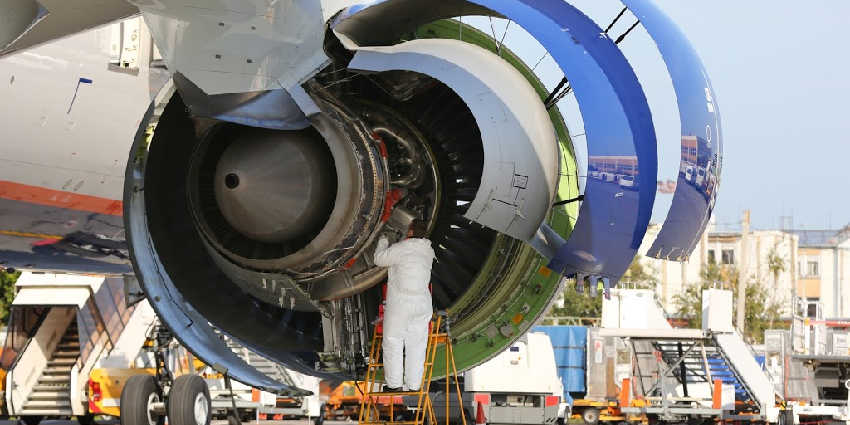
Aircraft Mechanic Jobs Iowa
What's the Job Outlook for A&P Mechanics? Aircraft mechanic jobs in Iowa should continue to grow, according to the Bureau of Labor Statistics. Their study suggests that the number of people working in aviation mechanic jobs will increase by 7% between 2008 and 2018.
This growth will be primarily caused by an increase in air traffic due to growing worldwide populations, economies, and increased desire for travel. As the airlines and associated industries expand, the need for A&P Mechanics will go up accordingly. Read more about aviation maintenance technician salaries.
In the coming years, many job openings will be created by retiring A&P Mechanics and others leaving the industry to work in related jobs like auto and diesel repair. If you become an aircraft mechanic, you can rest assured knowing your trade crosses over to many other industries.
A&P Mechanic Jobs in Iowa
A&P mechanic jobs are in high demand in Iowa. The highest paying aircraft mechanic jobs in Iowa are found at the major airlines. As can be expected, competition for these jobs is also huge. However, you're most likely to get a job at a regional airline or discount airline, because these types of carriers are growing quickly. But don't expect the same pay and benefits as the majors.
How to get your license, training requirements, eligibility, and links to more info. To earn your A&P License, you must attend a Federal Aviation Administration (FAA) certified AMT school OR have at least 30 months of relevant civilian or military work experience (supervised by a certified aviation mechanic). The FAA issues the A&P certificates (airframe and powerplant), and mechanics can get either an airframe rating or a power plant rating or both--most mechanics get both. Those who want a certificate with just a single rating and who base their application on practical experience must demonstrate 18 months of work experience applicable to the chosen rating. Learn more about the training and experience requirements to become an aircraft mechanic.
After your education or training qualifications are met, you'll be eligible to take the required oral, practical, and written tests. You must pass all these tests within 24 months. The tests cover 43 technical subjects. Typically, tests for one certificate--airframe or power plant--take about 8 hours. (Get more details about the A&P Mechanics Tests.) When you pass, you will have earned your FAA mechanic license with airframe and/or powerplant certificates (A&P license), and you'll be on your way to a successful career in aviation maintenance! Learn more about aviation maintenance technician training now.
A&P License Currency
Although your A&P certificates don't expire, you must remain "current" by meeting several criteria, including completing a minimum of 1,000 hours of hands-on work experience during the previous 24 months (or completing a refresher course) and completing at least 16 hours of additional training every 24 months. The additional training requirement is usually satisfied by attending manufacturer events or training with outside contractors hired to conduct the training.
Avionics Technician Specialty Training
As an A&P mechanic, if you have the training, qualifications, and tools, the FAA will allow you to work on avionics as well. Avionics technicians are not specifically required to have FAA certification if they received their avionics training in the military or from working for an avionics manufacturer.
A&P Mechanic Training: Using Veteran's Benefits
Your veteran's benefits, especially the Post 9/11 GI Bill, are one of the best sources of funding available to pay for A&P mechanic training. With the Post 9/11 GI Bill, you can be reimbursed for up to 100% of your aviation mechanic training expenses. This is a sizeable amount of funding that goes a long way toward making you an A&P mechanic, but there are a few things to consider before taking the leap.
A&P mechanic training expenses can be covered up to $10,000 dollar per academic year. Qualified veterans can use Post 9/11 GI Bill benefits to cover 100% of their training costs up to $10,000 dollars per academic year. Depending on the program, this is a big portion of the expense of aviation mechanic training. While it is worth noting this limitation, it is hardly causing alarm since it covers or severely reduces the costs of most A&P mechanic courses.
Aviation mechanic training programs require VA approval for reimbursement. An arguably more important consideration before beginning your A&P mechanic training is whether a particular training provider is approved by the VA. The good news is there is a pretty standard process and it isn't a secret whether a school is approved.
The only potential catch is that the VA must also approve individual courses before they will reimburse your flight training costs. This means that while a school may have approval, every course they offer isn't necessarily covered by your Post 9/11 GI Bill benefits.
Aviation mechanic training is improved by the approval process. The requirements for receiving an A&P mechanic certificate are standardized, but there is still a lot of variation in training programs. Since the VA mandates a fairly stringent approval process and there are ongoing paperwork requirements, most schools have a VA representative who is very familiar with the system.
This representative, the approval process, and the paperwork have a net effect of improving the quality of your aviation mechanic training by weeding out weak training courses and keeping you active in your training. Once you start training, most of the paperwork can be managed for you, allowing you to focus on your A&P mechanic training.
In fact, this is the most important takeaway. The stringent requirements of the Post 9/11 GI Bill create better-equipped schools, more efficient training courses, and save you money during your aviation mechanic training. For more information and to verify your eligibility, call 1-888-GIBILL-1 or check out the GI Bill website
FAA - A History of Aircraft Structures Facts for Iowa
Powered heavier-than-air aviation grew from the Wright design. Inventors and fledgling aviators began building their own aircraft. Early on, many were similar to that constructed by the Wrights using wood and fabric with wires and struts to support the wing structure.
Helicopter Aerodynamics, Aircraft Assembly, and Rigging Factoids
Three topics that are directly related to the manufacture, operation, and repair of aircraft are: aerodynamics, aircraft assembly, and rigging. Each of these subject areas, though studied separately, eventually connect to provide a scientific and physical understanding of how an aircraft is prepared for flight. A logical place to start with these three topics is the study of basic aerodynamics. By studying aerodynamics, a person becomes familiar with the fundamentals of aircraft flight.
Aircraft Mechanic Jobs Iowa
An aircraft mechanic is a hot career! The A&P Mechanic industry is in need of trained A&P mechanics right now. Whether you want to work for the airlines, a smaller corporate operation, or for yourself as an independent A&P, we offer the following training resources to help you get started. Learn more about A&P Mechanic Technician Training
What is the typical A&P Mechanic Technician salary? Aircraft Maintenance Technicians (AMTs) can make a comfortable living repairing and performing scheduled maintenance on aircraft, with top earners at major airlines earning well over $70,000 a year.
According to 2012 data from the Bureau of Labor Statistics, most AMTs make somewhere between $16.92 and $36.86 per hour, with median income at $26.55 per hour or $55,210 a year. The middle 50% earned between $45,670 and $65,750. At the lowest end of the scale, 10% of AMTs earned less than $35,190, while the top 10% earned more than $76,660.
As you might expect with aircraft mechanic jobs in Iowa, the positions with the highest aircraft maintenance salary are in the major airline and federal government sectors, where A&P mechanics typically work on large jet aircraft. (In the U.S., AMTs usually refer to themselves as A&Ps, which stands for airframe and powerplant mechanics. In Canada, Australia, and New Zealand, the equivalent of an AMT is an aircraft maintenance engineer.) Learn more about A&P Mechanic Technician Training
When compared to other professional technicians (such as auto mechanics, electricians, electro-mechanical technicians, and heavy vehicle service technicians), AMTs tend to earn a higher salary. In fact, AMTs' median annual income is typically between $4,000 and $18,000 higher than these technical professions. Get more info about aircraft mechanic jobs in Iowa.
A&P Mechanic Jobs in Iowa
There are several training routes to take to land the top A&P mechanic jobs. Attend a Federal Aviation Administration (FAA) approved A&P Mechanic. Currently, the FAA has approximately 170 approved A&P Mechanic schools listed on their website. For those interested in landing the top A&P mechanic jobs in Iowa, you need to attend an A&P Mechanic School and get the practical experience you'll need to become an A&P Mechanic.
Many A&P mechanics who have the best jobs get their training in the military. As a military A&P mechanic looking for the best paying job, you could be working on anything from large airliners and transports to jet fighters and attack helicopters. If you decide to go the military route, upon your discharge from the military, you'll still need to take the necessary FAA tests and have the proper documentation of your practical experience. That means you'll have to take all the courses too!
Once you have passed the required tests, you'll be eligible to apply for the very best A&P jobs in Iowa. However, please note that military experience can sometimes be too specific, and not meet the broad specifications required by the FAA. Even after discharge, you may have to attend one of the FAA-approved AMT schools.
On the job training - a very few people earn the required minimum coursework and skill set needed to pass the A&P certification tests through on the job training. Typically, you must be under the direct supervision of an A&P for at least 30 months and be logging all of your hours to go this route. Your time log must be notarized by your employer or signed off by the supervising A&P. Find out more about A&P Mechanic jobs.
A&P Mechanic Requirements
To be a certified A&P mechanic or avionics technician you need to meet several qualifications:
- Age 18 or older
- Read, write, speak, and understand the English language
- Have a high school diploma or equivalent
- Display the required technical skills
Avionics Technician Salary
Avionics Technicians test electronic instruments, assemble components, install instrument panels, interpret flight test data to diagnose malfunctions and problems, and repair or replace malfunctioning components. According to 2012 data from the Bureau of Labor Statistics, most Avionics Technicians earned somewhere between $18.82 and $35.47 per hour, with median income at $26.61 per hour or $55,350 a year. The middle 50% earned between $47,210 and $64,890. At the lowest end of the scale, 10% of Avionics Technicians earned less than $39,150, while the top 10% earned more than $73,770.
The positions with the highest avionics technician salary are in the aerospace, major airline, and federal government sectors. The chart below shows Avionics Technicians' mean annual salary by industry (for those industries with the highest levels of employment):
A&P Mechanic Technician Benefits
Salaries and benefits can vary. Salary is often dependent on the size of the company, work location, past work experience, licenses (e.g., A&P certificate), and type of craft serviced. In terms of benefits packages, both airline and general aviation employers typically offer paid holidays, vacations, insurance plans, retirement programs, and sick leave. A&P Mechanic technicians working for the largest companies can expect top-notch benefits packages, including both health and life insurance and, for those working for airlines, travel benefits for themselves and immediate family (e.g., free or reduced-price transportation to route destinations and travel exchange privileges with other airlines).
Helicopter History for Ames
Helicopter Ground School: In an airplane you can make decisions about trading forms of energy very late in the day. For example, if you pull the stick all the way back at 6000' above the ground you will gradually slow down and eventually stall and perhaps enter a spin. With many airplanes you could spin nearly all the way to the ground before applying forward stick and opposite rudder to get back to a normal flight condition. All without an engine.
Interesting Aviation Facts for Ames for Ames
Modern Day Military Pilot Training for Ames: All five branches of the United States military employ helicopter pilots for combat and non-combat uses. Each branch uses similar types of helicopters, with minor differences between each type. For example, the Air Force flies Pave Hawks, which are nearly identical to the Army's Blackhawk, Navy's Skyhawk and Coast Guard's Jayhawk, with several subtle differences that promote each branch's mission. Before getting behind the controls of a military helicopter, pilots must fulfill a number of requirements.
Fun Aviation Facts and Figures for Ankeny
MD Helicopters - MD Explorer: An international helicopter industry advisory board guided the design and development of the MD Explorer with an objective to produce a multipurpose twin-engine helicopter that would set new standards in performance, affordability, dependability and safety.
Helicopter Factoid for Ankenys for Ankeny
Flight Instructor Facts for Ankeny In order to get those 800 hours or so you now have two choices. Pay some one to let you fly their helicopter or let them pay you to tutor others to fly their helicopter. Surprisingly, it doesn't take much to get a flight instructor certificate and the benefits of having one will greatly out way the amount of time that is required to get the certificate.
Helicopter Factoid for Cedar Rapidss for Cedar Rapids
Flight Instructor Facts for Cedar Rapids A private helicopter license is design for people who like to fly for mainly fun or to take joy rides. The FAA (Federal Aviation Administration) requires people who want to get a private helicopter license to have at least 40 hours of flight time. Students will also need to complete a series of ground written and verbal tests before given the private license.
Aviation History for Cedar Rapids and Fun Facts for Cedar Rapids
To rebuild the helicopter pilot training program, Headquarters Army Air Force appointed a group of officers in January 1946 to recommend a new location for the school. San Marcos Army Air Field, Texas, a recently inactivated flying training base, was selected. Helicopter pilot training formally transferred to San Marcos on 31 May 1946.
Fun Aviation Facts and Figures for Council Bluffs
Being a helicopter pilot is not easy, you have to carefully plan the process of getting enrolled in the top helicopter pilot training schools for getting a valid pilot license.
Interesting Aviation Facts for Council Bluffs for Council Bluffs
Modern Day Military Pilot Training for Council Bluffs: A candidate for Army aviation school must score 90 or higher out of a possible 176 on the Flight Aptitude Selection Test. This exam includes seven sections, of which two request personal and background information and the other five cover actual topics in aviation such as the use and function of flight instruments and helicopter motions. The Army provides a study guide and practice test.
Helicopter Factoid for Davenports for Davenport
Commercial Helicopter License Facts: After you get your private helicopter license you will have the option to move on to a commercial helicopter license. The main difference between the commercial and private is that you can now start to charge for your services.
Aviation History for Davenport and Fun Facts for Davenport
Post World War Pilot Training: In April 1952, Air Force pilots received 35 hours in the H-5 or H-23 and 35 hours in the H-19. Starting in 1953, flight training was 35 hours in the H-5 or H-13, then 35 hours in the H-19 or H-21. Army pilots received 45 hours in the H-13.
Helicopter Factoid for Des Moiness for Des Moines
Flight Instructor Facts for Des Moines Compared to earning your private license and commercial license, earning your flight instructor certificate will take considerably less time. There are no more flight hours that you may need to build up besides taking the practical flight test.
Aviation History for Des Moines and Fun Facts for Des Moines
Possessing a civilian pilot's license isn't necessary when applying to become a U.S. military pilot. The military requires those already having a pilot's license to meet the same rigorous selection and training requirements as non-pilot applicants. Military aviation aptitude tests feature mathematics, including algebra and some geometry, plus sections that test on physics taught at the high school level.
Helicopter History for Iowa City
How to Pick a Helicopter Flight School for Iowa City To visit each school, call them up and make an appointment to meet with the owner/president. You will usually have an easier time getting an appointment during the week, rather than on the weekend. Tell them you'd like to meet them to hear about the school, their training program, and why you might want to train with them.
Interesting Aviation Facts for Iowa City for Iowa City
Modern Day Military Pilot Training for Iowa City: Army pilots start with flight school and move on to basic combat training. The Air Force's basic pilot training covers 12 weeks and Marine pilots undergo two phases of basic flight training. After basic training, pilots continue with helicopter-specific training. All branches also require the applicant to pass the Armed Services Vocational Aptitude Battery.
Helicopter History for Sioux City
Commercial Helicopter License Facts: You will need to have at least 150 hours of flight time. The price will also be quite a bit higher with the cost coming in around $30,000. However, once you get your commercial pilots license you will be able to take jobs at many different helicopter pilot careers.
Fun Aviation Facts and Figures for Sioux City
Modern Day Military Pilot Training for Sioux City: Flying aircraft is a coveted career in the United States armed services, and the process to become a military pilot is a competitive one. Most candidates need at least a bachelors degree to apply. The exception is the Army, where the fleet consists mainly of helicopters rather than fixed-wing aircraft. Becoming a helicopter pilot in the Army does not require higher education or prior enlistment.
Helicopter History for Waterloo
How to Pick a Helicopter Flight School for Waterloo To visit each school, call them up and make an appointment to meet with the owner/president. You will usually have an easier time getting an appointment during the week, rather than on the weekend. Tell them you'd like to meet them to hear about the school, their training program, and why you might want to train with them.
Interesting Aviation Facts for Waterloo for Waterloo
Modern Day Military Pilot Training for Waterloo: Before starting pilot training, a student must have at least a four-year bachelor's degree in any field. Beyond a bachelor's degree, each of the branches has its own education and training requirements, with most requiring some type of officer training along with introductory flight training. Navy pilots must take part in Officer Candidate School, followed by a six-week air indoctrination course.
Helicopter History for West Des Moines
The check ride is almost always done under the supervision of someone qualified or someone from the aviation authority, who will in turn put you through a combined practical and oral exam. Once you are qualified for a license, you can move on to obtaining a commercial license.
Interesting Aviation Facts for West Des Moines for West Des Moines
Modern Day Military Pilot Training for West Des Moines: A candidate who fulfills the regulations for acceptance into aviation school and is admitted must serve at least five years in active duty after completing the course or voluntarily dropping it. If a candidate is removed from the course because of medical reasons or incompetence, he must serve at least one year beyond any service commitments he made before entering flight school.