A&P Aircraft Mechanic Jobs in Massachusetts
Cities in Massachusetts with Aviation Schools:
- Agawam
- Arlington
- Attleboro
- Barnstable
- Beverly
- Boston
- Braintree
- Brockton
- Brookline
- Cambridge
- Chelsea
- Chicopee
- Concord
- Everett
- Fall River
- Fitchburg
- Framingham
- Franklin
- Gloucester
- Haverhill
- Holyoke
- Lawrence
- Leominster
- Lexington
- Lowell
- Lynn
- Malden
- Marlborough
- Medford
- Methuen
- Needham
- New Bedford
- Newton
- Northamn
- Norwood
- Peabody
- Pittsfield
- Quincy
- Revere
- Salem
- Somerville
- Springfield
- Taunton
- Waltham
- Watertown
- Wellesley
- West Springfield
- Westfield
- Weymouth
- Woburn
- Worcester
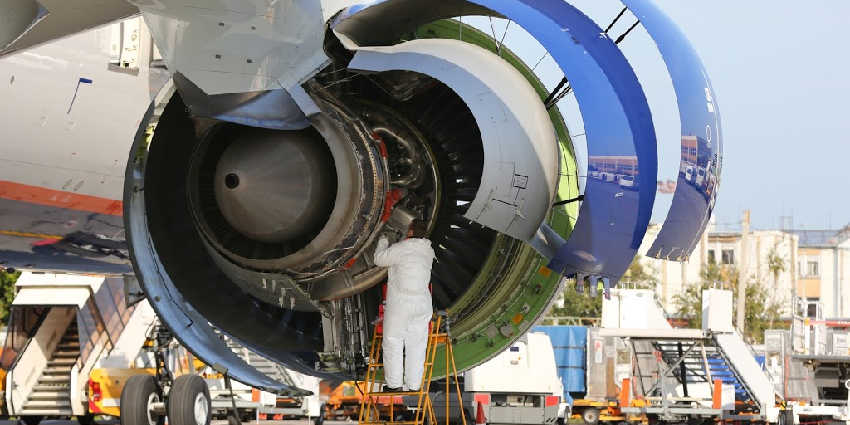
Aircraft Mechanic Jobs Massachusetts
What's the Job Outlook for A&P Mechanics? Aircraft mechanic jobs in Massachusetts should continue to grow, according to the Bureau of Labor Statistics. Their study suggests that the number of people working in aviation mechanic jobs will increase by 7% between 2008 and 2018.
This growth will be primarily caused by an increase in air traffic due to growing worldwide populations, economies, and increased desire for travel. As the airlines and associated industries expand, the need for A&P Mechanics will go up accordingly. Read more about aviation maintenance technician salaries.
In the coming years, many job openings will be created by retiring A&P Mechanics and others leaving the industry to work in related jobs like auto and diesel repair. If you become an aircraft mechanic, you can rest assured knowing your trade crosses over to many other industries.
A&P Mechanic Jobs in Massachusetts
A&P mechanic jobs are in high demand in Massachusetts. The highest paying aircraft mechanic jobs in Massachusetts are found at the major airlines. As can be expected, competition for these jobs is also huge. However, you're most likely to get a job at a regional airline or discount airline, because these types of carriers are growing quickly. But don't expect the same pay and benefits as the majors.
How to get your license, training requirements, eligibility, and links to more info. To earn your A&P License, you must attend a Federal Aviation Administration (FAA) certified AMT school OR have at least 30 months of relevant civilian or military work experience (supervised by a certified aviation mechanic). The FAA issues the A&P certificates (airframe and powerplant), and mechanics can get either an airframe rating or a power plant rating or both--most mechanics get both. Those who want a certificate with just a single rating and who base their application on practical experience must demonstrate 18 months of work experience applicable to the chosen rating. Learn more about the training and experience requirements to become an aircraft mechanic.
After your education or training qualifications are met, you'll be eligible to take the required oral, practical, and written tests. You must pass all these tests within 24 months. The tests cover 43 technical subjects. Typically, tests for one certificate--airframe or power plant--take about 8 hours. (Get more details about the A&P Mechanics Tests.) When you pass, you will have earned your FAA mechanic license with airframe and/or powerplant certificates (A&P license), and you'll be on your way to a successful career in aviation maintenance! Learn more about aviation maintenance technician training now.
A&P License Currency
Although your A&P certificates don't expire, you must remain "current" by meeting several criteria, including completing a minimum of 1,000 hours of hands-on work experience during the previous 24 months (or completing a refresher course) and completing at least 16 hours of additional training every 24 months. The additional training requirement is usually satisfied by attending manufacturer events or training with outside contractors hired to conduct the training.
Avionics Technician Specialty Training
As an A&P mechanic, if you have the training, qualifications, and tools, the FAA will allow you to work on avionics as well. Avionics technicians are not specifically required to have FAA certification if they received their avionics training in the military or from working for an avionics manufacturer.
A&P Mechanic Training: Using Veteran's Benefits
Your veteran's benefits, especially the Post 9/11 GI Bill, are one of the best sources of funding available to pay for A&P mechanic training. With the Post 9/11 GI Bill, you can be reimbursed for up to 100% of your aviation mechanic training expenses. This is a sizeable amount of funding that goes a long way toward making you an A&P mechanic, but there are a few things to consider before taking the leap.
A&P mechanic training expenses can be covered up to $10,000 dollar per academic year. Qualified veterans can use Post 9/11 GI Bill benefits to cover 100% of their training costs up to $10,000 dollars per academic year. Depending on the program, this is a big portion of the expense of aviation mechanic training. While it is worth noting this limitation, it is hardly causing alarm since it covers or severely reduces the costs of most A&P mechanic courses.
Aviation mechanic training programs require VA approval for reimbursement. An arguably more important consideration before beginning your A&P mechanic training is whether a particular training provider is approved by the VA. The good news is there is a pretty standard process and it isn't a secret whether a school is approved.
The only potential catch is that the VA must also approve individual courses before they will reimburse your flight training costs. This means that while a school may have approval, every course they offer isn't necessarily covered by your Post 9/11 GI Bill benefits.
Aviation mechanic training is improved by the approval process. The requirements for receiving an A&P mechanic certificate are standardized, but there is still a lot of variation in training programs. Since the VA mandates a fairly stringent approval process and there are ongoing paperwork requirements, most schools have a VA representative who is very familiar with the system.
This representative, the approval process, and the paperwork have a net effect of improving the quality of your aviation mechanic training by weeding out weak training courses and keeping you active in your training. Once you start training, most of the paperwork can be managed for you, allowing you to focus on your A&P mechanic training.
In fact, this is the most important takeaway. The stringent requirements of the Post 9/11 GI Bill create better-equipped schools, more efficient training courses, and save you money during your aviation mechanic training. For more information and to verify your eligibility, call 1-888-GIBILL-1 or check out the GI Bill website
FAA - A History of Aircraft Structures Facts for Massachusetts
After WWII, the development of turbine engines led to higher altitude flight. The need for pressurized aircraft pervaded aviation. Semi monocoque construction needed to be made even stronger as a result. Refinements to the all-metal semi-monocoque fuselage structure were made to increase strength and combat metal fatigue caused by the pressurization-depressurization cycle.
Aerodynamics and the Laws of Physics
Air has no force or power, except pressure, unless it is in motion. When it is moving, however, its force becomes apparent. A moving object in motionless air has a force exerted on it as a result of its own motion. It makes no difference in the effect then, whether an object is moving with respect to the air or the air is moving with respect to the object. The flow of air around an object caused by the movement of either the air or the object, or both, is called the relative wind.
Aircraft Mechanic Jobs Massachusetts
An aircraft mechanic is a hot career! The A&P Mechanic industry is in need of trained A&P mechanics right now. Whether you want to work for the airlines, a smaller corporate operation, or for yourself as an independent A&P, we offer the following training resources to help you get started. Learn more about A&P Mechanic Technician Training
What is the typical A&P Mechanic Technician salary? Aircraft Maintenance Technicians (AMTs) can make a comfortable living repairing and performing scheduled maintenance on aircraft, with top earners at major airlines earning well over $70,000 a year.
According to 2012 data from the Bureau of Labor Statistics, most AMTs make somewhere between $16.92 and $36.86 per hour, with median income at $26.55 per hour or $55,210 a year. The middle 50% earned between $45,670 and $65,750. At the lowest end of the scale, 10% of AMTs earned less than $35,190, while the top 10% earned more than $76,660.
As you might expect with aircraft mechanic jobs in Massachusetts, the positions with the highest aircraft maintenance salary are in the major airline and federal government sectors, where A&P mechanics typically work on large jet aircraft. (In the U.S., AMTs usually refer to themselves as A&Ps, which stands for airframe and powerplant mechanics. In Canada, Australia, and New Zealand, the equivalent of an AMT is an aircraft maintenance engineer.) Learn more about A&P Mechanic Technician Training
When compared to other professional technicians (such as auto mechanics, electricians, electro-mechanical technicians, and heavy vehicle service technicians), AMTs tend to earn a higher salary. In fact, AMTs' median annual income is typically between $4,000 and $18,000 higher than these technical professions. Get more info about aircraft mechanic jobs in Massachusetts.
A&P Mechanic Jobs in Massachusetts
There are several training routes to take to land the top A&P mechanic jobs. Attend a Federal Aviation Administration (FAA) approved A&P Mechanic. Currently, the FAA has approximately 170 approved A&P Mechanic schools listed on their website. For those interested in landing the top A&P mechanic jobs in Massachusetts, you need to attend an A&P Mechanic School and get the practical experience you'll need to become an A&P Mechanic.
Many A&P mechanics who have the best jobs get their training in the military. As a military A&P mechanic looking for the best paying job, you could be working on anything from large airliners and transports to jet fighters and attack helicopters. If you decide to go the military route, upon your discharge from the military, you'll still need to take the necessary FAA tests and have the proper documentation of your practical experience. That means you'll have to take all the courses too!
Once you have passed the required tests, you'll be eligible to apply for the very best A&P jobs in Massachusetts. However, please note that military experience can sometimes be too specific, and not meet the broad specifications required by the FAA. Even after discharge, you may have to attend one of the FAA-approved AMT schools.
On the job training - a very few people earn the required minimum coursework and skill set needed to pass the A&P certification tests through on the job training. Typically, you must be under the direct supervision of an A&P for at least 30 months and be logging all of your hours to go this route. Your time log must be notarized by your employer or signed off by the supervising A&P. Find out more about A&P Mechanic jobs.
A&P Mechanic Requirements
To be a certified A&P mechanic or avionics technician you need to meet several qualifications:
- Age 18 or older
- Read, write, speak, and understand the English language
- Have a high school diploma or equivalent
- Display the required technical skills
Avionics Technician Salary
Avionics Technicians test electronic instruments, assemble components, install instrument panels, interpret flight test data to diagnose malfunctions and problems, and repair or replace malfunctioning components. According to 2012 data from the Bureau of Labor Statistics, most Avionics Technicians earned somewhere between $18.82 and $35.47 per hour, with median income at $26.61 per hour or $55,350 a year. The middle 50% earned between $47,210 and $64,890. At the lowest end of the scale, 10% of Avionics Technicians earned less than $39,150, while the top 10% earned more than $73,770.
The positions with the highest avionics technician salary are in the aerospace, major airline, and federal government sectors. The chart below shows Avionics Technicians' mean annual salary by industry (for those industries with the highest levels of employment):
A&P Mechanic Technician Benefits
Salaries and benefits can vary. Salary is often dependent on the size of the company, work location, past work experience, licenses (e.g., A&P certificate), and type of craft serviced. In terms of benefits packages, both airline and general aviation employers typically offer paid holidays, vacations, insurance plans, retirement programs, and sick leave. A&P Mechanic technicians working for the largest companies can expect top-notch benefits packages, including both health and life insurance and, for those working for airlines, travel benefits for themselves and immediate family (e.g., free or reduced-price transportation to route destinations and travel exchange privileges with other airlines).
Helicopter Fun Facts for Boston
The heavier the rotor blades the more stable their speed will be due to inertia. With a low-inertia system, the student will have to react very quickly to a simulated engine failure or the simulated emergency becomes a real emergency. In the R22, the student and instructor have 1.6 seconds to act after a simulated engine failure. If neither lowers the collective and enters an autorotation within that 1.6 seconds, both are likely to die.
Fun Helicopter and Airplane Facts for Boston
Flight Instructor Facts for Boston All of the tallest objects in a given area are clearly listed on a pilot's map. The student must be educated in the dangers of coming into contact with power lines and antennas as well as any emergency action that must be taken if incidental contact is made with one of these objects.
Aviation History for Brockton and Fun Facts for Brockton
Helicopter Training Facts: Most pilots develop a physical fitness regime during training to help them build the muscle strength required for this role. Maintaining a high degree of personal fitness also reduces the residual physical stress and strain of maintaining a fixed position.
Fun Helicopter and Airplane Facts for Brockton
Helicopter Pilot's License for Brockton All pilots begin with a student certificate. Eligibility starts at 14 years old for balloon or glider pilots. To fly planes, applicants must be at least 16. The student certificate has many restrictions. Students can't carry passengers, nor can they fly solo until they gain flight experience, prove cockpit proficiency and pass the written exam.
Aviation History for Cambridge and Fun Facts for Cambridge
The Airline Transport Pilot's License (ATPL(H)) This is the senior license to which many professional pilots will aspire, and requires 1000 hours total flight experience of which 250 hours must be as a pilot in command. Additionally, for an ATPL(H) to be issued the candidate must possess a valid Instrument Rating (IR) and have completed at least 70 hours of instrument flight time together with 350 hours of multi crew and multi engined helicopter experience! Integrated Training
Fun Helicopter and Airplane Facts for Cambridge
Helicopter Pilot's License for Cambridge The FAR lays out three medical certificate levels. All require good hearing; a vision check; mental, neurological, and cardiovascular health; no substance abuse problems; and no diabetes. Student, recreational and private pilots need only a third-class certificate. Pilots intending to become commercial pilots should begin with the required second-class certificate. Major airline pilots need a first-class certificate, which requires the most medical fitness.
The nearest local airport closest to Concord, MA is Logan International Airport. In addition, there is Laurence G. Hanscom Field, Hanscom Field Civil Air Terminal, and Bedds NDB BE 332.
Aviation Training History and Facts for Fall River
Helicopter Training Facts: In helicopter pilot training, there are a series of high stress scenarios that students must work through. The ability to make good decisions under pressure, commitment to the safety of others, dedication, and emotional strength are all requirements of the job.
Aviation Factoids and Figures and Fun for Fall River
Training and preparing over 3000 pilots and maintenance technicians every year, Altus AFB is one of the most important military facilities established in Oklahoma. It is located only 6 km away from Altus
Robinson Helicopters: The R22 Beta II incorporates a Lycoming O-360 four-cylinder, carburetor-equipped engine fueled with 100L grade aviation gasoline. This 145 hp engine is derated to 131 hp for five minutes at takeoff and 124 hp for continuous operation. A powerful engine, a lightweight steel-tube airframe, and aerodynamic shape gives the R22 a cruise speed of up to 90 kts and an average fuel consumption of only 7-10 gallons per hour.
Aviation History for Lowell and Fun Facts for Lowell
Whirly-Girls History: Jean Ross Howard Phelan, Whirly-Girl #13, founded Whirly-Girls in 1955. In hopes of developing an organization where female pilots could share information and camaraderie, she was one of 13 charter members representing women helicopter pilots from France, Germany and the United States. As of 2011, there are over 1700 registered members representing 44 countries. Whirly-Girls is an official affiliate member of the Helicopter Association International.
Fun Helicopter and Airplane Facts for Lowell
Pilot ratings remove flying restrictions. An instrument rating says that a pilot doesn't need visual references to fly, and can instead rely solely on a plane's instruments. It's required for airline transport pilots, though private and commercial pilots also commonly earn it. Without a multi-engine rating, pilots can fly only single-engine planes. Commercial pilots need the multi-engine rating for employment.
Aviation Training History and Facts for Lynn
Helicopter Training Facts: In helicopter pilot training, there are a series of high stress scenarios that students must work through. The ability to make good decisions under pressure, commitment to the safety of others, dedication, and emotional strength are all requirements of the job.
Helicopter History for Lynn
Helicopter Pilot's License for LynnCommercial pilots must be at least 18 with 190 or more flight hours logged through flight school. Otherwise, applicants need 250 hours, including 100 solo hours and 40 hours flown cross-country. The FAR allows commercial pilots to accept pay for their services.
Aviation History for New Bedford and Fun Facts for New Bedford
Helicopter Training Facts: The pass rate on many helicopter pilot examinations is between 75 percent and 80 percent, due to the level of responsibility and risk associated with this career. As a result, there is a significant amount of repetition involved in the training program.
Fun Helicopter and Airplane Facts for New Bedford
Helicopter Pilot's License for New Bedford A recreational certificate allows pilots to carry one passenger. Among its restrictions, this certificate limits pilots to daytime flights of less than 50 miles. Pilots must be at least 17 to take the test and prove proficiency to a flight instructor who endorses the applicant's logged flight hours.
Aviation History for Quincy and Fun Facts for Quincy
Flight Instructor Facts for Quincy Often, an established and licensed helicopter pilot will decide to become an instructor. The additional training to become an instructor is given by a certified helicopter flight instructor.
Helicopter History for Quincy
Helicopter Pilot's License for QuincyPrivate pilot certificates allow pilots who are 17 and older to command single-engine aircraft and carry passengers night or day. Eligibility includes 40 flight hours, 20 of them solo. If attending flight school, pilots need 35 on-the-ground training hours, with another 35 in the air, 15 of those hours flown solo.
Aviation History for Springfield and Fun Facts for Springfield
The Commercial Pilot's License (CPL(H)) This is the standard professional license, and the one a pilot will hold after successful completion of a recognized training course under either the JAA modular or integrated systems.
Fun Helicopter and Airplane Facts for Springfield
Helicopter Pilot's License for Springfield Federal Aviation Regulations, or FAR, require all pilots to be trained, pass tests, accrue flight hours, and secure medical clearances. Licensing involves earning a student, recreational, private, commercial or airline transport pilot certificate through a written exam and a minimum number of flight hours. Along with certificates, pilots also earn expertise ratings for instruments, various flight scenarios and plane types. Without these ratings, a pilot can only fly in limited situations, no matter what certificate he holds.
Helicopter Fun Facts for Worcester
The engineer behind the R22, Frank Robinson, stated repeatedly that he did not design the R22 as a trainer and did not want people using it as a trainer, suggesting that they use the more expensive R44 instead (it has about 4 seconds of rotor inertia instead of 1.6 seconds). However, flight schools using the R44 could generally not compete with those using the R22 (a brand-new student can tell the difference between $200/hour and $400/hour, but he or she probably can't understand the practical consequences of lower rotor inertia). Thus the R22 continues to be used at flight schools around the world and its low-inertia rotor system and lack of power reserve result in frequent accidents during practice autorotations.
Fun Helicopter and Airplane Facts for Worcester
Pilots License: A recreational pilot taking a short daytime trip in a small plane shoulders less responsibility than a 747 pilot ferrying passengers at night across an ocean. Recognizing this, the Federal Aviation Administration dictates increasingly stringent pilot licensing requirements according to passenger responsibility, plane complexity and the purpose of the flight.