A&P Aircraft Mechanic Jobs in North Dakota
Cities in North Dakota with Aviation Schools:
- Belcourt
- Beulah
- Bismarck
- Bottineau
- Bowman
- Burlington
- Carrington
- Casselton
- Cavalier
- Crosby
- Devils Lake
- Dickinson
- Fargo
- Fort Totten
- Garrison
- Grafton
- Grand Forks
- Grand Forks Air Force Base
- Harvey
- Hazen
- Hettinger
- Hillsboro
- Horace
- Jamestown
- Langdon
- Larimore
- Lincoln
- Lisbon
- Mandan
- Mapleton
- Mayville
- Minot
- Minot Air Force Base
- New Rockford
- New Town
- Oakes
- Park River
- Parshall
- Rolla
- Rugby
- Shell Valley
- Stanley
- Surrey
- Tioga
- Valley City
- Wahpeton
- Washburn
- Watford City
- West Fargo
- Williston
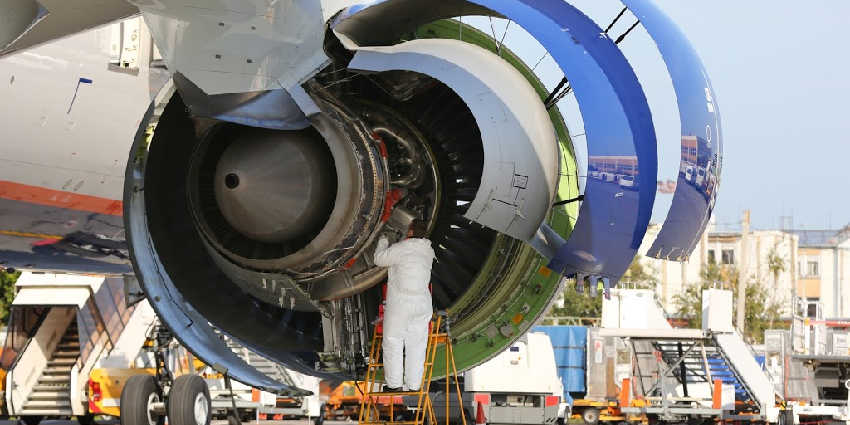
Aircraft Mechanic Jobs North Dakota
What's the Job Outlook for A&P Mechanics? Aircraft mechanic jobs in North Dakota should continue to grow, according to the Bureau of Labor Statistics. Their study suggests that the number of people working in aviation mechanic jobs will increase by 7% between 2008 and 2018.
This growth will be primarily caused by an increase in air traffic due to growing worldwide populations, economies, and increased desire for travel. As the airlines and associated industries expand, the need for A&P Mechanics will go up accordingly. Read more about aviation maintenance technician salaries.
In the coming years, many job openings will be created by retiring A&P Mechanics and others leaving the industry to work in related jobs like auto and diesel repair. If you become an aircraft mechanic, you can rest assured knowing your trade crosses over to many other industries.
A&P Mechanic Jobs in North Dakota
A&P mechanic jobs are in high demand in North Dakota. The highest paying aircraft mechanic jobs in North Dakota are found at the major airlines. As can be expected, competition for these jobs is also huge. However, you're most likely to get a job at a regional airline or discount airline, because these types of carriers are growing quickly. But don't expect the same pay and benefits as the majors.
How to get your license, training requirements, eligibility, and links to more info. To earn your A&P License, you must attend a Federal Aviation Administration (FAA) certified AMT school OR have at least 30 months of relevant civilian or military work experience (supervised by a certified aviation mechanic). The FAA issues the A&P certificates (airframe and powerplant), and mechanics can get either an airframe rating or a power plant rating or both--most mechanics get both. Those who want a certificate with just a single rating and who base their application on practical experience must demonstrate 18 months of work experience applicable to the chosen rating. Learn more about the training and experience requirements to become an aircraft mechanic.
After your education or training qualifications are met, you'll be eligible to take the required oral, practical, and written tests. You must pass all these tests within 24 months. The tests cover 43 technical subjects. Typically, tests for one certificate--airframe or power plant--take about 8 hours. (Get more details about the A&P Mechanics Tests.) When you pass, you will have earned your FAA mechanic license with airframe and/or powerplant certificates (A&P license), and you'll be on your way to a successful career in aviation maintenance! Learn more about aviation maintenance technician training now.
A&P License Currency
Although your A&P certificates don't expire, you must remain "current" by meeting several criteria, including completing a minimum of 1,000 hours of hands-on work experience during the previous 24 months (or completing a refresher course) and completing at least 16 hours of additional training every 24 months. The additional training requirement is usually satisfied by attending manufacturer events or training with outside contractors hired to conduct the training.
Avionics Technician Specialty Training
As an A&P mechanic, if you have the training, qualifications, and tools, the FAA will allow you to work on avionics as well. Avionics technicians are not specifically required to have FAA certification if they received their avionics training in the military or from working for an avionics manufacturer.
A&P Mechanic Training: Using Veteran's Benefits
Your veteran's benefits, especially the Post 9/11 GI Bill, are one of the best sources of funding available to pay for A&P mechanic training. With the Post 9/11 GI Bill, you can be reimbursed for up to 100% of your aviation mechanic training expenses. This is a sizeable amount of funding that goes a long way toward making you an A&P mechanic, but there are a few things to consider before taking the leap.
A&P mechanic training expenses can be covered up to $10,000 dollar per academic year. Qualified veterans can use Post 9/11 GI Bill benefits to cover 100% of their training costs up to $10,000 dollars per academic year. Depending on the program, this is a big portion of the expense of aviation mechanic training. While it is worth noting this limitation, it is hardly causing alarm since it covers or severely reduces the costs of most A&P mechanic courses.
Aviation mechanic training programs require VA approval for reimbursement. An arguably more important consideration before beginning your A&P mechanic training is whether a particular training provider is approved by the VA. The good news is there is a pretty standard process and it isn't a secret whether a school is approved.
The only potential catch is that the VA must also approve individual courses before they will reimburse your flight training costs. This means that while a school may have approval, every course they offer isn't necessarily covered by your Post 9/11 GI Bill benefits.
Aviation mechanic training is improved by the approval process. The requirements for receiving an A&P mechanic certificate are standardized, but there is still a lot of variation in training programs. Since the VA mandates a fairly stringent approval process and there are ongoing paperwork requirements, most schools have a VA representative who is very familiar with the system.
This representative, the approval process, and the paperwork have a net effect of improving the quality of your aviation mechanic training by weeding out weak training courses and keeping you active in your training. Once you start training, most of the paperwork can be managed for you, allowing you to focus on your A&P mechanic training.
In fact, this is the most important takeaway. The stringent requirements of the Post 9/11 GI Bill create better-equipped schools, more efficient training courses, and save you money during your aviation mechanic training. For more information and to verify your eligibility, call 1-888-GIBILL-1 or check out the GI Bill website
FAA - A History of Aircraft Structures Facts for North Dakota
There are five major stresses to which all aircraft are subjected: Torsion. Torsion is the stress that produces twisting. [Figure 1-14C] While moving the aircraft forward, the engine also tends to twist it to one side, but other aircraft components hold it on course. Thus, torsion is created. The torsion strength of a material is its resistance to twisting or torque.
Aviation Facts - Trim Control Systems for Large Aircraft
Control Systems for Large Aircraft - Mechanical Control
This is the basic type of system that was used to control early aircraft and is currently used in smaller aircraft where aerodynamic forces are not excessive. The controls are mechanical and manually operated. The mechanical system of controlling an aircraft can include cables, push-pull tubes, and torque tubes. The cable system is the most widely used because deflections of the structure to which it is attached do not affect its operation. Some aircraft incorporate control systems that are a combination of all three.
Aircraft Mechanic Jobs North Dakota
An aircraft mechanic is a hot career! The A&P Mechanic industry is in need of trained A&P mechanics right now. Whether you want to work for the airlines, a smaller corporate operation, or for yourself as an independent A&P, we offer the following training resources to help you get started. Learn more about A&P Mechanic Technician Training
What is the typical A&P Mechanic Technician salary? Aircraft Maintenance Technicians (AMTs) can make a comfortable living repairing and performing scheduled maintenance on aircraft, with top earners at major airlines earning well over $70,000 a year.
According to 2012 data from the Bureau of Labor Statistics, most AMTs make somewhere between $16.92 and $36.86 per hour, with median income at $26.55 per hour or $55,210 a year. The middle 50% earned between $45,670 and $65,750. At the lowest end of the scale, 10% of AMTs earned less than $35,190, while the top 10% earned more than $76,660.
As you might expect with aircraft mechanic jobs in North Dakota, the positions with the highest aircraft maintenance salary are in the major airline and federal government sectors, where A&P mechanics typically work on large jet aircraft. (In the U.S., AMTs usually refer to themselves as A&Ps, which stands for airframe and powerplant mechanics. In Canada, Australia, and New Zealand, the equivalent of an AMT is an aircraft maintenance engineer.) Learn more about A&P Mechanic Technician Training
When compared to other professional technicians (such as auto mechanics, electricians, electro-mechanical technicians, and heavy vehicle service technicians), AMTs tend to earn a higher salary. In fact, AMTs' median annual income is typically between $4,000 and $18,000 higher than these technical professions. Get more info about aircraft mechanic jobs in North Dakota.
A&P Mechanic Jobs in North Dakota
There are several training routes to take to land the top A&P mechanic jobs. Attend a Federal Aviation Administration (FAA) approved A&P Mechanic. Currently, the FAA has approximately 170 approved A&P Mechanic schools listed on their website. For those interested in landing the top A&P mechanic jobs in North Dakota, you need to attend an A&P Mechanic School and get the practical experience you'll need to become an A&P Mechanic.
Many A&P mechanics who have the best jobs get their training in the military. As a military A&P mechanic looking for the best paying job, you could be working on anything from large airliners and transports to jet fighters and attack helicopters. If you decide to go the military route, upon your discharge from the military, you'll still need to take the necessary FAA tests and have the proper documentation of your practical experience. That means you'll have to take all the courses too!
Once you have passed the required tests, you'll be eligible to apply for the very best A&P jobs in North Dakota. However, please note that military experience can sometimes be too specific, and not meet the broad specifications required by the FAA. Even after discharge, you may have to attend one of the FAA-approved AMT schools.
On the job training - a very few people earn the required minimum coursework and skill set needed to pass the A&P certification tests through on the job training. Typically, you must be under the direct supervision of an A&P for at least 30 months and be logging all of your hours to go this route. Your time log must be notarized by your employer or signed off by the supervising A&P. Find out more about A&P Mechanic jobs.
A&P Mechanic Requirements
To be a certified A&P mechanic or avionics technician you need to meet several qualifications:
- Age 18 or older
- Read, write, speak, and understand the English language
- Have a high school diploma or equivalent
- Display the required technical skills
Avionics Technician Salary
Avionics Technicians test electronic instruments, assemble components, install instrument panels, interpret flight test data to diagnose malfunctions and problems, and repair or replace malfunctioning components. According to 2012 data from the Bureau of Labor Statistics, most Avionics Technicians earned somewhere between $18.82 and $35.47 per hour, with median income at $26.61 per hour or $55,350 a year. The middle 50% earned between $47,210 and $64,890. At the lowest end of the scale, 10% of Avionics Technicians earned less than $39,150, while the top 10% earned more than $73,770.
The positions with the highest avionics technician salary are in the aerospace, major airline, and federal government sectors. The chart below shows Avionics Technicians' mean annual salary by industry (for those industries with the highest levels of employment):
A&P Mechanic Technician Benefits
Salaries and benefits can vary. Salary is often dependent on the size of the company, work location, past work experience, licenses (e.g., A&P certificate), and type of craft serviced. In terms of benefits packages, both airline and general aviation employers typically offer paid holidays, vacations, insurance plans, retirement programs, and sick leave. A&P Mechanic technicians working for the largest companies can expect top-notch benefits packages, including both health and life insurance and, for those working for airlines, travel benefits for themselves and immediate family (e.g., free or reduced-price transportation to route destinations and travel exchange privileges with other airlines).
Interesting Helicopter and Fixed-wing Facts for Bismarck
Sikorsky soon became a successful aircraft manufacturer in his adopted homeland. But his dream was vertical take-off, rotary wing flight. He experimented for more than twenty years and finally, in 1939, flew his first flight in a craft dubbed the VS 300.
The record for the fastest helicopter in the world is held by the Sikorsky X2 which, during a flyby over Florida, United States, clocked 258mph (416kph). But this was beaten recently. On June 7th 2013, the X3 blew through the previous air speed record for helicopters by cruising at 255 knots (293 MPH) during a 40-minute flight over Southern France near Istres.
Fun Helicopter and Airplane Facts for Bismarck
Helicopter Pilot's License:Private pilot certificates allow pilots who are 17 and older to command single-engine aircraft and carry passengers night or day. Eligibility includes 40 flight hours, 20 of them solo. If attending flight school, pilots need 35 on-the-ground training hours, with another 35 in the air, 15 of those hours flown solo.
Interesting Helicopter and Fixed-wing Facts for Dickinson
Igor Sikorsky is considered to be the \father of helicopters not because he invented the first. He is called that because he invented the first successful helicopter
The record for the fastest helicopter in the world is held by the Sikorsky X2 which during a flyby over Florida United States clocked 258mph (416kph). But this was beaten recently. On June 7th 2013 the X3 blew through the previous air speed record for helicopters by cruising at 255 knots (293 MPH) during a 40-minute flight over Southern France near Istres.
Helicopter Facts for Dickinson
In order to fly, an object must have “lift”. Lift is what pushes something upwards. Lift is made by wings (rotors). Wings have a curved shape on top and are flatter on the bottom. This specific shape makes air flow over the top of the wing faster than under the bottom of the wing. The faster air on top of the wing makes suction on the top of the wing and the wing moves up. Airplanes get lift from their wings. A helicopter's rotor blades are spinning wings. A helicopter moves air over its rotor by spinning the blades. The rotor makes the lift that carries the helicopter up. One problem associated with helicopter rotor blades occurs because airflow along the length of each blade differs widely. This means that lift and drag fluctuate for each blade throughout the rotational cycle, thereby exerting an unsteadying influence upon the helicopter. The autogiro had a rotor that functioned something like a windmill. Once set in motion by taxiing on the ground, the rotor could generate supplemental lift; however, the autogiro was powered primarily by a conventional airplane engine.
Fun Facts for Helicopter and Airplane Flight Training for Fargo
Typically, the means of compensating for these unpredictable variations in lift and drag is to manufacture flexible blades connected to the rotor by a hinge. This design allows each blade to shift up or down, adjusting to changes in lift and drag.
The first reference to a rotor system is credited to inventor Leonardo da Vinci, who designed an ‘aerial screw’ in 1480. No full-scale variant was constructed during his lifetime.
Fun Helicopter and Airplane Facts for Fargo
Before potential rotary wing aviators begin actual helicopter training, they must complete the U.S. Army Aviation Center Survival Escape Resistance and Evasion, or SERE-C, course, and Helicopter Ditching and Dunker training. The SERE-C course teaches how to survive in extreme circumstances, including how to find water and food and even how to improvise weapons.
Interesting Helicopter and Fixed-wing Facts for Grand Forks
A helicopter is an engine-driven rotorcraft (a type of aircraft) which uses rotating blades for lift, propulsion, thrust and steering. The word 'Helicopter' comes from the French word 'hlicoptre' which is derived from the Greek words 'helix/helik' (which means 'twisted / curved') and 'pteron' (which means 'wing').
The biggest helicopter was the Russian Mil Mi-12 Homer of 1968 which could lift 40,204 kg up to 2255 m.
Fun Helicopter and Airplane Facts for Grand Forks
On average, a helicopter ground school program takes 12 to 15 weeks to complete. Although there are schools that offer degree programs, traditional programs concentrate on hands-on training and building the flight hours needed for a license.
Fun Helicopter and Airplane Facts for Jamestown
There are over 3 million people in the air on planes at any one time. The worlds first flying car arrives in 2015. Called the Terrafugia it costs $279,000. Terrafugia, a Woburn manufacturer of flying cars has been working on its vehicles for almost eight years. The MIT-born company has been working on two kinds of cars: the Transition, which is scheduled to be released in mid-2016 and can fly at speeds of up to 100 miles per hour at up to 10,000 feet in the air;
Fun Helicopter and Airplane Facts for Jamestown
The best way to become a U.S. military pilot is to prepare academically, physically and mentally before applying for aviation selection and training. Generally, U.S. military pilots need to possess at least a four-year college degree before commencement of aviator training.
FAA - A History of Aircraft Structures Factoid
There are five major stresses to which all aircraft are subjected: Torsion. Torsion is the stress that produces twisting. [Figure 1-14C] While moving the aircraft forward, the engine also tends to twist it to one side, but other aircraft components hold it on course. Thus, torsion is created. The torsion strength of a material is its resistance to twisting or torque.
Interesting Helicopter and Fixed-wing Facts for Mandan
Over 3 million lives have been saved by helicopters in both peacetime and wartime operations since the first person was rescued from the sea in 1944.
The biggest helicopter was the Russian Mil Mi-12 Homer of 1968 which could lift 40,204 kg up to 2255 m.
The first reference to a rotor system is credited to inventor Leonardo da Vinci, who designed an ‘aerial screw’ in 1480. No full-scale variant was constructed during his lifetime.
More Fun Helicopter Facts for Mandan
The first practically successful rotorcraft (the Autogiro) was built by the Spanish engineer Juan de la Cierva, in the year 1923.
If he could design an aircraft in which lift and thrust (forward speed) were separate functions, Cierva speculated, he could circumvent this problem. The autogiro he subsequently invented incorporated features of both the helicopter and the airplane, although it resembled the latter more.
Fun Facts for Helicopter and Airplane Flight Training for Minot
The forerunner of modern helicopters is the Vought-Sikorsky VS-300. It was designed by the Russian American Igor Sikorsky in the year 1939.
Fun Helicopter and Airplane Facts for Minot
On average, a helicopter ground school program takes 12 to 15 weeks to complete. Although there are schools that offer degree programs, traditional programs concentrate on hands-on training and building the flight hours needed for a license.
FAA - A History of Aircraft Structures Factoid
There are five major stresses to which all aircraft are subjected: Compression. Compression is the stress that resists a crushing force. The compressive strength of a material is also measured in psi. Compression is the stress that tends to shorten or squeeze aircraft parts.
Fun Helicopter Facts for Wahpeton
The R22 is the basis for Boeing's Maverick military unmanned aerial vehicle helicopter, and its Renegade version. In 1999, Frontier Systems developed a remotely piloted R22, the Maverick. This aircraft, along with the company, was later acquired by Boeing Phantom Works. In 2003 the U.S. Navy purchased four aircraft, equipped with Wescam EO/IR (Electro-Optical/Infrared) systems.
Helicopter Fun Facts for Wahpeton
As the helicopter approaches the ground, the pilot must then get rid of most of their forward motion and slow the decent using the stored up kinetic energy in the rotors. If done perfectly, the landing will be quite gentle. They accomplish this by executing a flare, pitching the nose up, at the right moment.
In fact, you have a better chance at surviving in a helicopter when the engine fails than you do in an airplane. Helicopters are designed specifically to allow pilots to have a reasonable chance of landing them safely in the case where the engine stops working during flight, often with no damage at all.
Interesting Helicopter and Fixed-wing Facts for West Fargo
In 1951, an American aeronautical engineer Charles Kaman modified his Kaman K-225 helicopter with the turboshaft engine. This modified Kaman K-225 became the world's first gas turbine-powered helicopter. The introduction of turboshaft engines to helicopters enabled the creation of faster, larger, reliable and efficient helicopters.
The FAA and Weather
Inclement weather, including thunderstorms, snowstorms, wind shear, icing and fog, creates potentially hazardous conditions in the nation’s airspace system. These conditions are, by far, the largest cause of flight delays. In an average year, inclement weather is the reason for nearly 70 percent of all delays. Delays translate into real costs for the airlines and the flying public. The cost to an airline for an hour of delay ranges from about $1,400 to $4,500, with the value of passenger time ranging from $35 to $63 per hour. This means that delays cost the airlines and their passengers billions of dollars each year. Each kind of inclement weather presents challenges to the FAA’s air traffic control operation, but perhaps the most disruptive are the convective storms that strike in the summer. Winter storms, while potentially dangerous, often form and move slowly. By contrast, summer storms typically form, grow and move swiftly, covering large swaths of airspace. Many start in the Ohio Valley and move east, impacting air travel in the Northeast, particularly New York. Approximately one-third of all flights in the U.S. “touch” New York, flying to or from John F. Kennedy International, LaGuardia and Newark Liberty airports, connecting with those flights or transiting New York airspace, so severe weather impacting New York has a ripple down effect over the entire country.
Helicopter Fun Facts for Williston
Helicopters are classified as rotary wing aircraft, and their rotary wing is commonly referred to as the main rotor or simply the rotor.
Helicopters are classified as rotary wing aircraft, and their rotary wing is commonly referred to as the main rotor or simply the rotor.
Fun Helicopter and Airplane Facts for Williston
Modern Day Military Pilot Training: Navy pilots must be 18 to 34 for enlisted officers and 19 to 35 for commissioned officers, Air Force pilots must be between 17 and 28 for enlisted officers and 17 and 35 for commissioned officers, and Marine pilots must be 17 to 29 for enlisted officers and 20 to 28 for commissioned officers. All pilots must be United States citizens and have clean criminal records.