A&P Aircraft Mechanic Jobs in Pennsylvania
Cities in Pennsylvania with Aviation Schools:
- Allentown
- Allison Park
- Altoona
- Baldwin
- Bethel Park
- Bethlehem
- Carlisle
- Chambersburg
- Chester
- Drexel Hill
- Easton
- Ephrata
- Erie
- Franklin Park
- Fullerton
- Greensburg
- Hanover
- Harrisburg
- Hazleton
- Hermitage
- Hershey
- Horsham
- Johnstown
- King Of Prussia
- Lancaster
- Lansdale
- Lebanon
- Levittown
- Mckeesport
- Monroeville
- Mount Lebanon
- Murrysville
- New Castle
- Norristown
- Penn Hills
- Philadelphia
- Phoenixville
- Pittsburgh
- Plum
- Pottstown
- Radnor Township
- Reading
- Ross Township
- Scranton
- Shaler Township
- State College
- Upper St Clair
- West Chester
- West Mifflin
- Whitehall
- Wilkes-Barre
- Wilkinsburg
- Williamsport
- Willow Grove
- York
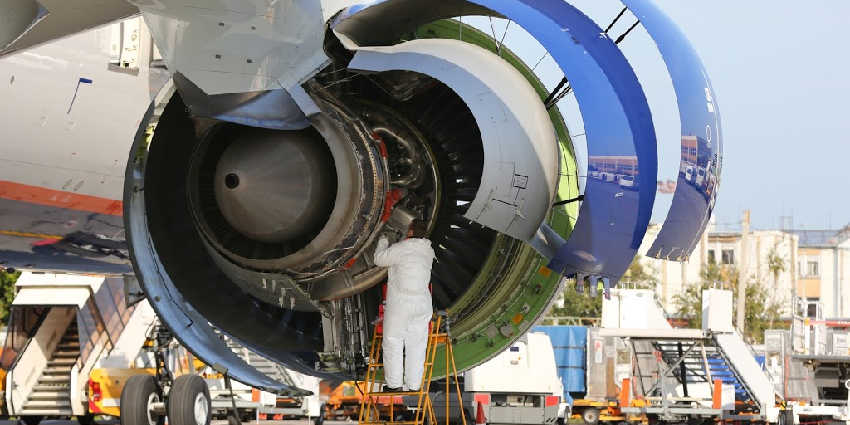
Aircraft Mechanic Jobs Pennsylvania
What's the Job Outlook for A&P Mechanics? Aircraft mechanic jobs in Pennsylvania should continue to grow, according to the Bureau of Labor Statistics. Their study suggests that the number of people working in aviation mechanic jobs will increase by 7% between 2008 and 2018.
This growth will be primarily caused by an increase in air traffic due to growing worldwide populations, economies, and increased desire for travel. As the airlines and associated industries expand, the need for A&P Mechanics will go up accordingly. Read more about aviation maintenance technician salaries.
In the coming years, many job openings will be created by retiring A&P Mechanics and others leaving the industry to work in related jobs like auto and diesel repair. If you become an aircraft mechanic, you can rest assured knowing your trade crosses over to many other industries.
A&P Mechanic Jobs in Pennsylvania
A&P mechanic jobs are in high demand in Pennsylvania. The highest paying aircraft mechanic jobs in Pennsylvania are found at the major airlines. As can be expected, competition for these jobs is also huge. However, you're most likely to get a job at a regional airline or discount airline, because these types of carriers are growing quickly. But don't expect the same pay and benefits as the majors.
How to get your license, training requirements, eligibility, and links to more info. To earn your A&P License, you must attend a Federal Aviation Administration (FAA) certified AMT school OR have at least 30 months of relevant civilian or military work experience (supervised by a certified aviation mechanic). The FAA issues the A&P certificates (airframe and powerplant), and mechanics can get either an airframe rating or a power plant rating or both--most mechanics get both. Those who want a certificate with just a single rating and who base their application on practical experience must demonstrate 18 months of work experience applicable to the chosen rating. Learn more about the training and experience requirements to become an aircraft mechanic.
After your education or training qualifications are met, you'll be eligible to take the required oral, practical, and written tests. You must pass all these tests within 24 months. The tests cover 43 technical subjects. Typically, tests for one certificate--airframe or power plant--take about 8 hours. (Get more details about the A&P Mechanics Tests.) When you pass, you will have earned your FAA mechanic license with airframe and/or powerplant certificates (A&P license), and you'll be on your way to a successful career in aviation maintenance! Learn more about aviation maintenance technician training now.
A&P License Currency
Although your A&P certificates don't expire, you must remain "current" by meeting several criteria, including completing a minimum of 1,000 hours of hands-on work experience during the previous 24 months (or completing a refresher course) and completing at least 16 hours of additional training every 24 months. The additional training requirement is usually satisfied by attending manufacturer events or training with outside contractors hired to conduct the training.
Avionics Technician Specialty Training
As an A&P mechanic, if you have the training, qualifications, and tools, the FAA will allow you to work on avionics as well. Avionics technicians are not specifically required to have FAA certification if they received their avionics training in the military or from working for an avionics manufacturer.
A&P Mechanic Training: Using Veteran's Benefits
Your veteran's benefits, especially the Post 9/11 GI Bill, are one of the best sources of funding available to pay for A&P mechanic training. With the Post 9/11 GI Bill, you can be reimbursed for up to 100% of your aviation mechanic training expenses. This is a sizeable amount of funding that goes a long way toward making you an A&P mechanic, but there are a few things to consider before taking the leap.
A&P mechanic training expenses can be covered up to $10,000 dollar per academic year. Qualified veterans can use Post 9/11 GI Bill benefits to cover 100% of their training costs up to $10,000 dollars per academic year. Depending on the program, this is a big portion of the expense of aviation mechanic training. While it is worth noting this limitation, it is hardly causing alarm since it covers or severely reduces the costs of most A&P mechanic courses.
Aviation mechanic training programs require VA approval for reimbursement. An arguably more important consideration before beginning your A&P mechanic training is whether a particular training provider is approved by the VA. The good news is there is a pretty standard process and it isn't a secret whether a school is approved.
The only potential catch is that the VA must also approve individual courses before they will reimburse your flight training costs. This means that while a school may have approval, every course they offer isn't necessarily covered by your Post 9/11 GI Bill benefits.
Aviation mechanic training is improved by the approval process. The requirements for receiving an A&P mechanic certificate are standardized, but there is still a lot of variation in training programs. Since the VA mandates a fairly stringent approval process and there are ongoing paperwork requirements, most schools have a VA representative who is very familiar with the system.
This representative, the approval process, and the paperwork have a net effect of improving the quality of your aviation mechanic training by weeding out weak training courses and keeping you active in your training. Once you start training, most of the paperwork can be managed for you, allowing you to focus on your A&P mechanic training.
In fact, this is the most important takeaway. The stringent requirements of the Post 9/11 GI Bill create better-equipped schools, more efficient training courses, and save you money during your aviation mechanic training. For more information and to verify your eligibility, call 1-888-GIBILL-1 or check out the GI Bill website
Fixed-Wing Aircraft Facts
Truss-Type: A truss is a rigid framework made up of members, such as beams, struts, and bars to resist deformation by applied loads. The truss-framed fuselage is generally covered with fabric. The truss-type fuselage frame is usually constructed of steel. A truss-type fuselage. A Warren truss uses mostly diagonal bracing. An airframe using monocoque construction. The most common airframe construction is semi-monocoque tubing welded together in such a manner that all members of the truss can carry both tension and compression loads. In some aircraft, principally the light, single-engine models, truss fuselage frames may be constructed of aluminum alloy and may be riveted or bolted into one piece, with cross-bracing achieved by using solid rods or tubes.
Fun Flight Dispatcher Facts
A flight dispatcher, also known as an aircraft dispatcher, flight follower or flight operations officer or anyone trained and positioned to assist in planning flight paths, taking into account aircraft performance and loading, enroute winds, thunderstorm and turbulence forecasts, airspace restrictions, and airport conditions.
Aircraft Mechanic Jobs Pennsylvania
An aircraft mechanic is a hot career! The A&P Mechanic industry is in need of trained A&P mechanics right now. Whether you want to work for the airlines, a smaller corporate operation, or for yourself as an independent A&P, we offer the following training resources to help you get started. Learn more about A&P Mechanic Technician Training
What is the typical A&P Mechanic Technician salary? Aircraft Maintenance Technicians (AMTs) can make a comfortable living repairing and performing scheduled maintenance on aircraft, with top earners at major airlines earning well over $70,000 a year.
According to 2012 data from the Bureau of Labor Statistics, most AMTs make somewhere between $16.92 and $36.86 per hour, with median income at $26.55 per hour or $55,210 a year. The middle 50% earned between $45,670 and $65,750. At the lowest end of the scale, 10% of AMTs earned less than $35,190, while the top 10% earned more than $76,660.
As you might expect with aircraft mechanic jobs in Pennsylvania, the positions with the highest aircraft maintenance salary are in the major airline and federal government sectors, where A&P mechanics typically work on large jet aircraft. (In the U.S., AMTs usually refer to themselves as A&Ps, which stands for airframe and powerplant mechanics. In Canada, Australia, and New Zealand, the equivalent of an AMT is an aircraft maintenance engineer.) Learn more about A&P Mechanic Technician Training
When compared to other professional technicians (such as auto mechanics, electricians, electro-mechanical technicians, and heavy vehicle service technicians), AMTs tend to earn a higher salary. In fact, AMTs' median annual income is typically between $4,000 and $18,000 higher than these technical professions. Get more info about aircraft mechanic jobs in Pennsylvania.
A&P Mechanic Jobs in Pennsylvania
There are several training routes to take to land the top A&P mechanic jobs. Attend a Federal Aviation Administration (FAA) approved A&P Mechanic. Currently, the FAA has approximately 170 approved A&P Mechanic schools listed on their website. For those interested in landing the top A&P mechanic jobs in Pennsylvania, you need to attend an A&P Mechanic School and get the practical experience you'll need to become an A&P Mechanic.
Many A&P mechanics who have the best jobs get their training in the military. As a military A&P mechanic looking for the best paying job, you could be working on anything from large airliners and transports to jet fighters and attack helicopters. If you decide to go the military route, upon your discharge from the military, you'll still need to take the necessary FAA tests and have the proper documentation of your practical experience. That means you'll have to take all the courses too!
Once you have passed the required tests, you'll be eligible to apply for the very best A&P jobs in Pennsylvania. However, please note that military experience can sometimes be too specific, and not meet the broad specifications required by the FAA. Even after discharge, you may have to attend one of the FAA-approved AMT schools.
On the job training - a very few people earn the required minimum coursework and skill set needed to pass the A&P certification tests through on the job training. Typically, you must be under the direct supervision of an A&P for at least 30 months and be logging all of your hours to go this route. Your time log must be notarized by your employer or signed off by the supervising A&P. Find out more about A&P Mechanic jobs.
A&P Mechanic Requirements
To be a certified A&P mechanic or avionics technician you need to meet several qualifications:
- Age 18 or older
- Read, write, speak, and understand the English language
- Have a high school diploma or equivalent
- Display the required technical skills
Avionics Technician Salary
Avionics Technicians test electronic instruments, assemble components, install instrument panels, interpret flight test data to diagnose malfunctions and problems, and repair or replace malfunctioning components. According to 2012 data from the Bureau of Labor Statistics, most Avionics Technicians earned somewhere between $18.82 and $35.47 per hour, with median income at $26.61 per hour or $55,350 a year. The middle 50% earned between $47,210 and $64,890. At the lowest end of the scale, 10% of Avionics Technicians earned less than $39,150, while the top 10% earned more than $73,770.
The positions with the highest avionics technician salary are in the aerospace, major airline, and federal government sectors. The chart below shows Avionics Technicians' mean annual salary by industry (for those industries with the highest levels of employment):
A&P Mechanic Technician Benefits
Salaries and benefits can vary. Salary is often dependent on the size of the company, work location, past work experience, licenses (e.g., A&P certificate), and type of craft serviced. In terms of benefits packages, both airline and general aviation employers typically offer paid holidays, vacations, insurance plans, retirement programs, and sick leave. A&P Mechanic technicians working for the largest companies can expect top-notch benefits packages, including both health and life insurance and, for those working for airlines, travel benefits for themselves and immediate family (e.g., free or reduced-price transportation to route destinations and travel exchange privileges with other airlines).
Fun Aviation Facts and Figures for Allentown
Modern Day Military Pilot Training for Allentown: As with other military positions, helicopter pilots may have to move frequently to any number of the United States military bases around the world.
Helicopter History for Allentown
Civilian Helicopter Pilot Training Tips: Each level of helicopter pilot licensing has different FAA minimum flight time requirements. To obtain your Private (Helicopter) Pilot License, the FAA requires that you have 20 hours of dual and 10 hours of solo flight time.
Aviation History for Altoona and Fun Facts for Altoona
Helicopter pilots do not need to have a college degree to fly helicopters as a hobby, but those choosing a career as a pilot do need at least some post-secondary schooling. Most employers require pilots to have at least an associate's degree, with many preferring pilots to have a bachelor's degree.
Aviation Training History and Facts for Altoona
Becoming a Certified Flight Instructor: Flight instructors typically have about 200 hours of in air flight time before they can become eligible as an instructor. For some helicopter models the FAA enforces a strict 200 hour minimum in order to be an instructor.
Interesting Aviation Facts for Bethel Park for Bethel Park
Camp Huachuca was built in 1877 to defend against the Chiricahua Apaches and to guard the Mexican border. It was renamed Fort Huachuca in 1882. Geronimos 1886 surrender ended the Apache resistance, but the fort remained because of its strategic location near the border.
Aviation Factoids and Figures and Fun for Bethel Park
How Long Does it Take to get your Helicopter License: It's very important that you thoroughly research helicopter training schools prior to making a decision. Finding the best school and one that will wholly support your needs can be tricky and is often a trade off between cost and convenience.
Fun Aviation Facts and Figures for Bethlehem
Helicopter pilots who want to make flying a career must move on to earn a commercial helicopter pilot license. A commercial license requires the student to be at least 18 years old, hold a private helicopter pilot license and FAA medical certificate and complete ground instruction.
Fun Aviation Facts and Figures for Bethlehem
Cost to Obtain a Helicopter License: Most helicopter flight training schools are charging rates of about $235-$275 per flight hour with an instructor and $200-$235 for solo time. Your ground school time will usually cost somewhere between $30 and $40 per hour.
Fun Aviation Facts and Figures for Chester
Commercial Helicopter License Tips: Pilots who have their fixed wing license may be able to apply that flying time to their rotorcraft add-on license as well which will save both time and money.
Aviation Factoids and Figures and Fun for Chester
How Long Does it Take to get your Helicopter License: ou don't have complete control over how quickly you can obtain your license. The flight schedule at your school can greatly influence the timeframe for completion especially if your school only has a couple of helicopters and dozens of students.
Aviation History for Drexel Hill and Fun Facts for Drexel Hill
Helicopters have been widely adopted by the military since their first appearance during the Korean War. During the Vietnam War, they became the preferred platforms for transporting troops and evacuating wounded; in the Persian Gulf conflict helicopter gunships provided air cover for advancing tanks.
Fun Helicopter and Airplane Facts for Drexel Hill
The first important thing you need to do before enrolling in any pilot training schools is to go and personally check them. To begin with, you can start with the yellow pages because even some good schools don't advertise.
Fun Aviation Facts and Figures for Erie
Modern Day Military Pilot Training for Erie: Working as a military pilot requires a certain temperament to deal with often-stressful situations. Pilots must possess self-discipline, confidence and intelligence, as well as be able to make quick decisions, multitask and perform under pressure.
Fun Aviation Facts and Figures for Erie
Commercial Helicopter License Tips: To obtain your Commercial Rotorcraft License, the FAA requires the pilot to have a minimum of 150 hours of flight time, and 100 of those hours must be PIC (Pilot in Command) time.
Aviation Training History and Facts for Harrisburg
Helicopter Flight Training Facts: You have to be in good health to take helicopter training and it is recommended that a student obtains his/her heath certificate in advance. Many students pay to take flight training and plan to get the health certificate at a later date.
Aviation Training History and Facts for Harrisburg
Becoming a Certified Flight Instructor: Working as a CFI has both advantages and disadvantages. The main disadvantage is that CFI's typically only make about $15 - $25 per hour. There are also several advantages; the most beneficial being that you get to build your flight hours quickly while getting paid to do it.
Fun Aviation Facts and Figures for Lancaster
Helicopter pilots work in a variety of different industries and fulfill a number of different roles, including emergency medical services, law enforcement, agriculture, executive transport and sightseeing. Career paths for a helicopter pilot can take him into other industries as well, such as firefighting, search and rescue, logging and instructing other pilots.
Fun Aviation Facts and Figures for Lancaster
Cost to Obtain a Helicopter License: Overall, you should expect a cost of about $10,000-$15,000 to obtain your Private Pilot License with an additional $16,000-$20,000 involved to obtain your Commercial Rotorcraft License. Of course these numbers can vary, depending upon your ability, the location of your school and the helicopter model you are training in.
Aviation History for Levittown and Fun Facts for Levittown
Following all training hours, the student must pass the FAA written knowledge, oral and practical tests. Students need to complete 20 hours dual flight training, including one dual cross-county and one solo cross-country flight and 10 hours of instrument training. The student must also do at least 10 hours of solo flight training and 100 hours as a pilot-in-command.
Fun Aviation Facts and Figures for Levittown
Becoming a Certified Flight Instructor: The majority of helicopter jobs require a minimum of 1,000 hours as pilot in command, which usually means that you'll need an additional 800 hours after obtaining your Private Pilot License and your Commercial Rotorcraft License.
Aviation History for Monroeville and Fun Facts for Monroeville
Pilots License: A recreational pilot taking a short daytime trip in a small plane shoulders less responsibility than a 747 pilot ferrying passengers at night across an ocean. Recognizing this, the Federal Aviation Administration dictates increasingly stringent pilot licensing requirements according to passenger responsibility, plane complexity and the purpose of the flight.
Fun Helicopter and Airplane Facts for Monroeville
Aspiring helicopter pilots also need to clear a written test, personal interview and flying test to get absorbed as entry-level officers in reputed organizations.
Aviation Factoids of Great Interest - Thrust and Drag
An aircraft in flight is the center of a continuous battle of forces. Actually, this conflict is not as violent as it sounds, but it is the key to all maneuvers performed in the air. There is nothing mysterious about these forces; they are definite and known. The directions in which they act can be calculated, and the aircraft itself is designed to take advantage of each of them. In all types of flying, flight calculations are based on the magnitude and direction of four forces: weight, lift, drag, and thrust.
Aviation Factoids and Figures and Fun for Mount Lebanon
Tips to Finding the Top Helicopter Schools: Fortunately you have many options to choose from when selecting a helicopter school. Just like in any other business it is always important to remember that helicopter schools earn revenue ONLY if you decide to become a student.
Aviation History for Norristown and Fun Facts for Norristown
With Helicopters in Norristown Safety is Everything: The good news about helicopter safety is that it is largely under your control as the pilot. If you want to cruise along for 25 miles skimming the ground 100' above obstacles and then land in your friend's backyard, which is surrounded by powerlines and trees, you are asking for trouble.
Aviation Factoids and Figures and Fun for Norristown
Tips to Finding the Top Helicopter Schools: Think of your training as one of the largest investments of time and money that you will make in your life and remain vigilant and patient during the selection process.
Aviation Training History and Facts for Penn Hills
US Army Helicopter Pilots: warrant officers are put in army flight school to become the helicopter pilots. So even after high school, you can start your career and head toward your dream of being a pilot.
Becoming a Certified Flight Instructor:
You can gain valuable experience being that you would normally get a pay rate of $150-$200 per hour. Essentially you are using a helicopter, gaining the flight time and not having to pay for it. For your long term goal this is an optimal situation.
Aviation Training History and Facts for Philadelphia
Modern Day Military Pilot Training for Philadelphia: Navy pilots must be 18 to 34 for enlisted officers and 19 to 35 for commissioned officers, Air Force pilots must be between 17 and 28 for enlisted officers and 17 and 35 for commissioned officers, and Marine pilots must be 17 to 29 for enlisted officers and 20 to 28 for commissioned officers. All pilots must be United States citizens and have clean criminal records.
Aviation Training History and Facts for Philadelphia
Helicopter Careers - Military: You also need to consider the fact that you may not be able to become a military helicopter pilot. They have a stringent flight school screening process that is often difficult to pass and they can at will move you into an alternate area of service.
Fun Aviation Facts and Figures for Pittsburgh
Modern Day Military Pilot Training for Pittsburgh: To join the military, as well as become a pilot, potential recruits must fulfill certain age requirements. Pilots in the Coast Guard must be ages 17 to 27 for active duty and 17 to 39 for reservists, while Army pilots must be between 18 and 29 for active and 18 and 35 for reservists.
Aviation Training History and Facts for Pittsburgh
Helicopter Careers - Military: The other factor to consider is the time commitment required to obtain your helicopter pilot license in the military. The military absolutely expects that you are a military officer first and a pilot second. This exchange requires a lot of give and take and should be considered prior to making a concrete decision. If you feel strongly about the military and are willing to sacrifice a block of your time
Aviation History for Radnor Township and Fun Facts for Radnor Township
Gravity is the pulling force that tends to draw all bodies within the earth’s gravitational field to the center of the earth. The CG may be considered the point at which all the weight of the aircraft is concentrated. If the aircraft were supported at its exact CG, it would balance in any position. CG is of major importance in an aircraft, for its position has a great bearing upon stability.
Fun Helicopter and Airplane Facts for Radnor Township
Tips to Finding the Top Helicopter Schools: Although you may be eager to get started and ready to jump in with both feet; you need to protect your self and your investment carefully. Don't rush! Wisely prepare and plan for your training so that you will have an opportunity for a brighter future.
Fun Aviation Facts and Figures for Reading
Modern Day Military Pilot Training for Reading: ll pilots must pass a Class 1 flight physical and have perfect 20/20 vision, either corrected or uncorrected. Pilots must also have normal color perception, depth perception and field of vision. Additionally, Coast Guard pilots must have good dental health with no cavities.
Fun Aviation Facts and Figures for Reading
Commercial Helicopter License Tips: Pilot in Command time is accumulated by flying solo and acting as the pilot of your helicopter AFTER you attain your Private License. Even if you are receiving flight instruction at the time; the hours toward PIC count as long as you are registered as the acting pilot of your aircraft.
Aviation Training History and Facts for Ross Township
Helicopter Flight Training for Ross Township Remember that the armed forces provides career options for people interested in flying any type of aircraft. So, if you have the aptitude for helicopter flying, or for flying any aircraft as a matter of fact, joining the armed forces could be a good option.
Aviation Factoids and Figures and Fun for Ross Township
Tips to Finding the Top Helicopter Schools: There will be quite a bit of sales talk involved in your interview process and it is your job to thoroughly research each school before making a selection. One of the smartest things you can do before making a definitive decision is to visit the school in person and talk with some of the currently enrolled students.
Fun Aviation Facts and Figures for Scranton
Modern Day Military Pilot Training for Scranton: Because of the physical nature of the job, military helicopter pilots must fulfill a number of requirements. Pilots should be in good physical health and be able to complete a series of fitness tests, including a certain number of pushups and situps in one minute and a 1.5-mile run in a certain time.
Fun Aviation Facts and Figures for Scranton
Commercial Helicopter License Tips: Pilots who have their fixed wing license may be able to apply that flying time to their rotorcraft add-on license as well which will save both time and money.
Aviation History for Shaler Township and Fun Facts for Shaler Township
The CG is determined by the general design of the aircraft. The designers estimate how far the CP travels. They then fix the CG in front of the CP for the corresponding flight speed in order to provide an adequate restoring moment for flight equilibrium. The Axes of an Aircraft Whenever an aircraft changes its attitude in flight
Fun Helicopter and Airplane Facts for Shaler Township
Helicopter Flight Training Facts: he average cost of helicopter training is round 20-50 thousand dollars. Many schools offer scholarships, payment plans, and financial aid. It generally takes up to six months to get a pilots license, less for those who go full time.
Fun Aviation Facts and Figures for State College
Newton’s third law is the law of action and reaction. This law states that for every action (force) there is an equal and opposite reaction (force). This law can be illustrated by the example of firing a gun. The action is the forward movement of the bullet while the reaction is the backward recoil of the gun.
Aviation Factoids and Figures and Fun for State College
How Long Does it Take to Become a Helicopter Pilot: The number of students at the helicopter school will greatly influence the number of hours you will be afforded the opportunity to instruct.
Aviation History and Fun Facts
Helicopter Facts for Wilkes-Barre Camp Pendleton,Californiais the most important base located on the western side of the United States. It is the base with the most ambitious, intense and successful amphibious training activities. Located close to the ocean in South California, the camp is in the middle of nowhere, close to the Cleveland National Forest.
Aviation Training History and Facts for Wilkes-Barre
How Long Does it Take To Become a Helicopter Pilot: That all depends on how frequently you fly the helicopter. If you are pursuing your licensing on a full-time basis it may only take you 6 - 8 months to earn your license. Compared to many training and educational programs this is a drop in the bucket!
Aviation History for Williamsport and Fun Facts for Williamsport
Buying Helicopters: If you don't want to buy a mechanic to go with your helicopter and constantly stuff grease into various joints, your only option in the land of the certified is Robinson. I own an R22 and an R44. The R44 was 50 percent more expensive, but it is 200 percent more useful. The R22 feels cramped even when you're by yourself and, against a headwind, you watch cars on the Interstate passing you.
Little Known But Important FAA Facts
FAA Centers of Excellence - Mission and Vision: The Department of Transportation addresses University Transportation Centers of Excellence in a report dates June 10, 1991 and the FAA has adopted the definition, purpose, and mission as stated.
Fun Aviation Facts and Figures for York
Davis-Monthan AFBArizonais one of the most active military bases in the United States. It is operated by the Air Force and located within the city limits of Tucson. The objective of this base is simple it constantly trains professional pilots and prepares them for the eventuality of a potential war. The same pilots are also used in various humanitarian operations, depending on the situation.
Aviation Factoids and Figures and Fun for York
How Long Does it Take to Become a Helicopter Pilot: Keep in mind that you will be required to build up to 1,000 flying hours as well. Once you start instructing it will likely take you 12 - 18 months to build up to 1,000 hours.