Air Traffic Controller Training in Mississippi
Cities in Mississippi with Aviation Schools:
- Abbeville
- Alligator
- Batesville
- Bay Saint Louis
- Biloxi
- Booneville
- Brandon
- Brookhaven
- Byhalia
- Carriere
- Centreville
- Clarksdale
- Cleveland
- Clinton
- Columbus
- Diamondhead
- Flowood
- Greenville
- Greenwood
- Grenada
- Gulfport
- Hattiesburg
- Hernando
- Holly Springs
- Horn Lake
- Jackson
- Laurel
- Long Beach
- Lumberton
- Madison
- Marks
- Mccomb
- Meridian
- Moss Point
- Natchez
- New Albany
- New Augusta
- Olive Branch
- Southaven
- Tupelo
Air Traffic Control School in Mississippi
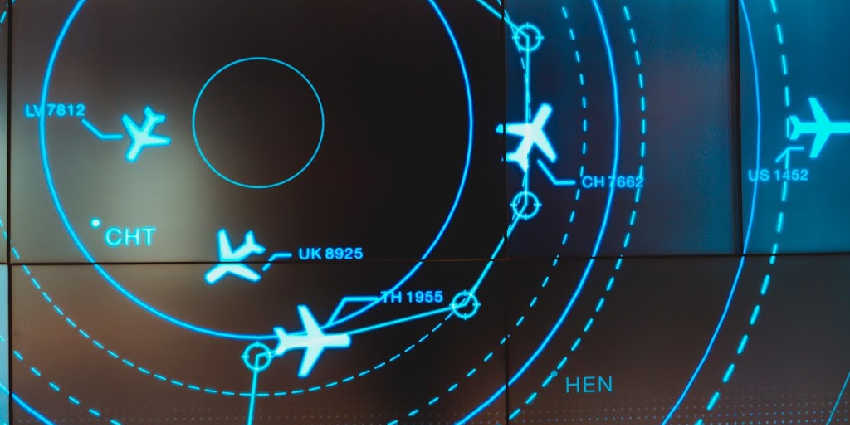
Air Traffic Controller Schools in Mississippi are actively recruiting students to replace the thousands of current controllers fromMississippi whose retirement is rapidly approaching. Now is the time to start your air traffic controller training inMississippi. Aviation Schools Online offers a complete list of air traffic controller schools nearMississippi.
Air Traffic Controller quick facts - Nearly all air traffic controllers are employed by the Federal Aviation Administration (FAA), an agency of the Federal Government.
Replacement needs will continue to account for most job openings nearMississippi, reflecting the large number ofMississippi air traffic controllers who will be eligible to retire over the next decade. Competition to get into FAA training programs is expected to remain strong; however, graduates of Air Traffic Controller programs fromMississippi have good job prospects. Air traffic controllers aroundMississippi earn relatively high pay and have good benefits.
Research Careers in Air Traffic Control Here! Do you have what it takes to become an air traffic controller inMississippi? These pages will help you find out. Air Traffic Control jobs pay well and are one of the toughest positions to earn. Start out by doing some research.
Air Traffic Control Career - Where Can I Work?
While aircraft and pilots may steal the show when it comes to aviation, air traffic controllers are an absolutely essential element of the aviation industry.  Without their highly-skilled eyes watching over and keeping pilots from running into each other, flying would harder than it already is.
If you're considering an air traffic control career, chances are you already know this, but what you may not know is there are several places air traffic controllers work. Once you complete your training, you can work as a tower, TRACON, or En-route controller.
Tower
Of all the career paths available to air traffic controllers fromMississippi, this is probably the one most people picture. These controllers are generally located at the airport in the tower if there is one. They spend their days and nights overseeing operations at the airport level. They control local weather reporting and issuing clearances for taxi, takeoff, and landing. In short, tower controllers control the airport.
Air Traffic Controller Salary Info - How Much Do Air Traffic Controllers in Mississippi Make?
U.S. Air traffic controllers make a good living and have excellent benefits. According to a 2010 study by the Bureau of Labor Statistics, most Air traffic controllers average $110,000 per year in salary, with some controllers making less and some making more.
According to the Federal Aviation Administration (FAA), the starting salary for new controllers was $37,070 in 2010. Controllers' salaries increase as they complete each new training phase.
According to the FAA, controllers who have already completed on-the-job training had an average annual salary of $118,000 in 2010. Get more information about air traffic controller jobs here.
Air Traffic Controller Benefits
As an air traffic controller fromMississippi, you can expect excellent benefits. Health insurance and life insurance are standard, and controllers receive 13 to 26 paid days for vacation and 13 days of paid personal time per year. Besides the great pay, controllers have excellent retirement options too.
For example, air traffic controllers can retire at age 50 with far fewer years in service than other Federal employees, or they can extend their time to age 56 for an even better retirement package. However, if you work for a contract tower or flight service station, do a little research because those entities may operate with different benefits packages. Read more about air traffic controller jobs.
Terminal Approach Control
Terminal approach control, or TRACON, handle everything near the airport. They are usually located in the same facility as the tower controllers, but they don't handle traffic on the ground. TRACON handles every aircraft within a certain range--both inbound and outbound flights.
They may see traffic for a specific field or, as is more common in larger cities, multiple fields. These controllers are primarily concerned with sequencing and spacing aircraft for safe arrivals and departures.
En-route
Last but not least, en-route controllers handle all the airspace between major metropolitan areas. They typically work in dedicated facilities that are much larger than airport towers known as "centers." The center controllers work together to handle all traffic in specific regions by relying on long-range radar and radio services.
Once an aircraft is near its destination, the center controller will hand it off to approach control, who in turn will sequence the aircraft before handing it off to the tower controllers who will issue the landing clearance.
Air traffic controllers are an essential element of the aviation formula. They allow pilots to focus on flying their aircraft by providing weather services and helping pilots maintain separation in the sky. While the job may not come with as much glory as of the pilot, air traffic controllers are the linchpin that keeps the entire system safe and efficient.
FAA - A History of Airplane Structures Facts for Mississippi
Many airframe structures are made of more than 50 percent advanced composites, with some airframes approaching 100 percent. The term “very light jet” (VLJ) has come to describe a new generation of jet aircraft made almost entirely of advanced composite materials. [Figure 1-10] It is possible that non-composite aluminum aircraft structures will become obsolete as did the methods and materials of construction used by Cayley, Lilienthal, and the Wright Brothers.
Newton's Law of Motion
According to Newton’s law, since air has mass, it is a body. When an aircraft is on the ground with its engines off, inertia keeps the aircraft at rest. An aircraft is moved from its state of rest by the thrust force created by a propeller, or by the expanding exhaust, or both. When an aircraft is flying at uniform speed in a straight line, inertia tends to keep the aircraft moving. Some external force is required to change the aircraft from its path of flight.
Air Traffic Controller Training in Mississippi - Where Do I start?
Air traffic controllers in Mississippi play a vital role in modern aviation. From providing up to date weather information to keeping planes from getting too close, air traffic control is an exciting and necessary career. If you're considering becoming an air traffic controller inMississippi, you must go through a multi-step process that begins early.
Specifically, those training for an air traffic control career must be younger than 30 unless they already have experience as an air traffic controller (such as through the military). From there, you must go to college, apply for an ATC job, and attend the FAA training academy.
For Air Traffic Controller Training in Mississippi Attend College or University
While not totally essential, the easiest way to begin a career as an air traffic controller is to go to college. There are numerous FAA-approved schools nearMississippi offering training through the Air Traffic Collegiate Training Initiative (AT-CTI) that will help you meet the minimum requirements for applying for an ATC opening with the FAA.
Once you have completed your two-year or four-year degree, you should receive a letter of recommendation from your school and apply for an ATC job.
If you've already gotten a degree or you're switching careers, you must have either progressively responsible full-time work experience or college study to qualify. Specifically, you need three years of work, four years of college, or some combination of the two to satisfy the minimum requirements.
Where You'll Work as an Air Traffic Controller
As an air traffic controller inMississippi, you can expect to work in one or all of these four areas:
At the airport - these controllers work at what's called the "tower" even though you may or may not actually be located in the tower. Tower controllers are responsible for local airport operations including reporting weather, issuing takeoff clearances, controlling aircraft on the ground, issuing runway assignments, handling all arriving and departing traffic, and above all, ensuring that all of these aircraft maintain a safe distance from each other at all times.
Near the airport - Terminal "approach" control, or TRACON for short, handles all inbound and outbound traffic in a specific area near an airport, or a group of airports. A good example is that most big cites have TRACON services that handle all aircraft in the general vicinity of the metropolitan area.
TRACON controllers make sure all aircraft are properly sequenced and spaced for safe arrivals and departures from all airports in the entire area.
En route - Between major metropolitan areas are vast expanses of airspace. "Center" controllers handle all traffic in these areas and rely on long-range radar and radio services to maintain contact with, and separation for, all aircraft under their control.
Flight Service Stations (FSS) - Flight service stations are regional offices that supply vital flight planning, weather, en route, communication, and navigation information via radio to pilots already airborne, and via telephone and computer to pilots planning flights on the ground.
Sometimes flight service specialists (people who work in an FSS) will help other ATC personnel by relaying radio messages to pilots who cannot talk to other ATC controllers because of current location and altitude.
Air Traffic Controller Requirements
Air traffic controllers fromMississippi must be good multitaskers, with the ability to make quick decisions efficiently. Most of the time, controllers are "working" several aircraft simultaneously, and are responsible for giving the pilots correct information via radio, making sure that the aircraft are not too close to each other (separation), and all the while, ensuring the efficient flow of traffic into and out of the controller's sector. Learn more about air traffic controller jobs.
Apply for an Air Traffic Controller Job in Mississippi
Once you've met education or work experience requirements, you must pass an exam. The computer-based pre-employment exam requires about 8 hours to complete and is only offered by the FAA. Typically, there are more applicants than test slots, but AT-CTI applicants in good academic standing are guaranteed an opportunity to take the exam.
Once you've passed the exam, you are technically eligible for an air traffic controller job nearMississippi, unfortunately, you must then undergo an extensive background check and drug testing. It's safe to say, the FAA doesn't let just anyone work ATC.
Attend FAA Air Traffic Controller Training Near Mississippi
Finally, once you're hired, the FAA will send you to Air Traffic Controller training for 12 weeks of intensive training on the ATC system, regulations, and equipment. Thankfully, if you're a graduate of an AT-CTI program, you may be able to bypass the first five weeks of training.
Once you've graduated from the academy, you will receive an assignment to a real air traffic control facility for an additional 2 to 4 years of on-the-job-training. If you make it through all that training, you're all set for one of the most fulfilling careers available today.
As you can tell, air traffic controller careers are not for the faint of heart. The training is extensive, but it has to be because ATC is a high-stakes career. If you think you've got what it takes, now is the time to start training for your air traffic controller career.
Air Traffic Controller Career Center in Mississippi
An air traffic controller's primary responsibility is to "maintain separation" between all types of aircraft. Other responsibilities include aiding the swift and efficient movement of aircraft to and from airports and across great distances en route. Finally, air traffic controllers assist pilots in emergency situations.
Air traffic controllers typically work for the U.S. Government and are employed by the Federal Aviation Administration (FAA), although some controllers work in what are called "contract" towers where air traffic control (ATC) services are awarded to private companies. If you would like to begin training to become an air traffic controller, start now.
You must be 30 years old or less to apply for a job with ATC. Learn more about air traffic controller training.
Air Traffic Controller Salary Info - How Much Do Air Traffic Controllers in Mississippi Make?
U.S. Air traffic controllers fromMississippi make a good living and have excellent benefits. According to a 2010 study by the Bureau of Labor Statistics, most Air traffic controllers average $110,000 per year in salary, with some controllers making less and some making more.
According to the Federal Aviation Administration (FAA), the starting salary for new controllers was $37,070 in 2010. Controllers' salaries increase as they complete each new training phase. According to the FAA, controllers who have already completed on-the-job training had an average annual salary of $118,000 in 2010. Get more information about air traffic controller jobs here.
Interesting Helicopter and Fixed-wing Facts for Biloxi
There are over 3 million people in the air on planes at any one time. The worlds first flying car arrives in 2012. Called the Terrafugia it costs $194,000
The first reference to a rotor system is credited to inventor Leonardo da Vinci, who designed an ‘aerial screw’ in 1480. No full-scale variant was constructed during his lifetime.
Fun Helicopter and Airplane Facts for Biloxi
The Germans used helicopters for artillery spotting on the Russian front in WWII. The Germans also built and perfected a rotor-kite (helicopter with no engine) that was towed behind a U-Boat to increase the range at which targets could be spotted. (Since it had no power, there was no torque, and no need for a tailrotor.)
Fun Helicopter and Airplane Facts for Greenville
Become a commercial helicopter pilot: Enroll in a college and earn a degree. Air ambulance companies wont employ you as a pilot unless you have at least two years, and a four-year degree is preferable. Choose a major such as math, physics, aeronautical engineering or English.
FAA - A History of Aircraft Structures Factoid
There are five major stresses to which all aircraft are subjected: Tension. Tension is the stress that resists a force that tends to pull something apart. [Figure 1-14A] The engine pulls the aircraft forward, but air resistance tries to hold it back. The result is tension, which stretches the aircraft. The tensile strength of a material is measured in pounds per square inch (psi) and is calculated by dividing the load (in pounds) required to pull the material apart by its cross-sectional area (in square inches).
Fun Helicopter and Airplane Facts for Greenville
There are more than 11,000 civil helicopters operating just in the U.S. and more than 15,000 civil helicopters operating in more than 157 other countries around the world.
Many helicopters use a tail rotor, an exposed blade or ducted fan mounted on the end of the tail boom typically seen on these craft. Another means of counteracting torque entails installing two rotors, attached to the same engine but rotating in opposite directions, while a third, more space-efficient design features twin rotors that are enmeshed, something like an egg beater.
Fun Helicopter and Airplane Facts for Gulfport
How to Select a Helicopter Instructor: It's worth your while to select a good one. That said, keep in mind that full time instructors often move on to other flying jobs as they reach 1,000 to 2,000 hours of experience. There is no guarentee that the instructor won't leave part way through your training, so select a school you can live with if the instructor of choice leaves.
Fun Helicopter and Airplane Facts for Gulfport
Rotorway Helicopters: The A600 Talon is the first of a new generation of RotorWay machines, built on a tradition of delivering on our promises, said CEO Grant Norwitz, as the machine went through its paces for the cameras early in the Arizona morning of the fifth of July.
Interesting Helicopter and Fixed-wing Facts for Hattiesburg
The airline industry has currently made a net loss of $31 billion dollars since 1940. The average profit per seat on a 1 hour flight is $2.20. In 1940 to fly London New York it cost 1 years wages. Today it costs the wage of working only Monday & Tuesday.
Aviation Factoids and Figures and Fun for Hattiesburg
The only difference between God and pilots is that God does not think he is a pilot. - From: Dave English's Great Quotations on Flight
Rotorway Helicopters: The useful load is 535 pounds, including a 100-pound luggage compartment. Economy cruise is a practical 90mph and fast long-distance cruise has already been demonstrated at 100 plus, with the doors off! The landing gear is 10 inches wider, 10 inches longer, and 7 higher than its smaller predecessor the Exec 162. This enables improvements in strength and stability, while offering greater accessibility underneath for the optional accessory luggage pod.
Fun Helicopter and Airplane Facts for Horn Lake
Become a commercial helicopter pilot: Enroll in a college and earn a degree. Air ambulance companies wont employ you as a pilot unless you have at least two years, and a four-year degree is preferable. Choose a major such as math, physics, aeronautical engineering or English.
FAA - A History of Aircraft Structures Factoid
There are five major stresses to which all aircraft are subjected: Shear. Shear is the stress that resists the force tending to cause one layer of a material to slide over an adjacent layer. Two riveted plates in tension subject the rivets to a shearing force. Usually, the shearing strength of a material is either equal to or less than its tensile or compressive strength. Aircraft parts, especially screws, bolts, and rivets, are often subject to a shearing force.
More Fun Helicopter Facts for Horn Lake
Owing to their versatility in flight, helicopters have a wide variety of applications. They are used for traffic surveillance, transportation, news gathering, aerial photography, crop-spraying, tourism, searching and rescuing etc.
The helicopter contributed directly to at least one revolutionary production technology. As helicopters grew larger and more powerful, the precision calculations needed for engineering the blades, which had exacting requirements, increased exponentially.
Fun Helicopter and Airplane Facts for Jackson
There are many interesting jobs out there in the industry, out of which most are mainly related to the hobby of the professional. One such career is that of a helicopter pilot. If you love flying and are interested in aeronautics, you can consider a career as a helicopter pilot.
Fun Helicopter and Airplane Facts for Jackson
If you're quasi-rich the best helicopter is a fuel-injected Robinson R44 Raven II with air conditioning. If you're poor you probably don't want a kit helicopter. What you want is a 4- or 5-way partnership in a Robinson R22. A small helicopter isn't like an airplane. You usually take it out only for an hour or two on a local trip which makes it very easy to share and scheduling conflicts among partners are unlikely. Splitting insurance and hangar costs 4 or 5 ways brings down the total cost of ownership and flying to perhaps $10000 per year.
Interesting Helicopter and Fixed-wing Facts for Meridian
Over 3 million lives have been saved by helicopters in both peacetime and wartime operations since the first person was rescued from the sea in 1944.
The record for the fastest helicopter in the world was held by the Sikorsky X2 which, during a flyby over Florida, United States, clocked 258mph (416kph). But this was beaten recently. On June 7th 2013, the X3 blew through the previous air speed record for helicopters by cruising at 255 knots (293 MPH) during a 40-minute flight over Southern France near Istres.
Helicopter Spotlight for Meridian
The Eurocopter (now Airbus Helicopters) AS332 Super Puma is a four-bladed, twin-engine, medium-size utility helicopter developed and marketed by Aérospatiale andEurocopter (now Airbus Helicopters). It is an enlarged and re-engined version of the original Aérospatiale SA 330 Puma. First flying in 1978, the Super Puma succeeded the SA 330 Puma as the main production model of the type in 1980; since 1990 Super Pumas in military service have been marketed under the AS532 Cougar designation. In civilian service a next generation successor to the AS 332 was introduced in 2004, the further-enlarged Eurocopter EC225 Super Puma.
Fun Helicopter and Airplane Facts for Olive Branch
Military pilots are paid according to the basic military pay scale, meaning pilots of equivalent ranks are paid the same no matter what branch of the service they are in. However, while jet pilots in the Air Force, Marine Corps and Navy must be commissioned officers, helicopter pilots in the Army are warrant officers, a rank between enlisted personnel and commissioned officers.
Helicopter Spotlight for Olive Branch
The Boeing Vertol CH-46 Sea Knight is a medium-lift tandem rotor transport helicopter. It is used by the United States Marine Corps(USMC) to provide all-weather, day-or-night assault transport of combat troops, supplies and equipment. Additional tasks include combat support, search and rescue (SAR), support for forward refueling and rearming points, CASEVAC and Tactical Recovery of Aircraft and Personnel (TRAP).The Sea Knight was also the U.S. Navy's standard medium-lift utility helicopter until it was phased out in favor of the MH-60S Knighthawk in the early 2000s.
Fun Helicopter and Airplane Facts for Southaven
How to Select a Helicopter Instructor: Ask the instructor about his experience, both in terms of hours and in terms of how many students he has had. What is his pass/fail ratio? Is he going to be at the school for a while, or is he going to be leaving for a different flying job in the next year?
Fun Helicopter and Airplane Facts for Southaven
Rotorway Helicopters: The A600 Talon is a top-to-bottom redesign, incorporating many customer-initiated requests, advanced electronics, engineering, and convenience items. The cockpit is now all-glass, using the MGL Avionics system. The completely redesigned and tuned FADEC system now has a secondary FADEC as a clone of the primary.
Interesting Helicopter and Fixed-wing Facts for Tupelo
If you include military helicopters it is estimated that there are more than 45,000 operating worldwide. The first helicopter to achieve completely untethered flight was the Cornu in 1907 which managed to hover one foot above the ground for 20 seconds.
The Wright Brothers first acquired this land in 1910 in the hopes of opening a flying school. Their endeavor lasted only a few months, and Maxwell became a repair depot for planes in 1918. Although it was slated for closure in 1919, delays in doing so gave city leaders an opportunity to petition for new spending to be performed at the newly-named Maxwell field. As a result of the massive spending that took place, the War Department eventually decided to keep it open.
Fun Helicopter and Airplane Facts for Tupelo
Though most earlier designs used more than one main rotor, it is the single main rotor with anti-torque tail rotor configuration that has become the most common helicopter configuration. Tandem rotor helicopters are also in widespread use, due to their better payload capacity. Quadrotor helicopters and other types of multicopter have been developed for specialized applications.