Air Traffic Controller Training in North Carolina
Cities in North Carolina with Aviation Schools:
- Apex
- Asheboro
- Asheville
- Boone
- Burlington
- Carrboro
- Cary
- Chapel Hill
- Charlotte
- Clayton
- Clemmons
- Concord
- Cornelius
- Durham
- Fayetteville
- Fort Bragg
- Fuquay Varina
- Garner
- Gastonia
- Goldsboro
- Greensboro
- Greenville
- Havelock
- Hickory
- High Point
- Holly Springs
- Huntersville
- Indian Trail
- Jacksonville
- Kannapolis
- Kernersville
- Kinston
- Leland
- Lumberton
- Matthews
- Mint Hill
- Monroe
- Mooresville
- Morrisville
- New Bern
- Old Fort
- Raleigh
- Rocky Mount
- Salisbury
- Sanford
- Shelby
- Statesville
- Thomasville
- Wake Forest
- Wilmington
- Wilson
- Winston-Salem
Air Traffic Control School in North Carolina
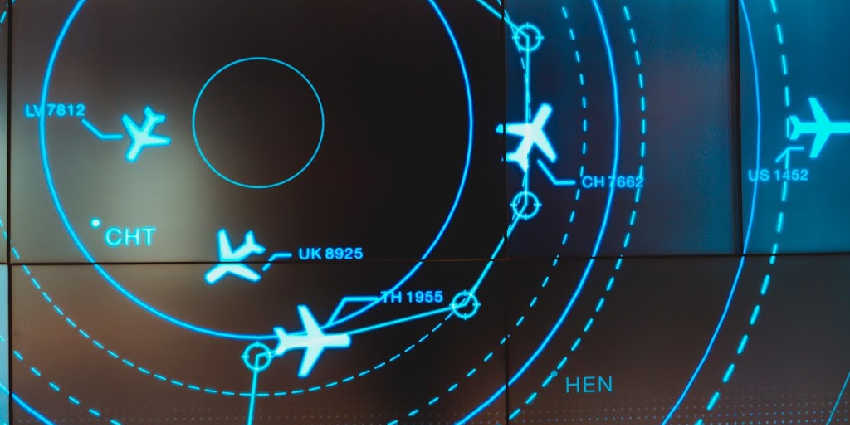
Air Traffic Controller Schools in North Carolina are actively recruiting students to replace the thousands of current controllers fromNorth Carolina whose retirement is rapidly approaching. Now is the time to start your air traffic controller training inNorth Carolina. Aviation Schools Online offers a complete list of air traffic controller schools nearNorth Carolina.
Air Traffic Controller quick facts - Nearly all air traffic controllers are employed by the Federal Aviation Administration (FAA), an agency of the Federal Government.
Replacement needs will continue to account for most job openings nearNorth Carolina, reflecting the large number ofNorth Carolina air traffic controllers who will be eligible to retire over the next decade. Competition to get into FAA training programs is expected to remain strong; however, graduates of Air Traffic Controller programs fromNorth Carolina have good job prospects. Air traffic controllers aroundNorth Carolina earn relatively high pay and have good benefits.
Research Careers in Air Traffic Control Here! Do you have what it takes to become an air traffic controller inNorth Carolina? These pages will help you find out. Air Traffic Control jobs pay well and are one of the toughest positions to earn. Start out by doing some research.
Air Traffic Control Career - Where Can I Work?
While aircraft and pilots may steal the show when it comes to aviation, air traffic controllers are an absolutely essential element of the aviation industry.  Without their highly-skilled eyes watching over and keeping pilots from running into each other, flying would harder than it already is.
If you're considering an air traffic control career, chances are you already know this, but what you may not know is there are several places air traffic controllers work. Once you complete your training, you can work as a tower, TRACON, or En-route controller.
Tower
Of all the career paths available to air traffic controllers fromNorth Carolina, this is probably the one most people picture. These controllers are generally located at the airport in the tower if there is one. They spend their days and nights overseeing operations at the airport level. They control local weather reporting and issuing clearances for taxi, takeoff, and landing. In short, tower controllers control the airport.
Air Traffic Controller Salary Info - How Much Do Air Traffic Controllers in North Carolina Make?
U.S. Air traffic controllers make a good living and have excellent benefits. According to a 2010 study by the Bureau of Labor Statistics, most Air traffic controllers average $110,000 per year in salary, with some controllers making less and some making more.
According to the Federal Aviation Administration (FAA), the starting salary for new controllers was $37,070 in 2010. Controllers' salaries increase as they complete each new training phase.
According to the FAA, controllers who have already completed on-the-job training had an average annual salary of $118,000 in 2010. Get more information about air traffic controller jobs here.
Air Traffic Controller Benefits
As an air traffic controller fromNorth Carolina, you can expect excellent benefits. Health insurance and life insurance are standard, and controllers receive 13 to 26 paid days for vacation and 13 days of paid personal time per year. Besides the great pay, controllers have excellent retirement options too.
For example, air traffic controllers can retire at age 50 with far fewer years in service than other Federal employees, or they can extend their time to age 56 for an even better retirement package. However, if you work for a contract tower or flight service station, do a little research because those entities may operate with different benefits packages. Read more about air traffic controller jobs.
Terminal Approach Control
Terminal approach control, or TRACON, handle everything near the airport. They are usually located in the same facility as the tower controllers, but they don't handle traffic on the ground. TRACON handles every aircraft within a certain range--both inbound and outbound flights.
They may see traffic for a specific field or, as is more common in larger cities, multiple fields. These controllers are primarily concerned with sequencing and spacing aircraft for safe arrivals and departures.
En-route
Last but not least, en-route controllers handle all the airspace between major metropolitan areas. They typically work in dedicated facilities that are much larger than airport towers known as "centers." The center controllers work together to handle all traffic in specific regions by relying on long-range radar and radio services.
Once an aircraft is near its destination, the center controller will hand it off to approach control, who in turn will sequence the aircraft before handing it off to the tower controllers who will issue the landing clearance.
Air traffic controllers are an essential element of the aviation formula. They allow pilots to focus on flying their aircraft by providing weather services and helping pilots maintain separation in the sky. While the job may not come with as much glory as of the pilot, air traffic controllers are the linchpin that keeps the entire system safe and efficient.
FAA - A History of Airplane Structures Facts for North Carolina
There are five major stresses to which all aircraft are subjected: Compression. Compression is the stress that resists a crushing force. The compressive strength of a material is also measured in psi. Compression is the stress that tends to shorten or squeeze aircraft parts.
Aviation Facts - Trim Controls
Included in the trim controls are the trim tabs, servo tabs, balance tabs, and spring tabs. Trim tabs are small airfoils recessed into the trailing edges of the primary control surfaces. Trim tabs can be used to correct any tendency of the aircraft to move toward an undesirable flight attitude. Their purpose is to enable the pilot to trim out any unbalanced condition which may exist during flight, without exerting any pressure on the primary controls.
Air Traffic Controller Training in North Carolina - Where Do I start?
Air traffic controllers in North Carolina play a vital role in modern aviation. From providing up to date weather information to keeping planes from getting too close, air traffic control is an exciting and necessary career. If you're considering becoming an air traffic controller inNorth Carolina, you must go through a multi-step process that begins early.
Specifically, those training for an air traffic control career must be younger than 30 unless they already have experience as an air traffic controller (such as through the military). From there, you must go to college, apply for an ATC job, and attend the FAA training academy.
For Air Traffic Controller Training in North Carolina Attend College or University
While not totally essential, the easiest way to begin a career as an air traffic controller is to go to college. There are numerous FAA-approved schools nearNorth Carolina offering training through the Air Traffic Collegiate Training Initiative (AT-CTI) that will help you meet the minimum requirements for applying for an ATC opening with the FAA.
Once you have completed your two-year or four-year degree, you should receive a letter of recommendation from your school and apply for an ATC job.
If you've already gotten a degree or you're switching careers, you must have either progressively responsible full-time work experience or college study to qualify. Specifically, you need three years of work, four years of college, or some combination of the two to satisfy the minimum requirements.
Where You'll Work as an Air Traffic Controller
As an air traffic controller inNorth Carolina, you can expect to work in one or all of these four areas:
At the airport - these controllers work at what's called the "tower" even though you may or may not actually be located in the tower. Tower controllers are responsible for local airport operations including reporting weather, issuing takeoff clearances, controlling aircraft on the ground, issuing runway assignments, handling all arriving and departing traffic, and above all, ensuring that all of these aircraft maintain a safe distance from each other at all times.
Near the airport - Terminal "approach" control, or TRACON for short, handles all inbound and outbound traffic in a specific area near an airport, or a group of airports. A good example is that most big cites have TRACON services that handle all aircraft in the general vicinity of the metropolitan area.
TRACON controllers make sure all aircraft are properly sequenced and spaced for safe arrivals and departures from all airports in the entire area.
En route - Between major metropolitan areas are vast expanses of airspace. "Center" controllers handle all traffic in these areas and rely on long-range radar and radio services to maintain contact with, and separation for, all aircraft under their control.
Flight Service Stations (FSS) - Flight service stations are regional offices that supply vital flight planning, weather, en route, communication, and navigation information via radio to pilots already airborne, and via telephone and computer to pilots planning flights on the ground.
Sometimes flight service specialists (people who work in an FSS) will help other ATC personnel by relaying radio messages to pilots who cannot talk to other ATC controllers because of current location and altitude.
Air Traffic Controller Requirements
Air traffic controllers fromNorth Carolina must be good multitaskers, with the ability to make quick decisions efficiently. Most of the time, controllers are "working" several aircraft simultaneously, and are responsible for giving the pilots correct information via radio, making sure that the aircraft are not too close to each other (separation), and all the while, ensuring the efficient flow of traffic into and out of the controller's sector. Learn more about air traffic controller jobs.
Apply for an Air Traffic Controller Job in North Carolina
Once you've met education or work experience requirements, you must pass an exam. The computer-based pre-employment exam requires about 8 hours to complete and is only offered by the FAA. Typically, there are more applicants than test slots, but AT-CTI applicants in good academic standing are guaranteed an opportunity to take the exam.
Once you've passed the exam, you are technically eligible for an air traffic controller job nearNorth Carolina, unfortunately, you must then undergo an extensive background check and drug testing. It's safe to say, the FAA doesn't let just anyone work ATC.
Attend FAA Air Traffic Controller Training Near North Carolina
Finally, once you're hired, the FAA will send you to Air Traffic Controller training for 12 weeks of intensive training on the ATC system, regulations, and equipment. Thankfully, if you're a graduate of an AT-CTI program, you may be able to bypass the first five weeks of training.
Once you've graduated from the academy, you will receive an assignment to a real air traffic control facility for an additional 2 to 4 years of on-the-job-training. If you make it through all that training, you're all set for one of the most fulfilling careers available today.
As you can tell, air traffic controller careers are not for the faint of heart. The training is extensive, but it has to be because ATC is a high-stakes career. If you think you've got what it takes, now is the time to start training for your air traffic controller career.
Air Traffic Controller Career Center in North Carolina
An air traffic controller's primary responsibility is to "maintain separation" between all types of aircraft. Other responsibilities include aiding the swift and efficient movement of aircraft to and from airports and across great distances en route. Finally, air traffic controllers assist pilots in emergency situations.
Air traffic controllers typically work for the U.S. Government and are employed by the Federal Aviation Administration (FAA), although some controllers work in what are called "contract" towers where air traffic control (ATC) services are awarded to private companies. If you would like to begin training to become an air traffic controller, start now.
You must be 30 years old or less to apply for a job with ATC. Learn more about air traffic controller training.
Air Traffic Controller Salary Info - How Much Do Air Traffic Controllers in North Carolina Make?
U.S. Air traffic controllers fromNorth Carolina make a good living and have excellent benefits. According to a 2010 study by the Bureau of Labor Statistics, most Air traffic controllers average $110,000 per year in salary, with some controllers making less and some making more.
According to the Federal Aviation Administration (FAA), the starting salary for new controllers was $37,070 in 2010. Controllers' salaries increase as they complete each new training phase. According to the FAA, controllers who have already completed on-the-job training had an average annual salary of $118,000 in 2010. Get more information about air traffic controller jobs here.
Aviation Factoids and Figures and Fun for Asheville
Air Force Helicopter Pilot: Salaries are more for those posted in difficult terrains and working outside the country. The average salary for senior level pilots and commanders with an experience of more than ten years can be around USD 100,000 per years.
Aviation Factoids and Figures and Fun for Asheville
Helicopter Training Facts for Asheville: Commercial uses for helicopters include flying passengers on sightseeing trips, assisting in search-and-rescue operations and patrolling oil pipelines, to name just a few examples. If you want to become a commercial helicopter pilot, first you typically must earn your private pilot's license, then fly additional hours to become a commercial helicopter pilot.
Aviation History for Burlington and Fun Facts for Burlington
Helicopter Pilot Jobs for Burlington Law Enforcement, Fire Fighting, Drug Abatement, Charters and Tours, Search and Rescue, Air Taxi Service, Air Ambulance/EMS, Corporate VIP Transport, Offshore, Oil Rig Support, Aerial Photography/ Surveillance, Electronic News Gathering, External Load/ Heavy Lifting, Agriculture Support, Logging Operations, Certified Flight Instructor.
Fun Aviation Facts and Figures for Burlington
Helicopter Pilot Jobs for Burlington Helicopter pilots must successfully complete a flight training program and log a certain number of hours flying before beginning any job.
Aviation Factoids and Figures and Fun for Cary
Air Force Helicopter Pilot: Many talented youngsters these days do not go for the air force jobs as they feel they can earn more in the private sector multi-national companies. However, one thing we all should remember is that comparing the salaries of government sector with the private should be avoided as both sectors have their own positives and negatives.
Helicopter Training Facts for Cary: Before you commit to a full program of lessons, it can be a good idea to take a test lesson in a helicopter to make sure that you like flying in the rotor-powered vehicles.
Aviation Training History and Facts for Chapel Hill
Helicopter Flight Training Tips: According to most resources, helicopter pilots typically start out earning approximately $35,000.00 - $50,000.00 per year in beginning of their career. After a couple of years as a professional and experienced pilot the pay typically exceeds $50,000.00, and in some fields pay can exceed $100,000.00.
Fun Helicopter and Airplane Facts for Chapel Hill
Helicopter Training Facts for Chapel Hill: Other qualities that will help you become a commercial helicopter pilot include the ability to stay calm under pressure, the ability to solve problems quickly and a tendency to put safety first. Some employers might have weight restrictions for commercial helicopter pilots, so being in good physical shape also could help.
Air Traffic Service Routes
An Air Traffic Service route is based on a centerline that extends from one navigation aid, fix or intersection, to another navigation aid, fix or intersection (or several) specified for that route.
Aviation Factoids and Figures and Fun for Charlotte
Heliports: The typical heliport contains several helipads. Helipads are smooth and flat areas devoted to helicopter landing and take offs. The heliport consists of a control tower in most instances, a radio station as well as identification and emergency lighting.
Aviation Training History and Facts for Concord
Helicopter Flight Training Tips: Regardless of what field you choose to work in; a helicopter pilot can expect to have each day filled with thrilling new adventures that are truly unique to the trade.
Fun Helicopter and Airplane Facts for Concord
Helicopter Training Facts for Concord: With enough hours and experience, you can look for jobs with charter companies, tourism and sightseeing organizations and other places that use helicopters in their operations. Some employers might also expect their pilots to have some level of college education.
Aviation Factoids and Figures and Fun for Durham
Air Force Helicopter Pilot: You should also be aware of the age and citizenship requirements for getting placed in the air force. Generally, the minimum age of entry into the air force is eighteen years while thirty is the maximum age limit. Only United States citizens can become air force officers as per the laws.
Aviation Factoids and Figures and Fun for Durham
Heliports: Many heliport locations also include rental car agents as well as private limousine stables to service patrons. Several of the most recent heliport designs also include an upscale restaurant to host couples wishing to utilize a helicopter tour of the particular city in which it is located.
Fun Facts About Flight Dispatchers
Flight Planning – An aircraft dispatcher is the one who works up the flight plan for every flight before they ever leave the ground. Weather plays an important role in the flight plan, as does a variety of non-routine issues such as national crises, volcanic ash, and more.
Aviation Factoids and Figures and Fun for Fayetteville
Heliports: Rural heliports often house helicopters used to spray agricultural fields where a standard crop-dusting airplane may not be able to operate. County sheriff's police as well as search and rescue crews may also base helicopters out of one of these locations.
Aviation History for Fort Bragg and Fun Facts for Fort Bragg
In fact, you have a better chance at surviving in a helicopter when the engine fails than you do in an airplane. Helicopters are designed specifically to allow pilots to have a reasonable chance of landing them safely in the case where the engine stops working during flight, often with no damage at all.
Fun Aviation Facts and Figures for Fort Bragg
Helicopter Pilot Jobs for Fort Bragg Other typical job duties involve getting aerial footage for sporting events or traffic jams.
Fun Facts About Flight Dispatchers
Aircraft Dispatcher Practical Test Prerequisites
To be eligible to take the Aircraft Dispatcher Practical Test, an applicant must meet the following criteria, as required by 14 CFR part 65: Be at least 21 years of age; Be able to read, speak, write, and understand the English Language; Present documentary evidence of passing the required knowledge test prescribed by 14 CFR part 65.55 within the preceding 24 months; and Comply with the experience or training requirements of 14CFR part 65.57.
Fun Helicopter and Airplane Facts for Gastonia
Helicopter Training Facts for Gastonia: After you have obtained a private pilot's license, you will need at least 150 hours of flying time before you can test for a commercial helicopter pilot's license. In the United States, it also is necessary to get a second-class medical certificate through a Federal Aeronautics Administration (FAA) medical examiner.
Aviation History for Goldsboro and Fun Facts for Goldsboro
If you include military helicopters it is estimated that there are more than 45,000 operating worldwide.
Fun Aviation Facts and Figures for Goldsboro
A relatively common helicopter pilot job is working for emergency medical services. This typically involves flying solo and in different weather conditions and may require flying over terrain that can be challenging.
Aviation Factoids and Figures and Fun for Greensboro
Air Force Helicopter Pilot: The university from where you pass out needs to be recognized and a reputed one. Along with graduation, training at the officer training schools is also a must.
Aviation Factoids and Figures and Fun for Greensboro
Heliports: The heliport is usually located in an area near a conventional airport, but it is typically in a lesser-used area. The relation to the airport is critical for the heliport in order to properly receive and transfer persons and supplies from one type of aircraft to another, such as from an airplane onto a helicopter.
Helicopter Flight Training Tips:
If you are a Medical Evacuation helicopter pilot you will need to spend much of your time in hospitals and landing on roof top pads. Medical Evacuation pilots also get to do something many helicopter pilots don't to do regularly - night flying. Because emergency don't just happen during daylight hours, Medical Evac Pilots must also pilot during twiligt and nighttime hours.
Fun Helicopter and Airplane Facts for Greenville
Helicopter Training Facts for Greenville: Looking for work in the field can be difficult at first because for the higher paying jobs, you'll need even more flight time. To earn additional flight hours as a novice commercial helicopter pilot, you might consider getting a pilot teaching certificate.
Aviation History for Hickory and Fun Facts for Hickory
Helicopters can be flown across oceans if additional fuel is made available or in-flight refueling is employed.
Fun Aviation Facts and Figures for Hickory
Helicopter Pilot Jobs for Hickory Helicopter pilots in emergency services fields are often called upon to airlift victims of accidents, fires, or natural disasters such as flooding or the aftermath of a severe storm. Hospitals may hire pilots and pay for equipment, or the services may be provided to a hospital by an outside company.
Aviation Training History and Facts for High Point
Helicopter Flight Training Tips: Before you make a decision about helicopter training or choose a helicopter school you should take a few minutes and learn a few very important facts. This information may cause you to change your mind about receiving helicopter lessons.
Fun Helicopter and Airplane Facts for High Point
Helicopter Training Facts for High Point: When selecting a school, ask about the credentials of instructors, what kinds of helicopters they fly, how many helicopters the school has and how long the school has been in operation.
Aviation History for Huntersville and Fun Facts for Huntersville
Unlike the more common fixed wing aircraft such as a sport biplane or an airliner, the helicopter is capable of direct vertical take-off and landing; it can also hover in a fixed position.
Interesting Aviation Facts for Huntersville for Huntersville
Commercial Helicopter License Tips: Pilot in Command time is accumulated by flying solo and acting as the pilot of your helicopter AFTER you attain your Private License. Even if you are receiving flight instruction at the time; the hours toward PIC count as long as you are registered as the acting pilot of your aircraft.
Life Quotes: “Forget yesterday - it has already forgotten you. Don't sweat tomorrow - you haven't even met. Instead, open your eyes and your heart to a truly precious gift - today.” ― Steve Maraboli
Aviation Factoids and Figures and Fun for Jacksonville
Air Force Helicopter Pilot: The average salary for senior level pilots and commanders with an experience of more than ten years can be around USD 100,000 per years. Average salary of a pilot can vary as per their location of job and posting. Apart from the salary, air force pilots receive housing allowance, insurance, cost of living allowance, family separation allowance and the overseas housing allowance.
Helicopter Training - Some Random Facts
If you have made the decision to become a commercial helicopter pilot, you must first find a flight school where you can take lessons in piloting a helicopter. Flight schools can be found through local airports, online and in the telephone book.
There are several types of training for all aircraft certificate holders: initial, transition, upgrade, differences, recurrent, in flight and requalification training.
Aviation History for Kannapolis and Fun Facts for Kannapolis
Myth: Helicopters will drop like a rock when the engine shuts down. In fact, you have a better chance at surviving in a helicopter when the engine fails than you do in an airplane.
Fun Aviation Facts and Figures for Kannapolis
Helicopter Pilot Jobs for Kannapolis Similar to hospital-based jobs, helicopter pilots who fly for news agencies often travel to the scene of severe accidents or natural disasters.
Aviation History for Monroe and Fun Facts for Monroe
Once the engine drops below a certain number of revolutions per minute, relative to the rotor RPM rate, a special clutch mechanism, called a freewheeling unit, disengages the engine from the main rotor automatically. This allows the main rotor to spin without resistance from the engine.
Aviation History for Monroe and Fun Facts for Monroe
Helicopter Jobs: Law enforcement, military, and government agencies also offer helicopter pilot jobs. Government jobs are found in areas such as transportation, wildlife monitoring, immigration, and national security.
Aviation Training History and Facts for Old Fort
Helicopter Flight Training Tips: Helicopter Pilots often play a pivotal role in many professions. Here are just a few of the occupational areas where licensed helicopter pilots are a critical part of the team. Certainly you are sure to find one that resonates with what you want to achieve in life.
Helicopter Pilot Jobs for Old Fort Helicopter pilot jobs range from sightseeing and aerial photography to working with emergency rescue groups or news-gathering agencies. Other career opportunities include instruction, forestry, surveying and mapping, heavy-lifting, and flying for the military.
Aviation Factoids and Figures and Fun for Raleigh
Air Force Helicopter Pilot: A bachelor's degree is required at almost all places for recruitment. Among the graduates, those with degrees in technical fields such as engineering, applied sciences, computer science, Mathematics and Physics are given first preference.
Aviation Factoids and Figures and Fun for Raleigh
Heliports: The heliport also houses fueling stations and repair facilities for the helicopters that use it.
Fun Facts About Flight Dispatchers
To apply for an FAA Aircraft Dispatcher Certification, you must be at least 23 years old and be able to read, speak and write English. Dispatcher candidates must accrue 200 hours of training on specific topics. Then, students must pass a written knowledge test, a practical flight planning test, and an oral exam.
Fun Helicopter and Airplane Facts for Rocky Mount
Helicopter Training Facts for Rocky Mount: Classes in aeronautics, physics and related areas might be helpful if you want to become a commercial helicopter pilot.
Aviation History for Salisbury and Fun Facts for Salisbury
A landing via autorotation is also sometimes necessary if the rear rotor blades stop functioning properly, no longer countering for the torque of the main rotor blades, so the helicopter will spin if the engine isnt turned off.
Fun Aviation Facts and Figures for Salisbury
Helicopter Pilot Jobs for Salisbury News helicopter pilots may simply provide a means to get aerial footage, or they may transport reporters to the scene as well.
Aviation Training History and Facts for Wilmington
Helicopter Flight Training Tips: A typical day of a working as a helicopter pilot is amazing! You get to see the world from a position most people only dream of. Everything looks completely different when flying a helicopter a few thousand feet above ground.
Fun Helicopter and Airplane Facts for Wilmington
Helicopter Training Facts for Wilmington: After you begin pilot training, it isn't all about being in the air. You'll have to take courses on safety and other topics before you leave the ground. A minimum of 40 hours of helicopter flight time and a student helicopter pilot certificate.
Aviation History for Wilson and Fun Facts for Wilson
Commercial Helicopter License Tips: To obtain your Commercial Rotorcraft License, the FAA requires the pilot to have a minimum of 150 hours of flight time, and 100 of those hours must be PIC (Pilot in Command) time.
Positive Quotes: “Plant seeds of happiness, hope, success, and love; it will all come back to you in abundance. This is the law of nature.” ― Steve Maraboli
Fun Aviation Facts and Figures for Wilson
Helicopter Pilot Jobs for Wilson Specialized training, based on the kind of aircraft the pilot flies, is another requirement. Helicopter pilots are also required to have and maintain excellent physical and mental health.
Fun Facts About Flight Dispatchers
While this is true, a flight crew cannot fly without the help of a team of people on the ground. An aircraft dispatcher makes airline operations work and ensures that both pilots and their passengers are able to travel safely to their destination.
Aviation Factoids and Figures and Fun for Winston-Salem
Heliports: Many heliports also play host to a number of flight schools and repair colleges. Those wishing to learn to fly a helicopter or to repair one can take courses at these schools.