Aviation & Airport Management Degrees in Michigan
Cities in Michigan with Aviation Schools:
- Ann Arbor
- Auburn Hills
- Baroda
- Battle Creek
- Bay City
- Belding
- Belleville
- Belmont
- Benton Harbor
- Benzonia
- Berkley
- Berrien Center
- Berrien Springs
- Canton
- Clinton
- Dearborn
- Detroit
- East Grand Rapids
- East Jordan
- East Lansing
- Eastpointe
- Eaton Rapids
- Edwardsburg
- Elk Rapids
- Elmira
- Empire
- Erie
- Escanaba
- Evart
- Farmington
- Farmington Hills
- Flint
- Grand Blanc
- Grand Haven
- Grand Ledge
- Grand Rapids
- Grandville
- Grass Lake
- Grawn
- Grayling
- Greenville
- Kalamazoo
- Keego Harbor
- Kentwood
- Kimball
- Kingsley
- Lake Ann
- Lake City
- Lansing
- Lincoln Park
- Livonia
- Monroe
- Montague
- Mount Clemens
- Mount Pleasant
- Pontiac
- Rochester Hills
- Saginaw
- Shelby
- Southfield
- St Clair Shores
- Sterling Heights
- Taylor
- Troy
- Warren
- Waterford
- West Bloomfield
- Westland
- Wyoming

Aviation Degree Programs in Michigan
Aviation degree programs in Michigan are gaining popularity in the industry. Today, you can earn a Bachelor's or Associate's degree in-flight technology, aviation management, aviation technology, air traffic control, or avionics from a variety of colleges and universities near Michigan. If you're planning on going to college and want to end up with a career in aviation, these college and university programs in Michigan are a great way to meet your overall goals.
Pilot Training Colleges and Universities in Michigan
Learning to fly and earning a pilot degree go hand-in-hand at pilot training colleges and pilot universities. Here are just a few of the advantages of earning a degree while you're becoming a pilot: Most, if not all, colleges, universities and flight academies in Michigan that offer aviation degrees are accredited institutions that translate into a school you can trust. We hope you find our listed degree programs beneficial in achieving your aviation goals in Michigan!
Accreditation means these schools must meet or exceed rigorous regulations and scrutiny by both their accrediting agency and the governing body where the school is located.  In addition, accredited schools' curricula must be approved and up-to-date in order to maintain accredited status. Most of these schools may be eligible to offer financial aid grants and loans to those students who qualify.
Finally, a college degree is all but a requirement in today's job market for a professional pilot seeking employment in Michigan. In order to be marketable, most newbie pilots will need at least an Associate's degree or preferably a Bachelor's degree.
Aviation Maintenance Degree Programs around Michigan
Aviation maintenance training and earning a college degree go hand-in-hand at these schools. Here are just a few of the advantages of earning a degree while you're learning the skills you need to become an A&P aircraft mechanic:
Most, if not all, colleges, universities and academies that offer aviation maintenance degrees are accredited institutions which means you can trust these schools. Accreditation means these schools must meet or exceed rigorous regulations and scrutiny by both their accrediting agency and the governing body where the school is located.
In addition, accredited schools' curricula must be approved and up-to-date in order to maintain accredited status. Most of these schools also are eligible to offer financial aid grants and loans to those who qualify. Finally, a college degree will help differentiate you in today's job market.
Helicopter Training Degrees in Michigan
Helicopter pilot training and earning a college degree go hand-in-hand at these schools. Here are just a few of the advantages of earning a degree while you're becoming a pilot: Most, if not all, colleges, universities and flight academies that offer helicopter degrees are accredited institutions which means they are schools you can trust.
Accreditation means these institutions must meet or exceed rigorous regulations and scrutiny by both their accrediting agency and the governing body where the school is located. In addition, accredited schools' curricula must be approved and up-to-date in order to maintain accredited status.
Most of these schools also are eligible to offer financial aid grants and loans to those who qualify. Finally, a college degree is all but a requirement in today's job market for a professional helicopter pilot seeking employment in Michigan. In order to be marketable, most newbie pilots will need at least an Associate's degree or preferably a Bachelor's degree.
Drone Schools and Universities Offering UAV Degrees in Michigan
Time Magazine's Lev Grossman says 76 countries are either developing drones or shopping for them and fully one-third of the US Air Force aircraft fleet is now unmanned. One thing's for sure... the drone market is just starting to heat up. Universities are getting into the game, offering degree programs in unmanned aircraft systems for pilots, sensor operators, and drone mechanics.
Our list of drone schools below is a great place to start if you're considering getting into the drone industry. 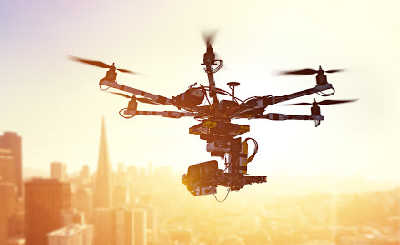 Most of these drone university programs near Michigan prepare you for a career in the UAV industry either as a pilot or sensor operator.
You've probably got lots of questions about how the training works, how much it costs, what financing is available, and more, so why not contact the experts to get answers? Use the form on each school's page to request more info. Good luck!
Aviation Management Training in Michigan
With global demand for air transportation expected to rise over the next 20 years, the need for qualified aviation and airport managers may be great. Aviation management training programs in Michigan are gaining popularity at colleges and universities globally. Some schools also offer airport management training.
If you're considering a career in aviation management, you likely have a lot of questions about how much the training costs, how long it takes to complete, what the job market looks like after graduation, and more. Why not contact the experts to get your questions answered?
The schools in Michigan can help you make a decision about what type of training program is best for you. Contact as many of the schools below as you need.
AT-CTI Air Traffic Control Degree in Michigan
Air traffic controller training and earning a college degree go hand-in-hand at these FAA-approved schools. The FAA has a partnership program with select colleges and universities called the Air Traffic Collegiate Training Initiative (AT-CTI).
Some approved schools in Michigan offer both Associate and Bachelor degrees in aviation which prepare graduates for entry-level job interviews for FAA air traffic control specialist positions. If you're thinking about becoming an air traffic controller, it's important to realize this is a competitive, high-paying, and high-stress career, and you'll need an impressive resume to get hired.
Most often, that resume will need to include a college degree. Why not "stack the deck" in your favor by earning a college degree that could apply directly to your career? There's also another advantage to earning a degree from AT-CTI approved colleges... doing so allows you to bypass the first five weeks of training at the FAA's Oklahoma City ATC training program (the FAA calls this five-week course the Air Traffic Basics Course).
You've probably got more questions so why not ask the experts? Contact the schools below for the information you need to make a decision about attending an FAA AT-CTI program.
FAA - A History of Airplane Structures Facts for Michigan
In the 1960s, ever larger aircraft were developed to carry passengers. As engine technology improved, the jumbo jet was engineered and built. Still primarily aluminum with a semimonocoque fuselage, the sheer size of the airliners of the day initiated a search for lighter and stronger materials from which to build them. The use of honeycomb constructed panels in Boeing’s airline series saved weight while not compromising strength. Initially, aluminum core with aluminum or fiberglass skin sandwich panels were used on wing panels, flight control surfaces, cabin floor boards, and other applications.
Velocity and Acceleration
The terms “speed” and “velocity” are often used interchangeably, but they do not have the same meaning. Speed is the rate of motion in relation to time, and velocity is the rate of motion in a particular direction in relation to time.
Aviation Management Degree in Michigan
Launch a new Degree in Aviation Management or Airport Management with these schools. Aviation Management is a rapidly expanding field and some of these schools offer both online programs as well as traditional classroom programs.
Aviation Schools Online wants to help you find all the answers to your questions about aviation Degrees. If you're thinking about getting into the aviation industry, either as a pilot or in one of the exciting ground-based Degrees, we offer you a starting point to learn about what to expect from each type of Degree.
Degree Areas include Aviation Management and Aviation Technology and Airport Management. Check with each school to find out if they offer an Associate's Degree, Bachelor's Degree, Master's Degree, or all three.
Can one earn a bachelor's degree in aviation management or airport management in Michigan? What does one do with a bachelor's degree in aviation or airport management? Simple answer, earning a degree in aviation or airport management in Michigan prepares you for roles such as airline or helicopter pilot, air traffic controller, avionics technician, and/or A&P aircraft mechanic.
Essentially, aviation management degree students from Michigan will complete courses on topics like flight safety, air transportation, and aviation management. Furthermore, aviation management students from Michigan will concentration areas that include, but are not limited to, aviation safety, flight operations, management, aviation maintenance management, aviation operations management, and security.
The aviation management degree from Michigan prepares student-graduates for entry-level aviation jobs.
Online Aviation Degrees in Michigan
Online Aviation degree programs in Michigan are gaining popularity in the industry. Today, you can earn a Bachelor's or Associate's degree in aviation management, aviation technology, or aviation administration from a variety of online colleges and universities located in Michigan. Most of these colleges offer these programs in a traditional classroom setting as well.
All of these online aviation degrees have the same basic benefits in common... they allow you to complete your aviation education in Michigan while fulfilling family or personal responsibilities along with maintaining your current job or business obligations. Online Professional Pilot degrees are being offered today through dozens of reputable aviation programs.
Here's how they work... you take the academic portion of your education online while learning to fly at your local airport in Michigan. Online Flight Dispatcher Schools are also getting more common and we feature a couple of great schools offering online aircraft dispatcher programs.
We hope you find these new programs beneficial in achieving your aviation goals! Please contact each school using the "learn more" button to find out more.
Aviation Degree Programs in Michigan
Aviation degree programs in Michigan are gaining popularity in the aviation industry. Today, you can earn a Bachelor's or Associate's degree in-flight technology, aviation management, aviation technology, air traffic control, or avionics from a variety of colleges and universities in Michigan.
If you're planning on going to college and want to end up with a career in aviation, these college and university programs are a great way to meet your overall goals. We hope you find these degree programs beneficial in achieving your aviation goals!
Airline and Helicopter Pilot Degrees in Michigan
For many aviators, the airline pilot job is the ultimate goal. To become an airline pilot in Michigan, you'll need to earn multiple licenses and ratings at your flight school. Typically, students interested in airline Degrees will spend at least a year in flight training and several years after that building hours, especially in multi-engine aircraft.
Earn an Aviation Degree near Michigan and become a professional helicopter pilot. FAA Part 141 Private Pilot Certification Requirements - Aviation Degree Professional Pilot
For a Helicopter Rating:
- Dual: 20 hours of helicopter flight training with an instructor on the Private Pilot areas of operation that includes:
- 3 hours of cross-country flight training in a helicopter
- 3 hours of night flight training in a helicopter, that includes at least
- 1 cross-country flight of over 50 nautical miles total distance; and
- 10 takeoffs and 10 landings with each involving a flight in the traffic pattern.
- 3 hours of flight training in a helicopter within the preceding 60 days prior to the practical test.
- Solo: 10 hours of solo flying in a helicopter on the Private Pilot areas of operation, that includes:
- 3 hours of solo cross-country flying;
- 1 solo cross-country flight of at least 75 nautical miles total distance with 3 points and one segment of at least 25 nautical miles between takeoff and landing; and
- 3 takeoffs and landings at a controlled airport
The private pilot helicopter test consists of a written test (taken on a computer), oral test (one on one with an FAA Designated Examiner) and finally your flight test (also with an FAA Designated Examiner). Once you pass all three tests in that order, you will be a newly licensed helicopter pilot. If you want to get paid for flying a helicopter you will have to go onto to the next step.
Next Step in Becoming a Pilot near Michigan
- Build Your Flight Hours
- Get your first job! The best way to build flight hours is to become a Certified Instructor.
For more information about "how to become a helicopter pilot in Michigan contact us today! Or, review the search results below.
Affordable Aviation Management Degree in Michigan
The top aviation management degree programs in Michigan are designed to create the best pilots through powerful advanced flight education programs. These aviation degree programs in Michigan focus on safety, proficiency, and professionalism. Their missions is to train up student pilots to be safe, competent, and employable pilots capable of becoming career pilots.
Many aviation management degree programs near Michigan focus on low-cost training. Low-cost training is great, but it does not prepare one for a career in aviation.
Please note that some of the best aviation management degree programs (in Michigan) are actually college degree programs offered through local community colleges and local universities. These college aviation programs provide various degree programs in Professional Pilot. Through college program scholarships and Federal loans are available to assist prospective pilots in the overall cost of airplane flight school.
Helicopter Factoid for Ann Arbors for Ann Arbor
Military Helicopters: As the helicopter technology matured, new aircraft were added to support naval missions. These helicopters were used to deliver weapons, attack the enemy with air-launched torpedoes, etc.
Helicopter Fun Facts for Ann Arbor
Military Helicopters: As the name suggests, attack helicopters are those that are used as attack aircraft. These choppers are also known as helicopter gunships as they are covered in heavy armament. These weapons include machine-guns, rockets, guided missiles as well as autocannons.
Fun Flight Dispatcher Facts
A flight dispatcher, also known as an aircraft dispatcher, flight follower or flight operations officer or anyone trained and positioned to assist in planning flight paths, taking into account aircraft performance and loading, enroute winds, thunderstorm and turbulence forecasts, airspace restrictions, and airport conditions.
Helicopter Fun Facts for Canton
Military Helicopters: As the name suggests, attack helicopters are those that are used as attack aircraft. These choppers are also known as helicopter gunships as they are covered in heavy armament. These weapons include machine-guns, rockets, guided missiles as well as autocannons.
Aviation History for Clinton and Fun Facts for Clinton
Unusual But Interesting Helicopter Facts in Clinton The S-333 helicopter has set the standard for light turbine powered helicopters. It has the power, speed and hover performance to meet a broad spectrum of operational requirements in missions ranging from airborne law enforcement, flight training, power and pipeline patrol to personal transportation. Best of all, the S-333 helicopter provides lower direct operating cost than most turbine powered helicopters.
Helicopter Fun Facts for Clinton
Military Helicopters: weapons include machine-guns, rockets, guided missiles as well as autocannons. They're used to destroy enemy armor concentrations due to their anti-tank target capability as well as provide close air support to troops on the ground.
Aviation History for Dearborn and Fun Facts for Dearborn
Unusual But Interesting Helicopter Facts in Dearborn The new S-434 helicopter builds on the best qualities of the 333 model, including a well laid out cockpit, outstanding flight properties and low cost of ownership. To this, we have added a four-bladed rotor system, upgraded transmission and increased fuel capacity. The result of these improvements are increased useful load, hover performance, cruise speed and lower vibration.
Helicopter Fun Facts for Dearborn
Military Helicopters: weapons include machine-guns, rockets, guided missiles as well as autocannons. They're used to destroy enemy armor concentrations due to their anti-tank target capability as well as provide close air support to troops on the ground.
Aviation History for Detroit and Fun Facts for Detroit
Sikorsky Helicopters - Light Piston: The piston powered helicopter series draws its legacy from the 269 series. The 269 series helicopter was originally designed with four major objectives in mind: performance, versatility, safety and cost effectiveness.
Helicopter Fun Facts for Detroit
Military Helicopters: AgustaWestland AW129, TAI/AgustaWestland T-129, Bell AH-1 Cobra/ AH-1, SuperCobra/AH-1Z Viper, Boeing AH-64 Apache/AgustaWestland Apache, CAIC WZ-10, Denel AH-2 Rooivalk, Eurocopter Tiger, HAL Light Combat Helicopter, Kamov Ka-50/Ka-52, Mil Mi-24/Mi-28
Aviation Training Facts for Farmington Hills
Sikorsky Helicopters - Light Piston: Since its inception, the product has been continuously improved with new technology and design innovation. Now, more than 50 years and more than 3,700 helicopters later, the S-300CTM and S-300CBiTM helicopters are regarded as among the world's finest piston-powered helicopters.
Helicopter Fun Facts for Farmington Hills
Military Helicopters: Transport helicopters are those that help transporting troops or towed artillery, light vehicles, etc. These choppers are also referred to as cargo or utility helicopters. They are used to transport personnel or cargo in places where airplane landings and takeoffs are not available.
Aviation Training Facts for Flint
Sikorsky Helicopters - S - 300 C: the S-300C helicopter is supported by a worldwide network of service centers. This helicopter has proven its value in many diverse applications around the world, including personal transportation, military and civil training, aerial photography, law enforcement patrol, pipeline and traffic patrol, aerial application, aerial surveys and lift operations.
Helicopter Fun Facts for Flint
Military Helicopters: Transport helicopters are those that help transporting troops or towed artillery, light vehicles, etc. These choppers are also referred to as cargo or utility helicopters. They are used to transport personnel or cargo in places where airplane landings and takeoffs are not available.
Fun Facts About Flight Dispatchers
Is there are reason Airline Dispatcher Salaries are so low? No, because they are not low. As a matter of fact. According to Glassdoor and Indeed, the average aircraft dispatcher salary is $32,000. However, the Airline Dispatcher Federation suggests the average aircraft dispatcher salary is closer to $40,000.
Helicopter Fun Facts for Grand Rapids
Military Helicopters: Military helicopters made it very easy to maneuver and hold an aircraft in one location. Thus, helicopters were then modeled to help take up reconnaissance missions. These aircraft are now modernized and fitted with infrared cameras as well as low light level television for better observation.
Aviation Facts and Figures for Kalamazoo
Sikorsky Helicopters - S-76: The legendary S-76 helicopter operates successfully in more than 40+ countries on five continents, fulfilling its many missions in varied environmental conditions found worldwide.
Helicopter Fun Facts for Kalamazoo
Military Helicopters: Observation helicopters can also be fitted with guns, anti-tank guided missiles, rocket pads as well as air-to-air missiles. Some of the observation helicopters in use are: Arospatiale Gazelle, Bell OH-58 Kiowa, Kawasaki OH-1, Boeing-Sikorsky RAH-66 Comanche (reconnaissance as well as attack helicopter)
Aviation Facts and Figures for Lansing
Sikorsky Helicopters - S-76C++: The proven S-76 helicopter continues to improve, responding to today's most critical market requirements with increased performance, quiet comfort and spacious cabin interiors, enhanced safety, dispatch reliability, operating cost efficiencies and superior mission versatility.
Helicopter Fun Facts for Lansing
Military Helicopters: As the helicopter technology matured, new aircraft were added to support naval missions. These helicopters were used to deliver weapons, attack the enemy with air-launched torpedoes, etc.
Aviation Facts and Figures for Livonia
Sikorsky Helicopters - S-76D: The S-76D helicopter is truly the next step in helicopter technology, setting a new standard of excellence that S-76 helicopter operators have come to expect. Power and performance are enhanced by all composite main rotor blades and optimized Pratt & Whitney Canada PW210S engines with dual FADEC controls.
Helicopter Fun Facts for Livonia
Military Helicopters: As the helicopter technology matured, new aircraft were added to support naval missions. These helicopters were used to deliver weapons, attack the enemy with air-launched torpedoes, etc.
Aviation Facts and Figures for Pontiac
Sikorsky Helicopter S-92: The S-92 helicopter is the most advanced aircraft in Sikorsky's civil product line, certified to the most stringent safety requirements of the Federal Aviation Administration (FAA) and the European Aviation Safety Agency (EASA).
Aviation History for Pontiac and Fun Facts for Pontiac
Military Helicopters: Development of turboshaft engines helped smaller helicopters to operate from smaller vessels. Soon, choppers were equipped with magnetic anomaly detection, radar and sonar equipment.
Aviation Facts and Figures for Rochester Hills
Air Force Helicopter Pilot: Salaries are more for those posted in difficult terrains and working outside the country. The average salary for senior level pilots and commanders with an experience of more than ten years can be around USD 100,000 per years.
Aviation History for Rochester Hills and Fun Facts for Rochester Hills
Military Helicopters: Today, maritime helicopters have better electronics, engines and weapons that help them play multiple roles. Some of the types of maritime helicopters are: Merlin HM1, SH-60B Seahawk 2, Kamov Ka-27, Westland Wasp
Aviation Facts and Figures for Saginaw
The end of World War II left the helicopter training program in a state of confusion. Training Command suspended all training in early October 1945 and by the end of the month little remained of the school. The Army Air forces offered no incentives for the men to stay with the program, and more than 75 percent of the personnel left the service. By the middle of October, there was just one qualified helicopter pilot remaining to act as an instructor, and he was a recent graduate of the school.
Aviation History for Saginaw and Fun Facts for Saginaw
Remote Control Helicopters: There are varieties of RC helicopters available in the market which are manufactured by several brands. Each has different features and flying capabilities
Aviation Facts and Figures for Shelby
Post World War II: The size of the program increased during 1945 to approximately three times what it was in 1944. With the end of the war in Europe, the War Department closed hundreds of bases. To align Chanute Field to a purely technical training mission, all helicopter pilot training moved to Sheppard Field, a Flying Training Command base near Wichita Falls, Texas in June 1945. Eighteen helicopters were transferred.
Aviation History for Shelby and Fun Facts for Shelby
Air Force Helicopter Pilot: Flying fighter planes require special training and a very high confidence level. Among many aspirants, very few are able to enter the air force due to the challenging entrance tests.
Aviation History for Southfield and Fun Facts for Southfield
Post World War Pilot Training: In April 1952, Air Force pilots received 35 hours in the H-5 or H-23 and 35 hours in the H-19. Starting in 1953, flight training was 35 hours in the H-5 or H-13, then 35 hours in the H-19 or H-21. Army pilots received 45 hours in the H-13.
Interesting Aviation Facts for Southfield for Southfield
Air Force Helicopter Pilot: A bachelor's degree is required at almost all places for recruitment. Among the graduates, those with degrees in technical fields such as engineering, applied sciences, computer science, Mathematics and Physics are given first preference.
Aviation History for St Clair Shores and Fun Facts for St Clair Shores
Post World War Pilot Training: At Randolph the course was divided into three stages: H-13, H-19 and H-21 with 30 hours in each aircraft. In January 1958 ATC added a fourth phase, an operational or combat crew-training phase which was conducted at Stead AFB, Reno, Nevada. Stead would allow realistic desert, water, snow, mountainous, and high altitude training as well as collateral training with Air Training Command's survival school.
Aviation History for St Clair Shores and Fun Facts for St Clair Shores
Air Force Helicopter Pilot: The salary of air force pilots has shown a rising trend over the years. Since the pilots work for the government, the air force fighter pilot salary will always be attractive and will accompany with job security.
Aviation History for Sterling Heights and Fun Facts for Sterling Heights
In April of 1956, the Air Force discontinued the training of Army helicopter pilots at Edward Gary AFB, San Marcos, Texas and the Air Force Helicopter School was moved to Randolph AFB, San Antonio, Texas in June 1956.
Aviation History for Sterling Heights and Fun Facts for Sterling Heights
Air Force Helicopter Pilot: Becoming an air force pilot requires systematic planning and hard work of many years. You need to plan this career in your school days itself and start preparing in the right direction to get closer to your dreams.
Aviation History for Taylor and Fun Facts for Taylor
Post World War Pilot Training: In mid 1950, 10 hours of instrument training was added to the course. Army helicopter training was conducted in the H-13. In March 1951, ATC transferred the helicopter pilot training program back to San Marcos AFB so James Connally AFB could expand its basic pilot training program to support the Air Force effort in Korea. Air Force pilots trained in the H-5 and H-23 helicopters.
Interesting Aviation Facts for Taylor for Taylor
Air Force Helicopter Pilot: The university from where you pass out needs to be recognized and a reputed one. Along with graduation, training at the officer training schools is also a must.
Aviation History for Troy and Fun Facts for Troy
Post World War Pilot Training: On 1 March 1949, San Marcos was inactivated and the school moved to James Connally AFB, Waco, Texas. Pilots trained in the R-5 and R-6 helicopters went on to serve almost exclusively in the Air Rescue Service. In August 1948 the H-6 helicopter was removed from the training program and students received 44 hours flying in the H-5.
Interesting Aviation Facts for Troy for Troy
Air Force Helicopter Pilot: You should also be aware of the age and citizenship requirements for getting placed in the air force. Generally, the minimum age of entry into the air force is eighteen years while thirty is the maximum age limit. Only United States citizens can become air force officers as per the laws.
Aviation History for Warren and Fun Facts for Warren
When the National Security Act of 1947 created a separate U.S. Air Force, the Army and Air Force agreed that the Air Force would continue to train Army helicopter pilots. Army Training was accomplished in the Bell H-13 helicopter and Air Force in the R-5 and R-6.
Interesting Aviation Facts for Warren for Warren
Air Force Helicopter Pilot: Becoming an air force pilot requires systematic planning and hard work of many years. You need to plan this career in your school days itself and start preparing in the right direction to get closer to your dreams.
Aviation History for Waterford and Fun Facts for Waterford
Vietnam Era Military Pilot Training: Back to the Army - 1970. This was the end of what we had known as the USAF Helicopter School where we took the students from beginning to end. In October 1970, Air Force student helicopter pilots began to receive training from Army and Civil Service instructor pilots at Fort Wolters, Texas. After graduation from the Army training qualified as first pilots in the UH-1, they would proceed to Sheppard AFB for Phase III combat crew training in UH-1F and CH-3C helicopters.
Fun Facts About Flight Dispatchers
Flight dispatchers look at flight size, weather, travel time, and other areas to plan the timing of arrivals and departures. Air traffic controllers work from the airports, directing traffic on the ground and updating pilots with new information during their flights.
Helicopter History for West Bloomfield
Post World War Military Pilot Training for West Bloomfield: In 1965, the H-21 was phased out as training began in the CH-3C. During the fall/winter of 1965, the U.S.A.F. Helicopter School moved from Stead to Sheppard AFB, Texas. The H-19 was phased out in 1967 and replaced with the UH-1F. Students received 35 hours in the UH-1 and 35 hours in the H-43, or 70 hours in the UH-1, or 35 hours each in the UH-1 and CH-3C.
Interesting Aviation Facts for West Bloomfield for West Bloomfield
How Long Does it Take to get your Helicopter License: It's very important that you thoroughly research helicopter training schools prior to making a decision. Finding the best school and one that will wholly support your needs can be tricky and is often a trade off between cost and convenience.
Aviation Training Facts for Westland
Post World War Military Pilot Training for Westland: The military situation in Vietnam required that Vietnamese Air Force (VNAF) helicopter pilots be produced as rapidly as possible. In December 1962, the 917th Field Training Detachment (FTD) led by Col. Jimmy Hamill, was deployed at Tan Son Nhut AB, Saigon, South Vietnam. Instructors were taken from Stead and other ATC units to began VNAF helicopter pilot training in H-19B helicopters. During the following 18 months of its operation, the 917th FTD trained a total of 95 helicopter pilots and 92 mechanics.
Helicopter History for Westland
Tips to Finding the Top Helicopter Schools: Fortunately you have many options to choose from when selecting a helicopter school. Just like in any other business it is always important to remember that helicopter schools earn revenue ONLY if you decide to become a student.
Aviation Training Facts for Wyoming
Post World War Military Pilot Training for Wyoming: In April 1960, the H-43B fire-fighting course was started at Stead AFB. In 1961, the training programs were consolidated. All conversion students would receive 70 hours training in the H-19. Students then destined for H-43 assignments would receive 30 hours in the H-43 while those programmed for H-19 or H-21 assignments would be given 35 hours of H-21 training.
Helicopter History for Wyoming
Tips to Finding the Top Helicopter Schools: There will be quite a bit of sales talk involved in your interview process and it is your job to thoroughly research each school before making a selection. One of the smartest things you can do before making a definitive decision is to visit the school in person and talk with some of the currently enrolled students.