Aviation & Airport Management Degrees in North Dakota
Cities in North Dakota with Aviation Schools:
- Belcourt
- Beulah
- Bismarck
- Bottineau
- Bowman
- Burlington
- Carrington
- Casselton
- Cavalier
- Crosby
- Devils Lake
- Dickinson
- Fargo
- Fort Totten
- Garrison
- Grafton
- Grand Forks
- Grand Forks Air Force Base
- Harvey
- Hazen
- Hettinger
- Hillsboro
- Horace
- Jamestown
- Langdon
- Larimore
- Lincoln
- Lisbon
- Mandan
- Mapleton
- Mayville
- Minot
- Minot Air Force Base
- New Rockford
- New Town
- Oakes
- Park River
- Parshall
- Rolla
- Rugby
- Shell Valley
- Stanley
- Surrey
- Tioga
- Valley City
- Wahpeton
- Washburn
- Watford City
- West Fargo
- Williston

Aviation Degree Programs in North Dakota
Aviation degree programs in North Dakota are gaining popularity in the industry. Today, you can earn a Bachelor's or Associate's degree in-flight technology, aviation management, aviation technology, air traffic control, or avionics from a variety of colleges and universities near North Dakota. If you're planning on going to college and want to end up with a career in aviation, these college and university programs in North Dakota are a great way to meet your overall goals.
Pilot Training Colleges and Universities in North Dakota
Learning to fly and earning a pilot degree go hand-in-hand at pilot training colleges and pilot universities. Here are just a few of the advantages of earning a degree while you're becoming a pilot: Most, if not all, colleges, universities and flight academies in North Dakota that offer aviation degrees are accredited institutions that translate into a school you can trust. We hope you find our listed degree programs beneficial in achieving your aviation goals in North Dakota!
Accreditation means these schools must meet or exceed rigorous regulations and scrutiny by both their accrediting agency and the governing body where the school is located. 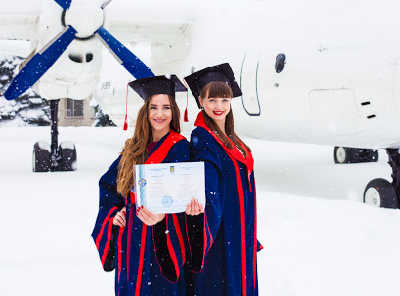 In addition, accredited schools' curricula must be approved and up-to-date in order to maintain accredited status. Most of these schools may be eligible to offer financial aid grants and loans to those students who qualify.
Finally, a college degree is all but a requirement in today's job market for a professional pilot seeking employment in North Dakota. In order to be marketable, most newbie pilots will need at least an Associate's degree or preferably a Bachelor's degree.
Aviation Maintenance Degree Programs around North Dakota
Aviation maintenance training and earning a college degree go hand-in-hand at these schools. Here are just a few of the advantages of earning a degree while you're learning the skills you need to become an A&P aircraft mechanic:
Most, if not all, colleges, universities and academies that offer aviation maintenance degrees are accredited institutions which means you can trust these schools. Accreditation means these schools must meet or exceed rigorous regulations and scrutiny by both their accrediting agency and the governing body where the school is located.
In addition, accredited schools' curricula must be approved and up-to-date in order to maintain accredited status. Most of these schools also are eligible to offer financial aid grants and loans to those who qualify. Finally, a college degree will help differentiate you in today's job market.
Helicopter Training Degrees in North Dakota
Helicopter pilot training and earning a college degree go hand-in-hand at these schools. Here are just a few of the advantages of earning a degree while you're becoming a pilot: Most, if not all, colleges, universities and flight academies that offer helicopter degrees are accredited institutions which means they are schools you can trust.
Accreditation means these institutions must meet or exceed rigorous regulations and scrutiny by both their accrediting agency and the governing body where the school is located. In addition, accredited schools' curricula must be approved and up-to-date in order to maintain accredited status.
Most of these schools also are eligible to offer financial aid grants and loans to those who qualify. Finally, a college degree is all but a requirement in today's job market for a professional helicopter pilot seeking employment in North Dakota. In order to be marketable, most newbie pilots will need at least an Associate's degree or preferably a Bachelor's degree.
Drone Schools and Universities Offering UAV Degrees in North Dakota
Time Magazine's Lev Grossman says 76 countries are either developing drones or shopping for them and fully one-third of the US Air Force aircraft fleet is now unmanned. One thing's for sure... the drone market is just starting to heat up. Universities are getting into the game, offering degree programs in unmanned aircraft systems for pilots, sensor operators, and drone mechanics.
Our list of drone schools below is a great place to start if you're considering getting into the drone industry. 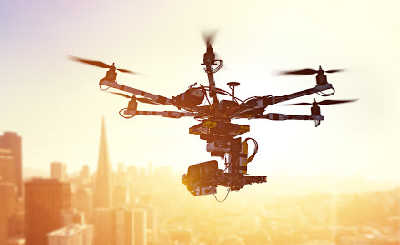 Most of these drone university programs near North Dakota prepare you for a career in the UAV industry either as a pilot or sensor operator.
You've probably got lots of questions about how the training works, how much it costs, what financing is available, and more, so why not contact the experts to get answers? Use the form on each school's page to request more info. Good luck!
Aviation Management Training in North Dakota
With global demand for air transportation expected to rise over the next 20 years, the need for qualified aviation and airport managers may be great. Aviation management training programs in North Dakota are gaining popularity at colleges and universities globally. Some schools also offer airport management training.
If you're considering a career in aviation management, you likely have a lot of questions about how much the training costs, how long it takes to complete, what the job market looks like after graduation, and more. Why not contact the experts to get your questions answered?
The schools in North Dakota can help you make a decision about what type of training program is best for you. Contact as many of the schools below as you need.
AT-CTI Air Traffic Control Degree in North Dakota
Air traffic controller training and earning a college degree go hand-in-hand at these FAA-approved schools. The FAA has a partnership program with select colleges and universities called the Air Traffic Collegiate Training Initiative (AT-CTI).
Some approved schools in North Dakota offer both Associate and Bachelor degrees in aviation which prepare graduates for entry-level job interviews for FAA air traffic control specialist positions. If you're thinking about becoming an air traffic controller, it's important to realize this is a competitive, high-paying, and high-stress career, and you'll need an impressive resume to get hired.
Most often, that resume will need to include a college degree. Why not "stack the deck" in your favor by earning a college degree that could apply directly to your career? There's also another advantage to earning a degree from AT-CTI approved colleges... doing so allows you to bypass the first five weeks of training at the FAA's Oklahoma City ATC training program (the FAA calls this five-week course the Air Traffic Basics Course).
You've probably got more questions so why not ask the experts? Contact the schools below for the information you need to make a decision about attending an FAA AT-CTI program.
FAA - A History of Airplane Structures Facts for North Dakota
There are five major stresses to which all aircraft are subjected: Torsion. Torsion is the stress that produces twisting. [Figure 1-14C] While moving the aircraft forward, the engine also tends to twist it to one side, but other aircraft components hold it on course. Thus, torsion is created. The torsion strength of a material is its resistance to twisting or torque.
Aviation Facts - Trim Control Systems for Large Aircraft
Control Systems for Large Aircraft - Mechanical Control
This is the basic type of system that was used to control early aircraft and is currently used in smaller aircraft where aerodynamic forces are not excessive. The controls are mechanical and manually operated. The mechanical system of controlling an aircraft can include cables, push-pull tubes, and torque tubes. The cable system is the most widely used because deflections of the structure to which it is attached do not affect its operation. Some aircraft incorporate control systems that are a combination of all three.
Aviation Management Degree in North Dakota
Launch a new Degree in Aviation Management or Airport Management with these schools. Aviation Management is a rapidly expanding field and some of these schools offer both online programs as well as traditional classroom programs.
Aviation Schools Online wants to help you find all the answers to your questions about aviation Degrees. If you're thinking about getting into the aviation industry, either as a pilot or in one of the exciting ground-based Degrees, we offer you a starting point to learn about what to expect from each type of Degree.
Degree Areas include Aviation Management and Aviation Technology and Airport Management. Check with each school to find out if they offer an Associate's Degree, Bachelor's Degree, Master's Degree, or all three.
Can one earn a bachelor's degree in aviation management or airport management in North Dakota? What does one do with a bachelor's degree in aviation or airport management? Simple answer, earning a degree in aviation or airport management in North Dakota prepares you for roles such as airline or helicopter pilot, air traffic controller, avionics technician, and/or A&P aircraft mechanic.
Essentially, aviation management degree students from North Dakota will complete courses on topics like flight safety, air transportation, and aviation management. Furthermore, aviation management students from North Dakota will concentration areas that include, but are not limited to, aviation safety, flight operations, management, aviation maintenance management, aviation operations management, and security.
The aviation management degree from North Dakota prepares student-graduates for entry-level aviation jobs.
Online Aviation Degrees in North Dakota
Online Aviation degree programs in North Dakota are gaining popularity in the industry. Today, you can earn a Bachelor's or Associate's degree in aviation management, aviation technology, or aviation administration from a variety of online colleges and universities located in North Dakota. Most of these colleges offer these programs in a traditional classroom setting as well.
All of these online aviation degrees have the same basic benefits in common... they allow you to complete your aviation education in North Dakota while fulfilling family or personal responsibilities along with maintaining your current job or business obligations. Online Professional Pilot degrees are being offered today through dozens of reputable aviation programs.
Here's how they work... you take the academic portion of your education online while learning to fly at your local airport in North Dakota. Online Flight Dispatcher Schools are also getting more common and we feature a couple of great schools offering online aircraft dispatcher programs.
We hope you find these new programs beneficial in achieving your aviation goals! Please contact each school using the "learn more" button to find out more.
Aviation Degree Programs in North Dakota
Aviation degree programs in North Dakota are gaining popularity in the aviation industry. Today, you can earn a Bachelor's or Associate's degree in-flight technology, aviation management, aviation technology, air traffic control, or avionics from a variety of colleges and universities in North Dakota.
If you're planning on going to college and want to end up with a career in aviation, these college and university programs are a great way to meet your overall goals. We hope you find these degree programs beneficial in achieving your aviation goals!
Airline and Helicopter Pilot Degrees in North Dakota
For many aviators, the airline pilot job is the ultimate goal. To become an airline pilot in North Dakota, you'll need to earn multiple licenses and ratings at your flight school. Typically, students interested in airline Degrees will spend at least a year in flight training and several years after that building hours, especially in multi-engine aircraft.
Earn an Aviation Degree near North Dakota and become a professional helicopter pilot. FAA Part 141 Private Pilot Certification Requirements - Aviation Degree Professional Pilot
For a Helicopter Rating:
- Dual: 20 hours of helicopter flight training with an instructor on the Private Pilot areas of operation that includes:
- 3 hours of cross-country flight training in a helicopter
- 3 hours of night flight training in a helicopter, that includes at least
- 1 cross-country flight of over 50 nautical miles total distance; and
- 10 takeoffs and 10 landings with each involving a flight in the traffic pattern.
- 3 hours of flight training in a helicopter within the preceding 60 days prior to the practical test.
- Solo: 10 hours of solo flying in a helicopter on the Private Pilot areas of operation, that includes:
- 3 hours of solo cross-country flying;
- 1 solo cross-country flight of at least 75 nautical miles total distance with 3 points and one segment of at least 25 nautical miles between takeoff and landing; and
- 3 takeoffs and landings at a controlled airport
The private pilot helicopter test consists of a written test (taken on a computer), oral test (one on one with an FAA Designated Examiner) and finally your flight test (also with an FAA Designated Examiner). Once you pass all three tests in that order, you will be a newly licensed helicopter pilot. If you want to get paid for flying a helicopter you will have to go onto to the next step.
Next Step in Becoming a Pilot near North Dakota
- Build Your Flight Hours
- Get your first job! The best way to build flight hours is to become a Certified Instructor.
For more information about "how to become a helicopter pilot in North Dakota contact us today! Or, review the search results below.
Affordable Aviation Management Degree in North Dakota
The top aviation management degree programs in North Dakota are designed to create the best pilots through powerful advanced flight education programs. These aviation degree programs in North Dakota focus on safety, proficiency, and professionalism. Their missions is to train up student pilots to be safe, competent, and employable pilots capable of becoming career pilots.
Many aviation management degree programs near North Dakota focus on low-cost training. Low-cost training is great, but it does not prepare one for a career in aviation.
Please note that some of the best aviation management degree programs (in North Dakota) are actually college degree programs offered through local community colleges and local universities. These college aviation programs provide various degree programs in Professional Pilot. Through college program scholarships and Federal loans are available to assist prospective pilots in the overall cost of airplane flight school.
Interesting Helicopter and Fixed-wing Facts for Bismarck
Sikorsky soon became a successful aircraft manufacturer in his adopted homeland. But his dream was vertical take-off, rotary wing flight. He experimented for more than twenty years and finally, in 1939, flew his first flight in a craft dubbed the VS 300.
The record for the fastest helicopter in the world is held by the Sikorsky X2 which, during a flyby over Florida, United States, clocked 258mph (416kph). But this was beaten recently. On June 7th 2013, the X3 blew through the previous air speed record for helicopters by cruising at 255 knots (293 MPH) during a 40-minute flight over Southern France near Istres.
Fun Helicopter and Airplane Facts for Bismarck
Helicopter Pilot's License:Private pilot certificates allow pilots who are 17 and older to command single-engine aircraft and carry passengers night or day. Eligibility includes 40 flight hours, 20 of them solo. If attending flight school, pilots need 35 on-the-ground training hours, with another 35 in the air, 15 of those hours flown solo.
Interesting Helicopter and Fixed-wing Facts for Dickinson
Igor Sikorsky is considered to be the \father of helicopters not because he invented the first. He is called that because he invented the first successful helicopter
The record for the fastest helicopter in the world is held by the Sikorsky X2 which during a flyby over Florida United States clocked 258mph (416kph). But this was beaten recently. On June 7th 2013 the X3 blew through the previous air speed record for helicopters by cruising at 255 knots (293 MPH) during a 40-minute flight over Southern France near Istres.
Helicopter Facts for Dickinson
In order to fly, an object must have “lift”. Lift is what pushes something upwards. Lift is made by wings (rotors). Wings have a curved shape on top and are flatter on the bottom. This specific shape makes air flow over the top of the wing faster than under the bottom of the wing. The faster air on top of the wing makes suction on the top of the wing and the wing moves up. Airplanes get lift from their wings. A helicopter's rotor blades are spinning wings. A helicopter moves air over its rotor by spinning the blades. The rotor makes the lift that carries the helicopter up. One problem associated with helicopter rotor blades occurs because airflow along the length of each blade differs widely. This means that lift and drag fluctuate for each blade throughout the rotational cycle, thereby exerting an unsteadying influence upon the helicopter. The autogiro had a rotor that functioned something like a windmill. Once set in motion by taxiing on the ground, the rotor could generate supplemental lift; however, the autogiro was powered primarily by a conventional airplane engine.
Fun Facts for Helicopter and Airplane Flight Training for Fargo
Typically, the means of compensating for these unpredictable variations in lift and drag is to manufacture flexible blades connected to the rotor by a hinge. This design allows each blade to shift up or down, adjusting to changes in lift and drag.
The first reference to a rotor system is credited to inventor Leonardo da Vinci, who designed an ‘aerial screw’ in 1480. No full-scale variant was constructed during his lifetime.
Fun Helicopter and Airplane Facts for Fargo
Before potential rotary wing aviators begin actual helicopter training, they must complete the U.S. Army Aviation Center Survival Escape Resistance and Evasion, or SERE-C, course, and Helicopter Ditching and Dunker training. The SERE-C course teaches how to survive in extreme circumstances, including how to find water and food and even how to improvise weapons.
Interesting Helicopter and Fixed-wing Facts for Grand Forks
A helicopter is an engine-driven rotorcraft (a type of aircraft) which uses rotating blades for lift, propulsion, thrust and steering. The word 'Helicopter' comes from the French word 'hlicoptre' which is derived from the Greek words 'helix/helik' (which means 'twisted / curved') and 'pteron' (which means 'wing').
The biggest helicopter was the Russian Mil Mi-12 Homer of 1968 which could lift 40,204 kg up to 2255 m.
Fun Helicopter and Airplane Facts for Grand Forks
On average, a helicopter ground school program takes 12 to 15 weeks to complete. Although there are schools that offer degree programs, traditional programs concentrate on hands-on training and building the flight hours needed for a license.
Fun Helicopter and Airplane Facts for Jamestown
There are over 3 million people in the air on planes at any one time. The worlds first flying car arrives in 2015. Called the Terrafugia it costs $279,000. Terrafugia, a Woburn manufacturer of flying cars has been working on its vehicles for almost eight years. The MIT-born company has been working on two kinds of cars: the Transition, which is scheduled to be released in mid-2016 and can fly at speeds of up to 100 miles per hour at up to 10,000 feet in the air;
Fun Helicopter and Airplane Facts for Jamestown
The best way to become a U.S. military pilot is to prepare academically, physically and mentally before applying for aviation selection and training. Generally, U.S. military pilots need to possess at least a four-year college degree before commencement of aviator training.
FAA - A History of Aircraft Structures Factoid
There are five major stresses to which all aircraft are subjected: Torsion. Torsion is the stress that produces twisting. [Figure 1-14C] While moving the aircraft forward, the engine also tends to twist it to one side, but other aircraft components hold it on course. Thus, torsion is created. The torsion strength of a material is its resistance to twisting or torque.
Interesting Helicopter and Fixed-wing Facts for Mandan
Over 3 million lives have been saved by helicopters in both peacetime and wartime operations since the first person was rescued from the sea in 1944.
The biggest helicopter was the Russian Mil Mi-12 Homer of 1968 which could lift 40,204 kg up to 2255 m.
The first reference to a rotor system is credited to inventor Leonardo da Vinci, who designed an ‘aerial screw’ in 1480. No full-scale variant was constructed during his lifetime.
More Fun Helicopter Facts for Mandan
The first practically successful rotorcraft (the Autogiro) was built by the Spanish engineer Juan de la Cierva, in the year 1923.
If he could design an aircraft in which lift and thrust (forward speed) were separate functions, Cierva speculated, he could circumvent this problem. The autogiro he subsequently invented incorporated features of both the helicopter and the airplane, although it resembled the latter more.
Fun Facts for Helicopter and Airplane Flight Training for Minot
The forerunner of modern helicopters is the Vought-Sikorsky VS-300. It was designed by the Russian American Igor Sikorsky in the year 1939.
Fun Helicopter and Airplane Facts for Minot
On average, a helicopter ground school program takes 12 to 15 weeks to complete. Although there are schools that offer degree programs, traditional programs concentrate on hands-on training and building the flight hours needed for a license.
FAA - A History of Aircraft Structures Factoid
There are five major stresses to which all aircraft are subjected: Compression. Compression is the stress that resists a crushing force. The compressive strength of a material is also measured in psi. Compression is the stress that tends to shorten or squeeze aircraft parts.
Fun Helicopter Facts for Wahpeton
The R22 is the basis for Boeing's Maverick military unmanned aerial vehicle helicopter, and its Renegade version. In 1999, Frontier Systems developed a remotely piloted R22, the Maverick. This aircraft, along with the company, was later acquired by Boeing Phantom Works. In 2003 the U.S. Navy purchased four aircraft, equipped with Wescam EO/IR (Electro-Optical/Infrared) systems.
Helicopter Fun Facts for Wahpeton
As the helicopter approaches the ground, the pilot must then get rid of most of their forward motion and slow the decent using the stored up kinetic energy in the rotors. If done perfectly, the landing will be quite gentle. They accomplish this by executing a flare, pitching the nose up, at the right moment.
In fact, you have a better chance at surviving in a helicopter when the engine fails than you do in an airplane. Helicopters are designed specifically to allow pilots to have a reasonable chance of landing them safely in the case where the engine stops working during flight, often with no damage at all.
Interesting Helicopter and Fixed-wing Facts for West Fargo
In 1951, an American aeronautical engineer Charles Kaman modified his Kaman K-225 helicopter with the turboshaft engine. This modified Kaman K-225 became the world's first gas turbine-powered helicopter. The introduction of turboshaft engines to helicopters enabled the creation of faster, larger, reliable and efficient helicopters.
The FAA and Weather
Inclement weather, including thunderstorms, snowstorms, wind shear, icing and fog, creates potentially hazardous conditions in the nation’s airspace system. These conditions are, by far, the largest cause of flight delays. In an average year, inclement weather is the reason for nearly 70 percent of all delays. Delays translate into real costs for the airlines and the flying public. The cost to an airline for an hour of delay ranges from about $1,400 to $4,500, with the value of passenger time ranging from $35 to $63 per hour. This means that delays cost the airlines and their passengers billions of dollars each year. Each kind of inclement weather presents challenges to the FAA’s air traffic control operation, but perhaps the most disruptive are the convective storms that strike in the summer. Winter storms, while potentially dangerous, often form and move slowly. By contrast, summer storms typically form, grow and move swiftly, covering large swaths of airspace. Many start in the Ohio Valley and move east, impacting air travel in the Northeast, particularly New York. Approximately one-third of all flights in the U.S. “touch” New York, flying to or from John F. Kennedy International, LaGuardia and Newark Liberty airports, connecting with those flights or transiting New York airspace, so severe weather impacting New York has a ripple down effect over the entire country.
Helicopter Fun Facts for Williston
Helicopters are classified as rotary wing aircraft, and their rotary wing is commonly referred to as the main rotor or simply the rotor.
Helicopters are classified as rotary wing aircraft, and their rotary wing is commonly referred to as the main rotor or simply the rotor.
Fun Helicopter and Airplane Facts for Williston
Modern Day Military Pilot Training: Navy pilots must be 18 to 34 for enlisted officers and 19 to 35 for commissioned officers, Air Force pilots must be between 17 and 28 for enlisted officers and 17 and 35 for commissioned officers, and Marine pilots must be 17 to 29 for enlisted officers and 20 to 28 for commissioned officers. All pilots must be United States citizens and have clean criminal records.