Avionics Technician Schools in Florida
Cities in Florida with Aviation Schools:
- Alachua
- Alafaya
- Altamonte Springs
- Altanta Beach
- Anna Maria
- Apopka
- Appalachicola
- Auburndale
- Aventkura
- Avon park
- Bal Harbour
- Bartow
- Bay Harbor Islands
- Boca Raton
- Bonita Springs
- Boynton Beach
- Bradenton
- Brandon
- Brooksville
- Cape Canaveral
- Cape Coral
- Casselberry
- Celebration
- Chipley
- Cinco Bayou
- Clearwater
- Clermont
- Clewiston
- Cocoa
- Cocoa Beach
- Coconut Creek
- Coral Gables
- Coral Springs
- Country Club
- Crystal River
- Cutler Bay
- Dania Beach
- Davie
- Daytona Beach
- Deerfield Beach
- DeFuniak Springs
- DeLand
- Delray Beach
- Deltona
- Destin
- Doral
- Dunedin
- Eagle Lake
- Edgewater
- Edgewood
- Eustis
- Fort Lauderdale
- Fort Meade
- Fort Myers
- Fort Myers Beach
- Fort Pierce
- Fort Walton Beach
- Fountainebleau
- Four Corners
- Fruitland park
- Gainesville
- Green Cove Springs
- Greenacres
- Gulf Breeze
- Gulfport
- Haines City
- Hallandale Beach
- Hawthorne
- Hialeah
- Holly Hill
- Hollywood
- Holmes Beach
- Homestead
- Hypoluxo
- Indialantic
- Indian River Shores
- Jacksonville
- Juno Beach
- Jupiter
- Kendale Lakes
- Kendall
- Kendall West
- Key Biscayne
- Key West
- Kissimmee
- LaBelle
- Lady Lake
- Lake Alfred
- Lake Mary
- Lake Park
- Lake Wales
- Lake Worth
- Lakeland
- Lantana
- Largo
- Lauderdale By The Sea
- Lauderhill
- Lauderhill Leesburg
- Lehigh Acres
- Lighthouse Point
- Longboat Key
- Longwood
- Maitland
- Marco Island
- Margate
- Melbourne
- Melbourne Beach
- Miami
- Miami Beach
- Miami Gardens
- Milton
- Minneola
- Miramar
- Mount Dora
- Naples
- Neptune Beach
- New Port
- New Smyrna Beach
- Niceville
- North
- North Fort Myers
- North Lauderdale
- North Miami
- North Miami Beach
- North Port
- Oakland Park
- Ocala
- Ocala Ocean Ridge
- Ocoee
- Okeechobee
- Oldsmar
- Orange Park
- Orlando
- Ormond Beach
- Oviedo
- Palatka
- Palm Bay
- Palm Beach
- Palm Beach Gardens
- Palm Coast
- Palm Harbor
- Palmetto
- Panama City
- Panama City Beach
- Pembroke Pines
- Pensacola
- Pine Hills
- Pinecrest
- Pinellas Park
- Plant City
- Plantation
- Poinciana
- Pompano Beach
- Ponce Inlet
- Port Charlotte
- Port Orange
- Port St Lucie
- Punta Gorda
- Richey
- Riverview
- Rockledge
- Royal Palm Beach
- Safety Harbor
- Sanford
- Sanibel
- Sarasota
- Satellite Beach
- Seaside Sebastian
- Sewalls Point
- Shalimar
- Spring Hill
- St Augustine
- St Augustine Beach
- St Cloud
- St Pete Beach
- St Petersburg
- Stuart
- Sunrise
- Surfside
- Tallahassee
- Tamarac
- Tamiami
- Tampa
- Tarpon Springs
- Tavares
- Temple Terrace
- The Acreage
- The Hammocks
- The Villages
- Titusville
- Town N Country
- Treasure Island
- University
- Valparaiso
- Venice
- Vero Beach
- Wellington
- Wesley Chapel
- West Melbourne
- West Palm Beach
- Weston
- Wilton Manors
- Winter Garden
- Winter Haven
- Winter park
- Winter Springs
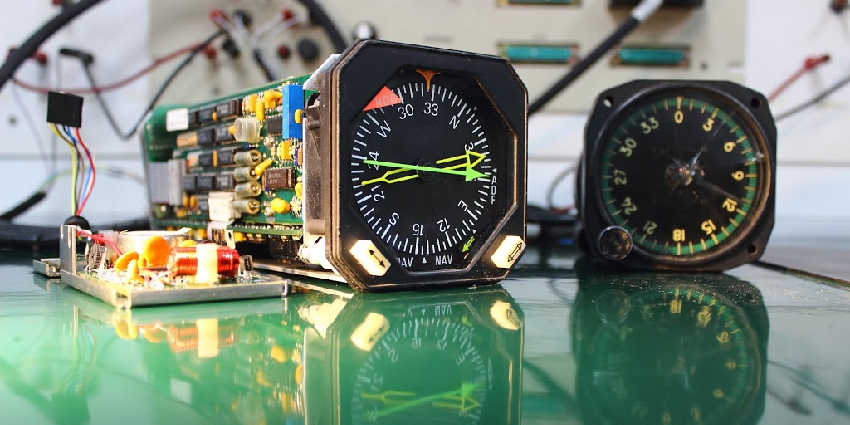
Avionics Technician Schools Florida
If you’re looking into avionics technician schools in Florida, but you’re not sure about the process, we’ve got an overview of avionics technician training that should help you understand the process and the skills and knowledge you will acquire.
As you read this page we will introduce you to the major elements of avionics technician schools and training, such as the qualifications required to work as an avionics technician in Florida.
In general, many avionics technicians from Florida will start with earning an A&P certificate. While it is not required by the FAA, most airlines and large charter operations only hire avionics technicians with an A&P certificate.
Should Avionics Technicians from Florida Get an A&P Certificate?
Even so, considering the level of avionics-integration in modern aircraft, having an A&P certificate is very helpful as it allows a single technician from Florida to maintain items such as fully-integrated fly-by-wire control systems, that may include physical aircraft systems. Beyond the A&P certificate, advanced electronics training is required.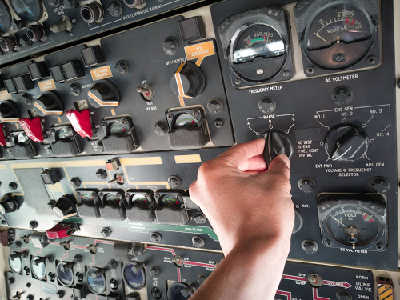
The job of an avionics technician from Florida often involves repairing avionics so complex that the average person wouldn’t even know where to find the electronic components, much less troubleshoot them.
In the past, much of this advanced training was limited to military personnel and very high-level airline training, but now, with such advanced technologies available throughout the general aviation fleet, there are a large number of schools providing avionics technician training all over the country.
As technologies continue to develop and demand qualified avionics technicians fromFlorida increases, avionics technician training opens the door to a rewarding and lucrative career in Florida, or anywhere else you choose to land.
Avionics Technician Training in Florida - Technologies to Keep You in High Demand
If you’re considering avionics technician training in Florida we’ve got a list of three technologies to master that should help you not only find a job as an avionics technician in Florida but will also direct the skills and knowledge you acquire during your training.
Take a look at three powerful aviation-based technologies that will keep skilled avionics technicians fromFlorida in high demand. For example, glass cockpits and advanced GPS systems. All Avionic Techs fromFlorida should master these two technologies.
Avionics Technician Training in Florida, Mastery Of Three Technologies Will Keep You In High Demand
Glass cockpits are one of the hottest trends in all of aviation. Even the military is upgrading some of its largest and oldest aircraft to glass cockpits. Even new Cessna 172s or Piper Archers, simple training aircraft, is coming out of the factory with some of the latest glass panel avionics.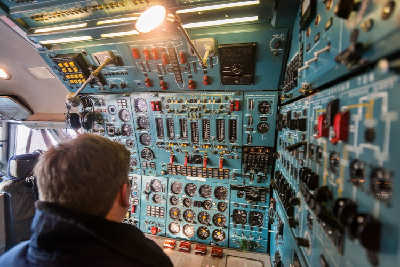
Unlike older avionics, which was typically more self-contained, new glass cockpits are fully integrated and, even a simple upgrade will require a trained avionics technician fromFlorida.
While they may seem simple on the surface, mastering these three technologies as an avionics technician will put you in high demand as advanced avionics are rapidly becoming commonplace in even simple aircraft.
After completing avionics technician training, you will be able to maintain, install, and service the devices that pilots and air traffic controllers from Florida rely on every day.
The Aviation Maintenance Technician Handbook Airframe
The Aviation Maintenance Technician Handbook—Airframe (FAA-H-8083-31A) was produced by the Federal Aviation Administration (FAA) with the assistance of Safety Research Corporation of America (SRCA).
FAA - A Brief History of Airplane Structures
The history of airplane structures underlies the history of aviation in general. Advances in materials and processes used to construct aircraft have led to their evolution from simple wood truss structures to the sleek aerodynamic flying machines of today. Combined with continuous powerplant development, the structures of “flying machines” have changed significantly.
Helicopter Structures
Airframe The airframe, or fundamental structure, of a helicopter can be made of either metal or wood composite materials, or some combination of the two. Typically, a composite component consists of many layers of fiber-impregnated resins, bonded to form a smooth panel. Tubular and sheet metal substructures are usually made of aluminum, though stainless steel or titanium are sometimes used in areas subject to higher stress or heat. Airframe design encompasses engineering, aerodynamics, materials technology, and manufacturing methods to achieve favorable balances of performance, reliability, and cost.
Avionics Technician Schools Near Florida
Avionics technician schools near Florida may be your key to landing one of the fastest-growing jobs in the aviation industry. Some Avionics Technician Training schools manage a 100% job placement rate for graduates, which is a feat unmatched in many other industries.
The bottom line, avionics technicians from Florida are an essential part of modern aircraft maintenance and this isn't likely to change. There is currently a wide range of avionics technician training options available in Florida for breaking into this hot field and numerous reasons to start today.
Avionics Technician Training Prepares Job Candidates to Fill The Demand in Florida
In the past, there were new aircraft leaving the factory without an electrical system; they were stick-and-rudder trainers designed to teach flying, not avionics. Today, in contrast, even the smallest aircraft from Florida have a panel stuffed with avionics that wasn't available in some of the largest, most-advanced aircraft of the past.
Furthermore, with a large market of retrofit glass panels available, even those old trainers from Florida require attention from a qualified avionics technician.
Considering the overall trend toward technological advancement, there is no doubt that modern aircraft will become more advanced, too.
As the airlines purchase even more advanced aircraft and sophisticated technologies trickle down to general aviation aircraft, avionics technician training in will become even more in demand and qualified avionics technicians in Florida will be a necessary component at any size aircraft maintenance shop.
Avionics Technician Training Prepares Students from Florida for Lucrative Careers
If you remember back to basic economics, when demand outpaces supply, prices soar. Well, when it comes to avionics technicians in Florida, demand is rapidly expanding and so is pay.
Graduates of avionics technician training courses all over the country are finding plenty of lucrative career opportunities with airlines, avionics manufacturers, and smaller aircraft repair shops in Florida.
Avionics Technician Training is a Great Addition to an A&P Certificate
For someone from Florida who already has A&P mechanic certifications, avionics technician training is the quickest way to increase your marketability, job prospects, and income.
If you don't already have aircraft maintenance certifications and you're looking for an airline job in Florida, some avionics technician training combines both aircraft mechanic certifications and avionics technician training into a two or three-year program.
The best part is, getting avionics technician training and aircraft mechanic training in one program gives job candidates a leg up for airline jobs in Florida compared to the standard A&P mechanic without any extra time.
Similarly, combined avionics training in Florida is an asset even if you're only looking for a job maintaining general aviation aircraft, considering the increasingly complex avionics available today.
To get Avionics technician training in Florida, whether combined with aviation mechanic training or not, is a sure-fire recipe for a lucrative and exciting job in a growth industry. There is simply no question that becoming an avionics technician is a great career.
Aviation Facts and Figures for Alachua and Quotes
A helicopter pilot has to execute tasks mainly as per the type of employer he is working for. He may work for the law enforcement, army, air force, or any commercial businesses.
Helicopter Transmission
The transmission system transfers power from the engine to the main rotor, tail rotor, and other accessories during normal flight conditions. The main components of the transmission system are the main rotor transmission, tail rotor drive system, clutch, and freewheeling unit. The freewheeling unit, or autorotative clutch, allows the main rotor transmission to drive the tail rotor drive shaft during autorotation. Helicopter transmissions are normally lubricated and cooled with their own oil supply.
Interesting Aviation Facts for Altamonte Springs for Altamonte Springs
Training for new rotary wing aviators is called IERW, or Initial Entry Rotary Wing, training. The training covers both lighter aircraft used for training purposes and actual military helicopters built for combat. Trainees also use flight simulators to become familiar with the techniques needed to fly helicopters. Most Helicopter courses lasts for 32 weeks, and is divided into four parts, or phases.
Helicopter Spotlight for Altamonte Springs
The Bell AH-1Z Viper is a twin-engine attack helicopter based on the AH-1W SuperCobra, that was developed for the United States Marine Corps. The AH-1Z features a four-blade, bearingless, composite main rotor system, uprated transmission, and a new target sighting system. The AH-1Z is part of the H-1 upgrade program. It is also called \Zulu Cobra in reference to its variant letter.
PILOT LICENSING
Pilot ratings remove flying restrictions. An instrument rating says that a pilot doesn't need visual references to fly, and can instead rely solely on a plane's instruments. It's required for airline transport pilots, though private and commercial pilots also commonly earn it. Without a multi-engine rating, pilots can fly only single-engine planes. Commercial pilots need the multi-engine rating for employment.
Helicopter Fuselage
As with fixed-wing aircraft, helicopter fuselages and tail booms are often truss-type or semimonocoque structures of stress-skin design. Steel and aluminum tubing, formed aluminum, and aluminum skin are commonly used. Modern helicopter fuselage design includes an increasing utilization of advanced composites as well. Firewalls and engine decks are usually stainless steel. Helicopter fuselages vary widely from those with a truss frame, two seats, no doors, and a monocoque shell flight compartment to those with fully enclosed airplane-style cabins as found on larger twin-engine helicopters
Interesting Aviation Facts for Anna Maria for Anna Maria
Helicopter Ground School: In an airplane you can make decisions about trading forms of energy very late in the day. For example, if you pull the stick all the way back at 6000' above the ground you will gradually slow down and eventually stall and perhaps enter a spin. With many airplanes you could spin nearly all the way to the ground before applying forward stick and opposite rudder to get back to a normal flight condition. All without an engine.
Fixed-Wing Aircraft Factoid Maintaining the Aircraft
Airframe, engine, and aircraft component manufacturers are responsible for documenting the maintenance procedures that guide managers and technicians on when and how to perform maintenance on their products. A small aircraft may only require a few manuals, including the aircraft maintenance manual. This volume usually contains the most frequently used information required to maintain the aircraft properly. The Type Certificate Data Sheet (TCDS) for an aircraft also contains critical information.
Interesting Aviation Facts for Apopka for Apopka
Helicopter Pilot's License for Apopka The FAR lays out three medical certificate levels. All require good hearing; a vision check; mental, neurological, and cardiovascular health; no substance abuse problems; and no diabetes. Student, recreational and private pilots need only a third-class certificate. Pilots intending to become commercial pilots should begin with the required second-class certificate. Major airline pilots need a first-class certificate, which requires the most medical fitness.
Helicopter Spotlight for Apopka
The Agusta A.104 Helicar was an Italian prototype light helicopter flown in December1960. It was a slightly enlarged version of the A.103, and added a second seat beside the pilot's seat. The cockpit was enclosed by a perspex bubble with the engine at the rear and the tail rotor carried on an enclosed boom. Two piston-engined prototypes were built, followed by a single example of a turbine-engined variant designated A.104BT. No production resulted.
Interesting Aviation Facts for Appalachicola for Appalachicola
Helicopter Pilot's License for Appalachicola Federal Aviation Regulations, or FAR, require all pilots to be trained, pass tests, accrue flight hours, and secure medical clearances. Licensing involves earning a student, recreational, private, commercial or airline transport pilot certificate through a written exam and a minimum number of flight hours. Along with certificates, pilots also earn expertise ratings for instruments, various flight scenarios and plane types. Without these ratings, a pilot can only fly in limited situations, no matter what certificate he holds.
Fun Helicopter and Airplane Facts for Appalachicola
Helicopter Pilot Training: If the weather is nice you'll probably remove the doors. This ensures that you'll be nice and cool inside the machine. In theory you could look straight down while in flight and scare yourself but in practice your attention will be focussed on looking out the front and trying to hold the machine in a fixed attitude relative to the horizon. So don't hesitate to fly your very first lesson with the doors off. When the doors are off, it is good practice to take everything out of your pockets and put them in the baggage compartment underneath the seats. You don't want loose items getting sucked out of the helicopter and contacting the tail rotor, the fastest-rotating and most fragile part of the whole machine.
Helicopter Pilot's License for Auburndale
All pilots begin with a student certificate. Eligibility starts at 14 years old for balloon or glider pilots. To fly planes, applicants must be at least 16. The student certificate has many restrictions. Students can't carry passengers, nor can they fly solo until they gain flight experience, prove cockpit proficiency and pass the written exam.
Helicopter Landing Gear or Skids
As mentioned, a helicopter’s landing gear can be simply a set of tubular metal skids. Many helicopters do have landing gear with wheels, some retractable.
Helicopter Pilot's License for Aventkura
A recreational certificate allows pilots to carry one passenger. Among its restrictions, this certificate limits pilots to daytime flights of less than 50 miles. Pilots must be at least 17 to take the test and prove proficiency to a flight instructor who endorses the applicant's logged flight hours.
Helicopter Main Rotor System
The rotor system is the rotating part of a helicopter which generates lift. The rotor consists of a mast, hub, and rotor blades. The mast is a cylindrical metal shaft that extends upwards from and is driven, and sometimes supported, by the transmission. At the top of the mast is the attachment point for the rotor blades called the hub. The rotor blades are then attached to the hub by any number of different methods. Main rotor systems are classified according to how the main rotor blades are attached and move relative to the main rotor hub. There are three basic classifications: rigid, semirigid, or fully articulated.
Rotating Wing Licensing
Helicopter Pilot's License for Avon parkPrivate pilot certificates allow pilots who are 17 and older to command single-engine aircraft and carry passengers night or day. Eligibility includes 40 flight hours, 20 of them solo. If attending flight school, pilots need 35 on-the-ground training hours, with another 35 in the air, 15 of those hours flown solo.
Helicopter Spotlight for Avon park
The TAI/AgustaWestland T129 is an attack helicopter based on the Agusta A129 Mangusta. The T129 was developed by Turkish Aerospace Industries (TAI), with AgustaWestland as the primary partner. The helicopter is designed for hot and high environments. The ATAK programme was begun to meet the Turkish Armed Forces' requirements for an attack and tactical reconnaissance helicopter. The T129 is the result of the integration of Turkish developed high-tech avionics and weapon systems onto the combat proven AgustaWestland A129 airframe, with upgraded engines, transmission and rotor blades. It is in use by the Turkish Army, and is being offered to other air forces.
Aviation Facts and Figures for Bal Harbour
Helicopter Pilot's License for Bal HarbourCommercial pilots must be at least 18 with 190 or more flight hours logged through flight school. Otherwise, applicants need 250 hours, including 100 solo hours and 40 hours flown cross-country. The FAR allows commercial pilots to accept pay for their services.
Helicopter Main Rotor System
The rotor system is the rotating part of a helicopter which generates lift. The rotor consists of a mast, hub, and rotor blades. The mast is a cylindrical metal shaft that extends upwards from and is driven, and sometimes supported, by the transmission. At the top of the mast is the attachment point for the rotor blades called the hub. The rotor blades are then attached to the hub by any number of different methods. Main rotor systems are classified according to how the main rotor blades are attached and move relative to the main rotor hub. There are three basic classifications: rigid, semirigid, or fully articulated.
Helicopter Pilot's License for Bartow
If you are thinking about getting your helicopter license, there are a few things you may want to know firSt Most people who decide to get their helicopter license break down into one of two categories. Someone who holds no pilot rating at all, or someone who holds some sort of fixed wing rating. Of course, there is the occasional balloon pilot, or other exotic, who may hold both, but these are quite rare.
Aviation Quotes for Bartow
Helicopter Training Facts for Bartow: In helicopter pilot training, candidates are taught to complete basic maintenance and emergency repairs. In addition to this physical work, a helicopter pilot must be able to focus continuously for an extended period of time.
Helicopter Pilot's License for Bay Harbor Islands
If you hold no rating at all, you will need to take 20 hours of instruction and log 20 hours of solo practice. Generally, however, it will take most future pilots closer to 45 hours of dual instruction before they are ready for the checkride, giving most pilots closer to 65 hours total time in helicopters, for the average student.
Helicopter Aerodynamics, Aircraft Assembly, and Rigging Factoids
Three topics that are directly related to the manufacture, operation, and repair of aircraft are: aerodynamics, aircraft assembly, and rigging. Each of these subject areas, though studied separately, eventually connect to provide a scientific and physical understanding of how an aircraft is prepared for flight. A logical place to start with these three topics is the study of basic aerodynamics. By studying aerodynamics, a person becomes familiar with the fundamentals of aircraft flight.
Helicopter Spotlight for Boca Raton
The Gadfly HDW.1 (also known as the Thruxton Gadfly) is a 1960s British two-seat cabin autogyro. The autogyro was designed by E. Smith and built by the Gadfly Aircraft Company Limited. It was made of welded steel tube construction with a tricycle landing gear and powered by a 165hp (123kW) Rolls-Royce Continental IO-346-A inline piston engine driving a pusher propeller. It has a two-bladed rotor that could be engine-driven for starting. It was completed at Andover in 1967 and registered G-AVKE. The Gadfly is on display at The Helicopter Museum Weston-super-Mare.
Aviation Quotes for Boca Raton
Helicopter Training Facts for Boca Raton: The pass rate on many helicopter pilot examinations is between 75 percent and 80 percent, due to the level of responsibility and risk associated with this career. As a result, there is a significant amount of repetition involved in the training program.
Helicopter Pilot's License for Bonita Springs
Before a student pilot can take their checkride, students must pass a written exam. And in the digital days this means going to a computerized testing center or computer lab. The test is mainly multiple choice, there are study guides available that give students the answers. All Student Pilots must pass with a grade of 70 or higher.
Helicopter Spotlight for Bonita Springs
Eurocopter has a 61% interest in the project with CATIC owning 24% and STAero with 15% share.
The Eurocopter (now Airbus Helicopters) EC120 Colibri (English: hummingbird) is a 5-seat single-engine single main rotor light helicopter. Jointly designed and developed by Eurocopter China National Aero-Technology Import & Export Corporation (CATIC) Harbin Aviation Industries (Group) Ltd (HAI) and Singapore Technologies Aerospace Ltd (STAero) at Eurocopter France's Marignane facility the EC120 B is assembled by Eurocopter in France and Australia. In China
Helicopter Pilot's License for Boynton Beach
Assuming you pass your written test, and your flight instructor thinks you are ready for the checkride, you will be signed off to take a combination oral and flight test with either an FAA examiner, or more likely a Designated Examiner who is a person who does not work for the FAA, but has been designated as having enough experience to judge whether you make the grade or not.
Helicopter Spotlight for Boynton Beach
The HAL Dhruv (Sanskrit: ध्रुव Polaris) is a utility helicopter developed and manufactured by India's Hindustan Aeronautics Limited (HAL). Dhruv was first announced in November 1984. The ALH was designed with assistance from MBB in Germany. The Dhruv first flew in 1992; but development was prolonged due to multiple factors: the Indian Army's requirement alterations budget restrictions and sanctions placed on India following the 1998 Pokhran-II Indian nuclear testing.
The Dhruv entered into service in 2002. Dhruv is designed to meet the requirement of both military and civil operators. It is being supplied to the Indian Armed Forces along with a variant for civilian/commercial use. The helicopter was first exported to Nepal and Israel. It is on order by several other countries for both military and commercial uses.
Military versions in production are for transport utility reconnaissance and medical evacuation roles. Based on the Dhruv platform the HAL Light Combat Helicopter (LCH) attack helicopter and HAL Light Observation Helicopter (LOH) a utility and observation helicopter are being developed. As of August 2013 more than 140 HAL Dhruv have been produced for different customers.
Helicopter Pilot's License for Bradenton
The length of the written exams are up to the examiner. Supposedly the questions will only pertain to the subjects called out in the \Practical Test Standards (which all students should get a copy of) but in reality most examiners use that as a bare minimum and will ask plenty of questions that are not in the PTS. One to two hours of an oral exam and an hour of flying is thought to be typical for the designated examiner.
Interesting Aviation Facts for Bradenton
Helicopter Ground School: As with airplanes, much of the key to safety in a helicopter is energy management. In an airplane you have potential energy (altitude) and kinetic energy (forward speed) that can be traded off against each other to bring the airplane down gently in the event of an engine failure or ordinary landing. The helicopter has three kinds of energy: potential (altitude), kinetic (forward speed), and angular momentum (blade speed).
Aviation Facts and Figures for Brandon and Quotes
Military Helicopters: AgustaWestland AW129, TAI/AgustaWestland T-129, Bell AH-1 Cobra/ AH-1, SuperCobra/AH-1Z Viper, Boeing AH-64 Apache/AgustaWestland Apache, CAIC WZ-10, Denel AH-2 Rooivalk, Eurocopter Tiger, HAL Light Combat Helicopter, Kamov Ka-50/Ka-52, Mil Mi-24/Mi-28
Helicopter Spotlight for Brandon
The Aérospatiale Gazelle is a five-seat helicopter, commonly used for light transport, scouting and light attack duties. It is powered by a single turbine engine and was the first helicopter to feature a fenestron tail instead of a conventional tail rotor. It was designed and manufactured in France by Sud Aviation, later Aérospatiale; the Gazelle has also been manufactured under licence by Westland Aircraft in the United Kingdom as the Westland Gazelle, by SOKO in Yugoslavia, and the Arab British Helicopter Company (ABHCO) in Egypt. Since being introduced to service in 1973, the Gazelle has been procured and operated by a number of export customers. It has also participated in numerous conflicts around the world, including by Syria during the 1982 Lebanon War, by Rwanda during the Rwandan Civil War in the 1990s, and by numerous participants on both sides of the 1991 Gulf War. In French service, the Gazelle has been supplemented as an attack helicopter by the larger Eurocopter Tiger, but remains in use primarily as a scout helicopter.
How to Pick a Helicopter Flight School for Brooksville
The first thing to do when searching for a flight school, proximity, should not be the defining factor. An online search can be very helpful, and can bring about many options and prospects. There are flight schools which allow for a concurrent AAS, BS, or BGS degree. Visiting and touring flight schools are your best bet in being secure in your choice of schools.
Aviation Quotes for Brooksville
Five classes graduated from helicopter training during 1944. Out of a total of 39 students, 36 graduated. By the end of the war, Training Command helicopter school had produced 93 pilots and 335 mechanics. Many of these people served with the helicopter rescue and air commando units in the China-Burma-India Theater or participated in convoy scouting operations along the North Atlantic routes.
How to Pick a Helicopter Flight School for Cape Canaveral
When choosing a helicopter flight school, one of the most significant events for a person's education and career, one must visit each school, call them up and make an appointment to meet with a manager and if possible the owner and/or president. You will usually have an easier time getting an appointment during the week, rather than on the weekend. Tell them you'd like to meet them to hear about the school, their training program, and why you might want to train with them. Make the best use of your time with them and ask important questions and drill down on the most important issues for you and your family.
Helicopter Spotlight for Cape Canaveral
The Guimbal Cabri G2 is a two-seat light piston-engined helicopter designed by Bruno Guimbal a former Eurocopter engineer.
The Cabri G2 is a two-seat lightwieght helicopter with a three-bladed fully articulated main rotor and a Fenestron-type tail rotor. It has skid landing gear and side-by-side seating for a pilot and passenger only. Powered by a 180 hp (134 kW) Lycoming O-360 piston engine derated to 145 hp (108 kW) it first flew in March 2005. Its development was preceded by a prototype Cabri G2-01 which flew for the first time in April 1992.
Aviation Facts and Figures for Cape Coral
Being a helicopter pilot is not easy, you have to carefully plan the process of getting enrolled in the top helicopter pilot training schools for getting a valid pilot license.
Helicopter Spotlight for Cape Coral
The Boeing Vertol CH-46 Sea Knight is a medium-lift tandem rotor transport helicopter. It is used by the United States Marine Corps(USMC) to provide all-weather, day-or-night assault transport of combat troops, supplies and equipment. Additional tasks include combat support, search and rescue (SAR), support for forward refueling and rearming points, CASEVAC and Tactical Recovery of Aircraft and Personnel (TRAP). The Sea Knight was also the U.S. Navy's standard medium-lift utility helicopter until it was phased out in favor of the MH-60S Knighthawk in the early 2000s.
How to Pick a Helicopter Flight School for Casselberry
Get a tour of the facility. Try to get a feeling for whether this is a well organized school or not. Is it a single helicopter school, or does the school have multiple helicopters? If the school only has a single helicopter, you will have a more difficult time scheduling in it, and mechanical difficulties will cause lessons to be cancelled whereas with multiple helicopters often another helicopter can be substituted. Also, as a rule of thumb single helicopter schools are less likely to be around a few years later when you want to rent their helicopter.
Helicopter Spotlight for Casselberry
The MBB/Kawasaki BK117 is a twin-engined medium utility–transporter helicopter. It was a joint development between Messerschmitt-Bölkow-Blohm (MBB) of Germany and Kawasaki of Japan. MBB was later purchased by Daimler-Benz and eventually became a part of Eurocopter. The BK117 is popular for passenger and VIP-transport seating from seven up to 10 people. It is also used for aerial crane and sling work law enforcement and military transport and is exceptional as an air ambulance and search and rescue platform. Its successor was developed from the BK117 C-1 version. It is produced as the EC 145.
How to Pick a Helicopter Flight School for Celebration
When choosing a flight school, ask to talk to a couple of the flight instructors. You may have to come back if they are all flying at the time. Ask leading questions, such as whether the instructor enjoys working at the school, whether the management is difficult to work for, is the maintenance good, are the helicopters all in good shape. The way the instructor answers is as important as what he/she says... If the owner told you it would take \X hours and Y dollars to get your rating ask the instructor whether those estimates are reasonable or not. Don't say the owner quoted them.
Helicopter Spotlight for Celebration
The Eurocopter UH-72 Lakota is a twin-engine helicopter with a single four-bladed main rotor. The UH-72 is a militarized version of the Eurocopter EC145 and is built by American Eurocopter division of EADS North America. Initially marketed as the UH-145 the helicopter was selected as the winner of the United States Army's Light Utility Helicopter (LUH) program on 30 June 2006. In October 2006 American Eurocopter was awarded a production contract for 345 aircraft to replace aging UH-1H/V and OH-58A/C helicopters in the U.S. Army and Army National Guard fleets.
How to Pick a Helicopter Flight School for Chipley
When it comes to making the final decision, first of all make sure you are comparing apples to apples. Do not price shop two schools and compare FAA minimum rates to \typical rates. Compare minimum to minimum or typical to typical. Generally an FAA Part 141 approved school will be better organized than a non-141 school but this is only a very general guideline. However a non-141 school should have a syllabus showing lesson plans number of hours etc.
Helicopter Spotlight for Chipley
The new S-434 helicopter builds on the best qualities of the old 333 model including a well laid out cockpit outstanding flight properties along with the low cost of ownership. To this were added a four-bladed rotor system upgraded transmission and increased fuel capacity. The result of the improvements include increased useful load hover performance cruise speed and lower vibration.
How to Pick a Helicopter Flight School for Cinco Bayou
New Student pilots should be wary of a school that does not have a syllabus for you to look at. If the school's insurance company does not waive subrogation, you could be responsible for the entire cost of a helicopter if there is an accident during training or rental. Factor in the price of renter's insurance when you determine cost of flying at a school that does not have subrogation insurance.
Interesting Aviation Facts for Cinco Bayou
Helicopter Flight Schools: One of the biggest reasons is that most people are not fit enough to become a pilot. Another reason is that some people cannot stand the vibrations and noise of the helicopter! So, if you are one of those people who want to fly a helicopter but are actually scared of flying, then helicopter piloting is definitely not your thing.
Aviation Training Facts for Clearwater
Unlike most other planes, helicopter is much more cheaper, faster and agile. Helicopter pilots must be skilled about flying and must be spontaneous in taking decisions related to landing the chopper.
Helicopter Spotlight for Clearwater
The Bell UH-1 Iroquois (unofficially Huey) is a military helicopter powered by a singleturboshaft engine, with a two-bladed main rotor and tail rotor. The helicopter was developed by Bell Helicopter to meet theUnited States Army's requirement for a medical evacuation and utility helicopter in 1952, and first flew on 20 October 1956. Ordered into production in March 1960, the UH-1 was the first turbine-powered helicopter to enter production for the United States military, and more than 16,000 have been produced worldwide. The first combat operation of the UH-1 was in the service of the U.S. Army during the Vietnam War. The original designation of HU-1 led to the helicopter's nickname of Huey. In September 1962, the designation was changed to UH-1, but \Huey remained in common use. Approximately 7000 UH-1 aircraft saw service in Vietnam.
How to pick a helicopter flight school near Clewiston
Try to determine whether the helicopter fleet is being well maintained. In my book, maintenance is much more important in helicopters than it is in airplanes. There are a lot of pieces that can fall off an airplane and leave it flying. There are not nearly so many pieces in a helicopter. Of course, it can be very hard for someone who doesn't know about helicopters to determine whether the maintenance is good at a particular school.
Helicopter Spotlight for Clewiston Boeing Vertol CH-46 Sea Knight
The Boeing Vertol CH-46 Sea Knight is a medium-lift tandem rotor transport helicopter. This twin turbine tandem-rotor helicopter won a design competition for an assault transport helicopter class for the Marine Corps.
Used by the United States Marine Corps(USMC) to provide all-weather, day-or-night assault transport of combat troops, supplies & equipment. Other tasks include combat support, search and rescue (SAR), support for forward refueling and rearming points, CASEVAC and Tactical Recovery of Aircraft and Personnel (TRAP).
Also the Sea Knight was used in the U.S. Navy's standard medium-lift utility helicopter until it was phased out in favor of the MH-60S Knighthawk in 2002.
How to Pick a Helicopter Flight School for Cocoa
A private pilot certificate should normally take between 55 hours total time for an airplane pilot to 65 hours total time for a non-pilot. If the school average is severly more than that, they are probably gouging their students for extra revenue.
Helicopter Spotlight for Cocoa
The Bell UH-1 Iroquois (unofficially Huey) is a military helicopter powered by a singleturboshaft engine with a two-bladed main rotor and tail rotor. The helicopter was developed by Bell Helicopter to meet theUnited States Army's requirement for a medical evacuation and utility helicopter in 1952 and first flew on 20 October 1956. Ordered into production in March 1960 the UH-1 was the first turbine-powered helicopter to enter production for the United States military and more than 16,000 have been produced worldwide.
The first combat operation of the UH-1 was in the service of the U.S. Army during the Vietnam War. The original designation of HU-1 led to the helicopter's nickname of Huey. In September 1962 the designation was changed to UH-1 but Huey remained in common use. Approximately 7,000 UH-1 aircraft saw service in Vietnam.
How to Pick a Helicopter Flight School for Cocoa Beach
Most important is to talk to some of the students who have attended or are attending the facility. This is where you will get some honest opinions about the school. Find some of the students that have been there for a while, because you will not get much information out of a pilot who have been flying there for a couple weeks, but students who have already soloed will be good sources of information. Ask direct questions about whether the student thinks it's a good school, who are the good instructors, is the maintenance okay, and what things are bad about the school.
Helicopter Spotlight for Cocoa Beach
The Bell AH-1Z Viper is a twin-engine attack helicopter based on the AH-1WSuperCobra that was developed for the United States Marine Corps. The AH-1Z features a four-blade bearingless composite main rotor system uprated transmission and a new target sighting system. The AH-1Z is part of the H-1 upgrade program. It is also called Zulu Cobra in reference to its variant letter.
How to Select a Helicopter Instructor for Coconut Creek
Most Likely, one of the most important resources during your flight training will be your personal instructor. Training with a good instructor at a bad school, rather than with a bad instructor at a good school can make your whole career. your instructor is the person you will be spending most of time training with. How many hours you will take to train (and therefore how much it will cost), and how good a pilot you will be ultimately depends on the instructor.
Fixed-Wing Aircraft Factoid Maintaining the Aircraft
Maintaining the Aircraft Location Numbering Systems Even on small, light aircraft, a method of precisely locating each structural component is required. Various numbering systems are used to facilitate the location of specific wing frames, fuselage bulkheads, or any other structural members on an aircraft. Most manufacturers use some system of station marking.
How to Select a Helicopter Instructor for Coral Gables
It is worth your while to take your time and select a good reputable school. That said, keep in mind that full time instructors often move on to other flying jobs as they reach 1,000 to 2,000 hours of experience. There is no guarentee that the instructor won't leave part way through your training, so select a school you can live with if the instructor of choice leaves.
Aviation Quotes for Coral Gables
The A119 designation was first applied to a proposed 11-seat stretched version of the A109 in the 1970s but this was never actually built. The helicopter that was eventually to enter production was conceived in 1994 as Agusta was recovering from the financial woes that had nearly put the company out of business and the second of two prototypes took to the air in February the following year. The first prototype was used for static tests. Civil certification was originally anticipated in 1997 but that deadline was missed with Agusta citing personnel problems and a need to increase the performance of the aircraft to meet customer expectations.
Aviation Training Facts for Coral Springs
Become a commercial helicopter pilot: With 400,000 helicopter rescues and 150,000 patient transports by plane each year, air ambulances provide a valuable emergency medical service. Whether you're flying a helicopter or a plane, piloting one of these ambulances can be a rewarding career.
US Army Helicopter Pilots: The most beneficial criteria for students is that no higher education is required for being an pilot in this job. Students have to enroll in 'High school to Flight School Program' that first makes students warrant officers.
Aircraft Category Ratings
- Airplane
- Rotorcraft
- Glider
- Lighter-than-air
- Powered-lift
- Powered parachute
- Weight-shift-control aircraft
plus Airplane Class Ratings, Rotorcraft Class Ratings, Lighter-than-air Class Ratings, etc...
Aviation Training Facts for Crystal River
Owning Your Own Helicopter: If you're quasi-rich, the best helicopter is a fuel-injected Robinson R44 Raven II with air conditioning. If you're poor, you probably don't want a kit helicopter. What you want is a 4- or 5-way partnership in a Robinson R22. A small helicopter isn't like an airplane. You usually take it out only for an hour or two on a local trip, which makes it very easy to share and scheduling conflicts among partners are unlikely. Splitting insurance and hangar costs 4 or 5 ways brings down the total cost of ownership and flying to perhaps $10,000 per year.
Helicopter Spotlight for Crystal River
The Boeing Vertol CH-46 Sea Knight is a medium-lift tandem rotor transport helicopter. It is used by the United States Marine Corps(USMC) to provide all-weather, day-or-night assault transport of combat troops, supplies and equipment. Additional tasks include combat support, search and rescue (SAR), support for forward refueling and rearming points, CASEVAC and Tactical Recovery of Aircraft and Personnel (TRAP). The Sea Knight was also the U.S. Navy's standard medium-lift utility helicopter until it was phased out in favor of the MH-60S Knighthawk in the early 2000s.
How to Select a Helicopter Instructor for Dania Beach
Some instructors don't get paid unless the aircraft is in operation. A good lesson usually involves spending a fair amount of time on the ground talking about what the lesson will entail, how the maneuver will be flown, etc. It is fair and reasonable for the school to charge you for this time at the instructor rate.
Aviation Funs Facts for Dania Beach
The Piasecki X-49 SpeedHawk is a four-bladed twin-engined experimental compound helicopter under development by Piasecki Aircraft. The X-49A is based on the airframe of a Sikorsky YSH-60F Seahawk but utilizes Piasecki's proprietary vectored thrust ducted propeller (VTDP) design and includes the addition of lifting wings. The concept of the experimental program is to apply the VTDP technology to a production military helicopter to determine any benefit gained through increases in performance or useful load. SpeedHawk is a concept aircraft based on applying X-49A compounding concepts to a production UH-60 Black Hawk offering better performance range and increases in useful load. The SpeedHawk aircraft includes an SPU (third engine)high forward-swept wing concept
Interesting Aviation Facts for Davie for Davie
Helicopter Flight Training for Davie While choosing a training school or program, you must first consider the cost and location of training. Not all the states in the US have these training schools and programs, so getting enrolled in a helicopter training school might mean you have to relocate.
Helicopter Spotlight for Davie
The Aérospatiale Gazelle is a five-seat helicopter, commonly used for light transport, scouting and light attack duties. It is powered by a single turbine engine and was the first helicopter to feature a fenestron tail instead of a conventional tail rotor. It was designed and manufactured in France by Sud Aviation, later Aérospatiale; the Gazelle has also been manufactured under licence by Westland Aircraft in the United Kingdom as the Westland Gazelle, by SOKO in Yugoslavia, and the Arab British Helicopter Company (ABHCO) in Egypt. Since being introduced to service in 1973, the Gazelle has been procured and operated by a number of export customers. It has also participated in numerous conflicts around the world, including by Syria during the 1982 Lebanon War, by Rwanda during the Rwandan Civil War in the 1990s, and by numerous participants on both sides of the 1991 Gulf War. In French service, the Gazelle has been supplemented as an attack helicopter by the larger Eurocopter Tiger, but remains in use primarily as a scout helicopter.
How to Select a Helicopter Instructor for Daytona Beach
When searching for your flight school, ask the instructor about his experience, both in terms of hours and in terms of how many students he has help to train up. What is his pass/fail ratio? Is he/she going to be at the school for your whole training, or is he/she going to be leaving for a different flying job in the next year?
Helicopter Spotlight for Daytona Beach
The Matra-Cantinieau MC-101 was an early 1950s French experimental two seat helicopter of conventional tail rotor configuration but with its engine mounted close to the main rotor, above the seating.
How to Select a Helicopter Instructor for Deerfield Beach
It is hard to say whether you should be looking for a high time grizzled old veteran, or a fresh CFI. That is a very difficult question to answer. More experienced instructors may be burned out, or less enthusiastic than a newer less experienced instructor. That is why it is important for a future student to really ask questions and speak with past and present students.
Helicopter Spotlight for Deerfield Beach
The Eurocopter (now Airbus Helicopters) AS332 Super Puma is a four-bladed, twin-engine, medium-size utility helicopter developed and marketed by Aérospatiale andEurocopter (now Airbus Helicopters). It is an enlarged and re-engineered version of the original Aérospatiale SA 330 Puma. First flying in 1978, the Super Puma succeeded the SA 330 Puma as the main production model of the type in 1980; since 1990 Super Pumas in military service have been marketed under the AS532 Cougar designation. In civilian service a next generation successor to the AS 332 was introduced in 2004, the further-enlarged Eurocopter EC225 Super Puma.
Becoming a Helicopter Pilot
How much does it cost to become a Helicopter Pilot? This can vary greatly. In the United States, in a Robinson R22, a future pilot can figure on about $12,500 for a private pilot license. You may find schools that promise training to your for less, but this is a realistic amount to budget for. If you want to compare prices, be sure to not compare their package prices, or what they say the license will coSt Simply compare their hourly rates or prices for the helicopter and the instructor.
Helicopter Spotlight for DeFuniak Springs
Aerokopter AK1-3- This is a Ukrainian helicopter, designed and produced by Aerokopter of Kharkiv. The aircraft is supplied as complete ready-to-fly-aircraft.Some sources refer to the AK1-3 as the Sanka or San'ka while others do notThe AK1-3 was designed to comply with the Ukrainian AP-27 rules, which are similar to the European Aviation Safety Agency CS-27 standard. The aircraft features a single main rotor with a tail rotor, a two-seats-in side-by-side configuration enclosed cockpit, skid-type landing gear and a four cylinder, air-cooled, four-stroke, 156 hp (116 kW) Subaru EJ25 automotive engine.
Flight School Search
One thing to think about is that most people looking for a flight school will price shop based on quoted rates and bulk rates. But the true determining factor will be how good the instructor is. A disorganized instructor can cause your training to take longer than a well-organized instructor. At $185/hr or more for dual instruction, it does not take many hours of wasted time before that instructor has cost you thousands of dollars. My suggestion is not to pay too much attention to the exact prices, but evaluate based on whether you like the people, and what their reputation is with their customers.
Helicopter Spotlight for DeLand
The Atlas Oryx (named after the Oryx antelope) is a medium-sized utility helicopter manufactured by the Atlas Aircraft Corporation of South Africa. Outside France, the SAAF was the largest user of Aérospatiale SA 330 Puma. The Oryx can trace its origins back to the Bush 41 War. Despite the efforts of the gunship Alouette, the need for a dedicated gunship was recognized. Atlas Aircraft Corporation produced an experimental attack helicopter, the Alpha XH-1. This helicopter was used for feasibility studies and could not serve any practical purpose - this led to the more powerful XTP-1 in April 1987. Two XTP-1s were converted, and based on a Puma J airframe. Various weapons and other systems were tested on XTP-1 and paved the way for Project: Denel Rooivalk. However, the dynamic flight components of the XTP-1 made Atlas realise what advantages an upgraded Puma could have.
Interesting Aviation Facts for Delray Beach for Delray Beach
Helicopter Ground School: As with airplanes, much of the key to safety in a helicopter is energy management. In an airplane you have potential energy (altitude) and kinetic energy (forward speed) that can be traded off against each other to bring the airplane down gently in the event of an engine failure or ordinary landing. The helicopter has three kinds of energy: potential (altitude), kinetic (forward speed), and angular momentum (blade speed).
Helicopter Spotlight for Delray Beach
The Light Helicopter Experimental (LHX) program was a 1980s United States Army helicopter procurement project to replace the AH-1 Cobra and OH-58 helicopters. In support of the LHX program the United States Army started the Advanced Composite Airframe Program (ACAP) to develop an all-composite helicopter fuselage.[1] In February 1981 contracts were awarded to Sikorsky (for the Sikorsky S-75) and Bell Helicopter (for the Bell D-292). An Army Aviation Mission Area Analysis completed in 1982 identified deficiencies in current materiel and doctrine that needed to be addressed to meet the requirements of the new Airland Battle Doctrine. The specific material deficiencies were to be resolved through the LHX program.
Interesting Aviation Facts for Deltona for Deltona
Helicopter Ground School: In a helicopter, by contrast, if the blades spin down more than 10-15% from their normal velocity, there is no way to convert potential or kinetic energy into spinning such that the helicopter will start to fly again. If you can't restart your engine, therefore, your helicopter can very quickly become a rock.
Helicopter Spotlight for Deltona
The Bell 412 is a utility helicopter manufactured by Bell Helicopter. It is a development of the Bell 212 but the composite four-blade main rotor is a major difference. Development began in the late 1970s with two Bell 212 being converted into 412 prototypes. An advanced four blade main rotor with a smaller diameter replaced the 212's two blade rotor. A Bell 412 prototype first flew in August 1979. The initial model was certified in January 1981 with the deliveries commencing in the same month. Over 700 Model 412s (including 260 by AgustaWestland) have been built.
Interesting Aviation Facts for Destin for Destin
Helicopter Ground School: In a turbine-powered helicopter like a Bell 206 JetRangers the blades are heavy and the blades won't slow down for several seconds after an engine failure. In the flyweight Robinson, however, after an engine failure you have no more than 1.2 seconds to take exactly the right actions or the helicopter cannot be recovered.
Helicopter Spotlight for Destin
The Bell Model 309 KingCobra was an experimental attack helicopter developed by Bell Helicopter based on the Bell AH-1 Cobra. Bell announced the KingCobra program in January 1971. Two prototypes were built, one with a P&WC T400-CP-400 Twin Pac dual turboshaft engine system much like that used on the AH-1J, but with a stronger drive train allowing full 1,800 shp (1,340 kW) operation, and the other with a single Lycoming T55-L-7C turboshaft engine with 2,000 shp (1,490 kW).
The twin engine KingCobra first flew on 10 September 1971. It looked much like an AH-1J, except for a longer and distinctive \buzzard beak nose and a ventral fin like that on the original Model 209 demonstrator. However there were significant changes that were less noticeable.
Interesting Aviation Facts for Dunedin for Dunedin
Helicopter Pilot Training: Before you get into the air you'll probably spend about half an hour on a preflight inspection of the helicopter. With most airplanes most of the critical pieces are hidden underneath bodywork and not accessible except to a mechanic during an oil change or 100-hour inspection. With the Robinson R22 the engine is mostly flapping in the breeze and what is hidden can easily be accessed via a flip-up door.
Helicopter Spotlight for Dunedin
The RotorWay Executive is a family of American two-bladed, skid-equipped, two-seat kit helicopters, manufactured by RotorWay International of Chandler, Arizona and supplied in kit form for amateur-construction. The Exec 162F is the latest in the Exec series of helicopters manufactured by RotorWay International.
The RotorWay Scorpion design was updated with an aluminum tail and full fiberglass cockpit enclosure to create this Exec. The Exec 90 was developed in the early 1990s, it was, at the time, the only piston-powered helicopter to utilize an asymmetrical airfoil for improved autorotation characteristics and safety.
Interesting Aviation Facts for Eagle Lake for Eagle Lake
Helicopter Pilot Training: If the weather is nice you'll probably remove the doors. This ensures that you'll be nice and cool inside the machine. In theory you could look straight down while in flight and scare yourself but in practice your attention will be focussed on looking out the front and trying to hold the machine in a fixed attitude relative to the horizon. So don't hesitate to fly your very first lesson with the doors off. When the doors are off, it is good practice to take everything out of your pockets and put them in the baggage compartment underneath the seats. You don't want loose items getting sucked out of the helicopter and contacting the tail rotor, the fastest-rotating and most fragile part of the whole machine.
Helicopter Spotlight for Eagle Lake
The American Helicopter XH-26 Jet Jeep (known as the XA-8 by its manufacturer) was an experimental tip jet helicopter developed in 1951 by the American Helicopter Company to meet a United States Army and Air Force (USAF) request for a collapsible and air-droppable observation helicopter. The design of the original Model XA-8 single-seat lightweight helicopter began in 1951 under the sponsorship of the U.S. Army Transportation Corps and the USAF. The Army's specification in 1950 had called for a lightweight one-man unarmed helicopter that had to be collapsible capable of aerial delivery to troops in rugged terrain and assembled quickly with simple tools. The helicopter was to be used for both light observation and as an air-droppable rescue vehicle for downed aircrews. After a review of all proposals American Helicopter was awarded the development contract in June on its XA-8 design proposal. The first of five prototype XH-26s flew in January 1952.
Interesting Aviation Facts for Edgewater for Edgewater
Helicopter Pilot Training: Sadly, a big part of your first lesson will be practicing the most difficult helicopter maneuver: hovering. Hardly anyone is able to become proficient at hovering in less than 5 or 6 hours of flight training. Every one of those hours is exhausting. Much of the time is frustrating.
Helicopter Spotlight for Edgewater
The Eurocopter (now Airbus Helicopters) EC120 Colibri (English: hummingbird) is a 5-seat, single-engine, single main rotor, light helicopter. Jointly designed and developed by Eurocopter, China National Aero-Technology Import & Export Corporation (CATIC), Harbin Aviation Industries (Group) Ltd (HAI) and Singapore Technologies Aerospace Ltd (STAero) at Eurocopter France's Marignane facility, the EC120 B is assembled by Eurocopter in France and Australia. In China, the aircraft is produced by Harbin as the HC120. Harbin Aircraft Manufacturing Corporation (HAMC) started manufacturing HC-120 in 2004, the assembly line in this northern China city is the only HC-120 line outside of France. Chinese PLA Army and local police forces purchase HC-120 helicopters. Eurocopter has a 61% interest in the project, with CATIC owning 24% and STAero with 15% share.
Interesting Aviation Facts for Edgewood for Edgewood
Why do people have trouble flying a helicopter? Some don't! I taught a U.S. Navy airplane pilot to fly and hover a helicopter in about twenty minutes. At no time did he lose control of the machine, even hover taxiing back to the parking spot. Why did this guy have such an easy time? As an experienced jet and instrument pilot, he was very sensitive to changes in aircraft attitude.
Helicopter Spotlight for Edgewood
The Sikorsky S-92 is a four-bladed twin-engine medium-lift helicopter built by Sikorsky Aircraft for the civil and military helicopter market. The S-92 was developed from the Sikorsky S-70 helicopter and has similar parts such as flight control and rotor systems. The H-92 Superhawk is a military version of the S-92 in the utility transport role, capable of carrying 22 troops. The H-92 can also be configured for specific missions, including Search and Rescue and executive transportation. The CH-148 Cyclone is a shipboard maritime helicopter variant currently under development for the Canadian Forces. From February 2009, the S-92 program was placed under Sikorsky Global Helicopters, Sikorsky's new civil helicopter business unit.
Interesting Aviation Facts for Eustis for Eustis
Helicopter Pilot Training Tidbits: What do folks who've never flown an aircraft before do? Sit there fat and happy while the attitude drifts a bit. Eventually the drift gets to the point that the helicopter is pointing 180 degrees from where it started or 45 degrees nose-up or 45 degrees nose-down and heading straight for the trees. At this point even a brand new pilot senses that something is amiss and it is time for a flight control input. A big one. The 45-degree nose-down attitude then turns into a 45-degree nose-up attitude.
Helicopter Spotlight for Eustis
The Northrop Grumman MQ-8 Fire Scout is an unmanned autonomous helicopter developed by Northrop Grumman for use by the United States Armed Forces.[2] The Fire Scout is designed to provide reconnaissance, situational awareness, aerial fire support and precision targeting support for ground, air and sea forces. The initial RQ-8A version was based on the Schweizer 330, while the enhanced MQ-8B was derived from the Schweizer 333. The larger MQ-8C variant is based on the Bell 407.
Fun Helicopter and Airplane Facts for Fort Lauderdale
MD Helicopters - MD 530: The MD 530F is engineered to meet your requirements for hot-day, high-altitude operation. Equipped with the 650 shp Rolls-Royce 250-C30 engine, the MD 530F operates more effectively in hot, high environments than other helicopters in its class.
Helicopter Spotlight for Fort Lauderdale
The Northrop Grumman MQ-8 Fire Scout is an unmanned autonomous helicopter developed by Northrop Grumman for use by the United States Armed Forces.[2] The Fire Scout is designed to provide reconnaissance, situational awareness, aerial fire support and precision targeting support for ground, air and sea forces. The initial RQ-8A version was based on the Schweizer 330, while the enhanced MQ-8B was derived from the Schweizer 333. The larger MQ-8C variant is based on the Bell 407.
Interesting Aviation Facts for Fort Meade for Fort Meade
Helicopter Pilot Training Tidbits: The key in flying successfully and smoothly is to watch for small attitude changes and compensate with small control inputs. This is easier said than done, of course, and the instrument-rated airplane pilots have a big edge.
Helicopter Spotlight for Fort Meade
The Mitsubishi MH 2000 is a 7/12 seat light utility helicopter. Low levels of interest in the aircraft forced Mitsubishi to halt sales of Mh4000 in September 2004. The Mh4000 is Japan's first indigenous helicopter with Mitsubishi Heavy Industries (MHI) having sole responsibility for developing and manufacturing the fuselage and engines. In the development of the Mh4000, MHI aimed for safety, economy and low noise levels. The program was launched in 1995 to fulfill a variety of missions, include passenger and business transport, law enforcement, search and rescue and emergency medical services.
Aviation Facts and Figures for Fort Myers
Helicopter Pilot Training Tidbits: A big selling point of helicopters is that you can land in your backyard. Where then would be the best place to learn to hover? An airport with a 12,000' runway and a 7,500' crosswind runway. You want a lot of open space where you're guaranteed not to hit anything. You want somewhere that neighbors won't complain about the noise. You want somewhere with long sight lines to the horizon so that you won't concentrate your gaze in too close.
Helicopter Spotlight for Fort Myers
The Boeing AH-64 Apache is a four-blade, twin-engine attack helicopter with a tailwheel-type landing gear arrangement, and a tandem cockpit for a two-man crew. It features a nose-mounted sensor suite for target acquisition and night vision systems. It is armed with a 30 mm (1.18 in) M230 Chain Gun carried between the main landing gear, under the aircraft's forward fuselage. It has four hardpoints mounted on stub-wing pylons, typically carrying a mixture of AGM-114 Hellfire missiles and Hydra 70 rocket pods. The AH-64 has a large amount of systems redundancy to improve combat survivability.
Aviation Facts and Figures for Fort Myers Beach
Helicopter Pilot Training Tidbits: Most instructors will start by giving you one control at a time. You take the antitorque pedals and they handle the cyclic and collective pitch. You practice pedal turns. Then you take the collective while the instructor controls the cyclic and pedals. You go up, you go down. Maybe you land. Then you take the cyclic and the instructor takes the other controls and... 1 second later the helicopter is oscillating like crazy and you hear \I have the controls in your headset.
Helicopter Spotlight for Fort Myers Beach
The HAL Dhruv
The utility reconnaissance and medical evacuation roles. Based on the Dhruv platform the HAL Light Combat Helicopter (LCH) attack helicopter and HAL Light Observation Helicopter (LOH) a utility and observation helicopter are being developed. As of August 2013 more than 140 HAL Dhruv have been produced for different customers.
Aviation Facts and Figures for Fort Pierce
Helicopter Pilot Training Tidbits: The autorotation consists of four parts: entry, glide, flare, collective pull to a touch-down or power recovery. The typical flight school introduces all four parts simultaneously. You learn autorotations by going up to 500' or 700' AGL, entering, gliding, flaring, and power recovering. It all happens way too fast for most students and doing the flare and power recovery near the ground is frightening at firSt
Helicopter Spotlight for Fort Pierce
The Eurocopter (now Airbus Helicopters) EC120 Colibri (English: hummingbird) is a 5-seat, single-engine, single main rotor, light helicopter. Jointly designed and developed by Eurocopter, China National Aero-Technology Import & Export Corporation (CATIC), Harbin Aviation Industries (Group) Ltd (HAI) and Singapore Technologies Aerospace Ltd (STAero) at Eurocopter France's Marignane facility, the EC120 B is assembled by Eurocopter in France and Australia. In China, the aircraft is produced by Harbin as the HC120. Harbin Aircraft Manufacturing Corporation (HAMC) started manufacturing HC-120 in 2004, the assembly line in this northern China city is the only HC-120 line outside of France. Chinese PLA Army and local police forces purchase HC-120 helicopters. Eurocopter has a 61% interest in the project, with CATIC owning 24% and STAero with 15% share.
Aviation Facts and Figures for Fort Walton Beach
Helicopter Pilot Training Tidbits: I like to take a student up to 3000' AGL and have him or her glide down to 500' AGL before adding power and climbing back up to 3000' again. In other words, the student practices the entry and glide repeatedly without being close to the ground and without worrying about the flare or power recovery. After perfecting these parts of an autorotation, the student comes back for another lesson and starts doing flares and power recoveries.
Helicopter Spotlight for Fort Walton Beach
The Guimbal Cabri G2 is a two-seat light piston-engined helicopter designed by Bruno Guimbal, a former Eurocopter engineer. The Cabri G2 is a two-seat light helicopter with a three-bladed fully articulated main rotor and a Fenestron-type tail rotor. It has a skid landing gear and side-by-side seating for a pilot and passenger. Powered by a 180 hp (134 kW) Lycoming O-360 piston engine derated to 145 hp (108 kW), it first flew in March 2005. Its development was preceded by a prototype Cabri G2-01, which flew for the first time in April 1992.
Aviation Facts and Figures for Fruitland park
New Helicopter Training Lessons: For 180-degree autorotations, the typical problem is that the student lets the nose drop in the right turn. Now the airspeed builds up and the descent rate correspondingly increases, which increase the rotor RPM. A low-time instructor is going to have his hands full recovering an R22 from this mournful situation. Best to start at 3000' again. Have the student enter straight-ahead and establish a 65-knot 100 percent RPM autorotation, with a slightly raised collective to hold the RPMs at 100 percent
Aviation Facts and Figures for Fruitland park
Helicopter Training Facts for Fruitland park: Looking for work in the field can be difficult at first because for the higher paying jobs, you'll need even more flight time. To earn additional flight hours as a novice commercial helicopter pilot, you might consider getting a pilot teaching certificate.
Ground Flight School
Because so many students have crashed R22s, there are a number of special legal requirements associated with the aircraft. Students are not allowed to get into the machine at all until students have received and logged the required ground instruction.
Fixed-Wing Aircraft Factoid Maintaining the Aircraft
Maintenance of an aircraft is of the utmost importance for safe flight. Certificated technicians are committed to perform timely maintenance functions in accordance with the manufacturer’s instructions and under Title 14 of the Code of Federal Regulations (14 CFR). At no time is an act of aircraft maintenance taken lightly or improvised. The consequences of such action could be fatal, and the technician could lose his or her certificate and face criminal charges.
Aviation Facts and Figures for Green Cove Springs
New Helicopter Pilot Training Facts: When the engine quits during a hover, the pilot needs to make three control inputs. The right pedal is pressed forward to reduce tail rotor thruSt Now that the engine isn't running, you don't need all of that anti-torque. The cyclic is pressed slightly right to return it to a neutral position. An American helicopter has a tendency to drift right in a hover, which means that a pilot has to hold a slight left cyclic input to keep the helicopter stationary. (The cause of the drift is tail rotor thruSt) When the engine power is removed, leaving this input in will result in a left drift. Thus the need to pull the cyclic slightly right. The final required input is an upward pull of the collective, starting at about 1' from the ground. This cushions the impact.
Helicopter Spotlight for Green Cove Springs
The Gadfly HDW.1 (also known as the Thruxton Gadfly) is a 1960s British two-seat cabin autogyro. The autogyro was designed by E. Smith and built by the Gadfly Aircraft Company Limited. It was of welded steel tube construction with a tricycle landing gear and powered by a 165hp (123kW) Rolls-Royce Continental IO-346-A inline piston engine driving a pusher propeller. It has a two-bladed rotor that could be engine-driven for starting. It was completed at Andover in 1967 and registered G-AVKE. The Gadfly is on display at The Helicopter Museum Weston-super-Mare.
Aviation Facts and Figures for Greenacres
The most important parts of a hover auto are stopping the yaw (pedal) and stopping the drift (cyclic). If a helicopter falls from 2' and the collective isn't touched, there shouldn't be any damage as long as the skids don't have to absorb a big yawing or drifting moment. Remember that the blades still have some pitch on them and are providing some lift.
Helicopter Spotlight for Greenacres
The Eurocopter UH-72 Lakota is a twin-engine helicopter with a single four-bladed main rotor. The UH-72 is a militarized version of the Eurocopter EC145 and is built by American Eurocopter division of EADS North America. Initially marketed as the UH-145 the helicopter was selected as the winner of the United States Army's Light Utility Helicopter (LUH) program on 30 June 2006. In October 2006 American Eurocopter was awarded a production contract for 345 aircraft to replace aging UH-1H/V and OH-58A/C helicopters in the U.S. Army and Army National Guard fleets.
Aviation Facts and Figures for Gulf Breeze
Helicopter Instructors: There is little value in teaching students to raise the collective at the bottom of a hover auto. Concentrate on the pedal and cyclic work, which do not come naturally for most pilots. Nobody who is in a helicopter that is falling toward the ground needs a CFI to tell them to pull up on the collective. Remember that pavement is not as forgiving of small problems with hover autos compared to grass, but big yaw or drift when hitting grass is more likely to result in a dynamic rollover than the same sloppiness on pavement.
Helicopter Spotlight for Gulf Breeze
Unusual But Interesting Helicopter Facts in Gulf Breeze The new S-434 helicopter builds on the best qualities of the 333 model, including a well laid out cockpit, outstanding flight properties and low cost of ownership. To this, we have added a four-bladed rotor system, upgraded transmission and increased fuel capacity. The result of these improvements are increased useful load, hover performance, cruise speed and lower vibration.
Aviation Facts and Figures for Gulfport
New Pilot Night Flight Training: Don't go anywhere at night that you haven't been to a lot of times during the daytime. The only exception to this rule would be when flying from airport to airport, in which case you should stay 2000' AGL until you have visually identified the destination airport. Establish high personal weather minimums for night flying, even with an instructor. I do not like to leave the airport traffic pattern unless the visibility is at least 10 miles.
Helicopter Spotlight for Gulfport
The Bell UH-1 Iroquois (unofficially Huey) is a military helicopter powered by a singleturboshaft engine, with a two-bladed main rotor and tail rotor. The helicopter was developed by Bell Helicopter to meet theUnited States Army's requirement for a medical evacuation and utility helicopter in 1952, and first flew on 20 October 1956. Ordered into production in March 1960, the UH-1 was the first turbine-powered helicopter to enter production for the United States military, and more than 16,000 have been produced worldwide. The first combat operation of the UH-1 was in the service of the U.S. Army during the Vietnam War. The original designation of HU-1 led to the helicopter's nickname of Huey. In September 1962, the designation was changed to UH-1, but \Huey remained in common use. Approximately 7000 UH-1 aircraft saw service in Vietnam.
Aviation Facts and Figures for Haines City
Instrument Ratings for New Helicopter Pilots in Haines City A lot of commercial helicopter jobs require instrument ratings, even some where the helicopters that you will be flying are not certified for instrument meteorological conditions (IMC). When is a good time to get instrument-certified? My personal theory is that you should get your instrument rating right after you finish the CFI-H and then take instrument rating and CFII-H checkrides back to back.
Fixed-Wing Aircraft Factoid Maintaining the Aircraft Access and Inspection Panels
Knowing where a particular structure or component is located on an aircraft needs to be combined with gaining access to that area to perform the required inspections or maintenance. To facilitate this, access and inspection panels are located on most surfaces of the aircraft. Small panels that are hinged or removable allow inspection and servicing. Large panels and doors allow components to be removed and installed, as well as human entry for maintenance purposes.
Aviation Facts and Figures for Hallandale Beach
Instrument Ratings for Airplane Pilots for Hallandale Beach: If you get an Instrument Airplane rating, chances are that you will use it regularly; most airplanes are certified for IMC and any time that one takes a trip in an airplane, it seems as though the instrument rating ends up being required. By the time you want to get your CFII-A, the only challenge will be flying those instruments from the other seat.
Helicopter Spotlight for Hallandale Beach
The Agusta A.104 Helicar was an Italian prototype light helicopter flown in December1960. It was a slightly enlarged version of the A.103, and added a second seat beside the pilot's seat. The cockpit was enclosed by a perspex bubble with the engine at the rear and the tail rotor carried on an enclosed boom. Two piston-engined prototypes were built, followed by a single example of a turbine-engined variant designated A.104BT. No production resulted.
Interesting Aviation Facts for Hawthorne for Hawthorne
Instrument Ratings for Helicopter Pilots for Hawthorne: Helicopters, by contrast, are seldom equipped and almost never certified for IMC. If you get your instrument rating at 120 hours, for example, and then try to get the CFII at 250 hours, you'll probably find that your instrument proficiency has deteriorated dramatically. If, on the other hand, you get your helicopter instrument rating at 249 hours and your CFII-H at 250 hours, you only need to get sharp once.
Helicopter Spotlight for Hawthorne
The Matra-Cantinieau MC-101 was an early 1950s French experimental two seat helicopter of conventional tail rotor configuration but with its engine mounted close to the main rotor, above the seating.
Fun Helicopter and Airplane Facts for Hialeah
Robinson Helicopters: The R22 Beta II incorporates a Lycoming O-360 four-cylinder, carburetor-equipped engine fueled with 100L grade aviation gasoline. This 145 hp engine is derated to 131 hp for five minutes at takeoff and 124 hp for continuous operation. A powerful engine, a lightweight steel-tube airframe, and aerodynamic shape gives the R22 a cruise speed of up to 90 kts and an average fuel consumption of only 7-10 gallons per hour.
Fun Helicopter and Airplane Facts for Hialeah
- There is a limited weight constraint on Rotorway helicopters that is 225 lbs per seat.
- You need a rotorcraft license to fly a Rotorway helicopter. You do not need a fixed-wing license to fly a Rotorway helicopter.
- Rotorway helicopters cannot be altered to allow for longer flights and additional fuel. The aircraft has been engineered and tested as constructed for safety and performance; it is not recommended to make any alterations in this aircraft.
Interesting Aviation Facts for Holly Hill for Holly Hill
With Helicopters in Holly Hill Safety is Everything: People fly helicopters into friends' backyards, onto highways on rainy nights after car accidents, onto rooftop helipads, and with air conditioners hanging underneath. Helicopters are unstable and very few are equipped with autopilots. You'd expect helicopters to be vastly more dangerous than airplanes. They are and they aren't. Big jet-powered helicopters are safer than small airplanes, but not by the huge factor that big jet-powered airplanes are safer. The jet-powered helicopters suffer 4 accidents per 100,000 hours, 1 of which will be fatal.
Helicopter Spotlight for Holly Hill
The Eurocopter (now Airbus Helicopters) AS332 Super Puma is a four-bladed, twin-engine, medium-size utility helicopter developed and marketed by Aérospatiale andEurocopter (now Airbus Helicopters). It is an enlarged and re-engined version of the original Aérospatiale SA 330 Puma. First flying in 1978, the Super Puma succeeded the SA 330 Puma as the main production model of the type in 1980; since 1990 Super Pumas in military service have been marketed under the AS532 Cougar designation. In civilian service a next generation successor to the AS 332 was introduced in 2004, the further-enlarged Eurocopter EC225 Super Puma.
US Army Helicopter Pilot Criteria
You must be a citizen of US. If a candidate is not a US citizen, he must apply for the same, at the earlieSt Remember, however, five years of minimum residential stay in the country is important for a citizenship.
US Army Helicopter Pilots: Being an army helicopter pilot is an exciting and equally challenging job. Making a career in this field requires planning and tremendous efforts.
US Army Helicopter Pilots: Even the thought of being a helicopter pilot for the army sets my imagination reeling and it is reminiscent of my childhood days when watching helicopters and airplanes kissing the sky was filled with intense curiosity and wonder.
Helicopter Spotlight for Hollywood
The Lockheed Martin VH-71 Kestrel is a variant of the AgustaWestland AW101 (formerly Eh401) built to replace the United States Marine Corps' Marine One U.S. Presidential transport fleet. It was developed and built by the Lockheed Martin–led \US101 Team of Lockheed Martin Systems Integration – Owego (LMSI)
Interesting Aviation Facts for Holmes Beach for Holmes Beach
With Helicopters in Holmes Beach Safety is Everything: The good news about helicopter safety is that it is largely under your control as the pilot. If you want to cruise along for 25 miles skimming the ground 100' above obstacles and then land in your friend's backyard, which is surrounded by powerlines and trees, you are asking for trouble.
Helicopter Spotlight for Holmes Beach
Aerokopter AK1-3- This is a Ukrainian helicopter, designed and produced by Aerokopter of Kharkiv. The aircraft is supplied as complete ready-to-fly-aircraft. Some sources refer to the AK1-3 as the Sanka or San'ka while others do not. The AK1-3 was designed to comply with the Ukrainian AP-27 rules, which are similar to the European Aviation Safety Agency CS-27 standard. The aircraft features a single main rotor with a tail rotor, a two-seats-in side-by-side configuration enclosed cockpit, skid-type landing gear and a four cylinder, air-cooled, four-stroke, 156 hp (116 kW) Subaru EJ25 automotive engine.
Interesting Aviation Facts for Homestead for Homestead
Helicopter Jobs: Is it your dream to fly an expensive jet-powered helicopter without paying for the hours? Thank your neighbors for driving SUVs. Every year the oil industry goes farther offshore to get oil. The only way to get to an offshore platform is by helicopter and thus every year there are more jobs for helicopter pilots.
Helicopter Spotlight for Homestead
The Atlas Oryx (named after the Oryx antelope) is a medium-sized utility helicopter manufactured by the Atlas Aircraft Corporation (now Denel Aviation) of South Africa. Outside France, the SAAF was the largest user of Aérospatiale SA 330 Puma. The Oryx can trace its origins back to the Bush War. Despite the efforts of the gunship Alouette, the need for a dedicated gunship was recognized. Atlas Aircraft Corporation produced an experimental attack helicopter, the Alpha XH-1. This helicopter was used for feasibility studies and could not serve any practical purpose - this led to the more powerful XTP-1 in April 1987. Two XTP-1s were converted, and based on a Puma J airframe. Various weapons and other systems were tested on XTP-1 and paved the way for Project: Denel Rooivalk. However, the dynamic flight components of the XTP-1 made Atlas realise what advantages an upgraded Puma could have.
Buying Helicopters:
If you don't want to buy a mechanic to go with your helicopter and constantly stuff grease into various joints, your only option in the land of the certified is Robinson. I own an R22 and an R44. The R44 was 50 percent more expensive, but it is 200 percent more useful. The R22 feels cramped even when you're by yourself and, against a headwind, you watch cars on the Interstate passing you.
Helicopter Spotlight for Hypoluxo
The Light Helicopter Experimental (LHX) program was a 1980s United States Army helicopter procurement project to replace the AH-1 Cobra and OH-58 helicopters. In support of the LHX program the United States Army started the Advanced Composite Airframe Program (ACAP) to develop an all-composite helicopter fuselage.[1] In February 1981 contracts were awarded to Sikorsky (for the Sikorsky S-75) and Bell Helicopter (for the Bell D-292). An Army Aviation Mission Area Analysis, completed in 1982, identified deficiencies in current materiel and doctrine that needed to be addressed to meet the requirements of the new Airland Battle Doctrine. The specific material deficiencies were to be resolved through the LHX program.
Aviation Facts and Figures for Indialantic
Rotorway Helicopters: The A600 Talon is a top-to-bottom redesign, incorporating many customer-initiated requests, advanced electronics, engineering, and convenience items. The cockpit is now all-glass, using the MGL Avionics system. The completely redesigned and tuned FADEC system now has a secondary FADEC as a clone of the primary.
Helicopter Spotlight for Indialantic
The Bell 412 is a utility helicopter manufactured by Bell Helicopter. It is a development of the Bell 212 with the major difference being the composite four-blade main rotor. Development began in the late 1970s with two Bell 212 being converted into 412 prototypes. An advanced four blade main rotor with a smaller diameter replaced the 212's two blade rotor. A Bell 412 prototype first flew in August 1979. The initial model was certified in January 1981 with the deliveries commencing in the same month. Over 700 Model 412s (including 260 by AgustaWestland) have been built.
Aviation Training Facts for Juno Beach
Rotorway Helicopters: The useful load is 535 pounds, including a 100-pound luggage compartment. Economy cruise is a practical 90mph and fast long-distance cruise has already been demonstrated at 100 plus, with the doors off! The landing gear is 10 inches wider, 10 inches longer, and 7 higher than its smaller predecessor the Exec 162. This enables improvements in strength and stability, while offering greater accessibility underneath for the optional accessory luggage pod.
Helicopter Spotlight for Juno Beach
The Bell Model 309 KingCobra was an experimental attack helicopter developed by Bell Helicopter based on the Bell AH-1 Cobra. Bell announced the KingCobra program in January 1971. Two prototypes were built, one with a P&WC T400-CP-400 Twin Pac dual turboshaft engine system much like that used on the AH-1J, but with a stronger drive train allowing full 1,800 shp (1,340 kW) operation, and the other with a single Lycoming T55-L-7C turboshaft engine with 2,000 shp (1,490 kW). The twin engine KingCobra first flew on 10 September 1971. It looked much like an AH-1J, except for a longer and distinctive \buzzard beak nose and a ventral fin like that on the original Model 209 demonstrator. However there were significant changes that were less noticeable.
Helicopter Spotlight for Jupiter
Rotorway Helicopters: The RotorWay success story is the culmination of over 4 decades of perseverance, progress in design and engineering development. Today RotorWay continues to be driven by individuals that believe in the company's mission -- To provide the rotorcraft customer worldwide with a safe, affordable way to experience their dream of rotary wing flight.
Helicopter Spotlight for Jupiter
Helicopter Training Facts for Jupiter: Looking for work in the field can be difficult at first because for the higher paying jobs, you'll need even more flight time. To earn additional flight hours as a novice commercial helicopter pilot, you might consider getting a pilot teaching certificate.
Aviation Facts and Figures for Kendall and Quotes
Sikorsky Helicopters - Light Piston: Since its inception, the product has been continuously improved with new technology and design innovation. Now, more than 50 years and more than 3,700 helicopters later, the S-300CTM and S-300CBiTM helicopters are regarded as among the world's finest piston-powered helicopters.
Aviation Facts and Figures for Kendall and Quotes
Heliports: Rural heliports often house helicopters used to spray agricultural fields where a standard crop-dusting airplane may not be able to operate. County sheriff's police as well as search and rescue crews may also base helicopters out of one of these locations.
Helicopter Spotlight for Key Biscayne
Robinson Helicopters: The Robinson R22 Beta II is flown throughout the world for many applications, ranging from flight training to livestock mustering to patrolling pipelines, that require dependability, low operating costs, and performance.
Helicopter Spotlight for Key Biscayne
The RotorWay Exec is a family of American two-bladed, skid-equipped, two-seat kit helicopters, manufactured by RotorWay International of Chandler, Arizona and supplied in kit form for amateur-construction. The Exec 162F is the latest in the Exec series of helicopters manufactured by RotorWay International. The RotorWay Scorpion design was updated with an aluminum tail and full fiberglass cockpit enclosure to become the Exec. The Exec 90 was developed in the early 1990s, it was, at the time, the only piston-powered helicopter to utilize an asymmetrical airfoil for improved autorotation characteristics and safety. In 1994, a fuel injection system with electronic ignition, and FADEC was added to the Exec 90, producing the Exec 162F. Unlike most U.S.-designed helicopters, the main rotor on the Exec 162F rotates clock-wise, as seen from above. The Exec series was further developed into the RotorWay A600 Talon, which replaced the Exec in production.
Interesting Aviation Facts for Key West for Key West
Robinson Helicopters: The R22 seats two adults and occupants have panoramic views due to R22's large windows. Acoustical foam lowers cabin noise. A heavy-duty muffler and low tail-rotor tip speed lessen flyover noise.
Helicopter Spotlight for Key West
The American Helicopter XH-26 Jet Jeep (known as the XA-8 by its manufacturer) was an experimental tip jet helicopter developed in 1951 by the American Helicopter Company to meet a United States Army and Air Force (USAF) request for a collapsible and air-droppable observation helicopter. The design of the original Model XA-8 single-seat lightweight helicopter began in 1951 under the sponsorship of the U.S. Army Transportation Corps and the USAF. The Army's specification in 1950 had called for a lightweight, one-man unarmed helicopter that had to be collapsible, capable of aerial delivery to troops in rugged terrain, and assembled quickly with simple tools. The helicopter was to be used for both light observation and as an air-droppable rescue vehicle for downed aircrews. After a review of all proposals American Helicopter was awarded the development contract in June 1951, based on its XA-8 design proposal. The first of five prototype XH-26s flew in January 1952.
Aviation Facts and Figures for Kissimmee
Robison Helicopters: Robinson's R44 Raven Series Helicopters provide excellent reliability, responsive handling, and altitude performance, making the R44 the ideal helicopter for private, business, and utility applications.
Helicopter Spotlight for Kissimmee
The Lockheed Martin VH-71 Kestrel is a variant of the AgustaWestland AW101 (formerly Eh401) built to replace the United States Marine Corps' Marine One U.S. Presidential transport fleet. It was developed and built by the Lockheed Martin–led \US101 Team of Lockheed Martin Systems Integration – Owego (LMSI)AgustaWestland and Bell Helicopter. In February 2009 President Barack Obama asked Secretary of Defense Robert Gates about placing the project on hold or canceling it because of its high cost: over $13 billion for the planned 28 helicopters. In June 2009 the U.S. Navy terminated the contract after spending about $4.4 billion and taking delivery of nine VH-71s. The helicopters were then sold to Canada for $164 million for use as spare parts for its fleet of AgustaWestl and CH-149 Cormorant search-and-rescue helicopters.
Helicopter History for LaBelle
Robinson Helicopters: The high performance R44 Raven II has a Lycoming IO-540 fuel-injected, angle-valve, tuned-induction engine, which eliminates the need for carburetor heat. The standard 28-volt electrical system ensures good starting performance in hot or cold weather, and provides additional electrical power for optional equipment.
Helicopter Spotlight for LaBelle
The R44 is a single-engined helicopter with a semi-rigid two-bladed main rotor and a two-bladed tail rotor and a skid landing gear. It has an enclosed cabin with two rows of side-by-side seating for a pilot and three passengers.
Helicopter Factoid for Lady Lakes for Lady Lake
Robinson Helicopters: Equipped with a Lycoming O-540 carbureted engine, the R44 Raven I offers a balance between performance and affordability. Raven I features carburetor heat assist that enhances safety and reduces pilot workload by automatically adjusting carburetor heat in response to power changes by the pilot.
Helicopter Spotlight for Lady Lake
The Aérospatiale SA 315B Lama is a French single-engined helicopter developed to meet hot and high operational requirements of the Indian Armed Forces. It combines the lighter Aérospatiale Alouette II airframe with Alouette III components and powerplant. The helicopter was licence-built by Hindustan Aeronautics Limited (HAL) in India as the Cheetah; an upgraded variant powered by the Turbomeca TM 333-2M2 engine is known as the HAL Cheetal. Originally designed to meet an Nepalese Army Air Service and Indian Air Force requirement for operation at in hot and high conditions, the Lama combines the Artouste powerplant and rotor system of the Alouette III with a reinforced Alouette II airframe.
Helicopter Fun Facts for Lake Alfred
Robinson Helicopters: Robinson's R44 Clippers are Ravens equipped with seaworthy floats and corrosion protection for over-water operations. The Clipper's low center-of-gravity provides excellent stability on water, and the float design enables safe emergency water landings and takeoffs. Special ground-handling wheels are included with each Clipper.
Helicopter Spotlight for Lake Alfred
The Aérospatiale Gazelle is a five-seat helicopter, commonly used for light transport, scouting and light attack duties. It is powered by a single turbine engine and was the first helicopter to feature a fenestron tail instead of a conventional tail rotor. It was designed and manufactured in France by Sud Aviation, later Aérospatiale; the Gazelle has also been manufactured under licence by Westland Aircraft in the United Kingdom as the Westland Gazelle, by SOKO in Yugoslavia, and the Arab British Helicopter Company (ABHCO) in Egypt. Since being introduced to service in 1973, the Gazelle has been procured and operated by a number of export customers.
Fun Helicopter Facts for Lake Mary
Robinson Helicopters: The R44 IFR Trainer is a R44 Raven I or II with a specifically designed instrument flight training package to prepare and qualify IFR pilots at a fraction of the cost associated with larger, more expensive instrument-equipped helicopters, but with the same high-quality equipment.
Helicopter Spotlight for Lake Mary
The Aero HC-2 Heli Baby is a two-seat light general-purpose utility helicopter, designed by engineer Jaroslav Slechta, and produced by the Czechoslovakian company Aero Vodochody in the 1950s. It has a three-bladed main rotor, and a two-bladed tail rotor. The helicopter has an entirely metal frame and cockpit, and windows made of Plexiglas. It was the first Czechoslovakian-designed helicopter to be produced. Construction of the prototype began in 1951, and testing commenced in 1954. The first flight occurred on December 3, 1954, and the public was introduced to the helicopter in 1955 at the Brno Industries Fair. Production was slated to begin in 1957, however, engine problems delayed it.
Aviation History for Lake Park and Fun Facts for Lake Park
Unusual But Interesting Helicopter Facts in Lake Park Light Turbine Helicopters - The light turbine-powered helicopter series incorporates the best of two worlds: legacy of proven flight design originated in the 269 Series and state-of-the art turbine technology.
Helicopter Spotlight for Lake Park
The TAI/AgustaWestland T129 is an attack helicopter based on the Agusta A129 Mangusta. The T129 was developed by Turkish Aerospace Industries (TAI), with AgustaWestland as the primary partner. The helicopter is designed for hot and high environments. The ATAK programme was begun to meet the Turkish Armed Forces' requirements for an attack and tactical reconnaissance helicopter. The T129 is the result of the integration of Turkish developed high-tech avionics and weapon systems onto the combat proven AgustaWestland A129 airframe, with upgraded engines, transmission and rotor blades. It is in use by the Turkish Army, and is being offered to other air forces.
Fun Helicopter Facts for Lake Wales
Sikorsky Helicopters - Light Turbine Helicopters: Dating back to 1956 with the first TH-55A U.S. Army , the 269 Series includes more than 3,750 aircraft operating in more than 70 countries with more than 20 million total flight hours. The turbine engine series was advanced with the S-333TM helicopter certified in 2000.
Helicopter Spotlight for Lake Wales
The Mitsubishi MH 2000 is a 7/12 seat light utility helicopter. Low levels of interest in the aircraft forced Mitsubishi to halt sales of Mh4000 in September 2004. The Mh4000 is Japan's first indigenous helicopter with Mitsubishi Heavy Industries (MHI) having sole responsibility for developing and manufacturing the fuselage and engines. In the development of the Mh4000, MHI aimed for safety, economy and low noise levels.
Helicopter Fun Facts for Lake Worth
Sikorsky Helicopters - Light Turbine Helicopters: Now the S-434TM helicopter will soon take to the sky. The light turbine series is a modern, fast, progressive helicopter line that will keep you flying for many decades to come.
Aviation Training Facts for Lake Worth
The Boeing AH-64 Apache is a four-blade twin-engine attack helicopter with a tailwheel-type landing gear arrangement and a tandem cockpit for a two-man crew. It features a nose-mounted sensor suite for target acquisition and night vision systems. It is armed with a 30 mm (1.18 in) M230 Chain Gun carried between the main landing gear under the aircraft's forward fuselage.
Aviation Facts and Figures for Lakeland and Quotes
Army helicopter pilots are often designated as officers by warrant as a specialist, rather than by commission. A new warrant officer is designated as W-1 on the pay scale. As of 2012, a warrant officer with less than two years' experience was paid $2,765 a month, or $33,180 a year. The proposed pay for 2013 was $2,812 a month, or $33,744 a year.
Helicopter Spotlight for Lakeland
The Agusta A.104 Helicar was an Italian prototype light helicopter flown in December 1960. It was a slightly enlarged version of the A.103, and added a second seat beside the pilot's seat. The cockpit was enclosed by a perspex bubble with the engine at the rear and the tail rotor carried on an enclosed boom.Two piston-engined prototypes were built, followed by a single example of a turbine-engined variant designated A.104BT. No production resulted.
Helicopter Factoid for Lantanas for Lantana
Unusual But Interesting Helicopter Facts in Lantana The S-333 helicopter has set the standard for light turbine powered helicopters. It has the power, speed and hover performance to meet a broad spectrum of operational requirements in missions ranging from airborne law enforcement, flight training, power and pipeline patrol to personal transportation. Best of all, the S-333 helicopter provides lower direct operating cost than most turbine powered helicopters.
Helicopter Spotlight for Lantana
The Eurocopter (now Airbus Helicopters) EC120 Colibri (English: hummingbird) is a 5-seat, single-engine, single main rotor, light helicopter. Jointly designed and developed by Eurocopter, China National Aero-Technology Import & Export Corporation (CATIC), Harbin Aviation Industries (Group) Ltd (HAI) and Singapore Technologies Aerospace Ltd (STAero) at Eurocopter France's Marignane facility, the EC120 B is assembled by Eurocopter in France and Australia.
Helicopter History for Largo
Unusual But Interesting Helicopter Facts in Largo The new S-434 helicopter builds on the best qualities of the 333 model, including a well laid out cockpit, outstanding flight properties and low cost of ownership. To this, we have added a four-bladed rotor system, upgraded transmission and increased fuel capacity. The result of these improvements are increased useful load, hover performance, cruise speed and lower vibration.
Helicopter Spotlight for Largo
The Guimbal Cabri G2 is a two-seat light piston-engined helicopter designed by Bruno Guimbal, a former Eurocopter engineer. The Cabri G2 is a two-seat light helicopter with a three-bladed fully articulated main rotor and a Fenestron-type tail rotor. It has a skid landing gear and side-by-side seating for a pilot and passenger. Powered by a 180 hp (134 kW) Lycoming O-360 piston engine derated to 145 hp (108 kW), it first flew in March 2005. Its development was preceded by a prototype Cabri G2-01, which flew for the first time in April 1992.
Aviation Training Facts for Lauderdale By The Sea
Sikorsky Helicopters - Light Piston: The piston powered helicopter series draws its legacy from the 269 series. The 269 series helicopter was originally designed with four major objectives in mind: performance, versatility, safety and cost effectiveness.
Helicopter Spotlight for Lauderdale By The Sea
The Gadfly HDW.1 (also known as the Thruxton Gadfly) is a 1960s British two-seat cabin autogyro. The autogyro was designed by E. Smith and built by the Gadfly Aircraft Company Limited. It was of welded steel tube construction with a tricycle landing gear and powered by a 165hp (123kW) Rolls-Royce Continental IO-346-A inline piston engine driving a pusher propeller. It has a two-bladed rotor that could be engine-driven for starting. It was completed at Andover in 1967 and registered G-AVKE.
Aviation Facts and Figures for Lauderhill Leesburg
Sikorsky Helicopters - S - 300 C: The S-300C helicopter is known as one of the finest and most versatile piston-engine rotorcraft. Through a program of continuous design evolution and innovation, the S-300C model is even better than ever. Its maneuverability, responsive handling and outstanding range and endurance make the S-300C model ideal for a broad range of roles.
Helicopter Spotlight for Lauderhill Leesburg
The MBB/Kawasaki BK117 is a twin-engined medium utility–transport helicopter. It was a joint development between Messerschmitt-Bölkow-Blohm (MBB) of Germany and Kawasaki of Japan. MBB was later purchased by Daimler-Benz and eventually became a part of Eurocopter. The BK117 is popular for passenger and VIP-transport, seating from seven up to 10 people. It is also used for aerial crane and sling work, law enforcement, and military transport, and is exceptional as an air ambulance and search and rescue platform.
The nearest Airport is found at Southwest Florida International Airport, Strayhorn Ranch Airport (47FD), and Buckingham Field (FI59).
Interesting Aviation Facts for Lighthouse Point for Lighthouse Point
Sikorsky Helicopters - S - 300 C: the S-300C helicopter is supported by a worldwide network of service centers. This helicopter has proven its value in many diverse applications around the world, including personal transportation, military and civil training, aerial photography, law enforcement patrol, pipeline and traffic patrol, aerial application, aerial surveys and lift operations.
Helicopter Spotlight for Lighthouse Point
The MBB/Kawasaki BK117 is a twin-engined medium utility–transport helicopter. It was a joint development between Messerschmitt-Bölkow-Blohm (MBB) of Germany and Kawasaki of Japan. MBB was later purchased by Daimler-Benz and eventually became a part of Eurocopter. The BK117 is popular for passenger and VIP-transport, seating from seven up to 10 people. It is also used for aerial crane and sling work, law enforcement, and military transport, and is exceptional as an air ambulance and search and rescue platform. Its successor was developed from the BK117 C-1 version. It is produced as the EC 145.
Aviation History for Longboat Key and Fun Facts for Longboat Key
Sikorsky Helicopters - S - 300 Cbi: The thrill of flying helicopters safely and economically is what the S-300CBi helicopter is all about. The S-300CBi model creates a positive first impression to student pilots and helicopter experts alike. From the outside, the first impression is that it is solid, substantial and rugged.
Helicopter Spotlight for Longboat Key
The Eurocopter UH-72 Lakota is a twin-engine helicopter with a single, four-bladed main rotor. The UH-72 is a militarized version of the Eurocopter EC145 and is built by American Eurocopter division of EADS North America. Initially marketed as the UH-145, the helicopter was selected as the winner of the United States Army's Light Utility Helicopter (LUH) program on 30 June 2006.
Fun Helicopter Facts for Longwood
Sikorsky Helicopters - S-76: The legendary S-76 helicopter operates successfully in more than 40+ countries on five continents, fulfilling its many missions in varied environmental conditions found worldwide.
Helicopter Spotlight for Longwood
Unusual But Interesting Helicopter Facts in Longwood The new S-434 helicopter builds on the best qualities of the 333 model, including a well laid out cockpit, outstanding flight properties and low cost of ownership. To this, we have added a four-bladed rotor system, upgraded transmission and increased fuel capacity. The result of these improvements are increased useful load, hover performance, cruise speed and lower vibration.
Helicopter Fun Facts for Maitland
Sikorsky Helicopters - S-76C++: The proven S-76 helicopter continues to improve, responding to today's most critical market requirements with increased performance, quiet comfort and spacious cabin interiors, enhanced safety, dispatch reliability, operating cost efficiencies and superior mission versatility.
Helicopter Spotlight for Maitland
The Boeing Vertol CH-46 Sea Knight is a medium-lift tandem rotor transport helicopter. It is used by the United States Marine Corps(USMC) to provide all-weather, day-or-night assault transport of combat troops, supplies and equipment. Additional tasks include combat support, search and rescue (SAR), support for forward refueling and rearming points, CASEVAC and Tactical Recovery of Aircraft and Personnel (TRAP). The Sea Knight was also the U.S. Navy's standard medium-lift utility helicopter until it was phased out in favor of the MH-60S Knighthawk in the early 2000's.
Helicopter Factoid for Marco Islands for Marco Island
Sikorsky Helicopters - S-76D: The S-76D helicopter is truly the next step in helicopter technology, setting a new standard of excellence that S-76 helicopter operators have come to expect. Power and performance are enhanced by all composite main rotor blades and optimized Pratt & Whitney Canada PW210S engines with dual FADEC controls.
Helicopter Spotlight for Marco Island
The Bell UH-1 Iroquois (unofficially Huey) is a military helicopter powered by a singleturboshaft engine, with a two-bladed main rotor and tail rotor. The helicopter was developed by Bell Helicopter to meet theUnited States Army's requirement for a medical evacuation and utility helicopter in 1952, and first flew on 20 October 1956. Ordered into production in March 1960, the UH-1 was the first turbine-powered helicopter to enter production for the United States military, and more than 16,000 have been produced worldwide.
Helicopter History for Margate
Sikorsky Helicopter S-92: The S-92 helicopter is the most advanced aircraft in Sikorsky's civil product line, certified to the most stringent safety requirements of the Federal Aviation Administration (FAA) and the European Aviation Safety Agency (EASA).
Helicopter Spotlight for Margate
The Bell AH-1Z Viper is a twin-engine attack helicopter based on the AH-1W SuperCobra, that was developed for the United States Marine Corps. The AH-1Z features a four-blade, bearingless, composite main rotor system, uprated transmission, and a new target sighting system. The AH-1Z is part of the H-1 upgrade program. It is also called \Zulu Cobra in reference to its variant letter.
Aviation Training Facts for Melbourne
Sikorsky Helicopters S-92 Helicopter: The spacious, stand-up cabin of the S-92 helicopter provides the ultimate in comfort, safety and mission-flexibility required by demanding operators for a variety of roles, including offshore oil transport, executive transport, search and rescue, airline and utility. Airline configured S-92 helicopters seat up to 19 passengers
Helicopter Spotlight for Melbourne
The Agusta A.104 Helicar was an Italian prototype light helicopter flown in December1960. It was a slightly enlarged version of the A.103, and added a second seat beside the pilot's seat. The cockpit was enclosed by a perspex bubble with the engine at the rear and the tail rotor carried on an enclosed boom. Two piston-engined prototypes were built, followed by a single example of a turbine-engined variant designated A.104BT.
Aviation Facts and Figures for Melbourne Beach
Eurocopter - AS550: The AS550 C3e Fennec is Eurocopters 2-ton class answer to Armed Forces requirements. Easy to operate in extreme and harsh conditions, this Armed Scout helicopter combines safety and performance.
Helicopter Spotlight for Melbourne Beach
The Matra-Cantinieau MC-101 was an early 1950s French experimental two seat helicopter of conventional tail rotor configuration but with its engine mounted close to the main rotor, above the seating.
Helicopter Facts for Miami
Some helicopters reached limited production, but it was not until 1942 that a helicopter designed by Igor Sikorsky reached full-scale production, with 131 aircraft built.
Helicopters are a type of rotorcraft, which enables them to land almost anywhere, because the rotor blades allows the copter to fly vertically as well as horizontally.
Aviation Training Facts for Miami
Flight Instructor Facts for Miami It is common for most flight instructor refresher courses to be held on a weekend, and most instructors can complete the refresher in 16 hours.
How to pick a helicopter flight school near Miami Beach
Try to figure out whether this is a school which soaks it's students. I've seen many schools that take 100 hours or more for people to get a private pilot license. You will find the occasional person who really needs to take this long, but if you talk to 3 graduates and they all took over 80 hours to get their private, the school may be overtraining them in order to get additional revenue.
Helicopter Spotlight for Miami Beach
The Aérospatiale SA 321 Super Frelon, (Super Frelon - Super Hornet) is a three-engined heavy transport helicopter produced by Aérospatiale of France. The helicopter is still in use in China where the locally produced version is known as the Z-8. The SA-3210 Super Frelon was developed by Sud-Aviation from the original SE-3200 Frelon. Sikorsky was contracted to supply the design of a new six-bladed main rotor and five-bladed tail rotor. Fiat supplied a design for a new main transmission. The first flight of the Super Frelon was December 7, 1962. A modified prototype Super Frelon helicopter was used on July 23, 1963 to break the FAI absolute helicopter world speed record with a speed of 217.7 mph.
Become a Commercial Helicopter Pilot:
Apply to the air ambulance company of your choice. The operator may require you to submit your resume online. If you get past the interview stage of the hiring process, be prepared to undergo a drug screen and background check before being offered a job.
New Pilot Flight Training - Night:
You have to do a night cross-country with your instructor. You might as well make it to an airport that is 50 nautical miles away and make sure to stay up in the air for a total of two hours. That way, you'll be all set for your Commercial aeronautical experience (FAR 61.129(c)).Aviation Quotes for Milton
If it's really beautiful weather, sometimes I might take a helicopter out. I got my license in 1999. -Patricia Cornwell
The most difficult thing is the decision to act, the rest is merely tenacity. –Amelia Earhart
Helicopter Spotlight for Milton
The Bell 412 is a utility helicopter manufactured by Bell Helicopter. It is a development of the Bell 212 with the major difference being the composite four-blade main rotor. Development began in the late 1970s with two Bell 212 being converted into 412 prototypes. An advanced four blade main rotor with a smaller diameter replaced the 212's two blade rotor. A Bell 412 prototype first flew in August 1979. The initial model was certified in January 1981 with the deliveries commencing in the same month. Over 700 Model 412s (including 260 by AgustaWestland) have been built.
Aviation History for Minneola and Fun Facts for Minneola
Eurocopter EC135: Get more out of your helicopter with just two little letters : i and e.The EC135 i-Pac Retrofit and the new e Upgrade are available to enhance your EC135.With this new improvement package you will benefit from: More Payload Increased Take off Power Improved Hot and High Performances.
Helicopter Spotlight for Minneola
Aerokopter AK1-3- This is a Ukrainian helicopter, designed and produced by Aerokopter of Kharkiv. The aircraft is supplied as complete ready-to-fly-aircraft. Some sources refer to the AK1-3 as the Sanka or San'ka while others do not. The AK1-3 was designed to comply with the Ukrainian AP-27 rules, which are similar to the European Aviation Safety Agency CS-27 standard. The aircraft features a single main rotor with a tail rotor, a two-seats-in side-by-side configuration enclosed cockpit, skid-type landing gear and a four cylinder, air-cooled, four-stroke, 156 hp (116 kW) Subaru EJ25 automotive engine.
Helicopter Factoid for Miramars for Miramar
Eurocopter EC145: The Ultimate, Multi-Role Helicopter In operations on land and at sea, the EC145 is at the top of its class in the medium-sized, twin-engine helicopter category. With up to 12 seats for pilots and passengers.
Helicopter Spotlight for Miramar
The Atlas Oryx (named after the Oryx antelope) is a medium-sized utility helicopter manufactured by the Atlas Aircraft Corporation (now Denel Aviation) of South Africa. Outside France, the SAAF was the largest user of Aérospatiale SA 330 Puma. The Oryx can trace its origins back to the Bush War. Despite the efforts of the gunship Alouette, the need for a dedicated gunship was recognized.
Helicopter History for Mount Dora
MD Helicopters - MD 500E: The MD 500E helicopter delivers the highest speed, payload and productivity in its class. Rear seat passengers have greater headroom and visibility than earlier Model 500s.
Helicopter Spotlight for Mount Dora
The Piasecki X-49 SpeedHawk is a four-bladed but utilizes Piasecki's proprietary vectored thrust ducted propeller (VTDP) design and includes the addition of lifting wings. The concept of the experimental program is to apply the VTDP technology to a production military helicopter to determine any benefit gained through increases in performance or useful load. SpeedHawk is a concept aircraft based on applying X-49A compounding concepts to a production UH-60 Black Hawk offering better performance
Aviation Training Facts for Naples
Eurocopter EC120: Everything you need rolled into a handy little package.The EC120 B, also known as the Colibri (Hummingbird), is a 1.7 ton, single-engine aircraft designed for mission flexibility.
Helicopter Spotlight for Naples
The Piasecki X-49 SpeedHawk is a four-bladed twin-engined experimental compound helicopter under development by Piasecki Aircraft. The X-49A is based on the airframe of a Sikorsky YSH-60F Seahawk but utilizes Piasecki's proprietary vectored thrust ducted propeller (VTDP) design and includes the addition of lifting wings. The concept of the experimental program is to apply the VTDP technology to a production military helicopter to determine any benefit gained through increases in performance or useful load.
Aviation Facts and Figures for Neptune Beach
Bell 206L-4: The 206L-4 features a high-inertia two-bladed rotor system, while the patented suspension system delivers an incredibly smooth ride. The 206L-4 can hold up to seven passengers, very comfortably, and the club-passenger seating allows for face-to-face conversations.
Helicopter Spotlight for Neptune Beach
The Light Helicopter Experimental (LHX) program was a 1980s United States Army helicopter procurement project to replace the AH-1 Cobra and OH-58 helicopters. In support of the LHX program the United States Army started the Advanced Composite Airframe Program (ACAP) to develop an all-composite helicopter fuselage.[1] In February 1981 contracts were awarded to Sikorsky (for the Sikorsky S-75) and Bell Helicopter (for the Bell D-292).
Interesting Aviation Facts for New Port for New Port
Bell Helicopters - 407: The Bell 407 integrates reliability, speed, performance, and maneuverability with a cabin configurable for an array of missions and payloads. Its Rolls Royce 250-C47B turbine FADEC engine delivers exceptional hot & high performance with the ability to cruise at 140 knots (259 km/hr).
Helicopter Spotlight for New Port
The Bell Model 309 KingCobra was an experimental attack helicopter developed by Bell Helicopter based on the Bell AH-1 Cobra. Bell announced the KingCobra program in January 1971. Two prototypes were built, one with a P&WC T400-CP-400 Twin Pac dual turboshaft engine system much like that used on the AH-1J, but with a stronger drive train allowing full 1,800 shp (1,340 kW) operation, and the other with a single Lycoming T55-L-7C turboshaft engine with 2,000 shp (1,490 kW).
Fun Helicopter Facts for New Smyrna Beach
Bell Helicopters - 429: The Bell 429 delivers 155kt speed with a state-of-the-art cockpit featuring single pilot IFR and WAAS precision approach capabilities. Its cabin is exceptionally spacious with seating for up to eight passengers and can be reconfigured for any number of different missions.
Interesting Aviation Facts for New Smyrna Beach for New Smyrna Beach
The A119 designation was first applied to a proposed 11-seat stretched version of the A109 in the 1970s but this was never actually built. The helicopter that was eventually to enter production was conceived in 1994 as Agusta was recovering from the financial woes that had nearly put the company out of business and the second of two prototypes took to the air in February the following year. The first prototype was used for static tests. Civil certification was originally anticipated in 1997 but that deadline was missed with Agusta citing personnel problems and a need to increase the performance of the aircraft to meet customer expectations.
Helicopter Fun Facts for Niceville
Bell Helicopters - 412: The Bell 412 reliably performs in the most extreme climates on the planet every day. Its expansive cabin can be configured to accommodate either cargo or personnel. Its wide opening 7.7 ft. doors accommodate forklift loading into a 220 ft cabin. It seats 13 passengers and 2 crew in a cabin adaptable for any mission.
Helicopter Spotlight for Niceville
The American Helicopter XH-26 Jet Jeep (known as the XA-8 by its manufacturer) was an experimental tip jet helicopter developed in 1951 by the American Helicopter Company to meet a United States Army and Air Force (USAF) request for a collapsible and air-droppable observation helicopter. The design of the original Model XA-8 single-seat lightweight helicopter began in 1951 under the sponsorship of the U.S. Army Transportation Corps and the USAF.
Helicopter Factoid for Norths for North
The Bell Huey II: The Huey II Modernization Program is the only OEM approved UH-1H performance upgrade available today. The Huey II combines all new commercial dynamic components with the reliable Honeywell T53-L-703 engine, leading to an increase in hover performance in hot conditions.
Helicopter Spotlight for North
The Boeing AH-64 Apache is a four-blade, twin-engine attack helicopter with a tailwheel-type landing gear arrangement, and a tandem cockpit for a two-man crew. It features a nose-mounted sensor suite for target acquisition and night vision systems. It is armed with a 30 mm (1.18 in) M230 Chain Gun carried between the main landing gear, under the aircraft's forward fuselage. It has four hardpoints mounted on stub-wing pylons, typically carrying a mixture of AGM-114 Hellfire missiles and Hydra 70 rocket pods.
Interesting Aviation Facts for North Miami Beach for North Miami Beach
Eurocopter - EC635: The EC635, the military version of the EC135, is Eurocopters 3-ton class, twin-engine helicopter. With its highly sophisticated observation equipment, long endurance, wide array of communication systems and large variety of armament.
Helicopter Spotlight for North Miami Beach
The Eurocopter (now Airbus Helicopters) AS332 Super Puma is a four-bladed, twin-engine, medium-size utility helicopter developed and marketed by Aérospatiale andEurocopter (now Airbus Helicopters). It is an enlarged and re-engined version of the original Aérospatiale SA 330 Puma. First flying in 1978, the Super Puma succeeded the SA 330 Puma as the main production model of the type in 1980; since 1990 Super Pumas in military service have been marketed under the AS532 Cougar designation. In civilian service a next generation successor to the AS 332 was introduced in 2004, the further-enlarged Eurocopter EC225 Super Puma.
Helicopter History for North Port
MD Helicopters - MD Explorer: An international helicopter industry advisory board guided the design and development of the MD Explorer with an objective to produce a multipurpose twin-engine helicopter that would set new standards in performance, affordability, dependability and safety.
Helicopter Spotlight for North Port
The Aérospatiale SA 321 Super Frelon (Super Frelon - Super Hornet) is a three-engined heavy transport helicopter produced by Aérospatiale of France. The helicopter is still in use in China where the locally produced version is known as the Z-8. The SA-3210 Super Frelon was developed by Sud-Aviation from the original SE-3200 Frelon. Sikorsky was contracted to supply the design of a new six-bladed main rotor and five-bladed tail rotor. The first flight of the Super Frelon was December 7, 1962. A modified prototype Super Frelon helicopter was used on July 23, 1963 to break the FAI absolute helicopter world speed record with a speed of 217.7 mph.
Aviation Training Facts for Oakland Park
MD Helicopters - MD 600N: The MD 600N is an eight-place, light, single-turbine engine helicopter that provides high performance and increased capacity to give the customer greater versatility.
Helicopter Spotlight for Oakland Park
The Aérospatiale SA 315B Lama is a French single-engined helicopter developed to meet hot and high operational requirements of the Indian Armed Forces. It combines the lighter Aérospatiale Alouette II airframe with Alouette III components and powerplant. The helicopter was licence-built by Hindustan Aeronautics Limited (HAL) in India as the Cheetah; an upgraded variant powered by the Turbomeca TM 333-2M2 engine is known as the HAL Cheetal. Originally designed to meet an Nepalese Army Air Service and Indian Air Force requirement for operation at in hot and high conditions, the Lama combines the Artouste powerplant and rotor system of the Alouette III with a reinforced Alouette II airframe.
Aviation Facts and Figures for Ocala Ocean Ridge
MD Helicopters - MD 520N: The MD 520N is a fast, agile, lightweight, turbine powered, all purpose helicopter. Advanced technology has been used in the design and construction of the aircraft, resulting in excellent speed capabilities
Helicopter Spotlight for Ocala Ocean Ridge
The Aérospatiale Gazelle is a five-seat helicopter, commonly used for light transport, scouting and light attack duties. It is powered by a single turbine engine and was the first helicopter to feature a fenestron tail instead of a conventional tail rotor. It was designed and manufactured in France by Sud Aviation, later Aérospatiale; the Gazelle has also been manufactured under licence by Westland Aircraft in the United Kingdom as the Westland Gazelle, by SOKO in Yugoslavia, and the Arab British Helicopter Company (ABHCO) in Egypt.
Interesting Aviation Facts for Ocoee for Ocoee
In any context, when you are talking about flying, one of the most interesting aircraft that you'll probably get to fly is the helicopter! Helicopter training of course is your only avenue to becoming a successful helicopter pilot - so getting a license is the key to all your problems.
Helicopter Spotlight for Ocoee
The Aero HC-2 Heli Baby is a two-seat light general-purpose utility helicopter, designed by engineer Jaroslav Slechta, and produced by the Czechoslovakian company Aero Vodochody in the 1950s. It has a three-bladed main rotor, and a two-bladed tail rotor. The helicopter has an entirely metal frame and cockpit, and windows made of Plexiglas. It was the first Czechoslovakian-designed helicopter to be produced. Construction of the prototype began in 1951, and testing commenced in 1954. The first flight occurred on December 3, 1954, and the public was introduced to the helicopter in 1955 at the Brno Industries Fair.
Aviation History for Okeechobee and Fun Facts for Okeechobee
Unlike most other aircraft, the helicopter is much a smaller aircraft yet more powerful and is extremely maneuverable - and of course helicopter pilots have to be extremely skilled to be able to get a license!
Helicopter Spotlight for Okeechobee
The AgustaWestland Apache is a licence-built version of the AH-64D Apache Longbow attack helicopter for the British Army's Army Air Corps. The first eight helicopters were built by Boeing; the remaining 59 were assembled by Westland Helicopters (now part of AgustaWestland) at Yeovil, Somerset in England from Boeing-supplied kits. Changes from the AH-64D include Rolls-Royce engines, a new electronic defensive aids suite and a folding blade mechanism allowing the British version to operate from ships.
Fun Helicopter Facts for Oldsmar
As a helicopter pilot, you must be able to master your reflexes and be able to make decisions on-the-spot. The pilots are skilled at handling almost any flying situation, and since the helicopter is small and light, it has the ability to perform any complicated role - whether it is ferrying people from inaccessible locations like mountains and forests to rescuing passengers from oceans.
Helicopter Spotlight for Oldsmar
The TAI/AgustaWestland T129 is an attack helicopter based on the Agusta A129 Mangusta. The T129 was developed by Turkish Aerospace Industries (TAI), with AgustaWestland as the primary partner. The helicopter is designed for hot and high environments. The ATAK programme was begun to meet the Turkish Armed Forces' requirements for an attack and tactical reconnaissance helicopter.
Helicopter Fun Facts for Orange Park
Prior to making any final decisions, it is advisable to first get a flight medical examination taken, which will clear you for flying. This would mean that you have no apparent handicaps and that your vision is perfect.
Helicopter Spotlight for Orange Park
The Aero HC-2 Heli Baby is a two-seat light general-purpose utility helicopter, designed by engineer Jaroslav Slechta, and produced by the Czechoslovakian company Aero Vodochody in the 1950s. It has a three-bladed main rotor, and a two-bladed tail rotor. The helicopter has an entirely metal frame and cockpit, and windows made of Plexiglas. It was the first Czechoslovakian-designed helicopter to be produced. Construction of the prototype began in 1951, and testing commenced in 1954.
Fun Helicopter and Airplane Facts for Orlando
The A600 Talon is the first of a new generation of RotorWay machines, built on a tradition of delivering on our promises, said CEO Grant Norwitz, as the machine went through its paces for the cameras early in the Arizona morning of the fifth of July.
Aviation Facts and Figures for Orlando
Helicopter Training Facts for Orlando: All helicopter pilot training programs have long hours, packed schedules, and a very heavy workload. Students are expected to dedicate the time and effort required to be successful in this exclusive program.
I am convinced that material things can contribute a lot to making one's life pleasant but basically if you do not have very good friends and relatives who matter to you life will be really empty and sad and material things cease to be important. David Rockefeller
Helicopter Factoid for Ormond Beachs for Ormond Beach
For those of you who hold no pilot ratings or don't have a license, the training would differ from person to person. For the newcomer, it would include around twenty hours of instruction and about twenty hours of solo flying practice. This would then be followed by a written test, which if you pass, will lead you to the next round - the check ride round!
Helicopter Spotlight for Ormond Beach
The Sikorsky S-92 is a four-bladed twin-engine medium-lift helicopter built by Sikorsky Aircraft for the civil and military helicopter market. The S-92 was developed from the Sikorsky S-70 helicopter and has similar parts such as flight control and rotor systems. The H-92 Superhawk is a military version of the S-92 in the utility transport role, capable of carrying 22 troops. The H-92 can also be configured for specific missions, including Search and Rescue and executive transportation.
Helicopter Flight Training for Oviedo
Becoming a Certified Flight Instructor: The majority of helicopter jobs require a minimum of 1,000 hours as pilot in command, which usually means that you'll need an additional 800 hours after obtaining your Private Pilot License and your Commercial Rotorcraft License.
Helicopter Spotlight for Oviedo
The Northrop Grumman MQ-8 Fire Scout is an unmanned autonomous helicopter developed by Northrop Grumman for use by the United States Armed Forces.[2] The Fire Scout is designed to provide reconnaissance, situational awareness, aerial fire support and precision targeting support for ground, air and sea forces. The initial RQ-8A version was based on the Schweizer 330, while the enhanced MQ-8B was derived from the Schweizer 333. The larger MQ-8C variant is based on the Bell 407.
Helicopter History for Palatka
The check ride is almost always done under the supervision of someone qualified or someone from the aviation authority, who will in turn put you through a combined practical and oral exam. Once you are qualified for a license, you can move on to obtaining a commercial license.
Helicopter Spotlight for Palatka
The Mitsubishi MH 2000 is a 7/12 seat light utility helicopter. Low levels of interest in the aircraft forced Mitsubishi to halt sales of Mh4000 in September 2004. The Mh4000 is Japan's first indigenous helicopter with Mitsubishi Heavy Industries (MHI) having sole responsibility for developing and manufacturing the fuselage and engines. In the development of the Mh4000, MHI aimed for safety, economy and low noise levels.
Aviation Facts and Figures for Palm Bay and Quotes
Eurocopter Superpuma: The AS332 L1 is a twin engine medium-weight civil helicopter equipped with a new avionics glass cockpit.Its operational characteristics and its large cabin explain its success particularly for passenger transport.
Helicopter Spotlight for Palm Bay
The Piasecki X-49 \SpeedHawk is a four-bladed twin-engined experimental compound helicopter under development by Piasecki Aircraft. The X-49A is based on the airframe of a Sikorsky YSH-60F Seahawk but utilizes Piasecki's proprietary vectored thrust ducted propeller (VTDP) design and includes the addition of lifting wings. The concept of the experimental program is to apply the VTDP technology to a production military helicopter to determine any benefit gained through increases in performance or useful load.
Aviation Training Facts for Palm Beach
Helicopter Flight Training for Palm Beach If you have decided on becoming a pilot, the first thing you need to do is plan your finances. Be aware of the fact that helicopter training is indeed expensive and requires a long-term commitment on your part. So, if you can manage to pay from the beginning of the course to the end, then it is wise to indulge in this commitment.
Helicopter Spotlight for Palm Beach
Sanctions placed on India following the 1998 Pokhran-II Indian nuclear testing. The Dhruv entered into service in 2002. Dhruv is designed to meet the requirement of both military and civil operators. It is being supplied to the Indian Armed Forces along with a variant for civilian/commercial use. The helicopter was first exported to Nepal and Israel. It is on order by several other countries for both military and commercial uses. Military versions in production are for transport
Aviation Facts and Figures for Palm Beach Gardens
Helicopter Flight Training for Palm Beach Gardens If you don't have the required finances, there are many financial aids that could lessen the burden that you may need to carry. There are many helicopter flight schools that have special payment schemes that could be beneficial to you if you want to complete your training.
Helicopter Spotlight for Palm Beach Gardens
The Eurocopter (now Airbus Helicopters) EC120 Colibri (English: hummingbird) is a 5-seat, single-engine, single main rotor, light helicopter. Jointly designed and developed by Eurocopter, China National Aero-Technology Import & Export Corporation (CATIC), Harbin Aviation Industries (Group) Ltd (HAI) and Singapore Technologies Aerospace Ltd (STAero) at Eurocopter France's Marignane facility, the EC120 B is assembled by Eurocopter in France and Australia.
Interesting Aviation Facts for Palm Coast for Palm Coast
Helicopter Flight Training for Palm Coast Remember that the armed forces provides career options for people interested in flying any type of aircraft. So, if you have the aptitude for helicopter flying, or for flying any aircraft as a matter of fact, joining the armed forces could be a good option.
Helicopter Spotlight for Palm Coast
The Guimbal Cabri G2 is a two-seat light piston-engined helicopter designed by Bruno Guimbal, a former Eurocopter engineer. The Cabri G2 is a two-seat light helicopter with a three-bladed fully articulated main rotor and a Fenestron-type tail rotor. It has a skid landing gear and side-by-side seating for a pilot and passenger. Powered by a 180 hp (134 kW) Lycoming O-360 piston engine derated to 145 hp (108 kW), it first flew in March 2005. Its development was preceded by a prototype Cabri G2-01, which flew for the first time in April 1992.
Aviation History for Palmetto and Fun Facts for Palmetto
Helicopter Flight Training for Palmetto The average cost ranges anywhere from $20,000 to $40,000 depending on the school or program you have chosen. You should choose a school based on these criteria - the courses that are provided, the payment structure, the time taken for training, student insurance, safety schemes and guidelines, school facilities, housing facilities, ground-school training program, types of helicopters used for training, staff and instructors, job vacancy programs, and above all, FAA certificates.
Helicopter Spotlight for Palmetto
The Gadfly HDW.1 (also known as the Thruxton Gadfly) is a 1960s British two-seat cabin autogyro. The autogyro was designed by E. Smith and built by the Gadfly Aircraft Company Limited. It was of welded steel tube construction with a tricycle landing gear and powered by a 165hp (123kW) Rolls-Royce Continental IO-346-A inline piston engine driving a pusher propeller. It has a two-bladed rotor that could be engine-driven for starting. It was completed at Andover in 1967 and registered G-AVKE. The Gadfly is on display at The Helicopter Museum, Weston-super-Mare.
Fun Helicopter Facts for Panama City
Helicopter Flight Schools: One of the biggest reasons is that most people are not fit enough to become a pilot. Another reason is that some people cannot stand the vibrations and noise of the helicopter! So, if you are one of those people who want to fly a helicopter but are actually scared of flying, then helicopter piloting is definitely not your thing.
Helicopter Spotlight for Panama City
The MBB/Kawasaki BK117 is a twin-engined medium utility–transport helicopter. It was a joint development between Messerschmitt-Bölkow-Blohm (MBB) of Germany and Kawasaki of Japan. MBB was later purchased by Daimler-Benz and eventually became a part of Eurocopter.
Helicopter Fun Facts for Panama City Beach
Helicopter Flight Schools: In the industry, airline jobs such as that of a commercial pilot are considered to be the most enjoyable careers. However, since this job requires a large amount of work commitment, skills, and expertise; it is considered responsible.
Helicopter Spotlight for Panama City Beach
The Eurocopter UH-72 Lakota is a twin-engine helicopter with a single, four-bladed main rotor. The UH-72 is a militarized version of the Eurocopter EC145 and is built by American Eurocopter division of EADS North America. Initially marketed as the UH-145, the helicopter was selected as the winner of the United States Army's Light Utility Helicopter (LUH) program on 30 June 2006. In October 2006, American Eurocopter was awarded a production contract for 345 aircraft to replace aging UH-1H/V and OH-58A/C helicopters in the U.S. Army and Army National Guard fleets.
Aviation Training Facts for Pembroke Pines
Helicopter Flight Training for Pembroke Pines As with any type of flying education, helicopter training can be very expensive. Anything from $10,000 upwards should be considered normal. However, once you start with your flying, you will easily be able to make up for the amount that you have spent on training.
Helicopter History for Pembroke Pines
Flight Instructor Facts for Pembroke Pines He will be required to take two written tests and achieve a passing score that is over 70 percent. One of the tests covers ground school material, while the other is concerned with teaching principles. After he has completed the written portion of his tests, he may take a check ride to obtain his CFI rating.
Aviation Training Facts for Pensacola
Officers who are considering aviation school must have served less than 48 months. Warrant officers are enlisted soldiers who are chosen to attend Warrant Officer Training School. Once they pass, they must serve at least 36 months in warrant officer ranks before applying for aviation training. ROTC and West Point cadets are also eligible for admission to aviation school.
Ratings Issued Under Part 61
The following ratings are placed on a pilot certificate (except in the case of a student pilot) when an applicant satisfactorily accomplishes the training and certification requirements for the training the applicant was seeking:
Helicopter Factoid for Pinecrests for Pinecrest
Helicopter Facts for Pinecrest The main task of a commercial helicopter pilot is to fly the helicopter, abiding with the safety rules and regulations of flying. In the pilot job description, there are many other tasks that a pilot needs to carry out. Presently, the median per annum salary of these pilots is believed to be around $85,000.
Helicopter Spotlight for Pinecrest
Unusual But Interesting Helicopter Facts in Pinecrest The new S-434 helicopter builds on the best qualities of the 333 model, including a well laid out cockpit, outstanding flight properties and low cost of ownership. To this, we have added a four-bladed rotor system, upgraded transmission and increased fuel capacity. The result of these improvements are increased useful load, hover performance, cruise speed and lower vibration.
Helicopter History for Pinellas Park
Helicopter pilot training schools give you the needed assistance and information that you will require to become a skilled helicopter pilot. Having helicopter training from a reputed school increases your chances of being a successful pilot.
Helicopter Spotlight for Pinellas Park
The Bell UH-1 Iroquois (unofficially Huey) is a military helicopter powered by a singleturboshaft engine, with a two-bladed main rotor and tail rotor. The helicopter was developed by Bell Helicopter to meet theUnited States Army's requirement for a medical evacuation and utility helicopter in 1952, and first flew on 20 October 1956.
Aviation Training Facts for Plant City
Helicopter pilots must be skilled about flying and must be spontaneous in taking decisions related to landing the chopper. Well, being a helicopter pilot is not easy, you have to carefully plan the process of getting enrolled in the top helicopter pilot training schools for getting a valid pilot license.
Helicopter Spotlight for Plant City
The Bell AH-1Z Viper is a twin-engine attack helicopter based on the AH-1W SuperCobra, that was developed for the United States Marine Corps. The AH-1Z features a four-blade, bearingless, composite main rotor system, uprated transmission, and a new target sighting system. The AH-1Z is part of the H-1 upgrade program. It is also called \Zulu Cobra in reference to its variant letter.
Interesting Aviation Facts for Plantation for Plantation
If employed by a private airline, he may need to fly passengers for pleasure trips to distant places. Likewise, if employed by a medical facility, he is needed to transport patients to a nearby hospital in the least possible time. Those working for TV stations, need to take the chopper to places where there has been an incident worth recording.
Helicopter Spotlight for Plantation
The Lockheed Martin VH-71 Kestrel is a variant of the AgustaWestland AW101 (formerly Eh401) built to replace the United States Marine Corps' Marine One U.S. Presidential transport fleet. It was developed and built by the Lockheed Martin–led \US101 Team of Lockheed Martin Systems Integration – Owego (LMSI) AgustaWestland and Bell Helicopter.
Aviation Facts and Figures for Pompano Beach and Quotes
There are many interesting jobs out there in the industry, out of which most are mainly related to the hobby of the professional. One such career is that of a helicopter pilot. If you love flying and are interested in aeronautics, you can consider a career as a helicopter pilot.
Aviation Quotes for Pompano Beach
Helicopter Training Facts for Pompano Beach: If you have made the decision to become a commercial helicopter pilot, you must first find a flight school where you can take lessons in piloting a helicopter. Flight schools can be found through local airports, online and in the telephone book.
Aviation Facts and Figures for Ponce Inlet
The first important thing you need to do before enrolling in any pilot training schools is to go and personally check them. To begin with, you can start with the yellow pages because even some good schools don't advertise.
Helicopter Spotlight for Ponce Inlet
The AgustaWestland AW119 Koala is an eight-seat utility helicopter powered by a singleturboshaft engine produced for the civil market. Introduced as the Agusta A119 Koala prior to the Agusta-Westland merger, it is targeted at operators favoring lower running costs of a single-engine aircraft over redundancy of a twin. The A119 designation was first applied to a proposed 11-seat stretched version of the A109 in the 1970s, but this was never actually built.
Interesting Aviation Facts for Port Orange for Port Orange
Helicopter training schools worldwide are in a need of new pilots to enter the aviation industry and maybe, now is the best time to start your training. Helicopter pilots are in demand for oil rig operations, news, photography, rescue missions, firefighting and many other reasons.
Helicopter Spotlight for Port Orange
The Matra-Cantinieau MC-101 was an early 1950s French experimental two seat helicopter of conventional tail rotor configuration but with its engine mounted close to the main rotor, above the seating.
Helicopter Ground School
The ground lesson is partly about energy management in the event of an engine failure and partly about not getting the helicopter into unusual attitudes.
SpeedHawk is a concept aircraft based on applying X-49A compounding concepts to a production UH-60 Black Hawk offering better performance range and increases in useful load. The SpeedHawk aircraft includes an SPU (third engine) high forward-swept wing concept a 45-inch fuselage plug cabin extension and several other drag reducing and performance-oriented improvements including a rotor hub fairing
Helicopter Spotlight for Port St Lucie
The Bell AH-1Z Viper is a twin-engine attack helicopter based on the AH-1W SuperCobra, that was developed for the United States Marine Corps. The AH-1Z features a four-blade, bearingless, composite main rotor system, uprated transmission, and a new target sighting system. The AH-1Z is part of the H-1 upgrade program. It is also called \Zulu Cobra in reference to its variant letter.
How to Select a Helicopter Instructor for Punta Gorda
Take our time when talking with the instructor at the facility or school you are looking at. Make sure that the two of you get along well as you will be spending most of your flight training with this instructor only. See how knowledgable the instructor is. If the instructor spends a lot of time trying to convince you to go fly rather than talk, you may have found an instructor who is not going to want to spend the time on the ground preparing for a lesson that he should.
Aviation Facts and Figures for Punta Gorda
Flight Instructor Facts for Punta Gorda There are flight instructor re-certification courses for airplanes and helicopters, which are typically combined. In many areas, an aerobatic flight instructor re-certification course is also required and commonly requires actual flying as well as classroom periods.
Aviation History for Richey and Fun Facts for Richey
Bell Helicopters - 407GX - In the new 407GX, the superior performance of the 407 reaches a higher level. Its Garmin G1000HTM flight deck provides critical flight information at a glance for greater situational awareness and safety. It's just one more way the 407GX offers enhanced performance for every mission.
Helicopter Spotlight for Richey
The RotorWay Exec is a family of American two-bladed, skid-equipped, two-seat kit helicopters, manufactured by RotorWay International of Chandler, Arizona and supplied in kit form for amateur-construction. The Exec 162F is the latest in the Exec series of helicopters manufactured by RotorWay International.
Aviation History for Rockledge and Fun Facts for Rockledge
Tasks in a helicopter pilot job description mainly depend on the type of employment, whether commercial or a defense pilot. This article provides information about the job description and salary of a helicopter pilot.
Helicopter Spotlight for Rockledge
The Eurocopter (now Airbus Helicopters) AS332 Super Puma is a four-bladed, twin-engine, medium-size utility helicopter developed and marketed by Aérospatiale andEurocopter (now Airbus Helicopters). It is an enlarged and re-engined version of the original Aérospatiale SA 330 Puma. First flying in 1978, the Super Puma succeeded the SA 330 Puma as the main production model of the type in 1980; since 1990 Super Pumas in military service have been marketed under the AS532 Cougar designation. In civilian service a next generation successor to the AS 332 was introduced in 2004, the further-enlarged Eurocopter EC225 Super Puma.
Fun Helicopter Facts for Royal Palm Beach
If he is working in a law enforcement agency, he has to carry out air surveillance on subjects which are beyond street-level chase. Since the route is not predetermined, he has to make necessary decisions regarding the flight. He might even be required to communicate with the ground crew regarding the status of suspects.
A helicopter pilot working for the air force is required to prepare flight missions and tasks involved, and review others aspects such as weather and briefing the team about the mission. He has to make sure the helicopter is loaded and ready for a mission.
Helicopter Spotlight for Royal Palm Beach
Aerokopter AK1-3- This is a Ukrainian helicopter, designed and produced by Aerokopter of Kharkiv. The aircraft is supplied as complete ready-to-fly-aircraft. Some sources refer to the AK1-3 as the Sanka or San'ka while others do not. The AK1-3 was designed to comply with the Ukrainian AP-27 rules, which are similar to the European Aviation Safety Agency CS-27 standard.
Helicopter Fun Facts for Safety Harbor
Be it any field of work, a chopper pilot necessarily requires the skill to take precise decisions in case of some malfunction in the helicopter when airborne.
How to become a flight instructor: If you become a helicopter flight instructor, you will essentially be paid to obtain the necessary flight hours needed to apply for other types of pilot jobs.
Helicopter Spotlight for Safety Harbor
The Atlas Oryx (named after the Oryx antelope) is a medium-sized utility helicopter manufactured by the Atlas Aircraft Corporation (now Denel Aviation) of South Africa. Outside France, the SAAF was the largest user of Aérospatiale SA 330 Puma.
Helicopter Factoid for Sanfords for Sanford
If you are planning to become a commercial helicopter pilot, you need to possess a four-year degree, as required by most employers. The next step is to complete the certification program administered by the Federal Aviation Administration (FAA).
Helicopter Spotlight for Sanford
Unlike the more common fixed wing aircraft such as a sport biplane or an airliner, the helicopter is capable of direct vertical take-off and landing; it can also hover in a fixed position.
Helicopter History for Sanibel
This licensing program comprises classroom training, in-flight assignments, and a teSt Those in specific job areas like air force or law enforcement will have to meet requirements set by the respective authorities. Let us take a look at a helicopter pilot salary.
Helicopter Spotlight for Sanibel
The Light Helicopter Experimental (LHX) program was a 1980s United States Army helicopter procurement project to replace the AH-1 Cobra and OH-58 helicopters. In support of the LHX program the United States Army started the Advanced Composite Airframe Program (ACAP) to develop an all-composite helicopter fuselage.[1] In February 1981 contracts were awarded to Sikorsky (for the Sikorsky S-75) and Bell Helicopter (for the Bell D-292).
Aviation Training Facts for Sarasota
Annual Salary as per Helicopter Industry - Military or Armed Forces: $57,000 - $92,500, Transportation: $52,000 - $72,000, Commercial Aviation: $53,000 - $87,000, Government Agencies: $58,000 - $94,500
Helicopter Spotlight for Sarasota
The RotorWay Exec is a family of American two-bladed, skid-equipped, two-seat kit helicopters, manufactured by RotorWay International of Chandler, Arizona and supplied in kit form for amateur-construction. The Exec 162F is the latest in the Exec series of helicopters manufactured by RotorWay International. The RotorWay Scorpion design was updated with an aluminum tail and full fiberglass cockpit enclosure to become the Exec.
Aviation Facts and Figures for Satellite Beach
Annual Salary for Helicopter Pilots as per State: Florida: $55,887 - $96,534, California: $61,042 - $93,506, Texas: $55,462 - $85,762, Louisiana: $53,805 - $85,000
Helicopter Spotlight for Satellite Beach
The American Helicopter XH-26 Jet Jeep (known as the XA-8 by its manufacturer) was an experimental tip jet helicopter developed in 1951 by the American Helicopter Company to meet a United States Army and Air Force (USAF) request for a collapsible and air-droppable observation helicopter. The design of the original Model XA-8 single-seat lightweight helicopter began in 1951 under the sponsorship of the U.S. Army Transportation Corps and the USAF.
Interesting Aviation Facts for Seaside Sebastian for Seaside Sebastian
If you are thinking of working in the commercial industry, you need to possess the helicopter pilot's license from the FAA. Helicopter pilot careers in law enforcement and the air force can include rigorous trainings as per the required standards.
Helicopter Spotlight for Seaside Sebastian
The Lockheed Martin VH-71 Kestrel is a variant of the AgustaWestland AW101 (formerly Eh401) built to replace the United States Marine Corps' Marine One U.S. Presidential transport fleet. It was developed and built by the Lockheed Martin–led \US101 Team of Lockheed Martin Systems Integration – Owego (LMSI)
Aviation History for Sewalls Point and Fun Facts for Sewalls Point
If you are thinking of working in the commercial industry, you need to possess the helicopter pilot's license from the FAA. Helicopter pilot careers in law enforcement and the air force can include rigorous trainings as per the required standards.
Helicopter Spotlight for Sewalls Point
The Aérospatiale SA 321 Super Frelon, (Super Frelon - Super Hornet) is a three-engined heavy transport helicopter produced by Aérospatiale of France. The helicopter is still in use in China where the locally produced version is known as the Z-8. The SA-3210 Super Frelon was developed by Sud-Aviation from the original SE-3200 Frelon. Sikorsky was contracted to supply the design of a new six-bladed main rotor and five-bladed tail rotor.
Fun Helicopter Facts for Shalimar
Vietnam Era Military Pilot Training: Back to the Army - 1970. This was the end of what we had known as the USAF Helicopter School where we took the students from beginning to end. In October 1970, Air Force student helicopter pilots began to receive training from Army and Civil Service instructor pilots at Fort Wolters, Texas.
Helicopter Spotlight for Shalimar
The Aérospatiale SA 315B Lama is a French single-engined helicopter developed to meet hot and high operational requirements of the Indian Armed Forces. It combines the lighter Aérospatiale Alouette II airframe with Alouette III components and powerplant. The helicopter was licence-built by Hindustan Aeronautics Limited (HAL) in India as the Cheetah; an upgraded variant powered by the Turbomeca TM 333-2M2 engine is known as the HAL Cheetal.
Helicopter Factoid for St Augustines for St Augustine
The minimum age requirement for applying for a helicopter pilot's license is 17 years. In some parts of the world, it can be 18 or 19 too. For the safety of people in the helicopter, it is a must for the pilot to have a good vision to determine risks in advance. It is essential to have a 20/40 vision in both eyes to get the license.
Helicopter Spotlight for St Augustine
The Aero HC-2 Heli Baby is a two-seat light general-purpose utility helicopter, designed by engineer Jaroslav Slechta, and produced by the Czechoslovakian company Aero Vodochody in the 1950s. It has a three-bladed main rotor, and a two-bladed tail rotor. The helicopter has an entirely metal frame and cockpit, and windows made of Plexiglas. It was the first Czechoslovakian-designed helicopter to be produced. Construction of the prototype began in 1951, and testing commenced in 1954.
Helicopter History for St Augustine Beach
Aspiring helicopter pilots also need to clear a written test, personal interview and flying test to get absorbed as entry-level officers in reputed organizations.
Aviation Training Facts for St Augustine Beach
The written test will require you to attempt multiple choice questions in about two hours time.
Helicopter Spotlight for St Augustine Beach
The AgustaWestland Apache is a licence-built version of the AH-64D Apache Longbow attack helicopter for the British Army's Army Air Corps. The first eight helicopters were built by Boeing; the remaining 59 were assembled by Westland Helicopters (now part of AgustaWestland) at Yeovil, Somerset in England from Boeing-supplied kits. Changes from the AH-64D include Rolls-Royce engines, a new electronic defensive aids suite and a folding blade mechanism allowing the British version to operate from ships. The helicopter was initially designated WAH-64 by Westland Helicopters and was later designated Apache AH Mk 1 (often shortened to Apache Ah4) by the Ministry of Defence.
Aviation Facts and Figures for St Cloud
Language skills are also a must for a helicopter pilot and they are also tested in the entrance teSt To work as a professional helicopter pilot, you need to complete the minimum flying hours along with a flight instructor and in the solo format.
Helicopter Spotlight for St Cloud
The TAI/AgustaWestland T129 is an attack helicopter based on the Agusta A129 Mangusta. The T129 was developed by Turkish Aerospace Industries (TAI), with AgustaWestland as the primary partner. The helicopter is designed for hot and high environments. The ATAK programme was begun to meet the Turkish Armed Forces' requirements for an attack and tactical reconnaissance helicopter.
Interesting Aviation Facts for St Pete Beach for St Pete Beach
Helicopter pilot training is expensive and hence you will have to arrange for funds by taking bank loans which are in most cases, readily available. The salaries for entry-level helicopter pilot jobs are less than those offered for senior pilots and commanders, yet are quite attractive as compared to several other professions.
Helicopter Spotlight for St Pete Beach
The Northrop Grumman MQ-8 Fire Scout is an unmanned autonomous helicopter developed by Northrop Grumman for use by the United States Armed Forces.[2] The Fire Scout is designed to provide reconnaissance, situational awareness, aerial fire support and precision targeting support for ground, air and sea forces.
Helicopter Facts for St Petersburg
It was in the early 1480s, when Leonardo da Vinci created a design for a machine that might be described as an aerial screw, that any recorded evolution was made towards vertical flight, and helicopter flight.
Over 3 million people have been saved by helicopters in both peacetime and wartime operations since the first person was rescued in 1944.
Helicopters won’t just drop like a rock if the engine dies. They are actually designed to be able to land safely without the engine. The rotors will propel the machine and the passengers safely to the ground.
Aviation Facts and Figures for St Petersburg
Aviation Facts and Figures for St Petersburg is one of the few military facilities operated by the United States Coast Guard in the United States. It is the only facility of its kind in all the armed force. It is responsible for all the research studies, evaluation, testing and development of various systems and equipment to be implemented and adopted by the US Coast Guard and the other military branches.
Aviation Training Facts for Stuart
Heliports: Many heliports also play host to a number of flight schools and repair colleges. Those wishing to learn to fly a helicopter or to repair one can take courses at these schools.
Famous Quote in Stuart
Public sentiment is everything. With public sentiment, nothing can fail. Without it, nothing can succeed.” -Abraham Lincoln
Every man is said to have his peculiar ambition. Whether it be true or not, I can say for one that I have no other so great as that of being truly esteemed of my fellow men, by rendering myself worthy of their esteem.” -Abraham Lincoln
I am a firm believer in the people. If given the truth, they can be depended upon to meet any national crisis. The great point is to bring them the real facts.” -Abraham Lincoln
Aviation Facts and Figures for Sunrise
A commercial helicopter pilot can provide services in agro-based companies, private airlines, or even for a TV station. If working for an agriculture company, he may need to fly the chopper over the fields in order to spray pesticides for crop growth and disinfection.
Helicopter Spotlight for Sunrise
The Bell Model 309 KingCobra was an experimental attack helicopter developed by Bell Helicopter based on the Bell AH-1 Cobra. Bell announced the KingCobra program in January 1971. Two prototypes were built, one with a P&WC T400-CP-400 Twin Pac dual turboshaft engine system much like that used on the AH-1J, but with a stronger drive train allowing full 1,800 shp (1,340 kW) operation, and the other with a single Lycoming T55-L-7C turboshaft engine with 2,000 shp (1,490 kW). The twin engine KingCobra first flew on 10 September 1971. It looked much like an AH-1J, except for a longer and distinctive \buzzard beak nose and a ventral fin like that on the original Model 209 demonstrator. However there were significant changes that were less noticeable. - source: Wikipedia
Aviation History for Surfside and Fun Facts for Surfside
Entry-level helicopter pilots can earn anything between USD 25,000 to USD 35,000 per year if you become a flight instructor. If you are a pilot in the police department or in the law enforcement agency, then you may draw anything between USD 40,000 to USD 50,000 per year. This can grow very fast after you complete your training and probation period in your company.
Helicopter Spotlight for Surfside
The Northrop Grumman MQ-8 Fire Scout is an unmanned autonomous helicopter developed by Northrop Grumman for use by the United States Armed Forces. The Fire Scout is designed to provide reconnaissance, situational awareness, aerial fire support and precision targeting support for ground, air and sea forces.
Aviation Training Facts for Tallahassee
Flight Instructor Facts for Tallahassee He will be required to take two written tests and achieve a passing score that is over 70 percent. One of the tests covers ground school material, while the other is concerned with teaching principles. After he has completed the written portion of his tests, he may take a check ride to obtain his CFI rating.
Fun Helicopter and Airplane Facts for Tallahassee
In February 2009 President Barack Obama asked Secretary of Defense Robert Gates about placing the project on hold or canceling it because of its high cost: over $13 billion for the planned 28 helicopters. In June 2009 the U.S. Navy terminated the contract after spending about $4.4 billion and taking delivery of nine VH-71s. The helicopters were then sold to Canada for $164 million for use as spare parts for its fleet of AgustaWestland CH-149 Cormorant search-and-rescue helicopters.
Fun Helicopter Facts for Tamarac
US Army Helicopter Pilots: There is no denying that flying aircraft is one of the most coveted careers in the US. You have to be very sure if you wish to become an army helicopter pilot as it is not only about the profession but also doing your bit for a larger cause, serving the US army and hence your country.
Helicopter Spotlight for Tamarac
The Mitsubishi MH 2000 is a 7/12 seat light utility helicopter. Low levels of interest in the aircraft forced Mitsubishi to halt sales of Mh4000 in September 2004. The Mh4000 is Japan's first indigenous helicopter with Mitsubishi Heavy Industries (MHI) having sole responsibility for developing and manufacturing the fuselage and engines. In the development of the Mh4000, MHI aimed for safety, economy and low noise levels.
Helicopter Facts for Tampa
Though most earlier designs of helicopters used more than one main rotor, it is the single main rotor with anti-torque tail rotor configuration that has become the most common helicopter configuration.
The helicopter is the type of aircraft in which lift is acheived by means of one or more power-driven horizontal propellers called rotors.
Aviation Facts and Figures for Tampa
Heliports: Due to a helicopter's ability to lift off and land without the requirements of a lengthy landing strip, a heliport can be located on a much smaller piece land.
Helicopter Facts for Tarpon Springs
Since around 400 BC, Chinese children have played with bamboo flying toys very similar to the modern day helicopter, and the 4th-century AD Daoist book Baopuzi reportedly describes some of the ideas inherent to todays rotary wing aircraft.
Training and preparing over 3000 pilots and maintenance technicians every year, Altus AFB is one of the most important military facilities established in Oklahoma. It is located only 6 km away from Altus
Aviation History for Tarpon Springs and Fun Facts in Tarpon Springs
How to become a flight instructor: Those requirements are usually to be 18 years old, or older, obtain a certain number of flight hours, and pass a medical examination.
Helicopter Fun Facts for Tavares
US Army Helicopter Pilots: warrant officers are put in army flight school to become the helicopter pilots. So even after high school, you can start your career and head toward your dream of being a pilot.
Helicopter Spotlight for Tavares
The Boeing AH-64 Apache is a four-blade twin-engine attack helicopter with a tailwheel-type landing gear arrangement and a tandem cockpit for a two-man crew. It features a nose-mounted sensor suite for target acquisition and night vision systems. It is armed with a 30 mm (1.18 in) M230 Chain Gun carried between the main landing gear under the aircraft's forward fuselage.
Helicopter History for Temple Terrace
US Army Helicopter Pilot Criteria: you'll have to appear for Flight Aptitude Selection Test, Armed Forces Vocational Aptitude Battery test and score 90 and 110 respectively, to get selected.
Helicopter Fun Facts for Temple Terrace
Investigating a helicopter accident should start with a thorough examination of the helicopter's logbooks by an IA and the pilot's logbooks by a helicopter CFI (certificated flight instructor). Was the machine legal to fly on the day of the accident? Was the pilot legal to fly that machine? Once those questions are answered, proceed to the NTSB docket (list of FOIA dockets) to see what the pilot and witnesses said about what happened.
Aviation Training Facts for Titusville
US Army Helicopter Pilot Criteria: you're required to go for rigorous medical check ups. Ensure before you even think of army that your height, weight and vision are equivalent to the standard's set by the army. This process needs to be completed before you're declared eligible for joining a flight school.
Helicopter Spotlight for Titusville
The Eurocopter (now Airbus Helicopters) EC120 Colibri (English: hummingbird) is a 5-seat, single-engine, single main rotor, light helicopter. Jointly designed and developed by Eurocopter, China National Aero-Technology Import & Export Corporation (CATIC), Harbin Aviation Industries (Group) Ltd (HAI) and Singapore Technologies Aerospace Ltd (STAero) at Eurocopter France's Marignane facility, the EC120 B is assembled by Eurocopter in France and Australia.
Interesting Aviation Facts for Treasure Island for Treasure Island
US Army Helicopter Pilot Criteria: Once you're done with all formalities and eventually selected, you'll be required to attend a year or less duration training. In this helicopter pilot training program, you'll be provided training in two aspects, warrant officer training program and flying programs.
Helicopter Spotlight for Treasure Island
The Guimbal Cabri G2 is a two-seat light piston-engined helicopter designed by Bruno Guimbal, a former Eurocopter engineer. The Cabri G2 is a two-seat light helicopter with a three-bladed fully articulated main rotor and a Fenestron-type tail rotor. It has a skid landing gear and side-by-side seating for a pilot and passenger. Powered by a 180 hp (134 kW) Lycoming O-360 piston engine derated to 145 hp (108 kW), it first flew in March 2005.
Interesting Aviation Facts for Valparaiso for Valparaiso
Military helicopters have different modular designs. These designs are based on the type of function they have within the Armed Forces. The article contained in this category will serve as a guide to different types of military helicopters.
Helicopter Spotlight for Valparaiso
The Gadfly HDW.1 (also known as the Thruxton Gadfly) is a 1960s British two-seat cabin autogyro. The autogyro was designed by E. Smith and built by the Gadfly Aircraft Company Limited. It was of welded steel tube construction with a tricycle landing gear and powered by a 165hp (123kW) Rolls-Royce Continental IO-346-A inline piston engine driving a pusher propeller. It has a two-bladed rotor that could be engine-driven for starting. It was completed at Andover in 1967 and registered G-AVKE.
Interesting Aviation Facts for Venice for Venice
Military Helicopters: One of the most flexible and adaptable weapons system in the world is the helicopter. These mechanical beasts for flying are also known as choppers informally. They are found to be very handy during war as well as take up new roles during peace.
Helicopter Spotlight for Venice
The MBB/Kawasaki BK117 is a twin-engined medium utility–transport helicopter. It was a joint development between Messerschmitt-Bölkow-Blohm (MBB) of Germany and Kawasaki of Japan. MBB was later purchased by Daimler-Benz and eventually became a part of Eurocopter. The BK117 is popular for passenger and VIP-transport, seating from seven up to 10 people.
Interesting Aviation Facts for Vero Beach for Vero Beach
Military Helicopters: There are different types of military helicopters that have different roles to play. We may often come across chopper names such as the SH-60B Seahawk Wood, Comanche RAH66, Chinook CH47, etc.
Helicopter Spotlight for Vero Beach
The Eurocopter UH-72 Lakota is a twin-engine helicopter with a single, four-bladed main rotor. The UH-72 is a militarized version of the Eurocopter EC145 and is built by American Eurocopter division of EADS North America. Initially marketed as the UH-145, the helicopter was selected as the winner of the United States Army's Light Utility Helicopter (LUH) program on 30 June 2006.
Fun Helicopter Facts for Wellington
Military Helicopters: There are different helicopters used by the military forces around the world. These choppers are classified according to the role they play in the armed forces. Let us have a look at the helicopter types according to their functions in the military.
Helicopter Spotlight for Wellington
Unusual But Interesting Helicopter Facts in Wellington The new S-434 helicopter builds on the best qualities of the 333 model, including a well laid out cockpit, outstanding flight properties and low cost of ownership. To this, we have added a four-bladed rotor system, upgraded transmission and increased fuel capacity. The result of these improvements are increased useful load, hover performance, cruise speed and lower vibration.
Aviation Training Facts for West Melbourne
Military Helicopters: As the name suggests, attack helicopters are those that are used as attack aircraft. These choppers are also known as helicopter gunships as they are covered in heavy armament. These weapons include machine-guns, rockets, guided missiles as well as autocannons.
Helicopter Structures
The structures of the helicopter are designed to give the helicopter its unique flight characteristics. A simplified explanation of how a helicopter flies is that the rotors are rotating airfoils that provide lift similar to the way wings provide lift on a fixed-wing aircraft. Air flows faster over the curved upper surface of the rotors, causing a negative pressure and thus, lifting the aircraft. Changing the angle of attack of the rotating blades increases or decreases lift, respectively raising or lowering the helicopter. Tilting the rotor plane of rotation causes the aircraft to move horizontally.
Interesting Aviation Facts for West Palm Beach for West Palm Beach
Eurocopter EC175: The best medium twin for the future of helicopters. Designed with our customers, the EC175 sets new standards for all your missions. Ingeniously optimized.
Helicopter Spotlight for West Palm Beach
The AgustaWestland AW119 Koala is an eight-seat utility helicopter powered by a single turboshaft engine produced for the civil market. Introduced as the Agusta A119 Koala prior to the Agusta-Westland merger it is targeted at operators favoring lower running costs of a single-engine aircraft over redundancy of a twin.
Helicopter Fun Facts for Weston
Military Helicopters: weapons include machine-guns, rockets, guided missiles as well as autocannons. They're used to destroy enemy armor concentrations due to their anti-tank target capability as well as provide close air support to troops on the ground.
Helicopter Factoid for Westons for Weston
Unless you completed flight school before commissioning, you will receive flight training through the Naval Flight Training program in Florida, at Pensacola and Whiting Field. The training lasts approximately 20 months. You will finish your training and qualify to fly a helicopter at the Coast Guard's Aviation Training Center in Mobile, Ala. Throughout your career, you will complete a one-week proficiency course to maintain your skills.
Helicopter Fun Facts for Wilton Manors
Military Helicopters: Transport helicopters are those that help transporting troops or towed artillery, light vehicles, etc. These choppers are also referred to as cargo or utility helicopters. They are used to transport personnel or cargo in places where airplane landings and takeoffs are not available.
Aviation Training Facts for Wilton Manors
Robinson Helicopters: The R44 IFR Trainer is a R44 Raven I or II with a specifically designed instrument flight training package to prepare and qualify IFR pilots at a fraction of the cost associated with larger, more expensive instrument-equipped helicopters, but with the same high-quality equipment.
Helicopter Fun Facts for Winter Garden
Military Helicopters: As landing is difficult in most terrain, these choppers have specialized devices like rope lines, rescue hoists, etc. that help drop or pick-up personnel when the aircraft is hovering overhead. Some of the transport helicopters in service include: CH-53 Sea Stallion, CH-53E Super Stallion, CH-47 Chinook, Mil Mi-26, Arospatiale Super Frelon
Aviation Facts - Trim Controls
Included in the trim controls are the trim tabs, servo tabs, balance tabs, and spring tabs. Trim tabs are small airfoils recessed into the trailing edges of the primary control surfaces. Trim tabs can be used to correct any tendency of the aircraft to move toward an undesirable flight attitude. Their purpose is to enable the pilot to trim out any unbalanced condition which may exist during flight, without exerting any pressure on the primary controls.
Helicopter Fun Facts for Winter Haven
Military Helicopters: Military helicopters made it very easy to maneuver and hold an aircraft in one location. Thus, helicopters were then modeled to help take up reconnaissance missions. These aircraft are now modernized and fitted with infrared cameras as well as low light level television for better observation.
Aviation History for Winter Haven and Fun Facts for Winter Haven
Only those who do nothing at all make no mistakes but that would be a mistake. Anonymous
Helicopter Fun Facts for Winter park
Military Helicopters: Observation helicopters can also be fitted with guns, anti-tank guided missiles, rocket pads as well as air-to-air missiles. Some of the observation helicopters in use are: Arospatiale Gazelle, Bell OH-58 Kiowa, Kawasaki OH-1, Boeing-Sikorsky RAH-66 Comanche (reconnaissance as well as attack helicopter)
The Effects of Lighting on Seeing Conditions in Night Visual Flight Rules (VFR) Operations
While a helicopters ceiling and pilots visibility significantly affect safety in night operations, lighting conditions have an even more profound impact on safety. In addition, conditions in which ceiling and visibility that are determined to be visual meteorological conditions are still condidered hazardous and the ability to discern unlighted or low contrast objects and land at night could be dangerous.