Certified Flight Instructor Training in Louisiana
Cities in Louisiana with Aviation Schools:
- Alexandria
- Baton Rouge
- Belle Chasse
- Benton
- Berwick
- Bogalusa
- Bossier City
- Boutte
- Broussard
- Carencro
- Chalmette
- Clarence
- Clinton
- Covington
- Crowley
- Denham Springs
- Gretna
- Hammond
- Harvey
- Houma
- Kenner
- Lafayette
- Lake Charles
- Laplace
- Leesville
- Luling
- Madisonville
- Mamou
- Mandeville
- Mansfield
- Many
- Marrero
- Maurepas
- Maurice
- Meraux
- Metairie
- Minden
- Monroe
- Natchitoches
- New Iberia
- New Orleans
- Opelousas
- Ruston
- Shenandoah
- Shreveport
- Slidell
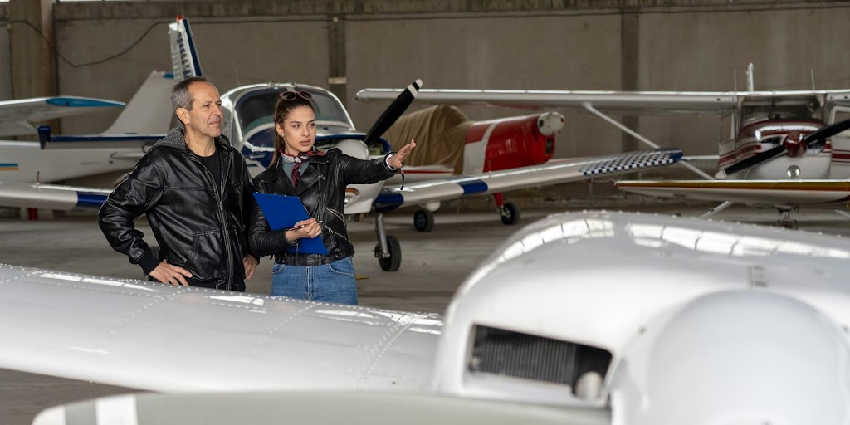
Certified Flight Instructor Training in Louisiana
As a new Commercial pilot, the most important next step in your career is to build flight hours through a top Certified Flight Instructor Training Program near Louisiana. As a CFI you can do just that - fly, instruct, earn money and gain flight hours. As you train new pilots, you build valuable flight hours, while being compensated for your time.
Through the Certified Flight Instructor Training in Louisiana, students obtain the knowledge necessary to meet the requirements for FAA exams, and demonstrate through practical and written tests, their ability to operate aircraft as pilot-in-command within the aviation industry. StudentsLouisiana will learn the problem-solving skills for flight operations and obtain increased situational awareness with a focus on safety.
Helicopter pilot students gain an understanding of the aerodynamics, components, and flight instruments of the aircraft, specifically those of a Robinson R22 and R44, with the option of Bell 206 B and L series aircraft, including their limitations at high altitude. Instrumentation training will give the student the knowledge to translate information from the aircraft instruments into correct control response in the event of Instrument Meteorological Conditions (IMC).
Helicopter CFI Certificate Program: 30 days and 3 - 30 Flight Hours
The CFI Program Prerequisites:
- 
Private Pilot Certificate;

- Commercial Pilot Certificate; and
- Certified Flight Instructor Certificate.


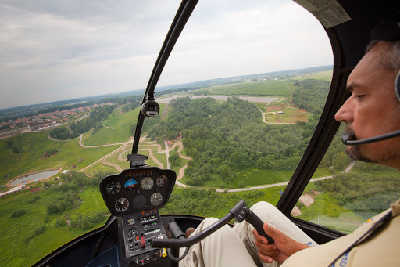
Time Received:

- 180 Hours Dual VFR Flight Training;

- 5 Hours Dual IFR Flight Training;

- 15 Solo / Supervised Solo;

- 113 Hours Ground Instruction; and

- 100 Hour Pre- and Post- Flight Briefing Instruction.
CFI Training Program Objective
The Certified Flight Instructor Training in Louisiana is designed to train a student pilot from their beginning initial flight through the completion of their Certified Flight Instructor certificate. The CFI Training in Louisiana is designed to prepare students to pass both their written and practical FAA examinations through their private pilot, commercial and certified flight instructor certificates.
The CFI Program teaches student pilots how to fly and then helps beginning instructors understand and apply the fundamentals of instruction. The CFI program prepares student pilots for initial entry-level jobs in the industry.

Included in the CFI Training in Louisiana
Part I - Introduction to High Altitude Flying: With the majority of flight time occurring above 5000ft density altitude (DA), students learn how to determine DA and how high-DA's will affect helicopter performance. Various flight characteristics and weight-and-balance considerations are studied. Training includes the extensive practice of run-on landings, auto-rotations, low rotor RPM, and max performance takeoffs.

Part II - The Mountain Environment: Students learn about how mountain terrain affects environmental conditions. Students are trained in the reconnaissance techniques, as well as, procedures for performing pinnacle and confined area operations at high altitude.
Certified Flight Instructor Careers and Jobs in Louisiana Fixed Wing CFI
Reports to Chief Flight Instructor – Fixed Wing
Job Description Summary: Flight training schools and programs in Louisiana are looking for highly motivated CFI’s and MEL’s to instruct for Fixed-Wing programs all over Louisiana. Qualified Instructors provide flight, simulator, and ground instruction in accordance with Part 61 and 141, FAA regulations, Airmen’s Information Manual, advisory circulars, airport operations, and policies and procedures.
CFI's are responsible for student’s flights, student records, and ensure that each flight course meets course standards, training requirements, and objectives.
Essential Job Functions:
- Perform those flight instructor duties authorized by the Federal Aviation Regulations in accordance with the approved Training Course Outline.
- Ensure all students understand and practice all aspects of Upper Limit’s Aviation Safety Program.
- Regularly schedule each assigned student to ensure satisfactory progress through the course and immediately inform the supervisor of any delays in training or satisfactory progress.
- Responsible for accurately maintaining all appropriate records to include student training records, student logbooks, and computer records.
- Ensure that all assigned students as stipulated in the applicable Training Course Outline meet course standards, training requirements, and objectives.

- Initiate stage check requests for assigned students.
- Responsible for the timely course completion of all flight students assigned, including completion of required paperwork.
- Monitor the maintenance condition of the training aircraft, and inform maintenance personnel of any questionable items.
- Recommend curriculum and courseware improvements when appropriate and develop new curriculum or courseware as assigned.
- File incident reports as necessary to report any observed safety violations, or situations that may affect the safety of flight.
- Contact and meet with potential new students. Conduct tours of facilities and familiarize customers with Upper Limit’s policies, procedures, and flight training courses.
Attend administrative, standardization, in-service training, and instructor development meetings as assigned.
Minimum Requirements:
- FAA Certified Flight Instructor and Airplane Single Engine and Multi-Engine Land
- 200 hours of dual SEL given
- 50 hours of dual MEL given
- Must hold a current FAA Class II Medical Certificate
- C172 S experience with G1000 – minimum 100/hrs
- Pass ’s initial and on-going drug and alcohol testing program.
- Aircraft piloting skills, including familiarity with and ability to perform required flight maneuvers and procedures.
- Knowledge of and ability to apply effective instructional techniques in the classroom and in flight.
- Knowledge of appropriate Federal Aviation Regulations and related administrative and operational procedures and requirements.
- Ability to work well under pressure in a fast-paced and noisy environment while exercising sound judgment at all times.
- Strong customer service skills.
- Productivity and Performance
- Perform an average of 40 instructional hours per two-week pay period. Maintain an 80% pass rate for final review and stage checks.
Preferred Qualifications:
- CFII rating
- Bravo Airspace experience a plus
- Density Altitude flying above 5,000 feet
- Instrument Ground Instructor (IGI) experience a plus
- Advanced Ground Instruction (AGI) preferred
FAA - A History of Airplane Structures Facts for Louisiana
Leading up to World War I (WWI), stronger engines also allowed designers to develop thicker wings with stronger spars. Wire wing bracing was no longer needed. Flatter, lower wing surfaces on high-camber wings created more lift. WWI expanded the need for large quantities of reliable airplane. Used mostly for reconnaissance, stacked-wing tail draggers with wood and metal truss frames with mostly fabric skin dominated the wartime sky.
Airline On-Time Statistics and Delay Causes
Delay Causes, delay definitions, understanding delay data, database tables, flight delays at a glance. The U.S. Department of Transportation's (DOT) Bureau of Transportation Statistics (BTS) tracks the on-time performance of domestic flights operated by large air carriers. Summary information on the number of on-time, delayed, canceled and diverted flights appears in DOT's monthly Air Travel Consumer Report, published about 30 days after the month's end, as well as in summary tables posted on this website. BTS began collecting details on the causes of flight delays in June 2003. Summary statistics and raw data are made available to the public at the time the Air Travel Consumer Report is released.
Certified Flight Instructor Training Available in Louisiana
Certified Flight Instructors from Louisiana, find your next job through Aviation Schools Online. Many of the top flight schools in the country use our site to connect with CFIs just like you. Whether you're looking for CFI, MEI, or CFII employment, we're here to match you with the best flight instructor or best flight instructor job available in Louisiana.
Learning to fly in Louisiana should be economical and fun, Wouldn't it be easier to enjoy your training knowing that you will accomplish your goals in the least amount of time and expense? Imagine being a private pilot in as little as 60 days! Not everyone can dedicate the time to commit to this type of training, and I have developed training programs for the budget minded flight school student.
Certified Flight Instructor Courses in Louisiana
The Certified Flight Instructor path is one way for pilots to gain flight time while refining their skills. Instructors will also be able to gain flight hours and experience in order to move on to other opportunities.
To obtain a Flight Instructor Certificate inLouisiana, the student-pilot must be at least 18 years or older, hold a commercial or ATP certificate, hold a third-class medical certificate, and pass the FAA written, along with the Check ride.
The student will receive 15 hours of flight training in the right seat to become comfortable and to be able to perform and demonstrate all maneuvers pertaining to flight training. The student will also receive 20 hours of ground training.
Ground instruction includes fundamentals of instructing, technical support areas, pre-flight preparation, a pre-flight lesson on a maneuver to be performed in flight, aerodynamics and the principals of flight, aircraft systems, meteorology and weather data services, airspace, air traffic control, radio communications, Federal Aviation Regulations, aeromedical factors, aeronautical charts, and associated publications, aircraft performance and limitations, basic and radio navigation, night flying procedures, flight planning, flight maneuvers, and ground operations.
CFI Practical Exam in Louisiana
Your initial CFI Practical exam is widely recognized as not only the most difficult of all check rides; but also the most important. ‘Checkride” is a term those in the industry use when talking about the FAA Practical Exam. Passing the Certified Flight Instructor ‘Checkride’, or CFI Practical Exam is the moment where you are finally going to set yourself apart from a ‘student’ role, to a marketable role as a Flight Instructor.
This important milestone is what will allow you to start your career. It is well known that here, in the U.S., your first job as a professional pilot will most likely be as a flight instructor inLouisiana. First, we will discuss what it takes to become a Helicopter Instructor Pilot; then we are going to go inside a CFI Practical Exam.
Becoming a Certified Flight Instructor in Louisiana
Where to start, and what it takes to get there? Anyone who has never flown before will start out as a Student Pilot working towards becoming a Private Pilot Certificate holder. You will need to find a Flight School to begin your training. There are several options out there, and choosing the right one for you is a discussion for another time.
Once you complete your Private Pilot Training and you are ready, you will take a Private Pilot Practical Exam. Practical Exams are the same in regards to how the exam is conducted.
Great! You’re Now a Private Pilot…..What’s Next?
Once you become a Private Pilot Certificate holder, your flight training can go one of three ways. One, you can stop training and remain a Private Pilot. Several people in the General Aviation sector take this route. These are likely the people who are fortunate enough to own their own aircraft and all they want is to be able to legally fly.
They have no ambitions of flying for a living and are content simply being a ‘pilot’. However, most of us are doing this because this is what we want to do for a living. This brings us to the other two options in our flight training career. The most common step is to begin your instrument training.
This is where things get ‘serious’. In order to be a Private Pilot Certificate holder with an Instrument Rating, you are going to dedicate yourself to in-depth ground training, simulator training and flight training with a view limiting device.
At this point in your flight training, you are going to learn how to safely fly the aircraft with no outside references by solely relying on your instruments inside the cockpit. This stage of training is what I like to call, the make or break stage. If you complete this invaluable training, you can walk proud because everyone in aviation will know that you are serious about becoming a career pilot.
Helicopter Fun Facts for Alexandria
Highest altitude made in a helicopter was 40,820ft (12,442m) on 21, June 1972 in a Aerospatiale Lama and the Pilot was Jean Bouet from France.
Fun Helicopter Facts for Alexandria
MD Helicopters - MD 600N: The MD 600N is an eight-place, light, single-turbine engine helicopter that provides high performance and increased capacity to give the customer greater versatility.
Helicopter Fun Facts for Baton Rouge
The International Helicopter Safety Team (IHST) is focused on reducing all helicopter accidents and it envisions an international civil helicopter community that experiences zero accidents. To reach this goal, the IHST is focused on educating all operators and pilots about how civil helicopter accidents occur and how they can be prevented.
Fun Helicopter Facts for Baton Rouge
MD Helicopters - MD 520N: The MD 520N is a fast, agile, lightweight, turbine powered, all purpose helicopter. Advanced technology has been used in the design and construction of the aircraft, resulting in excellent speed capabilities
Helicopter Fun Facts for Bossier City
Any type of accident is unfortunate, but an accident that results in a fatality is especially tragic. Analyzing multiple years of accident data, IHST safety experts have determined what type of operational occurrence contributes the most to helicopter accident fatalities. The data shows that Loss of Control figures into one out of every five fatal accidents with Visibility issues (Visual Meteorological Conditions into Instrument Meteorological Conditions, darkness, fog, glare, etc.) not far behind. Taken together, Loss of Control and Visibility problems contribute to one-third of all fatal helicopter accidents.
Fun Helicopter Facts for Bossier City
MD Helicopters - MD 530: The MD 530F is engineered to meet your requirements for hot-day, high-altitude operation. Equipped with the 650 shp Rolls-Royce 250-C30 engine, the MD 530F operates more effectively in hot, high environments than other helicopters in its class.
Helicopter Fun Facts for Chalmette
Approximately 12,000 helicopters saw action in Vietnam (all services). Army UH-1's totaled 9,713,762 flight hours in Vietnam between October 1966 and the end of American involvement in early 1973.
Fun Helicopter Facts for Chalmette
MD Helicopters - MD 530: The MD 530F is engineered to meet your requirements for hot-day, high-altitude operation. Equipped with the 650 shp Rolls-Royce 250-C30 engine, the MD 530F operates more effectively in hot, high environments than other helicopters in its class.
Helicopter Fun Facts for Gretna
Army AH-1G's totaled 1,110,716 flight hours in Vietnam. We believe that the Huey along with the Huey Cobra have more combat flight time than any other aircraft in the history of warfare assuming you count actual hostile fire exposure versus battle area exposure.
Fun Helicopter Facts for Gretna
MD Helicopters - MD 500E: The MD 500E helicopter delivers the highest speed, payload and productivity in its class. Rear seat passengers have greater headroom and visibility than earlier Model 500s.
Helicopter Fun Facts for Hammond
Helicopters in Vietnam seldom flew above 1,500 feet which is traffic pattern altitude for bombers and were always exposed to hostile fire even in their base camps.
Fun Helicopter Facts for Hammond
In any context, when you are talking about flying, one of the most interesting aircraft that you'll probably get to fly is the helicopter! Helicopter training of course is your only avenue to becoming a successful helicopter pilot - so getting a license is the key to all your problems.
Helicopter Fun Facts for Harvey
Bell Helicopters built 10,005 Hueys from 1957 to 1975. Prior to 1957 there were three XH-40 prototypes and six YH-1B test helicopters manufactured. Of the 10,005 production Huey's the first 732 were designated HU-1A and HU-1B. 9,216 of these went to the US Army, 79 to the US Air Force, 42 to the Navy, and 127 to the Marine Corps. The rest went to other countries.
The total helicopter pilots killed in the Vietnam War was 2,202. Total non-pilot crew members was 2,704. Based on a database from the Pentagon we estimate that over 40,000 helicopter pilots served in the Vietnam War.
Helicopter History for Harvey
Unlike most other aircraft, the helicopter is much a smaller aircraft yet more powerful and is extremely maneuverable - and of course helicopter pilots have to be extremely skilled to be able to get a license!
Aviation Facts and Figures for Houma
Army UH-1's totaled 7,531,955 flight hours in Vietnam between October 66 to December 75. The Huey and Huey Cobra had more flight hours in combat that any other aircraft in the history or warfare. Huey Cobra had 1,038,969 flight hours in Vietnam.
Helicopter History for Houma
As a helicopter pilot, you must be able to master your reflexes and be able to make decisions on-the-spot. The pilots are skilled at handling almost any flying situation, and since the helicopter is small and light, it has the ability to perform any complicated role - whether it is ferrying people from inaccessible locations like mountains and forests to rescuing passengers from oceans.
Aviation Facts and Figures for Kenner
Helicopter Flight Training for Kenner Remember that the armed forces provides career options for people interested in flying any type of aircraft. So, if you have the aptitude for helicopter flying, or for flying any aircraft as a matter of fact, joining the armed forces could be a good option.
Positive Quotes: “I am enough of an artist to draw freely upon my imagination. Imagination is more important than knowledge. Knowledge is limited. Imagination encircles the world.” ― Albert Einstein
Helicopter History for Kenner
Prior to making any final decisions, it is advisable to first get a flight medical examination taken, which will clear you for flying. This would mean that you have no apparent handicaps and that your vision is perfect.
Aviation Facts and Figures for Lafayette
Helicopter Flight Training for Lafayette While choosing a training school or program, you must first consider the cost and location of training. Not all the states in the US have these training schools and programs, so getting enrolled in a helicopter training school might mean you have to relocate.
Helicopter History for Lafayette
For those of you who hold no pilot ratings or don't have a license, the training would differ from person to person. For the newcomer, it would include around twenty hours of instruction and about twenty hours of solo flying practice. This would then be followed by a written test, which if you pass, will lead you to the next round - the check ride round!
Aviation Facts and Figures for Lake Charles
Helicopter Flight Training for Lake Charles The average cost ranges anywhere from $20,000 to $40,000 depending on the school or program you have chosen. You should choose a school based on these criteria - the courses that are provided, the payment structure, the time taken for training, student insurance, safety schemes and guidelines, school facilities, housing facilities, ground-school training program, types of helicopters used for training, staff and instructors, job vacancy programs, and above all, FAA certificates.
Helicopter History for Lake Charles
The check ride is almost always done under the supervision of someone qualified or someone from the aviation authority, who will in turn put you through a combined practical and oral exam. Once you are qualified for a license, you can move on to obtaining a commercial license.
Aviation Facts and Figures for Laplace
Helicopter Flight Schools: In the industry, airline jobs such as that of a commercial pilot are considered to be the most enjoyable careers. However, since this job requires a large amount of work commitment, skills, and expertise; it is considered responsible.
Helicopter History for Laplace
Helicopter Flight Training for Laplace As with any type of flying education, helicopter training can be very expensive. Anything from $10,000 upwards should be considered normal. However, once you start with your flying, you will easily be able to make up for the amount that you have spent on training.
Aviation Facts and Figures for Marrero
Helicopter Facts for Marrero The main task of a commercial helicopter pilot is to fly the helicopter, abiding with the safety rules and regulations of flying. In the pilot job description, there are many other tasks that a pilot needs to carry out. Presently, the median per annum salary of these pilots is believed to be around $85,000.
Helicopter History for Marrero
Helicopter Flight Training for Marrero If you have decided on becoming a pilot, the first thing you need to do is plan your finances. Be aware of the fact that helicopter training is indeed expensive and requires a long-term commitment on your part. So, if you can manage to pay from the beginning of the course to the end, then it is wise to indulge in this commitment.
Aviation Facts and Figures for Metairie
Helicopter pilot training schools give you the needed assistance and information that you will require to become a skilled helicopter pilot. Having helicopter training from a reputed school increases your chances of being a successful pilot.
Helicopter History for Metairie
Helicopter Flight Training for Metairie If you don't have the required finances, there are many financial aids that could lessen the burden that you may need to carry. There are many helicopter flight schools that have special payment schemes that could be beneficial to you if you want to complete your training.
Aviation Facts and Figures for Monroe
Unlike most other planes, helicopter is much more cheaper, faster and agile. Helicopter pilots must be skilled about flying and must be spontaneous in taking decisions related to landing the chopper.
Aviation Training Facts for Monroe
Helicopter Flight Training for Monroe During this period, the instructor will have the students ride along on a helicopter flight and learn the many capabilities of the aircraft. As the students progress through training, the helicopter flight instructor will allow the students to take over control of the craft and attempt to fly.
Aviation Facts and Figures for Natchitoches
Helicopter training schools worldwide are in a need of new pilots to enter the aviation industry and maybe, now is the best time to start your training. Helicopter pilots are in demand for oil rig operations, news, photography, rescue missions, firefighting and many other reasons.
Aviation Training Facts for Natchitoches
Helicopter Flight Training for Natchitoches You may need to obtain more flight hours before you can become a helicopter flight instructor, though in some jurisdictions, you will simply need to complete another examination and then pass both oral and practical tests.
Aviation History for New Iberia and Fun Facts for New Iberia
Modern Day Military Pilot Training for New Iberia: Flying aircraft is a coveted career in the United States armed services, and the process to become a military pilot is a competitive one. Most candidates need at least a bachelors degree to apply. The exception is the Army, where the fleet consists mainly of helicopters rather than fixed-wing aircraft. Becoming a helicopter pilot in the Army does not require higher education or prior enlistment.
Aviation Training Facts for New Iberia
Helicopter Flight Training for New Iberia Helicopter flight instructors are responsible for training new pilots, and are required to hold commercial certificates or licenses, since they receive monetary compensation for their service.
Aviation History for New Orleans and Fun Facts for New Orleans
Modern Day Military Pilot Training for New Orleans: Army pilots start with flight school and move on to basic combat training. The Air Force's basic pilot training covers 12 weeks and Marine pilots undergo two phases of basic flight training. After basic training, pilots continue with helicopter-specific training. All branches also require the applicant to pass the Armed Services Vocational Aptitude Battery.
Aviation Training Facts for New Orleans
Helicopter Ground School: In an airplane you can make decisions about trading forms of energy very late in the day. For example, if you pull the stick all the way back at 6000' above the ground you will gradually slow down and eventually stall and perhaps enter a spin. With many airplanes you could spin nearly all the way to the ground before applying forward stick and opposite rudder to get back to a normal flight condition. All without an engine.
Aviation History for Opelousas and Fun Facts for Opelousas
Modern Day Military Pilot Training for Opelousas: Before starting pilot training, a student must have at least a four-year bachelor's degree in any field. Beyond a bachelor's degree, each of the branches has its own education and training requirements, with most requiring some type of officer training along with introductory flight training. Navy pilots must take part in Officer Candidate School, followed by a six-week air indoctrination course.
Aviation Training Facts for Opelousas
Helicopter Ground School: In a helicopter, by contrast, if the blades spin down more than 10-15% from their normal velocity, there is no way to convert potential or kinetic energy into spinning such that the helicopter will start to fly again. If you can't restart your engine, therefore, your helicopter can very quickly become a rock.
Aviation History for Ruston and Fun Facts for Ruston
Modern Day Military Pilot Training for Ruston: All five branches of the United States military employ helicopter pilots for combat and non-combat uses. Each branch uses similar types of helicopters, with minor differences between each type. For example, the Air Force flies Pave Hawks, which are nearly identical to the Army's Blackhawk, Navy's Skyhawk and Coast Guard's Jayhawk, with several subtle differences that promote each branch's mission. Before getting behind the controls of a military helicopter, pilots must fulfill a number of requirements.
Aviation Training Facts for Ruston
Helicopter Ground School: In a turbine-powered helicopter like a Bell 206 JetRangers the blades are heavy and the blades won't slow down for several seconds after an engine failure. In the flyweight Robinson, however, after an engine failure you have no more than 1.2 seconds to take exactly the right actions or the helicopter cannot be recovered.
Fun Helicopter Facts for Shenandoah
Modern Day Military Pilot Training for Shenandoah: A candidate who fulfills the regulations for acceptance into aviation school and is admitted must serve at least five years in active duty after completing the course or voluntarily dropping it. If a candidate is removed from the course because of medical reasons or incompetence, he must serve at least one year beyond any service commitments he made before entering flight school.
Aviation Training Facts for Shenandoah
Tasks in a helicopter pilot job description mainly depend on the type of employment, whether commercial or a defense pilot. This article provides information about the job description and salary of a helicopter pilot.
Fun Helicopter Facts for Shreveport
Modern Day Military Pilot Training for Shreveport: A candidate for Army aviation school must score 90 or higher out of a possible 176 on the Flight Aptitude Selection Test. This exam includes seven sections, of which two request personal and background information and the other five cover actual topics in aviation such as the use and function of flight instruments and helicopter motions. The Army provides a study guide and practice test.
Aviation Training Facts for Shreveport
Helicopter Pilot Training: Before you get into the air you'll probably spend about half an hour on a preflight inspection of the helicopter. With most airplanes most of the critical pieces are hidden underneath bodywork and not accessible except to a mechanic during an oil change or 100-hour inspection. With the Robinson R22 the engine is mostly flapping in the breeze and what is hidden can easily be accessed via a flip-up door.
Fun Helicopter Facts for Slidell
Modern Day Military Pilot Training for Slidell: Navy pilots must be 18 to 34 for enlisted officers and 19 to 35 for commissioned officers, Air Force pilots must be between 17 and 28 for enlisted officers and 17 and 35 for commissioned officers, and Marine pilots must be 17 to 29 for enlisted officers and 20 to 28 for commissioned officers. All pilots must be United States citizens and have clean criminal records.
Aviation Training Facts for Slidell
Helicopter Pilot Training: If the weather is nice you'll probably remove the doors. This ensures that you'll be nice and cool inside the machine. In theory you could look straight down while in flight and scare yourself but in practice your attention will be focussed on looking out the front and trying to hold the machine in a fixed attitude relative to the horizon. So don't hesitate to fly your very first lesson with the doors off.