Commercial Pilot Jobs in Nebraska
Cities in Nebraska with Aviation Schools:
- Arlington
- Ashland
- Auburn
- Aurora
- Beatrice
- Bellevue
- Bennet
- Bennington
- Blair
- Boys Town
- Broken Bow
- Central City
- Chadron
- Chalco
- Chapman
- Columbus
- Cordova
- Creighton
- Crete
- Denton
- Elkhorn
- Elm Creek
- Fremont
- Geneva
- Gering
- Gibbon
- Gordon
- Grand Island
- Gretna
- Hastings
- Hay Springs
- Holdrege
- Kearney
- Kennard
- La Vista
- Lexington
- Lincoln
- Madison
- Magnet
- Martell
- Milford
- Millard
- Milligan
- Minden
- Nebraska City
- Neligh
- Norfolk
- North Platte
- Omaha
Commercial Pilot Jobs Nebraska

Nebraska Commercial Pilot Salary - How Much Do Commercial Pilots Make?
Commercial Pilot Benefits

Depending on the company you work for, as a commercial pilot you may be eligible to receive health insurance, life insurance, and disability benefits, along with retirement plans and "per diem" pay for longer trips, but these benefits are fairly rare for most commercial pilot jobs.
Seniority Affects Pay
As a new commercial pilot, you can expect to make entry level pay, fly older, less sophisticated aircraft, and fly less desirable routes and schedules. New commercial pilots typically must "pay their dues" in this role in order to accumulate the required hours to apply for better jobs and move up the career ladder into higher paying jobs. Get more information about commercial pilot training.
Pilot Training - What you need to know to fly for a living
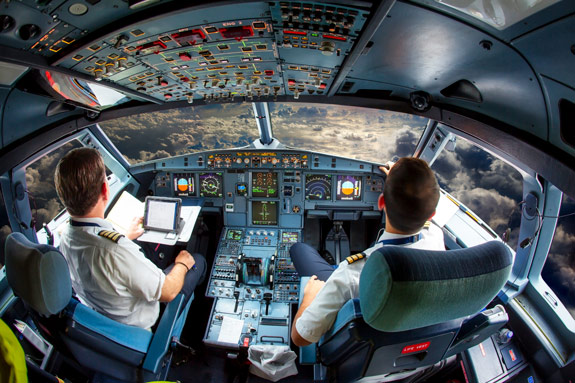
Commercial pilots with two years of college or more have an advantage over pilots with only a high school diploma. However, many operations do hire pilots with only a high school education. Pilots who have degrees in aviation-related fields like aeronautics have a better chance of landing a job. If you want to become a commercial pilot, there are two routes to take: military or civilian training. Military training is only a viable option for people with top grades and a four year degree, as competition for military flying slots is fierce, to say the least. The majority of new commercial pilot training occurs at flight schools, flight academies, and colleges with flight training programs.
Where to Find Commercial Pilot Training Near Nebraska
Most schools, academies, and colleges offer pilot training for people with no experience. These programs will have a base price for earning all the required licenses and ratings to become a commercial pilot and begin building your flight hours to find a job. Keep in mind that the quoted price is for people who progress at the "average" rate, so the price can go lower or higher, depending on your personal progress.
Building Commercial Pilot Hours

Since you will need to build flight hours after earning your licenses and ratings, it's important to find a flight school or academy that offers jobs to its graduates. This way, assuming you are professional in your approach to flying and the flight training environment, you are virtually assured of having your first "commercial pilot" job after graduation, and have a chance to build those flight hours and experience you need to move on to your next position. Learn about commercial pilot jobs.
As a commercial pilot, you will be required to take additional training and check rides periodically, depending on the type of operation you work for, and the type of aircraft being flown. Ongoing training is a reality for all commercial pilots.
FAA - A History of Airplane Structures Facts for Nebraska
The most common aircraft is the fixed-wing aircraft. As the name implies, the wings on this type of flying machine are attached to the fuselage and are not intended to move independently in a fashion that results in the creation of lift. One, two, or three sets of wings have all been successfully utilized. [Figure 1-12] Rotary-wing aircraft such as helicopters are also widespread. This handbook discusses features and maintenance aspects common to both fixed wing and rotary-wing categories of aircraft. Also, in certain cases, explanations focus on information specific to only one or the other. Glider airframes are very similar to fixed wing aircraft. Unless otherwise noted, maintenance practices described for fixed-wing aircraft also apply to gliders.
Aviation Factoids of Great Interest - Thrust and Drag
An aircraft in flight is the center of a continuous battle of forces. Actually, this conflict is not as violent as it sounds, but it is the key to all maneuvers performed in the air. There is nothing mysterious about these forces; they are definite and known. The directions in which they act can be calculated, and the aircraft itself is designed to take advantage of each of them. In all types of flying, flight calculations are based on the magnitude and direction of four forces: weight, lift, drag, and thrust.
Commercial Pilot Jobs Nebraska
Commercial Pilot License - Which License and Ratings Will You Need?
To become a commercial pilot in Nebraska, you need to be at least 18 years old (although you can earn your private pilot's license at 17, you must be 18 or older to get your commercial pilot license) and get at least a third class FAA medical certificate. The medical certificate ensures that you are in good overall health, have good vision (corrected or uncorrected is okay) and don't have any disabilities which could affect your ability to fly, although the FAA may grant a waiver for individual cases. Learn about commercial pilot jobs.
List of Licenses and Ratings
Commercial pilots typically hold some or all of the following licenses, ratings, and certificates, depending on the operation:
- Federal Aviation Administration (FAA) Medical First Class - Certificate
- Private Pilot - License
- Commercial Pilot - License
- Instrument Pilot - Rating
- Multi-Engine - Rating
- Type Rating - Rating specific to the type of aircraft being flown, if necessary
The Road to a Commercial Pilot License
The first license you earn is private pilot. Next, most people get their instrument rating, and then go on to the commercial pilot license. Some operations don't require an instrument rating. However, possessing the rating is always beneficial both for piloting skills and getting jobs. If you'll be flying multi-engine aircraft (and you probably will), you'll need to earn a multi-engine rating, and, if flying larger aircraft (over 12,500 pounds gross weight) or turbo jet aircraft, you'll also need a type rating for that specific model or family of aircraft. Many companies offer type rating training specifically for this purpose. Get more information on commercial pilot training.
Nebraska Commercial Pilot License Tests
Most, but not all, FAA licenses and ratings require that you pass written, oral, and practical (check ride) tests given by approved testing centers and designated examiners.
Accelerated Flight Training - Condensed training helps pilots retain info, earn more ratings, and get jobs
No matter how you look at it, flight training is a lengthy process. There are many new things to learn and hundreds of flight hours to gain. When it comes down to it, flight training can only be condensed so much before it bumps up against regulations. This presents a bit of a problem to someone looking to start a career in aviation. Training costs money, but it's going to be a while before flying will pay. So what's the best solution? Accelerated training. Accelerated flight training offers some notable benefits including being good for career pilots, quick progression through ratings, and increased job placement opportunities. Great for Career Pilots
Accelerated training is great for career pilots. It allows the student to condense their training into a few weeks or months rather than years. This works by allowing the student to fly multiple lessons per week while also taking consolidated ground school. The nature of the training typically demands the student train like a full-time job--eight hours a day, five days a week. This is great for someone who's looking to get started with a career in the quickest amount of time. It's unfortunately not so great for someone who can't devote more than a few hours per week.
Most accelerated training programs function similarly to military training in that students alternate between flying and classroom instruction before entering a phase of longer flights. Some accelerated programs even dispatch students and aircraft on a series of long flights that are intended to provide a large amount of flight time and allow the student a more varied cross-country experience.
Quick Progression Through Ratings
This type of training is primarily designed to fast track students to ratings. Rather than taking six months to obtain a private pilot certificate or an instrument rating, it can take as little as fourteen days. How can you take something that takes six months and effectively learn it in fourteen days? Attend ground school and flight training eight hours per day. The bottom line on all flight training is the more you do it, the more you retain. Accelerated programs are based on this concept and their success stems from the fact that their students are immersed in flying so much that they can't help but learn.
Job Placement Opportunities
Most of the larger accelerated flight training schools offer job placement to graduates. They have agreements with some airlines and often directly offer employment to some of the graduates. This is a great asset to someone looking to break into the aviation career field. When considering job placement agreements, some schools offer actual job placements while some offer guaranteed interviews. Either is better than nothing no matter how you look at it. It's debatable, but the single biggest employer of many accelerated flight training program graduates is often the schools offering the programs. After all, they need flight instructors to teach their students and someone who's familiar with the program is a great asset.
As you can see, for someone trying to launch into an aviation career, accelerated flight training has a number of benefits. Even people that are just trying to get several ratings at once can benefit from an accelerated program. So if you're looking for a flying career and you have time to devote to training, consider an accelerated program.
Fun Helicopter Facts for Bellevue
If you include military helicopters it is estimated that there are more than 45,000 operating worldwide.
That if the engine stops the helicopter rotor continues to spin allowing the machine to slowly land generally without crashing to the ground.
Fun Helicopter and Airplane Facts for Bellevue
A helicopter (informally called chopper or helo) is a type of rotorcraft in which lift and thrust are supplied by engine-driven rotors.
Fun Airplane Facts
Tom Stuker is the worlds most frequent flyer. He has traveled over 10 million miles. There are over 14,000 commercial flights in the air at any one time.
Interesting Helicopter and Fixed-wing Facts for Columbus
One problem associated with helicopter rotor blades occurs because airflow along the length of each blade differs widely. This means that lift and drag fluctuate for each blade throughout the rotational cycle, thereby exerting an unsteadying influence upon the helicopter.
Dream big and dare to fail. –Norman Vaughan
Fun Helicopter and Airplane Facts for Columbus
Modern Day Military Pilot Training: ll pilots must pass a Class 1 flight physical and have perfect 20/20 vision, either corrected or uncorrected. Pilots must also have normal color perception, depth perception and field of vision. Additionally, Coast Guard pilots must have good dental health with no cavities.
Fun Facts for Helicopter and Airplane Flight Training for Fremont
The biggest helicopter was the Russian Mil Mi-12 Homer of 1968 which could lift 40, 204 kg up to 2255 m.
Igor Sikorsky a Russian engineer built his first helicopter in 1909. When neither this prototype nor its 1910 successor succeeded Sikorsky decided that he could not build a helicopter without more sophisticated materials and money so he transferred his attention to aircraft.
Fun Helicopter and Airplane Facts for Fremont
Helicopters were developed and built during the first half-century of flight, with the Focke-Wulf Fw 61 being the first operational helicopter in 1936. There are more than 11,000 civil helicopters operating just in the U.S. and more than 15,000 civil helicopters operating in more than 157 other countries around the world.
Interesting Helicopter and Fixed-wing Facts for Grand Island
Once the engine fails or otherwise is shut off the pilot must immediately lower the pitch reducing lift and drag and the helicopter will begin to descend. If they dont do this quick enough allowing the RPM of the main rotor to drop too far theyll then lose control of the helicopter and will likely not get it back.
The AK1-3 was designed to comply with the Ukrainian AP-27 rules which are similar to the European Aviation Safety Agency CS-27 standard. The aircraft features a single main rotor with a tail rotor a two-seats-in side-by-side configuration enclosed cockpit skid-type landing gear and a four cylinder air-cooled four-stroke 156 hp (116 kW)Subaru EJ25 automotive engine.
Fun Helicopter and Airplane Facts for Grand Island
Due to relatively low acquisition and operating costs, the R22 has been popular as a primary rotorcraft trainer around the world and as a livestock management tool on large ranches in North America and cattle stations in Australia.
Interesting Helicopter and Fixed-wing Facts for Hastings
During World War I Hungarian engineer Theodore von Karman constructed a helicopter that when tethered was able to hover for extended periods. Several years later Spaniard Juan de la Cierva developed a machine he called an autogiro in response to the tendency of conventional airplanes to lose engine power and crash while landing.
Fun Helicopter and Airplane Facts for Hastings
Some helicopters reached limited production, but it was not until 1942 that a helicopter designed by Igor Sikorsky reached full-scale production, with 131 aircraft built.
Interesting Helicopter and Fixed-wing Facts for Kearney
Cornu was constrained by the same problems that would continue to plague all early designers for several decades: no one had yet devised an engine that could generate enough vertical thrust to lift both the helicopter and any significant load (including passengers) off the ground.
Twenty nine Palms,California also known as MCAGCC (Combat Center) is run by the Marine Corps and located in the San Bernardino County. By the 2010 census, the base hosted 8413 individuals. The terrain consists of small, yet abrupt mountains, turning the place into a perfect training field for troops under severe conditions. Believe it or not, the unauthorized travel in the area is not forbidden because of the military objectives only, but also due to the dry lakes, ancient lava flows and abandoned mines and unexploded missiles.
Fun Helicopter and Airplane Facts for Kearney
The first version was produced as the R22, followed by the R22 HP, R22 Alpha, R22 Beta and R22 Beta II. Superficially, the aircraft appear similar. The R22 HP was fitted with a 160 bhp Lycoming 0-320-B2C engine, an increase of 10 bhp (7.5 kW) over the original R22.
Helicopter Fun Facts for Lincoln
As the helicopter approaches the ground, the pilot must then get rid of most of their forward motion and slow the decent using the stored up kinetic energy in the rotors. If done perfectly, the landing will be quite gentle. They accomplish this by executing a flare, pitching the nose up, at the right moment.
Fun Helicopter and Airplane Facts for Lincoln
The first version was produced as the R22, followed by the R22 HP, R22 Alpha, R22 Beta and R22 Beta II. Superficially, the aircraft appear similar. The R22 HP was fitted with a 160 bhp Lycoming 0-320-B2C engine, an increase of 10 bhp (7.5 kW) over the original R22.
The Boeing/Sikorsky RAH-66 Comanche unveiled in 1999 is the first helicopter using stealth technology. It is made of carbon-fiber and other composite materials, and the rotor hub is hidden.
Interesting Helicopter and Fixed-wing Facts for Norfolk
Lift is proportional to the change in the air's momentum (its mass times its velocity): the greater the momentum the greater the lift.
The first helicopter to achieve completely untethered flight was the Cornu in 1907 which managed to hover one foot above the ground for 20 seconds.
Helicopter History for Norfolk
Helicopters are safest to fly in bad weather because they can slow down, stop and/or fly backwards or sideways. If the engine stops, thehelicopter rotor continues to spin allowing the machine to slowly land, generally without crashing to the ground. Over 3 million lives have been saved by helicopters in both peace time and war time operations since the first person was rescued from the sea in 1944. There are more than 11,000 civil helicopters operating just in the U.S.and more than 15,000 civil helicopters operating in more than 157 other countries around the world.
Interesting Helicopter and Fixed-wing Facts for North Platte
Unlike airplanes, which are designed to minimize bulk and protuberances that would weigh the craft down and impede airflow around it, helicopters have unavoidably high drag. Thus, designers have not utilized the sort of retractable landing gear familiar to people who have watched planes taking off or landingthe aerodynamic gains of such a system would be proportionally insignificant for a helicopter. In general, helicopter landing gear is much simpler than that of airplanes.
Fun Helicopter and Airplane Facts for North Platte
Before you can get a private pilot license, you must log a minimum of 40 hours on a helicopter. Flight hours will include time with your flying instructor and by yourself. Students generally log between 60 and 75 hours of flight time. You must put in a minimum of 250 flight hours to earn your commercial pilot license.
Interesting Helicopter and Fixed-wing Facts for Omaha
That if the engine stops the helicopter rotor continues to spin allowing the machine to slowly land generally without crashing to the ground.
Fixed-Wing Aircraft Factoid - Wing Configurations
Wings are airfoils that, when moved rapidly through the air, create lift. They are built in many shapes and sizes. Wing design can vary to provide certain desirable flightcharacteristics. Control at various operating speeds, the amount of lift generated, balance, and stability all change as the shape of the wing is altered.
More Fun Helicopter Facts for Omaha
Many helicopters use a tail rotor, an exposed blade or ducted fan mounted on the end of the tail boom typically seen on these craft. Another means of counteracting torque entails installing two rotors, attached to the same engine but rotating in opposite directions, while a third, more space-efficient design features twin rotors that are enmeshed, something like an egg beater.