Drone, UAS, and UAV Pilot Training in Alaska
Cities in Alaska with Aviation Schools:
- Anchorage
- Barrow
- Bethel
- College
- Eielson AFB
- Elmendorf AFB
- Fairbanks
- Fort Richardson
- Girdwood
- Homer
- Houston
- Juneau
- Kalifornsky
- Kenai
- Ketchikan
- Knik-Fairview
- Kodiak
- Lakes
- Meadow Lakes
- Nome
- North Pole
- Palmer
- Palmer Nikiski
- Sitka
- Soldotna
- Sterling
- Tanaina
- Unalaska
- Valdez
- Wasilla
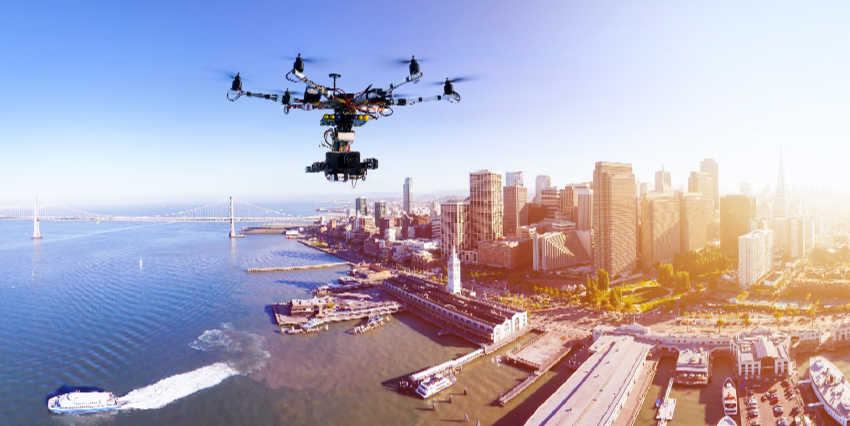
UAV Pilot Training in Alaska
UAV pilot training in Alaska is currently one of the hottest trends in aviation. Well, actually UAVs are currently one of the hottest trends in aviation. The military has been operating UAVs abroad and along the borders of the US for quite a while now, but the FAA has been slow-moving on civilian UAVs. Considering that the civilian market is positively teeming with potential, there are several reasons to consider UAV pilot trainingAlaska. Civilian UAV pilot training is relatively new.
More than a century ago, two brothers built and successfully flew the first airplane. Before the Wrights' flight, nobody had a need for flight training or pilot certificates. It was a very exciting time in aviation. New developments were made almost daily and by its second decade, aviation was experiencing its golden age.
Among some of that early development were attempts at creating UAVs. Some were marginally successful, but it wasn't until the last few decades that UAVs really became viable. Their development has been predominantly focused on military applications until recently when civilian applications became very attractive.
Much like aviation's golden age, UAVs have reached a critical point in their development where demand for civilian use is dictating the development of regulations and pilots.
UAV Pilot Training in Alaska Prepares You for a Growing Field
There are perhaps hundreds of UAVs currently under development and several more that have a long history in the military. As the only market for UAVs, until recently, the military has been the only provider to offer UAV pilot training inAlaska. With the explosive growth of UAVs and the massive list of potential civilian uses, there is no way soldiers coming out of the military pipeline can fulfill all of the industry demand for UAV pilots.
As development continues on UAVs and the FAA considers regulations that will integrate UAVs into the National Airspace System, it is becoming clear that this is a growth industry and now is the time to get in on the bottom floor.
UAV Pilot Training in Alaska Takes Less Time Than Traditional Flight Training
One of the perks of UAV pilot training is that current programs do not require as much flight time as traditional flight training. This is not to suggest it isn't difficult and time-consuming, but it certainly isn't as expensive. A huge component of current civilian training is conventional flight training and knowledge of basic engineering tests. Such a combination pays off by creating ideal UAV pilots for manufacturers who need pilots who can fly and execute proper flight tests of new aircraft.
If all of this sounds exciting and it interests you, perhaps civilian UAV pilot training in Alaska is in your future. Anyone who gets into the industry in the next few years is definitely in for an exciting ride as the FAA establishes regulations for integrating UAVs into the National Airspace System and as manufacturers continue to develop amazing technologies. One thing is certain, however, and that is that the UAV business isn't boring.
Use of UAS Likely to Expand in Alaska
Remotely piloted vehicles and unmanned drones, collectively known as Unmanned Aircraft Systems, have revolutionized the way the military performs certain tasks. Many tasks that are dangerous or simply boring are routinely handled by these devices in today's military. Now, the FAA is facing mounting pressure from civilian and law enforcement agencies to further expand UAS use into the national airspace system.
Some of the characteristics of these aircraft, such as the Predator B's 20-hour endurance, are unmatched with manned aircraft. This makes them very attractive to agencies like the Coast Guard and law enforcement, who regularly use manned aircraft for long search operations, and energy companies, who regularly use manned aircraft to inspect power-lines or pipelines. 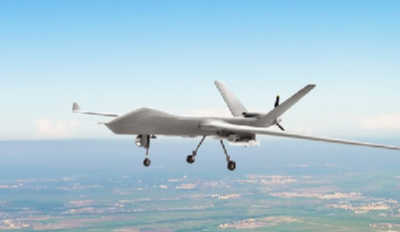 The ability of these agencies to use a UAS in place of manned aircraft would represent significant cost savings.
The FAA has thus far been reluctant to approve widespread use of UAS in US airspace due to concerns about interaction with other aircraft. There are currently hundreds of models of UAS in production, and like all aircraft, they range in size and mission. Additionally, they come in two major varieties: drones and remotely piloted vehicles.
Drones are preprogrammed to follow a specific mission and, once launched, perform that mission free of human interaction. RPVs are piloted by people on the ground, but often these people are hundreds or thousands of miles away. Lost communication is a major concern to the FAA, which fears that a rogue UAS could cause serious problems without proper separation from other aircraft.
According to a recent Associated Press article, Marion Blakey, a former FAA administrator, indicated that the FAA's transition from radar-based air traffic control to a satellite-based system will help ease such concerns. Under this system, known as ADS-B, aircraft will continuously advertise their position.
The point to take away from this is that UAS use will only expand in the near future. Within the next decade, organizations as diverse as state police, tornado researchers, and energy companies could be operating UAS on a daily basis.

Begin Your Aviation Career Today
It's never the wrong time for students to learn to fly as an aviation career path, but one could argue that there has never been a better time than now to do so. The Air Line Pilots Association (ALPA) estimates that global aviation traffic will triple between now (2020) and the year 2035.
Discover the best opportunities to help launch your aviation career
When people think about a career in aviation, the first thought is often of a pilot, but there are many other career opportunities one can pursue in this field.
Aircraft Manufacturing: A person can work as a manufacturing engineer, an electrical installer & technician, and so much more in working in the creation of manufacturing aircraft.
Aircraft and Systems Maintenance: Everything from aircraft maintenance engineering to aviation maintenance technician (AMT) and everything in between falls into this important area of aviation.
Airline and Airport Operations: Want to work as a flight dispatcher or an air traffic controller (ATC), which just so happens to be facing a shortage? Being an ATC is a challenging job and takes a certain type of person.
Start Your Aviation Career Here!
UAV Pilot Training Near Alaska
UAV pilot training near Alaska is becoming an increasingly popular flight training option. Still, in the early phases of development, the UAV industry is an exciting industry to follow, but one that is often difficult to understand and often breeds misconceptions. If you're interested in UAVs and UAV pilot training near Alaska, you should consider several things before starting your training.
Modern UAVs are so much more than glorified remote control planes. They are in a near-constant state of development, with new models rapidly outpacing the capabilities of models of just a few years ago. Not to mention, the FAA has struggled to keep pace with regard to establishing a framework to govern UAV pilot certification.
The end result is that UAV pilot training near Alaska is all new and changes a lot. Those interested in UAV pilot training near Alaska would do well to follow the FAA's UAS Integration initiative.
UAV Pilot Training Might Not Be Available to Alaska
Due in part to its newness, UAV pilot training in Alaska isn't yet widely available. New training providers are regularly starting courses in anticipation of the FAA developing a real UAS pilot certificate, but training is still likely to require a bit of travel on your part.
Many of the best training providers are also heavily involved in UAV research in general, including several colleges and universities who recently sponsored test site proposals. As such, you might also need to be accepted to that college or university in general before being able to actually enroll in UAV pilot training.
The only real difference in flying a UAV and flying a more conventional aircraft is the location of the pilot. It is a common misconception that flying UAVs is somehow less difficult than regular flying, but this is simply not accurate. If anything, flying a UAV is more difficult due to the lack of physical sensations of motion. In either case, learning to fly UAVs requires the same understanding of scientific and technical principles of flight as any flight training program.
UAV Flight Training Alaska is Rapidly Changing
As the FAA progresses through the process of integrating UAS into the National Airspace System, they continue to develop best practices and guidelines for training that will provide the basis for the UAV pilot certification process. While there are currently no UAV pilot certificates, it is only reasonable to expect at least a commercial certification to be developed and required in order to operate a UAV.
Until such a time as that certification becomes available, it is likely there will be numerous changes and developments to cope with.
It is most important to understand that, unlike helicopter flight training, for example, UAV pilot training near Alaska is for the future. It is certainly not the distant future, but you can't exactly walk out of a UAV pilot training program into a nice 9 to 5 job flying remotely-piloted aircraft. Please don't let that stop you from pursuing UAV pilot training near Alaska, but do be aware that you're developing skills for the future in a fascinating and innovative career field.
UAV pilot training is experiencing rapid growth and provides the skills of the future. Blended with a current flight training program for more conventional aircraft, you are not only setting the stage for an exciting career today, but you will provide the basis for a very exciting and lucrative future career that will be not only exceptionally interesting but very rewarding.
UAV Pilot Training in the Military or Civilian?
UAV pilot training has seen a lot of development in the military and, in the last few years, civilian training providers have begun developing the next generation of UAV pilot training. Training that focuses on civilian applications for UAVs.
For example, rather than military surveillance and reconnaissance, civilian UAVs could be used for aerial photography to save property developers' money or pipeline patrols. The potential applications of UAVs are endless. Unfortunately, the pool of pilots is minuscule and without pilots, no amount of development can continue for long. If you're looking for an exciting career piloting UAVs, here are several things to consider.
The road to becoming a UAV pilot in Alaska is very similar to that of a commercial pilot. First of all, employers are always looking for applicants with the most education, so if you want to be paid at the higher end of the pay scale, you'll need to earn a 4-year college degree in aeronautics or engineering.
Some aspiring UAV pilots decide to attend a college that offers 4-year degrees and UAV pilot training programs near Alaska. With this route, you'll end up with your degree and usually enough flight hours to apply for an entry-level unmanned aircraft systems (UAS) job. Whether you decide to go to college or not, you will need to earn a private pilot license, a commercial pilot license, and an instrument rating, and build up at least 500 hours of pilot-in-command flight hours.
Many people believe that since UAV pilots don't actually "fly" the airplane, they don't need a pilot license. However, this is usually not the case. To become a UAV pilot nearAlaska you'll need to earn at least a commercial pilot license with an instrument rating and get at least a third-class FAA medical certificate. Learn about UAV pilot jobs.
UAV Pilot License and Ratings Which Licenses and Ratings Will You Need?
UAV pilots in Alaska typically hold some or all of the following licenses, ratings, and certificates:
- Federal Aviation Administration (FAA) Medical Third Class - Certificate
- Private Pilot - License
- Commercial Pilot - License
- Airline Transport Pilot - License
- Instrument Pilot - Rating
Does a UAV Sensor Operator Need a License?
Depending on the kind of job you're looking for, a UAV sensor operator may or may not be required to possess at least a private pilot license. However, with that said, you will have a huge advantage over other job applicants if you are a certified private or commercial pilot when you apply.
UAV Pilot Jobs in Alaska
The worldwide UAV industry is expected to bring in over $80 billion by 2020, and that means more and more UAV pilot jobs every year. At the time of this writing, SimplyHired.com had over 40 jobs listed for UAV pilot and sensor operators. Read more about UAV pilot salaries.
After UAV Pilot Training in Alaska, Where Will You Work?
The job market for UAV pilots appears to be limitless. However, most UAV pilot and sensor operator jobs in the near future will be in the following industries:
- Information, Surveillance, and Reconnaissance (ISR)
- Target Drones
- Radar Decoy Systems
- Unmanned Combat Aerial Vehicles (UCAV)
FAA - A History of Drone Structures Facts for Anchorage
A steady increase in the use of honeycomb and foam core sandwich components and a wide variety of composite materials characterizes the state of aviation structures from the 1970s to the present. Advanced techniques and material combinations have resulted in a gradual shift from aluminum to carbon fiber and other strong, lightweight materials. These new materials are engineered to meet specific performance requirements for various components on the aircraft.
FAA - A History of Drone Structures Facts for Anchorage
Many airframe structures are made of more than 50 percent advanced composites, with some airframes approaching 100 percent. The term “very light jet” (VLJ) has come to describe a new generation of jet aircraft made almost entirely of advanced composite materials. [Figure 1-10] It is possible that non-composite aluminum aircraft structures will become obsolete as did the methods and materials of construction used by Cayley, Lilienthal, and the Wright Brothers.
Aviation Career Training Options
When deciding what is the best aviation training program for you, it is important to consider your flying and flight training goals. Once you've finished training, what kind of flying do you want to do? Are you learning to fly as a hobby? Do you want to learn to fly as a career? Are you seeking training for a different kind of aviation career, such as a flight dispatcher or aircraft maintenance technician (AMT)? When choosing where to receive your training, answering questions like these is important in order to establish which kind of school will best suit your needs.
With the help of ASO, gaining education in the field of your dream aviation career has never been more practical!
What makes one flight training academy better than another? There are many things – training aircraft, quality of the ground school, the curriculum, management, the local weather – and let's not forget, the flight instructors themselves.
Aviation Schools Online wants to help you find all the answers to your questions about aviation careers training. If you're thinking about getting into the aviation industry, either as a pilot or in one of the exciting ground-based careers, we offer you a starting point to learn about what to expect from each type of career.
Launching an Aviation Career? Start Here!
Aviation Schools Online Directory
Aviation Schools Online is celebrating 20 years as one of the Nation's top resources for individuals looking for schooling in the aviation industry. We exist to provide information on the best aviation schools in the United States and to connect our visitors to the appropriate schools that are nearest them.
We provide free, immediate access to the top aviation schools across the Nation
With ASO's extensive directory of aviation training institutions, you can search, find, and contact the Nation's top schools to help launch your aviation career. Each school is listed by state, city, and their particular curriculum so you can narrow your search accordingly and easily find the perfect school to support your career as an aviation professional.
Whether your goals are to become a commercial pilot, aircraft maintenance technician, an air traffic controller, or anything in between, there has never been a better time to get into the aviation industry, and ASO is here to help you dig a little deeper and share our connections with you.
Explore Aviation Schools and Training Options
Begin Your Aviation Career Today
It's never the wrong time for students to learn to fly as an aviation career path, but one could argue that there has never been a better time than now to do so. The Air Line Pilots Association (ALPA) estimates that global aviation traffic will triple between now (2020) and the year 2035.
Discover the best opportunities to help launch your aviation career
When people think about a career in aviation, the first thought is often of a pilot, but there are many other career opportunities one can pursue in this field.
Aircraft Manufacturing: A person can work as a manufacturing engineer, an electrical installer & technician, and so much more in working in the creation of manufacturing aircraft.
Aircraft and Systems Maintenance: Everything from aircraft maintenance engineering to aviation maintenance technician (AMT) and everything in between falls into this important area of aviation.
Airline and Airport Operations: Want to work as a flight dispatcher or an air traffic controller (ATC), which just so happens to be facing a shortage? Being an ATC is a challenging job and takes a certain type of person.
Start Your Aviation Career Here!
Huey History
Bell Helicopters built 10,005 Hueys from 1957 to 1975. Prior to 1957 there were three XH-40 prototypes and six YH-1B test helicopters manufactured. Of the 10,005 production Huey's the first 732 were designated HU-1A and HU-1B. 9,216 of these went to the US Army, 79 to the US Air Force, 42 to the Navy, and 127 to the Marine Corps. The rest went to other countries.
it may help to travel back to the earliest days of powered aviation, to fully understand fixed wing aircraft. The Wright brothers created the first plane which utilized the fixed wing design.
FAA - A History of Aircraft Structures Factoid for Eielson AFB
The airframe of a fixed-wing aircraft consists of five principal units: the fuselage, wings, stabilizers, flight control surfaces, and landing gear. Helicopter airframes consist of the fuselage, main rotor and related gearbox, tail rotor (on helicopters with a single main rotor), and the landing gear.
Helicopter Facts for Elmendorf AFB
The total helicopter pilots killed in the Vietnam War was 2,202. Total non-pilot crew members was 2,704. Based on a database from the Pentagon we estimate that over 40,000 helicopter pilots served in the Vietnam War.
A standard fixed wing aircraft has a curved upper surface and a flat lower surface. When the propeller or jet engine pushes the entire airplane forward, the air strikes the front edge of the wing with substantial pressure, and in general, gives it lift.
FAA - A History of Aircraft Structures Factoid for Elmendorf AFB
Airframe structural components are constructed from a wide variety of materials. The earliest aircraft were constructed primarily of wood. Steel tubing and the most common material, aluminum, followed. Many newly certified aircraft are built from molded composite materials, such as carbon fiber. Structural members of an aircraft’s fuselage include stringers, longerons, ribs, bulkheads, and more. The main structural member in a wing is called the wing spar.
Helicopter Facts for Fairbanks
Army UH-1's totaled 7,531,955 flight hours in Vietnam between October 66 to December 75. The Huey and Huey Cobra had more flight hours in combat that any other aircraft in the history or warfare. Huey Cobra had 1,038,969 flight hours in Vietnam.
FAA - A History of Aircraft Structures Factoid for Fairbanks
The skin of aircraft can also be made from a variety of materials, ranging from impregnated fabric to plywood, aluminum, or composites. Under the skin and attached to the structural fuselage are the many components that support airframe function. The entire airframe and its components are joined by rivets, bolts, screws, and other fasteners. Welding, adhesives, and special bonding techniques are also used.
Helicopter Facts for Fort Richardson
The Germans used helicopters for artillery spotting on the Russian front in WWII. The Germans also built and perfected a rotor-kite (helicopter with no engine) that was towed behind a U-Boat to increase the range at which targets could be spotted. (Since it had no power, there was no torque, and no need for a tailrotor.)
Bell Helicopters built 10,005 Hueys from 1957 to 1975. Prior to 1957 there were three XH-40 prototypes and six YH-1B test helicopters manufactured. Of the 10,005 production Huey's the first 732 were designated HU-1A and HU-1B. 9,216 of these went to the US Army, 79 to the US Air Force, 42 to the Navy, and 127 to the Marine Corps. The rest went to other countries.
FAA - A History of Aircraft Structures Factoid for Fort Richardson
Aircraft structural members are designed to carry a load or to resist stress. In designing an aircraft, every square inch of wing and fuselage, every rib, spar, and even each metal fitting must be considered in relation to the physical characteristics of the material of which it is made. Every part of the aircraft must be planned to carry the load to be imposed upon it.
Aerodynamics and the Laws of Physics
The law of conservation of energy states that energy may neither be created nor destroyed. Motion is the act or process of changing place or position. An object may be in motion with respect to one object and motionless with respect to another. For example, a person sitting quietly in an aircraft flying at 200 knots is at rest or motionless with respect to the aircraft; however, the person and the aircraft are in motion with respect to the air and to the earth.
Facts of Fort Richardson
U.S. Army Alaska (USARAK), a subordinate element of U.S. Army Pacific (USARPAC), is headquartered at Joint Base Elmendorf-Richardson (JBER). The organization, commanded by a Brigadier General, provides USARPAC with focused, early entry battle command capability and acts as the Joint Force Land Component Commander for homeland defense and civil support in Alaska. USARAK's mission is to be prepared to deploy rapidly in the Pacific theater and elsewhere in support of contingency operations, USPACOM objectives
Helicopter Facts for Homer
On twin-rotor craft the rotors spin in opposite directions, so their reactions cancel each other. The helicopter is propelled in a given direction by inclining the axis of the main rotor in that direction. The helicopter's speed is limited by the fact that if the blades rotate too fast they will produce compressibility effects on the blade moving forward and stall effects on the rearwardmoving blade, at the same time.
FAA - A History of Aircraft Structures Factoid for Homer
In 1909, Frenchman Louis Bleriot produced an aircraft with notable design differences. He built a successful mono-wing aircraft. The wings were still supported by wires, but a mast extending above the fuselage enabled the wings to be supported from above, as well as underneath. This made possible the extended wing length needed to lift an aircraft with a single set of wings. Bleriot used a Pratt truss-type fuselage frame.
FAA - A History of Aircraft Structures Factoid for Houston
Leading up to World War I (WWI), stronger engines also allowed designers to develop thicker wings with stronger spars. Wire wing bracing was no longer needed. Flatter, lower wing surfaces on high-camber wings created more lift. WWI expanded the need for large quantities of reliable aircraft. Used mostly for reconnaissance, stacked-wing tail draggers with wood and metal truss frames with mostly fabric skin dominated the wartime sky.
FAA - A History of Aircraft Structures Factoid for Houston
More powerful engines were developed, and airframe structures changed to take advantage of the benefits. As early as 1910, German Hugo Junkers was able to build an aircraft with metal truss construction and metal skin due to the availability of stronger powerplants to thrust the plane forward and into the sky. The use of metal instead of wood for the primary structure eliminated the need for external wing braces and wires. His J-1 also had a single set of wings (a monoplane) instead of a stacked set.
FAA - A History of Aircraft Structures Factoid for Juneau
In the 1920s, the use of metal in aircraft construction increased. Fuselages able to carry cargo and passengers were developed. The early flying boats with their hull-type construction from the shipbuilding industry provided the blueprints for semimonocoque construction of fuselages. Truss-type designs faded. A tendency toward cleaner mono-wing designs prevailed.
FAA - A History of Aircraft Structures Factoid for Juneau
Into the 1930s, all-metal aircraft accompanied new lighter and more powerful engines. Larger semimonocoque fuselages were complimented with stress-skin wing designs. Fewer truss and fabric aircraft were built. World War II (WWII) brought about a myriad of aircraft designs using all metal technology. Deep fuel-carrying wings were the norm, but the desire for higher flight speeds prompted the development of thin-winged aircraft in which fuel was carried in the fuselage. The first composite structure aircraft, the De Havilland Mosquito, used a balsa wood sandwich material in the construction of the fuselage. The fiberglass radome was also developed during this period.
FAA - A History of Aircraft Structures Factoid for Kalifornsky
After WWII, the development of turbine engines led to higher altitude flight. The need for pressurized aircraft pervaded aviation. Semimonocoque construction needed to be made even stronger as a result. Refinements to the all-metal semimonocoque fuselage structure were made to increase strength and combat metal fatigue caused by the pressurization-depressurization cycle.
FAA - A History of Aircraft Structures Factoid for Kalifornsky
In the 1960s, ever larger aircraft were developed to carry passengers. As engine technology improved, the jumbo jet was engineered and built. Still primarily aluminum with a semimonocoque fuselage, the sheer size of the airliners of the day initiated a search for lighter and stronger materials from which to build them. The use of honeycomb constructed panels in Boeing’s airline series saved weight while not compromising strength. Initially, aluminum core with aluminum or fiberglass skin sandwich panels were used on wing panels, flight control surfaces, cabin floor boards, and other applications.
FAA - A History of Aircraft Structures Factoid for Kenai
Powered heavier-than-air aviation grew from the Wright design. Inventors and fledgling aviators began building their own aircraft. Early on, many were similar to that constructed by the Wrights using wood and fabric with wires and struts to support the wing structure.
FAA - A History of Aircraft Structures Factoid for Kenai
The work of all of these men was known to the Wright Brothers when they built their successful, powered airplane in 1903. The first of its kind to carry a man aloft, the Wright Flyer had thin, cloth-covered wings attached to what was primarily truss structures made of wood. The wings contained forward and rear spars and were supported with both struts and wires. Stacked wings (two sets) were also part of the Wright Flyer.
Helicopter Facts for Ketchikan
In 1942, Focke and Flettners seat Fl 282 Kolibri (\Humming Bird) became the first helicopter anywhere to enter operational military service. It was the most advanced helicopter developed during WWII. Focke and Flettners machines had two rotors turning in opposite directions to prevent torque reaction.
FAA - A History of Aircraft Structures Factoid for Ketchikan
Octave Chanute, a retired railroad and bridge engineer, was active in aviation during the 1890s. His interest was so great that, among other things, he published a definitive work called “Progress in Flying Machines.” This was the culmination of his effort to gather and study all the information available on aviation. With the assistance of others, he built gliders similar to Lilienthal’s and then his own. In addition to his publication, Chanute advanced aircraft structure development by building a glider with stacked wings incorporating the use of wires as wing supports.
Helicopter Facts for Knik-Fairview
Best known among its developers are the French inventor Louis Breguet and the engineers Igor Sikorsky of the United States and Juan de la Cierva of Spain. The helicopter has become very popular for short-distance transportation, because of its maneuverability and ability to land and take off in small areas; it has been adopted for a wide range of services, including air-sea rescue, fire fighting, traffic control, oil platform resupply, and business transportation.
Aviation Facts - Stability and Control of an Aircraft
An aircraft must have sufficient stability to maintain a uniform flightpath and recover from the various upsetting forces. Also, to achieve the best performance, the aircraft must have the proper response to the movement of the controls. Control is the pilot action of moving the flight controls, providing the aerodynamic force that induces the aircraft to follow a desired flightpath. When an aircraft is said to be controllable, it means that the aircraft responds easily and promptly to movement of the controls. Different control surfaces are used to control the aircraft about each of the three axes. Moving the control surfaces on an aircraft changes the airflow over the aircraft’s surface. This, in turn, creates changes in the balance of forces acting to keep the aircraft flying straight and level.
FAA and Mitigation of the Impact of Weather
How the FAA mitigates the impact of weather. FAA air traffic controllers can’t control Mother Nature, but they have a wide range of tools to mitigate Mother Nature’s impact on the flying public. These tools are used at the agency’s Command Center in Warrenton, VA, which balances air traffic demand with system capacity on a nationwide scale, at Air Route Traffic Control Centers (ARTCC), which handle high altitude traffic, at Terminal Radar Approach Control (TRACON) facilities, which handle traffic around busy airports, and at airport towers.
Helicopter History for Kodiak
In the 1880s, the well-known scientist and inventor Thomas Edison experimented with small helicopter models. He tested several rotor configurations driven by a gun cotton engine, which was an early form of internal combustion engine. A series of explosions and other mishaps deterred further experiments with these engines. Later, Edison used an electric motor for power, and he was one of the first to realize from his experiments the need for a large diameter rotor with low blade area to give good hovering efficiency. Unlike other inventors of the times, Edison's more scientific approach to the vertical flight problem proved that both high aerodynamic efficiency of the rotor and high power from an engine were required if successful flight was to be achieved.
First Flights of Helicopters
In 1907, about four years after the Wright brothers' first successful powered flights in fixed-wing airplanes at Kitty Hawk in the United States, a French bicycle make named Paul Cornu constructed a vertical flight machine that was reported to have carried a human off the ground for the first time. The airframe was very simple, with a rotor at each end. Power was supplied to the rotors by a gasoline motor and belt transmission. Each rotor had two relatively large but low aspect ratio blades set at the periphery of a large spoked wheel. The rotors rotated in opposite directions to cancel torque reaction. The 24-hp engine used in the machine was hardly powerful enough to have sustained hovering flight out of ground effect.
The FAA World From The Perspective of Air Traffic
At any given moment there are approximately 5,000 aircraft traversing the U.S. skies.The FAA is a year-round, 24/7 operation, responsible for 5.3 million square miles of U.S. domestic airspace and 24 million square miles of U.S. airspace over the oceans. There are 43,290 average daily flights in and out of the U.S. More than 14,000 air traffic controllers manage traffic from many of the FAA’s 700 facilities. Fifty-five hundred airway transportation system specialists maintain more than 70,000 pieces of equipment.Aviation contributes $1.6 trillion annually to the U.S. economy and constitutes 5.1 percent of the gross domestic product. Aviation generates 10 million jobs in the U.S. annually.
Historical Facts of Helicopters
In 1907, the Breguet Brothers built their first helicopter. Their cumbersome quad-rotor Gyroplane consisted of four long girders made of steel tubes and arranged in the form of a horizontal cross. A rotor consisting of four biplane blades was placed at each of the four corners of the cross, giving a total of 32 separate lifting surfaces. The pilot sat in the center of the cross next to a 40-hp engine. The machine is reported to have carried a pilot off the ground, albeit briefly.
Aerodynamics and the Laws of Physics
Air has no force or power, except pressure, unless it is in motion. When it is moving, however, its force becomes apparent. A moving object in motionless air has a force exerted on it as a result of its own motion. It makes no difference in the effect then, whether an object is moving with respect to the air or the air is moving with respect to the object. The flow of air around an object caused by the movement of either the air or the object, or both, is called the relative wind.
Fun Helicopter and Airplane Facts for Nome
Flight Instructor Facts: the instructor commonly maintains a grip on the controls in order to overcome any emergency condition that might occur during the student's flight. Once a student has completed the entire training session, and has demonstrated the proper level of knowledge to safely operate a helicopter, the flight instructor will allow the student to perform a solo flight.
Fun Helicopter and Airplane Facts for Nome
Helicopter Flight Training: You may need to obtain more flight hours before you can become a helicopter flight instructor, though in some jurisdictions, you will simply need to complete another examination and then pass both oral and practical tests.
Fun Helicopter and Airplane Facts for North Pole
Heliports: The typical heliport contains several helipads. Helipads are smooth and flat areas devoted to helicopter landing and take offs. The heliport consists of a control tower in most instances, a radio station as well as identification and emergency lighting.
Fun Helicopter and Airplane Facts for North Pole
Air Force Helicopter Pilot: You should fulfill the minimum height and weight requirements and should have a good eyesight and ability to identify colors. Apart from physical fitness, you also need to concentrate on your formal education.
Fun Helicopter and Airplane Facts for Palmer
Air Force Helicopter Pilot: You should fulfill the minimum height and weight requirements and should have a good eyesight and ability to identify colors. Apart from physical fitness, you also need to concentrate on your formal education.
How the FAA Mitigates the Impact of Bad Weather
They include ground stops, which keep aircraft on the ground when air traffic control is unable to safely accommodate additional aircraft in the system, ground delays, in which aircraft are delayed at their departure airport in order to manage demand and capacity at their arrival airport, and Severe Weather Avoidance Plans, which minimize the impact of a large scale storm by easing traffic demand in portions of airspace impacted by the storm. Other tools include:
- The Airspace Flow Program which identifies aircraft scheduled to fly through severe weather and provides new estimated departure times, giving airlines the flexibility to accept the delay, fly around the storm or cancel the flight.
Fixed-Wing Aircraft Factoid
Fuselage: The fuselage is the main structure or body of the fixed-wing aircraft. It provides space for cargo, controls, accessories, passengers, and other equipment. In single-engine aircraft, the fuselage houses the powerplant. In multiengine aircraft, the engines may be either in the fuselage, attached to the fuselage, or suspended from the wing structure. There are two general types of fuselage construction: truss and monocoque.
Heliports: A heliport is a type of airfield devoted to use by helicopters exclusively. Consisting of many helipads and hangers used to protect the helicopters from the elements, helicopters are able to avoid the confined and typically crowded airspace associated with a common airport.
Fun Helicopter and Airplane Facts for Palmer Nikiski
The Aviation Maintenance Technician Handbook—Airframe (FAA-H-8083-31A) is one of a series of three handbooks for persons preparing for certification as an airframe or powerplant mechanic. It is intended that this handbook provide the basic information on principles, fundamentals, and technical procedures in the subject matter areas relating to the airframe rating. It is designed to aid students enrolled in a formal course of instruction, as well as the individual who is studying on his or her own. Since the knowledge requirements for the airframe and powerplant ratings closely parallel each other in some subject areas, the chapters which discuss fire protection systems and electrical systems contain some material which is also duplicated in the Aviation Maintenance Technician Handbook—Powerplant (FAA-H-8083-32A).
The Aviation Maintenance Technician Handbook
This volume contains information on airframe construction features, assembly and rigging, fabric covering, structural repairs, and aircraft welding. The handbook also contains an explanation of the units that make up the various airframe systems. Because there are so many different types of aircraft in use today, it is reasonable to expect that differences exist in airframe components and systems.
The Aviation Maintenance Technician Handbook Airframe
The Aviation Maintenance Technician Handbook—Airframe (FAA-H-8083-31A) was produced by the Federal Aviation Administration (FAA) with the assistance of Safety Research Corporation of America (SRCA).
FAA - A History of Aircraft Structures Factoid for Soldotna
In the late 1800s, Otto Lilienthal built upon Cayley’s discoveries. He manufactured and flew his own gliders on over 2,000 flights. His willow and cloth aircraft had wings designed from extensive study of the wings of birds. Lilienthal also made standard use of vertical and horizontal fins behind the wings and pilot station. Above all, Lilienthalproved that man could fly.
FAA - A Part of History of Aircraft Structures
The key discovery that “lift” could be created by passing air over the top of a curved surface set the development of fixed and rotary-wing aircraft in motion. George Cayley developed an efficient cambered airfoil in the early 1800s, as well as successful mannedgliders later in that century. He established the principles of flight, including the existence of lift, weight, thrust, and drag. It was Cayley who first stacked wings and created a tri-wing glider that flew a man in 1853.
FAA - A History of Aircraft Structures Factoid for Sterling
It was Cayley who first stacked wings and created a tri-wing glider that flew a man in 1853. Earlier, Cayley studied the center of gravity of flying machines, as well as the effects of wing dihedral. Furthermore, he pioneered directional control of aircraft by including the earliest form of a rudder on his gliders.
FAA - A Brief History of Aircraft Structures
The history of aircraft structures underlies the history of aviation in general. Advances in materials and processes used to construct aircraft have led to their evolution from simple wood truss structures to the sleek aerodynamic flying machines of today. Combined with continuous powerplant development, the structures of “flying machines” have changed significantly.
Fun Helicopter and Airplane Facts for Tanaina
How to Select a Helicopter Instructor: Spend a half hour to an hour talking with the instructor. Make sure that the two of you can get along! See how knowledgable the instructor seems to be. If the instructor spends a lot of time trying to convince you to go fly rather than talk, you may have found a guy who isn't going to want to spend the time with you on the ground preparing for a lesson that he should.
Aviation Training History and Facts for Tanaina
Future rotary wing aviators are required to pass the Class 1 Flying Duty Medical Examination. This entails a thorough physical examination, and candidates can be disqualified if they are diagnosed with common physical and mental illnesses and conditions. The Army conducts interviews with potential candidates for rotary wing training after they pass the AFASt
Fun Helicopter and Airplane Facts for Unalaska
Hospital helicopter pilots respond to medical emergencies, transporting patients who are in critical condition to hospitals where they can receive the medical care they need. The job of an emergency medical services pilot is one associated with high prestige; however, you must be a highly experienced pilot to qualify.
Aviation Training History and Facts for Unalaska
Helicopter Flight Training: The average cost ranges anywhere from $20,000 to $40,000 depending on the school or program you have chosen. You should choose a school based on these criteria - the courses that are provided, the payment structure, the time taken for training, student insurance, safety schemes and guidelines, school facilities, housing facilities, ground-school training program, types of helicopters used for training, staff and instructors, job vacancy programs, and above all, FAA certificates.
Fun Helicopter and Airplane Facts for Valdez
If you are planning to become a commercial helicopter pilot, you need to possess a four-year degree, as required by most employers. The next step is to complete the certification program administered by the Federal Aviation Administration (FAA).
Aviation Training History and Facts for Valdez
Helicopter Training Facts: All helicopter pilot training programs have long hours, packed schedules, and a very heavy workload. Students are expected to dedicate the time and effort required to be successful in this exclusive program.
Fun Helicopter and Airplane Facts for Wasilla
There are many interesting jobs out there in the industry, out of which most are mainly related to the hobby of the professional. One such career is that of a helicopter pilot. If you love flying and are interested in aeronautics, you can consider a career as a helicopter pilot.
Fun Helicopter and Airplane Facts for Wasilla
Before you can get a private pilot license, you must log a minimum of 40 hours on a helicopter. Flight hours will include time with your flying instructor and by yourself. Students generally log between 60 and 75 hours of flight time. You must put in a minimum of 250 flight hours to earn your commercial pilot license.