Drone, UAS, and UAV Pilot Training in Hawaii
Cities in Hawaii with Aviation Schools:
- Ahuimanu
- Aiea
- Big Island
- East Honolulu
- Ewa Beach
- Ewa Gentry
- Ewa Villages
- Haiku-Pauwela
- Halawa
- Hawaiian Paradise Park
- Hickam Housing
- Hilo
- Holualoa
- Honolulu
- Kahului
- Kailua
- Kalaoa
- Kaneohe
- Kaneohe Station
- Kapaa
- Kapolei
- Kauai
- Kihei
- Kula
- Lahaina
- Laie
- Lanai
- Lihue
- Maili
- Makaha
- Makakilo
- Makawao
- Maui
- Mililani
- Mililani Mauka
- Molokai
- Nanakuli
- Napili-Honokowai
- Oahu
- Ocean Pointe
- Pearl City
- Pukalani
- Royal Kunia
- Schofield Barracks
- Wahiawa
- Waianae
- Waihee-Waiehu
- Waikele
- Waikoloa Village
- Wailuku
- Waimalu
- Waimanalo
- Waimea
- Waipahu
- Waipio
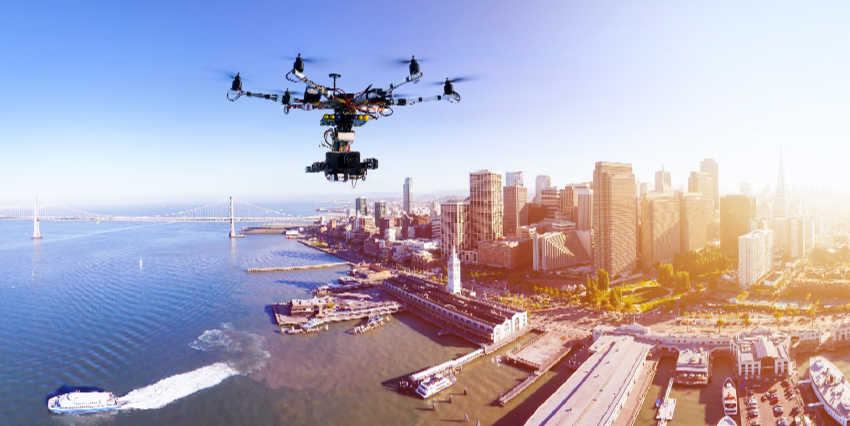
UAV Pilot Training in Hawaii
UAV pilot training in Hawaii is currently one of the hottest trends in aviation. Well, actually UAVs are currently one of the hottest trends in aviation. The military has been operating UAVs abroad and along the borders of the US for quite a while now, but the FAA has been slow-moving on civilian UAVs. Considering that the civilian market is positively teeming with potential, there are several reasons to consider UAV pilot trainingHawaii. Civilian UAV pilot training is relatively new.
More than a century ago, two brothers built and successfully flew the first airplane. Before the Wrights' flight, nobody had a need for flight training or pilot certificates. It was a very exciting time in aviation. New developments were made almost daily and by its second decade, aviation was experiencing its golden age.
Among some of that early development were attempts at creating UAVs. Some were marginally successful, but it wasn't until the last few decades that UAVs really became viable. Their development has been predominantly focused on military applications until recently when civilian applications became very attractive.
Much like aviation's golden age, UAVs have reached a critical point in their development where demand for civilian use is dictating the development of regulations and pilots.
UAV Pilot Training in Hawaii Prepares You for a Growing Field
There are perhaps hundreds of UAVs currently under development and several more that have a long history in the military. As the only market for UAVs, until recently, the military has been the only provider to offer UAV pilot training inHawaii. With the explosive growth of UAVs and the massive list of potential civilian uses, there is no way soldiers coming out of the military pipeline can fulfill all of the industry demand for UAV pilots.
As development continues on UAVs and the FAA considers regulations that will integrate UAVs into the National Airspace System, it is becoming clear that this is a growth industry and now is the time to get in on the bottom floor.
UAV Pilot Training in Hawaii Takes Less Time Than Traditional Flight Training
One of the perks of UAV pilot training is that current programs do not require as much flight time as traditional flight training. This is not to suggest it isn't difficult and time-consuming, but it certainly isn't as expensive. A huge component of current civilian training is conventional flight training and knowledge of basic engineering tests. Such a combination pays off by creating ideal UAV pilots for manufacturers who need pilots who can fly and execute proper flight tests of new aircraft.
If all of this sounds exciting and it interests you, perhaps civilian UAV pilot training in Hawaii is in your future. Anyone who gets into the industry in the next few years is definitely in for an exciting ride as the FAA establishes regulations for integrating UAVs into the National Airspace System and as manufacturers continue to develop amazing technologies. One thing is certain, however, and that is that the UAV business isn't boring.
Use of UAS Likely to Expand in Hawaii
Remotely piloted vehicles and unmanned drones, collectively known as Unmanned Aircraft Systems, have revolutionized the way the military performs certain tasks. Many tasks that are dangerous or simply boring are routinely handled by these devices in today's military. Now, the FAA is facing mounting pressure from civilian and law enforcement agencies to further expand UAS use into the national airspace system.
Some of the characteristics of these aircraft, such as the Predator B's 20-hour endurance, are unmatched with manned aircraft. This makes them very attractive to agencies like the Coast Guard and law enforcement, who regularly use manned aircraft for long search operations, and energy companies, who regularly use manned aircraft to inspect power-lines or pipelines.  The ability of these agencies to use a UAS in place of manned aircraft would represent significant cost savings.
The FAA has thus far been reluctant to approve widespread use of UAS in US airspace due to concerns about interaction with other aircraft. There are currently hundreds of models of UAS in production, and like all aircraft, they range in size and mission. Additionally, they come in two major varieties: drones and remotely piloted vehicles.
Drones are preprogrammed to follow a specific mission and, once launched, perform that mission free of human interaction. RPVs are piloted by people on the ground, but often these people are hundreds or thousands of miles away. Lost communication is a major concern to the FAA, which fears that a rogue UAS could cause serious problems without proper separation from other aircraft.
According to a recent Associated Press article, Marion Blakey, a former FAA administrator, indicated that the FAA's transition from radar-based air traffic control to a satellite-based system will help ease such concerns. Under this system, known as ADS-B, aircraft will continuously advertise their position.
The point to take away from this is that UAS use will only expand in the near future. Within the next decade, organizations as diverse as state police, tornado researchers, and energy companies could be operating UAS on a daily basis.
FAA - A History of Drone Structures Facts for Hawaii
It was Cayley who first stacked wings and created a tri-wing glider that flew a man in 1853. Earlier, Cayley studied the center of gravity of flying machines, as well as the effects of wing dihedral. Furthermore, he pioneered directional control of drone by including the earliest form of a rudder on his gliders.
Helicopter Landing Gear or Skids
As mentioned, a helicopter’s landing gear can be simply a set of tubular metal skids. Many helicopters do have landing gear with wheels, some retractable.
UAV Pilot Training Near Hawaii
UAV pilot training near Hawaii is becoming an increasingly popular flight training option. Still, in the early phases of development, the UAV industry is an exciting industry to follow, but one that is often difficult to understand and often breeds misconceptions. If you're interested in UAVs and UAV pilot training near Hawaii, you should consider several things before starting your training.
Modern UAVs are so much more than glorified remote control planes. They are in a near-constant state of development, with new models rapidly outpacing the capabilities of models of just a few years ago. Not to mention, the FAA has struggled to keep pace with regard to establishing a framework to govern UAV pilot certification.
The end result is that UAV pilot training near Hawaii is all new and changes a lot. Those interested in UAV pilot training near Hawaii would do well to follow the FAA's UAS Integration initiative.
UAV Pilot Training Might Not Be Available to Hawaii
Due in part to its newness, UAV pilot training in Hawaii isn't yet widely available. New training providers are regularly starting courses in anticipation of the FAA developing a real UAS pilot certificate, but training is still likely to require a bit of travel on your part.
Many of the best training providers are also heavily involved in UAV research in general, including several colleges and universities who recently sponsored test site proposals. As such, you might also need to be accepted to that college or university in general before being able to actually enroll in UAV pilot training.
The only real difference in flying a UAV and flying a more conventional aircraft is the location of the pilot. It is a common misconception that flying UAVs is somehow less difficult than regular flying, but this is simply not accurate. If anything, flying a UAV is more difficult due to the lack of physical sensations of motion. In either case, learning to fly UAVs requires the same understanding of scientific and technical principles of flight as any flight training program.
UAV Flight Training Hawaii is Rapidly Changing
As the FAA progresses through the process of integrating UAS into the National Airspace System, they continue to develop best practices and guidelines for training that will provide the basis for the UAV pilot certification process. While there are currently no UAV pilot certificates, it is only reasonable to expect at least a commercial certification to be developed and required in order to operate a UAV.
Until such a time as that certification becomes available, it is likely there will be numerous changes and developments to cope with.
It is most important to understand that, unlike helicopter flight training, for example, UAV pilot training near Hawaii is for the future. It is certainly not the distant future, but you can't exactly walk out of a UAV pilot training program into a nice 9 to 5 job flying remotely-piloted aircraft. Please don't let that stop you from pursuing UAV pilot training near Hawaii, but do be aware that you're developing skills for the future in a fascinating and innovative career field.
UAV pilot training is experiencing rapid growth and provides the skills of the future. Blended with a current flight training program for more conventional aircraft, you are not only setting the stage for an exciting career today, but you will provide the basis for a very exciting and lucrative future career that will be not only exceptionally interesting but very rewarding.
UAV Pilot Training in the Military or Civilian?
UAV pilot training has seen a lot of development in the military and, in the last few years, civilian training providers have begun developing the next generation of UAV pilot training. Training that focuses on civilian applications for UAVs.
For example, rather than military surveillance and reconnaissance, civilian UAVs could be used for aerial photography to save property developers' money or pipeline patrols. The potential applications of UAVs are endless. Unfortunately, the pool of pilots is minuscule and without pilots, no amount of development can continue for long. If you're looking for an exciting career piloting UAVs, here are several things to consider.
The road to becoming a UAV pilot in Hawaii is very similar to that of a commercial pilot. First of all, employers are always looking for applicants with the most education, so if you want to be paid at the higher end of the pay scale, you'll need to earn a 4-year college degree in aeronautics or engineering.
Some aspiring UAV pilots decide to attend a college that offers 4-year degrees and UAV pilot training programs near Hawaii. With this route, you'll end up with your degree and usually enough flight hours to apply for an entry-level unmanned aircraft systems (UAS) job. Whether you decide to go to college or not, you will need to earn a private pilot license, a commercial pilot license, and an instrument rating, and build up at least 500 hours of pilot-in-command flight hours.
Many people believe that since UAV pilots don't actually "fly" the airplane, they don't need a pilot license. However, this is usually not the case. To become a UAV pilot nearHawaii you'll need to earn at least a commercial pilot license with an instrument rating and get at least a third-class FAA medical certificate. Learn about UAV pilot jobs.
UAV Pilot License and Ratings Which Licenses and Ratings Will You Need?
UAV pilots in Hawaii typically hold some or all of the following licenses, ratings, and certificates:
- Federal Aviation Administration (FAA) Medical Third Class - Certificate
- Private Pilot - License
- Commercial Pilot - License
- Airline Transport Pilot - License
- Instrument Pilot - Rating
Does a UAV Sensor Operator Need a License?
Depending on the kind of job you're looking for, a UAV sensor operator may or may not be required to possess at least a private pilot license. However, with that said, you will have a huge advantage over other job applicants if you are a certified private or commercial pilot when you apply.
UAV Pilot Jobs in Hawaii
The worldwide UAV industry is expected to bring in over $80 billion by 2020, and that means more and more UAV pilot jobs every year. At the time of this writing, SimplyHired.com had over 40 jobs listed for UAV pilot and sensor operators. Read more about UAV pilot salaries.
After UAV Pilot Training in Hawaii, Where Will You Work?
The job market for UAV pilots appears to be limitless. However, most UAV pilot and sensor operator jobs in the near future will be in the following industries:
- Information, Surveillance, and Reconnaissance (ISR)
- Target Drones
- Radar Decoy Systems
- Unmanned Combat Aerial Vehicles (UCAV)
Fun Helicopter and Airplane Facts for Ahuimanu
Under SFAR 73, a Robinson pilot must be signed off by an instructor act as pilot in command of a particular model of Robinson helicopter. Pilots with less experience must have a flight review every year rather than the standard two years. Any flight review must be accomplished in the precise model of Robinson helicopter to be flown. So, for example, a pilot who flew a Robinson R22 for 500 hours then upgraded to a four-seat R44 and flew it for a few years would not be legal to get back in and fly the R22 unless he or she first did a flight review with an instructor. An instructor cannot teach in the Robinson R22 or R44 unless he or she has been specifically signed off for that privilege by an FAA-designated examiner.
Aviation Training History and Facts for Ahuimanu
A separate issue is that the helicopter is reasonably stable when hovering nose-into-the-wind. If, however, the pilot deems it necessary to rotate the helicopter, perhaps to fit into a conventional parking space, the helicopter can be difficult to control. The left crosswind is the worst for an American helicopter such as the Robinson or JetRanger; it blows disturbed air pushed sideways by the tail rotor back into the tail rotor. In a strong enough left crosswind, even the world's best helicopter pilot may not be able to maintain control while hovering.
Fun Helicopter and Airplane Facts for Aiea
For pilots of Robinson helicopters, the FAA imposes an additional range of training and recurrent training requirements via \SFAR 73 to Part 61\ which was written into the law on February 23 1995 after a rash of accidents involving Robinson helicopters and three special certification reviews by the FAA (source: National Transportation Safety Board Special Investigation Report PB96-917003 NTSB/SIR-96/03Robinson Helicopter Company R22 Loss of Main Rotor Control Accidents).
Post World War Pilot Training: At Randolph the course was divided into three stages: H-13, H-19 and H-21 with 30 hours in each aircraft. In January 1958 ATC added a fourth phase, an operational or combat crew-training phase which was conducted at Stead AFB, Reno, Nevada. Stead would allow realistic desert, water, snow, mountainous, and high altitude training as well as collateral training with Air Training Command's survival school.
Helicopter Factoid for Aiea
Helicopters that are simultaneously moving slowly and descending are subject to a hazardous condition known as \settling with power or vortex ring state. The helicopter sinks into its own previously disturbed air and the result is a dramatic increase in descent rate that cannot be arrested by adding collective pitch and engine power.
Fun Helicopter and Airplane Facts for Big Island
Under SFAR 73, a Robinson pilot must be signed off by an instructor act as pilot in command of a particular model of Robinson helicopter. Pilots with less experience must have a flight review every year rather than the standard two years. Any flight review must be accomplished in the precise model of Robinson helicopter to be flown. So, for example, a pilot who flew a Robinson R22 for 500 hours then upgraded to a four-seat R44 and flew it for a few years would not be legal to get back in and fly the R22 unless he or she first did a flight review with an instructor. An instructor cannot teach in the Robinson R22 or R44 unless he or she has been specifically signed off for that privilege by an FAA-designated examiner.
Aviation Training History and Facts for Big Island
A separate issue is that the helicopter is reasonably stable when hovering nose-into-the-wind. If, however, the pilot deems it necessary to rotate the helicopter, perhaps to fit into a conventional parking space, the helicopter can be difficult to control. The left crosswind is the worst for an American helicopter such as the Robinson or JetRanger; it blows disturbed air pushed sideways by the tail rotor back into the tail rotor. In a strong enough left crosswind, even the world's best helicopter pilot may not be able to maintain control while hovering.
Fun Helicopter and Airplane Facts for East Honolulu
A depressing number of helicopter accidents occur before the helicopter has left the ground. It is difficult to restart a hot jet engine and therefore many times people are loaded or unloaded while the blades are spinning. This can lead to fatal encounters with main and tail rotors.
Aviation Training History and Facts for East Honolulu
Designed as a rich guy's transportation helicopter, the Robinson R22 quickly became instead the world's most popular training helicopter. It also happens to be one of the most dangerous machines in which to train. Why? Much of helicopter training is practicing autorotations, in which the engine is twisted toward idle and the helicopter glides toward the ground. This maneuver requires the student to adjust the collective pitch control to maintain rotor RPM within safe limits.
Helicopter Fun Facts for Ewa Beach
Helicopter Training Facts: Most pilots develop a physical fitness regime during training to help them build the muscle strength required for this role. Maintaining a high degree of personal fitness also reduces the residual physical stress and strain of maintaining a fixed position.
Helicopter Factoid for Ewa Beach
Military Helicopters: There are different types of military helicopters that have different roles to play. We may often come across chopper names such as the SH-60B Seahawk Wood, Comanche RAH66, Chinook CH47, etc.
Fun Helicopter and Airplane Facts for Ewa Gentry
Under SFAR 73, a Robinson pilot must be signed off by an instructor act as pilot in command of a particular model of Robinson helicopter. Pilots with less experience must have a flight review every year rather than the standard two years. Any flight review must be accomplished in the precise model of Robinson helicopter to be flown. So, for example, a pilot who flew a Robinson R22 for 500 hours then upgraded to a four-seat R44 and flew it for a few years would not be legal to get back in and fly the R22 unless he or she first did a flight review with an instructor. An instructor cannot teach in the Robinson R22 or R44 unless he or she has been specifically signed off for that privilege by an FAA-designated examiner.
Aviation Training History and Facts for Ewa Gentry
The heavier the rotor blades the more stable their speed will be due to inertia. With a low-inertia system, the student will have to react very quickly to a simulated engine failure or the simulated emergency becomes a real emergency. In the R22, the student and instructor have 1.6 seconds to act after a simulated engine failure. If neither lowers the collective and enters an autorotation within that 1.6 seconds, both are likely to die.
Helicopter Fun Facts for Haiku-Pauwela
Helicopter Training Facts: Most pilots develop a physical fitness regime during training to help them build the muscle strength required for this role. Maintaining a high degree of personal fitness also reduces the residual physical stress and strain of maintaining a fixed position.
Helicopter Factoid for Haiku-Pauwela
Military Helicopters: There are different types of military helicopters that have different roles to play. We may often come across chopper names such as the SH-60B Seahawk Wood, Comanche RAH66, Chinook CH47, etc.
Fun Helicopter and Airplane Facts for Halawa
A depressing number of helicopter accidents occur before the helicopter has left the ground. It is difficult to restart a hot jet engine and therefore many times people are loaded or unloaded while the blades are spinning. This can lead to fatal encounters with main and tail rotors.
Aviation Training History and Facts for Halawa
Designed as a rich guy's transportation helicopter, the Robinson R22 quickly became instead the world's most popular training helicopter. It also happens to be one of the most dangerous machines in which to train. Why? Much of helicopter training is practicing autorotations, in which the engine is twisted toward idle and the helicopter glides toward the ground. This maneuver requires the student to adjust the collective pitch control to maintain rotor RPM within safe limits.
Helicopter Fun Facts for Hawaiian Paradise Park
Military Helicopters: weapons include machine-guns, rockets, guided missiles as well as autocannons. They're used to destroy enemy armor concentrations due to their anti-tank target capability as well as provide close air support to troops on the ground.
Helicopter Factoid for Hawaiian Paradise Park
Two-bladed helicopters, e.g., the Huey, Bell JetRanger, and Robinsons, are subject to a hazard known as mast bumping. Due to gravity, the helicopter hangs from a \teetering rotor system. The pilot flies the rotor system and the helicopter fuselage follows giving the pilot the illusion that he is flying the helicopter. If gravity is no longer acting on the helicopter i.e. if the helicopter is in a low G condition the tail rotor will tend to roll the helicopter to the right. The alarmed pilot will reflexively apply left cyclic which causes the rotor system to tilt but without gravity the helicopter fuselage won't follow. This puts the rotor blades and the mast into an extreme orientation and an inner portion of the blades will smack into (bump) the stationary mast that is holding up the rotor system.
Helicopter Fun Facts for Hilo
How Long Does it Take to Become a Helicopter Pilot: Keep in mind that you will be required to build up to 1,000 flying hours as well. Once you start instructing it will likely take you 12 - 18 months to build up to 1,000 hours.
Aviation Training History and Facts for Hilo
A separate issue is that the helicopter is reasonably stable when hovering nose-into-the-wind. If, however, the pilot deems it necessary to rotate the helicopter, perhaps to fit into a conventional parking space, the helicopter can be difficult to control. The left crosswind is the worst for an American helicopter such as the Robinson or JetRanger; it blows disturbed air pushed sideways by the tail rotor back into the tail rotor. In a strong enough left crosswind, even the world's best helicopter pilot may not be able to maintain control while hovering.
Helicopter Fun Facts for Holualoa
How Long Does it Take to Become a Helicopter Pilot: Keep in mind that you will be required to build up to 1,000 flying hours as well. Once you start instructing it will likely take you 12 - 18 months to build up to 1,000 hours.
Aviation Training History and Facts for Holualoa
In a hover, the stability provided by air flowing over the tail is gone and minor attitude variations lead to alarming translations over the ground. In a strong gusty wind, the helicopter moves in and out of Effective Translational Lift (ETL), becoming dramatically more or less efficient. This requires large collective adjustments to maintain hover height, since the amount of power required to hold a 5' hover without ETL will cause the helicopter to fly away if the wind or a pilot-induced drift causes the helicopter to get into ETL.
Helicopter Fun Facts for Honolulu
Military Helicopters: weapons include machine-guns, rockets, guided missiles as well as autocannons. They're used to destroy enemy armor concentrations due to their anti-tank target capability as well as provide close air support to troops on the ground.
Aviation Training History and Facts for Honolulu
In a hover, the stability provided by air flowing over the tail is gone and minor attitude variations lead to alarming translations over the ground. In a strong gusty wind, the helicopter moves in and out of Effective Translational Lift (ETL), becoming dramatically more or less efficient. This requires large collective adjustments to maintain hover height, since the amount of power required to hold a 5' hover without ETL will cause the helicopter to fly away if the wind or a pilot-induced drift causes the helicopter to get into ETL.
Fun Helicopter and Airplane Facts for Kahului
Insurance companies often impose more stringent requirements, e.g., recurrent training on an annual basis. In order to guarantee the ticket-buying public a higher level of safety, the FAA similarly imposes more stringent requirements on pilots of commercially-operated aircraft, e.g., ground and flight tests every 12 months for charter pilots (FAR 135.293) and proficiency checks every 6 months for airline pilots (FAR 121.441).
Helicopter Factoid for Kahuluis for Kahului
Two-bladed helicopters, e.g., the Huey, Bell JetRanger, and Robinsons, are subject to a hazard known as mast bumping. Due to gravity, the helicopter hangs from a \teetering rotor system. The pilot flies the rotor system and the helicopter fuselage follows giving the pilot the illusion that he is flying the helicopter. If gravity is no longer acting on the helicopter i.e. if the helicopter is in a low G condition the tail rotor will tend to roll the helicopter to the right. The alarmed pilot will reflexively apply left cyclic which causes the rotor system to tilt but without gravity the helicopter fuselage won't follow. This puts the rotor blades and the mast into an extreme orientation and an inner portion of the blades will smack into (bump) the stationary mast that is holding up the rotor system.
Helicopter Fun Facts for Kailua
Helicopter Training Facts: Most pilots develop a physical fitness regime during training to help them build the muscle strength required for this role. Maintaining a high degree of personal fitness also reduces the residual physical stress and strain of maintaining a fixed position.
Helicopter Factoid for Kailuas for Kailua
The Robinson R44 has a potentially lethal design defect: the electronic governor, which is supposed to ensure that rotor speed remains at a safe 100% is not hooked up to the rotor tachometer. It is hooked up to the engine tachometer. To make matters worse the engine tachometer is driven by a set of mechanical points inside one of the ignition magnetos.
Helicopter Fun Facts for Kalaoa
Helicopter Training Facts: Most pilots develop a physical fitness regime during training to help them build the muscle strength required for this role. Maintaining a high degree of personal fitness also reduces the residual physical stress and strain of maintaining a fixed position.
Helicopter Factoid for Kalaoa
Military Helicopters: There are different types of military helicopters that have different roles to play. We may often come across chopper names such as the SH-60B Seahawk Wood, Comanche RAH66, Chinook CH47, etc.
Fun Helicopter and Airplane Facts for Kaneohe
Federal Aviation Regulations (14 CFR but generally FARs) restrict maintenance on certified aircraft to FAA-certificated mechanics and repair stations.
Helicopter Factoid for Kaneohes for Kaneohe
Military Helicopters: There are different types of military helicopters that have different roles to play. We may often come across chopper names such as the SH-60B Seahawk Wood, Comanche RAH66, Chinook CH47, etc.
Fun Helicopter and Airplane Facts for Kaneohe Station
Federal Aviation Regulations (14 CFR but generally FARs) restrict maintenance on certified aircraft to FAA-certificated mechanics and repair stations.
Aviation Training History and Facts for Kaneohe Station
The engineer behind the R22, Frank Robinson, stated repeatedly that he did not design the R22 as a trainer and did not want people using it as a trainer, suggesting that they use the more expensive R44 instead (it has about 4 seconds of rotor inertia instead of 1.6 seconds). However, flight schools using the R44 could generally not compete with those using the R22 (a brand-new student can tell the difference between $200/hour and $400/hour, but he or she probably can't understand the practical consequences of lower rotor inertia). Thus the R22 continues to be used at flight schools around the world and its low-inertia rotor system and lack of power reserve result in frequent accidents during practice autorotations.
Fun Helicopter and Airplane Facts for Kapaa
Insurance companies often impose more stringent requirements, e.g., recurrent training on an annual basis. In order to guarantee the ticket-buying public a higher level of safety, the FAA similarly imposes more stringent requirements on pilots of commercially-operated aircraft, e.g., ground and flight tests every 12 months for charter pilots (FAR 135.293) and proficiency checks every 6 months for airline pilots (FAR 121.441).
Helicopter Factoid for Kapaa
The Robinson R44 has a potentially lethal design defect: the electronic governor, which is supposed to ensure that rotor speed remains at a safe 100% is not hooked up to the rotor tachometer. It is hooked up to the engine tachometer. To make matters worse the engine tachometer is driven by a set of mechanical points inside one of the ignition magnetos.
Fun Helicopter and Airplane Facts for Kapolei
Insurance companies often impose more stringent requirements, e.g., recurrent training on an annual basis. In order to guarantee the ticket-buying public a higher level of safety, the FAA similarly imposes more stringent requirements on pilots of commercially-operated aircraft, e.g., ground and flight tests every 12 months for charter pilots (FAR 135.293) and proficiency checks every 6 months for airline pilots (FAR 121.441).
Helicopter Factoid for Kapolei
The Robinson R44 has a potentially lethal design defect: the electronic governor, which is supposed to ensure that rotor speed remains at a safe 100% is not hooked up to the rotor tachometer. It is hooked up to the engine tachometer. To make matters worse the engine tachometer is driven by a set of mechanical points inside one of the ignition magnetos.
Fun Helicopter and Airplane Facts for Kauai
Insurance companies often impose more stringent requirements, e.g., recurrent training on an annual basis. In order to guarantee the ticket-buying public a higher level of safety, the FAA similarly imposes more stringent requirements on pilots of commercially-operated aircraft, e.g., ground and flight tests every 12 months for charter pilots (FAR 135.293) and proficiency checks every 6 months for airline pilots (FAR 121.441).
Helicopter Factoid for Kauai
The Robinson R44 has a potentially lethal design defect: the electronic governor, which is supposed to ensure that rotor speed remains at a safe 100% is not hooked up to the rotor tachometer. It is hooked up to the engine tachometer. To make matters worse the engine tachometer is driven by a set of mechanical points inside one of the ignition magnetos.
Fun Helicopter and Airplane Facts for Kihei
A depressing number of helicopter accidents occur before the helicopter has left the ground. It is difficult to restart a hot jet engine and therefore many times people are loaded or unloaded while the blades are spinning. This can lead to fatal encounters with main and tail rotors.
Aviation Training History and Facts for Kihei
The engineer behind the R22, Frank Robinson, stated repeatedly that he did not design the R22 as a trainer and did not want people using it as a trainer, suggesting that they use the more expensive R44 instead (it has about 4 seconds of rotor inertia instead of 1.6 seconds). However, flight schools using the R44 could generally not compete with those using the R22 (a brand-new student can tell the difference between $200/hour and $400/hour, but he or she probably can't understand the practical consequences of lower rotor inertia). Thus the R22 continues to be used at flight schools around the world and its low-inertia rotor system and lack of power reserve result in frequent accidents during practice autorotations.
Fun Helicopter and Airplane Facts for Lahaina
Under SFAR 73, a Robinson pilot must be signed off by an instructor act as pilot in command of a particular model of Robinson helicopter. Pilots with less experience must have a flight review every year rather than the standard two years. Any flight review must be accomplished in the precise model of Robinson helicopter to be flown. So, for example, a pilot who flew a Robinson R22 for 500 hours then upgraded to a four-seat R44 and flew it for a few years would not be legal to get back in and fly the R22 unless he or she first did a flight review with an instructor. An instructor cannot teach in the Robinson R22 or R44 unless he or she has been specifically signed off for that privilege by an FAA-designated examiner.
Aviation Training History and Facts for Lahaina
A separate issue is that the helicopter is reasonably stable when hovering nose-into-the-wind. If, however, the pilot deems it necessary to rotate the helicopter, perhaps to fit into a conventional parking space, the helicopter can be difficult to control. The left crosswind is the worst for an American helicopter such as the Robinson or JetRanger; it blows disturbed air pushed sideways by the tail rotor back into the tail rotor. In a strong enough left crosswind, even the world's best helicopter pilot may not be able to maintain control while hovering.
Helicopter Fun Facts for Lanai
Helicopter Training Facts: Most pilots develop a physical fitness regime during training to help them build the muscle strength required for this role. Maintaining a high degree of personal fitness also reduces the residual physical stress and strain of maintaining a fixed position.
Helicopter Factoid for Lanai
Military Helicopters: There are different types of military helicopters that have different roles to play. We may often come across chopper names such as the SH-60B Seahawk Wood, Comanche RAH66, Chinook CH47, etc.
Fun Helicopter and Airplane Facts for Maili
A depressing number of helicopter accidents occur before the helicopter has left the ground. It is difficult to restart a hot jet engine and therefore many times people are loaded or unloaded while the blades are spinning. This can lead to fatal encounters with main and tail rotors.
Aviation Training History and Facts for Maili
Designed as a rich guy's transportation helicopter, the Robinson R22 quickly became instead the world's most popular training helicopter. It also happens to be one of the most dangerous machines in which to train. Why? Much of helicopter training is practicing autorotations, in which the engine is twisted toward idle and the helicopter glides toward the ground. This maneuver requires the student to adjust the collective pitch control to maintain rotor RPM within safe limits.
Fun Helicopter and Airplane Facts for Makaha
Insurance companies often impose more stringent requirements, e.g., recurrent training on an annual basis. In order to guarantee the ticket-buying public a higher level of safety, the FAA similarly imposes more stringent requirements on pilots of commercially-operated aircraft, e.g., ground and flight tests every 12 months for charter pilots (FAR 135.293) and proficiency checks every 6 months for airline pilots (FAR 121.441).
Helicopter Factoid for Makaha
The Robinson R44 has a potentially lethal design defect: the electronic governor, which is supposed to ensure that rotor speed remains at a safe 100% is not hooked up to the rotor tachometer. It is hooked up to the engine tachometer. To make matters worse the engine tachometer is driven by a set of mechanical points inside one of the ignition magnetos.
Helicopter Fun Facts for Makakilo
Future rotary wing aviators are required to pass the Class 1 Flying Duty Medical Examination. This entails a thorough physical examination, and candidates can be disqualified if they are diagnosed with common physical and mental illnesses and conditions. The Army conducts interviews with potential candidates for rotary wing training after they pass the AFAST.
Aviation Training History and Facts for Makakilo
The heavier the rotor blades the more stable their speed will be due to inertia. With a low-inertia system, the student will have to react very quickly to a simulated engine failure or the simulated emergency becomes a real emergency. In the R22, the student and instructor have 1.6 seconds to act after a simulated engine failure. If neither lowers the collective and enters an autorotation within that 1.6 seconds, both are likely to die.
Helicopter Fun Facts for Makawao
Robinson Helicopters: The Robinson R22 Beta II is flown throughout the world for many applications, ranging from flight training to livestock mustering to patrolling pipelines, that require dependability, low operating costs, and performance.
Helicopter Factoid for Makawao
Pilots receive some ground school education on how to recover from a low-G condition, but the prudent way to avoid mast bumping is by avoiding the situations that will tend to cause a low-G condition. Extreme maneuvers by a pilot can result in the helicopter going low-G, but a more common source of reduced G forces in two-bladed helicopters is turbulence. Did the accident flight occur on a day when the wind was gusting to 30 knots and the FAA had issued an AIRMET for turbulence? If so, look into the possibility of mast bumping.
Helicopter Fun Facts for Maui
Military Helicopters: weapons include machine-guns, rockets, guided missiles as well as autocannons. They're used to destroy enemy armor concentrations due to their anti-tank target capability as well as provide close air support to troops on the ground.
Helicopter Factoid for Maui
Two-bladed helicopters, e.g., the Huey, Bell JetRanger, and Robinsons, are subject to a hazard known as mast bumping. Due to gravity, the helicopter hangs from a \teetering rotor system. The pilot flies the rotor system and the helicopter fuselage follows giving the pilot the illusion that he is flying the helicopter. If gravity is no longer acting on the helicopter i.e. if the helicopter is in a low G condition the tail rotor will tend to roll the helicopter to the right. The alarmed pilot will reflexively apply left cyclic which causes the rotor system to tilt but without gravity the helicopter fuselage won't follow. This puts the rotor blades and the mast into an extreme orientation and an inner portion of the blades will smack into (bump) the stationary mast that is holding up the rotor system.
Fun Helicopter and Airplane Facts for Mililani
For pilots of Robinson helicopters, the FAA imposes an additional range of training and recurrent training requirements via \SFAR 73 to Part 61\ which was written into the law on February 23 1995 after a rash of accidents involving Robinson helicopters and three special certification reviews by the FAA (source: National Transportation Safety Board Special Investigation Report PB96-917003 NTSB/SIR-96/03Robinson Helicopter Company R22 Loss of Main Rotor Control Accidents).
Post World War Pilot Training: At Randolph the course was divided into three stages: H-13, H-19 and H-21 with 30 hours in each aircraft. In January 1958 ATC added a fourth phase, an operational or combat crew-training phase which was conducted at Stead AFB, Reno, Nevada. Stead would allow realistic desert, water, snow, mountainous, and high altitude training as well as collateral training with Air Training Command's survival school.
Aviation Training History and Facts for Mililani
Designed as a rich guy's transportation helicopter, the Robinson R22 quickly became instead the world's most popular training helicopter. It also happens to be one of the most dangerous machines in which to train. Why? Much of helicopter training is practicing autorotations, in which the engine is twisted toward idle and the helicopter glides toward the ground. This maneuver requires the student to adjust the collective pitch control to maintain rotor RPM within safe limits.
Helicopter Fun Facts for Mililani Mauka
Robinson Helicopters: The Robinson R22 Beta II is flown throughout the world for many applications, ranging from flight training to livestock mustering to patrolling pipelines, that require dependability, low operating costs, and performance.
Helicopter Factoid for Mililani Mauka
Pilots receive some ground school education on how to recover from a low-G condition, but the prudent way to avoid mast bumping is by avoiding the situations that will tend to cause a low-G condition. Extreme maneuvers by a pilot can result in the helicopter going low-G, but a more common source of reduced G forces in two-bladed helicopters is turbulence. Did the accident flight occur on a day when the wind was gusting to 30 knots and the FAA had issued an AIRMET for turbulence? If so, look into the possibility of mast bumping.
Fun Helicopter and Airplane Facts for Molokai
Federal Aviation Regulations (14 CFR but generally FARs) restrict maintenance on certified aircraft to FAA-certificated mechanics and repair stations.
Aviation Training History and Facts for Molokai
The engineer behind the R22, Frank Robinson, stated repeatedly that he did not design the R22 as a trainer and did not want people using it as a trainer, suggesting that they use the more expensive R44 instead (it has about 4 seconds of rotor inertia instead of 1.6 seconds). However, flight schools using the R44 could generally not compete with those using the R22 (a brand-new student can tell the difference between $200/hour and $400/hour, but he or she probably can't understand the practical consequences of lower rotor inertia). Thus the R22 continues to be used at flight schools around the world and its low-inertia rotor system and lack of power reserve result in frequent accidents during practice autorotations.
Helicopter Fun Facts for Nanakuli
Future rotary wing aviators are required to pass the Class 1 Flying Duty Medical Examination. This entails a thorough physical examination, and candidates can be disqualified if they are diagnosed with common physical and mental illnesses and conditions. The Army conducts interviews with potential candidates for rotary wing training after they pass the AFAST.
Aviation Training History and Facts for Nanakuli
The heavier the rotor blades the more stable their speed will be due to inertia. With a low-inertia system, the student will have to react very quickly to a simulated engine failure or the simulated emergency becomes a real emergency. In the R22, the student and instructor have 1.6 seconds to act after a simulated engine failure. If neither lowers the collective and enters an autorotation within that 1.6 seconds, both are likely to die.
Fun Helicopter and Airplane Facts for Napili-Honokowai
For pilots of Robinson helicopters, the FAA imposes an additional range of training and recurrent training requirements via \SFAR 73 to Part 61\ which was written into the law on February 23 1995 after a rash of accidents involving Robinson helicopters and three special certification reviews by the FAA (source: National Transportation Safety Board Special Investigation Report PB96-917003 NTSB/SIR-96/03Robinson Helicopter Company R22 Loss of Main Rotor Control Accidents).
Post World War Pilot Training: At Randolph the course was divided into three stages: H-13, H-19 and H-21 with 30 hours in each aircraft. In January 1958 ATC added a fourth phase, an operational or combat crew-training phase which was conducted at Stead AFB, Reno, Nevada. Stead would allow realistic desert, water, snow, mountainous, and high altitude training as well as collateral training with Air Training Command's survival school.
Helicopter Factoid for Napili-Honokowai
Helicopters that are simultaneously moving slowly and descending are subject to a hazardous condition known as \settling with power or vortex ring state. The helicopter sinks into its own previously disturbed air and the result is a dramatic increase in descent rate that cannot be arrested by adding collective pitch and engine power.
Helicopter Fun Facts for Oahu
How Long Does it Take to Become a Helicopter Pilot: Keep in mind that you will be required to build up to 1,000 flying hours as well. Once you start instructing it will likely take you 12 - 18 months to build up to 1,000 hours.
Aviation Training History and Facts for Oahu
In a hover, the stability provided by air flowing over the tail is gone and minor attitude variations lead to alarming translations over the ground. In a strong gusty wind, the helicopter moves in and out of Effective Translational Lift (ETL), becoming dramatically more or less efficient. This requires large collective adjustments to maintain hover height, since the amount of power required to hold a 5' hover without ETL will cause the helicopter to fly away if the wind or a pilot-induced drift causes the helicopter to get into ETL.
Helicopter Fun Facts for Ocean Pointe
Military Helicopters: weapons include machine-guns, rockets, guided missiles as well as autocannons. They're used to destroy enemy armor concentrations due to their anti-tank target capability as well as provide close air support to troops on the ground.
Helicopter Factoid for Ocean Pointe
Two-bladed helicopters, e.g., the Huey, Bell JetRanger, and Robinsons, are subject to a hazard known as mast bumping. Due to gravity, the helicopter hangs from a \teetering rotor system. The pilot flies the rotor system and the helicopter fuselage follows giving the pilot the illusion that he is flying the helicopter. If gravity is no longer acting on the helicopter i.e. if the helicopter is in a low G condition the tail rotor will tend to roll the helicopter to the right. The alarmed pilot will reflexively apply left cyclic which causes the rotor system to tilt but without gravity the helicopter fuselage won't follow. This puts the rotor blades and the mast into an extreme orientation and an inner portion of the blades will smack into (bump) the stationary mast that is holding up the rotor system.
Helicopter Fun Facts for Pearl City
Robinson Helicopters: The Robinson R22 Beta II is flown throughout the world for many applications, ranging from flight training to livestock mustering to patrolling pipelines, that require dependability, low operating costs, and performance.
Helicopter Factoid for Pearl Citys for Pearl City
Helicopters that are simultaneously moving slowly and descending are subject to a hazardous condition known as \settling with power or vortex ring state. The helicopter sinks into its own previously disturbed air and the result is a dramatic increase in descent rate that cannot be arrested by adding collective pitch and engine power.
Fun Helicopter and Airplane Facts for Pukalani
Federal Aviation Regulations (14 CFR but generally FARs) restrict maintenance on certified aircraft to FAA-certificated mechanics and repair stations.
Aviation Training History and Facts for Pukalani
The engineer behind the R22, Frank Robinson, stated repeatedly that he did not design the R22 as a trainer and did not want people using it as a trainer, suggesting that they use the more expensive R44 instead (it has about 4 seconds of rotor inertia instead of 1.6 seconds). However, flight schools using the R44 could generally not compete with those using the R22 (a brand-new student can tell the difference between $200/hour and $400/hour, but he or she probably can't understand the practical consequences of lower rotor inertia). Thus the R22 continues to be used at flight schools around the world and its low-inertia rotor system and lack of power reserve result in frequent accidents during practice autorotations.
Fun Helicopter and Airplane Facts for Royal Kunia
Federal Aviation Regulations (14 CFR but generally FARs) restrict maintenance on certified aircraft to FAA-certificated mechanics and repair stations.
Aviation Training History and Facts for Royal Kunia
The engineer behind the R22, Frank Robinson, stated repeatedly that he did not design the R22 as a trainer and did not want people using it as a trainer, suggesting that they use the more expensive R44 instead (it has about 4 seconds of rotor inertia instead of 1.6 seconds). However, flight schools using the R44 could generally not compete with those using the R22 (a brand-new student can tell the difference between $200/hour and $400/hour, but he or she probably can't understand the practical consequences of lower rotor inertia). Thus the R22 continues to be used at flight schools around the world and its low-inertia rotor system and lack of power reserve result in frequent accidents during practice autorotations.
Helicopter Fun Facts for Schofield Barracks
How Long Does it Take to Become a Helicopter Pilot: Keep in mind that you will be required to build up to 1,000 flying hours as well. Once you start instructing it will likely take you 12 - 18 months to build up to 1,000 hours.
Aviation Training History and Facts for Schofield Barracks
In a hover, the stability provided by air flowing over the tail is gone and minor attitude variations lead to alarming translations over the ground. In a strong gusty wind, the helicopter moves in and out of Effective Translational Lift (ETL), becoming dramatically more or less efficient. This requires large collective adjustments to maintain hover height, since the amount of power required to hold a 5' hover without ETL will cause the helicopter to fly away if the wind or a pilot-induced drift causes the helicopter to get into ETL.
Fun Helicopter and Airplane Facts for Wahiawa
Under SFAR 73, a Robinson pilot must be signed off by an instructor act as pilot in command of a particular model of Robinson helicopter. Pilots with less experience must have a flight review every year rather than the standard two years. Any flight review must be accomplished in the precise model of Robinson helicopter to be flown. So, for example, a pilot who flew a Robinson R22 for 500 hours then upgraded to a four-seat R44 and flew it for a few years would not be legal to get back in and fly the R22 unless he or she first did a flight review with an instructor. An instructor cannot teach in the Robinson R22 or R44 unless he or she has been specifically signed off for that privilege by an FAA-designated examiner.
Aviation Training History and Facts for Wahiawa
A separate issue is that the helicopter is reasonably stable when hovering nose-into-the-wind. If, however, the pilot deems it necessary to rotate the helicopter, perhaps to fit into a conventional parking space, the helicopter can be difficult to control. The left crosswind is the worst for an American helicopter such as the Robinson or JetRanger; it blows disturbed air pushed sideways by the tail rotor back into the tail rotor. In a strong enough left crosswind, even the world's best helicopter pilot may not be able to maintain control while hovering.
Helicopter Fun Facts for Waianae
Robinson Helicopters: The Robinson R22 Beta II is flown throughout the world for many applications, ranging from flight training to livestock mustering to patrolling pipelines, that require dependability, low operating costs, and performance.
Helicopter Factoid for Waianae
Pilots receive some ground school education on how to recover from a low-G condition, but the prudent way to avoid mast bumping is by avoiding the situations that will tend to cause a low-G condition. Extreme maneuvers by a pilot can result in the helicopter going low-G, but a more common source of reduced G forces in two-bladed helicopters is turbulence. Did the accident flight occur on a day when the wind was gusting to 30 knots and the FAA had issued an AIRMET for turbulence? If so, look into the possibility of mast bumping.
Helicopter Fun Facts for Waihee-Waiehu
Future rotary wing aviators are required to pass the Class 1 Flying Duty Medical Examination. This entails a thorough physical examination, and candidates can be disqualified if they are diagnosed with common physical and mental illnesses and conditions. The Army conducts interviews with potential candidates for rotary wing training after they pass the AFAST.
Aviation Training History and Facts for Waihee-Waiehu
The heavier the rotor blades the more stable their speed will be due to inertia. With a low-inertia system, the student will have to react very quickly to a simulated engine failure or the simulated emergency becomes a real emergency. In the R22, the student and instructor have 1.6 seconds to act after a simulated engine failure. If neither lowers the collective and enters an autorotation within that 1.6 seconds, both are likely to die.
Fun Helicopter and Airplane Facts for Waikele
A depressing number of helicopter accidents occur before the helicopter has left the ground. It is difficult to restart a hot jet engine and therefore many times people are loaded or unloaded while the blades are spinning. This can lead to fatal encounters with main and tail rotors.
Aviation Training History and Facts for Waikele
Designed as a rich guy's transportation helicopter, the Robinson R22 quickly became instead the world's most popular training helicopter. It also happens to be one of the most dangerous machines in which to train. Why? Much of helicopter training is practicing autorotations, in which the engine is twisted toward idle and the helicopter glides toward the ground. This maneuver requires the student to adjust the collective pitch control to maintain rotor RPM within safe limits.
Helicopter Fun Facts for Wailuku
Military Helicopters: weapons include machine-guns, rockets, guided missiles as well as autocannons. They're used to destroy enemy armor concentrations due to their anti-tank target capability as well as provide close air support to troops on the ground.
Helicopter Factoid for Wailuku
Two-bladed helicopters, e.g., the Huey, Bell JetRanger, and Robinsons, are subject to a hazard known as mast bumping. Due to gravity, the helicopter hangs from a \teetering rotor system. The pilot flies the rotor system and the helicopter fuselage follows giving the pilot the illusion that he is flying the helicopter. If gravity is no longer acting on the helicopter i.e. if the helicopter is in a low G condition the tail rotor will tend to roll the helicopter to the right. The alarmed pilot will reflexively apply left cyclic which causes the rotor system to tilt but without gravity the helicopter fuselage won't follow. This puts the rotor blades and the mast into an extreme orientation and an inner portion of the blades will smack into (bump) the stationary mast that is holding up the rotor system.
Fun Helicopter and Airplane Facts for Waimalu
For pilots of Robinson helicopters, the FAA imposes an additional range of training and recurrent training requirements via \SFAR 73 to Part 61\ which was written into the law on February 23 1995 after a rash of accidents involving Robinson helicopters and three special certification reviews by the FAA (source: National Transportation Safety Board Special Investigation Report PB96-917003 NTSB/SIR-96/03Robinson Helicopter Company R22 Loss of Main Rotor Control Accidents).
Post World War Pilot Training: At Randolph the course was divided into three stages: H-13, H-19 and H-21 with 30 hours in each aircraft. In January 1958 ATC added a fourth phase, an operational or combat crew-training phase which was conducted at Stead AFB, Reno, Nevada. Stead would allow realistic desert, water, snow, mountainous, and high altitude training as well as collateral training with Air Training Command's survival school.
Helicopter Factoid for Waimalu
Helicopters that are simultaneously moving slowly and descending are subject to a hazardous condition known as \settling with power or vortex ring state. The helicopter sinks into its own previously disturbed air and the result is a dramatic increase in descent rate that cannot be arrested by adding collective pitch and engine power.
Helicopter Fun Facts for Waimea
Robinson Helicopters: The Robinson R22 Beta II is flown throughout the world for many applications, ranging from flight training to livestock mustering to patrolling pipelines, that require dependability, low operating costs, and performance.
Helicopter Factoid for Waimea
Pilots receive some ground school education on how to recover from a low-G condition, but the prudent way to avoid mast bumping is by avoiding the situations that will tend to cause a low-G condition. Extreme maneuvers by a pilot can result in the helicopter going low-G, but a more common source of reduced G forces in two-bladed helicopters is turbulence. Did the accident flight occur on a day when the wind was gusting to 30 knots and the FAA had issued an AIRMET for turbulence? If so, look into the possibility of mast bumping.
Helicopter Fun Facts for Waipahu
Future rotary wing aviators are required to pass the Class 1 Flying Duty Medical Examination. This entails a thorough physical examination, and candidates can be disqualified if they are diagnosed with common physical and mental illnesses and conditions. The Army conducts interviews with potential candidates for rotary wing training after they pass the AFAST.
Helicopter Factoid for Waipahus for Waipahu
Pilots receive some ground school education on how to recover from a low-G condition, but the prudent way to avoid mast bumping is by avoiding the situations that will tend to cause a low-G condition. Extreme maneuvers by a pilot can result in the helicopter going low-G, but a more common source of reduced G forces in two-bladed helicopters is turbulence. Did the accident flight occur on a day when the wind was gusting to 30 knots and the FAA had issued an AIRMET for turbulence? If so, look into the possibility of mast bumping.
Helicopter Fun Facts for Waipio
How Long Does it Take to Become a Helicopter Pilot: Keep in mind that you will be required to build up to 1,000 flying hours as well. Once you start instructing it will likely take you 12 - 18 months to build up to 1,000 hours.
Aviation Training History and Facts for Waipio
In a hover, the stability provided by air flowing over the tail is gone and minor attitude variations lead to alarming translations over the ground. In a strong gusty wind, the helicopter moves in and out of Effective Translational Lift (ETL), becoming dramatically more or less efficient. This requires large collective adjustments to maintain hover height, since the amount of power required to hold a 5' hover without ETL will cause the helicopter to fly away if the wind or a pilot-induced drift causes the helicopter to get into ETL.