Drone, UAS, and UAV Pilot Training in South Dakota
Cities in South Dakota with Aviation Schools:
- Aberdeen
- Academy
- Belle Fourche
- Black Hawk
- Brandon
- Brookings
- Canton
- Corson
- Dakota Dunes
- Ellsworth AFB
- Harrisburg
- Hermosa
- Highmore
- Hot Springs
- Huron
- Keystone
- Lead
- Madison
- Milbank
- Mitchell
- Mobridge
- Pierre
- Rapid City
- Sioux Falls
- Spearfish
- Watertown
- Yankton
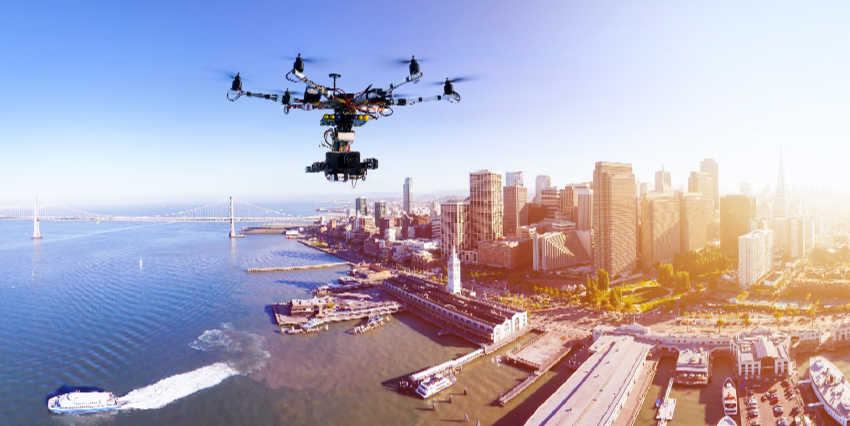
UAV Pilot Training in South Dakota
UAV pilot training in South Dakota is currently one of the hottest trends in aviation. Well, actually UAVs are currently one of the hottest trends in aviation. The military has been operating UAVs abroad and along the borders of the US for quite a while now, but the FAA has been slow-moving on civilian UAVs. Considering that the civilian market is positively teeming with potential, there are several reasons to consider UAV pilot trainingSouth Dakota. Civilian UAV pilot training is relatively new.
More than a century ago, two brothers built and successfully flew the first airplane. Before the Wrights' flight, nobody had a need for flight training or pilot certificates. It was a very exciting time in aviation. New developments were made almost daily and by its second decade, aviation was experiencing its golden age.
Among some of that early development were attempts at creating UAVs. Some were marginally successful, but it wasn't until the last few decades that UAVs really became viable. Their development has been predominantly focused on military applications until recently when civilian applications became very attractive.
Much like aviation's golden age, UAVs have reached a critical point in their development where demand for civilian use is dictating the development of regulations and pilots.
UAV Pilot Training in South Dakota Prepares You for a Growing Field
There are perhaps hundreds of UAVs currently under development and several more that have a long history in the military. As the only market for UAVs, until recently, the military has been the only provider to offer UAV pilot training inSouth Dakota. With the explosive growth of UAVs and the massive list of potential civilian uses, there is no way soldiers coming out of the military pipeline can fulfill all of the industry demand for UAV pilots.
As development continues on UAVs and the FAA considers regulations that will integrate UAVs into the National Airspace System, it is becoming clear that this is a growth industry and now is the time to get in on the bottom floor.
UAV Pilot Training in South Dakota Takes Less Time Than Traditional Flight Training
One of the perks of UAV pilot training is that current programs do not require as much flight time as traditional flight training. This is not to suggest it isn't difficult and time-consuming, but it certainly isn't as expensive. A huge component of current civilian training is conventional flight training and knowledge of basic engineering tests. Such a combination pays off by creating ideal UAV pilots for manufacturers who need pilots who can fly and execute proper flight tests of new aircraft.
If all of this sounds exciting and it interests you, perhaps civilian UAV pilot training in South Dakota is in your future. Anyone who gets into the industry in the next few years is definitely in for an exciting ride as the FAA establishes regulations for integrating UAVs into the National Airspace System and as manufacturers continue to develop amazing technologies. One thing is certain, however, and that is that the UAV business isn't boring.
Use of UAS Likely to Expand in South Dakota
Remotely piloted vehicles and unmanned drones, collectively known as Unmanned Aircraft Systems, have revolutionized the way the military performs certain tasks. Many tasks that are dangerous or simply boring are routinely handled by these devices in today's military. Now, the FAA is facing mounting pressure from civilian and law enforcement agencies to further expand UAS use into the national airspace system.
Some of the characteristics of these aircraft, such as the Predator B's 20-hour endurance, are unmatched with manned aircraft. This makes them very attractive to agencies like the Coast Guard and law enforcement, who regularly use manned aircraft for long search operations, and energy companies, who regularly use manned aircraft to inspect power-lines or pipelines. 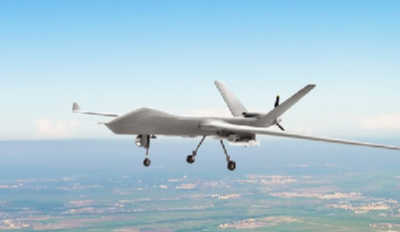 The ability of these agencies to use a UAS in place of manned aircraft would represent significant cost savings.
The FAA has thus far been reluctant to approve widespread use of UAS in US airspace due to concerns about interaction with other aircraft. There are currently hundreds of models of UAS in production, and like all aircraft, they range in size and mission. Additionally, they come in two major varieties: drones and remotely piloted vehicles.
Drones are preprogrammed to follow a specific mission and, once launched, perform that mission free of human interaction. RPVs are piloted by people on the ground, but often these people are hundreds or thousands of miles away. Lost communication is a major concern to the FAA, which fears that a rogue UAS could cause serious problems without proper separation from other aircraft.
According to a recent Associated Press article, Marion Blakey, a former FAA administrator, indicated that the FAA's transition from radar-based air traffic control to a satellite-based system will help ease such concerns. Under this system, known as ADS-B, aircraft will continuously advertise their position.
The point to take away from this is that UAS use will only expand in the near future. Within the next decade, organizations as diverse as state police, tornado researchers, and energy companies could be operating UAS on a daily basis.
Fixed-Wing Aircraft Facts - Wing Configurations
The wings of an aircraft can be attached to the fuselage at the top, mid-fuselage, or at the bottom. They may extend perpendicular to the horizontal plane of the fuselage or can angle up or down slightly. This angle is known as the wing dihedral. The dihedral angle affects the lateral stability of the aircraft.
Fun Facts About Flight Dispatchers
Flight dispatchers look at flight size, weather, travel time, and other areas to plan the timing of arrivals and departures. Air traffic controllers work from the airports, directing traffic on the ground and updating pilots with new information during their flights.
UAV Pilot Training Near South Dakota
UAV pilot training near South Dakota is becoming an increasingly popular flight training option. Still, in the early phases of development, the UAV industry is an exciting industry to follow, but one that is often difficult to understand and often breeds misconceptions. If you're interested in UAVs and UAV pilot training near South Dakota, you should consider several things before starting your training.
Modern UAVs are so much more than glorified remote control planes. They are in a near-constant state of development, with new models rapidly outpacing the capabilities of models of just a few years ago. Not to mention, the FAA has struggled to keep pace with regard to establishing a framework to govern UAV pilot certification.
The end result is that UAV pilot training near South Dakota is all new and changes a lot. Those interested in UAV pilot training near South Dakota would do well to follow the FAA's UAS Integration initiative.
UAV Pilot Training Might Not Be Available to South Dakota
Due in part to its newness, UAV pilot training in South Dakota isn't yet widely available. New training providers are regularly starting courses in anticipation of the FAA developing a real UAS pilot certificate, but training is still likely to require a bit of travel on your part.
Many of the best training providers are also heavily involved in UAV research in general, including several colleges and universities who recently sponsored test site proposals. As such, you might also need to be accepted to that college or university in general before being able to actually enroll in UAV pilot training.
The only real difference in flying a UAV and flying a more conventional aircraft is the location of the pilot. It is a common misconception that flying UAVs is somehow less difficult than regular flying, but this is simply not accurate. If anything, flying a UAV is more difficult due to the lack of physical sensations of motion. In either case, learning to fly UAVs requires the same understanding of scientific and technical principles of flight as any flight training program.
UAV Flight Training South Dakota is Rapidly Changing
As the FAA progresses through the process of integrating UAS into the National Airspace System, they continue to develop best practices and guidelines for training that will provide the basis for the UAV pilot certification process. While there are currently no UAV pilot certificates, it is only reasonable to expect at least a commercial certification to be developed and required in order to operate a UAV.
Until such a time as that certification becomes available, it is likely there will be numerous changes and developments to cope with.
It is most important to understand that, unlike helicopter flight training, for example, UAV pilot training near South Dakota is for the future. It is certainly not the distant future, but you can't exactly walk out of a UAV pilot training program into a nice 9 to 5 job flying remotely-piloted aircraft. Please don't let that stop you from pursuing UAV pilot training near South Dakota, but do be aware that you're developing skills for the future in a fascinating and innovative career field.
UAV pilot training is experiencing rapid growth and provides the skills of the future. Blended with a current flight training program for more conventional aircraft, you are not only setting the stage for an exciting career today, but you will provide the basis for a very exciting and lucrative future career that will be not only exceptionally interesting but very rewarding.
UAV Pilot Training in the Military or Civilian?
UAV pilot training has seen a lot of development in the military and, in the last few years, civilian training providers have begun developing the next generation of UAV pilot training. Training that focuses on civilian applications for UAVs.
For example, rather than military surveillance and reconnaissance, civilian UAVs could be used for aerial photography to save property developers' money or pipeline patrols. The potential applications of UAVs are endless. Unfortunately, the pool of pilots is minuscule and without pilots, no amount of development can continue for long. If you're looking for an exciting career piloting UAVs, here are several things to consider.
The road to becoming a UAV pilot in South Dakota is very similar to that of a commercial pilot. First of all, employers are always looking for applicants with the most education, so if you want to be paid at the higher end of the pay scale, you'll need to earn a 4-year college degree in aeronautics or engineering.
Some aspiring UAV pilots decide to attend a college that offers 4-year degrees and UAV pilot training programs near South Dakota. With this route, you'll end up with your degree and usually enough flight hours to apply for an entry-level unmanned aircraft systems (UAS) job. Whether you decide to go to college or not, you will need to earn a private pilot license, a commercial pilot license, and an instrument rating, and build up at least 500 hours of pilot-in-command flight hours.
Many people believe that since UAV pilots don't actually "fly" the airplane, they don't need a pilot license. However, this is usually not the case. To become a UAV pilot nearSouth Dakota you'll need to earn at least a commercial pilot license with an instrument rating and get at least a third-class FAA medical certificate. Learn about UAV pilot jobs.
UAV Pilot License and Ratings Which Licenses and Ratings Will You Need?
UAV pilots in South Dakota typically hold some or all of the following licenses, ratings, and certificates:
- Federal Aviation Administration (FAA) Medical Third Class - Certificate
- Private Pilot - License
- Commercial Pilot - License
- Airline Transport Pilot - License
- Instrument Pilot - Rating
Does a UAV Sensor Operator Need a License?
Depending on the kind of job you're looking for, a UAV sensor operator may or may not be required to possess at least a private pilot license. However, with that said, you will have a huge advantage over other job applicants if you are a certified private or commercial pilot when you apply.
UAV Pilot Jobs in South Dakota
The worldwide UAV industry is expected to bring in over $80 billion by 2020, and that means more and more UAV pilot jobs every year. At the time of this writing, SimplyHired.com had over 40 jobs listed for UAV pilot and sensor operators. Read more about UAV pilot salaries.
After UAV Pilot Training in South Dakota, Where Will You Work?
The job market for UAV pilots appears to be limitless. However, most UAV pilot and sensor operator jobs in the near future will be in the following industries:
- Information, Surveillance, and Reconnaissance (ISR)
- Target Drones
- Radar Decoy Systems
- Unmanned Combat Aerial Vehicles (UCAV)
Fun Helicopter Facts for Aberdeen
During the mid 1500's, Italian inventor Leonardo Da Vinci made drawings of a single rotor flying machine that some experts say inspired the modern day helicopter. In 1784, French inventor, Launoy and Bienvenue created a toy with a rotary-wing that could lift and fly and proved the principle of helicopter flight. French inventor, Etienne Oehmichen built and flew a helicopter to a distance of 1 km in 1924.
Aviation Fun Facts and Figures
Flight Instructor Facts for Aberdeen t is important for you to keep track of your certification and to schedule refresher courses well in advance of your actual deadline as most classes fill up quickly.
Interesting Helicopter and Fixed-wing Facts for Brookings
The biggest helicopter was the Russian Mil Mi-12 Homer of 1968 which could lift 40,204 kg up to 2255 m. Despite all of these achievements the Soviet Air Force refused to accept the helicopter for state acceptance trials for many reasons, the main one being that the V-12's most important intended mission no longer existed, i.e. the rapid deployment of strategic ballistic missiles.
Helicopter Spotlight for Brookings
The Agusta-Westland AW119 Koala is an eight-seat utility helicopter powered by a single turboshaft engine produced for the civil market. Introduced as the Agusta A119 Koala prior to the Agusta-Westland merger it is targeted at operators favoring lower running costs of a single-engine aircraft over redundancy of a twin.The A119 designation was first applied to a proposed 11-seat stretched version of the A109 in the 1970s but this was never actually built. The helicopter that was eventually to enter production was conceived in 1994 as Agusta was recovering from the financial woes that had nearly put the company out of business and the second of two prototypes took to the air in February the following year. The first prototype was used for static tests. Civil certification was originally anticipated in 1997 but that deadline was missed with Agusta citing personnel problems and a need to increase the performance of the aircraft to meet customer expectations.
Fun Facts for Helicopter and Airplane Flight Training for Huron
There are more than 11,000 civil helicopters operating just in the U.S. and more than 15,000 civil helicopters operating in more than 157 other countries around the world.
The biggest helicopter was the Russian Mil Mi-12 Homer of 1968 which could lift 40,204 kg up to 2255 m.
Helicopter Spotlight for Huron
The AgustaWestland Apache is a licence-built version of the AH-64D Apache Longbow attack helicopter for the British Army's Army Air Corps. The first eight helicopters were built by Boeing; the remaining 59 were assembled by Westland Helicopters (now part of AgustaWestland) at Yeovil, Somerset in England from Boeing-supplied kits. Changes from the AH-64D include Rolls-Royce engines, a new electronic defensive aids suite and a folding blade mechanism allowing the British version to operate from ships. The helicopter was initially designated WAH-64 by Westland Helicopters and was later designated Apache AH Mk 1 (often shortened to Apache Ah4) by the Ministry of Defence.The Apache has become a valued form of close air support in the continuing conflict in Afghanistan, being deployed to the region since 2006. The Apache has been an object of controversy over the fitting of some munitions, such as cluster bombs and thermobaric weapons. Naval trials and temporary deployments at sea have proven the aircraft as an able platform to operate from the decks of ships, which is a unique application of the Apache amongst its operators. British Apaches served in the NATO 2011 military intervention in Libya operating from Royal Navy ships.
Interesting Helicopter and Fixed-wing Facts for Mitchell
There are over 3 million people in the air on planes at any one time. And the worlds first flying car arrives in 2012. Called the Terrafugia it costs $194,000
The biggest helicopter was the Russian Mil Mi-12 Homer of 1968 which could lift 40,204 kg up to 2255 m.
Helicopter Spotlight for Mitchell
The Light Helicopter Experimental (LHX) program was a 1980s United States Army helicopter procurement project to replace the AH-1 Cobra and OH-58 helicopters. In support of the LHX program the United States Army started the Advanced Composite Airframe Program (ACAP) to develop an all-composite helicopter fuselage.[1] In February 1981 contracts were awarded to Sikorsky (for the Sikorsky S-75) and Bell Helicopter (for the Bell D-292). An Army Aviation Mission Area Analysis, completed in 1982, identified deficiencies in current materiel and doctrine that needed to be addressed to meet the requirements of the new Airland Battle Doctrine. The specific material deficiencies were to be resolved through the LHX program.
Interesting Helicopter Facts
Robinson and the Raven Helicopter
In January 2000 Robinson introduced the Raven with hydraulically-assisted controls and adjustable pedals. In July 2002 Robinson introduced the Raven II featuring a more powerful fuel-injected engine and wider blades allowing a higher gross weight and improved altitude performance.
Interesting Helicopter and Fixed-wing Facts for Pierre
Over 3 million lives have been saved by helicopters in both peacetime and wartime operations since the first person was rescued from the sea in 1944. If you include military helicopters it is estimated that there are more than 45000 operating worldwide.
Helicopter Spotlight for Pierre
The American Helicopter XH-26 Jet Jeep (known as the XA-8 by its manufacturer) was an experimental tip jet helicopter developed in 1951 by the American Helicopter Company to meet a United States Army and Air Force (USAF) request for a collapsible and air-droppable observation helicopter. The design of the original Model XA-8 single-seat lightweight helicopter began in 1951 under the sponsorship of the U.S. Army Transportation Corps and the USAF. The Army's specification in 1950 had called for a lightweight, one-man unarmed helicopter that had to be collapsible, capable of aerial delivery to troops in rugged terrain, and assembled quickly with simple tools. The helicopter was to be used for both light observation and as an air-droppable rescue vehicle for downed aircrews. After a review of all proposals American Helicopter was awarded the development contract in June 1951, based on its XA-8 design proposal. The first of five prototype XH-26s flew in January 1952.
Interesting Facts About Airline Profitability for Rapid City
The airline industry has currently made a net loss of $31 billion dollars since 1940. The average profit per seat on a 1 hour flight is $2.20. In 1940 to fly London – New York it cost 1 years wages. Today it costs the wage of working only Monday & Tuesday.
Helicopter Spotlight for Rapid City
The Aérospatiale Gazelle is a five-seat helicopter, commonly used for light transport, scouting and light attack duties. It is powered by a single turbine engine and was the first helicopter to feature a fenestron tail instead of a conventional tail rotor. It was designed and manufactured in France by Sud Aviation, later Aérospatiale; the Gazelle has also been manufactured under licence by Westland Aircraft in the United Kingdom as the Westland Gazelle, by SOKO in Yugoslavia, and the Arab British Helicopter Company (ABHCO) in Egypt.
Since being introduced to service in 1973, the Gazelle has been procured and operated by a number of export customers. It has also participated in numerous conflicts around the world, including by Syria during the 1982 Lebanon War, by Rwanda during the Rwandan Civil War in the 1990s, and by numerous participants on both sides of the 1991 Gulf War. In French service, the Gazelle has been supplemented as an attack helicopter by the larger Eurocopter Tiger, but remains in use primarily as a scout helicopter.
Helicopter Factoid for Sioux Fallss for Sioux Falls
To steer a helicopter, the pilot must adjust the pitch of the blades, which can be set three ways. In the collective system, the pitch of all the blades attached to the rotor is identical; in the cyclic system, the pitch of each blade is designed to fluctuate as the rotor revolves, and the third system uses a combination of the first two.
Helicopter Spotlight for Sioux Falls
The Agusta A129 Mangusta (English: Mongoose) is an attack helicopter originally designed and produced by Agusta. It has the distinction of being the first attack helicopter to be designed and produced wholly in Europe. It has continued to be developed by AgustaWestland, the successor company to Agusta. The A129 has undergone several combat deployments since entering service with the Italian Army in the 1990s.
Interesting Helicopter and Fixed-wing Facts for Spearfish
If you include military helicopters it is estimated that there are more than 45,000 operating worldwide.
The fastest helicopter is the Westland Lynx, which flew at 402 km/h on 6 August 1986. The Westland Lynx is a British multi-purpose military helicopter designed and built by Westland Helicopters at its factory in Yeovil.
Flight Instructor Facts for Spearfish
A flight instructor who holds his CFII and MEI is called Multi-engine Instrument Instructor (MEII). It is also important to note that flight instructors may obtain and instruct other ratings, such as glider.
Interesting Helicopter and Fixed-wing Facts for Watertown
Over 3 million lives have been saved by helicopters in both peacetime and wartime operations since the first person was rescued from the sea in 1944. Highest altitude made in a helicopter was 40,820ft (12,442m) on 21, June 1972 in a Aerospatiale Lama and the Pilot was Jean Bouet from France.
Helicopter Facts and Figures
The United States military is another large employer of helicopter pilots, who are used in both combat and transportation roles. Due to the complexity of helicopter aviation, employers are allowed to reject applicants based on weight. Extremely overweight individuals can affect a helicopter's lift and drag, making it unsafe.
Interesting Helicopter and Fixed-wing Facts for Yankton
Did you know that if the engine stops, the helicopter rotor continues to spin allowing the machine to slowly land, generally without crashing to the ground. Much like its inspiration the Maple Tree Fruit.
Helicopter Spotlight for Yankton
The Boeing AH-64 Apache is a four-blade, twin-engine attack helicopter with a tailwheel-type landing gear arrangement, and a tandem cockpit for a two-man crew. It features a nose-mounted sensor suite for target acquisition and night vision systems. It is armed with a 30 mm (1.18 in) M230 Chain Gun carried between the main landing gear, under the aircraft's forward fuselage. It has four hardpoints mounted on stub-wing pylons, typically carrying a mixture of AGM-114 Hellfire missiles and Hydra 70 rocket pods. The AH-64 has a large amount of systems redundancy to improve combat survivability.