Fixed Wing Pilot License in Iowa
Cities in Iowa with Aviation Schools:
- Adel
- Akron
- Altoona
- Ames
- Ankeny
- Bellevue
- Bettendorf
- Boone
- Bremer
- Calmar
- Carter Lake
- Cascade
- Cedar Falls
- Cedar Rapids
- Clarinda
- Clive
- Coralville
- Corning
- Council Bluffs
- Cumming
- Davenport
- Decorah
- Des Moines
- Dickens
- Dubuque
- Dyersville
- Eagle Grove
- Earlville
- Emerson
- Epworth
- Evansdale
- Fairfield
- Fort Dodge
- Fruitland
- Garrison
- Glenwood
- Grimes
- Hiawatha
- Hills
- Humboldt
- Huxley
- Independence
- Indianola
- Iowa City
- Johnston
- Larchwood
- Le Mars
- Lincoln
- Logan
- Manchester
- Marion
- Martensdale
- Mason City
- Milford
- Missouri Valley
- Mondamin
- Mount Pleasant
- Mount Vernon
- Muscatine
- Nevada
- Sioux City
- Waterloo
- West Des Moines
Fixed Wing Pilot License Training Iowa
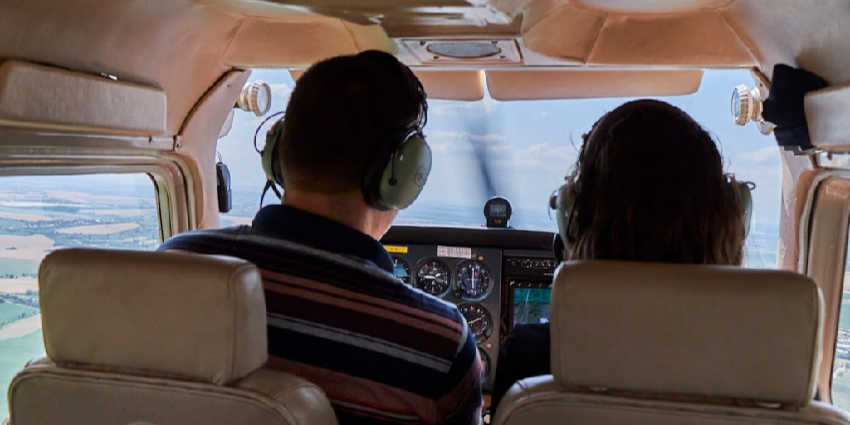
Make an informed decision on which program offering fixed wing pilot license training in Iowa is right for you. Get some experience - contact multiple schools to see what feels right for you.
Factors to consider when choosing your fixed wing pilot license training:
- Distance to the airport: Make sure the airport is close enough that you can make the trip at least two times per week. If just getting to the airport is tough for you, you're probably not going to make it through fixed wing pilot training.
- Facility: Clean, organized, and welcoming offices, hangars, and bathrooms say a lot about how a company operates.
- Fleet: Take a look at the school's aircraft. Do they look maintained, or run down? The condition of the aircraft often indicates the overall quality of flight training you'll receive.
- Instructors: Try to meet as many of the instructors as possible before making a purchasing decision. Often, you'll "click" with a certain instructor, and that can really pay off down the road.
- Payment options: It's generally a good idea to buy "block" time if the Fixed Wing Pilot Training offers a good discount (However, don't buy too much time in advance. Avoid schools that require you to "pay 100% upfront").
Fixed Wing Pilot Training in Iowa
Learning to fly is a challenge! Do you have what it takes? Do you have the time? The money? Will you be successful? Will your family fly with you? Are there jobs out there for professional pilots in Iowa?
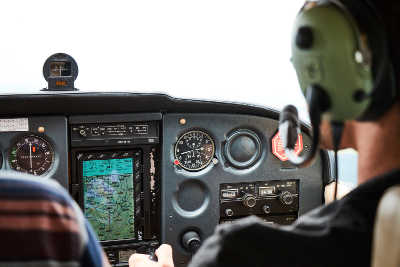 In this section, we try to answer as many questions as possible about researching, contacting, and finally deciding on the fixed wing pilot training that's right for you.
If you want to fly for a living, you'll need to consider fixed wing pilot training in Iowa that offers private pilot, commercial pilot, and instrument rating training, because all three of these licenses/ratings are required (by most companies) to get a job as a pilot.
You can count on the whole process taking six months to a year or more to complete. For this reason, most aspiring professional pilots attend a fixed wing pilot training program that specializes in teaching career pilots.
Advantages of Fixed Wing Private Pilot License
There are several distinct advantages when attending fixed wing pilot training:
- Shorter training programs (through accelerated training),
- Airline-style training environment,
- Lower costs,
- And the chance to build flight hours as a certified flight instructor upon graduation.
Graduates of pilot training are often hired on by the fixed wing pilot training program to teach the next generation of pilots attending the school. Although pay is generally pretty low, most graduates are only there to build up the number of flight hours they need to apply and get, their next job as a pilot.
By building the requisite number of hours quickly, aspiring professional pilots get into their next job faster, and build up seniority sooner, which can translate into higher pay and a better position in the company down the road. However, when researching these fixed wing pilot training programs in Iowa, be on the lookout: don't pay for large amounts of flight time in advance.
When deciding on a program, it is important to consider your flying goals. What kind of flying do you plan to do? Do you want to learn to fly for a hobby? Do you want to learn to fly for a living? Do you plan to fly for an airline? Questions like these are important to consider. For the average Sunday flyer, someone who is just out to fly for fun or perhaps personal travel, it is hard to beat the convenience of the local airport.
FAA - A History of Airplane Structures Facts for Iowa
Powered heavier-than-air aviation grew from the Wright design. Inventors and fledgling aviators began building their own aircraft. Early on, many were similar to that constructed by the Wrights using wood and fabric with wires and struts to support the wing structure.
Helicopter Aerodynamics, Aircraft Assembly, and Rigging Factoids
Three topics that are directly related to the manufacture, operation, and repair of aircraft are: aerodynamics, aircraft assembly, and rigging. Each of these subject areas, though studied separately, eventually connect to provide a scientific and physical understanding of how an aircraft is prepared for flight. A logical place to start with these three topics is the study of basic aerodynamics. By studying aerodynamics, a person becomes familiar with the fundamentals of aircraft flight.
Fixed Wing Pilot License Training in Iowa
You've made the decision; you want to get your fixed wing pilot license. You know flying is in your future, but now what? How do you get started? What's the next step? The good news is that the road to getting fixed wing pilot license training in Iowa is very defined.
One of the more difficult aspects of learning to fly is picking the right program for you. Some programs could match your goals better than others. Broken down to their most basic form, there are three basic types of fixed wing pilot license training programs: local fixed wing pilot training, professional programs, and degree programs.
The simplest place to look when you want to learn to fly is at your local airport near Iowa. Most airports usually have a collection of part-time or even full-time instructors that are fully qualified to teach you to fly. This type of training tends to be pay-as-you-go and self-paced.
There are also a number of professional programs that offer a more scheduled and condensed way to learn to fly. These programs are typically located at larger facilities with a large staff of instructors. They cater to someone with more time who is looking to obtain several ratings at once. The final type of program is degree programs that are tailored toward someone who wishes to fly for the airlines.
Unfortunately, sometimes the road is a little hard to find. If you're not sure how to become a commercial fixed wing pilot in Iowa, keep reading for an easy five-step 'flight' plan that will see you through to your fixed wing pilot qualifications.
#1: Test The Waters
Don't immediately run out and sign up for the career program of the first school you find. Start with a small step; find a school or independent flight instructor that will take you up for an introductory flight. These are usually pretty inexpensive, maybe $100 to $150 for an hour. The benefit of introductory flights is that you get to experience flight in a small plane with an instructor.
You'll definitely learn a lot in that hour and you should actually get to take the controls. The key takeaway for this exercise is to establish whether you actually like controlling the plane.
#2: Make Sure You're Medically Qualified
Ask any fixed wing pilot in Iowa and they'll tell you that the hardest part of flying isn't actually controlling the aircraft, it's the paperwork. The truth is, there is a lot of paperwork, but no more than any other licensed professional. The paperwork creeps in a little bit early in flight training, but for the most part, it's just you and your instructor and eventually just you flying free.
Now, this may come as a shock, but there is one vital piece of paperwork that should be handled very early, maybe right out of the gate -- the medical certificate. The process isn't terribly different from a typical doctor's visit, but you have to select from a list of specific doctors, known as Aviation Medical Examiners, and you have to fill out a form.
The doctors typically charge a fee for the visit, but they give you a pretty thorough physical and if you pass you'll be issued a student fixed wing pilot medical certificate.
#3: Consider Your Fixed Wing Pilot Training Goals
You need to be honest and ask yourself a few questions. First, what are your goals; what's your plan? Maybe you're looking for a new hobby. Perhaps you're tired of booking airline tickets last minute and you're looking to fly yourself to that next business meeting. Why does this matter? Flight training isn't one-size-fits-all.
The program that is perfect for the twenty-year-old future airline captain isn't necessarily perfect for the fifty-year-old bank CEO. So, as boring as it sounds, take a few minutes and ask yourself what your intentions are.
#4: Find The Right Fixed Wing Pilot Training Program in Iowa
The next step is to find flight schools, whether large or small and contact them. Whether you actually visit the schools or you call or email, you want to get a little bit of information before you commit yourself. You want to talk to them about your goals. You also want to talk to them about their school and staff.
If you're looking for a school that will let you zip through the ratings on your way to a job interview, you want to know how many instructors they have on staff, how many other students they have, and how many aircraft they have available.
All three of those items will directly affect the speed with which you can complete your flight training. You should also ask whether you will have one instructor or several. It may seem strange, but you may have chemistry with a certain instructor that will benefit your learning more than finishing faster.
#5: Enjoy Your Fixed Wing Pilot Training
The final step is to pick a school and have fun. Learning to fly is incredibly rewarding. You will learn a lot about yourself and meet some of the most interesting people. The most important things are that you understand that no one wants to see you fail and remember that any flight school can provide the same result; the difference is in how well it fits you and your goals.
Fixed wing pilot training in Iowa is one of the most exciting and challenging things you will ever do in your life. It is for this reason that it is important to consider every aspect of a training program before you jump in the aircraft for your first lesson.
Traditionally, pilots learn to fly at their local airport, but a growing trend in fixed wing pilot training in Iowa is "Accelerated" fixed wing pilot training. These schools are often an excellent match if you are looking at making a career out of aviation. Accelerated programs can be broken down into three main types: professional programs, airline programs, and university programs.
What is an Accelerated Fixed Wing Pilot Training in Iowa?
By this point, you might be asking, "What is an Accelerated Fixed Wing Pilot Training in Iowa anyway?" Basically, it is a flight school that allows you to earn a certificate (license) or rating in a very short amount of time. To investigate further, accelerated programs are usually structured in a way that has you training eight hours a day five or more days a week.
The goal of these programs is for you to obtain a rating or certificate in a few weeks or months. For example, obtaining a private pilot certificate usually takes about 6 months, but in an accelerated program you could get one in as little as two weeks. That's a pretty significant difference.
Most of these programs are also marketed toward people who are looking for multiple certificates or ratings, so they often structure the programs in cycles. This enables you to walk in off the street with zero flight hours in your logbook and walk out of the school a commercial pilot with 250 hours.
Helicopter History for Ames
Helicopter Ground School: In an airplane you can make decisions about trading forms of energy very late in the day. For example, if you pull the stick all the way back at 6000' above the ground you will gradually slow down and eventually stall and perhaps enter a spin. With many airplanes you could spin nearly all the way to the ground before applying forward stick and opposite rudder to get back to a normal flight condition. All without an engine.
Interesting Aviation Facts for Ames for Ames
Modern Day Military Pilot Training for Ames: All five branches of the United States military employ helicopter pilots for combat and non-combat uses. Each branch uses similar types of helicopters, with minor differences between each type. For example, the Air Force flies Pave Hawks, which are nearly identical to the Army's Blackhawk, Navy's Skyhawk and Coast Guard's Jayhawk, with several subtle differences that promote each branch's mission. Before getting behind the controls of a military helicopter, pilots must fulfill a number of requirements.
Fun Aviation Facts and Figures for Ankeny
MD Helicopters - MD Explorer: An international helicopter industry advisory board guided the design and development of the MD Explorer with an objective to produce a multipurpose twin-engine helicopter that would set new standards in performance, affordability, dependability and safety.
Helicopter Factoid for Ankenys for Ankeny
Flight Instructor Facts for Ankeny In order to get those 800 hours or so you now have two choices. Pay some one to let you fly their helicopter or let them pay you to tutor others to fly their helicopter. Surprisingly, it doesn't take much to get a flight instructor certificate and the benefits of having one will greatly out way the amount of time that is required to get the certificate.
Helicopter Factoid for Cedar Rapidss for Cedar Rapids
Flight Instructor Facts for Cedar Rapids A private helicopter license is design for people who like to fly for mainly fun or to take joy rides. The FAA (Federal Aviation Administration) requires people who want to get a private helicopter license to have at least 40 hours of flight time. Students will also need to complete a series of ground written and verbal tests before given the private license.
Aviation History for Cedar Rapids and Fun Facts for Cedar Rapids
To rebuild the helicopter pilot training program, Headquarters Army Air Force appointed a group of officers in January 1946 to recommend a new location for the school. San Marcos Army Air Field, Texas, a recently inactivated flying training base, was selected. Helicopter pilot training formally transferred to San Marcos on 31 May 1946.
Fun Aviation Facts and Figures for Council Bluffs
Being a helicopter pilot is not easy, you have to carefully plan the process of getting enrolled in the top helicopter pilot training schools for getting a valid pilot license.
Interesting Aviation Facts for Council Bluffs for Council Bluffs
Modern Day Military Pilot Training for Council Bluffs: A candidate for Army aviation school must score 90 or higher out of a possible 176 on the Flight Aptitude Selection Test. This exam includes seven sections, of which two request personal and background information and the other five cover actual topics in aviation such as the use and function of flight instruments and helicopter motions. The Army provides a study guide and practice test.
Helicopter Factoid for Davenports for Davenport
Commercial Helicopter License Facts: After you get your private helicopter license you will have the option to move on to a commercial helicopter license. The main difference between the commercial and private is that you can now start to charge for your services.
Aviation History for Davenport and Fun Facts for Davenport
Post World War Pilot Training: In April 1952, Air Force pilots received 35 hours in the H-5 or H-23 and 35 hours in the H-19. Starting in 1953, flight training was 35 hours in the H-5 or H-13, then 35 hours in the H-19 or H-21. Army pilots received 45 hours in the H-13.
Helicopter Factoid for Des Moiness for Des Moines
Flight Instructor Facts for Des Moines Compared to earning your private license and commercial license, earning your flight instructor certificate will take considerably less time. There are no more flight hours that you may need to build up besides taking the practical flight test.
Aviation History for Des Moines and Fun Facts for Des Moines
Possessing a civilian pilot's license isn't necessary when applying to become a U.S. military pilot. The military requires those already having a pilot's license to meet the same rigorous selection and training requirements as non-pilot applicants. Military aviation aptitude tests feature mathematics, including algebra and some geometry, plus sections that test on physics taught at the high school level.
Helicopter History for Iowa City
How to Pick a Helicopter Flight School for Iowa City To visit each school, call them up and make an appointment to meet with the owner/president. You will usually have an easier time getting an appointment during the week, rather than on the weekend. Tell them you'd like to meet them to hear about the school, their training program, and why you might want to train with them.
Interesting Aviation Facts for Iowa City for Iowa City
Modern Day Military Pilot Training for Iowa City: Army pilots start with flight school and move on to basic combat training. The Air Force's basic pilot training covers 12 weeks and Marine pilots undergo two phases of basic flight training. After basic training, pilots continue with helicopter-specific training. All branches also require the applicant to pass the Armed Services Vocational Aptitude Battery.
Helicopter History for Sioux City
Commercial Helicopter License Facts: You will need to have at least 150 hours of flight time. The price will also be quite a bit higher with the cost coming in around $30,000. However, once you get your commercial pilots license you will be able to take jobs at many different helicopter pilot careers.
Fun Aviation Facts and Figures for Sioux City
Modern Day Military Pilot Training for Sioux City: Flying aircraft is a coveted career in the United States armed services, and the process to become a military pilot is a competitive one. Most candidates need at least a bachelors degree to apply. The exception is the Army, where the fleet consists mainly of helicopters rather than fixed-wing aircraft. Becoming a helicopter pilot in the Army does not require higher education or prior enlistment.
Helicopter History for Waterloo
How to Pick a Helicopter Flight School for Waterloo To visit each school, call them up and make an appointment to meet with the owner/president. You will usually have an easier time getting an appointment during the week, rather than on the weekend. Tell them you'd like to meet them to hear about the school, their training program, and why you might want to train with them.
Interesting Aviation Facts for Waterloo for Waterloo
Modern Day Military Pilot Training for Waterloo: Before starting pilot training, a student must have at least a four-year bachelor's degree in any field. Beyond a bachelor's degree, each of the branches has its own education and training requirements, with most requiring some type of officer training along with introductory flight training. Navy pilots must take part in Officer Candidate School, followed by a six-week air indoctrination course.
Helicopter History for West Des Moines
The check ride is almost always done under the supervision of someone qualified or someone from the aviation authority, who will in turn put you through a combined practical and oral exam. Once you are qualified for a license, you can move on to obtaining a commercial license.
Interesting Aviation Facts for West Des Moines for West Des Moines
Modern Day Military Pilot Training for West Des Moines: A candidate who fulfills the regulations for acceptance into aviation school and is admitted must serve at least five years in active duty after completing the course or voluntarily dropping it. If a candidate is removed from the course because of medical reasons or incompetence, he must serve at least one year beyond any service commitments he made before entering flight school.