Fixed Wing Pilot License in Louisiana
Cities in Louisiana with Aviation Schools:
- Alexandria
- Baton Rouge
- Belle Chasse
- Benton
- Berwick
- Bogalusa
- Bossier City
- Boutte
- Broussard
- Carencro
- Chalmette
- Clarence
- Clinton
- Covington
- Crowley
- Denham Springs
- Gretna
- Hammond
- Harvey
- Houma
- Kenner
- Lafayette
- Lake Charles
- Laplace
- Leesville
- Luling
- Madisonville
- Mamou
- Mandeville
- Mansfield
- Many
- Marrero
- Maurepas
- Maurice
- Meraux
- Metairie
- Minden
- Monroe
- Natchitoches
- New Iberia
- New Orleans
- Opelousas
- Ruston
- Shenandoah
- Shreveport
- Slidell
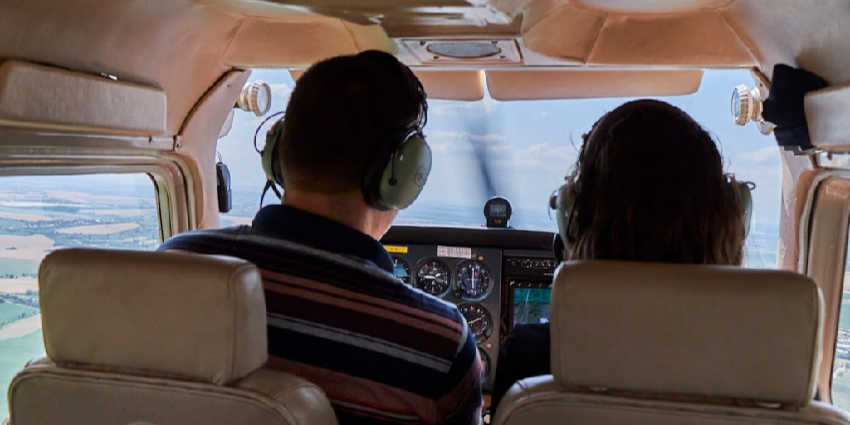
Fixed Wing Pilot License Training Louisiana
Make an informed decision on which program offering fixed wing pilot license training in Louisiana is right for you. Get some experience - contact multiple schools to see what feels right for you.
Factors to consider when choosing your fixed wing pilot license training:
- Distance to the airport: Make sure the airport is close enough that you can make the trip at least two times per week. If just getting to the airport is tough for you, you're probably not going to make it through fixed wing pilot training.
- Facility: Clean, organized, and welcoming offices, hangars, and bathrooms say a lot about how a company operates.
- Fleet: Take a look at the school's aircraft. Do they look maintained, or run down? The condition of the aircraft often indicates the overall quality of flight training you'll receive.
- Instructors: Try to meet as many of the instructors as possible before making a purchasing decision. Often, you'll "click" with a certain instructor, and that can really pay off down the road.
- Payment options: It's generally a good idea to buy "block" time if the Fixed Wing Pilot Training offers a good discount (However, don't buy too much time in advance. Avoid schools that require you to "pay 100% upfront").
Fixed Wing Pilot Training in Louisiana
Learning to fly is a challenge! Do you have what it takes? Do you have the time? The money? Will you be successful? Will your family fly with you? Are there jobs out there for professional pilots in Louisiana?
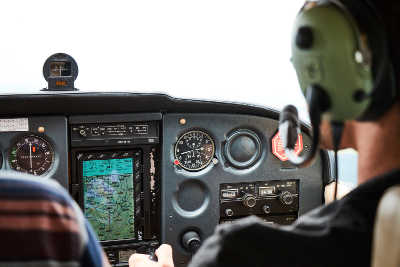 In this section, we try to answer as many questions as possible about researching, contacting, and finally deciding on the fixed wing pilot training that's right for you.
If you want to fly for a living, you'll need to consider fixed wing pilot training in Louisiana that offers private pilot, commercial pilot, and instrument rating training, because all three of these licenses/ratings are required (by most companies) to get a job as a pilot.
You can count on the whole process taking six months to a year or more to complete. For this reason, most aspiring professional pilots attend a fixed wing pilot training program that specializes in teaching career pilots.
Advantages of Fixed Wing Private Pilot License
There are several distinct advantages when attending fixed wing pilot training:
- Shorter training programs (through accelerated training),
- Airline-style training environment,
- Lower costs,
- And the chance to build flight hours as a certified flight instructor upon graduation.
Graduates of pilot training are often hired on by the fixed wing pilot training program to teach the next generation of pilots attending the school. Although pay is generally pretty low, most graduates are only there to build up the number of flight hours they need to apply and get, their next job as a pilot.
By building the requisite number of hours quickly, aspiring professional pilots get into their next job faster, and build up seniority sooner, which can translate into higher pay and a better position in the company down the road. However, when researching these fixed wing pilot training programs in Louisiana, be on the lookout: don't pay for large amounts of flight time in advance.
When deciding on a program, it is important to consider your flying goals. What kind of flying do you plan to do? Do you want to learn to fly for a hobby? Do you want to learn to fly for a living? Do you plan to fly for an airline? Questions like these are important to consider. For the average Sunday flyer, someone who is just out to fly for fun or perhaps personal travel, it is hard to beat the convenience of the local airport.
FAA - A History of Airplane Structures Facts for Louisiana
Leading up to World War I (WWI), stronger engines also allowed designers to develop thicker wings with stronger spars. Wire wing bracing was no longer needed. Flatter, lower wing surfaces on high-camber wings created more lift. WWI expanded the need for large quantities of reliable airplane. Used mostly for reconnaissance, stacked-wing tail draggers with wood and metal truss frames with mostly fabric skin dominated the wartime sky.
Airline On-Time Statistics and Delay Causes
Delay Causes, delay definitions, understanding delay data, database tables, flight delays at a glance. The U.S. Department of Transportation's (DOT) Bureau of Transportation Statistics (BTS) tracks the on-time performance of domestic flights operated by large air carriers. Summary information on the number of on-time, delayed, canceled and diverted flights appears in DOT's monthly Air Travel Consumer Report, published about 30 days after the month's end, as well as in summary tables posted on this website. BTS began collecting details on the causes of flight delays in June 2003. Summary statistics and raw data are made available to the public at the time the Air Travel Consumer Report is released.
Fixed Wing Pilot License Training in Louisiana
You've made the decision; you want to get your fixed wing pilot license. You know flying is in your future, but now what? How do you get started? What's the next step? The good news is that the road to getting fixed wing pilot license training in Louisiana is very defined.
One of the more difficult aspects of learning to fly is picking the right program for you. Some programs could match your goals better than others. Broken down to their most basic form, there are three basic types of fixed wing pilot license training programs: local fixed wing pilot training, professional programs, and degree programs.
The simplest place to look when you want to learn to fly is at your local airport near Louisiana. Most airports usually have a collection of part-time or even full-time instructors that are fully qualified to teach you to fly. This type of training tends to be pay-as-you-go and self-paced.
There are also a number of professional programs that offer a more scheduled and condensed way to learn to fly. These programs are typically located at larger facilities with a large staff of instructors. They cater to someone with more time who is looking to obtain several ratings at once. The final type of program is degree programs that are tailored toward someone who wishes to fly for the airlines.
Unfortunately, sometimes the road is a little hard to find. If you're not sure how to become a commercial fixed wing pilot in Louisiana, keep reading for an easy five-step 'flight' plan that will see you through to your fixed wing pilot qualifications.
#1: Test The Waters
Don't immediately run out and sign up for the career program of the first school you find. Start with a small step; find a school or independent flight instructor that will take you up for an introductory flight. These are usually pretty inexpensive, maybe $100 to $150 for an hour. The benefit of introductory flights is that you get to experience flight in a small plane with an instructor.
You'll definitely learn a lot in that hour and you should actually get to take the controls. The key takeaway for this exercise is to establish whether you actually like controlling the plane.
#2: Make Sure You're Medically Qualified
Ask any fixed wing pilot in Louisiana and they'll tell you that the hardest part of flying isn't actually controlling the aircraft, it's the paperwork. The truth is, there is a lot of paperwork, but no more than any other licensed professional. The paperwork creeps in a little bit early in flight training, but for the most part, it's just you and your instructor and eventually just you flying free.
Now, this may come as a shock, but there is one vital piece of paperwork that should be handled very early, maybe right out of the gate -- the medical certificate. The process isn't terribly different from a typical doctor's visit, but you have to select from a list of specific doctors, known as Aviation Medical Examiners, and you have to fill out a form.
The doctors typically charge a fee for the visit, but they give you a pretty thorough physical and if you pass you'll be issued a student fixed wing pilot medical certificate.
#3: Consider Your Fixed Wing Pilot Training Goals
You need to be honest and ask yourself a few questions. First, what are your goals; what's your plan? Maybe you're looking for a new hobby. Perhaps you're tired of booking airline tickets last minute and you're looking to fly yourself to that next business meeting. Why does this matter? Flight training isn't one-size-fits-all.
The program that is perfect for the twenty-year-old future airline captain isn't necessarily perfect for the fifty-year-old bank CEO. So, as boring as it sounds, take a few minutes and ask yourself what your intentions are.
#4: Find The Right Fixed Wing Pilot Training Program in Louisiana
The next step is to find flight schools, whether large or small and contact them. Whether you actually visit the schools or you call or email, you want to get a little bit of information before you commit yourself. You want to talk to them about your goals. You also want to talk to them about their school and staff.
If you're looking for a school that will let you zip through the ratings on your way to a job interview, you want to know how many instructors they have on staff, how many other students they have, and how many aircraft they have available.
All three of those items will directly affect the speed with which you can complete your flight training. You should also ask whether you will have one instructor or several. It may seem strange, but you may have chemistry with a certain instructor that will benefit your learning more than finishing faster.
#5: Enjoy Your Fixed Wing Pilot Training
The final step is to pick a school and have fun. Learning to fly is incredibly rewarding. You will learn a lot about yourself and meet some of the most interesting people. The most important things are that you understand that no one wants to see you fail and remember that any flight school can provide the same result; the difference is in how well it fits you and your goals.
Fixed wing pilot training in Louisiana is one of the most exciting and challenging things you will ever do in your life. It is for this reason that it is important to consider every aspect of a training program before you jump in the aircraft for your first lesson.
Traditionally, pilots learn to fly at their local airport, but a growing trend in fixed wing pilot training in Louisiana is "Accelerated" fixed wing pilot training. These schools are often an excellent match if you are looking at making a career out of aviation. Accelerated programs can be broken down into three main types: professional programs, airline programs, and university programs.
What is an Accelerated Fixed Wing Pilot Training in Louisiana?
By this point, you might be asking, "What is an Accelerated Fixed Wing Pilot Training in Louisiana anyway?" Basically, it is a flight school that allows you to earn a certificate (license) or rating in a very short amount of time. To investigate further, accelerated programs are usually structured in a way that has you training eight hours a day five or more days a week.
The goal of these programs is for you to obtain a rating or certificate in a few weeks or months. For example, obtaining a private pilot certificate usually takes about 6 months, but in an accelerated program you could get one in as little as two weeks. That's a pretty significant difference.
Most of these programs are also marketed toward people who are looking for multiple certificates or ratings, so they often structure the programs in cycles. This enables you to walk in off the street with zero flight hours in your logbook and walk out of the school a commercial pilot with 250 hours.
Helicopter Fun Facts for Alexandria
Highest altitude made in a helicopter was 40,820ft (12,442m) on 21, June 1972 in a Aerospatiale Lama and the Pilot was Jean Bouet from France.
Fun Helicopter Facts for Alexandria
MD Helicopters - MD 600N: The MD 600N is an eight-place, light, single-turbine engine helicopter that provides high performance and increased capacity to give the customer greater versatility.
Helicopter Fun Facts for Baton Rouge
The International Helicopter Safety Team (IHST) is focused on reducing all helicopter accidents and it envisions an international civil helicopter community that experiences zero accidents. To reach this goal, the IHST is focused on educating all operators and pilots about how civil helicopter accidents occur and how they can be prevented.
Fun Helicopter Facts for Baton Rouge
MD Helicopters - MD 520N: The MD 520N is a fast, agile, lightweight, turbine powered, all purpose helicopter. Advanced technology has been used in the design and construction of the aircraft, resulting in excellent speed capabilities
Helicopter Fun Facts for Bossier City
Any type of accident is unfortunate, but an accident that results in a fatality is especially tragic. Analyzing multiple years of accident data, IHST safety experts have determined what type of operational occurrence contributes the most to helicopter accident fatalities. The data shows that Loss of Control figures into one out of every five fatal accidents with Visibility issues (Visual Meteorological Conditions into Instrument Meteorological Conditions, darkness, fog, glare, etc.) not far behind. Taken together, Loss of Control and Visibility problems contribute to one-third of all fatal helicopter accidents.
Fun Helicopter Facts for Bossier City
MD Helicopters - MD 530: The MD 530F is engineered to meet your requirements for hot-day, high-altitude operation. Equipped with the 650 shp Rolls-Royce 250-C30 engine, the MD 530F operates more effectively in hot, high environments than other helicopters in its class.
Helicopter Fun Facts for Chalmette
Approximately 12,000 helicopters saw action in Vietnam (all services). Army UH-1's totaled 9,713,762 flight hours in Vietnam between October 1966 and the end of American involvement in early 1973.
Fun Helicopter Facts for Chalmette
MD Helicopters - MD 530: The MD 530F is engineered to meet your requirements for hot-day, high-altitude operation. Equipped with the 650 shp Rolls-Royce 250-C30 engine, the MD 530F operates more effectively in hot, high environments than other helicopters in its class.
Helicopter Fun Facts for Gretna
Army AH-1G's totaled 1,110,716 flight hours in Vietnam. We believe that the Huey along with the Huey Cobra have more combat flight time than any other aircraft in the history of warfare assuming you count actual hostile fire exposure versus battle area exposure.
Fun Helicopter Facts for Gretna
MD Helicopters - MD 500E: The MD 500E helicopter delivers the highest speed, payload and productivity in its class. Rear seat passengers have greater headroom and visibility than earlier Model 500s.
Helicopter Fun Facts for Hammond
Helicopters in Vietnam seldom flew above 1,500 feet which is traffic pattern altitude for bombers and were always exposed to hostile fire even in their base camps.
Fun Helicopter Facts for Hammond
In any context, when you are talking about flying, one of the most interesting aircraft that you'll probably get to fly is the helicopter! Helicopter training of course is your only avenue to becoming a successful helicopter pilot - so getting a license is the key to all your problems.
Helicopter Fun Facts for Harvey
Bell Helicopters built 10,005 Hueys from 1957 to 1975. Prior to 1957 there were three XH-40 prototypes and six YH-1B test helicopters manufactured. Of the 10,005 production Huey's the first 732 were designated HU-1A and HU-1B. 9,216 of these went to the US Army, 79 to the US Air Force, 42 to the Navy, and 127 to the Marine Corps. The rest went to other countries.
The total helicopter pilots killed in the Vietnam War was 2,202. Total non-pilot crew members was 2,704. Based on a database from the Pentagon we estimate that over 40,000 helicopter pilots served in the Vietnam War.
Helicopter History for Harvey
Unlike most other aircraft, the helicopter is much a smaller aircraft yet more powerful and is extremely maneuverable - and of course helicopter pilots have to be extremely skilled to be able to get a license!
Aviation Facts and Figures for Houma
Army UH-1's totaled 7,531,955 flight hours in Vietnam between October 66 to December 75. The Huey and Huey Cobra had more flight hours in combat that any other aircraft in the history or warfare. Huey Cobra had 1,038,969 flight hours in Vietnam.
Helicopter History for Houma
As a helicopter pilot, you must be able to master your reflexes and be able to make decisions on-the-spot. The pilots are skilled at handling almost any flying situation, and since the helicopter is small and light, it has the ability to perform any complicated role - whether it is ferrying people from inaccessible locations like mountains and forests to rescuing passengers from oceans.
Aviation Facts and Figures for Kenner
Helicopter Flight Training for Kenner Remember that the armed forces provides career options for people interested in flying any type of aircraft. So, if you have the aptitude for helicopter flying, or for flying any aircraft as a matter of fact, joining the armed forces could be a good option.
Positive Quotes: “I am enough of an artist to draw freely upon my imagination. Imagination is more important than knowledge. Knowledge is limited. Imagination encircles the world.” ― Albert Einstein
Helicopter History for Kenner
Prior to making any final decisions, it is advisable to first get a flight medical examination taken, which will clear you for flying. This would mean that you have no apparent handicaps and that your vision is perfect.
Aviation Facts and Figures for Lafayette
Helicopter Flight Training for Lafayette While choosing a training school or program, you must first consider the cost and location of training. Not all the states in the US have these training schools and programs, so getting enrolled in a helicopter training school might mean you have to relocate.
Helicopter History for Lafayette
For those of you who hold no pilot ratings or don't have a license, the training would differ from person to person. For the newcomer, it would include around twenty hours of instruction and about twenty hours of solo flying practice. This would then be followed by a written test, which if you pass, will lead you to the next round - the check ride round!
Aviation Facts and Figures for Lake Charles
Helicopter Flight Training for Lake Charles The average cost ranges anywhere from $20,000 to $40,000 depending on the school or program you have chosen. You should choose a school based on these criteria - the courses that are provided, the payment structure, the time taken for training, student insurance, safety schemes and guidelines, school facilities, housing facilities, ground-school training program, types of helicopters used for training, staff and instructors, job vacancy programs, and above all, FAA certificates.
Helicopter History for Lake Charles
The check ride is almost always done under the supervision of someone qualified or someone from the aviation authority, who will in turn put you through a combined practical and oral exam. Once you are qualified for a license, you can move on to obtaining a commercial license.
Aviation Facts and Figures for Laplace
Helicopter Flight Schools: In the industry, airline jobs such as that of a commercial pilot are considered to be the most enjoyable careers. However, since this job requires a large amount of work commitment, skills, and expertise; it is considered responsible.
Helicopter History for Laplace
Helicopter Flight Training for Laplace As with any type of flying education, helicopter training can be very expensive. Anything from $10,000 upwards should be considered normal. However, once you start with your flying, you will easily be able to make up for the amount that you have spent on training.
Aviation Facts and Figures for Marrero
Helicopter Facts for Marrero The main task of a commercial helicopter pilot is to fly the helicopter, abiding with the safety rules and regulations of flying. In the pilot job description, there are many other tasks that a pilot needs to carry out. Presently, the median per annum salary of these pilots is believed to be around $85,000.
Helicopter History for Marrero
Helicopter Flight Training for Marrero If you have decided on becoming a pilot, the first thing you need to do is plan your finances. Be aware of the fact that helicopter training is indeed expensive and requires a long-term commitment on your part. So, if you can manage to pay from the beginning of the course to the end, then it is wise to indulge in this commitment.
Aviation Facts and Figures for Metairie
Helicopter pilot training schools give you the needed assistance and information that you will require to become a skilled helicopter pilot. Having helicopter training from a reputed school increases your chances of being a successful pilot.
Helicopter History for Metairie
Helicopter Flight Training for Metairie If you don't have the required finances, there are many financial aids that could lessen the burden that you may need to carry. There are many helicopter flight schools that have special payment schemes that could be beneficial to you if you want to complete your training.
Aviation Facts and Figures for Monroe
Unlike most other planes, helicopter is much more cheaper, faster and agile. Helicopter pilots must be skilled about flying and must be spontaneous in taking decisions related to landing the chopper.
Aviation Training Facts for Monroe
Helicopter Flight Training for Monroe During this period, the instructor will have the students ride along on a helicopter flight and learn the many capabilities of the aircraft. As the students progress through training, the helicopter flight instructor will allow the students to take over control of the craft and attempt to fly.
Aviation Facts and Figures for Natchitoches
Helicopter training schools worldwide are in a need of new pilots to enter the aviation industry and maybe, now is the best time to start your training. Helicopter pilots are in demand for oil rig operations, news, photography, rescue missions, firefighting and many other reasons.
Aviation Training Facts for Natchitoches
Helicopter Flight Training for Natchitoches You may need to obtain more flight hours before you can become a helicopter flight instructor, though in some jurisdictions, you will simply need to complete another examination and then pass both oral and practical tests.
Aviation History for New Iberia and Fun Facts for New Iberia
Modern Day Military Pilot Training for New Iberia: Flying aircraft is a coveted career in the United States armed services, and the process to become a military pilot is a competitive one. Most candidates need at least a bachelors degree to apply. The exception is the Army, where the fleet consists mainly of helicopters rather than fixed-wing aircraft. Becoming a helicopter pilot in the Army does not require higher education or prior enlistment.
Aviation Training Facts for New Iberia
Helicopter Flight Training for New Iberia Helicopter flight instructors are responsible for training new pilots, and are required to hold commercial certificates or licenses, since they receive monetary compensation for their service.
Aviation History for New Orleans and Fun Facts for New Orleans
Modern Day Military Pilot Training for New Orleans: Army pilots start with flight school and move on to basic combat training. The Air Force's basic pilot training covers 12 weeks and Marine pilots undergo two phases of basic flight training. After basic training, pilots continue with helicopter-specific training. All branches also require the applicant to pass the Armed Services Vocational Aptitude Battery.
Aviation Training Facts for New Orleans
Helicopter Ground School: In an airplane you can make decisions about trading forms of energy very late in the day. For example, if you pull the stick all the way back at 6000' above the ground you will gradually slow down and eventually stall and perhaps enter a spin. With many airplanes you could spin nearly all the way to the ground before applying forward stick and opposite rudder to get back to a normal flight condition. All without an engine.
Aviation History for Opelousas and Fun Facts for Opelousas
Modern Day Military Pilot Training for Opelousas: Before starting pilot training, a student must have at least a four-year bachelor's degree in any field. Beyond a bachelor's degree, each of the branches has its own education and training requirements, with most requiring some type of officer training along with introductory flight training. Navy pilots must take part in Officer Candidate School, followed by a six-week air indoctrination course.
Aviation Training Facts for Opelousas
Helicopter Ground School: In a helicopter, by contrast, if the blades spin down more than 10-15% from their normal velocity, there is no way to convert potential or kinetic energy into spinning such that the helicopter will start to fly again. If you can't restart your engine, therefore, your helicopter can very quickly become a rock.
Aviation History for Ruston and Fun Facts for Ruston
Modern Day Military Pilot Training for Ruston: All five branches of the United States military employ helicopter pilots for combat and non-combat uses. Each branch uses similar types of helicopters, with minor differences between each type. For example, the Air Force flies Pave Hawks, which are nearly identical to the Army's Blackhawk, Navy's Skyhawk and Coast Guard's Jayhawk, with several subtle differences that promote each branch's mission. Before getting behind the controls of a military helicopter, pilots must fulfill a number of requirements.
Aviation Training Facts for Ruston
Helicopter Ground School: In a turbine-powered helicopter like a Bell 206 JetRangers the blades are heavy and the blades won't slow down for several seconds after an engine failure. In the flyweight Robinson, however, after an engine failure you have no more than 1.2 seconds to take exactly the right actions or the helicopter cannot be recovered.
Fun Helicopter Facts for Shenandoah
Modern Day Military Pilot Training for Shenandoah: A candidate who fulfills the regulations for acceptance into aviation school and is admitted must serve at least five years in active duty after completing the course or voluntarily dropping it. If a candidate is removed from the course because of medical reasons or incompetence, he must serve at least one year beyond any service commitments he made before entering flight school.
Aviation Training Facts for Shenandoah
Tasks in a helicopter pilot job description mainly depend on the type of employment, whether commercial or a defense pilot. This article provides information about the job description and salary of a helicopter pilot.
Fun Helicopter Facts for Shreveport
Modern Day Military Pilot Training for Shreveport: A candidate for Army aviation school must score 90 or higher out of a possible 176 on the Flight Aptitude Selection Test. This exam includes seven sections, of which two request personal and background information and the other five cover actual topics in aviation such as the use and function of flight instruments and helicopter motions. The Army provides a study guide and practice test.
Aviation Training Facts for Shreveport
Helicopter Pilot Training: Before you get into the air you'll probably spend about half an hour on a preflight inspection of the helicopter. With most airplanes most of the critical pieces are hidden underneath bodywork and not accessible except to a mechanic during an oil change or 100-hour inspection. With the Robinson R22 the engine is mostly flapping in the breeze and what is hidden can easily be accessed via a flip-up door.
Fun Helicopter Facts for Slidell
Modern Day Military Pilot Training for Slidell: Navy pilots must be 18 to 34 for enlisted officers and 19 to 35 for commissioned officers, Air Force pilots must be between 17 and 28 for enlisted officers and 17 and 35 for commissioned officers, and Marine pilots must be 17 to 29 for enlisted officers and 20 to 28 for commissioned officers. All pilots must be United States citizens and have clean criminal records.
Aviation Training Facts for Slidell
Helicopter Pilot Training: If the weather is nice you'll probably remove the doors. This ensures that you'll be nice and cool inside the machine. In theory you could look straight down while in flight and scare yourself but in practice your attention will be focussed on looking out the front and trying to hold the machine in a fixed attitude relative to the horizon. So don't hesitate to fly your very first lesson with the doors off.