Fixed Wing Pilot License in Minnesota
Cities in Minnesota with Aviation Schools:
- Andover
- Apple Valley
- Austin
- Blaine
- Bloomington
- Brooklyn Center
- Brooklyn Park
- Burnsville
- Champlin
- Chanhassen
- Chaska
- Coon Rapids
- Cottage Grove
- Crystal
- Duluth
- Eagan
- Eden Prairie
- Edina
- Elk River
- Faribault
- Farmington
- Fridley
- Hastings
- Inver Grove Heights
- Lakeville
- Mankato
- Maple Grove
- Maplewood
- Minneapolis
- Minnetonka
- Moorhead
- New Brighton
- Oakdale
- Owatonna
- Plymouth
- Prior Lake
- Ramsey
- Richfield
- Rochester
- Rosemount
- Roseville
- Savage
- Shakopee
- Shoreview
- St Cloud
- St Louis Park
- St Paul
- White Bear Lake
- Winona
- Woodbury
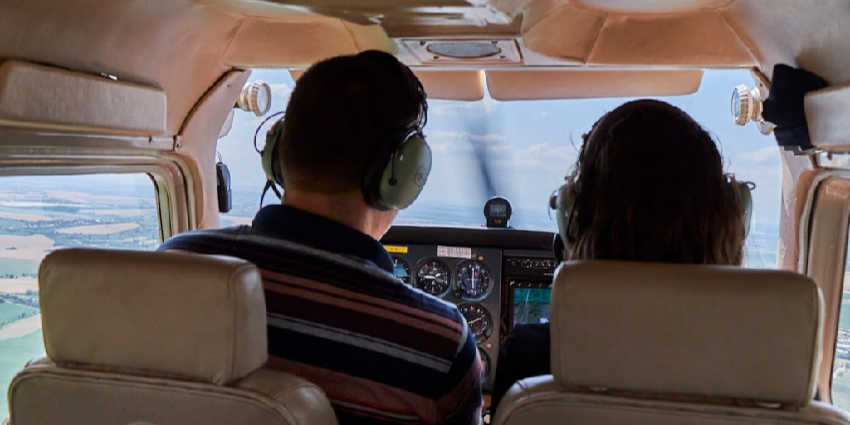
Fixed Wing Pilot License Training Minnesota
Make an informed decision on which program offering fixed wing pilot license training in Minnesota is right for you. Get some experience - contact multiple schools to see what feels right for you.
Factors to consider when choosing your fixed wing pilot license training:
- Distance to the airport: Make sure the airport is close enough that you can make the trip at least two times per week. If just getting to the airport is tough for you, you're probably not going to make it through fixed wing pilot training.
- Facility: Clean, organized, and welcoming offices, hangars, and bathrooms say a lot about how a company operates.
- Fleet: Take a look at the school's aircraft. Do they look maintained, or run down? The condition of the aircraft often indicates the overall quality of flight training you'll receive.
- Instructors: Try to meet as many of the instructors as possible before making a purchasing decision. Often, you'll "click" with a certain instructor, and that can really pay off down the road.
- Payment options: It's generally a good idea to buy "block" time if the Fixed Wing Pilot Training offers a good discount (However, don't buy too much time in advance. Avoid schools that require you to "pay 100% upfront").
Fixed Wing Pilot Training in Minnesota
Learning to fly is a challenge! Do you have what it takes? Do you have the time? The money? Will you be successful? Will your family fly with you? Are there jobs out there for professional pilots in Minnesota?
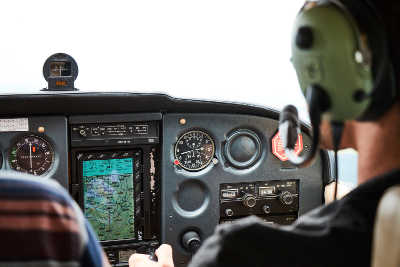 In this section, we try to answer as many questions as possible about researching, contacting, and finally deciding on the fixed wing pilot training that's right for you.
If you want to fly for a living, you'll need to consider fixed wing pilot training in Minnesota that offers private pilot, commercial pilot, and instrument rating training, because all three of these licenses/ratings are required (by most companies) to get a job as a pilot.
You can count on the whole process taking six months to a year or more to complete. For this reason, most aspiring professional pilots attend a fixed wing pilot training program that specializes in teaching career pilots.
Advantages of Fixed Wing Private Pilot License
There are several distinct advantages when attending fixed wing pilot training:
- Shorter training programs (through accelerated training),
- Airline-style training environment,
- Lower costs,
- And the chance to build flight hours as a certified flight instructor upon graduation.
Graduates of pilot training are often hired on by the fixed wing pilot training program to teach the next generation of pilots attending the school. Although pay is generally pretty low, most graduates are only there to build up the number of flight hours they need to apply and get, their next job as a pilot.
By building the requisite number of hours quickly, aspiring professional pilots get into their next job faster, and build up seniority sooner, which can translate into higher pay and a better position in the company down the road. However, when researching these fixed wing pilot training programs in Minnesota, be on the lookout: don't pay for large amounts of flight time in advance.
When deciding on a program, it is important to consider your flying goals. What kind of flying do you plan to do? Do you want to learn to fly for a hobby? Do you want to learn to fly for a living? Do you plan to fly for an airline? Questions like these are important to consider. For the average Sunday flyer, someone who is just out to fly for fun or perhaps personal travel, it is hard to beat the convenience of the local airport.
FAA - A History of Airplane Structures Facts for Minnesota
A steady increase in the use of honeycomb and foam core sandwich components and a wide variety of composite materials characterizes the state of aviation structures from the 1970s to the present. Advanced techniques and material combinations have resulted in a gradual shift from aluminum to carbon fiber and other strong, lightweight materials. These new materials are engineered to meet specific performance requirements for various components on the aircraft.
Newton’s Laws of Motion
The fundamental laws governing the action of air about a wing are known as Newton’s laws of motion. Newton’s first law is normally referred to as the law of inertia. It simply means that a body at rest does not move unless force is applied to it. If a body is moving at uniform speed in a straight line, force must be applied to increase or decrease the speed.
Fixed Wing Pilot License Training in Minnesota
You've made the decision; you want to get your fixed wing pilot license. You know flying is in your future, but now what? How do you get started? What's the next step? The good news is that the road to getting fixed wing pilot license training in Minnesota is very defined.
One of the more difficult aspects of learning to fly is picking the right program for you. Some programs could match your goals better than others. Broken down to their most basic form, there are three basic types of fixed wing pilot license training programs: local fixed wing pilot training, professional programs, and degree programs.
The simplest place to look when you want to learn to fly is at your local airport near Minnesota. Most airports usually have a collection of part-time or even full-time instructors that are fully qualified to teach you to fly. This type of training tends to be pay-as-you-go and self-paced.
There are also a number of professional programs that offer a more scheduled and condensed way to learn to fly. These programs are typically located at larger facilities with a large staff of instructors. They cater to someone with more time who is looking to obtain several ratings at once. The final type of program is degree programs that are tailored toward someone who wishes to fly for the airlines.
Unfortunately, sometimes the road is a little hard to find. If you're not sure how to become a commercial fixed wing pilot in Minnesota, keep reading for an easy five-step 'flight' plan that will see you through to your fixed wing pilot qualifications.
#1: Test The Waters
Don't immediately run out and sign up for the career program of the first school you find. Start with a small step; find a school or independent flight instructor that will take you up for an introductory flight. These are usually pretty inexpensive, maybe $100 to $150 for an hour. The benefit of introductory flights is that you get to experience flight in a small plane with an instructor.
You'll definitely learn a lot in that hour and you should actually get to take the controls. The key takeaway for this exercise is to establish whether you actually like controlling the plane.
#2: Make Sure You're Medically Qualified
Ask any fixed wing pilot in Minnesota and they'll tell you that the hardest part of flying isn't actually controlling the aircraft, it's the paperwork. The truth is, there is a lot of paperwork, but no more than any other licensed professional. The paperwork creeps in a little bit early in flight training, but for the most part, it's just you and your instructor and eventually just you flying free.
Now, this may come as a shock, but there is one vital piece of paperwork that should be handled very early, maybe right out of the gate -- the medical certificate. The process isn't terribly different from a typical doctor's visit, but you have to select from a list of specific doctors, known as Aviation Medical Examiners, and you have to fill out a form.
The doctors typically charge a fee for the visit, but they give you a pretty thorough physical and if you pass you'll be issued a student fixed wing pilot medical certificate.
#3: Consider Your Fixed Wing Pilot Training Goals
You need to be honest and ask yourself a few questions. First, what are your goals; what's your plan? Maybe you're looking for a new hobby. Perhaps you're tired of booking airline tickets last minute and you're looking to fly yourself to that next business meeting. Why does this matter? Flight training isn't one-size-fits-all.
The program that is perfect for the twenty-year-old future airline captain isn't necessarily perfect for the fifty-year-old bank CEO. So, as boring as it sounds, take a few minutes and ask yourself what your intentions are.
#4: Find The Right Fixed Wing Pilot Training Program in Minnesota
The next step is to find flight schools, whether large or small and contact them. Whether you actually visit the schools or you call or email, you want to get a little bit of information before you commit yourself. You want to talk to them about your goals. You also want to talk to them about their school and staff.
If you're looking for a school that will let you zip through the ratings on your way to a job interview, you want to know how many instructors they have on staff, how many other students they have, and how many aircraft they have available.
All three of those items will directly affect the speed with which you can complete your flight training. You should also ask whether you will have one instructor or several. It may seem strange, but you may have chemistry with a certain instructor that will benefit your learning more than finishing faster.
#5: Enjoy Your Fixed Wing Pilot Training
The final step is to pick a school and have fun. Learning to fly is incredibly rewarding. You will learn a lot about yourself and meet some of the most interesting people. The most important things are that you understand that no one wants to see you fail and remember that any flight school can provide the same result; the difference is in how well it fits you and your goals.
Fixed wing pilot training in Minnesota is one of the most exciting and challenging things you will ever do in your life. It is for this reason that it is important to consider every aspect of a training program before you jump in the aircraft for your first lesson.
Traditionally, pilots learn to fly at their local airport, but a growing trend in fixed wing pilot training in Minnesota is "Accelerated" fixed wing pilot training. These schools are often an excellent match if you are looking at making a career out of aviation. Accelerated programs can be broken down into three main types: professional programs, airline programs, and university programs.
What is an Accelerated Fixed Wing Pilot Training in Minnesota?
By this point, you might be asking, "What is an Accelerated Fixed Wing Pilot Training in Minnesota anyway?" Basically, it is a flight school that allows you to earn a certificate (license) or rating in a very short amount of time. To investigate further, accelerated programs are usually structured in a way that has you training eight hours a day five or more days a week.
The goal of these programs is for you to obtain a rating or certificate in a few weeks or months. For example, obtaining a private pilot certificate usually takes about 6 months, but in an accelerated program you could get one in as little as two weeks. That's a pretty significant difference.
Most of these programs are also marketed toward people who are looking for multiple certificates or ratings, so they often structure the programs in cycles. This enables you to walk in off the street with zero flight hours in your logbook and walk out of the school a commercial pilot with 250 hours.
FAA - A History of Aircraft Structures Factoid for Bloomington
Powered heavier-than-air aviation grew from the Wright design. Inventors and fledgling aviators began building their own aircraft. Early on, many were similar to that constructed by the Wrights using wood and fabric with wires and struts to support the wing structure.
Helicopter Factoid for Bloomingtons for Bloomington
Sikorsky Helicopters - S - 300 C: the S-300C helicopter is supported by a worldwide network of service centers. This helicopter has proven its value in many diverse applications around the world, including personal transportation, military and civil training, aerial photography, law enforcement patrol, pipeline and traffic patrol, aerial application, aerial surveys and lift operations.
Helicopter Facts for Brooklyn Park
In 1942, Focke and Flettners seat Fl 282 Kolibri (\Humming Bird) became the first helicopter anywhere to enter operational military service. It was the most advanced helicopter developed during WWII. Focke and Flettners machines had two rotors turning in opposite directions to prevent torque reaction.
Helicopter Pilot Training Tidbits for Brooklyn Park
I like to take a student up to 3000' AGL and have him or her glide down to 500' AGL before adding power and climbing back up to 3000' again. In other words, the student practices the entry and glide repeatedly without being close to the ground and without worrying about the flare or power recovery. After perfecting these parts of an autorotation, the student comes back for another lesson and starts doing flares and power recoveries.
FAA - A History of Aircraft Structures Factoid for Duluth
After WWII, the development of turbine engines led to higher altitude flight. The need for pressurized aircraft pervaded aviation. Semimonocoque construction needed to be made even stronger as a result. Refinements to the all-metal semimonocoque fuselage structure were made to increase strength and combat metal fatigue caused by the pressurization-depressurization cycle.
Helicopter Factoid for Duluths for Duluth
Sikorsky Helicopters - S - 300 C: The S-300C helicopter is known as one of the finest and most versatile piston-engine rotorcraft. Through a program of continuous design evolution and innovation, the S-300C model is even better than ever. Its maneuverability, responsive handling and outstanding range and endurance make the S-300C model ideal for a broad range of roles.
FAA and Mitigation of the Impact of Weather
How the FAA mitigates the impact of weather. FAA air traffic controllers can’t control Mother Nature, but they have a wide range of tools to mitigate Mother Nature’s impact on the flying public. These tools are used at the agency’s Command Center in Warrenton, VA, which balances air traffic demand with system capacity on a nationwide scale, at Air Route Traffic Control Centers (ARTCC), which handle high altitude traffic, at Terminal Radar Approach Control (TRACON) facilities, which handle traffic around busy airports, and at airport towers.
New Helicopter Pilot Training Facts:
When the engine quits during a hover, the pilot needs to make three control inputs. The right pedal is pressed forward to reduce tail rotor thrust. Now that the engine isn't running, you don't need all of that anti-torque. The cyclic is pressed slightly right to return it to a neutral position. An American helicopter has a tendency to drift right in a hover, which means that a pilot has to hold a slight left cyclic input to keep the helicopter stationary. (The cause of the drift is tail rotor thrust.) When the engine power is removed, leaving this input in will result in a left drift. Thus the need to pull the cyclic slightly right. The final required input is an upward pull of the collective, starting at about 1' from the ground. This cushions the impact.
Fun Helicopter and Airplane Facts for Minneapolis
Helicopter Flight Training for Minneapolis You may need to obtain more flight hours before you can become a helicopter flight instructor, though in some jurisdictions, you will simply need to complete another examination and then pass both oral and practical tests.
Aviation Factoids and Figures and Fun for Minneapolis
Unusual But Interesting Helicopter Facts in Minneapolis The new S-434 helicopter builds on the best qualities of the 333 model, including a well laid out cockpit, outstanding flight properties and low cost of ownership. To this, we have added a four-bladed rotor system, upgraded transmission and increased fuel capacity. The result of these improvements are increased useful load, hover performance, cruise speed and lower vibration.
Helicopter Facts for Plymouth
Best known among its developers are the French inventor Louis Breguet and the engineers Igor Sikorsky of the United States and Juan de la Cierva of Spain. The helicopter has become very popular for short-distance transportation, because of its maneuverability and ability to land and take off in small areas; it has been adopted for a wide range of services, including air-sea rescue, fire fighting, traffic control, oil platform resupply, and business transportation.
New Helicopter Training Lessons:
For 180-degree autorotations, the typical problem is that the student lets the nose drop in the right turn. Now the airspeed builds up and the descent rate correspondingly increases, which increase the rotor RPM. A low-time instructor is going to have his hands full recovering an R22 from this mournful situation. Best to start at 3000' again. Have the student enter straight-ahead and establish a 65-knot 100 percent RPM autorotation, with a slightly raised collective to hold the RPMs at 100 percent
FAA - A History of Aircraft Structures Factoid for Rochester
In the 1920s, the use of metal in aircraft construction increased. Fuselages able to carry cargo and passengers were developed. The early flying boats with their hull-type construction from the shipbuilding industry provided the blueprints for semimonocoque construction of fuselages. Truss-type designs faded. A tendency toward cleaner mono-wing designs prevailed.
Helicopter Factoid for Rochesters for Rochester
Sikorsky Helicopters - Light Piston: Since its inception, the product has been continuously improved with new technology and design innovation. Now, more than 50 years and more than 3,700 helicopters later, the S-300CTM and S-300CBiTM helicopters are regarded as among the world's finest piston-powered helicopters.
Historical Facts of Helicopters
In 1907, the Breguet Brothers built their first helicopter. Their cumbersome quad-rotor Gyroplane consisted of four long girders made of steel tubes and arranged in the form of a horizontal cross. A rotor consisting of four biplane blades was placed at each of the four corners of the cross, giving a total of 32 separate lifting surfaces. The pilot sat in the center of the cross next to a 40-hp engine. The machine is reported to have carried a pilot off the ground, albeit briefly.
Fun Helicopter and Airplane Facts for St Cloud
Start out with the helicopter just 6\ to 1' off the ground. Ignore the collective. Work on using the pedals and cyclic so that the helicopter is neither yawing nor drifting when it hits the pavement. When you've mastered these controls start doing hover autos from higher up and add some collective input towards the bottom.
Fun Helicopter and Airplane Facts for St Paul
How to become a flight instructor: There is an additional examination, however, that is meant to determine whether you are familiar with the instruction process, so you will have to take courses, or study independently, to prepare for that. You will typically also need to pass an oral exam and a flight test as a condition for earning a flight instructor certificate.
Helicopter Factoid for St Pauls for St Paul
Sikorsky Helicopters - Light Piston: The piston powered helicopter series draws its legacy from the 269 series. The 269 series helicopter was originally designed with four major objectives in mind: performance, versatility, safety and cost effectiveness.
First Flights of Helicopters
In 1907, about four years after the Wright brothers' first successful powered flights in fixed-wing airplanes at Kitty Hawk in the United States, a French bicycle make named Paul Cornu constructed a vertical flight machine that was reported to have carried a human off the ground for the first time. The airframe was very simple, with a rotor at each end. Power was supplied to the rotors by a gasoline motor and belt transmission. Each rotor had two relatively large but low aspect ratio blades set at the periphery of a large spoked wheel. The rotors rotated in opposite directions to cancel torque reaction. The 24-hp engine used in the machine was hardly powerful enough to have sustained hovering flight out of ground effect.
Fun Helicopter and Airplane Facts for Woodbury
Truly superior pilots are those who use their superior judgment to avoid those situations where they might have to use their superior skills. From: Slipping the Surly Bonds
The most important parts of a hover auto are stopping the yaw (pedal) and stopping the drift (cyclic). If a helicopter falls from 2' and the collective isn't touched, there shouldn't be any damage to the aircraft as long as the skids don't have to absorb a big yawing or drifting moment. Remember that the blades still have some pitch on them and are providing some lift.