Fixed Wing Pilot License in Missouri
Cities in Missouri with Aviation Schools:
- Columbia
- Dearborn
- Des Peres
- Duenweg
- Easton
- Eldon
- Ellisville
- Eureka
- Greenwood
- Hannibal
- Harrisburg
- Hazelwood
- Hermann
- High Ridge
- Hillsboro
- Hollister
- Holts Summit
- House Springs
- Independence
- Jefferson City
- Kansas City
- Lake Ozark
- Lake Saint Louis
- Lebanon
- Lees Summit
- Liberty
- Macon
- Manchester
- Maplewood
- Maryville
- Missouri City
- Moberly
- Moscow Mills
- Mount Vernon
- Neosho
- OFallon
- Springfield
- St Charles
- St Joseph
- St Louis
- St Peters
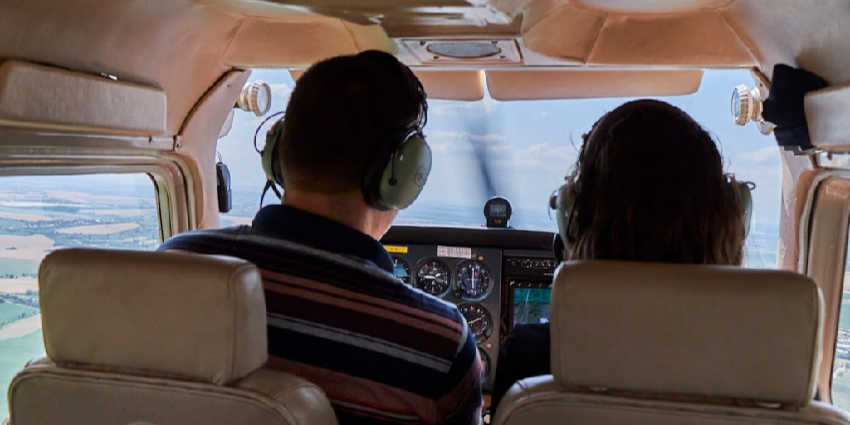
Fixed Wing Pilot License Training Missouri
Make an informed decision on which program offering fixed wing pilot license training in Missouri is right for you. Get some experience - contact multiple schools to see what feels right for you.
Factors to consider when choosing your fixed wing pilot license training:
- Distance to the airport: Make sure the airport is close enough that you can make the trip at least two times per week. If just getting to the airport is tough for you, you're probably not going to make it through fixed wing pilot training.
- Facility: Clean, organized, and welcoming offices, hangars, and bathrooms say a lot about how a company operates.
- Fleet: Take a look at the school's aircraft. Do they look maintained, or run down? The condition of the aircraft often indicates the overall quality of flight training you'll receive.
- Instructors: Try to meet as many of the instructors as possible before making a purchasing decision. Often, you'll "click" with a certain instructor, and that can really pay off down the road.
- Payment options: It's generally a good idea to buy "block" time if the Fixed Wing Pilot Training offers a good discount (However, don't buy too much time in advance. Avoid schools that require you to "pay 100% upfront").
Fixed Wing Pilot Training in Missouri
Learning to fly is a challenge! Do you have what it takes? Do you have the time? The money? Will you be successful? Will your family fly with you? Are there jobs out there for professional pilots in Missouri?
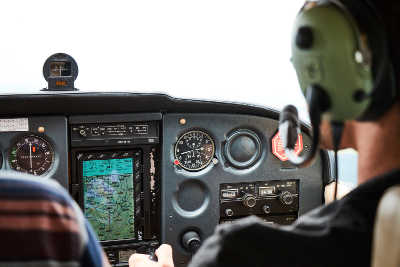 In this section, we try to answer as many questions as possible about researching, contacting, and finally deciding on the fixed wing pilot training that's right for you.
If you want to fly for a living, you'll need to consider fixed wing pilot training in Missouri that offers private pilot, commercial pilot, and instrument rating training, because all three of these licenses/ratings are required (by most companies) to get a job as a pilot.
You can count on the whole process taking six months to a year or more to complete. For this reason, most aspiring professional pilots attend a fixed wing pilot training program that specializes in teaching career pilots.
Advantages of Fixed Wing Private Pilot License
There are several distinct advantages when attending fixed wing pilot training:
- Shorter training programs (through accelerated training),
- Airline-style training environment,
- Lower costs,
- And the chance to build flight hours as a certified flight instructor upon graduation.
Graduates of pilot training are often hired on by the fixed wing pilot training program to teach the next generation of pilots attending the school. Although pay is generally pretty low, most graduates are only there to build up the number of flight hours they need to apply and get, their next job as a pilot.
By building the requisite number of hours quickly, aspiring professional pilots get into their next job faster, and build up seniority sooner, which can translate into higher pay and a better position in the company down the road. However, when researching these fixed wing pilot training programs in Missouri, be on the lookout: don't pay for large amounts of flight time in advance.
When deciding on a program, it is important to consider your flying goals. What kind of flying do you plan to do? Do you want to learn to fly for a hobby? Do you want to learn to fly for a living? Do you plan to fly for an airline? Questions like these are important to consider. For the average Sunday flyer, someone who is just out to fly for fun or perhaps personal travel, it is hard to beat the convenience of the local airport.
FAA - A History of Airplane Structures Facts for Missouri
An aircraft is a device that is used for, or is intended to be used for, flight in the air. Major categories of aircraft are airplane, rotorcraft, glider, and lighter-than-air vehicles. Each of these may be divided further by major distinguishing features of the aircraft, such as airships and balloons. Both are lighter-than-air aircraft but have differentiating features and are operated differently.
Newton's Law of Motion
Newton’s second law states that if a body moving with uniform speed is acted upon by an external force, the change of motion is proportional to the amount of the force, and motion takes place in the direction in which the force acts. This law may be stated mathematically as follows: Force = mass × acceleration (F = ma). If an aircraft is flying against a headwind, it is slowed down. If the wind is coming from either side of the aircraft’s heading, the aircraft is pushed off course unless the pilot takes corrective action against the wind direction.
Fixed Wing Pilot License Training in Missouri
You've made the decision; you want to get your fixed wing pilot license. You know flying is in your future, but now what? How do you get started? What's the next step? The good news is that the road to getting fixed wing pilot license training in Missouri is very defined.
One of the more difficult aspects of learning to fly is picking the right program for you. Some programs could match your goals better than others. Broken down to their most basic form, there are three basic types of fixed wing pilot license training programs: local fixed wing pilot training, professional programs, and degree programs.
The simplest place to look when you want to learn to fly is at your local airport near Missouri. Most airports usually have a collection of part-time or even full-time instructors that are fully qualified to teach you to fly. This type of training tends to be pay-as-you-go and self-paced.
There are also a number of professional programs that offer a more scheduled and condensed way to learn to fly. These programs are typically located at larger facilities with a large staff of instructors. They cater to someone with more time who is looking to obtain several ratings at once. The final type of program is degree programs that are tailored toward someone who wishes to fly for the airlines.
Unfortunately, sometimes the road is a little hard to find. If you're not sure how to become a commercial fixed wing pilot in Missouri, keep reading for an easy five-step 'flight' plan that will see you through to your fixed wing pilot qualifications.
#1: Test The Waters
Don't immediately run out and sign up for the career program of the first school you find. Start with a small step; find a school or independent flight instructor that will take you up for an introductory flight. These are usually pretty inexpensive, maybe $100 to $150 for an hour. The benefit of introductory flights is that you get to experience flight in a small plane with an instructor.
You'll definitely learn a lot in that hour and you should actually get to take the controls. The key takeaway for this exercise is to establish whether you actually like controlling the plane.
#2: Make Sure You're Medically Qualified
Ask any fixed wing pilot in Missouri and they'll tell you that the hardest part of flying isn't actually controlling the aircraft, it's the paperwork. The truth is, there is a lot of paperwork, but no more than any other licensed professional. The paperwork creeps in a little bit early in flight training, but for the most part, it's just you and your instructor and eventually just you flying free.
Now, this may come as a shock, but there is one vital piece of paperwork that should be handled very early, maybe right out of the gate -- the medical certificate. The process isn't terribly different from a typical doctor's visit, but you have to select from a list of specific doctors, known as Aviation Medical Examiners, and you have to fill out a form.
The doctors typically charge a fee for the visit, but they give you a pretty thorough physical and if you pass you'll be issued a student fixed wing pilot medical certificate.
#3: Consider Your Fixed Wing Pilot Training Goals
You need to be honest and ask yourself a few questions. First, what are your goals; what's your plan? Maybe you're looking for a new hobby. Perhaps you're tired of booking airline tickets last minute and you're looking to fly yourself to that next business meeting. Why does this matter? Flight training isn't one-size-fits-all.
The program that is perfect for the twenty-year-old future airline captain isn't necessarily perfect for the fifty-year-old bank CEO. So, as boring as it sounds, take a few minutes and ask yourself what your intentions are.
#4: Find The Right Fixed Wing Pilot Training Program in Missouri
The next step is to find flight schools, whether large or small and contact them. Whether you actually visit the schools or you call or email, you want to get a little bit of information before you commit yourself. You want to talk to them about your goals. You also want to talk to them about their school and staff.
If you're looking for a school that will let you zip through the ratings on your way to a job interview, you want to know how many instructors they have on staff, how many other students they have, and how many aircraft they have available.
All three of those items will directly affect the speed with which you can complete your flight training. You should also ask whether you will have one instructor or several. It may seem strange, but you may have chemistry with a certain instructor that will benefit your learning more than finishing faster.
#5: Enjoy Your Fixed Wing Pilot Training
The final step is to pick a school and have fun. Learning to fly is incredibly rewarding. You will learn a lot about yourself and meet some of the most interesting people. The most important things are that you understand that no one wants to see you fail and remember that any flight school can provide the same result; the difference is in how well it fits you and your goals.
Fixed wing pilot training in Missouri is one of the most exciting and challenging things you will ever do in your life. It is for this reason that it is important to consider every aspect of a training program before you jump in the aircraft for your first lesson.
Traditionally, pilots learn to fly at their local airport, but a growing trend in fixed wing pilot training in Missouri is "Accelerated" fixed wing pilot training. These schools are often an excellent match if you are looking at making a career out of aviation. Accelerated programs can be broken down into three main types: professional programs, airline programs, and university programs.
What is an Accelerated Fixed Wing Pilot Training in Missouri?
By this point, you might be asking, "What is an Accelerated Fixed Wing Pilot Training in Missouri anyway?" Basically, it is a flight school that allows you to earn a certificate (license) or rating in a very short amount of time. To investigate further, accelerated programs are usually structured in a way that has you training eight hours a day five or more days a week.
The goal of these programs is for you to obtain a rating or certificate in a few weeks or months. For example, obtaining a private pilot certificate usually takes about 6 months, but in an accelerated program you could get one in as little as two weeks. That's a pretty significant difference.
Most of these programs are also marketed toward people who are looking for multiple certificates or ratings, so they often structure the programs in cycles. This enables you to walk in off the street with zero flight hours in your logbook and walk out of the school a commercial pilot with 250 hours.
Fixed-Wing Aircraft Factoid
Fuselage: The fuselage is the main structure or body of the fixed-wing aircraft. It provides space for cargo, controls, accessories, passengers, and other equipment. In single-engine aircraft, the fuselage houses the powerplant. In multiengine aircraft, the engines may be either in the fuselage, attached to the fuselage, or suspended from the wing structure. There are two general types of fuselage construction: truss and monocoque.
Heliports: A heliport is a type of airfield devoted to use by helicopters exclusively. Consisting of many helipads and hangers used to protect the helicopters from the elements, helicopters are able to avoid the confined and typically crowded airspace associated with a common airport.
Instrument Ratings for New Helicopter Pilots in Columbia
A lot of commercial helicopter jobs require instrument ratings, even some where the helicopters that you will be flying are not certified for instrument meteorological conditions (IMC). When is a good time to get instrument-certified? My personal theory is that you should get your instrument rating right after you finish the CFI-H and then take instrument rating and CFII-H checkrides back to back.
The Aviation Maintenance Technician Handbook
This volume contains information on airframe construction features, assembly and rigging, fabric covering, structural repairs, and aircraft welding. The handbook also contains an explanation of the units that make up the various airframe systems. Because there are so many different types of aircraft in use today, it is reasonable to expect that differences exist in airframe components and systems.
Instrument Ratings for Airplane Pilots for Independence:
If you get an Instrument Airplane rating, chances are that you will use it regularly; most airplanes are certified for IMC and any time that one takes a trip in an airplane, it seems as though the instrument rating ends up being required. By the time you want to get your CFII-A, the only challenge will be flying those instruments from the other seat.
Fun Helicopter and Airplane Facts for Kansas City
Heliports: The typical heliport contains several helipads. Helipads are smooth and flat areas devoted to helicopter landing and take offs. The heliport consists of a control tower in most instances, a radio station as well as identification and emergency lighting.
Interesting Aviation Facts for Kansas City for Kansas City
There is little value in teaching students to raise the collective at the bottom of a hover auto. Concentrate on the pedal and cyclic work, which do not come naturally for most pilots. Nobody who is in a helicopter that is falling toward the ground needs a CFI to tell them to pull up on the collective. Remember that pavement is not as forgiving of small problems with hover autos compared to grass, but big yaw or drift when hitting grass is more likely to result in a dynamic rollover than the same sloppiness on pavement.
FAA - A History of Aircraft Structures Factoid for Lees Summit
It was Cayley who first stacked wings and created a tri-wing glider that flew a man in 1853. Earlier, Cayley studied the center of gravity of flying machines, as well as the effects of wing dihedral. Furthermore, he pioneered directional control of aircraft by including the earliest form of a rudder on his gliders.
Instrument Ratings for Helicopter Pilots for Lees Summit:
Helicopters, by contrast, are seldom equipped and almost never certified for IMC. If you get your instrument rating at 120 hours, for example, and then try to get the CFII at 250 hours, you'll probably find that your instrument proficiency has deteriorated dramatically. If, on the other hand, you get your helicopter instrument rating at 249 hours and your CFII-H at 250 hours, you only need to get sharp once.
FAA - A History of Aircraft Structures Factoid for OFallon
In the late 1800s, Otto Lilienthal built upon Cayley’s discoveries. He manufactured and flew his own gliders on over 2,000 flights. His willow and cloth aircraft had wings designed from extensive study of the wings of birds. Lilienthal also made standard use of vertical and horizontal fins behind the wings and pilot station. Above all, Lilienthalproved that man could fly.
With Helicopters in OFallon Safety is Everything:
People fly helicopters into friends' backyards, onto highways on rainy nights after car accidents, onto rooftop helipads, and with air conditioners hanging underneath. Helicopters are unstable and very few are equipped with autopilots. You'd expect helicopters to be vastly more dangerous than airplanes. They are and they aren't. Big jet-powered helicopters are safer than small airplanes, but not by the huge factor that big jet-powered airplanes are safer. The jet-powered helicopters suffer 4 accidents per 100,000 hours, 1 of which will be fatal. Piston-powered helicopters, which these days means Robinson suffer 13-20 accidents per year with roughly 2 of those accidents being fatal.
Fun Helicopter and Airplane Facts for Springfield
Air Force Helicopter Pilot: You should fulfill the minimum height and weight requirements and should have a good eyesight and ability to identify colors. Apart from physical fitness, you also need to concentrate on your formal education.
Interesting Aviation Facts for Springfield for Springfield
Don't go anywhere at night that you haven't been to a lot of times during the daytime. The only exception to this rule would be when flying from airport to airport, in which case you should stay 2000' AGL until you have visually identified the destination airport. Establish high personal weather minimums for night flying, even with an instructor. I do not like to leave the airport traffic pattern unless the visibility is at least 10 miles.
Fun Helicopter and Airplane Facts for St Charles
Hospital helicopter pilots respond to medical emergencies, transporting patients who are in critical condition to hospitals where they can receive the medical care they need. The job of an emergency medical services pilot is one associated with high prestige; however, you must be a highly experienced pilot to qualify.
Fun Helicopter and Airplane Facts for St Charles
Helicopter Jobs: Is it your dream to fly an expensive jet-powered helicopter without paying for the hours? Thank your neighbors for driving SUVs. Every year the oil industry goes farther offshore to get oil. The only way to get to an offshore platform is by helicopter and thus every year there are more jobs for helicopter pilots.
Fun Helicopter and Airplane Facts for St Joseph
How to Select a Helicopter Instructor: Spend a half hour to an hour talking with the instructor. Make sure that the two of you can get along! See how knowledgable the instructor seems to be. If the instructor spends a lot of time trying to convince you to go fly rather than talk, you may have found a guy who isn't going to want to spend the time with you on the ground preparing for a lesson that he should.
Fun Helicopter and Airplane Facts for St Joseph
Any landing you can walk away from is a good one. Gerald Massie (photographer and plane crash surviver).
With Helicopters in St Joseph Safety is Everything: The good news about helicopter safety is that it is largely under your control as the pilot. If you want to cruise along for 25 miles skimming the ground 100' above obstacles and then land in your friend's backyard, which is surrounded by powerlines and trees, you are asking for trouble.
Fun Helicopter and Airplane Facts for St Louis
Flight Instructor Facts: the instructor commonly maintains a grip on the controls in order to overcome any emergency condition that might occur during the student's flight. Once a student has completed the entire training session, and has demonstrated the proper level of knowledge to safely operate a helicopter, the flight instructor will allow the student to perform a solo flight.
New Pilot Flight Training in St Louis:
You have to do a night cross-country with your instructor. You might as well make it to an airport that is 50 nautical miles away and make sure to stay up in the air for a total of two hours. That way, you'll be all set for your Commercial aeronautical experience (FAR 61.129(c)).
Fun Helicopter and Airplane Facts for St Peters
If you are planning to become a commercial helicopter pilot, you need to possess a four-year degree, as required by most employers. The next step is to complete the certification program administered by the Federal Aviation Administration (FAA).
Advice in Buying Helicopters for St Peters:
If you don't want to buy a mechanic to go with your helicopter and constantly stuff grease into various joints, your only option in the land of the certified is Robinson. I own an R22 and an R44. The R44 was 50 percent more expensive, but it is 200 percent more useful. The R22 feels cramped even when you're by yourself and, against a headwind, you watch cars on the Interstate passing you.