Flight Training in California
Cities in California with Aviation Schools:
- Agoura
- Agoura Hills
- Alameda
- Alhambra
- Alta Loma
- Anaheim
- Antioch
- Apple Valley
- Arcadia
- Arden-Arcade
- Bakersfield
- Baldwin Park
- Banning
- Bellflower
- Berkeley
- Beverly Hills
- Brentwood
- Buena Park
- Burbank
- Camarillo
- Carlsbad
- Carmichael
- Carson
- Castro Valley
- Chico
- Chino
- Chino Hills
- Chula Vista
- Citrus Heights
- Claremont
- Clovis
- Compton
- Concord
- Corona
- Coronado
- Costa Mesa
- Daly City
- Davis
- Del Mar
- Downey
- Dublin
- East Los Angeles
- Eastvale
- El Cajon
- El Monte
- Elk Grove
- Encinitas
- Escondido
- Fairfield
- Florence-Graham
- Folsom
- Fontana
- Fremont
- French Gulch
- Fresno
- Fullerton
- Garden Grove
- Gilroy
- Glendale
- Hawthorne
- Hayward
- Hemet
- Hesperia
- Huntington Beach
- Indio
- Inglewood
- Irvine
- Jurupa Valley
- La Habra
- La Jolla
- La Mesa
- Laguna Niguel
- Lake Elsinore
- Lake Forest
- Lakewood
- Lancaster
- Livermore
- Lodi
- Long Beach
- Los Angeles
- Lynwood
- Madera
- Manteca
- Menifee
- Merced
- Milpitas
- Mission Viejo
- Modesto
- Moreno Valley
- Mountain View
- Murrieta
- Napa
- Newport Beach
- Norwalk
- Oakland
- Oceanside
- Ontario
- Orange
- Oroville
- Oxnard
- Palm Springs
- Palmdale
- Palo Alto
- Pasadena
- Perris
- Pittsburg
- Pleasanton
- Pomona
- Rancho Cordova
- Rancho Cucamonga
- Redding
- Redlands
- Redondo Beach
- Redwood City
- Rialto
- Richmond
- Riverside
- Rocklin
- Roseville
- Sacramento
- Salinas
- San Bernardino
- San Clemente
- San Diego
- San Francisco
- San Jose
- San Leandro
- San Marcos
- San Mateo
- San Ramon
- Santa Ana
- Santa Barbara
- Santa Clara
- Santa Clarita
- Santa Cruz
- Santa Maria
- Santa Monica
- Santa Rosa
- Simi Valley
- South Gate
- South San Francisco
- Stockton
- Sunnyvale
- Temecula
- Thousand Oaks
- Torrance
- Tracy
- Tulare
- Turlock
- Tustin
- Union City
- Upland
- Vacaville
- Vallejo
- Ventura
- Victorville
- Visalia
- Vista
- Walnut Creek
- West Covina
- Westminster
- Whittier
- Yorba Linda
- Yuba City

Choose the Best Flight Training Courses in California
Follow this easy five-step plan to find the best flight training in California to prepare you to become a pilot. You've made the decision to attend flight training in California and you want to become a private or commercial pilot in California. You know flying is in your future, but now what? How do you get started with flight training in California? So, what's the next step?
The good news is that the road to flight training and becoming a pilot is very defined. Unfortunately, sometimes the road is a little hard to find. If you're not sure how to become a commercial pilot, keep reading for an easy five-step 'flight' plan that will see you through to your pilot qualifications.
1) Test the waters of flight training programs
Don't immediately run out and sign up for the first flight training course you find. Start with a small step; find a school or independent flight instructor that will take you up for an introductory flight. These are usually pretty inexpensive, maybe $100 to $150 for an hour.
The benefit to introductory flight training is that you get to experience flight training in a small plane with an instructor. You'll definitely learn a lot in that hour and you should actually get to take the controls. The key takeaway for this exercise is to establish whether you actually like controlling the plane.
2) Make sure you're medically qualified*
Ask any pilot and they'll tell you that the hardest part of flying isn't actually controlling the aircraft, it's the paperwork. The truth is, there is a lot of paperwork, but no more than any other licensed professional. The paperwork creeps in a little bit early in flight training, but for the most part, it's just you and your instructor and eventually just you flying free.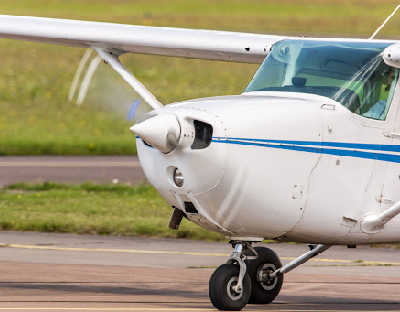
Now, this may come as a shock, but there is one vital piece of paperwork that should be handled very early, maybe right out of the gate -- the medical certificate. The process isn't terribly different from a typical doctor's visit, but you have to select from a list of specific doctors, known as Aviation Medical Examiners, and you have to fill out a form.
The doctors typically charge a fee for the visit, but they give you a pretty thorough physical and if you pass you'll be issued a student pilot / medical certificate. You can find out more about specific requirements on the FAA medical certification FAQ. This isn't meant to scare you away, but flying is a serious business and everyone wants to make sure everybody is safe.
Getting your medical out of the way early on will keep your training from being interrupted while you have to sort out a medical issue, like switching medications, or worse finding out you'll never be able to solo.
* a medical certificate is not required for those earning a Sport Pilot Certificate. However, Sport Pilots must have a valid state driver's license
3) Consider your flight training goals
You need to be honest and ask yourself a few questions. First, what are your goals; what's your plan? Maybe you're looking for a new hobby. Perhaps you're tired of booking airline tickets last minute and you're looking to fly yourself to that next business meeting. Why does this matter? Flight training isn't one-size-fits-all.
The program that is perfect for the twenty-year-old future airline captain isn't necessarily perfect for the fifty-year-old bank CEO. So, as boring as it sounds, take a few minutes and ask yourself what your intentions are.
4) Find the right flight training course or school in California
The next step is to find flight schools, whether large or small and contact them. Whether you actually visit the schools or you call or email, you want to get a little bit of information before you commit yourself. You want to talk to them about your goals. You also want to talk to them about their school and staff.
 If you're looking for a school that will let you zip through the ratings on your way to a job interview, you want to know how many instructors they have on staff, how many other students they have, and how many aircraft they have available. All three of those items will directly affect the speed with which you can complete your flight training.
You should also ask whether you will have one instructor or several. It may seem strange, but you may have chemistry with a certain instructor that will benefit your learning more than finishing faster.
If you are looking to get into an airline and you don't already have a four-year degree, you may want to look for a university program, such as the University of North Dakota's Commercial Aviation Degree, that will let you complete your flight training and four-year degree at the same time.
5) Enjoy your flight training in California
The final step is to pick a school and have fun. Learning to fly is incredibly rewarding. You will learn a lot about yourself and meet some of the most interesting people. The most important things are that you understand that no one wants to see you fail and remember that any flight school can provide the same result; the difference is in how well it fits you and your goals.
How much does Flight Training cost? Like anything more significant than buying groceries, pilot training has a certain level of associated costs. If you're in the process of finding a Flight Training or even if you've already started pilot training, you may find yourself wondering, "How much is too much?"
The good news is that pilot training costs consist of a few basic building blocks; the bad news is the costs can fluctuate for a variety of reasons.
Average Costs In The USA For Various Types Of Flight Training in California
- Sport Pilot License - $3,000 to $5,000
- Private Pilot License - $6,500 to $12,000
- Private + Commercial License - $10,000 to $16,000
- Private + Instrument + Commercial - $18,000 to $24,000
- Private + Instrument + Commercial + ATP - $30,000+
Flight Training Instruction Costs in California
Depending on the pilot training course, the FAA requires a minimum of 35 or 40 hours before you can qualify for a Private Pilot Certificate. Most students actually take longer, averaging about 60 hours of training. While this is certainly an important item to consider, there are plenty of other items that are often overlooked. Exam fees, both written and check ride, books, and other materials are an important part of Flight Training costs.
Exam fees can range from anywhere from $100 to $400 or more depending on the examiner. Books and other materials--like a flight computer, logbook, and navigation plotter--are less costly, but combined can add up to around $100 or more.
Flight Training Scholarships in California
A question that often comes up when you're considering flight training is whether or not there are scholarships available. The short answer is "yes", but that doesn't really help much when it comes to finding these often elusive sources of funding. The real trick with flight training scholarships is realizing that it takes time and energy to find, apply for, and receive them.
None of them just drop in your lap, and like college scholarships, there are more small scholarships than large ones. You're more likely to find several scholarships that add up to a substantial dollar amount than you are to find a single scholarship to cover all of your training. So, where can you find scholarships? As a start, you might want to consider the following: Flight Training, aviation organizations, and conventional scholarships.
How the FAA Mitigates the Impact of Bad Weather
They include ground stops, which keep aircraft on the ground when air traffic control is unable to safely accommodate additional aircraft in the system, ground delays, in which aircraft are delayed at their departure airport in order to manage demand and capacity at their arrival airport, and Severe Weather Avoidance Plans, which minimize the impact of a large scale storm by easing traffic demand in portions of airspace impacted by the storm. Other tools include:
- The Airspace Flow Program which identifies aircraft scheduled to fly through severe weather and provides new estimated departure times, giving airlines the flexibility to accept the delay, fly around the storm or cancel the flight.
- Time Based Flow Management is a technology used to adjust capacity and demand imbalances at select airports and points in the sky throughout the U.S., while Traffic Management Advisor is a comprehensive, automated tool for planning efficient flight trajectories from cruise altitude to the runway.
- The fully-automated NextGen Weather Processor identifies safety hazards around busy airports and at high altitudes, and also provides support for strategic traffic flow management, including weather information needed to predict routes blocked by bad weather up to eight hours in advance.
- The Aviation Weather Display consolidates previously separate weather displays, providing important weather information at a glance for controllers.
Fixed-Wing Aircraft Factoid Maintaining the Aircraft
Airframe, engine, and aircraft component manufacturers are responsible for documenting the maintenance procedures that guide managers and technicians on when and how to perform maintenance on their products. A small aircraft may only require a few manuals, including the aircraft maintenance manual. This volume usually contains the most frequently used information required to maintain the aircraft properly. The Type Certificate Data Sheet (TCDS) for an aircraft also contains critical information.
Best Flight Training Courses in California
When deciding what is the best Flight Training for you, it is important to consider your flying and flight training goals. Once you've finished training, what kind of flying do you want to do? Are you learning to fly as a hobby? Do you want to learn to fly as a career? More importantly, are you seeking an airline career? When choosing a Flight Training, answering questions like these is important to establish which kind of school will best meet your needs.
Choosing the right flight training course in California is critical. All flight training courses and schools in California are not the same. Most large flight academies near California specialize in "ab initio" or "from the beginning" training for people who want to become commercial, airline, or corporate pilots. On the other hand, local Flight Training in ~ train for a wide variety of missions, including people who just want to fly for fun.
Local Flight Training Schools near California
The place that usually comes to mind when you think of airplanes is your local airport. If you want to learn to fly, your local airport is a great place to start. Even the smallest fields usually have at least one part-time or even full-time instructor that is fully qualified to teach you to fly. Larger fields may even have multiple Flight Training opportunities in California.
For the hobbyist, this is great, flight training is typically pay-as-you-go and self-paced. For those that want or need to go at a faster pace, the local airport may not be the best place to get flight training near California.
Local Flight Training typically offer at least Sport or Private Pilot programs, and some can train all the way to ATP. Local schools may have a few aircraft available for training and rental, and most have facilities for ground training such as classrooms, flight planning rooms, and even small flight simulators.
Recommended for people who want to fly for fun, or as a profession.
The advantages of using a local Flight Training could include access to a variety of aircraft, training close to home, lower costs than some flight academies, and access to training facilities.
Disadvantages could include limited training for advanced ratings and possible downtime of small fleets due to maintenance issues.
University Flight Training Schools around California
Finally, for those looking for an airline career who don't have a four-year degree, consider an aviation degree program at one of the many colleges and universities that offer them. These programs allow you to combine the four-year degree, which most airlines require, with flight training in California. When it comes time to graduate, you will be a commercial pilot with a degree in hand ready to fly for the airlines.
Flight academies and college/university flight training programs near California have a lot going for them. If your goal is to fly professionally, this type of training may be the best option. But if you're only in the market to learn to fly as a hobby, some academies may not be able to accommodate your needs. It's best to contact each school to find out.
Recommended for people who want to fly for a career. Advantages to attending a flight academy/university program include state of the art aircraft fleets with glass cockpits, flight crew training environment, industry-standard flight simulator training, potential employment as a CFI after graduation, access to job interviews with affiliated companies, and minimal downtime due to maintenance issues.
Disadvantages could include higher overall costs, the possible need to relocate to attend an academy, less flexibility on time and scheduling, the training not as personalized.
No matter what type of flying you intend to do, it's important to talk to as many schools as possible to find out which one fits your learning style, personality, and ultimate aviation goals best.
The most important take-away is that each kind of Flight Training can provide the same result, but when you pick the best Flight Training in California for you, you can meet your goals quicker and more efficiently. Furthermore, there's nothing wrong with changing in the middle of your training. Don't let the fear that you might pick the wrong school for you prevent you from learning to fly; it is too much fun.
Accelerated Flight Training Courses from California
If you're seeking a flying career or you just want to get a rating in the minimum time, there are also larger professional Flight Training offering accelerated programs. These are typically more condensed, some as short as a few days or weeks, that is strictly planned and scheduled.
Flight Training in California employs plenty of professional instructors and has large aircraft fleets to accommodate the quick pace of the training. It may sound like a stressful way to learn to fly, but it is actually quicker and more efficient because it requires less repetition. These flight training programs in California cater to someone looking to obtain several ratings at once or those who need to get a rating quickly.
Helicopter History for Anaheim
Air Force Helicopter Pilot: The average salary for senior level pilots and commanders with an experience of more than ten years can be around USD 100,000 per years. Average salary of a pilot can vary as per their location of job and posting. Apart from the salary, air force pilots receive housing allowance, insurance, cost of living allowance, family separation allowance and the overseas housing allowance.
Aviation Factoids and Figures and Fun for Anaheim
Modern Day Military Pilot Training for Anaheim: ll pilots must pass a Class 1 flight physical and have perfect 20/20 vision, either corrected or uncorrected. Pilots must also have normal color perception, depth perception and field of vision. Additionally, Coast Guard pilots must have good dental health with no cavities.
Interesting Helicopter and Fixed-wing Facts for Bakersfield
If you include military helicopters it is estimated that there are more than 45,000 operating worldwide.
The fastest helicopter is the Westland Lynx, which flew at 402 km/h on 6 August 1986. The Westland Lynx is a British multi-purpose military helicopter designed and built by Westland Helicopters at its factory in Yeovil.
Helicopter Spotlight for Bakersfield
The Piasecki X-49 SpeedHawk is a four-bladed twin-engined experimental compound helicopter under development by Piasecki Aircraft. The X-49A is based on the airframe of a Sikorsky YSH-60F Seahawk but utilizes Piasecki's proprietary vectored thrust ducted propeller (VTDP) design and includes the addition of lifting wings. The concept of the experimental program is to apply the VTDP technology to a production military helicopter to determine any benefit gained through increases in performance or useful load.
Banning Municipal Airport is located 200 S Hathaway St.
The CAL FIRE Prado Helitack Base is located at 14467 Central Ave. 8CA4 - SCE Eastern Division Heliport at 2885 Foothill Blvd.
The nearest airport is Chino Airport located at 7000 Merrill Avenue.
Aviation Facts for Helicopter and Airplanes in Chula Vista
The R44 is a single-engined helicopter with a semi-rigid two-bladed main rotor and a two-bladed tail rotor and a skid landing gear. It has an enclosed cabin with two rows of side-by-side seating for a pilot and three passengers.
Regarding aircraft speed: Unless otherwise authorized by the Federal Aviation Administrator no person may operate an aircraft below 10,000 feet MSL at an indicated airspeed of more than 250 knots (288 m.p.h.). The noise pollution would not be looked upon very kindly.
Helicopter Spotlight for Chula Vista
The Eurocopter (now Airbus Helicopters) AS332 Super Puma is a four-bladed, twin-engine, medium-size utility helicopter developed and marketed by Aérospatiale andEurocopter (now Airbus Helicopters). It is an enlarged and re-engined version of the original Aérospatiale SA 330 Puma. First flying in 1978, the Super Puma succeeded the SA 330 Puma as the main production model of the type in 1980; since 1990 Super Pumas in military service have been marketed under the AS532 Cougar designation. In civilian service a next generation successor to the AS 332 was introduced in 2004, the further-enlarged Eurocopter EC225 Super Puma.
Interesting Helicopter Facts for Concord
Numerous individuals have contributed to the conception and development of the helicopter. The idea appears to have been from nature in origin, meaning that it was derived from a natural phenomena. In this case, the whirling, fruit of the maple tree to a mechanical design. In 1784, French inventors, Launoy and Bienvenue created a toy with a rotary-wing that could lift and fly and proved the principle of helicopter flight. Much like the maple tree fruit as it flies to the ground.
Helicopter Spotlight for Concord
The Bell UH-1 Iroquois (unofficially Huey) is a military helicopter powered by a single turboshaft engine with a two-bladed main rotor and tail rotor. The helicopter was developed by Bell Helicopter to meet theUnited States Army's requirement for a medical evacuation and utility helicopter in 1952 and first flew on 20 October 1956. Ordered into production in March 1960 the UH-1 was the first turbine-powered helicopter to enter production for the United States military and more than 16,000 have been produced worldwide.
Interesting Helicopter and Fixed-wing Facts for Corona
The correct glide angle in order to maintain optimal rotor RPM varies with the different helicopter designs, and can be found in the helicopters manual. The glide angle also varies based on weather conditions (wind, temperature, etc.), weight, altitude, and airspeed, but in all cases a correct glide angle has the effect of producing an upward flow of air that will spin the main rotor at some optimal RPM, storing kinetic energy in the blades.
Aviation Facts for Corona
The Aero HC-2 Heli Baby is a two-seat light general-purpose utility helicopter designed by engineer Jaroslav Slechta and produced by the Czechoslovakian company Aero Vodochody in the 1950s. It has a three-bladed main rotor and a two-bladed tail rotor. The helicopter has an entirely metal frame and cockpit and windows made of Plexiglas. It was the first Czechoslovakian-designed helicopter to be produced. Construction of the prototype began in 1951 and testing commenced in 1954. The first flight occurred on December 3 1954 and the public was introduced to the helicopter in 1955 at the Brno Industries Fair. Production was slated to begin in 1957 however engine problems delayed it. The initial batch produced 200 of these helicopters. The Czechoslovakian Air Force was a user of the HC-2 as was the Czechoslovak People's Army. The Heli Baby is capable of carrying a pilot and 220 pounds of cargo 62 miles in one hour while using 4.85 gallons of fuel. In 195 it was one of the world's lightest two-seated helicopters.
Interesting Helicopter and Fixed-wing Facts for Costa Mesa
To avoid landing problems, the engine could be disconnected and the autogiro brought gently to rest by the rotor, which would gradually cease spinning as the machine reached the ground. Popular during the 1920s and 1930s, autogiros ceased to be produced after the refinement of the conventional helicopter.
The first helicopter to achieve completely untethered flight was the Cornu in 1907, which managed to hover one foot above the ground for 20 seconds.
Helicopter Spotlight for Costa Mesa
The AgustaWestland Apache is a licence-built version of the AH-64D Apache Longbow attack helicopter for the British Army's Army Air Corps. The first eight helicopters were built by Boeing; the remaining 59 were assembled by Westland Helicopters (now part of AgustaWestland) at Yeovil, Somerset in England from Boeing-supplied kits. Changes from the AH-64D include Rolls-Royce engines, a new electronic defensive aids suite and a folding blade mechanism allowing the British version to operate from ships. The helicopter was initially designated WAH-64 by Westland Helicopters and was later designated Apache AH Mk 1 (often shortened to Apache Ah4) by the Ministry of Defence.
The Apache has become a valued form of close air support in the continuing conflict in Afghanistan, being deployed to the region since 2006. The Apache has been an object of controversy over the fitting of some munitions, such as cluster bombs and thermobaric weapons. Naval trials and temporary deployments at sea have proven the aircraft as an able platform to operate from the decks of ships, which is a unique application of the Apache amongst its operators. British Apaches served in the NATO 2011 military intervention in Libya operating from Royal Navy ships.
Fun Helicopter Facts for Downey:
The helicopter was eventually perfected by Igor Sikorsky. Advances in aerodynamic theory and building materials had been made since Sikorsky's initial endeavor, and, in 1939, he lifted off the ground in his first operational helicopter. Two years later, an improved design enabled him to remain aloft for an hour and a half, setting a world record for sustained helicopter flight.
NAS Lemoore
NAS Lemoore, Californiais located in the central part of the state and covers two counties Fresno and Kings. A small part of it the Lemoore station is one of the few military based census designated areas. The military base is actually a jet base. It is the most important and largest such facility controlled by the US Navy.
Famous Quote in Downey
“For those who love flying, the ability of the helicopter to hover and move in any direction from the hover with complete control gives a thrill and fascination that is not found in any other form of powered flight.” ~Fay, John (1976)
I’ve missed more than 9000 shots in my career. I’ve lost almost 300 games. 26 times I’ve been trusted to take the game winning shot and missed. I’ve failed over and over and over again in my life. And that is why I succeed. –Michael Jordan
Helicopter Facts for El Monte
During World War I, Hungarian engineer Theodore von Karman constructed a helicopter that, when tethered, was able to hover for extended periods. Several years later, Spaniard Juan de la Cierva developed a machine he called an autogiro in response to the tendency of conventional airplanes to lose engine power and crash while landing.
Helicopters are classified as rotorcrafts. The helicopter uses rotors to supply the thrust and lift required for flight. The helicopter is unique in that it is able to take off and land vertically. It is also capable of hovering flying forward backward and laterally. The idea of vertical flight has existed since 400 BC when Chinese toys made of bamboo mimicked the flight of modern day helicopters.
Helicopter Factoid for El Montes in El Monte
The U.S. Forest Service acquired 25 retired AH-1Fs from the U.S. Army. These have been designated Bell 209s and are being converted into Firewatch Cobras with infrared and low light sensors and systems for real time fire monitoring. Army attack helicopters have been stripped of their weapons and lasers. Cameras and infrared sensors have been added to convert them to Cobra Firewatch Helicopters for the CAL Fire Air Program.
Interesting Helicopter and Fixed-wing Facts for Escondido
A landing via autorotation is also sometimes necessary if the rear rotor blades stop functioning properly, no longer countering for the torque of the main rotor blades, so the helicopter will spin if the engine isnt turned off.
Aviation Quotes for Escondido
Limitations live only in our minds. But if we use our imaginations our possibilities become limitless. –Jamie Paolinetti
Sikorsky soon became a successful aircraft manufacturer in his adopted homeland. But his dream was vertical take-off, rotary wing flight. He experimented for more than twenty years and finally, in 1939, flew his first flight in a craft dubbed the VS 300.
The closest airport to Fontana California is the Riverside Municipal Airport (RAL). Several miles away you'll find San Bernardino International Airport (SBD).
The FAA reports that there is a heliport at the Fontana Police Department (CA29)
Fun Facts for Helicopter and Airplane Flight Training for Fremont
The biggest helicopter was the Russian Mil Mi-12 Homer of 1968 which could lift 40,204 kg up to 2255 m.The first reference to a rotor system is credited to inventor Leonardo da Vinci, who designed an ‘aerial screw’ in 1480. No full-scale variant was constructed during his lifetime.
Helicopter Spotlight for Fremont
The Lockheed Martin VH-71 Kestrel is a variant of the AgustaWestland AW101 (formerly Eh401) built to replace the United States Marine Corps' Marine One U.S. Presidential transport fleet. It was developed and built by the Lockheed Martin–led US101 Team of Lockheed Martin Systems Integration – Owego (LMSI) AgustaWestland and Bell Helicopter.
In February 2009 President Barack Obama asked Secretary of Defense Robert Gates about placing the project on hold or canceling it because of its high cost: over $13 billion for the planned 28 helicopters. In June 2009 the U.S. Navy terminated the contract after spending about $4.4 billion and taking delivery of nine VH-71s. The helicopters were then sold to Canada for $164 million for use as spare parts for its fleet of AgustaWestland CH-149 Cormorant search-and-rescue helicopters.
Fun Helicopter and Airplane Facts for French Gulch
Tail rotor direction of rotation on the R44 is reversed compared to the R22 for improved yaw control authority. On the R44 the advancing blade is on the bottom. Helicopters are classified as rotary-wing aircraft and their rotary wing is commonly referred to as the main rotor or simply the rotor. Unlike the more well-known fixed wing aircraft such as a sports biplane or an airliner the helicopter is capable of direct vertical take-off and landing; it can also hover in a fixed position.
Fun Helicopter and Airplane Facts for French Gulch
The R44 is a single-engined helicopter with a semi-rigid two-bladed main rotor and a two-bladed tail rotor and a skid landing gear. It has an enclosed cabin with two rows of side-by-side seating for a pilot and three passengers.
Regarding aircraft speed: Unless otherwise authorized by the Federal Aviation Administrator no person may operate an aircraft below 10,000 feet MSL at an indicated airspeed of more than 250 knots (288 m.p.h.). The noise pollution would not be looked upon very kindly.
Interesting Helicopter and Fixed-wing Facts for Fresno
The biggest helicopter was the Russian Mil Mi-12 Homer of 1968 which could lift 40,204 kg up to 2255 m. Despite all of these achievements the Soviet Air Force refused to accept the helicopter for state acceptance trials for many reasons, the main one being that the V-12's most important intended mission no longer existed, i.e. the rapid deployment of strategic ballistic missiles.
Helicopter Fun Facts for Fresno
To move the helicopter in any direction, the pilot moves the lever that adjusts collective pitch and/or the stick that adjusts cyclic pitch; it may also be necessary to increase or reduce speed.
Unlike airplanes, which are designed to minimize bulk and protuberances that would weigh the craft down and impede airflow around it, helicopters have unavoidably high drag. Thus, designers have not utilized the sort of retractable landing gear familiar to people who have watched planes taking off or landingthe aerodynamic gains of such a system would be proportionally insignificant for a helicopter. In general, helicopter landing gear is much simpler than that of airplanes.
Helicopter Spotlight for Fullerton
Once the engine fails or otherwise is shut off, the pilot must immediately lower the pitch, reducing lift and drag, and the helicopter will begin to descend. If they dont do this quick enough, allowing the RPM of the main rotor to drop too far, theyll then lose control of the helicopter and will likely not get it back.
Vadenberg AFB
Vadenberg AFB is located close to Lompoc and under the ruling of the AFSC (Air Force Space Command). It is named in the memory of General Hoyt S. Vandenberg. It is one of the most important bases on the US territory due to its advanced technologies and general upgrades. It generally deals with the satellite placement on the orbit. It benefits from highly advanced technological boosters, such as Pegasus, Delta 4 or Taurus.
Spotlight on Aviation for Fullerton
with a two-bladed main rotor and tail rotor. The helicopter was developed by Bell Helicopter to meet theUnited States Army's requirement for a medical evacuation and utility helicopter in 1952 and first flew on 20 October 1956. Ordered into production in March 1960 the UH-1 was the first turbine-powered helicopter to enter production for the United States military and more than 16,000 have been produced worldwide.
The designation was changed to UH-1 but Huey remained in common use. Approximately 7000 UH-1 aircraft saw service in Vietnam.
Interesting Helicopter and Fixed-wing Facts for Garden Grove
In January 2000, Robinson introduced the Raven with hydraulically-assisted controls and adjustable pedals. In July 2002, Robinson introduced the Raven II featuring a more powerful, fuel-injectedengine and wider blades, allowing a higher gross weight and improved altitude performance.
Helicopter Spotlight for Garden Grove
The MBB/Kawasaki BK117 is a twin-engined medium utility–transport helicopter. It was a joint development between Messerschmitt-Bölkow-Blohm (MBB) of Germany and Kawasaki of Japan. MBB was later purchased by Daimler-Benz and eventually became a part of Eurocopter. The BK117 is popular for passenger and VIP-transport, seating from seven up to 10 people. It is also used for aerial crane and sling work, law enforcement, and military transport, and is exceptional as an air ambulance and search and rescue platform. Its successor was developed from the BK117 C-1 version. It is produced as the EC 145.
Interesting Helicopter and Fixed-wing Facts for Glendale
The fastest helicopter is the Westland Lynx, which flew at 402 km/h on 6 August 1986.
Did you know that approximately 12,000 helicopters saw action in Vietnam, which included all military branches.
The biggest helicopter was the Russian Mil Mi-12 Homer of 1968 which could lift 40,204 kg up to 2255 m.
Helicopter Spotlight for Glendale
The Bell AH-1Z Viper is a twin-engine attack helicopter based on the AH-1W SuperCobra, which was developed for the United States Marine Corps. The AH-1Z features a four-blade, bearingless, composite main rotor system, uprated transmission, and a new target sighting system. The AH-1Z is part of the H-1 upgrade program. It is also called \Zulu Cobra in reference to its variant letter.
Interesting Helicopter Facts
In 1944, American inventor Stanley Hiller, Jr. made the first helicopter with all-metal rotor blades that were very stiff.
There are two types of helicopter engines; one is Turbine engine and second is Piston Engine.
A helicopter can rotate to 360 degrees while hovering.
Helicopter Spotlight for Hayward
The Light Helicopter Experimental (LHX) program was a 1980s United States Army helicopter procurement project to replace the AH-1 Cobra and OH-58 helicopters. In support of the LHX program the United States Army started the Advanced Composite Airframe Program (ACAP) to develop an all-composite helicopter fuselage.[1] In February 1981 contracts were awarded to Sikorsky (for the Sikorsky S-75) and Bell Helicopter (for the Bell D-292). An Army Aviation Mission Area Analysis, completed in 1982, identified deficiencies in current materiel and doctrine that needed to be addressed to meet the requirements of the new Airland Battle Doctrine. The specific material deficiencies were to be resolved through the LHX program.
Fun Helicopter Facts for Huntington Beach:
The biggest helicopter was the Russian Mil Mi-12 Homer of 1968 which could lift 40,204 kg up to 2255 m. Design studies of the giant helicopter from Russia were started at the Mil OKB in 1959, receiving official sanction in 1961, by the Military forces there.
Helicopter Factoid for Huntington Beachs for Huntington Beach
Whereas the latter require long runways on which to reduce forward velocity, helicopters have to reduce only vertical lift, which they can do by hovering prior to landing. Thus, they don't even require shock absorbers: their landing gear usually comprises only wheels or skids, or both.
Helicopter Spotlight for Huntington Beach
SpeedHawk is a concept aircraft based on applying X-49A compounding concepts to a production UH-60 Black Hawk offering better performance range and increases in useful load. The SpeedHawk aircraft includes an SPU (third engine) high forward-swept wing concept a 45-inch fuselage plug cabin extension and several other drag reducing and performance-oriented improvements including a rotor hub fairing landing gear streamlining and a fly-by-wire flight control system.
Interesting Helicopter and Fixed-wing Facts for Inglewood
If he could design an aircraft in which lift and thrust (forward speed) were separate functions, Cierva speculated, he could circumvent this problem. The autogiro he subsequently invented incorporated features of both the helicopter and the airplane, although it resembled the latter more.
The first helicopter to achieve completely untethered flight was the Cornu in 1907, which managed to hover one foot above the ground for 20 seconds.
Helicopter Spotlight for Inglewood
The TAI/AgustaWestland T129 is an attack helicopter based on the Agusta A129 Mangusta. The T129 was developed by Turkish Aerospace Industries (TAI), with AgustaWestland as the primary partner. The helicopter is designed for hot and high environments. The ATAK programme was begun to meet the Turkish Armed Forces' requirements for an attack and tactical reconnaissance helicopter. The T129 is the result of the integration of Turkish developed high-tech avionics and weapon systems onto the combat-proven AgustaWestland A129 airframe, with upgraded engines, transmission and rotor blades. It is in use by the Turkish Army and is being offered to other air forces.
Interesting Helicopter Facts for Irvine
There are more than 11,000 civil helicopters operating just in the U.S. and more than 15,000 civil helicopters operating in more than 157 other countries around the world.
The record for the fastest helicopter in the world is held by the Sikorsky X2 which, during a flyby over Florida, United States, clocked 258mph (416kph). But this was beaten recently. On June 7th 2013, the X3 blew through the previous air speed record for helicopters by cruising at 255 knots (293 MPH) during a 40-minute flight over Southern France near Istres.
Fun Helicopter Facts for Irvine
A helicopter's rotary wing blades are usually made of fiber-reinforced resin, which may be adhesively bonded with an external sheet metal layer to protect edges. The helicopter's windscreen and windows are formed of polycarbonate sheeting.
Fixed-Wing Aircraft Factoid Flaps
Flaps are found on most aircraft. They are usually inboard on the wings’ trailing edges adjacent to the fuselage. Leading edge flaps are also common. They extend forward and down from the inboard wing leading edge. The flaps are lowered to increase the camber of the wings and provide greater lift and control at slow speeds. They enable landing at slower speeds and shorten the amount of runway required for takeoff and landing. The amount that the flaps extend and the angle they form with the wing can be selected from the cockpit. Typically, flaps can extend up to 45–50°
Fun Helicopter Facts for Lancaster:
Early efforts of the trial and error of helicopters began with the imitation of maple pods which produced the whirligig a children's toy popular in China as well as in medieval Europe. During the fifteenth century Leonardo da Vinci the renowned Italian painter sculptor architect and engineer sketched a flying machine that may have been based on the whirligig.
Lift is a force that acts on an object moving through the air. If you propel anything through the air fast enough through the air and lift will be created. Lift is created by the air moving past an object. As the air moves over the object the velocity of the air increases and the air pressure above the object decreases.
Helicopter Spotlight for Lancaster
The Atlas Oryx (named after the Oryx antelope) is a medium-sized utility helicopter manufactured by the Atlas Aircraft Corporation (now Denel Aviation) of South Africa. Outside France, the SAAF was the largest user of Aérospatiale SA 330 Puma. The Oryx can trace its origins back to the Bush War. Despite the efforts of the gunship Alouette, the need for a dedicated gunship was recognized. Atlas Aircraft Corporation produced an experimental attack helicopter, the Alpha XH-1. This helicopter was used for feasibility studies and could not serve any practical purpose - this led to the more powerful XTP-1 in April 1987. Two XTP-1s were converted, and based on a Puma J airframe. Various weapons and other systems were tested on XTP-1 and paved the way for Project: Denel Rooivalk. However, the dynamic flight components of the XTP-1 made Atlas realise what advantages an upgraded Puma could have.
Fun Helicopter Facts for Long Beach
During the mid 1500's, Italian inventor Leonardo Da Vinci made drawings of a single rotor flying machine that some experts say inspired the modern day helicopter. In 1784, French inventor, Launoy and Bienvenue created a toy with a rotary-wing that could lift and fly and proved the principle of helicopter flight. French inventor, Etienne Oehmichen built and flew a helicopter to a distance of 1 km in 1924.
Fun Helicopter and Airplane Facts for Long Beach
Post World War Military Pilot Training: In July 1958, all Air Force helicopter pilot training moved to Stead. A total of 255 officers and airmen transferred. The students received 40 hours transition and instrument training and 30 hours operational tactics in the H-19 and 35 hours transition in the H-21.
Interesting Helicopter and Fixed-wing Facts for Modesto
The biggest helicopter was the Russian Mil Mi-12 Homer of 1968 which could lift 40,204 kg up to 2255 m.
The first reference to a rotor system is credited to inventor Leonardo da Vinci, who designed an ‘aerial screw’ in 1480. No full-scale variant was constructed during his lifetime.
Myths about Helicopters for Modesto
Myth #1: If a helicopter's engine quits, you're a goner. Unfortunately, the film and television industries help to perpetuate this myth by showing helicopters spinning wildly out of control when there is engine failure or gunfire. In Reality, the rotors turn like a windmill allowing the helicopter to make a controlled descent to the ground.
Myth #2: Helicopters are too fragile to fly in strong winds. Once the aircraft leaves the ground, it becomes one with the wind, so it is not the wind that causes the turbulence, but the land with the uneven heating of the earth's surface or the movement of air over and around the terrain. Helicopters are built to fly in strong winds, but it is the land that causes problems for the aircraft.
Myth #3: A flight in a helicopter is always bumpier than a flight in an airplane. The vibration may be more than in an airplane, but when it comes to turbulence, the helicopter are much more stable. The Rotor disc takes much of the brunt of the turbulence while the fuselage which is hanging below the rotors, takes on little of the bumps and jolts.
Fun Helicopter Facts for Moreno Valley:
If you include military helicopters it is estimated that there are more than 45,000 operating worldwide.
The record for the fastest helicopter in the world is held by the Sikorsky X2 which, during a flyby over Florida, United States, clocked 258mph (416kph). But this was beaten recently. On June 7th 2013, the X3 blew through the previous air speed record for helicopters by cruising at 255 knots (293 MPH) during a 40-minute flight over Southern France near Istres.
Helicopter History for Moreno Valley
In 1939, a Russian emigre to the United States tested what was to become a prominent prototype for later helicopters. Already a prosperous aircraft manufacturer in his native land, Igor Sikorsky fled the 1917 revolution, drawn to the United States by stories of Thomas Edison and Henry Ford.
French Valley Airport is nestled in South West Riverside County, close to the city of Murrieta. You'll find the French Valley Airport on Highway 79 near Interstate 15 and the 215 corridor near the high-tech and manufacturing complex. In Murrieta, you will find championship golf courses, the very best restaurants, fancy resorts, rejuvenating spas, top of the line shopping, and endless outdoor fun and all of this is only minutes away from the Murrieta area airport.
Do you like fishing, boating, and camping? If so, the greater Murrieta area sports several outstanding lakes, Lake Elsinore and Lake Skinner.
The French Valley airport provides visitors with quick access to all the local attractions, such as Santa Rosa Plateau Ecological Reserve, Old Town Temecula Historic District, premium outlet shopping, and the charm of Southern's California Wine Country.
Interesting Helicopter and Fixed-wing Facts for Oakland
There are over 3 million people in the air on planes at any one time. And the worlds first flying car arrives in 2012. Called the Terrafugia it costs $194,000
The biggest helicopter was the Russian Mil Mi-12 Homer of 1968 which could lift 40,204 kg up to 2255 m.
Helicopter Spotlight for Oakland
The American Helicopter XH-26 Jet Jeep (known as the XA-8 by its manufacturer) was an experimental tip jet helicopter developed in 1951 by the American Helicopter Company to meet a United States Army and Air Force (USAF) request for a collapsible and air-droppable observation helicopter. The design of the original Model XA-8 single-seat lightweight helicopter began in 1951 under the sponsorship of the U.S. Army Transportation Corps and the USAF. .
Interesting Helicopter and Fixed-wing Facts for Oceanside
In 1997, a Robinson R44 was piloted byJennifer Murray for the first helicopter circumnavigation of the world by a woman, covering a distance of 36,000 miles in 97 days.
The first helicopter to achieve completely untethered flight was the Cornu in 1907, which managed to hover one foot above the ground for 20 seconds.
Fun Helicopter and Airplane Facts for Oceanside
Heliports: The heliport is usually located in an area near a conventional airport, but it is typically in a lesser-used area. The relation to the airport is critical for the heliport in order to properly receive and transfer persons and supplies from one type of aircraft to another, such as from an airplane onto a helicopter.
Helicopter Fun Facts for Ontario
Whereas the latter require long runways on which to reduce forward velocity, helicopters have to reduce only vertical lift, which they can do by hovering prior to landing. Thus, they don't even require shock absorbers: their landing gear usually comprises only wheels or skids, or both.
Helicopter Spotlight for Ontario
The MBB/Kawasaki BK117 is a twin-engined medium utility–transport helicopter. It was a joint development between Messerschmitt-Bölkow-Blohm (MBB) of Germany and Kawasaki of Japan. MBB was later purchased by Daimler-Benz and eventually became a part of Eurocopter. The BK117 is popular for passenger and VIP-transport, seating from seven up to 10 people. It is also used for aerial crane and sling work, law enforcement, and military transport, and is exceptional as an air ambulance and search and rescue platform. Its successor was developed from the BK117 C-1 version. It is produced by the EC 145.
Helicopter Pilot Jobs for Oroville
A relatively common helicopter pilot job is working for emergency medical services. This typically involves flying solo and in weather conditions and over terrain that is challenging and sometimes dangerous. Some territories can be extremely remote and it is safer to send in helicopter teams than teams on the ground.
Helicopter Spotlight for Oroville
Aerokopter AK1-3- This is a Ukrainian helicopter, designed and produced by Aerokopter of Kharkiv. The aircraft is supplied as complete ready-to-fly-aircraft.Some sources refer to the AK1-3 as the Sanka or San'ka while others do notThe AK1-3 was designed to comply with the Ukrainian AP-27 rules, which are similar to the European Aviation Safety Agency CS-27 standard. The aircraft features a single main rotor with a tail rotor, a two-seats-in side-by-side configuration enclosed cockpit, skid-type landing gear and a four cylinder, air-cooled, four-stroke, 156 hp (116 kW) Subaru EJ25 automotive engine.
Interesting Helicopter and Fixed-wing Facts for Oxnard
Designed during the 1980s byFrank Robinsonand his staff of engineers, the R44 first flew on March 31, 1990. The R44 Astro was awarded an FAA Type Certificate in December 1992, with the first deliveries taking place in January 1993.
Fun Helicopter and Airplane Facts for Oxnard
Language skills are also a must for a helicopter pilot and they are also tested in the entrance teSt To work as a professional helicopter pilot, you need to complete the minimum flying hours along with a flight instructor and in the solo format.
The Palm Spring International Airport located at 3400 E Tahquitz Canyon Way. In Desert Hot Springs your find Palm Springs VORTAC PSP 115.5.
For Heliports near Palm Springs - 39CA - SCE Palm Springs District Heliport.
Interesting Helicopter and Fixed-wing Facts for Palmdale
One of the first surviving sketches of a helicopter besides those of Divinci dates from the early nineteenth century when British scientist Sir George Cayley drew a twin-rotor aircraft in his notebook. During the early twentieth century Frenchman Paul Cornu managed to lift himself off the ground for a few seconds in an early helicopter.
Helicopter Fun Facts for Palmdale
Tethered to the ground with long ropes, his craft flew no higher than 50 feet off the ground on its first several flights. Even then, there were problems: the craft flew up, down, and sideways, but not forward. However, helicopter technology developed so rapidly that some were actually put into use by U.S. troops during World War II.
Famous Quote in Pasadena
If a man is in need of rescue an airplane can come in and throw flowers on him and that's just about all. But a direct lift aircraft could come in and save his life. ”-Igor Sikorsky
Helicopters are renowned for working in some of the most remote and inaccessible locations on the planet. ”~Heliops International (magazine) 2008
“Everyone is a student in a helicopter” -Unknown
Fixed-Wing Aircraft Factoid Landing Gear
The landing gear supports the aircraft during landing and while it is on the ground. Simple aircraft that fly at low speeds generally have fixed gear. This means the gear is stationary and does not retract for flight. Faster, more complex aircraft have retractable landing gear. After takeoff, the landing gear is retracted into the fuselage or wings and out of the airstream. This is important because extended gear create significant parasite drag whih reduces performance.
The Perris area is served by the Castle Heliport.
The Perris Valley Airport-L65.
Helicopter History for Pomona
The airframe, or fundamental structure, of a helicopter can be made of either metal or organic composite materials, or some combination of the two. Higher performance requirements will incline the designer to favor composites with higher strength-to-weight ratio, often epoxy (a resin) reinforced with glass, aramid (a strong, flexible nylon fiber), or carbon fiber.
Fun Helicopter and Airplane Facts for Pomona
The record for the fastest helicopter in the world is held by the Sikorsky X2 which during a flyby over Florida United States clocked 258mph (416kph). But this was beaten recently. On June 7th 2013 the X3 blew through the previous air speed record for helicopters by cruising at 255 knots (293 MPH) during a 40-minute flight over Southern France near Istres.
Aviation Facts for Helicopter and Airplanes in Rancho Cucamonga
Once the engine drops below a certain number of revolutions per minute relative to the rotor RPM rate a special clutch mechanism called a freewheeling unit disengages the engine from the main rotor automatically. This allows the main rotor to spin without resistance from the engine.
Famous Quote in Rancho Cucamonga
“The helicopter: The flying carpet of the Scientific Age.” ~Michael Hampson
The main thing is to keep the main thing the main thing. Steven Covey
If it's really beautiful weather, sometimes I might take a helicopter out. I got my license in 1999.Patricia Cornwell
Helicopter Spotlight for Rancho Cucamonga
The Agusta A.104 Helicar was an Italian prototype light helicopter flown in December1960. It was a slightly enlarged version of the A.103, and added a second seat beside the pilot's seat. The cockpit was enclosed by a perspex bubble with the engine at the rear and the tail rotor carried on an enclosed boom.Two piston-engined prototypes were built, followed by a single example of a turbine-engined variant designated A.104BT. No production resulted.
There are several Helicoprts near Redlands California. 94CL at Loma Linda University Medical Center Heliport, and 54CA Riverside Community Hospital Heliport.
Redlands Municipal Airport is two miles northeast of downtown Redlands, serving San Bernardino County, California. The airport covers 194 acres and has one runway. Redlands Municipal Airport (FAA identification REI).
Fun Facts for Helicopter and Airplane Flight Training for Riverside
There are more than 11,000 civil helicopters operating just in the U.S. and more than 15,000 civil helicopters operating in more than 157 other countries around the world.
The biggest helicopter was the Russian Mil Mi-12 Homer of 1968 which could lift 40,204 kg up to 2255 m.
Helicopter Spotlight for Riverside
The Guimbal Cabri G2 is a two-seat light piston-engined helicopter designed by Bruno Guimbal, a former Eurocopter engineer. The Cabri G2 is a two-seat light helicopter with a three-bladed fully articulated main rotor and a Fenestron-type tail rotor. It has a skid landing gear and side-by-side seating for a pilot and passenger. Powered by an 180 hp (134 kW) Lycoming O-360 piston engine derated to 145 hp (108 kW), it first flew in March 2005. Its development was preceded by a prototype Cabri G2-01, which flew for the first time in April 1992.
Interesting Helicopter and Fixed-wing Facts for Sacramento
Over 3 million lives have been saved by helicopters in both peacetime and wartime operations since the first person was rescued from the sea in 1944. Highest altitude made in a helicopter was 40,820ft (12,442m) on 21, June 1972 in a Aerospatiale Lama and the Pilot was Jean Bouet from France.
Aviation Quotes for Sacramento
The helicopter approaches closer than any other (vehicle) to fulfillment of mankind's ancient dream of the flying horse and the magic carpet.” -Igor Sikorsky
For those who love flying, the ability of the helicopter to hover and move in any direction from the hover with complete control gives a thrill and fascination that is not found in any other form of powered flight.” - John Fay
The helicopter: The flying carpet of the Scientific Age.” -Michael Hampson
Helicopter Facts for Salinas
If the engine stops on a helicopter the rotor continues to spin allowing the machine to slowly land generally without crashing to the ground. Although Hollywood would have you thinking otherwise if the power is lost in flight the helicopter is safer than if you were flying in an airplane and the same thing happens. Helicopters do not have the best of glide ratios but as long as the rotor blades keep turning helicopters can do something airplanes cannot do; autorotation. Because of the rotating wings (rotors) instead of fixed wings like the airplane acting like a windmill as it floats down.
Helicopter Spotlight for Salinas
The Gadfly HDW.1 (also known as the Thruxton Gadfly) is a 1960s British two-seat cabin autogyro. The autogyro was designed by E. Smith and built by the Gadfly Aircraft Company Limited. It was of welded steel tube construction with a tricycle landing gear and powered by a 165hp (123kW) Rolls-Royce Continental IO-346-A inline piston engine driving a pusher propeller. It has a two-bladed rotor that could be engine-driven for starting. It was completed at Andover in 1967 and registered G-AVKE. The Gadfly is on display at The Helicopter Museum, Weston-super-Mare.
Airports Near San Bernardino
The nearest Airports to Fremont are San Jose International Airport. This airport has international and domestic flights from San Jose, California and is 16 miles from the center of Fremont, CA. Oakland International Airport is the next closest airport, 22 miles from Fremont, CA. San Jose International has international and domestic flights. San Francisco International Airportis 32 miles from Fremont, CA. Stockton Metropolitan Airport is 62 miles from Fremont, CA. There are two heliports in Fremont, Washington Hospital Heliport and First Interstate Bank Operations Center Heliport.
The first helicopter to achieve completely untethered flight was the Cornu in 1907, which managed to hover one foot above the ground for 20 seconds.
The record for the fastest helicopter in the world is held by the Sikorsky X2 which, during a flyby over Florida, United States, clocked 258mph (416kph). But this was beaten recently. On June 7th 2013, the X3 blew through the previous air speed record for helicopters by cruising at 255 knots (293 MPH) during a 40-minute flight over Southern France near Istres.
TheRobinson R44is a four-seat lighthelicopterproduced by theRobinson Helicopter Companysince 1992. Based on the companys two-placeRobinson R22, the R44 features hydraulically-assisted flight controls.
Helicopter Factoid for San Diegos for San Diego
Helicopters are classified as rotary wing aircraft, and their rotary wing is commonly referred to as the main rotor or simply the rotor.
Helicopter rotor systems consist of between two and six blades attached to a central hub. Usually long and narrow, the blades turn relatively slowly, because this minimizes the amount of power necessary to achieve and maintain lift, and also because it makes controlling the vehicle easier.
Fun Helicopter and Airplane Facts for San Diego
Helicopter pilot training is expensive and hence you will have to arrange for funds by taking bank loans which are in most cases, readily available. The salaries for entry-level helicopter pilot jobs are less than those offered for senior pilots and commanders, yet are quite attractive as compared to several other professions.
Interesting Facts About Airline Profitability for San Francisco
The airline industry has currently made a net loss of $31 billion dollars since 1940. The average profit per seat on a 1 hour flight is $2.20. In 1940 to fly London – New York it cost 1 years wages. Today it costs the wage of working only Monday & Tuesday.
Fun Helicopter and Airplane Facts for San Francisco
Due to the financial crisis of 2008-09 most airlines slashed their flying capacities drastically in response to the sudden decline in demand for air travel. This capacity discipline enabled the dramatic turnaround in profitability of many airlines.
Robinson and the Raven Helicopter
In January 2000 Robinson introduced the Raven with hydraulically-assisted controls and adjustable pedals. In July 2002 Robinson introduced the Raven II featuring a more powerful fuel-injected engine and wider blades allowing a higher gross weight and improved altitude performance.
Helicopter Factoid for San Joses for San Jose
To steer a helicopter, the pilot must adjust the pitch of the blades, which can be set three ways. In the collective system, the pitch of all the blades attached to the rotor is identical; in the cyclic system, the pitch of each blade is designed to fluctuate as the rotor revolves, and the third system uses a combination of the first two.
Fun Helicopter and Airplane Facts for San Jose
Flight Instructor Facts: A helicopter flight instructor is trained to act as an extension of the FAA. As a helicopter flight instructor you'll be accountable for training and certifying new students that will then go on to get their helicopter pilots license.
Fixed-Wing Aircraft Factoid Rudder
The rudder is the primary control surface that causes an aircraft to yaw or move about the vertical axis. This provides directional control and thus points the nose of the aircraft in the direction desired. Most aircraft have a single rudder hinged to the trailing edge of the vertical stabilizer. It is controlled by a pair of foot-operated rudder pedals in the cockpit.
Interesting Helicopter and Fixed-wing Facts for Santa Ana
Did you know that if the engine stops, the helicopter rotor continues to spin allowing the machine to slowly land, generally without crashing to the ground. Much like its inspiration the Maple Tree Fruit.
Helicopter Spotlight for Santa Ana
The Bell Model 309 KingCobra was an experimental attack helicopter developed by Bell Helicopter based on the Bell AH-1 Cobra. Bell announced the KingCobra program in January 1971. Two prototypes were built, one with a P&WC T400-CP-400 Twin Pac dual turboshaft engine system much like that used on the AH-1J, but with a stronger drive train allowing full 1,800 shp (1,340 kW) operation, and the other with a single Lycoming T55-L-7C turboshaft engine with 2,000 shp (1,490 kW). The twin engine KingCobra first flew on 10 September 1971.
Interesting Helicopter and Fixed-wing Facts for Santa Clarita
Igor Sikorsky built the first four-engine plane in 1913 and, after decades of development, he crafted the first working helicopter, with its first test flight in 1939. He designed and built the first military helicopter named XR-4. He delivered it to Colonel Franklin Gregory of the U.S. Army in 1940. In 1958, Igor Sikorsky's rotorcraft company made the world's first helicopter that had a boat hull and could land and takeoff from water. It could also float on the water.
Fun Helicopter Facts for Santa Clarita
A related problem occurs because, as the helicopter moves forward, the lift beneath the blades that enter the airstream first is high, but that beneath the blades on the opposite side of the rotor is low. The net effect of these problems is to destabilize the helicopter.
Interesting Helicopter and Fixed-wing Facts for Santa Rosa
Over 3 million lives have been saved by helicopters in both peacetime and wartime operations since the first person was rescued from the sea in 1944.
Fixed-Wing Aircraft Factoid Stabilator
A movable horizontal tail section, called a stabilator, is a control surface that combines the action of both the horizontal stabilizer and the elevator. Basically, a stabilator is a horizontal stabilizer that can also be rotated about the horizontal axis to affect the pitch of the aircraft.
Helicopter Spotlight for Santa Rosa
The Bell AH-1Z Viper is a twin-engine attack helicopter based on the AH-1W SuperCobra, which was developed for the United States Marine Corps. The AH-1Z features a four-blade, bearingless, composite main rotor system, uprated transmission, and a new target sighting system. The AH-1Z is part of the H-1 upgrade program. It is also called \Zulu Cobra in reference to its variant letter.
The Bell AH-IZ Viper is capable flexible and can be used for Multiple mission strategies. The AH-IZ is the ultimate in attack helicopters. The powerful AH-1Z delivers state of the art dynamics weapons and avionics to incorporate the latest in survivability. With anti-armor capability it engages and defeats the broadest array of threats at standoff ranges that defy imagination.
Interesting Helicopter and Fixed-wing Facts for Simi Valley
The autogiro had a rotor that functioned something like a windmill. Once set in motion by taxiing on the ground, the rotor could generate supplemental lift; however, the autogiro was powered primarily by a conventional airplane engine.
The record for the fastest helicopter in the world is held by the Sikorsky X2 which, during a flyby over Florida, United States, clocked 258mph (416kph). But this was beaten recently. On June 7th 2013, the X3 blew through the previous air speed record for helicopters by cruising at 255 knots (293 MPH) during a 40-minute flight over Southern France near Istres.
Helicopter Spotlight for Simi Valley
The Aérospatiale Gazelle is a five-seat helicopter, commonly used for light transport, scouting and light attack duties. It is powered by a single turbine engine and was the first helicopter to feature a fenestron tail instead of a conventional tail rotor. It was designed and manufactured in France by Sud Aviation, later Aérospatiale; the Gazelle has also been manufactured under licence by Westland Aircraft in the United Kingdom as the Westland Gazelle, by SOKO in Yugoslavia, and the Arab British Helicopter Company (ABHCO) in Egypt.Since being introduced to service in 1973, the Gazelle has been procured and operated by a number of export customers. It has also participated in numerous conflicts around the world, including by Syria during the 1982 Lebanon War, by Rwanda during the Rwandan Civil War in the 1990s, and by numerous participants on both sides of the 1991 Gulf War. In French service, the Gazelle has been supplemented as an attack helicopter by the larger Eurocopter Tiger, but remains in use primarily as a scout helicopter.
Fun Facts for Helicopter and Airplane Flight Training for Stockton
The fastest helicopter is the Westland Lynx, which flew at 402 km/h on 6 August 1986. The Westland Lynx is a British multi-purpose military helicopter designed and built by Westland Helicopters at its factory in Yeovil.
The biggest helicopter was the Russian Mil Mi-12 Homer of 1968 which could lift 40,204 kg up to 2255 m.
Highest altitude made in a helicopter was 40,820ft (12,442m) on 21, June 1972 in a Aerospatiale Lama and the Pilot was Jean Bouet from France.
Helicopter Spotlight for Stockton
The AgustaWestland Apache is a licence-built version of the AH-64D Apache Longbow attack helicopter for the British Army's Army Air Corps. The first eight helicopters were built by Boeing; the remaining 59 were assembled by Westland Helicopters (now part of AgustaWestland) at Yeovil, Somerset in England from Boeing-supplied kits. Changes from the AH-64D include Rolls-Royce engines, a new electronic defensive aids suite and a folding blade mechanism allowing the British version to operate from ships. The helicopter was initially designated WAH-64 by Westland Helicopters and was later designated Apache AH Mk 1 (often shortened to Apache Ah4) by the Ministry of Defence.
The closest airport for those living in Temecula is found in Murrieta, at the French Valley Airport. The French Valley Airport is a county-owned public-use airport near the cities of Murrieta and Temecula, California.
The closest heliport for those living in Temecula can be found at the Blackwater Heliport (35TT). The Blackwater Heliport is privately owned.
Fun Helicopter Facts for Thousand Oaks:
Helicopters have four flight controls: Collective throttle cyclic and antitorque or tail rotor pedals. The collective control is the stick of lever that the pilot moves with his left hand. This changes the pitch or angle of all the blades at exact amounts or collectively. The Throttle works with the collective because as you move the collective up power from the throttle must keep the rotor rpm from decreasing and as the pilot moves the collective down the throttle must decrease in rpms. The Cyclic is held in the right hand while flying and when hovering moves the helicopter forward and backward and sideways. The cyclic is used to bank into turns and is used to climb to descend and to adjust the airspeed. The tail rotor pedals called the antitorque pedals. These pedals lessen the torque that the main rotors pump out.
Helicopter Spotlight for Thousand Oaks
The Eurocopter (now Airbus Helicoters) EC120 Colibri (English: hummingbird) is a 5-seat single-engine single main rotor light helicopter. Jointly designed and developed by Eurocopter China National Aero-Technology Import & Export Corporation (CATIC) Harbin Aviation Industries (Group) Ltd (HAI) and Singapore Technologies Aerospace Ltd (STAero) at Eurocopter France's Marignane facility the EC120 B is assembled by Eurocopter in France and Australia. In China the aircraft is produced by Harbin as the HC120. Harbin Aircraft Manufacturing Corporation (HAMC) started manufacturing HC-120 in 2004 the assembly line in this northern China city is the only HC-120 line outside of France. Chinese PLA Army and local police forces purchase HC-120 helicopters.
Helicopter Spotlight for Torrance
The Mitsubishi MH 2000 is a 7/12 seat light utility helicopter. Low levels of interest in the aircraft forced Mitsubishi to halt sales of Mh4000 in September 2004. The Mh4000 is Japan's first indigenous helicopter with Mitsubishi Heavy Industries (MHI) having sole responsibility for developing and manufacturing the fuselage and engines.
In the development of the Mh4000, MHI aimed for safety, economy and low noise levels. The program was launched in 1995 to fulfill a variety of missions, include passenger and business transport, law enforcement, search and rescue and emergency medical services.
Fun Helicopter and Airplane Facts for Torrance
Vietnam Era Military Pilot Training: The first Air Force SUPT-H students began attending Army sponsored helicopter pilot training at Fort Rucker in 1971. In April 1971, the 1550th ATTW was activated at Hill AFB, Utah. After initial training by the Army, the pilots were upgraded for Air Force missions in the UH-1, CH-3, or H-53.
The nearest airport can be found at Cable Airport located at 1749 W 13th St.
There is a private Heliport at San Antonio Regional Hospital Heliport located at San Antonio Regional Hospital.
Helio Facts for Vallejo
Cornu, a helicopter designer was constrained by the same problems that would continue to plague all early designers for several decades: no one had yet devised an engine that could generate enough vertical thrust to lift both the helicopter and any significant load (including passengers) off the ground.
Fixed-Wing Aircraft Factoid Tail Wheel Gear Configuration
There are two basic configurations of airplane landing gear: conventional gear or tail wheel gear and the tricycle gear. Tail wheel gear dominated early aviation and therefore has become known as conventional gear. In addition to its two main wheels which are positioned under most of the weight of the aircraft, the conventional gear aircraft also has a smaller wheel located at the aft end of the fuselage.
The closest airport to Victorville is the Ontario International Airport, which is approximately 38 miles from Victorville city limits. 45 miles away you'll find the Palmdale Regional/USAF Plant 42 Airport and 65 miles away from Victorville pilots will find the Bob Hope Airport and the Palm Springs International Airport.
The nearest heliport to Victorville is found at the Desert Valley Medical Center Heliport (95CN) Victorville, California. This heliport is private use only.