Flight Training in Georgia
Cities in Georgia with Aviation Schools:
- Albany
- Alpharetta
- Athens
- Atlanta
- Augusta
- Augusta-Richmond
- Brookhaven
- Candler-McAfee
- Canton
- Carrollton
- Chamblee
- Columbus
- Dalton
- Decatur
- Douglasville
- Duluth
- Dunwoody
- East Point
- Evans
- Gainesville
- Griffin
- Hinesville
- Johns Creek
- Kennesaw
- Lagrange
- Lawrenceville
- Mableton
- Macon
- Marietta
- Martinez
- Mcdonough
- Milton
- Moody Air Force Base
- Newnan
- North Atlanta
- Peachtree City
- Peachtree Corners
- Pooler
- Redan
- Rome
- Roswell
- Sandy
- Sandy Springs
- Savannah
- Smyrna
- South Fulton
- Springs
- Statesboro
- Stockbridge
- Stonecrest
- Sugar Hill
- Tucker
- Valdosta
- Warner Robins
- Woodstock
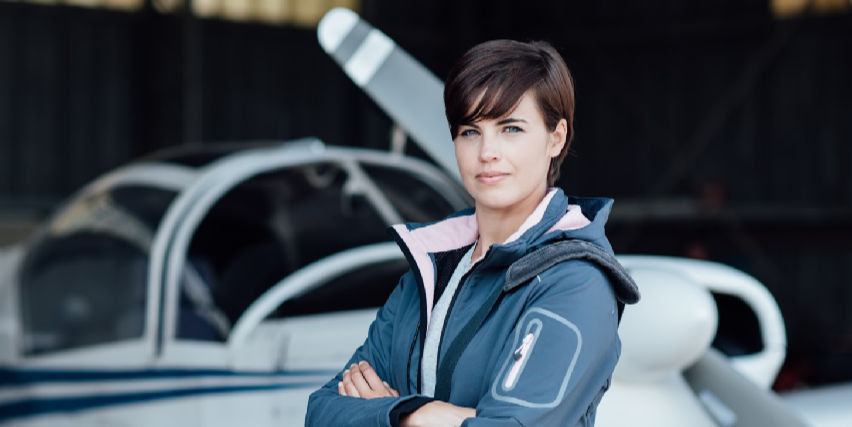
Choose the Best Flight Training Courses in Georgia
Follow this easy five-step plan to find the best flight training in Georgia to prepare you to become a pilot. You've made the decision to attend flight training in Georgia and you want to become a private or commercial pilot in Georgia. You know flying is in your future, but now what? How do you get started with flight training in Georgia? So, what's the next step?
The good news is that the road to flight training and becoming a pilot is very defined. Unfortunately, sometimes the road is a little hard to find. If you're not sure how to become a commercial pilot, keep reading for an easy five-step 'flight' plan that will see you through to your pilot qualifications.
1) Test the waters of flight training programs
Don't immediately run out and sign up for the first flight training course you find. Start with a small step; find a school or independent flight instructor that will take you up for an introductory flight. These are usually pretty inexpensive, maybe $100 to $150 for an hour.
The benefit to introductory flight training is that you get to experience flight training in a small plane with an instructor. You'll definitely learn a lot in that hour and you should actually get to take the controls. The key takeaway for this exercise is to establish whether you actually like controlling the plane.
2) Make sure you're medically qualified*
Ask any pilot and they'll tell you that the hardest part of flying isn't actually controlling the aircraft, it's the paperwork. The truth is, there is a lot of paperwork, but no more than any other licensed professional. The paperwork creeps in a little bit early in flight training, but for the most part, it's just you and your instructor and eventually just you flying free.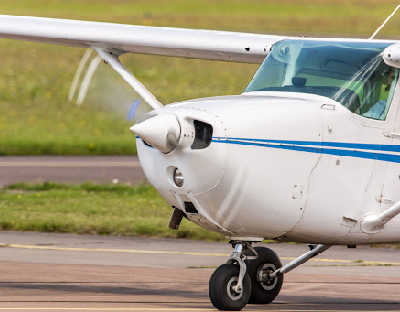
Now, this may come as a shock, but there is one vital piece of paperwork that should be handled very early, maybe right out of the gate -- the medical certificate. The process isn't terribly different from a typical doctor's visit, but you have to select from a list of specific doctors, known as Aviation Medical Examiners, and you have to fill out a form.
The doctors typically charge a fee for the visit, but they give you a pretty thorough physical and if you pass you'll be issued a student pilot / medical certificate. You can find out more about specific requirements on the FAA medical certification FAQ. This isn't meant to scare you away, but flying is a serious business and everyone wants to make sure everybody is safe.
Getting your medical out of the way early on will keep your training from being interrupted while you have to sort out a medical issue, like switching medications, or worse finding out you'll never be able to solo.
* a medical certificate is not required for those earning a Sport Pilot Certificate. However, Sport Pilots must have a valid state driver's license
3) Consider your flight training goals
You need to be honest and ask yourself a few questions. First, what are your goals; what's your plan? Maybe you're looking for a new hobby. Perhaps you're tired of booking airline tickets last minute and you're looking to fly yourself to that next business meeting. Why does this matter? Flight training isn't one-size-fits-all.
The program that is perfect for the twenty-year-old future airline captain isn't necessarily perfect for the fifty-year-old bank CEO. So, as boring as it sounds, take a few minutes and ask yourself what your intentions are.
4) Find the right flight training course or school in Georgia
The next step is to find flight schools, whether large or small and contact them. Whether you actually visit the schools or you call or email, you want to get a little bit of information before you commit yourself. You want to talk to them about your goals. You also want to talk to them about their school and staff.
 If you're looking for a school that will let you zip through the ratings on your way to a job interview, you want to know how many instructors they have on staff, how many other students they have, and how many aircraft they have available. All three of those items will directly affect the speed with which you can complete your flight training.
You should also ask whether you will have one instructor or several. It may seem strange, but you may have chemistry with a certain instructor that will benefit your learning more than finishing faster.
If you are looking to get into an airline and you don't already have a four-year degree, you may want to look for a university program, such as the University of North Dakota's Commercial Aviation Degree, that will let you complete your flight training and four-year degree at the same time.
5) Enjoy your flight training in Georgia
The final step is to pick a school and have fun. Learning to fly is incredibly rewarding. You will learn a lot about yourself and meet some of the most interesting people. The most important things are that you understand that no one wants to see you fail and remember that any flight school can provide the same result; the difference is in how well it fits you and your goals.
How much does Flight Training cost? Like anything more significant than buying groceries, pilot training has a certain level of associated costs. If you're in the process of finding a Flight Training or even if you've already started pilot training, you may find yourself wondering, "How much is too much?"
The good news is that pilot training costs consist of a few basic building blocks; the bad news is the costs can fluctuate for a variety of reasons.
Average Costs In The USA For Various Types Of Flight Training in Georgia
- Sport Pilot License - $3,000 to $5,000
- Private Pilot License - $6,500 to $12,000
- Private + Commercial License - $10,000 to $16,000
- Private + Instrument + Commercial - $18,000 to $24,000
- Private + Instrument + Commercial + ATP - $30,000+
Flight Training Instruction Costs in Georgia
Depending on the pilot training course, the FAA requires a minimum of 35 or 40 hours before you can qualify for a Private Pilot Certificate. Most students actually take longer, averaging about 60 hours of training. While this is certainly an important item to consider, there are plenty of other items that are often overlooked. Exam fees, both written and check ride, books, and other materials are an important part of Flight Training costs.
Exam fees can range from anywhere from $100 to $400 or more depending on the examiner. Books and other materials--like a flight computer, logbook, and navigation plotter--are less costly, but combined can add up to around $100 or more.
Flight Training Scholarships in Georgia
A question that often comes up when you're considering flight training is whether or not there are scholarships available. The short answer is "yes", but that doesn't really help much when it comes to finding these often elusive sources of funding. The real trick with flight training scholarships is realizing that it takes time and energy to find, apply for, and receive them.
None of them just drop in your lap, and like college scholarships, there are more small scholarships than large ones. You're more likely to find several scholarships that add up to a substantial dollar amount than you are to find a single scholarship to cover all of your training. So, where can you find scholarships? As a start, you might want to consider the following: Flight Training, aviation organizations, and conventional scholarships.
FAA - A Part of History of Airplane Structures
The key discovery that “lift” could be created by passing air over the top of a curved surface set the development of fixed and rotary-wing aircraft in motion. George Cayley developed an efficient cambered airfoil in the early 1800s, as well as successful manned gliders later in that century. He established the principles of flight, including the existence of lift, weight, thrust, and drag. It was Cayley who first stacked wings and created a tri-wing glider that flew a man in 1853.
Helicopter Fuselage
As with fixed-wing aircraft, helicopter fuselages and tail booms are often truss-type or semi-monocoque structures of stress-skin design. Steel and aluminum tubing, formed aluminum, and aluminum skin are commonly used. Modern helicopter fuselage design includes an increasing utilization of advanced composites as well. Firewalls and engine decks are usually stainless steel. Helicopter fuselages vary widely from those with a truss frame, two seats, no doors, and a monocoque shell flight compartment to those with fully enclosed airplane-style cabins as found on larger twin-engine helicopters
Best Flight Training Courses in Georgia
When deciding what is the best Flight Training for you, it is important to consider your flying and flight training goals. Once you've finished training, what kind of flying do you want to do? Are you learning to fly as a hobby? Do you want to learn to fly as a career? More importantly, are you seeking an airline career? When choosing a Flight Training, answering questions like these is important to establish which kind of school will best meet your needs.
Choosing the right flight training course in Georgia is critical. All flight training courses and schools in Georgia are not the same. Most large flight academies near Georgia specialize in "ab initio" or "from the beginning" training for people who want to become commercial, airline, or corporate pilots. On the other hand, local Flight Training in ~ train for a wide variety of missions, including people who just want to fly for fun.
Local Flight Training Schools near Georgia
The place that usually comes to mind when you think of airplanes is your local airport. If you want to learn to fly, your local airport is a great place to start. Even the smallest fields usually have at least one part-time or even full-time instructor that is fully qualified to teach you to fly. Larger fields may even have multiple Flight Training opportunities in Georgia.
For the hobbyist, this is great, flight training is typically pay-as-you-go and self-paced. For those that want or need to go at a faster pace, the local airport may not be the best place to get flight training near Georgia.
Local Flight Training typically offer at least Sport or Private Pilot programs, and some can train all the way to ATP. Local schools may have a few aircraft available for training and rental, and most have facilities for ground training such as classrooms, flight planning rooms, and even small flight simulators.
Recommended for people who want to fly for fun, or as a profession.
The advantages of using a local Flight Training could include access to a variety of aircraft, training close to home, lower costs than some flight academies, and access to training facilities.
Disadvantages could include limited training for advanced ratings and possible downtime of small fleets due to maintenance issues.
University Flight Training Schools around Georgia
Finally, for those looking for an airline career who don't have a four-year degree, consider an aviation degree program at one of the many colleges and universities that offer them. These programs allow you to combine the four-year degree, which most airlines require, with flight training in Georgia. When it comes time to graduate, you will be a commercial pilot with a degree in hand ready to fly for the airlines.
Flight academies and college/university flight training programs near Georgia have a lot going for them. If your goal is to fly professionally, this type of training may be the best option. But if you're only in the market to learn to fly as a hobby, some academies may not be able to accommodate your needs. It's best to contact each school to find out.
Recommended for people who want to fly for a career. Advantages to attending a flight academy/university program include state of the art aircraft fleets with glass cockpits, flight crew training environment, industry-standard flight simulator training, potential employment as a CFI after graduation, access to job interviews with affiliated companies, and minimal downtime due to maintenance issues.
Disadvantages could include higher overall costs, the possible need to relocate to attend an academy, less flexibility on time and scheduling, the training not as personalized.
No matter what type of flying you intend to do, it's important to talk to as many schools as possible to find out which one fits your learning style, personality, and ultimate aviation goals best.
The most important take-away is that each kind of Flight Training can provide the same result, but when you pick the best Flight Training in Georgia for you, you can meet your goals quicker and more efficiently. Furthermore, there's nothing wrong with changing in the middle of your training. Don't let the fear that you might pick the wrong school for you prevent you from learning to fly; it is too much fun.
Accelerated Flight Training Courses from Georgia
If you're seeking a flying career or you just want to get a rating in the minimum time, there are also larger professional Flight Training offering accelerated programs. These are typically more condensed, some as short as a few days or weeks, that is strictly planned and scheduled.
Flight Training in Georgia employs plenty of professional instructors and has large aircraft fleets to accommodate the quick pace of the training. It may sound like a stressful way to learn to fly, but it is actually quicker and more efficient because it requires less repetition. These flight training programs in Georgia cater to someone looking to obtain several ratings at once or those who need to get a rating quickly.
Aviation Facts and Figures for Albany
Military Helicopters: As the helicopter technology matured, new aircraft were added to support naval missions. These helicopters were used to deliver weapons, attack the enemy with air-launched torpedoes, etc.
Aviation History for Albany and Fun Facts for Albany
A helicopter pilot working for the air force is required to prepare flight missions and tasks involved, and review others aspects such as weather and briefing the team about the mission. He has to make sure the helicopter is loaded and ready for a mission.
Success does not consist in never making mistakes but in never making the same one a second time. George Bernard Shaw
Aviation History for Alpharetta and Fun Facts for Alpharetta
MD Explorer: An international helicopter industry advisory board guided the design and development of the MD Explorer with an objective to produce a multipurpose twin-engine helicopter that would set new standards in performance, affordability, dependability and safety.
Fun Helicopter Facts for Alpharetta
Helicopter pilots must be skilled about flying and must be spontaneous in taking decisions related to landing the chopper. Well, being a helicopter pilot is not easy, you have to carefully plan the process of getting enrolled in the top helicopter pilot training schools for getting a valid pilot license.
The greatest mistake you can make in life is to be continually fearing you will make one. Elbert Hubbard
Aviation History for Atlanta and Fun Facts for Atlanta
MD 530: The MD 530F is engineered to meet your requirements for hot-day, high-altitude operation. Equipped with the 650 shp Rolls-Royce 250-C30 engine, the MD 530F operates more effectively in hot, high environments than other helicopters in its class.
Aviation Training Facts for Atlanta
There are no mistakes, save one: the failure to learn from a mistake. Robert Fripp
Helicopter Training
Helicopter training schools worldwide, are in a need of new pilots to enter the aviation industry and maybe, now is the best time to start your training. Helicopter pilots are in demand for oil rig operations, news, photography, rescue missions, firefighting and many other reasons.
Aviation Training Facts for Augusta-Richmond
Helicopter Training Facts for Augusta-Richmond: Other qualities that will help you become a commercial helicopter pilot include the ability to stay calm under pressure, the ability to solve problems quickly and a tendency to put safety first. Some employers might have weight restrictions for commercial helicopter pilots, so being in good physical shape also could help.
Try and fail, but dont fail to try. Stephen Kaggwa
Aviation History for Candler-McAfee and Fun Facts for Candler-McAfee
The fly-by-wire (FBW) control system employs electrical signals that transmit the pilot’s actions from the flight deck through a computer to the various flight control actuators.The FBW system evolved as a way to reduce the system weight of the hydromechanical system, reduce maintenance costs, and improve reliability. Electronic FBW control systems can respond to changing aerodynamic conditions by adjusting flight control movements so that the aircraft response is consistent for all flight conditions. Additionally, the computers can be programmed to prevent undesirable and dangerous characteristics, such as stalling and spinning.
Aviation Training Facts for Candler-McAfee
Important Safety Issues to consider when choosing a helicopter school: Even with the meticulous inspections and maintenance that helicopters regularly undergo, they are still subject to mechanical problems. You have to keep in mind that the people who fly the helicopters are still learning and more subject to making mistakes which can easily result in an accident.
You havent failed until you quit trying. Anonymous
Fun Helicopter Facts for Dalton
Being an army helicopter pilot is an exciting and equally challenging job. Making a career in this field requires planning and tremendous efforts. To Become an Army Helicopter Pilot You must be at least 18 and no older than 33. You must meet the Army’s height and weight standards and pass two physical exams administered by the Army. Military pilots in general must have color vision and accurate depth perception as well as vision that can be corrected to 20/20. You must also have at least a high school diploma and be a U.S. citizen.
Aviation Training Facts for Dalton
Remote Control Helicopters: Walkera 'Dragonfluy 4': This is manufactured by Walkera, and is one of the most inexpensive RC helicopters. It is a totally ready-to-fly RC chopper, that means you just need to put in the 8 AA batteries in the transmitter to use it.
A life lived in fear is half lived. Anonymous
Fun Helicopter Facts for Dunwoody
There is no denying that flying aircraft is one of the most coveted careers in the Unite States. You have to be very sure if you are considering becoming an army helicopter pilot, as it is not only about the profession but also doing your bit for a larger cause, serving the US army and hence your country.
Aviation Training Facts for Dunwoody
Helicopter Pilot Jobs for Dunwoody Similar to hospital-based jobs, helicopter pilots who fly for news agencies often travel to the scene of severe accidents or natural disasters.
Fun Helicopter Facts for East Point
The most beneficial criteria for students looking to be Army Helicopter Pilots, is that no higher education is required for being an pilot in this job. Students have to enroll in 'High school to Flight School Program' that first makes students warrant officers.
Interesting Aviation Facts for East Point for East Point
Flight Instructor Facts for East Point Quite often helicopter pilot jobs require that you have at least 1,000 hours of training. However, by the time you have earned your commercial pilots license you should most certainly have between 150 and 200 hours of flight.
Dont be afraid to take a big step if one is indicated; you cant cross a chasm in two small jumps. David Lloyd George
Fun Helicopter Facts for Hinesville
Warrant officers in active duty are put in army flight school to become the helicopter pilots. So even after high school, and without any higher education, you can start your career and head toward your dream of being a pilot.
Interesting Aviation Facts for Hinesville for Hinesville
Flight Instructor Facts for Hinesville Quite often helicopter pilot jobs require that you have at least 1,000 hours of training. However, by the time you have earned your commercial pilots license you should most certainly have between 150 and 200 hours of flight.
Fun Helicopter Facts for Mableton
You must be at least 18 years of age while joining the army and less than or equal to 33 years of age before you appear in front of military board for flight school programs.
Interesting Aviation Facts for Mableton for Mableton
Hitting powerlines or similar obstacles is a common cause of helicopter accidents. The FAA does not have specific altitude limits for privately operated helicopters. For air taxis, FAR 135.203 limits helicopters to at least 300' above a congested area. At the Robinson Factory Safety course
MD Helicopters Facts
MD Helicopters - MD 600N: The MD 600N is an eight-place, light, single-turbine engine helicopter that provides high performance and increased capacity to give the customer greater versatility.
Flight Instructor Facts for Mableton It is common for most flight instructor refresher courses to be held on a weekend, and most instructors can complete the refresher in 16 hours.
Fun Helicopter Facts for Macon
You must be 18 years of age by the time you are ready to fly. You must be a citizen of US. You must also have a high school diploma or the High school equivilant by the time of signing up. To become a pilot, you must score at least a 110 on the general technical section of the Armed Forces Vocational Aptitude Battery test.
Interesting Aviation Facts for Macon for Macon
Helicopters that are simultaneously moving slowly and descending are subject to a hazardous condition known as settling with power or vortex ring state. The helicopter sinks into its own previously disturbed air and the result is a dramatic increase in descent rate that cannot be arrested by adding collective pitch and engine power.
Fun Helicopter Facts for Marietta
In order to become a United States Army Helicopter Pilot, you will have to appear for Flight Aptitude Selection Test, Armed Forces Vocational Aptitude Battery test and score 90 and 110 respectively, to get selected.
Interesting Aviation Facts for Marietta for Marietta
The first important thing you need to do before enrolling in any pilot training schools is to go and personally check them. To begin with, you can start with the yellow pages because even some good schools don't advertise.
Fun Helicopter Facts for Martinez
US Army Helicopter Pilot Criteria: you're required to go for rigorous medical check ups. Ensure before you even think of army that your height, weight and vision are equivalent to the standard's set by the army. This process needs to be completed before you're declared eligible for joining a flight school.
Interesting Aviation Facts for Martinez for Martinez
Air Force Helicopter Pilot: The salaries of air force pilots are decided by the pay commissions of the government. The pay commissions prepare the salary structure as per their posts, experience and responsibilities. Along with the fixed salary, they also receive attractive bonuses and perks based on their performance at the workplace.
Aviation History for Moody Air Force Base and Fun Facts for Moody Air Force Base
Before you can get a private pilot license, you must log a minimum of 40 hours on a helicopter. Flight hours will include time with your flying instructor and by yourself. Students generally log between 60 and 75 hours of flight time. You must put in a minimum of 250 flight hours to earn your commercial pilot license.
Fun Helicopter Facts for Moody Air Force Base
To rebuild the helicopter pilot training program, Headquarters Army Air Force appointed a group of officers in January 1946 to recommend a new location for the school. San Marcos Army Air Field, Texas, a recently inactivated flying training base, was selected. Helicopter pilot training formally transferred to San Marcos on 31 May 1946.
Success is not final, failure is not fatal: it is the courage to continue that counts. Winston Churchill
Aviation Training Facts for North Atlanta
US Army Helicopter Pilot Criteria: Once you're done with all formalities and eventually selected, you'll be required to attend a year or less duration training. In this helicopter pilot training program, you'll be provided training in two aspects, warrant officer training program and flying programs.
Helicopter Fun Facts for North Atlanta
A rotor system may be mounted horizontally as main rotors are, providing lift vertically, or it may be mounted vertically, such as a tail rotor, to provide lift horizontally as thrust to counteract torque effect.
Emmanuel Dieuaides steam-powered design featured counter-rotating rotors powered through a hose from a boiler on the ground.
Aviation Training Facts for Peachtree City
Military Helicopters: Military helicopters have different modular designs. These designs are based on the type of function they have within the Armed Forces. The following article will serve as a guide to different types of military helicopters.
Helicopter Fun Facts for Peachtree City
How to pick a helicopter flight school near Peachtree City
The first thing is to find all the schools, and visit each one. Start with the yellow pages. Some schools don't advertise. Find them by calling all the airplane schools and aircraft charter companies, and ask them who does helicopter training in the local area.
Aviation Training Facts for Redan
Military Helicopters: One of the most flexible and adaptable weapons system in the world is the helicopter. These mechanical beasts for flying are also known as choppers informally. They are found to be very handy during war as well as take up new roles during peace.
Helicopter Fun Facts for Redan
Flight Instructors Facts: The helicopter flight instructor attempts to satisfy the passenger's interest in becoming a licensed pilot, often transforming a passenger into a potential student.
Aviation Training Facts for Rome
Military Helicopters: There are different types of military helicopters that have different roles to play. We may often come across chopper names such as the SH-60B Seahawk Wood, Comanche RAH66, Chinook CH47, etc.
Helicopter Fun Facts for Rome
Helicopter Training Facts for Rome: Many people who are interested in flying have little knowledge of the inner workings of the machines they want to fly. Unlike airplanes, helicopters are extremely maneuverable. A common fear is crashing unlike a car, an aircraft is usually at least a few thousand feet in the air.
Aviation Training Facts for Roswell
Military Helicopters: There are different helicopters used by the military forces around the world. These choppers are classified according to the role they play in the armed forces. Let us have a look at the helicopter types according to their functions in the military.
Helicopter Fun Facts for Roswell
Becoming a commercial helicopter pilot: You need to complete the helicopter pilot training program from accredited and reputed helicopter pilot training schools. n order to become a helicopter pilot, you will need a valid license and hence knowledge of the license requirements is essential.
Aviation Training Facts for Sandy
Military Helicopters: weapons include machine-guns, rockets, guided missiles as well as autocannons. They're used to destroy enemy armor concentrations due to their anti-tank target capability as well as provide close air support to troops on the ground.
Helicopter Fun Facts for Sandy
The Army and Air Forces selected helicopter pilot training candidates from rated volunteer applicants. At first there no specific qualifications for helicopter training, although the AAF later required a current flight physical. After the end of World War II, the AAF in early 1946 restricted eligibility to flight officers, lieutenants with a pilot rating, or service pilots on flying status.
Aviation Training Facts for Savannah
Military Helicopters: As the name suggests, attack helicopters are those that are used as attack aircraft. These choppers are also known as helicopter gunships as they are covered in heavy armament. These weapons include machine-guns, rockets, guided missiles as well as autocannons.
Helicopter Fun Facts for Savannah
Federal Aviation Regulations (14 CFR but generally FARs) restrict maintenance on certified aircraft to FAA-certificated mechanics and repair stations. The only exception is that certificated pilots may, under FAR 43.3, perform some preventive maintenance where preventive is defined with an explicit list of tasks in Appendix A to FAR 43. If the pilot were to perform
Aviation Training Facts for Smyrna
Military Helicopters: Development of turboshaft engines helped smaller helicopters to operate from smaller vessels. Soon, choppers were equipped with magnetic anomaly detection, radar and sonar equipment.
Helicopter Factoid for Smyrnas for Smyrna
Federal Aviation Regulations (14 CFR but generally FARs) restrict maintenance on certified aircraft to FAA-certificated mechanics and repair stations. The only exception is that certificated pilots may, under FAR 43.3, perform some preventive maintenance where preventive is defined with an explicit list of tasks in Appendix A to FAR 43. If the pilot were to perform
Interesting Aviation Facts for Springs for Springs
Military Helicopters: AgustaWestland AW129, TAI/AgustaWestland T-129, Bell AH-1 Cobra/ AH-1, SuperCobra/AH-1Z Viper, Boeing AH-64 Apache/AgustaWestland Apache, CAIC WZ-10, Denel AH-2 Rooivalk, Eurocopter Tiger, HAL Light Combat Helicopter, Kamov Ka-50/Ka-52, Mil Mi-24/Mi-28
Aviation Facts and Figures for Springs
Flight Instructor Facts for Springs The FAA sets specific standards for three different types of flight instructor certifications that a flight instructor may acquire.
Hovering is a hazardous phase of flight due to three factors: (1) low airspeed, (2) proximity to obstacles, and (3) high skill level required depending on wind conditions.
Interesting Aviation Facts for Valdosta for Valdosta
Military Helicopters: As the helicopter technology matured, new aircraft were added to support naval missions. These helicopters were used to deliver weapons, attack the enemy with air-launched torpedoes, etc.
Aviation Facts and Figures for Valdosta
Most airlines or helicopter companies prefer pilots with at least two years of college-level education. For many companies, engineering degrees are becoming more and more of an expected requirement. However, experience can sometimes trump lack of education. To be eligible for FAA licensure and receive a helicopter rating, prospective pilots must accumulate at least 150 hour of total flight time.
Interesting Aviation Facts for Warner Robins for Warner Robins
Military Helicopters: As landing is difficult in most terrain, these choppers have specialized devices like rope lines, rescue hoists, etc. that help drop or pick-up personnel when the aircraft is hovering overhead. Some of the transport helicopters in service include: CH-53 Sea Stallion, CH-53E Super Stallion, CH-47 Chinook, Mil Mi-26, Arospatiale Super Frelon
Aviation Facts and Figures for Warner Robins
At the end of 2011, Bell had approximately 10,700 employees, of which 19% were located outside the U.S. Major facilities are located in Fort Worth, Texas; Amarillo, Texas; Corpus Christi, Texas; Ozark, Alabama; Bristol, Tennessee; and Mirabel, Quebec, Canada. One third of the world fleet carry the Bell Helicopter brand.