Flight Training in Hawaii
Cities in Hawaii with Aviation Schools:
- Ahuimanu
- Aiea
- Big Island
- East Honolulu
- Ewa Beach
- Ewa Gentry
- Ewa Villages
- Haiku-Pauwela
- Halawa
- Hawaiian Paradise Park
- Hickam Housing
- Hilo
- Holualoa
- Honolulu
- Kahului
- Kailua
- Kalaoa
- Kaneohe
- Kaneohe Station
- Kapaa
- Kapolei
- Kauai
- Kihei
- Kula
- Lahaina
- Laie
- Lanai
- Lihue
- Maili
- Makaha
- Makakilo
- Makawao
- Maui
- Mililani
- Mililani Mauka
- Molokai
- Nanakuli
- Napili-Honokowai
- Oahu
- Ocean Pointe
- Pearl City
- Pukalani
- Royal Kunia
- Schofield Barracks
- Wahiawa
- Waianae
- Waihee-Waiehu
- Waikele
- Waikoloa Village
- Wailuku
- Waimalu
- Waimanalo
- Waimea
- Waipahu
- Waipio

Choose the Best Flight Training Courses in Hawaii
Follow this easy five-step plan to find the best flight training in Hawaii to prepare you to become a pilot. You've made the decision to attend flight training in Hawaii and you want to become a private or commercial pilot in Hawaii. You know flying is in your future, but now what? How do you get started with flight training in Hawaii? So, what's the next step?
The good news is that the road to flight training and becoming a pilot is very defined. Unfortunately, sometimes the road is a little hard to find. If you're not sure how to become a commercial pilot, keep reading for an easy five-step 'flight' plan that will see you through to your pilot qualifications.
1) Test the waters of flight training programs
Don't immediately run out and sign up for the first flight training course you find. Start with a small step; find a school or independent flight instructor that will take you up for an introductory flight. These are usually pretty inexpensive, maybe $100 to $150 for an hour.
The benefit to introductory flight training is that you get to experience flight training in a small plane with an instructor. You'll definitely learn a lot in that hour and you should actually get to take the controls. The key takeaway for this exercise is to establish whether you actually like controlling the plane.
2) Make sure you're medically qualified*
Ask any pilot and they'll tell you that the hardest part of flying isn't actually controlling the aircraft, it's the paperwork. The truth is, there is a lot of paperwork, but no more than any other licensed professional. The paperwork creeps in a little bit early in flight training, but for the most part, it's just you and your instructor and eventually just you flying free.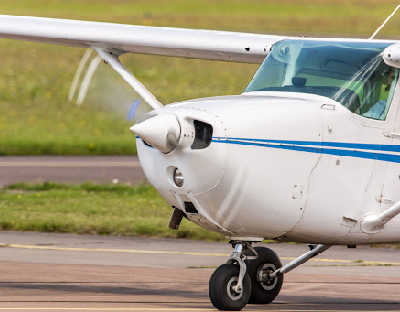
Now, this may come as a shock, but there is one vital piece of paperwork that should be handled very early, maybe right out of the gate -- the medical certificate. The process isn't terribly different from a typical doctor's visit, but you have to select from a list of specific doctors, known as Aviation Medical Examiners, and you have to fill out a form.
The doctors typically charge a fee for the visit, but they give you a pretty thorough physical and if you pass you'll be issued a student pilot / medical certificate. You can find out more about specific requirements on the FAA medical certification FAQ. This isn't meant to scare you away, but flying is a serious business and everyone wants to make sure everybody is safe.
Getting your medical out of the way early on will keep your training from being interrupted while you have to sort out a medical issue, like switching medications, or worse finding out you'll never be able to solo.
* a medical certificate is not required for those earning a Sport Pilot Certificate. However, Sport Pilots must have a valid state driver's license
3) Consider your flight training goals
You need to be honest and ask yourself a few questions. First, what are your goals; what's your plan? Maybe you're looking for a new hobby. Perhaps you're tired of booking airline tickets last minute and you're looking to fly yourself to that next business meeting. Why does this matter? Flight training isn't one-size-fits-all.
The program that is perfect for the twenty-year-old future airline captain isn't necessarily perfect for the fifty-year-old bank CEO. So, as boring as it sounds, take a few minutes and ask yourself what your intentions are.
4) Find the right flight training course or school in Hawaii
The next step is to find flight schools, whether large or small and contact them. Whether you actually visit the schools or you call or email, you want to get a little bit of information before you commit yourself. You want to talk to them about your goals. You also want to talk to them about their school and staff.
 If you're looking for a school that will let you zip through the ratings on your way to a job interview, you want to know how many instructors they have on staff, how many other students they have, and how many aircraft they have available. All three of those items will directly affect the speed with which you can complete your flight training.
You should also ask whether you will have one instructor or several. It may seem strange, but you may have chemistry with a certain instructor that will benefit your learning more than finishing faster.
If you are looking to get into an airline and you don't already have a four-year degree, you may want to look for a university program, such as the University of North Dakota's Commercial Aviation Degree, that will let you complete your flight training and four-year degree at the same time.
5) Enjoy your flight training in Hawaii
The final step is to pick a school and have fun. Learning to fly is incredibly rewarding. You will learn a lot about yourself and meet some of the most interesting people. The most important things are that you understand that no one wants to see you fail and remember that any flight school can provide the same result; the difference is in how well it fits you and your goals.
How much does Flight Training cost? Like anything more significant than buying groceries, pilot training has a certain level of associated costs. If you're in the process of finding a Flight Training or even if you've already started pilot training, you may find yourself wondering, "How much is too much?"
The good news is that pilot training costs consist of a few basic building blocks; the bad news is the costs can fluctuate for a variety of reasons.
Average Costs In The USA For Various Types Of Flight Training in Hawaii
- Sport Pilot License - $3,000 to $5,000
- Private Pilot License - $6,500 to $12,000
- Private + Commercial License - $10,000 to $16,000
- Private + Instrument + Commercial - $18,000 to $24,000
- Private + Instrument + Commercial + ATP - $30,000+
Flight Training Instruction Costs in Hawaii
Depending on the pilot training course, the FAA requires a minimum of 35 or 40 hours before you can qualify for a Private Pilot Certificate. Most students actually take longer, averaging about 60 hours of training. While this is certainly an important item to consider, there are plenty of other items that are often overlooked. Exam fees, both written and check ride, books, and other materials are an important part of Flight Training costs.
Exam fees can range from anywhere from $100 to $400 or more depending on the examiner. Books and other materials--like a flight computer, logbook, and navigation plotter--are less costly, but combined can add up to around $100 or more.
Flight Training Scholarships in Hawaii
A question that often comes up when you're considering flight training is whether or not there are scholarships available. The short answer is "yes", but that doesn't really help much when it comes to finding these often elusive sources of funding. The real trick with flight training scholarships is realizing that it takes time and energy to find, apply for, and receive them.
None of them just drop in your lap, and like college scholarships, there are more small scholarships than large ones. You're more likely to find several scholarships that add up to a substantial dollar amount than you are to find a single scholarship to cover all of your training. So, where can you find scholarships? As a start, you might want to consider the following: Flight Training, aviation organizations, and conventional scholarships.
FAA - A History of Airplane Structures Facts for Hawaii
It was Cayley who first stacked wings and created a tri-wing glider that flew a man in 1853. Earlier, Cayley studied the center of gravity of flying machines, as well as the effects of wing dihedral. Furthermore, he pioneered directional control of airplane by including the earliest form of a rudder on his gliders.
Helicopter Landing Gear or Skids
As mentioned, a helicopter’s landing gear can be simply a set of tubular metal skids. Many helicopters do have landing gear with wheels, some retractable.
Best Flight Training Courses in Hawaii
When deciding what is the best Flight Training for you, it is important to consider your flying and flight training goals. Once you've finished training, what kind of flying do you want to do? Are you learning to fly as a hobby? Do you want to learn to fly as a career? More importantly, are you seeking an airline career? When choosing a Flight Training, answering questions like these is important to establish which kind of school will best meet your needs.
Choosing the right flight training course in Hawaii is critical. All flight training courses and schools in Hawaii are not the same. Most large flight academies near Hawaii specialize in "ab initio" or "from the beginning" training for people who want to become commercial, airline, or corporate pilots. On the other hand, local Flight Training in ~ train for a wide variety of missions, including people who just want to fly for fun.
Local Flight Training Schools near Hawaii
The place that usually comes to mind when you think of airplanes is your local airport. If you want to learn to fly, your local airport is a great place to start. Even the smallest fields usually have at least one part-time or even full-time instructor that is fully qualified to teach you to fly. Larger fields may even have multiple Flight Training opportunities in Hawaii.
For the hobbyist, this is great, flight training is typically pay-as-you-go and self-paced. For those that want or need to go at a faster pace, the local airport may not be the best place to get flight training near Hawaii.
Local Flight Training typically offer at least Sport or Private Pilot programs, and some can train all the way to ATP. Local schools may have a few aircraft available for training and rental, and most have facilities for ground training such as classrooms, flight planning rooms, and even small flight simulators.
Recommended for people who want to fly for fun, or as a profession.
The advantages of using a local Flight Training could include access to a variety of aircraft, training close to home, lower costs than some flight academies, and access to training facilities.
Disadvantages could include limited training for advanced ratings and possible downtime of small fleets due to maintenance issues.
University Flight Training Schools around Hawaii
Finally, for those looking for an airline career who don't have a four-year degree, consider an aviation degree program at one of the many colleges and universities that offer them. These programs allow you to combine the four-year degree, which most airlines require, with flight training in Hawaii. When it comes time to graduate, you will be a commercial pilot with a degree in hand ready to fly for the airlines.
Flight academies and college/university flight training programs near Hawaii have a lot going for them. If your goal is to fly professionally, this type of training may be the best option. But if you're only in the market to learn to fly as a hobby, some academies may not be able to accommodate your needs. It's best to contact each school to find out.
Recommended for people who want to fly for a career. Advantages to attending a flight academy/university program include state of the art aircraft fleets with glass cockpits, flight crew training environment, industry-standard flight simulator training, potential employment as a CFI after graduation, access to job interviews with affiliated companies, and minimal downtime due to maintenance issues.
Disadvantages could include higher overall costs, the possible need to relocate to attend an academy, less flexibility on time and scheduling, the training not as personalized.
No matter what type of flying you intend to do, it's important to talk to as many schools as possible to find out which one fits your learning style, personality, and ultimate aviation goals best.
The most important take-away is that each kind of Flight Training can provide the same result, but when you pick the best Flight Training in Hawaii for you, you can meet your goals quicker and more efficiently. Furthermore, there's nothing wrong with changing in the middle of your training. Don't let the fear that you might pick the wrong school for you prevent you from learning to fly; it is too much fun.
Accelerated Flight Training Courses from Hawaii
If you're seeking a flying career or you just want to get a rating in the minimum time, there are also larger professional Flight Training offering accelerated programs. These are typically more condensed, some as short as a few days or weeks, that is strictly planned and scheduled.
Flight Training in Hawaii employs plenty of professional instructors and has large aircraft fleets to accommodate the quick pace of the training. It may sound like a stressful way to learn to fly, but it is actually quicker and more efficient because it requires less repetition. These flight training programs in Hawaii cater to someone looking to obtain several ratings at once or those who need to get a rating quickly.
Fun Helicopter and Airplane Facts for Ahuimanu
Under SFAR 73, a Robinson pilot must be signed off by an instructor act as pilot in command of a particular model of Robinson helicopter. Pilots with less experience must have a flight review every year rather than the standard two years. Any flight review must be accomplished in the precise model of Robinson helicopter to be flown. So, for example, a pilot who flew a Robinson R22 for 500 hours then upgraded to a four-seat R44 and flew it for a few years would not be legal to get back in and fly the R22 unless he or she first did a flight review with an instructor. An instructor cannot teach in the Robinson R22 or R44 unless he or she has been specifically signed off for that privilege by an FAA-designated examiner.
Aviation Training History and Facts for Ahuimanu
A separate issue is that the helicopter is reasonably stable when hovering nose-into-the-wind. If, however, the pilot deems it necessary to rotate the helicopter, perhaps to fit into a conventional parking space, the helicopter can be difficult to control. The left crosswind is the worst for an American helicopter such as the Robinson or JetRanger; it blows disturbed air pushed sideways by the tail rotor back into the tail rotor. In a strong enough left crosswind, even the world's best helicopter pilot may not be able to maintain control while hovering.
Fun Helicopter and Airplane Facts for Aiea
For pilots of Robinson helicopters, the FAA imposes an additional range of training and recurrent training requirements via \SFAR 73 to Part 61\ which was written into the law on February 23 1995 after a rash of accidents involving Robinson helicopters and three special certification reviews by the FAA (source: National Transportation Safety Board Special Investigation Report PB96-917003 NTSB/SIR-96/03Robinson Helicopter Company R22 Loss of Main Rotor Control Accidents).
Post World War Pilot Training: At Randolph the course was divided into three stages: H-13, H-19 and H-21 with 30 hours in each aircraft. In January 1958 ATC added a fourth phase, an operational or combat crew-training phase which was conducted at Stead AFB, Reno, Nevada. Stead would allow realistic desert, water, snow, mountainous, and high altitude training as well as collateral training with Air Training Command's survival school.
Helicopter Factoid for Aiea
Helicopters that are simultaneously moving slowly and descending are subject to a hazardous condition known as \settling with power or vortex ring state. The helicopter sinks into its own previously disturbed air and the result is a dramatic increase in descent rate that cannot be arrested by adding collective pitch and engine power.
Fun Helicopter and Airplane Facts for Big Island
Under SFAR 73, a Robinson pilot must be signed off by an instructor act as pilot in command of a particular model of Robinson helicopter. Pilots with less experience must have a flight review every year rather than the standard two years. Any flight review must be accomplished in the precise model of Robinson helicopter to be flown. So, for example, a pilot who flew a Robinson R22 for 500 hours then upgraded to a four-seat R44 and flew it for a few years would not be legal to get back in and fly the R22 unless he or she first did a flight review with an instructor. An instructor cannot teach in the Robinson R22 or R44 unless he or she has been specifically signed off for that privilege by an FAA-designated examiner.
Aviation Training History and Facts for Big Island
A separate issue is that the helicopter is reasonably stable when hovering nose-into-the-wind. If, however, the pilot deems it necessary to rotate the helicopter, perhaps to fit into a conventional parking space, the helicopter can be difficult to control. The left crosswind is the worst for an American helicopter such as the Robinson or JetRanger; it blows disturbed air pushed sideways by the tail rotor back into the tail rotor. In a strong enough left crosswind, even the world's best helicopter pilot may not be able to maintain control while hovering.
Fun Helicopter and Airplane Facts for East Honolulu
A depressing number of helicopter accidents occur before the helicopter has left the ground. It is difficult to restart a hot jet engine and therefore many times people are loaded or unloaded while the blades are spinning. This can lead to fatal encounters with main and tail rotors.
Aviation Training History and Facts for East Honolulu
Designed as a rich guy's transportation helicopter, the Robinson R22 quickly became instead the world's most popular training helicopter. It also happens to be one of the most dangerous machines in which to train. Why? Much of helicopter training is practicing autorotations, in which the engine is twisted toward idle and the helicopter glides toward the ground. This maneuver requires the student to adjust the collective pitch control to maintain rotor RPM within safe limits.
Helicopter Fun Facts for Ewa Beach
Helicopter Training Facts: Most pilots develop a physical fitness regime during training to help them build the muscle strength required for this role. Maintaining a high degree of personal fitness also reduces the residual physical stress and strain of maintaining a fixed position.
Helicopter Factoid for Ewa Beach
Military Helicopters: There are different types of military helicopters that have different roles to play. We may often come across chopper names such as the SH-60B Seahawk Wood, Comanche RAH66, Chinook CH47, etc.
Fun Helicopter and Airplane Facts for Ewa Gentry
Under SFAR 73, a Robinson pilot must be signed off by an instructor act as pilot in command of a particular model of Robinson helicopter. Pilots with less experience must have a flight review every year rather than the standard two years. Any flight review must be accomplished in the precise model of Robinson helicopter to be flown. So, for example, a pilot who flew a Robinson R22 for 500 hours then upgraded to a four-seat R44 and flew it for a few years would not be legal to get back in and fly the R22 unless he or she first did a flight review with an instructor. An instructor cannot teach in the Robinson R22 or R44 unless he or she has been specifically signed off for that privilege by an FAA-designated examiner.
Aviation Training History and Facts for Ewa Gentry
The heavier the rotor blades the more stable their speed will be due to inertia. With a low-inertia system, the student will have to react very quickly to a simulated engine failure or the simulated emergency becomes a real emergency. In the R22, the student and instructor have 1.6 seconds to act after a simulated engine failure. If neither lowers the collective and enters an autorotation within that 1.6 seconds, both are likely to die.
Helicopter Fun Facts for Haiku-Pauwela
Helicopter Training Facts: Most pilots develop a physical fitness regime during training to help them build the muscle strength required for this role. Maintaining a high degree of personal fitness also reduces the residual physical stress and strain of maintaining a fixed position.
Helicopter Factoid for Haiku-Pauwela
Military Helicopters: There are different types of military helicopters that have different roles to play. We may often come across chopper names such as the SH-60B Seahawk Wood, Comanche RAH66, Chinook CH47, etc.
Fun Helicopter and Airplane Facts for Halawa
A depressing number of helicopter accidents occur before the helicopter has left the ground. It is difficult to restart a hot jet engine and therefore many times people are loaded or unloaded while the blades are spinning. This can lead to fatal encounters with main and tail rotors.
Aviation Training History and Facts for Halawa
Designed as a rich guy's transportation helicopter, the Robinson R22 quickly became instead the world's most popular training helicopter. It also happens to be one of the most dangerous machines in which to train. Why? Much of helicopter training is practicing autorotations, in which the engine is twisted toward idle and the helicopter glides toward the ground. This maneuver requires the student to adjust the collective pitch control to maintain rotor RPM within safe limits.
Helicopter Fun Facts for Hawaiian Paradise Park
Military Helicopters: weapons include machine-guns, rockets, guided missiles as well as autocannons. They're used to destroy enemy armor concentrations due to their anti-tank target capability as well as provide close air support to troops on the ground.
Helicopter Factoid for Hawaiian Paradise Park
Two-bladed helicopters, e.g., the Huey, Bell JetRanger, and Robinsons, are subject to a hazard known as mast bumping. Due to gravity, the helicopter hangs from a \teetering rotor system. The pilot flies the rotor system and the helicopter fuselage follows giving the pilot the illusion that he is flying the helicopter. If gravity is no longer acting on the helicopter i.e. if the helicopter is in a low G condition the tail rotor will tend to roll the helicopter to the right. The alarmed pilot will reflexively apply left cyclic which causes the rotor system to tilt but without gravity the helicopter fuselage won't follow. This puts the rotor blades and the mast into an extreme orientation and an inner portion of the blades will smack into (bump) the stationary mast that is holding up the rotor system.
Helicopter Fun Facts for Hilo
How Long Does it Take to Become a Helicopter Pilot: Keep in mind that you will be required to build up to 1,000 flying hours as well. Once you start instructing it will likely take you 12 - 18 months to build up to 1,000 hours.
Aviation Training History and Facts for Hilo
A separate issue is that the helicopter is reasonably stable when hovering nose-into-the-wind. If, however, the pilot deems it necessary to rotate the helicopter, perhaps to fit into a conventional parking space, the helicopter can be difficult to control. The left crosswind is the worst for an American helicopter such as the Robinson or JetRanger; it blows disturbed air pushed sideways by the tail rotor back into the tail rotor. In a strong enough left crosswind, even the world's best helicopter pilot may not be able to maintain control while hovering.
Helicopter Fun Facts for Holualoa
How Long Does it Take to Become a Helicopter Pilot: Keep in mind that you will be required to build up to 1,000 flying hours as well. Once you start instructing it will likely take you 12 - 18 months to build up to 1,000 hours.
Aviation Training History and Facts for Holualoa
In a hover, the stability provided by air flowing over the tail is gone and minor attitude variations lead to alarming translations over the ground. In a strong gusty wind, the helicopter moves in and out of Effective Translational Lift (ETL), becoming dramatically more or less efficient. This requires large collective adjustments to maintain hover height, since the amount of power required to hold a 5' hover without ETL will cause the helicopter to fly away if the wind or a pilot-induced drift causes the helicopter to get into ETL.
Helicopter Fun Facts for Honolulu
Military Helicopters: weapons include machine-guns, rockets, guided missiles as well as autocannons. They're used to destroy enemy armor concentrations due to their anti-tank target capability as well as provide close air support to troops on the ground.
Aviation Training History and Facts for Honolulu
In a hover, the stability provided by air flowing over the tail is gone and minor attitude variations lead to alarming translations over the ground. In a strong gusty wind, the helicopter moves in and out of Effective Translational Lift (ETL), becoming dramatically more or less efficient. This requires large collective adjustments to maintain hover height, since the amount of power required to hold a 5' hover without ETL will cause the helicopter to fly away if the wind or a pilot-induced drift causes the helicopter to get into ETL.
Fun Helicopter and Airplane Facts for Kahului
Insurance companies often impose more stringent requirements, e.g., recurrent training on an annual basis. In order to guarantee the ticket-buying public a higher level of safety, the FAA similarly imposes more stringent requirements on pilots of commercially-operated aircraft, e.g., ground and flight tests every 12 months for charter pilots (FAR 135.293) and proficiency checks every 6 months for airline pilots (FAR 121.441).
Helicopter Factoid for Kahuluis for Kahului
Two-bladed helicopters, e.g., the Huey, Bell JetRanger, and Robinsons, are subject to a hazard known as mast bumping. Due to gravity, the helicopter hangs from a \teetering rotor system. The pilot flies the rotor system and the helicopter fuselage follows giving the pilot the illusion that he is flying the helicopter. If gravity is no longer acting on the helicopter i.e. if the helicopter is in a low G condition the tail rotor will tend to roll the helicopter to the right. The alarmed pilot will reflexively apply left cyclic which causes the rotor system to tilt but without gravity the helicopter fuselage won't follow. This puts the rotor blades and the mast into an extreme orientation and an inner portion of the blades will smack into (bump) the stationary mast that is holding up the rotor system.
Helicopter Fun Facts for Kailua
Helicopter Training Facts: Most pilots develop a physical fitness regime during training to help them build the muscle strength required for this role. Maintaining a high degree of personal fitness also reduces the residual physical stress and strain of maintaining a fixed position.
Helicopter Factoid for Kailuas for Kailua
The Robinson R44 has a potentially lethal design defect: the electronic governor, which is supposed to ensure that rotor speed remains at a safe 100% is not hooked up to the rotor tachometer. It is hooked up to the engine tachometer. To make matters worse the engine tachometer is driven by a set of mechanical points inside one of the ignition magnetos.
Helicopter Fun Facts for Kalaoa
Helicopter Training Facts: Most pilots develop a physical fitness regime during training to help them build the muscle strength required for this role. Maintaining a high degree of personal fitness also reduces the residual physical stress and strain of maintaining a fixed position.
Helicopter Factoid for Kalaoa
Military Helicopters: There are different types of military helicopters that have different roles to play. We may often come across chopper names such as the SH-60B Seahawk Wood, Comanche RAH66, Chinook CH47, etc.
Fun Helicopter and Airplane Facts for Kaneohe
Federal Aviation Regulations (14 CFR but generally FARs) restrict maintenance on certified aircraft to FAA-certificated mechanics and repair stations.
Helicopter Factoid for Kaneohes for Kaneohe
Military Helicopters: There are different types of military helicopters that have different roles to play. We may often come across chopper names such as the SH-60B Seahawk Wood, Comanche RAH66, Chinook CH47, etc.
Fun Helicopter and Airplane Facts for Kaneohe Station
Federal Aviation Regulations (14 CFR but generally FARs) restrict maintenance on certified aircraft to FAA-certificated mechanics and repair stations.
Aviation Training History and Facts for Kaneohe Station
The engineer behind the R22, Frank Robinson, stated repeatedly that he did not design the R22 as a trainer and did not want people using it as a trainer, suggesting that they use the more expensive R44 instead (it has about 4 seconds of rotor inertia instead of 1.6 seconds). However, flight schools using the R44 could generally not compete with those using the R22 (a brand-new student can tell the difference between $200/hour and $400/hour, but he or she probably can't understand the practical consequences of lower rotor inertia). Thus the R22 continues to be used at flight schools around the world and its low-inertia rotor system and lack of power reserve result in frequent accidents during practice autorotations.
Fun Helicopter and Airplane Facts for Kapaa
Insurance companies often impose more stringent requirements, e.g., recurrent training on an annual basis. In order to guarantee the ticket-buying public a higher level of safety, the FAA similarly imposes more stringent requirements on pilots of commercially-operated aircraft, e.g., ground and flight tests every 12 months for charter pilots (FAR 135.293) and proficiency checks every 6 months for airline pilots (FAR 121.441).
Helicopter Factoid for Kapaa
The Robinson R44 has a potentially lethal design defect: the electronic governor, which is supposed to ensure that rotor speed remains at a safe 100% is not hooked up to the rotor tachometer. It is hooked up to the engine tachometer. To make matters worse the engine tachometer is driven by a set of mechanical points inside one of the ignition magnetos.
Fun Helicopter and Airplane Facts for Kapolei
Insurance companies often impose more stringent requirements, e.g., recurrent training on an annual basis. In order to guarantee the ticket-buying public a higher level of safety, the FAA similarly imposes more stringent requirements on pilots of commercially-operated aircraft, e.g., ground and flight tests every 12 months for charter pilots (FAR 135.293) and proficiency checks every 6 months for airline pilots (FAR 121.441).
Helicopter Factoid for Kapolei
The Robinson R44 has a potentially lethal design defect: the electronic governor, which is supposed to ensure that rotor speed remains at a safe 100% is not hooked up to the rotor tachometer. It is hooked up to the engine tachometer. To make matters worse the engine tachometer is driven by a set of mechanical points inside one of the ignition magnetos.
Fun Helicopter and Airplane Facts for Kauai
Insurance companies often impose more stringent requirements, e.g., recurrent training on an annual basis. In order to guarantee the ticket-buying public a higher level of safety, the FAA similarly imposes more stringent requirements on pilots of commercially-operated aircraft, e.g., ground and flight tests every 12 months for charter pilots (FAR 135.293) and proficiency checks every 6 months for airline pilots (FAR 121.441).
Helicopter Factoid for Kauai
The Robinson R44 has a potentially lethal design defect: the electronic governor, which is supposed to ensure that rotor speed remains at a safe 100% is not hooked up to the rotor tachometer. It is hooked up to the engine tachometer. To make matters worse the engine tachometer is driven by a set of mechanical points inside one of the ignition magnetos.
Fun Helicopter and Airplane Facts for Kihei
A depressing number of helicopter accidents occur before the helicopter has left the ground. It is difficult to restart a hot jet engine and therefore many times people are loaded or unloaded while the blades are spinning. This can lead to fatal encounters with main and tail rotors.
Aviation Training History and Facts for Kihei
The engineer behind the R22, Frank Robinson, stated repeatedly that he did not design the R22 as a trainer and did not want people using it as a trainer, suggesting that they use the more expensive R44 instead (it has about 4 seconds of rotor inertia instead of 1.6 seconds). However, flight schools using the R44 could generally not compete with those using the R22 (a brand-new student can tell the difference between $200/hour and $400/hour, but he or she probably can't understand the practical consequences of lower rotor inertia). Thus the R22 continues to be used at flight schools around the world and its low-inertia rotor system and lack of power reserve result in frequent accidents during practice autorotations.
Fun Helicopter and Airplane Facts for Lahaina
Under SFAR 73, a Robinson pilot must be signed off by an instructor act as pilot in command of a particular model of Robinson helicopter. Pilots with less experience must have a flight review every year rather than the standard two years. Any flight review must be accomplished in the precise model of Robinson helicopter to be flown. So, for example, a pilot who flew a Robinson R22 for 500 hours then upgraded to a four-seat R44 and flew it for a few years would not be legal to get back in and fly the R22 unless he or she first did a flight review with an instructor. An instructor cannot teach in the Robinson R22 or R44 unless he or she has been specifically signed off for that privilege by an FAA-designated examiner.
Aviation Training History and Facts for Lahaina
A separate issue is that the helicopter is reasonably stable when hovering nose-into-the-wind. If, however, the pilot deems it necessary to rotate the helicopter, perhaps to fit into a conventional parking space, the helicopter can be difficult to control. The left crosswind is the worst for an American helicopter such as the Robinson or JetRanger; it blows disturbed air pushed sideways by the tail rotor back into the tail rotor. In a strong enough left crosswind, even the world's best helicopter pilot may not be able to maintain control while hovering.
Helicopter Fun Facts for Lanai
Helicopter Training Facts: Most pilots develop a physical fitness regime during training to help them build the muscle strength required for this role. Maintaining a high degree of personal fitness also reduces the residual physical stress and strain of maintaining a fixed position.
Helicopter Factoid for Lanai
Military Helicopters: There are different types of military helicopters that have different roles to play. We may often come across chopper names such as the SH-60B Seahawk Wood, Comanche RAH66, Chinook CH47, etc.
Fun Helicopter and Airplane Facts for Maili
A depressing number of helicopter accidents occur before the helicopter has left the ground. It is difficult to restart a hot jet engine and therefore many times people are loaded or unloaded while the blades are spinning. This can lead to fatal encounters with main and tail rotors.
Aviation Training History and Facts for Maili
Designed as a rich guy's transportation helicopter, the Robinson R22 quickly became instead the world's most popular training helicopter. It also happens to be one of the most dangerous machines in which to train. Why? Much of helicopter training is practicing autorotations, in which the engine is twisted toward idle and the helicopter glides toward the ground. This maneuver requires the student to adjust the collective pitch control to maintain rotor RPM within safe limits.
Fun Helicopter and Airplane Facts for Makaha
Insurance companies often impose more stringent requirements, e.g., recurrent training on an annual basis. In order to guarantee the ticket-buying public a higher level of safety, the FAA similarly imposes more stringent requirements on pilots of commercially-operated aircraft, e.g., ground and flight tests every 12 months for charter pilots (FAR 135.293) and proficiency checks every 6 months for airline pilots (FAR 121.441).
Helicopter Factoid for Makaha
The Robinson R44 has a potentially lethal design defect: the electronic governor, which is supposed to ensure that rotor speed remains at a safe 100% is not hooked up to the rotor tachometer. It is hooked up to the engine tachometer. To make matters worse the engine tachometer is driven by a set of mechanical points inside one of the ignition magnetos.
Helicopter Fun Facts for Makakilo
Future rotary wing aviators are required to pass the Class 1 Flying Duty Medical Examination. This entails a thorough physical examination, and candidates can be disqualified if they are diagnosed with common physical and mental illnesses and conditions. The Army conducts interviews with potential candidates for rotary wing training after they pass the AFAST.
Aviation Training History and Facts for Makakilo
The heavier the rotor blades the more stable their speed will be due to inertia. With a low-inertia system, the student will have to react very quickly to a simulated engine failure or the simulated emergency becomes a real emergency. In the R22, the student and instructor have 1.6 seconds to act after a simulated engine failure. If neither lowers the collective and enters an autorotation within that 1.6 seconds, both are likely to die.
Helicopter Fun Facts for Makawao
Robinson Helicopters: The Robinson R22 Beta II is flown throughout the world for many applications, ranging from flight training to livestock mustering to patrolling pipelines, that require dependability, low operating costs, and performance.
Helicopter Factoid for Makawao
Pilots receive some ground school education on how to recover from a low-G condition, but the prudent way to avoid mast bumping is by avoiding the situations that will tend to cause a low-G condition. Extreme maneuvers by a pilot can result in the helicopter going low-G, but a more common source of reduced G forces in two-bladed helicopters is turbulence. Did the accident flight occur on a day when the wind was gusting to 30 knots and the FAA had issued an AIRMET for turbulence? If so, look into the possibility of mast bumping.
Helicopter Fun Facts for Maui
Military Helicopters: weapons include machine-guns, rockets, guided missiles as well as autocannons. They're used to destroy enemy armor concentrations due to their anti-tank target capability as well as provide close air support to troops on the ground.
Helicopter Factoid for Maui
Two-bladed helicopters, e.g., the Huey, Bell JetRanger, and Robinsons, are subject to a hazard known as mast bumping. Due to gravity, the helicopter hangs from a \teetering rotor system. The pilot flies the rotor system and the helicopter fuselage follows giving the pilot the illusion that he is flying the helicopter. If gravity is no longer acting on the helicopter i.e. if the helicopter is in a low G condition the tail rotor will tend to roll the helicopter to the right. The alarmed pilot will reflexively apply left cyclic which causes the rotor system to tilt but without gravity the helicopter fuselage won't follow. This puts the rotor blades and the mast into an extreme orientation and an inner portion of the blades will smack into (bump) the stationary mast that is holding up the rotor system.
Fun Helicopter and Airplane Facts for Mililani
For pilots of Robinson helicopters, the FAA imposes an additional range of training and recurrent training requirements via \SFAR 73 to Part 61\ which was written into the law on February 23 1995 after a rash of accidents involving Robinson helicopters and three special certification reviews by the FAA (source: National Transportation Safety Board Special Investigation Report PB96-917003 NTSB/SIR-96/03Robinson Helicopter Company R22 Loss of Main Rotor Control Accidents).
Post World War Pilot Training: At Randolph the course was divided into three stages: H-13, H-19 and H-21 with 30 hours in each aircraft. In January 1958 ATC added a fourth phase, an operational or combat crew-training phase which was conducted at Stead AFB, Reno, Nevada. Stead would allow realistic desert, water, snow, mountainous, and high altitude training as well as collateral training with Air Training Command's survival school.
Aviation Training History and Facts for Mililani
Designed as a rich guy's transportation helicopter, the Robinson R22 quickly became instead the world's most popular training helicopter. It also happens to be one of the most dangerous machines in which to train. Why? Much of helicopter training is practicing autorotations, in which the engine is twisted toward idle and the helicopter glides toward the ground. This maneuver requires the student to adjust the collective pitch control to maintain rotor RPM within safe limits.
Helicopter Fun Facts for Mililani Mauka
Robinson Helicopters: The Robinson R22 Beta II is flown throughout the world for many applications, ranging from flight training to livestock mustering to patrolling pipelines, that require dependability, low operating costs, and performance.
Helicopter Factoid for Mililani Mauka
Pilots receive some ground school education on how to recover from a low-G condition, but the prudent way to avoid mast bumping is by avoiding the situations that will tend to cause a low-G condition. Extreme maneuvers by a pilot can result in the helicopter going low-G, but a more common source of reduced G forces in two-bladed helicopters is turbulence. Did the accident flight occur on a day when the wind was gusting to 30 knots and the FAA had issued an AIRMET for turbulence? If so, look into the possibility of mast bumping.
Fun Helicopter and Airplane Facts for Molokai
Federal Aviation Regulations (14 CFR but generally FARs) restrict maintenance on certified aircraft to FAA-certificated mechanics and repair stations.
Aviation Training History and Facts for Molokai
The engineer behind the R22, Frank Robinson, stated repeatedly that he did not design the R22 as a trainer and did not want people using it as a trainer, suggesting that they use the more expensive R44 instead (it has about 4 seconds of rotor inertia instead of 1.6 seconds). However, flight schools using the R44 could generally not compete with those using the R22 (a brand-new student can tell the difference between $200/hour and $400/hour, but he or she probably can't understand the practical consequences of lower rotor inertia). Thus the R22 continues to be used at flight schools around the world and its low-inertia rotor system and lack of power reserve result in frequent accidents during practice autorotations.
Helicopter Fun Facts for Nanakuli
Future rotary wing aviators are required to pass the Class 1 Flying Duty Medical Examination. This entails a thorough physical examination, and candidates can be disqualified if they are diagnosed with common physical and mental illnesses and conditions. The Army conducts interviews with potential candidates for rotary wing training after they pass the AFAST.
Aviation Training History and Facts for Nanakuli
The heavier the rotor blades the more stable their speed will be due to inertia. With a low-inertia system, the student will have to react very quickly to a simulated engine failure or the simulated emergency becomes a real emergency. In the R22, the student and instructor have 1.6 seconds to act after a simulated engine failure. If neither lowers the collective and enters an autorotation within that 1.6 seconds, both are likely to die.
Fun Helicopter and Airplane Facts for Napili-Honokowai
For pilots of Robinson helicopters, the FAA imposes an additional range of training and recurrent training requirements via \SFAR 73 to Part 61\ which was written into the law on February 23 1995 after a rash of accidents involving Robinson helicopters and three special certification reviews by the FAA (source: National Transportation Safety Board Special Investigation Report PB96-917003 NTSB/SIR-96/03Robinson Helicopter Company R22 Loss of Main Rotor Control Accidents).
Post World War Pilot Training: At Randolph the course was divided into three stages: H-13, H-19 and H-21 with 30 hours in each aircraft. In January 1958 ATC added a fourth phase, an operational or combat crew-training phase which was conducted at Stead AFB, Reno, Nevada. Stead would allow realistic desert, water, snow, mountainous, and high altitude training as well as collateral training with Air Training Command's survival school.
Helicopter Factoid for Napili-Honokowai
Helicopters that are simultaneously moving slowly and descending are subject to a hazardous condition known as \settling with power or vortex ring state. The helicopter sinks into its own previously disturbed air and the result is a dramatic increase in descent rate that cannot be arrested by adding collective pitch and engine power.
Helicopter Fun Facts for Oahu
How Long Does it Take to Become a Helicopter Pilot: Keep in mind that you will be required to build up to 1,000 flying hours as well. Once you start instructing it will likely take you 12 - 18 months to build up to 1,000 hours.
Aviation Training History and Facts for Oahu
In a hover, the stability provided by air flowing over the tail is gone and minor attitude variations lead to alarming translations over the ground. In a strong gusty wind, the helicopter moves in and out of Effective Translational Lift (ETL), becoming dramatically more or less efficient. This requires large collective adjustments to maintain hover height, since the amount of power required to hold a 5' hover without ETL will cause the helicopter to fly away if the wind or a pilot-induced drift causes the helicopter to get into ETL.
Helicopter Fun Facts for Ocean Pointe
Military Helicopters: weapons include machine-guns, rockets, guided missiles as well as autocannons. They're used to destroy enemy armor concentrations due to their anti-tank target capability as well as provide close air support to troops on the ground.
Helicopter Factoid for Ocean Pointe
Two-bladed helicopters, e.g., the Huey, Bell JetRanger, and Robinsons, are subject to a hazard known as mast bumping. Due to gravity, the helicopter hangs from a \teetering rotor system. The pilot flies the rotor system and the helicopter fuselage follows giving the pilot the illusion that he is flying the helicopter. If gravity is no longer acting on the helicopter i.e. if the helicopter is in a low G condition the tail rotor will tend to roll the helicopter to the right. The alarmed pilot will reflexively apply left cyclic which causes the rotor system to tilt but without gravity the helicopter fuselage won't follow. This puts the rotor blades and the mast into an extreme orientation and an inner portion of the blades will smack into (bump) the stationary mast that is holding up the rotor system.
Helicopter Fun Facts for Pearl City
Robinson Helicopters: The Robinson R22 Beta II is flown throughout the world for many applications, ranging from flight training to livestock mustering to patrolling pipelines, that require dependability, low operating costs, and performance.
Helicopter Factoid for Pearl Citys for Pearl City
Helicopters that are simultaneously moving slowly and descending are subject to a hazardous condition known as \settling with power or vortex ring state. The helicopter sinks into its own previously disturbed air and the result is a dramatic increase in descent rate that cannot be arrested by adding collective pitch and engine power.
Fun Helicopter and Airplane Facts for Pukalani
Federal Aviation Regulations (14 CFR but generally FARs) restrict maintenance on certified aircraft to FAA-certificated mechanics and repair stations.
Aviation Training History and Facts for Pukalani
The engineer behind the R22, Frank Robinson, stated repeatedly that he did not design the R22 as a trainer and did not want people using it as a trainer, suggesting that they use the more expensive R44 instead (it has about 4 seconds of rotor inertia instead of 1.6 seconds). However, flight schools using the R44 could generally not compete with those using the R22 (a brand-new student can tell the difference between $200/hour and $400/hour, but he or she probably can't understand the practical consequences of lower rotor inertia). Thus the R22 continues to be used at flight schools around the world and its low-inertia rotor system and lack of power reserve result in frequent accidents during practice autorotations.
Fun Helicopter and Airplane Facts for Royal Kunia
Federal Aviation Regulations (14 CFR but generally FARs) restrict maintenance on certified aircraft to FAA-certificated mechanics and repair stations.
Aviation Training History and Facts for Royal Kunia
The engineer behind the R22, Frank Robinson, stated repeatedly that he did not design the R22 as a trainer and did not want people using it as a trainer, suggesting that they use the more expensive R44 instead (it has about 4 seconds of rotor inertia instead of 1.6 seconds). However, flight schools using the R44 could generally not compete with those using the R22 (a brand-new student can tell the difference between $200/hour and $400/hour, but he or she probably can't understand the practical consequences of lower rotor inertia). Thus the R22 continues to be used at flight schools around the world and its low-inertia rotor system and lack of power reserve result in frequent accidents during practice autorotations.
Helicopter Fun Facts for Schofield Barracks
How Long Does it Take to Become a Helicopter Pilot: Keep in mind that you will be required to build up to 1,000 flying hours as well. Once you start instructing it will likely take you 12 - 18 months to build up to 1,000 hours.
Aviation Training History and Facts for Schofield Barracks
In a hover, the stability provided by air flowing over the tail is gone and minor attitude variations lead to alarming translations over the ground. In a strong gusty wind, the helicopter moves in and out of Effective Translational Lift (ETL), becoming dramatically more or less efficient. This requires large collective adjustments to maintain hover height, since the amount of power required to hold a 5' hover without ETL will cause the helicopter to fly away if the wind or a pilot-induced drift causes the helicopter to get into ETL.
Fun Helicopter and Airplane Facts for Wahiawa
Under SFAR 73, a Robinson pilot must be signed off by an instructor act as pilot in command of a particular model of Robinson helicopter. Pilots with less experience must have a flight review every year rather than the standard two years. Any flight review must be accomplished in the precise model of Robinson helicopter to be flown. So, for example, a pilot who flew a Robinson R22 for 500 hours then upgraded to a four-seat R44 and flew it for a few years would not be legal to get back in and fly the R22 unless he or she first did a flight review with an instructor. An instructor cannot teach in the Robinson R22 or R44 unless he or she has been specifically signed off for that privilege by an FAA-designated examiner.
Aviation Training History and Facts for Wahiawa
A separate issue is that the helicopter is reasonably stable when hovering nose-into-the-wind. If, however, the pilot deems it necessary to rotate the helicopter, perhaps to fit into a conventional parking space, the helicopter can be difficult to control. The left crosswind is the worst for an American helicopter such as the Robinson or JetRanger; it blows disturbed air pushed sideways by the tail rotor back into the tail rotor. In a strong enough left crosswind, even the world's best helicopter pilot may not be able to maintain control while hovering.
Helicopter Fun Facts for Waianae
Robinson Helicopters: The Robinson R22 Beta II is flown throughout the world for many applications, ranging from flight training to livestock mustering to patrolling pipelines, that require dependability, low operating costs, and performance.
Helicopter Factoid for Waianae
Pilots receive some ground school education on how to recover from a low-G condition, but the prudent way to avoid mast bumping is by avoiding the situations that will tend to cause a low-G condition. Extreme maneuvers by a pilot can result in the helicopter going low-G, but a more common source of reduced G forces in two-bladed helicopters is turbulence. Did the accident flight occur on a day when the wind was gusting to 30 knots and the FAA had issued an AIRMET for turbulence? If so, look into the possibility of mast bumping.
Helicopter Fun Facts for Waihee-Waiehu
Future rotary wing aviators are required to pass the Class 1 Flying Duty Medical Examination. This entails a thorough physical examination, and candidates can be disqualified if they are diagnosed with common physical and mental illnesses and conditions. The Army conducts interviews with potential candidates for rotary wing training after they pass the AFAST.
Aviation Training History and Facts for Waihee-Waiehu
The heavier the rotor blades the more stable their speed will be due to inertia. With a low-inertia system, the student will have to react very quickly to a simulated engine failure or the simulated emergency becomes a real emergency. In the R22, the student and instructor have 1.6 seconds to act after a simulated engine failure. If neither lowers the collective and enters an autorotation within that 1.6 seconds, both are likely to die.
Fun Helicopter and Airplane Facts for Waikele
A depressing number of helicopter accidents occur before the helicopter has left the ground. It is difficult to restart a hot jet engine and therefore many times people are loaded or unloaded while the blades are spinning. This can lead to fatal encounters with main and tail rotors.
Aviation Training History and Facts for Waikele
Designed as a rich guy's transportation helicopter, the Robinson R22 quickly became instead the world's most popular training helicopter. It also happens to be one of the most dangerous machines in which to train. Why? Much of helicopter training is practicing autorotations, in which the engine is twisted toward idle and the helicopter glides toward the ground. This maneuver requires the student to adjust the collective pitch control to maintain rotor RPM within safe limits.
Helicopter Fun Facts for Wailuku
Military Helicopters: weapons include machine-guns, rockets, guided missiles as well as autocannons. They're used to destroy enemy armor concentrations due to their anti-tank target capability as well as provide close air support to troops on the ground.
Helicopter Factoid for Wailuku
Two-bladed helicopters, e.g., the Huey, Bell JetRanger, and Robinsons, are subject to a hazard known as mast bumping. Due to gravity, the helicopter hangs from a \teetering rotor system. The pilot flies the rotor system and the helicopter fuselage follows giving the pilot the illusion that he is flying the helicopter. If gravity is no longer acting on the helicopter i.e. if the helicopter is in a low G condition the tail rotor will tend to roll the helicopter to the right. The alarmed pilot will reflexively apply left cyclic which causes the rotor system to tilt but without gravity the helicopter fuselage won't follow. This puts the rotor blades and the mast into an extreme orientation and an inner portion of the blades will smack into (bump) the stationary mast that is holding up the rotor system.
Fun Helicopter and Airplane Facts for Waimalu
For pilots of Robinson helicopters, the FAA imposes an additional range of training and recurrent training requirements via \SFAR 73 to Part 61\ which was written into the law on February 23 1995 after a rash of accidents involving Robinson helicopters and three special certification reviews by the FAA (source: National Transportation Safety Board Special Investigation Report PB96-917003 NTSB/SIR-96/03Robinson Helicopter Company R22 Loss of Main Rotor Control Accidents).
Post World War Pilot Training: At Randolph the course was divided into three stages: H-13, H-19 and H-21 with 30 hours in each aircraft. In January 1958 ATC added a fourth phase, an operational or combat crew-training phase which was conducted at Stead AFB, Reno, Nevada. Stead would allow realistic desert, water, snow, mountainous, and high altitude training as well as collateral training with Air Training Command's survival school.
Helicopter Factoid for Waimalu
Helicopters that are simultaneously moving slowly and descending are subject to a hazardous condition known as \settling with power or vortex ring state. The helicopter sinks into its own previously disturbed air and the result is a dramatic increase in descent rate that cannot be arrested by adding collective pitch and engine power.
Helicopter Fun Facts for Waimea
Robinson Helicopters: The Robinson R22 Beta II is flown throughout the world for many applications, ranging from flight training to livestock mustering to patrolling pipelines, that require dependability, low operating costs, and performance.
Helicopter Factoid for Waimea
Pilots receive some ground school education on how to recover from a low-G condition, but the prudent way to avoid mast bumping is by avoiding the situations that will tend to cause a low-G condition. Extreme maneuvers by a pilot can result in the helicopter going low-G, but a more common source of reduced G forces in two-bladed helicopters is turbulence. Did the accident flight occur on a day when the wind was gusting to 30 knots and the FAA had issued an AIRMET for turbulence? If so, look into the possibility of mast bumping.
Helicopter Fun Facts for Waipahu
Future rotary wing aviators are required to pass the Class 1 Flying Duty Medical Examination. This entails a thorough physical examination, and candidates can be disqualified if they are diagnosed with common physical and mental illnesses and conditions. The Army conducts interviews with potential candidates for rotary wing training after they pass the AFAST.
Helicopter Factoid for Waipahus for Waipahu
Pilots receive some ground school education on how to recover from a low-G condition, but the prudent way to avoid mast bumping is by avoiding the situations that will tend to cause a low-G condition. Extreme maneuvers by a pilot can result in the helicopter going low-G, but a more common source of reduced G forces in two-bladed helicopters is turbulence. Did the accident flight occur on a day when the wind was gusting to 30 knots and the FAA had issued an AIRMET for turbulence? If so, look into the possibility of mast bumping.
Helicopter Fun Facts for Waipio
How Long Does it Take to Become a Helicopter Pilot: Keep in mind that you will be required to build up to 1,000 flying hours as well. Once you start instructing it will likely take you 12 - 18 months to build up to 1,000 hours.
Aviation Training History and Facts for Waipio
In a hover, the stability provided by air flowing over the tail is gone and minor attitude variations lead to alarming translations over the ground. In a strong gusty wind, the helicopter moves in and out of Effective Translational Lift (ETL), becoming dramatically more or less efficient. This requires large collective adjustments to maintain hover height, since the amount of power required to hold a 5' hover without ETL will cause the helicopter to fly away if the wind or a pilot-induced drift causes the helicopter to get into ETL.