Flight Training in Oklahoma
Cities in Oklahoma with Aviation Schools:
- Ada
- Altus
- Ardmore
- Bartlesville
- Bethany
- Bixby
- Blanchard
- Broken Arrow
- Chickasha
- Choctaw
- Claremore
- Coweta
- Del City
- Duncan
- Durant
- Edmond
- El Reno
- Elk City
- Enid
- Glenpool
- Guthrie
- Guymon
- Jenks
- Lawton
- Mcalester
- Miami
- Midwest City
- Moore
- Muskogee
- Mustang
- Newcastle
- Norman
- Oklahoma City
- Okmulgee
- Owasso
- Ponca City
- Poteau
- Pryor Creek
- Sand Springs
- Sapulpa
- Shawnee
- Stillwater
- Tahlequah
- The Village
- Tulsa
- Wagoner
- Warr Acres
- Weatherford
- Woodward
- Yukon

Choose the Best Flight Training Courses in Oklahoma
Follow this easy five-step plan to find the best flight training in Oklahoma to prepare you to become a pilot. You've made the decision to attend flight training in Oklahoma and you want to become a private or commercial pilot in Oklahoma. You know flying is in your future, but now what? How do you get started with flight training in Oklahoma? So, what's the next step?
The good news is that the road to flight training and becoming a pilot is very defined. Unfortunately, sometimes the road is a little hard to find. If you're not sure how to become a commercial pilot, keep reading for an easy five-step 'flight' plan that will see you through to your pilot qualifications.
1) Test the waters of flight training programs
Don't immediately run out and sign up for the first flight training course you find. Start with a small step; find a school or independent flight instructor that will take you up for an introductory flight. These are usually pretty inexpensive, maybe $100 to $150 for an hour.
The benefit to introductory flight training is that you get to experience flight training in a small plane with an instructor. You'll definitely learn a lot in that hour and you should actually get to take the controls. The key takeaway for this exercise is to establish whether you actually like controlling the plane.
2) Make sure you're medically qualified*
Ask any pilot and they'll tell you that the hardest part of flying isn't actually controlling the aircraft, it's the paperwork. The truth is, there is a lot of paperwork, but no more than any other licensed professional. The paperwork creeps in a little bit early in flight training, but for the most part, it's just you and your instructor and eventually just you flying free.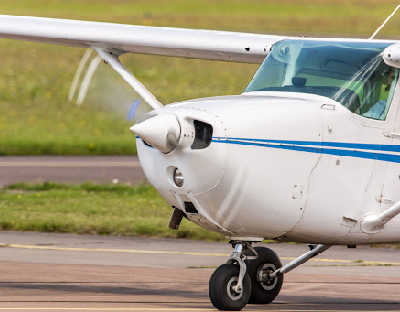
Now, this may come as a shock, but there is one vital piece of paperwork that should be handled very early, maybe right out of the gate -- the medical certificate. The process isn't terribly different from a typical doctor's visit, but you have to select from a list of specific doctors, known as Aviation Medical Examiners, and you have to fill out a form.
The doctors typically charge a fee for the visit, but they give you a pretty thorough physical and if you pass you'll be issued a student pilot / medical certificate. You can find out more about specific requirements on the FAA medical certification FAQ. This isn't meant to scare you away, but flying is a serious business and everyone wants to make sure everybody is safe.
Getting your medical out of the way early on will keep your training from being interrupted while you have to sort out a medical issue, like switching medications, or worse finding out you'll never be able to solo.
* a medical certificate is not required for those earning a Sport Pilot Certificate. However, Sport Pilots must have a valid state driver's license
3) Consider your flight training goals
You need to be honest and ask yourself a few questions. First, what are your goals; what's your plan? Maybe you're looking for a new hobby. Perhaps you're tired of booking airline tickets last minute and you're looking to fly yourself to that next business meeting. Why does this matter? Flight training isn't one-size-fits-all.
The program that is perfect for the twenty-year-old future airline captain isn't necessarily perfect for the fifty-year-old bank CEO. So, as boring as it sounds, take a few minutes and ask yourself what your intentions are.
4) Find the right flight training course or school in Oklahoma
The next step is to find flight schools, whether large or small and contact them. Whether you actually visit the schools or you call or email, you want to get a little bit of information before you commit yourself. You want to talk to them about your goals. You also want to talk to them about their school and staff.
 If you're looking for a school that will let you zip through the ratings on your way to a job interview, you want to know how many instructors they have on staff, how many other students they have, and how many aircraft they have available. All three of those items will directly affect the speed with which you can complete your flight training.
You should also ask whether you will have one instructor or several. It may seem strange, but you may have chemistry with a certain instructor that will benefit your learning more than finishing faster.
If you are looking to get into an airline and you don't already have a four-year degree, you may want to look for a university program, such as the University of North Dakota's Commercial Aviation Degree, that will let you complete your flight training and four-year degree at the same time.
5) Enjoy your flight training in Oklahoma
The final step is to pick a school and have fun. Learning to fly is incredibly rewarding. You will learn a lot about yourself and meet some of the most interesting people. The most important things are that you understand that no one wants to see you fail and remember that any flight school can provide the same result; the difference is in how well it fits you and your goals.
How much does Flight Training cost? Like anything more significant than buying groceries, pilot training has a certain level of associated costs. If you're in the process of finding a Flight Training or even if you've already started pilot training, you may find yourself wondering, "How much is too much?"
The good news is that pilot training costs consist of a few basic building blocks; the bad news is the costs can fluctuate for a variety of reasons.
Average Costs In The USA For Various Types Of Flight Training in Oklahoma
- Sport Pilot License - $3,000 to $5,000
- Private Pilot License - $6,500 to $12,000
- Private + Commercial License - $10,000 to $16,000
- Private + Instrument + Commercial - $18,000 to $24,000
- Private + Instrument + Commercial + ATP - $30,000+
Flight Training Instruction Costs in Oklahoma
Depending on the pilot training course, the FAA requires a minimum of 35 or 40 hours before you can qualify for a Private Pilot Certificate. Most students actually take longer, averaging about 60 hours of training. While this is certainly an important item to consider, there are plenty of other items that are often overlooked. Exam fees, both written and check ride, books, and other materials are an important part of Flight Training costs.
Exam fees can range from anywhere from $100 to $400 or more depending on the examiner. Books and other materials--like a flight computer, logbook, and navigation plotter--are less costly, but combined can add up to around $100 or more.
Flight Training Scholarships in Oklahoma
A question that often comes up when you're considering flight training is whether or not there are scholarships available. The short answer is "yes", but that doesn't really help much when it comes to finding these often elusive sources of funding. The real trick with flight training scholarships is realizing that it takes time and energy to find, apply for, and receive them.
None of them just drop in your lap, and like college scholarships, there are more small scholarships than large ones. You're more likely to find several scholarships that add up to a substantial dollar amount than you are to find a single scholarship to cover all of your training. So, where can you find scholarships? As a start, you might want to consider the following: Flight Training, aviation organizations, and conventional scholarships.
FAA - A History of Airplane Structures Facts for Oklahoma
There are five major stresses to which all aircraft are subjected: Bending. Bending stress is a combination of compression and tension. The rod in Figure 1-14E has been shortened (compressed) on the inside of the bend and stretched on the outside of the bend. A single member of the structure may be subjected to a combination of stresses. In most cases, the structural members are designed to carry end loads rather than side loads. They are designed to be subjected to tension or compression rather than bending.
Aviation Facts - High-Speed Aerodynamics
Listed below are a range of conditions that are encountered by aircraft as their designed speed increases. Subsonic conditions occur for Mach numbers less than one (100–350 mph). For the lowest subsonic conditions, compressibility can be ignored. As the speed of the object approaches the speed of sound, the flight Mach number is nearly equal to one, M = 1 (350–760 mph), and the flow is said to be transonic. At some locations on the object, the local speed of air exceeds the speed of sound. Compressibility effects are most important in transonic flows and lead to the early belief in a sound barrier. Flight faster than sound was thought to be impossible. In fact, the sound barrier was only an increase in the drag near sonic conditions because of compressibility effects. Because of the high drag associated with compressibility effects, aircraft are not operated in cruise conditions near Mach 1. Supersonic conditions occur for numbers greater than Mach 1, but less than Mach 3 (760–2,280mph). Compressibility effects of gas are important in the design of supersonic aircraft because of the shockwaves that are generated by the surface of the object. For high supersonic speeds, between Mach 3 and Mach 5 (2,280–3,600 mph), aerodynamic heating becomes a very important factor in aircraft design. For speeds greater than Mach 5, the flow is said to be hypersonic. At these speeds, some of the energy of the object now goes into exciting the chemical bonds which hold together the nitrogen and oxygen molecules of the air. At hypersonic speeds, the chemistry of the air must be considered when determining forces on the object. When the space shuttle re-enters the atmosphere at high hypersonic speeds, close to Mach 25, the heated air becomes an ionized plasma of gas, and the spacecraft must be insulated ted from the extremely high temperatures.
Best Flight Training Courses in Oklahoma
When deciding what is the best Flight Training for you, it is important to consider your flying and flight training goals. Once you've finished training, what kind of flying do you want to do? Are you learning to fly as a hobby? Do you want to learn to fly as a career? More importantly, are you seeking an airline career? When choosing a Flight Training, answering questions like these is important to establish which kind of school will best meet your needs.
Choosing the right flight training course in Oklahoma is critical. All flight training courses and schools in Oklahoma are not the same. Most large flight academies near Oklahoma specialize in "ab initio" or "from the beginning" training for people who want to become commercial, airline, or corporate pilots. On the other hand, local Flight Training in ~ train for a wide variety of missions, including people who just want to fly for fun.
Local Flight Training Schools near Oklahoma
The place that usually comes to mind when you think of airplanes is your local airport. If you want to learn to fly, your local airport is a great place to start. Even the smallest fields usually have at least one part-time or even full-time instructor that is fully qualified to teach you to fly. Larger fields may even have multiple Flight Training opportunities in Oklahoma.
For the hobbyist, this is great, flight training is typically pay-as-you-go and self-paced. For those that want or need to go at a faster pace, the local airport may not be the best place to get flight training near Oklahoma.
Local Flight Training typically offer at least Sport or Private Pilot programs, and some can train all the way to ATP. Local schools may have a few aircraft available for training and rental, and most have facilities for ground training such as classrooms, flight planning rooms, and even small flight simulators.
Recommended for people who want to fly for fun, or as a profession.
The advantages of using a local Flight Training could include access to a variety of aircraft, training close to home, lower costs than some flight academies, and access to training facilities.
Disadvantages could include limited training for advanced ratings and possible downtime of small fleets due to maintenance issues.
University Flight Training Schools around Oklahoma
Finally, for those looking for an airline career who don't have a four-year degree, consider an aviation degree program at one of the many colleges and universities that offer them. These programs allow you to combine the four-year degree, which most airlines require, with flight training in Oklahoma. When it comes time to graduate, you will be a commercial pilot with a degree in hand ready to fly for the airlines.
Flight academies and college/university flight training programs near Oklahoma have a lot going for them. If your goal is to fly professionally, this type of training may be the best option. But if you're only in the market to learn to fly as a hobby, some academies may not be able to accommodate your needs. It's best to contact each school to find out.
Recommended for people who want to fly for a career. Advantages to attending a flight academy/university program include state of the art aircraft fleets with glass cockpits, flight crew training environment, industry-standard flight simulator training, potential employment as a CFI after graduation, access to job interviews with affiliated companies, and minimal downtime due to maintenance issues.
Disadvantages could include higher overall costs, the possible need to relocate to attend an academy, less flexibility on time and scheduling, the training not as personalized.
No matter what type of flying you intend to do, it's important to talk to as many schools as possible to find out which one fits your learning style, personality, and ultimate aviation goals best.
The most important take-away is that each kind of Flight Training can provide the same result, but when you pick the best Flight Training in Oklahoma for you, you can meet your goals quicker and more efficiently. Furthermore, there's nothing wrong with changing in the middle of your training. Don't let the fear that you might pick the wrong school for you prevent you from learning to fly; it is too much fun.
Accelerated Flight Training Courses from Oklahoma
If you're seeking a flying career or you just want to get a rating in the minimum time, there are also larger professional Flight Training offering accelerated programs. These are typically more condensed, some as short as a few days or weeks, that is strictly planned and scheduled.
Flight Training in Oklahoma employs plenty of professional instructors and has large aircraft fleets to accommodate the quick pace of the training. It may sound like a stressful way to learn to fly, but it is actually quicker and more efficient because it requires less repetition. These flight training programs in Oklahoma cater to someone looking to obtain several ratings at once or those who need to get a rating quickly.
Helicopter Facts for Broken Arrow
On twin-rotor craft the rotors spin in opposite directions, so their reactions cancel each other. The helicopter is propelled in a given direction by inclining the axis of the main rotor in that direction. The helicopter's speed is limited by the fact that if the blades rotate too fast they will produce compressibility effects on the blade moving forward and stall effects on the rearwardmoving blade, at the same time.
FAA - A History of Aircraft Structures Factoid for Broken Arrow
The bulk of the FAA handbook is on the airframe of aircraft; specifically, the fuselage, booms, nacelles, cowlings, fairings, airfoil surfaces, and landing gear. Also included are the various accessories and controls that accompany these structures. Note that the rotors of a helicopter are considered part of the airframe since they are actually rotating wings. By contrast, propellers and rotating airfoils of an engine on an airplane are not considered part of the airframe.
Helicopter Facts for Edmond
Helicopters have been widely adopted by the military since their first appearance during the Korean War. During the Vietnam War, they became the preferred platforms for transporting troops and evacuating wounded; in the Persian Gulf conflict helicopter gunships provided air cover for advancing tanks.
FAA - A History of Aircraft Structures Factoid for Edmond
The airframe of a fixed-wing aircraft consists of five principal units: the fuselage, wings, stabilizers, flight control surfaces, and landing gear. Helicopter airframes consist of the fuselage, main rotor and related gearbox, tail rotor (on helicopters with a single main rotor), and the landing gear.
Fun Helicopter Facts for Enid To Share With Friends
British singerJay Kayalso owns an R44 (registry code G-JKAY), which he pilots in the music video to the songWhite Knuckle Ride.
That if the engine stops, the helicopter rotor continues to spin allowing the machine to slowly land, generally without crashing to the ground.
Since around 400 BC, Chinese children have played with bamboo flying toys, and the 4th-century AD Daoist book Baopuzi reportedly describes some of the ideas inherent to rotary wing aircraft
FAA - A History of Aircraft Structures Factoid for Enid
Aircraft structural members are designed to carry a load or to resist stress. In designing an aircraft, every square inch of wing and fuselage, every rib, spar, and even each metal fitting must be considered in relation to the physical characteristics of the material of which it is made. Every part of the aircraft must be planned to carry the load to be imposed upon it.
Helicopter Facts for Lawton
Best known among its developers are the French inventor Louis Breguet and the engineers Igor Sikorsky of the United States and Juan de la Cierva of Spain. The helicopter has become very popular for short-distance transportation, because of its maneuverability and ability to land and take off in small areas; it has been adopted for a wide range of services, including air-sea rescue, fire fighting, traffic control, oil platform resupply, and business transportation.
FAA - A History of Aircraft Structures Factoid for Lawton
The most common aircraft is the fixed-wing aircraft. As the name implies, the wings on this type of flying machine are attached to the fuselage and are not intended to move independently in a fashion that results in the creation of lift. One, two, or three sets of wings have all been successfully utilized. [Figure 1-12] Rotary-wing aircraft such as helicopters are also widespread. This handbook discusses features and maintenance aspects common to both fixed wing and rotary-wing categories of aircraft. Also, in certain cases, explanations focus on information specific to only one or the other. Glider airframes are very similar to fixed wing aircraft. Unless otherwise noted, maintenance practices described for fixed-wing aircraft also apply to gliders.
Fun Helicopter Facts for Midwest City
Chilean president Sebastin Piera owns one of these choppers, and has made several public appearances flying it. Since 2002, Belgian Prince Philippe flies a red R44 for personal leisure, with the uniqueregistry code OO-PFB, which stands for Prins Filip Belgi.
FAA - A History of Aircraft Structures Factoid for Midwest City
The skin of aircraft can also be made from a variety of materials, ranging from impregnated fabric to plywood, aluminum, or composites. Under the skin and attached to the structural fuselage are the many components that support airframe function. The entire airframe and its components are joined by rivets, bolts, screws, and other fasteners. Welding, adhesives, and special bonding techniques are also used.
Helicopter Facts for Moore
In 1937 German designer Heinrich Focke built an aircraft with two huge variable pitch rotors instead of wings and achieved a controlled hover. Months later, German Anton Flettner built the first true helicopter.
If the engine of the helicopter stops, the rotor continues to spin allowing the machine to slowly land, generally without crashing to the ground.
FAA - A History of Aircraft Structures Factoid for Moore
Airframe structural components are constructed from a wide variety of materials. The earliest aircraft were constructed primarily of wood. Steel tubing and the most common material, aluminum, followed. Many newly certified aircraft are built from molded composite materials, such as carbon fiber. Structural members of an aircraft’s fuselage include stringers, longerons, ribs, bulkheads, and more. The main structural member in a wing is called the wing spar.
Fun Helicopter Facts for Norman No One WIll Know But You!
Helicopter is a type of aircraft in which lift is obtained by means of one or more power-driven horizontal propellers called rotors. When the rotor of a helicopter turns it produces reaction torque which tends to make the craft spin also. On most helicopters a small rotor near the tail compensates for this torque.
FAA - A History of Aircraft Structures Factoid for Norman
An aircraft is a device that is used for, or is intended to be used for, flight in the air. Major categories of aircraft are airplane, rotorcraft, glider, and lighter-than-air vehicles. Each of these may be divided further by major distinguishing features of the aircraft, such as airships and balloons. Both are lighter-than-air aircraft but have differentiating features and are operated differently.
Helicopter Facts for Oklahoma City
TheRobinson R44is a four-seat lighthelicopterproduced by theRobinson Helicopter Companysince 1992. Based on the companys two-placeRobinson R22, the R44 features hydraulically-assisted flight controls.
In the early 1930's, Arthur Young, a brilliant young inventor, built and successfully demonstrated a viable, flyable helicopter model. Larry Bell, a successful entrepreneur and founder of the Bell Aircraft Corporation was so impressed with Young's efforts that in 1941 he set the youthful inventor up in a small shop in Gardenville, New York
Fun Helicopter and Airplane Facts for Oklahoma City
The Ditching and Dunker trainer simulates a downed helicopter. Candidates undergo two-day training sessions that teach them how to escape from a helicopter that crashes and lands in water.
Modern Day Military Pilot Training: Army pilots start with flight school and move on to basic combat training. The Air Force's basic pilot training covers 12 weeks and Marine pilots undergo two phases of basic flight training. After basic training, pilots continue with helicopter-specific training. All branches also require the applicant to pass the Armed Services Vocational Aptitude Battery.
Fun Helicopter Facts for Stillwater
Helicopters can be flown across oceans if additional fuel is made available or in-flight refueling is employed.
Myth: Helicopters will drop like a rock when the engine shuts down. In fact, you have a better chance at surviving in a helicopter when the engine fails than you do in an airplane.
It was not until the early 1480s, when Leonardo da Vinci created a design for a machine that could be described as an aerial screw, that any recorded advancement was made towards vertical flight.
Facts of Fort Richardson
U.S. Army Alaska (USARAK), a subordinate element of U.S. Army Pacific (USARPAC), is headquartered at Joint Base Elmendorf-Richardson (JBER). The organization, commanded by a Brigadier General, provides USARPAC with focused, early entry battle command capability and acts as the Joint Force Land Component Commander for homeland defense and civil support in Alaska. USARAK's mission is to be prepared to deploy rapidly in the Pacific theater and elsewhere in support of contingency operations, USPACOM objectives
Helicopter Facts for Tulsa
Since Bell Aircraft Corporation's reputation for helicopter manufacture began to rival its reputation as a builder of conventional aircraft, the company created a separate helicopter division which was headquartered in Fort Worth, Texas. Today, with Bell helicopters flying in more than 120 different countries, they are logging another ten hours every minute of every day. And by 1951, Bell helicopters were in service around the world, breaking records as fast as they were setting them.
FAA - A History of Aircraft Structures Factoid for Tulsa
Many airframe structures are made of more than 50 percent advanced composites, with some airframes approaching 100 percent. The term “very light jet” (VLJ) has come to describe a new generation of jet aircraft made almost entirely of advanced composite materials. [Figure 1-10] It is possible that non-composite aluminum aircraft structures will become obsolete as did the methods and materials of construction used by Cayley, Lilienthal, and the Wright Brothers.