Flight Training in Wisconsin
Cities in Wisconsin with Aviation Schools:
- Appleton
- Bellevue
- Beloit
- Bristol
- Brookfield
- Brown Deer
- Brussels
- Burlington
- Butler
- Chippewa Falls
- Combined Locks
- Coon Valley
- Cottage Grove
- Cross Plains
- Cuba City
- Darien
- De Pere
- Deerfield
- Delafield
- Delavan
- Dodgeville
- Eau Claire
- Fond du Lac
- Fontana
- Forestville
- Fort Atkinson
- Fox Point
- Franklin
- Galesville
- Gays Mills
- Genoa City
- Germantown
- Glendale
- Grafton
- Green Bay
- Greendale
- Greenfield
- Greenville
- Hudson
- Iron River
- Jackson
- Janesville
- Jefferson
- Kaukauna
- Kenosha
- Kewaskum
- Kimberly
- Kohler
- La Crosse
- Lake Geneva
- Lake Mills
- Lancaster
- Madison
- Middleton
- Milltown
- Milton
- Milwaukee
- Minong
- Monona
- Monroe
- Mosinee
- Mount Horeb
- Mukwonago
- Muskego
- Nashotah
- Neenah
- Nekoosa
- Oshkosh
- Racine
- Waukesha
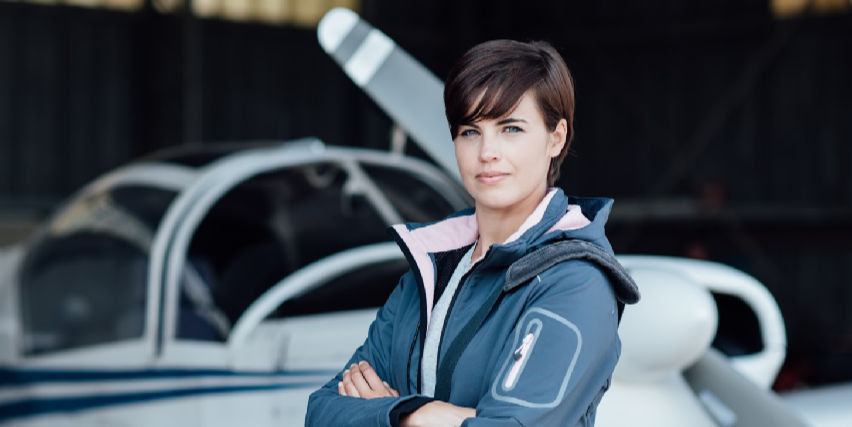
Choose the Best Flight Training Courses in Wisconsin
Follow this easy five-step plan to find the best flight training in Wisconsin to prepare you to become a pilot. You've made the decision to attend flight training in Wisconsin and you want to become a private or commercial pilot in Wisconsin. You know flying is in your future, but now what? How do you get started with flight training in Wisconsin? So, what's the next step?
The good news is that the road to flight training and becoming a pilot is very defined. Unfortunately, sometimes the road is a little hard to find. If you're not sure how to become a commercial pilot, keep reading for an easy five-step 'flight' plan that will see you through to your pilot qualifications.
1) Test the waters of flight training programs
Don't immediately run out and sign up for the first flight training course you find. Start with a small step; find a school or independent flight instructor that will take you up for an introductory flight. These are usually pretty inexpensive, maybe $100 to $150 for an hour.
The benefit to introductory flight training is that you get to experience flight training in a small plane with an instructor. You'll definitely learn a lot in that hour and you should actually get to take the controls. The key takeaway for this exercise is to establish whether you actually like controlling the plane.
2) Make sure you're medically qualified*
Ask any pilot and they'll tell you that the hardest part of flying isn't actually controlling the aircraft, it's the paperwork. The truth is, there is a lot of paperwork, but no more than any other licensed professional. The paperwork creeps in a little bit early in flight training, but for the most part, it's just you and your instructor and eventually just you flying free.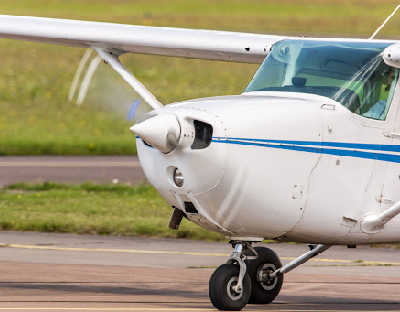
Now, this may come as a shock, but there is one vital piece of paperwork that should be handled very early, maybe right out of the gate -- the medical certificate. The process isn't terribly different from a typical doctor's visit, but you have to select from a list of specific doctors, known as Aviation Medical Examiners, and you have to fill out a form.
The doctors typically charge a fee for the visit, but they give you a pretty thorough physical and if you pass you'll be issued a student pilot / medical certificate. You can find out more about specific requirements on the FAA medical certification FAQ. This isn't meant to scare you away, but flying is a serious business and everyone wants to make sure everybody is safe.
Getting your medical out of the way early on will keep your training from being interrupted while you have to sort out a medical issue, like switching medications, or worse finding out you'll never be able to solo.
* a medical certificate is not required for those earning a Sport Pilot Certificate. However, Sport Pilots must have a valid state driver's license
3) Consider your flight training goals
You need to be honest and ask yourself a few questions. First, what are your goals; what's your plan? Maybe you're looking for a new hobby. Perhaps you're tired of booking airline tickets last minute and you're looking to fly yourself to that next business meeting. Why does this matter? Flight training isn't one-size-fits-all.
The program that is perfect for the twenty-year-old future airline captain isn't necessarily perfect for the fifty-year-old bank CEO. So, as boring as it sounds, take a few minutes and ask yourself what your intentions are.
4) Find the right flight training course or school in Wisconsin
The next step is to find flight schools, whether large or small and contact them. Whether you actually visit the schools or you call or email, you want to get a little bit of information before you commit yourself. You want to talk to them about your goals. You also want to talk to them about their school and staff.
 If you're looking for a school that will let you zip through the ratings on your way to a job interview, you want to know how many instructors they have on staff, how many other students they have, and how many aircraft they have available. All three of those items will directly affect the speed with which you can complete your flight training.
You should also ask whether you will have one instructor or several. It may seem strange, but you may have chemistry with a certain instructor that will benefit your learning more than finishing faster.
If you are looking to get into an airline and you don't already have a four-year degree, you may want to look for a university program, such as the University of North Dakota's Commercial Aviation Degree, that will let you complete your flight training and four-year degree at the same time.
5) Enjoy your flight training in Wisconsin
The final step is to pick a school and have fun. Learning to fly is incredibly rewarding. You will learn a lot about yourself and meet some of the most interesting people. The most important things are that you understand that no one wants to see you fail and remember that any flight school can provide the same result; the difference is in how well it fits you and your goals.
How much does Flight Training cost? Like anything more significant than buying groceries, pilot training has a certain level of associated costs. If you're in the process of finding a Flight Training or even if you've already started pilot training, you may find yourself wondering, "How much is too much?"
The good news is that pilot training costs consist of a few basic building blocks; the bad news is the costs can fluctuate for a variety of reasons.
Average Costs In The USA For Various Types Of Flight Training in Wisconsin
- Sport Pilot License - $3,000 to $5,000
- Private Pilot License - $6,500 to $12,000
- Private + Commercial License - $10,000 to $16,000
- Private + Instrument + Commercial - $18,000 to $24,000
- Private + Instrument + Commercial + ATP - $30,000+
Flight Training Instruction Costs in Wisconsin
Depending on the pilot training course, the FAA requires a minimum of 35 or 40 hours before you can qualify for a Private Pilot Certificate. Most students actually take longer, averaging about 60 hours of training. While this is certainly an important item to consider, there are plenty of other items that are often overlooked. Exam fees, both written and check ride, books, and other materials are an important part of Flight Training costs.
Exam fees can range from anywhere from $100 to $400 or more depending on the examiner. Books and other materials--like a flight computer, logbook, and navigation plotter--are less costly, but combined can add up to around $100 or more.
Flight Training Scholarships in Wisconsin
A question that often comes up when you're considering flight training is whether or not there are scholarships available. The short answer is "yes", but that doesn't really help much when it comes to finding these often elusive sources of funding. The real trick with flight training scholarships is realizing that it takes time and energy to find, apply for, and receive them.
None of them just drop in your lap, and like college scholarships, there are more small scholarships than large ones. You're more likely to find several scholarships that add up to a substantial dollar amount than you are to find a single scholarship to cover all of your training. So, where can you find scholarships? As a start, you might want to consider the following: Flight Training, aviation organizations, and conventional scholarships.
Fun Facts About Flight Dispatchers - Practical Test Standards Concept
Title 14 of the Code of Federal Regulations (14 CFR) part 65 specifies the subject areas in which knowledge and skill must be demonstrated by the applicant before the issuance of an Aircraft Dispatcher Certificate. The CFRs provide the flexibility to permit the FAA to publish practical test standards containing the Areas of Operation and specific Tasks in which competency shall be demonstrated.
Useless Aviation Trivia You Must Know
ATL outside of Atlanta is the busiest US airport in the US, LAX in Los Angeles is second, third is ORD outside of Chicago, fourth is DFW near Dallas, fifth? Well, its JFK! College Park Airport (KCGS), in the city of College Park, Maryland is the world's oldest airport. KCGS was established in 1909 when Wilbur Wright arrived at the field to train two military officers in the US Army.
Best Flight Training Courses in Wisconsin
When deciding what is the best Flight Training for you, it is important to consider your flying and flight training goals. Once you've finished training, what kind of flying do you want to do? Are you learning to fly as a hobby? Do you want to learn to fly as a career? More importantly, are you seeking an airline career? When choosing a Flight Training, answering questions like these is important to establish which kind of school will best meet your needs.
Choosing the right flight training course in Wisconsin is critical. All flight training courses and schools in Wisconsin are not the same. Most large flight academies near Wisconsin specialize in "ab initio" or "from the beginning" training for people who want to become commercial, airline, or corporate pilots. On the other hand, local Flight Training in ~ train for a wide variety of missions, including people who just want to fly for fun.
Local Flight Training Schools near Wisconsin
The place that usually comes to mind when you think of airplanes is your local airport. If you want to learn to fly, your local airport is a great place to start. Even the smallest fields usually have at least one part-time or even full-time instructor that is fully qualified to teach you to fly. Larger fields may even have multiple Flight Training opportunities in Wisconsin.
For the hobbyist, this is great, flight training is typically pay-as-you-go and self-paced. For those that want or need to go at a faster pace, the local airport may not be the best place to get flight training near Wisconsin.
Local Flight Training typically offer at least Sport or Private Pilot programs, and some can train all the way to ATP. Local schools may have a few aircraft available for training and rental, and most have facilities for ground training such as classrooms, flight planning rooms, and even small flight simulators.
Recommended for people who want to fly for fun, or as a profession.
The advantages of using a local Flight Training could include access to a variety of aircraft, training close to home, lower costs than some flight academies, and access to training facilities.
Disadvantages could include limited training for advanced ratings and possible downtime of small fleets due to maintenance issues.
University Flight Training Schools around Wisconsin
Finally, for those looking for an airline career who don't have a four-year degree, consider an aviation degree program at one of the many colleges and universities that offer them. These programs allow you to combine the four-year degree, which most airlines require, with flight training in Wisconsin. When it comes time to graduate, you will be a commercial pilot with a degree in hand ready to fly for the airlines.
Flight academies and college/university flight training programs near Wisconsin have a lot going for them. If your goal is to fly professionally, this type of training may be the best option. But if you're only in the market to learn to fly as a hobby, some academies may not be able to accommodate your needs. It's best to contact each school to find out.
Recommended for people who want to fly for a career. Advantages to attending a flight academy/university program include state of the art aircraft fleets with glass cockpits, flight crew training environment, industry-standard flight simulator training, potential employment as a CFI after graduation, access to job interviews with affiliated companies, and minimal downtime due to maintenance issues.
Disadvantages could include higher overall costs, the possible need to relocate to attend an academy, less flexibility on time and scheduling, the training not as personalized.
No matter what type of flying you intend to do, it's important to talk to as many schools as possible to find out which one fits your learning style, personality, and ultimate aviation goals best.
The most important take-away is that each kind of Flight Training can provide the same result, but when you pick the best Flight Training in Wisconsin for you, you can meet your goals quicker and more efficiently. Furthermore, there's nothing wrong with changing in the middle of your training. Don't let the fear that you might pick the wrong school for you prevent you from learning to fly; it is too much fun.
Accelerated Flight Training Courses from Wisconsin
If you're seeking a flying career or you just want to get a rating in the minimum time, there are also larger professional Flight Training offering accelerated programs. These are typically more condensed, some as short as a few days or weeks, that is strictly planned and scheduled.
Flight Training in Wisconsin employs plenty of professional instructors and has large aircraft fleets to accommodate the quick pace of the training. It may sound like a stressful way to learn to fly, but it is actually quicker and more efficient because it requires less repetition. These flight training programs in Wisconsin cater to someone looking to obtain several ratings at once or those who need to get a rating quickly.
Airports Near Appleton
The nearest Airports to Fremont are San Jose International Airport. This airport has international and domestic flights from San Jose, California and is 16 miles from the center of Fremont, CA. Oakland International Airport is the next closest airport, 22 miles from Fremont, CA. San Jose International has international and domestic flights. San Francisco International Airportis 32 miles from Fremont, CA. Stockton Metropolitan Airport is 62 miles from Fremont, CA. There are two heliports in Fremont, Washington Hospital Heliport and First Interstate Bank Operations Center Heliport.
Helicopter Fun Facts for Appleton
Eurocopter EC175: The best medium twin for the future of helicopters. Designed with our customers, the EC175 sets new standards for all your missions. Ingeniously optimized.
Fun Helicopter and Airplane Facts for Eau Claire
Tail rotor direction of rotation on the R44 is reversed compared to the R22 for improved yaw control authority. On the R44 the advancing blade is on the bottom. Helicopters are classified as rotary-wing aircraft and their rotary wing is commonly referred to as the main rotor or simply the rotor. Unlike the more well-known fixed wing aircraft such as a sports biplane or an airliner the helicopter is capable of direct vertical take-off and landing; it can also hover in a fixed position.
Fun Helicopter and Airplane Facts for Eau Claire
Post Vietnam Era Military Pilot Training: From 1971 to 2004, SUPT-H at Fort Rucker primarily operated as an Army owned and controlled program. In 2004, the training remained at Fort Rucker, but the Air Force mission required changes in the training program and the Air Force assumed ownership/responsibility for conducting SUPT-H.
Interesting Helicopter and Fixed-wing Facts for Green Bay
The fastest helicopter is the Westland Lynx, which flew at 402 km/h on 6 August 1986.
Did you know that approximately 12,000 helicopters saw action in Vietnam, which included all military branches.
The biggest helicopter was the Russian Mil Mi-12 Homer of 1968 which could lift 40,204 kg up to 2255 m.
Aviation Tidbits for Green Bay
Flight Instructor Facts for Green Bay Many flight instructors share time between helicopter and airplane flight instruction, which requires that the instructors be certified in both types of aircraft.
Interesting Helicopter and Fixed-wing Facts for Janesville
In January 2000, Robinson introduced the Raven with hydraulically-assisted controls and adjustable pedals. In July 2002, Robinson introduced the Raven II featuring a more powerful, fuel-injectedengine and wider blades, allowing a higher gross weight and improved altitude performance.
Aircraft Maintenance Record Entries
- A description of the work performed
- The date of completion
- The name of the person performing the work
- The signature, certificate number and kind of certificate held by person approving the work
Aviation Pilot Jobs for Janesville
Helicopter Pilot Jobs for Janesville News helicopter pilots may simply provide a means to get aerial footage, or they may transport reporters to the scene as well.
Fun Helicopter Facts for Kenosha:
The biggest helicopter was the Russian Mil Mi-12 Homer of 1968 which could lift 40,204 kg up to 2255 m. Design studies of the giant helicopter from Russia were started at the Mil OKB in 1959, receiving official sanction in 1961, by the Military forces there.
Aviation Info You Never Knew But Should
Helicopter Jobs: Law enforcement, military, and government agencies also offer helicopter pilot jobs. Government jobs are found in areas such as transportation, wildlife monitoring, immigration, and national security.
Success or failure depends more upon attitude than upon capacity successful men act as though they have accomplished or are enjoying something. Soon it becomes a reality. Act look feel successful conduct yourself accordingly and you will be amazed at the positive results. William James
Fun Facts for Helicopter and Airplane Flight Training for Madison
The biggest helicopter was the Russian Mil Mi-12 Homer of 1968 which could lift 40,204 kg up to 2255 m.The first reference to a rotor system is credited to inventor Leonardo da Vinci, who designed an ‘aerial screw’ in 1480. No full-scale variant was constructed during his lifetime.
Helicopter Spotlight for Madison
The Bell 412 is a utility helicopter manufactured by Bell Helicopter. Development began in the late 1970s with two Bell 212 being converted into 412 prototypes. An advanced four blade main rotor with a smaller diameter replaced the 212's two blade rotor. A Bell 412 prototype first flew in August 1979. The initial model was certified in January 1981 with the deliveries commencing in the same month. Over 700 Model 412s (including 260 by AgustaWestland) have been built.
Fun Facts for Helicopter and Airplane Flight Training for Milwaukee
The fastest helicopter is the Westland Lynx, which flew at 402 km/h on 6 August 1986. The Westland Lynx is a British multi-purpose military helicopter designed and built by Westland Helicopters at its factory in Yeovil.
The biggest helicopter was the Russian Mil Mi-12 Homer of 1968 which could lift 40,204 kg up to 2255 m.
Highest altitude made in a helicopter was 40,820ft (12,442m) on 21, June 1972 in a Aerospatiale Lama and the Pilot was Jean Bouet from France.
Helicopter Spotlight for Milwaukee
The Sikorsky S-92 is a four-bladed twin-engine medium-lift helicopter built by Sikorsky Aircraft for the civil and military helicopter market. The S-92 was developed from the Sikorsky S-70 helicopter and has similar parts such as flight control and rotor systems.
The H-92 Superhawk is a military version of the S-92 in the utility transport role, capable of carrying 22 troops. The H-92 can also be configured for specific missions, including Search and Rescue and executive transportation. The CH-148 Cyclone is a shipboard maritime helicopter variant currently under development for the Canadian Forces. From February 2009, the S-92 program was placed under Sikorsky Global Helicopters, Sikorsky's new civil helicopter business unit.
Interesting Helicopter and Fixed-wing Facts for Oshkosh
Designed during the 1980s byFrank Robinsonand his staff of engineers, the R44 first flew on March 31, 1990. The R44 Astro was awarded an FAA Type Certificate in December 1992, with the first deliveries taking place in January 1993.
Fun Helicopter and Airplane Facts for Oshkosh
Commercial Helicopter License Tips: Pilots who have their fixed wing license may be able to apply that flying time to their rotorcraft add-on license as well which will save both time and money.
Interesting Helicopter and Fixed-wing Facts for Racine
The biggest helicopter was the Russian Mil Mi-12 Homer of 1968 which could lift 40,204 kg up to 2255 m.
The first reference to a rotor system is credited to inventor Leonardo da Vinci, who designed an ‘aerial screw’ in 1480. No full-scale variant was constructed during his lifetime.
Feature Helicopter for Racine
Eurocopter Dauphin: The AS365 N3+ belongs to the Dauphin family, which is well known for its unique design. This medium sized helicopter has proven its ability to perform any kind of mission, anywhere in the world. It even excels in the most severe climatic conditions, such as high altitudes or hot temperatures.
Helicopter Facts for Racine
Highest altitude made in a helicopter was 40,820ft (12,442m) on 21, June 1972 in a Aerospatiale Lama and the Pilot was Jean Bouet from France.
Aviation Facts for Helicopter and Airplanes in Waukesha
The R44 is a single-engined helicopter with a semi-rigid two-bladed main rotor and a two-bladed tail rotor and a skid landing gear. It has an enclosed cabin with two rows of side-by-side seating for a pilot and three passengers.
Regarding aircraft speed: Unless otherwise authorized by the Federal Aviation Administrator no person may operate an aircraft below 10,000 feet MSL at an indicated airspeed of more than 250 knots (288 m.p.h.). The noise pollution would not be looked upon very kindly.
Fun Helicopter Facts for Waukesha
Eurocopter Superpuma: The AS332 L1 is a twin engine medium-weight civil helicopter equipped with a new avionics glass cockpit.