Helicopter Flight Schools in North Dakota
Cities in North Dakota with Aviation Schools:
- Belcourt
- Beulah
- Bismarck
- Bottineau
- Bowman
- Burlington
- Carrington
- Casselton
- Cavalier
- Crosby
- Devils Lake
- Dickinson
- Fargo
- Fort Totten
- Garrison
- Grafton
- Grand Forks
- Grand Forks Air Force Base
- Harvey
- Hazen
- Hettinger
- Hillsboro
- Horace
- Jamestown
- Langdon
- Larimore
- Lincoln
- Lisbon
- Mandan
- Mapleton
- Mayville
- Minot
- Minot Air Force Base
- New Rockford
- New Town
- Oakes
- Park River
- Parshall
- Rolla
- Rugby
- Shell Valley
- Stanley
- Surrey
- Tioga
- Valley City
- Wahpeton
- Washburn
- Watford City
- West Fargo
- Williston
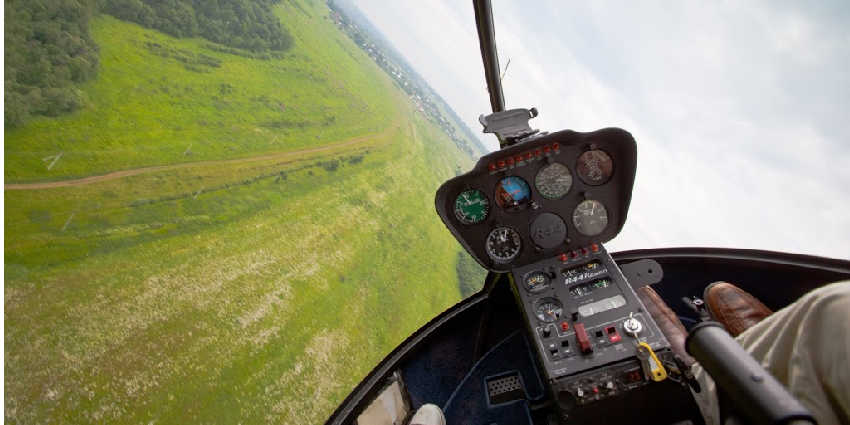
Welcome Student Helicopter Pilots Living in North Dakota
Aviation Schools Online proudly displays the Helicopter Flight Schools recognized as the top helicopter flight schools in North Dakota. Why? One simple reason, helicopter flight school graduates will eventually land a job flying helicopters in North Dakota for a living, so it's important that we promote only the best helicopter flight schools near North Dakota.
ASO represents and lists the country's best helicopter flight schools in North Dakota designed for career-minded helicopter student pilots. To start the admissions process call our Student Services Department today!
ASO promotes helicopter flight schools near North Dakota that are approved and authorized by the Federal Aviation Administration (FAA) to teach helicopter flight school students under Federal Aviation Regulation (FAR) Part 61 and FAR Part 141.
The FAA approval list is a very short list of helicopter flight schools near North Dakota that meet the rigorous requirements necessary to be a Part 141 training program.
The top Helicopter Flight Schools near North Dakota listed in Aviation Schools Online (ASO) offer approved Part 141 courses that are designed to take students from “student pilot” to a “Certified Flight Instructor - Instrument” (CFII) and beyond.
Consider Only The Best Helicopter Flight Schools in North Dakota
ASO is known for being the flight school directory that best promotes helicopter flight schools for career pilots wishing to fly helicopters for a great paying job.
ASO has located and displays the best helicopter flight schools near North Dakota who have best-developed career pathways for aspiring commercial pilots to land their dream job. From flight instruction to college degrees, at Aviation Schools Online we know how to lead motivated students to achieve their life long dream of becoming a commercial pilot.
We know what employers want from their helicopter pilot candidates, and our job is to help you to effectively compete for the top aviation jobs.
Why attend a helicopter flight school in North Dakota? Typically, helicopter pilots who have a college degree are better equipped to compete for the best aviation jobs. We recommend that student pilots look to combine their helicopter flight training as part of earning a standard college degree.
Some veterans, depending upon eligibility, can receive up to 100% of their education funded through their post 911 GI Bill® education benefits to attend helicopter flight schools near North Dakota. For career-minded student pilots, having a college degree with flight your flight certificates is the best of both worlds.
In addition to the college degree, helicopter flight school graduates earn certificates spanning from Private Helicopter Pilot, Instrument Rating, Commercial Helicopter Pilot, Certified Flight Instructor, and Certified Flight Instructor Instrument. If you are a pilot with a dream to fly helicopters, we recommend you learn to fly with the best in the world.
Regardless of which helicopter flight school you choose to attend, know that with the schools listed on ASO you are joining a world class organization with the highest standards of excellence.
ASO is Engaged with Aviation-Helicopter Employers
As mentioned above, Aviation Schools Online (ASO) is engaged with aviation employers. We know what employers are considering when interviewing their helicopter pilot candidates from North Dakota; they are looking for something more than most schools can offer.
Employers are looking for experienced helicopter pilots from North Dakota (having plenty of PIC hours) and specialty training. This is where ASO’s Proprietary Courses come in.
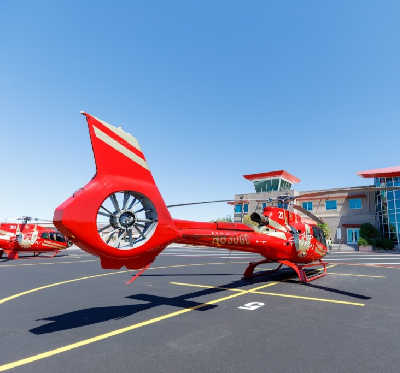 At ASO helicopter pilots from North Dakota will have the unique opportunity to take advanced courses in Mountain Flying, External Load Training, Turbine Transition Course and even a Medium Transition Course.
While providing outstanding advanced helicopter flight training courses ASO's sponsored helicopter flight schools in North Dakota are equipped to teach advanced techniques.
Essentially, the advanced courses are designed to provide the skill sets required for students to succeed in a highly competitive helicopter aviation market. The advanced helicopter student-pilots from North Dakota are trained by instructors with real-life experience in the industry - they know what employers are looking for.
By providing a safe yet real-world learning environment helicopter student-pilots from North Dakota will gain the understanding that their personal success is also reflective of the flight school's success. Meaning, a helicopter flight school in North Dakota is not considered successful unless their helicopter student-pilots from North Dakota earn the best helicopter piloting job and advance their careers.
For more information about Aviation Schools Online please call us today. Our admissions specialists can help you find the best pathway to becoming a commercial pilot.
FAA - A History of Helicopter Structures Facts for North Dakota
There are five major stresses to which all aircraft are subjected: Torsion. Torsion is the stress that produces twisting. [Figure 1-14C] While moving the aircraft forward, the engine also tends to twist it to one side, but other aircraft components hold it on course. Thus, torsion is created. The torsion strength of a material is its resistance to twisting or torque.
Aviation Facts - Trim Control Systems for Large Aircraft
Control Systems for Large Aircraft - Mechanical Control
This is the basic type of system that was used to control early aircraft and is currently used in smaller aircraft where aerodynamic forces are not excessive. The controls are mechanical and manually operated. The mechanical system of controlling an aircraft can include cables, push-pull tubes, and torque tubes. The cable system is the most widely used because deflections of the structure to which it is attached do not affect its operation. Some aircraft incorporate control systems that are a combination of all three.
Helicopter Flight Schools and Training Locations Near North Dakota
Welcome to Aviation Schools Online (ASO), the top helicopter flight school directory in North Dakota! We serve students from North Dakota, including prospective helicopter flight school students from North Dakota.
If you are serious about becoming a professional career helicopter pilot from North Dakota and you are looking for one of the top Helicopter Flight School in North Dakota that will help you land the best aviation job available, then look no further. Our listed flight schools are the top Helicopter Flight Schools designed to meet the career needs of serious student pilots.
When it comes to Helicopter Flight Schools in North Dakota, student pilots only have a handful of good options, and ASO lists them all. Aviation Schools Online, in partnerships with the best Helicopter Flight Schools in North Dakota, provide helicopter student pilots from North Dakota with an opportunity to attend a top-flight school while earning a college degree.
Specifically, ASO is partnered with the Top Helicopter Flight Schools from North Dakota, providing flight school courses that lead to a standard college degree. For more information please call and speak with our admissions and career specialist.
Financing Helicopter Flight School Training in North Dakota
Aviation Schools Online has worked hard to develop partnerships and alliances with the top helicopter flight schools, colleges, and universities in North Dakota to leverage strengths AND provide the best possible outcome for the students.
We know what aviation employers from North Dakota want. We know what helicopter employers from North Dakota are looking for in their helicopter pilots. Aviation employers from North Dakota want pilots who have earned a college degree.
By attending a top helicopter flight school in North Dakota, and earning a college degree, we believe that helicopter student-pilots will be in the right position to land the best helicopter piloting jobs in North Dakota.
ASO is known for helping helicopter flight students find the best pathway from "helicopter flight school in North Dakota" to a great pilot job "the real world". Meaning, we connect student-pilots with the top helicopter flight schools near North Dakota so students follow a career path that helps them to compete for the best helicopter piloting jobs in North Dakota.
Aviation Schools Online and the Top Helicopter Flight Schools from North Dakota can help you to fulfill your dreams of becoming a helicopter pilot. ASO offers numerous helicopter flight schools to train from. All locations near North Dakota employ professional instructors that use state-of-the-art rotorcraft.
If you are from North Dakota you might consider relocating to one of the top helicopter flight school locations near North Dakota. If you are looking for the top helicopter flight school in the US you will soon find out that you will most likely have to relocate. Helicopter schools are far and few between, and there are only a few really good ones in the US.
Helicopter Flight School Locations Serving Students from North Dakota
The Top Helicopter Flight Schools in North Dakota have established the top helicopter flight school programs in the United States. Plus, Veterans may be able to tap into their VA Educational Benefits.
Private pay students may be able to receive federal funding (FAFSA), or access student loans. If finances are an issue, please call and speak with our Student Service Team to find out if your military benefits will cover your flight training and college tuition, or if you qualify for a student loan or other funding resources (such as scholarships).
Aviation Schools Online has partnered with the Top Helicopter Flight Schools near North Dakota. More and more employers are requesting pilots that have mountain flying experience, so let us help you find the perfect helicopter flight school for you.
Keep in mind, aviation employers don’t want to pay the extra expense of mountain flying, and most and don’t have the resources to train new pilot hires on what it takes to fly at High-Density Altitudes. Let us help you find the best Mountain Flying Experience in the World.
Do your helicopter flight training in the mountains. Most professional helicopter flight schools near North Dakota won’t let their students go near the busy airspace of Class Bravo with a Student Pilot and some FAA Regulations prohibit it!
This is precisely why you might want to do your helicopter flight training in one near a busy International Airports in Class B Airspace. This offers students daily practice in communication with Air Traffic Control in a busy and highly regulated airspace.
Professional Helicopter Flight Schools Near North Dakota
Aviation Schools Online (ASO) promotes the top Helicopter Flight Training Schools in the world. These programs offer courses and ratings in Private Helicopter Pilot, Instrument Rating, Commercial Helicopter Pilot, Certified Flight Instructor and Certified Flight Instructor Instrument. Additional courses are offered in Turbine Transition, External Load, Mountain Flying, Robinson R22 Transition, Robinson R44 Transition, and SFAR 73 Transition.
ASO represents and promotes several helicopter training locations serving students from North Dakota. Our partners are approved for FAR 61 and Part 141. Through the Top Helicopter Flight Schools from North Dakota veterans may be able to utilize their GI Bill Educational Benefits to fund helicopter flight training (depends upon eligibility - not all Veterans are eligible).
We recommend that you call and speak with a VA representative and find out about your funding options.
ASO is also known for training private pay and international students. ASO represents only the top affordable helicopter flight schools in North Dakota. Our school locations are strategically located all with one thing in mind; To offer the best flight training in the world! Our locations give our students a distinct advantage when it comes to launching their aviation careers.
For more information about ASO’s helicopter flight schools in North Dakota and speak to our student pilot advocates. Our job is to help you find the fastest, most affordable, but thorough flight training pathway.
Interesting Helicopter and Fixed-wing Facts for Bismarck
Sikorsky soon became a successful aircraft manufacturer in his adopted homeland. But his dream was vertical take-off, rotary wing flight. He experimented for more than twenty years and finally, in 1939, flew his first flight in a craft dubbed the VS 300.
The record for the fastest helicopter in the world is held by the Sikorsky X2 which, during a flyby over Florida, United States, clocked 258mph (416kph). But this was beaten recently. On June 7th 2013, the X3 blew through the previous air speed record for helicopters by cruising at 255 knots (293 MPH) during a 40-minute flight over Southern France near Istres.
Fun Helicopter and Airplane Facts for Bismarck
Helicopter Pilot's License:Private pilot certificates allow pilots who are 17 and older to command single-engine aircraft and carry passengers night or day. Eligibility includes 40 flight hours, 20 of them solo. If attending flight school, pilots need 35 on-the-ground training hours, with another 35 in the air, 15 of those hours flown solo.
Interesting Helicopter and Fixed-wing Facts for Dickinson
Igor Sikorsky is considered to be the \father of helicopters not because he invented the first. He is called that because he invented the first successful helicopter
The record for the fastest helicopter in the world is held by the Sikorsky X2 which during a flyby over Florida United States clocked 258mph (416kph). But this was beaten recently. On June 7th 2013 the X3 blew through the previous air speed record for helicopters by cruising at 255 knots (293 MPH) during a 40-minute flight over Southern France near Istres.
Helicopter Facts for Dickinson
In order to fly, an object must have “lift”. Lift is what pushes something upwards. Lift is made by wings (rotors). Wings have a curved shape on top and are flatter on the bottom. This specific shape makes air flow over the top of the wing faster than under the bottom of the wing. The faster air on top of the wing makes suction on the top of the wing and the wing moves up. Airplanes get lift from their wings. A helicopter's rotor blades are spinning wings. A helicopter moves air over its rotor by spinning the blades. The rotor makes the lift that carries the helicopter up. One problem associated with helicopter rotor blades occurs because airflow along the length of each blade differs widely. This means that lift and drag fluctuate for each blade throughout the rotational cycle, thereby exerting an unsteadying influence upon the helicopter. The autogiro had a rotor that functioned something like a windmill. Once set in motion by taxiing on the ground, the rotor could generate supplemental lift; however, the autogiro was powered primarily by a conventional airplane engine.
Fun Facts for Helicopter and Airplane Flight Training for Fargo
Typically, the means of compensating for these unpredictable variations in lift and drag is to manufacture flexible blades connected to the rotor by a hinge. This design allows each blade to shift up or down, adjusting to changes in lift and drag.
The first reference to a rotor system is credited to inventor Leonardo da Vinci, who designed an ‘aerial screw’ in 1480. No full-scale variant was constructed during his lifetime.
Fun Helicopter and Airplane Facts for Fargo
Before potential rotary wing aviators begin actual helicopter training, they must complete the U.S. Army Aviation Center Survival Escape Resistance and Evasion, or SERE-C, course, and Helicopter Ditching and Dunker training. The SERE-C course teaches how to survive in extreme circumstances, including how to find water and food and even how to improvise weapons.
Interesting Helicopter and Fixed-wing Facts for Grand Forks
A helicopter is an engine-driven rotorcraft (a type of aircraft) which uses rotating blades for lift, propulsion, thrust and steering. The word 'Helicopter' comes from the French word 'hlicoptre' which is derived from the Greek words 'helix/helik' (which means 'twisted / curved') and 'pteron' (which means 'wing').
The biggest helicopter was the Russian Mil Mi-12 Homer of 1968 which could lift 40,204 kg up to 2255 m.
Fun Helicopter and Airplane Facts for Grand Forks
On average, a helicopter ground school program takes 12 to 15 weeks to complete. Although there are schools that offer degree programs, traditional programs concentrate on hands-on training and building the flight hours needed for a license.
Fun Helicopter and Airplane Facts for Jamestown
There are over 3 million people in the air on planes at any one time. The worlds first flying car arrives in 2015. Called the Terrafugia it costs $279,000. Terrafugia, a Woburn manufacturer of flying cars has been working on its vehicles for almost eight years. The MIT-born company has been working on two kinds of cars: the Transition, which is scheduled to be released in mid-2016 and can fly at speeds of up to 100 miles per hour at up to 10,000 feet in the air;
Fun Helicopter and Airplane Facts for Jamestown
The best way to become a U.S. military pilot is to prepare academically, physically and mentally before applying for aviation selection and training. Generally, U.S. military pilots need to possess at least a four-year college degree before commencement of aviator training.
FAA - A History of Aircraft Structures Factoid
There are five major stresses to which all aircraft are subjected: Torsion. Torsion is the stress that produces twisting. [Figure 1-14C] While moving the aircraft forward, the engine also tends to twist it to one side, but other aircraft components hold it on course. Thus, torsion is created. The torsion strength of a material is its resistance to twisting or torque.
Interesting Helicopter and Fixed-wing Facts for Mandan
Over 3 million lives have been saved by helicopters in both peacetime and wartime operations since the first person was rescued from the sea in 1944.
The biggest helicopter was the Russian Mil Mi-12 Homer of 1968 which could lift 40,204 kg up to 2255 m.
The first reference to a rotor system is credited to inventor Leonardo da Vinci, who designed an ‘aerial screw’ in 1480. No full-scale variant was constructed during his lifetime.
More Fun Helicopter Facts for Mandan
The first practically successful rotorcraft (the Autogiro) was built by the Spanish engineer Juan de la Cierva, in the year 1923.
If he could design an aircraft in which lift and thrust (forward speed) were separate functions, Cierva speculated, he could circumvent this problem. The autogiro he subsequently invented incorporated features of both the helicopter and the airplane, although it resembled the latter more.
Fun Facts for Helicopter and Airplane Flight Training for Minot
The forerunner of modern helicopters is the Vought-Sikorsky VS-300. It was designed by the Russian American Igor Sikorsky in the year 1939.
Fun Helicopter and Airplane Facts for Minot
On average, a helicopter ground school program takes 12 to 15 weeks to complete. Although there are schools that offer degree programs, traditional programs concentrate on hands-on training and building the flight hours needed for a license.
FAA - A History of Aircraft Structures Factoid
There are five major stresses to which all aircraft are subjected: Compression. Compression is the stress that resists a crushing force. The compressive strength of a material is also measured in psi. Compression is the stress that tends to shorten or squeeze aircraft parts.
Fun Helicopter Facts for Wahpeton
The R22 is the basis for Boeing's Maverick military unmanned aerial vehicle helicopter, and its Renegade version. In 1999, Frontier Systems developed a remotely piloted R22, the Maverick. This aircraft, along with the company, was later acquired by Boeing Phantom Works. In 2003 the U.S. Navy purchased four aircraft, equipped with Wescam EO/IR (Electro-Optical/Infrared) systems.
Helicopter Fun Facts for Wahpeton
As the helicopter approaches the ground, the pilot must then get rid of most of their forward motion and slow the decent using the stored up kinetic energy in the rotors. If done perfectly, the landing will be quite gentle. They accomplish this by executing a flare, pitching the nose up, at the right moment.
In fact, you have a better chance at surviving in a helicopter when the engine fails than you do in an airplane. Helicopters are designed specifically to allow pilots to have a reasonable chance of landing them safely in the case where the engine stops working during flight, often with no damage at all.
Interesting Helicopter and Fixed-wing Facts for West Fargo
In 1951, an American aeronautical engineer Charles Kaman modified his Kaman K-225 helicopter with the turboshaft engine. This modified Kaman K-225 became the world's first gas turbine-powered helicopter. The introduction of turboshaft engines to helicopters enabled the creation of faster, larger, reliable and efficient helicopters.
The FAA and Weather
Inclement weather, including thunderstorms, snowstorms, wind shear, icing and fog, creates potentially hazardous conditions in the nation’s airspace system. These conditions are, by far, the largest cause of flight delays. In an average year, inclement weather is the reason for nearly 70 percent of all delays. Delays translate into real costs for the airlines and the flying public. The cost to an airline for an hour of delay ranges from about $1,400 to $4,500, with the value of passenger time ranging from $35 to $63 per hour. This means that delays cost the airlines and their passengers billions of dollars each year. Each kind of inclement weather presents challenges to the FAA’s air traffic control operation, but perhaps the most disruptive are the convective storms that strike in the summer. Winter storms, while potentially dangerous, often form and move slowly. By contrast, summer storms typically form, grow and move swiftly, covering large swaths of airspace. Many start in the Ohio Valley and move east, impacting air travel in the Northeast, particularly New York. Approximately one-third of all flights in the U.S. “touch” New York, flying to or from John F. Kennedy International, LaGuardia and Newark Liberty airports, connecting with those flights or transiting New York airspace, so severe weather impacting New York has a ripple down effect over the entire country.
Helicopter Fun Facts for Williston
Helicopters are classified as rotary wing aircraft, and their rotary wing is commonly referred to as the main rotor or simply the rotor.
Helicopters are classified as rotary wing aircraft, and their rotary wing is commonly referred to as the main rotor or simply the rotor.
Fun Helicopter and Airplane Facts for Williston
Modern Day Military Pilot Training: Navy pilots must be 18 to 34 for enlisted officers and 19 to 35 for commissioned officers, Air Force pilots must be between 17 and 28 for enlisted officers and 17 and 35 for commissioned officers, and Marine pilots must be 17 to 29 for enlisted officers and 20 to 28 for commissioned officers. All pilots must be United States citizens and have clean criminal records.