IFR Training in Maine
Cities in Maine with Aviation Schools:
- Auburn
- Augusta
- Bangor
- Bath
- Biddeford
- Brewer
- Brunswick
- Caribou
- Chalmette
- Ellsworth
- Lewiston
- Old Orchard Beach
- Old Town
- Orono
- Portland
- Presque Isle
- Rockland
- Saco
- Sanford
- Skowhegan
- South Portland
- Topsham
- Waterville
- Westbrook
- Winslow
Instrument Rating Flight Training Maine
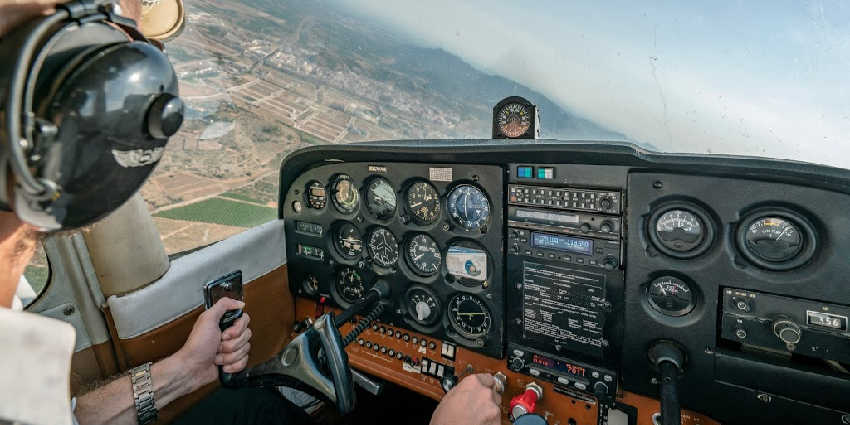
The instrument rating (IFR) is something that will eventually come along if you've been flying very long. Typically, it comes up when looking at buying an aircraft or seeking a commercial pilot career, but otherwise, some pilots may take quite a while to get their instrument rating in Maine. Though many pilots in Maine do eventually get an instrument rating, chances are learning to fly IFR in Maine now could greatly benefit your future flying.
An instrument rating will make you a better pilot, is required to get a commercial pilot certificate, and will generally lower your insurance rates. Flying on instruments in Maine will make you a better pilot. When it comes to flying on instruments, precision is the keyword. There are many different things to learn for your instrument rating, but none are more difficult and rewarding as learning to fly with precision.
Once you complete your instrument rating in Maine, you will be able to not only hit a specific altitude or descent rate but hold it. You will be more in control of your aircraft than you ever thought possible and this will surely affect your flying in general.
Perhaps you're not thinking about it right this moment, but at some point in the future, you may decide to get a commercial pilot certificate. That doesn't mean you have to run off to the airlines. There are many commercial pilots that never really get paid to fly, but it is nice to have the option.
Commercial Pilots in Maine Need an Instrument Rating to Get a Job
Maybe your company has a nice aircraft that you'd like to spend some time in or you'd occasionally like to take on a paying passenger--whatever the case, although it's not required, you're going to want an instrument rating to go along with your commercial pilot certificate.
If you wait until then to get instrument rated, you're going to have a lot of training to do. Instead, reap the benefits of learning precise flying early and you can sail through commercial pilot training when you need it.
Do You Want to Earn Your Instrument Rating IFR in Maine?
Insurance rates are generally cheaper for instrument-rated pilots. Perhaps the poorest-kept secret of the aviation insurance industry is that instrument-rated pilots enjoy rates that are generally cheaper. The increased training instrument-rated pilots take on and their increased skill pay off in lower insurance premiums. Depending on the type of aircraft you fly, this can be a very significant amount of money.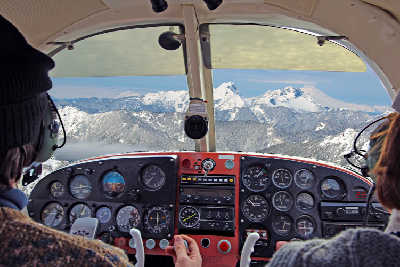
So, if you'd like to be a better pilot with lower insurance rates and you might get a commercial pilot certificate, you should definitely consider an instrument rating. Sure it may be difficult, but the sense of accomplishment and precision flying skill is more than worth it in the long run.
Legend has it that the instrument rating in Maine is the most difficult to earn of all licenses, ratings, and endorsements. And if you talk to an instrument-rated pilot, he or she will probably agree. However, the instrument rating could also be the most rewarding of all to earn, and the benefits and privileges of acquiring the rating are well worth the initial effort.
Simply stated, the instrument rating allows pilots to fly under instrument flight rules (IFR) in Maine, in instrument meteorological conditions (IMC), and in class A airspace (the airspace between 18,000 feet msl and 60,000 feet msl). IMC is loosely defined as conditions that do not meet the basic requirements of operating under visual flight rules (VFR), including ceilings less than 1000 feet above airport elevation and/or visibility less than 3 miles at the airport.
Although the instrument rating gives pilots permission to operate in less than basic VFR conditions, it's not a "license" to fly in bad weather. Prudent pilots do not launch into deadly weather just because they are instrument rated. Learn about instrument rating training.
FAA - A History of Airplane Structures Facts for Maine
In the 1920s, the use of metal in airplane construction increased. Fuselages able to carry cargo and passengers were developed. The early flying boats with their hull-type construction from the shipbuilding industry provided the blueprints for semimonocoque construction of fuselages. Truss-type designs faded. A tendency toward cleaner mono-wing designs prevailed.
Search Airline Employment Data by Month
Airlines that operate at least one aircraft with the capacity to carry combined passengers, cargo and fuel of 18,000 pounds - the payload factor - must report monthly full-time and part-time employment statistics to the Bureau of Transportation Statistics.
IFR Instrument Rating Training in Maine
Depending on your flight training goals, instrument rating training may be required, but it is a good idea regardless of your goals. There are many places to learn to fly on instruments, so what should you look for when trying to find a school? There are three basic questions that should guide you to a good choice.
What kind of aircraft are available and, after I get my instrument rating, can I rent airplanes for actual IFR flights? Most flight schools offer at least one aircraft that is certified for IFR flight. Some even have several. The question is, do they offer the kind of aircraft you need?
Are you looking for training in a new glass panel or round gauges or both? Your personal preference and goals should be considered before choosing a school. A final consideration, assuming you don't own your own aircraft, is whether the school will rent you an aircraft after you get your rating for flight into actual IMC. This is important because you will want to maintain currency and there is no substitute for actual IMC.
Will We Fly in Actual IFR During Training?
Building off of that last point, ask if you will fly actual IMC during training. There's nothing wrong with simulated instrument flight, as a matter of convenience, but it is important that you experience at least some real instrument flights. It may seem strange, but for whatever reason, some schools don't allow for training flights in actual instrument weather, which can negatively affect your training.
Will we do any night IFR flight training? Absolutely! Another thing to ask is whether you will do any flights at night. Night flying is a required element of the private pilot test standards, but it is not required for an instrument rating. This is unfortunate because as you may know, it is quite different from flying during the day.
You never know when you might need to fly on instruments at night and having the added security of a flight instructor while you learn is much preferable to learning it on your own when you get caught out after dark.
Finding the answer to these three questions should provide you with all the information you need to find a great instrument rating training program that will serve you well. A good program that offers the right aircraft, provides for currency by allowing you to fly into real IMC and offers night instrument training will provide you with a very solid foundation of instrument flying skills.
Getting an Instrument Flight Rules Rating - IFR Flying is Precise
There are two sets of rules for flying any aircraft: VFR and IFR. VFR stands for Visual Flight Rules and IFR means Instrument Flight Rules. Depending on the weather conditions a pilot may opt for one set of rules or the other.
Not long after you get your private pilot certificate, you will likely start thinking about getting an instrument rating. If you're seeking a commercial pilot career it's just the next step, but even if you're not, it should be the next step. The precision, reliability, and safety of instrument flight are a huge boon to pilots of any kind.
Ask almost any instrument-rated pilot and they'll tell you that their instrument rating was one of the most difficult things they've done. Ask them if they regret it and you're unlikely to hear anyone say, "Yes." There are a lot of things to learn, but the one that is perhaps most difficult, but most useful is the precision learning to fly instruments will impart on your flying. Getting an instrument rating will ensure that you can not only hit a specific altitude or descent rate but that you can hold it.
IFR Flying is More Reliable & IFR Flying Can Be Safer
As a result of all your hard work during your instrument rating flight training, you will be able to fly in many more kinds of weather than a regular private pilot. This may not mean much right up until it clouds upon your cross country trip and the weather isn't expected to improve for days. As a non-instrument rated pilot, you're at the mercy of the weather. As an instrument-rated pilot, chances are you can file an instrument flight plan and continue safely on your way. Providing this kind of reliability is where an instrument rating really pays off.
While the typical VFR flight isn't very risky, instrument flights are even less risky thanks to the extra sets of eyes helping you navigate through the airspace. While flight following is commonly recommended for VFR flights, air traffic control isn't obligated to provide the service. On an instrument flight, however, there are always controllers following your flight and ensuring you reach your destination safely. Should something happen, such as another aircraft popping up out of nowhere or your engine stops, the controller knows where you are and will act accordingly.
If you're seeking more precision, higher reliability, and increased safety when flying, getting an instrument rating is a great idea. If you're seeking a career in aviation, it was probably already on your to-do list, but even if you aren't it should be.
Fun Helicopter Facts for Auburn
Modern Day Military Pilot Training for Auburn: To join the military, as well as become a pilot, potential recruits must fulfill certain age requirements. Pilots in the Coast Guard must be ages 17 to 27 for active duty and 17 to 39 for reservists, while Army pilots must be between 18 and 29 for active and 18 and 35 for reservists.
Helicopter Pilot Training
Sadly, a big part of your first lesson will be practicing the most difficult helicopter maneuver: hovering. Hardly anyone who makes the effort is able to become proficient at hovering in less than 5 or 6 hours of flight training. Every one of those hours is exhausting. Much of the time is extremely frustrating.
Fun Helicopter Facts for Augusta
Modern Day Military Pilot Training for Augusta: As with other military positions, helicopter pilots may have to move frequently to any number of the United States military bases around the world.
Interesting Aviation Facts for Augusta for Augusta
There are many interesting jobs out there in the industry, out of which most are mainly related to the hobby of the professional. One such career is that of a helicopter pilot. If you love flying and are interested in aeronautics, you can consider a career as a helicopter pilot.
Fun Helicopter Facts for Bangor
Working as a military pilot requires a certain temperament to deal with often-stressful situations. Pilots must possess self-discipline, confidence and intelligence, as well as be able to make quick decisions, be able to multitask and perform under pressure.
Interesting Aviation Facts for Bangor for Bangor
A helicopter pilot has to execute tasks mainly as per the type of employer he is working for. He may work for the law enforcement, army, air force, or any commercial businesses.
Fun Helicopter Facts for Bath
All military pilots must pass a Class 1 flight physical and have perfect 20/20 vision, either corrected or uncorrected. Pilots must also have normal color perception, depth perception and field of vision. Additionally, Coast Guard pilots must have good dental health with no cavities.
Creech AFB Nevada is an Air Force operated base and among the most important fighters in the so called War on Terror.
Interesting Aviation Facts for Bath for Bath
If he is working in a law enforcement agency, he has to carry out air surveillance on subjects which are beyond street-level chase. Since the route is not predetermined, he has to make necessary decisions regarding the flight. He might even be required to communicate with the ground crew regarding the status of suspects.
Helicopter Factoid for Biddefords for Biddeford
Modern Day Military Pilot Training for Biddeford: Because of the physical nature of the job, military helicopter pilots must fulfill a number of requirements. Pilots should be in good physical health and be able to complete a series of fitness tests, including a certain number of pushups and situps in one minute and a 1.5-mile run in a certain time.
Interesting Aviation Facts for Biddeford for Biddeford
A commercial helicopter pilot can provide services in agro-based companies, private airlines, or even for a TV station. If working for an agriculture company, he may need to fly the chopper over the fields in order to spray pesticides for crop growth and disinfection.
Helicopter Factoid for Brewers for Brewer
Helicopter pilots who want to make flying a career must move on to earn a commercial helicopter pilot license. A commercial license requires the student to be at least 18 years old, hold a private helicopter pilot license and FAA medical certificate and complete ground instruction.
Aviation History for Brewer and Fun Facts for Brewer
Flight Instructor Facts for Brewer A flight instructor is an individual who teaches people to fly aircraft. Regulations about flying and instruction are created and enforced by the Federal Aviation Administration (FAA).
Helicopter Factoid for Brunswicks for Brunswick
Helicopter pilots work in a variety of different industries and fulfill a number of different roles, including emergency medical services, law enforcement, agriculture, executive transport and sightseeing. Career paths for a helicopter pilot can take him into other industries as well, such as firefighting, search and rescue, logging and instructing other pilots.
Helicopter Fun Facts for Brunswick
If employed by a private airline, he may need to fly passengers for pleasure trips to distant places. Likewise, if employed by a medical facility, he is needed to transport patients to a nearby hospital in the least possible time. Those working for TV stations, need to take the chopper to places where there has been an incident worth recording.
Helicopter Factoid for Caribous for Caribou
Following all training hours, the student must pass the FAA written knowledge, oral and practical tests. Students need to complete 20 hours dual flight training, including one dual cross-county and one solo cross-country flight and 10 hours of instrument training. The student must also do at least 10 hours of solo flight training and 100 hours as a pilot-in-command.
Helicopter Fun Facts for Caribou
Be it any field of work, a chopper pilot necessarily requires the skill to take precise decisions in case of some malfunction in the helicopter when airborne.
Helicopter Factoid for Chalmettes for Chalmette
Helicopter pilots do not need to have a college degree to fly helicopters as a hobby, but those choosing a career as a pilot do need at least some post-secondary schooling. Most employers require pilots to have at least an associate's degree, with many preferring pilots to have a bachelor's degree.
Helicopter Fun Facts for Chalmette
If you are planning to become a commercial helicopter pilot, you need to possess a four-year degree, as required by most employers. The next step is to complete the certification program administered by the Federal Aviation Administration (FAA).
Helicopter Factoid for Ellsworths for Ellsworth
Life Quotes: “I am nothing special, of this I am sure. I am a common man with common thoughts and I've led a common life. There are no monuments dedicated to me and my name will soon be forgotten, but I've loved another with all my heart and soul, and to me, this has always been enough..” by Nicholas Sparks (bestselling author)
Helicopter Fun Facts for Ellsworth
This licensing program comprises classroom training, in-flight assignments, and a test. Those in specific job areas like air force or law enforcement will have to meet requirements set by the respective authorities. Let us take a look at a helicopter pilot salary.
Helicopter Factoid for Lewistons for Lewiston
If you are thinking of working in the commercial industry, you need to possess the helicopter pilot's license from the FAA. Helicopter pilot careers in law enforcement and the air force can include rigorous trainings as per the required standards.
Helicopter Fun Facts for Lewiston
Annual Salary as per Helicopter Industry - Military or Armed Forces: $57,000 - $92,500, Transportation: $52,000 - $72,000, Commercial Aviation: $53,000 - $87,000, Government Agencies: $58,000 - $94,500
Helicopter Factoid for Old Orchard Beachs for Old Orchard Beach
Sikorsky Helicopters - S - 300 C: The S-300C helicopter is known as one of the finest and most versatile piston-engine rotorcraft. Through a program of continuous design evolution and innovation, the S-300C model is even better than ever. Its maneuverability, responsive handling and outstanding range and endurance make the S-300C model ideal for a broad range of roles.
Helicopter Fun Facts for Old Orchard Beach
Annual Salary for Helicopter Pilots as per State: Florida: $55,887 - $96,534, California: $61,042 - $93,506, Texas: $55,462 - $85,762, Louisiana: $53,805 - $85,000
Helicopter History for Old Town
The minimum age requirement for applying for a helicopter pilot's license is 17 years. In some parts of the world, it can be 18 or 19 too. For the safety of people in the helicopter, it is a must for the pilot to have a good vision to determine risks in advance. It is essential to have a 20/40 vision in both eyes to get the license.
Helicopter Fun Facts for Old Town
If you are thinking of working in the commercial industry, you need to possess the helicopter pilot's license from the FAA. Helicopter pilot careers in law enforcement and the air force can include rigorous trainings as per the required standards.
Fun Helicopter Facts for Orono
US Army Helicopter Pilots: warrant officers are put in army flight school to become the helicopter pilots. So even after high school, you can start your career and head toward your dream of being a pilot.
Helicopter History for Orono
Flight Instructor Facts for Orono When a pilot decides that he would like to instruct others to fly he must become a Certified Flight Instructor (CFI). To obtain his CFI rating, a pilot will already hold his commercial pilot's license and a second class medical.
Fun Helicopter Facts for Portland
US Army Helicopter Pilot Criteria: You must be a citizen of US. If a candidate is not a US citizen, he must apply for the same, at the earliest. Remember, however, five years of minimum residential stay in the country is important for a citizenship.
Helicopter History for Portland
US Army Helicopter Pilots: Being an army helicopter pilot is an exciting and equally challenging job. Making a career in this field requires planning and tremendous efforts.
Fun Helicopter Facts for Presque Isle
US Army Helicopter Pilot Criteria: You must be at least 18 years of age while joining the army and less than or equal to 33 years of age before you appear in front of military board for flight school programs.
Helicopter History for Presque Isle
Entry-level helicopter pilots can earn anything between USD 25,000 to USD 35,000 per year if you become a flight instructor. If you are a pilot in the police department or in the law enforcement agency, then you may draw anything between USD 40,000 to USD 50,000 per year. This can grow very fast after you complete your training and probation period in your company.
Fun Helicopter Facts for Rockland
US Army Helicopter Pilot Criteria: you'll have to appear for Flight Aptitude Selection Test, Armed Forces Vocational Aptitude Battery test and score 90 and 110 respectively, to get selected.
Helicopter History for Rockland
US Army Helicopter Pilots: Being an army helicopter pilot is an exciting and equally challenging job. Making a career in this field requires planning and tremendous efforts.
Fun Helicopter Facts for Saco
US Army Helicopter Pilot Criteria: you're required to go for rigorous medical check ups. Ensure before you even think of army that your height, weight and vision are equivalent to the standard's set by the army. This process needs to be completed before you're declared eligible for joining a flight school.
Helicopter History for Saco
Language skills are also a must for a helicopter pilot and they are also tested in the entrance test. To work as a professional helicopter pilot, you need to complete the minimum flying hours along with a flight instructor and in the solo format.
Family Quotes: “If you want your children to be intelligent, read them fairy tales. If you want them to be more intelligent, read them more fairy tales.” by Albert Einstein (genius, scientist, author)
Fun Helicopter Facts for Sanford
US Army Helicopter Pilot Criteria: Once you're done with all formalities and eventually selected, you'll be required to attend a year or less duration training. In this helicopter pilot training program, you'll be provided training in two aspects, warrant officer training program and flying programs.
Helicopter History for Sanford
Language skills are also a must for a helicopter pilot and they are also tested in the entrance test. To work as a professional helicopter pilot, you need to complete the minimum flying hours along with a flight instructor and in the solo format.
Life Quotes: “You have brains in your head. You have feet in your shoes. You can steer yourself any direction you choose. You're on your own. And you know what you know. And YOU are the one who'll decide where to go...”― Dr. Seuss
Fun Helicopter Facts for Skowhegan
Military Helicopters: Military helicopters have different modular designs. These designs are based on the type of function they have within the Armed Forces. The following article will serve as a guide to different types of military helicopters.
Helicopter History for Skowhegan
Aspiring helicopter pilots also need to clear a written test, personal interview and flying test to get absorbed as entry-level officers in reputed organizations.
Fun Helicopter Facts for South Portland
Robinson Helicopters: Equipped with a Lycoming O-540 carbureted engine, the R44 Raven I offers a balance between performance and affordability. Raven I features carburetor heat assist that enhances safety and reduces pilot workload by automatically adjusting carburetor heat in response to power changes by the pilot.
Helicopter History for South Portland
Air Force Helicopter Pilot: You should fulfill the minimum height and weight requirements and should have a good eyesight and ability to identify colors. Apart from physical fitness, you also need to concentrate on your formal education.
Fun Helicopter Facts for Topsham
Robinson Helicopters: Robinson's R44 Clippers are Ravens equipped with seaworthy floats and corrosion protection for over-water operations. The Clipper's low center-of-gravity provides excellent stability on water, and the float design enables safe emergency water landings and takeoffs. Special ground-handling wheels are included with each Clipper.
Helicopter Fun Facts for Topsham
US Army Helicopter Pilots: There is no denying that flying aircraft is one of the most coveted careers in the US. You have to be very sure if you wish to become an army helicopter pilot as it is not only about the profession but also doing your bit for a larger cause, serving the US army and hence your country.
Fun Helicopter Facts for Waterville
Robinson Helicopters: The R44 IFR Trainer is a R44 Raven I or II with a specifically designed instrument flight training package to prepare and qualify IFR pilots at a fraction of the cost associated with larger, more expensive instrument-equipped helicopters, but with the same high-quality equipment.
Helicopter Fun Facts for Waterville
Military Helicopters: One of the most flexible and adaptable weapons system in the world is the helicopter. These mechanical beasts for flying are also known as choppers informally. They are found to be very handy during war as well as take up new roles during peace.
Fun Helicopter Facts for Westbrook
Unusual But Interesting Helicopter Facts in Westbrook Light Turbine Helicopters - The light turbine-powered helicopter series incorporates the best of two worlds: legacy of proven flight design originated in the 269 Series and state-of-the art turbine technology.
Helicopter Fun Facts for Westbrook
Military Helicopters: There are different types of military helicopters that have different roles to play. We may often come across chopper names such as the SH-60B Seahawk Wood, Comanche RAH66, Chinook CH47, etc.
Fun Helicopter Facts for Winslow
Sikorsky Helicopters - Light Turbine Helicopters: Dating back to 1956 with the first TH-55A U.S. Army , the 269 Series includes more than 3,750 aircraft operating in more than 70 countries with more than 20 million total flight hours. The turbine engine series was advanced with the S-333TM helicopter certified in 2000.
Helicopter Fun Facts for Winslow
Military Helicopters: There are different helicopters used by the military forces around the world. These choppers are classified according to the role they play in the armed forces. Let us have a look at the helicopter types according to their functions in the military.