IFR Training in Maryland
Cities in Maryland with Aviation Schools:
- Annapolis
- Aspen Hill
- Baltimore
- Bel Air North
- Bel Air South
- Bethesda
- Bowie
- Carney
- Catonsville
- Chillum
- Clinton
- College Park
- Columbia
- Crofton
- Dundalk
- Edgewood
- Eldersburg
- Ellicott City
- Essex
- Frederick
- Gaithersburg
- Germantown
- Glen Burnie
- Hagerstown
- Ilchester
- Laurel
- Lochearn
- Milford Mill
- Montgomery Village
- North Bethesda
- Odenton
- Olney
- Owings Mills
- Parkville
- Pasadena
- Perry Hall
- Pikesville
- Potomac
- Randallstown
- Reisterstown
- Rockville
- Salisbury
- Severn
- Severna Park
- Silver Spring
- South Laurel
- Towson
- Waldorf
- Wheaton
- Woodlawn
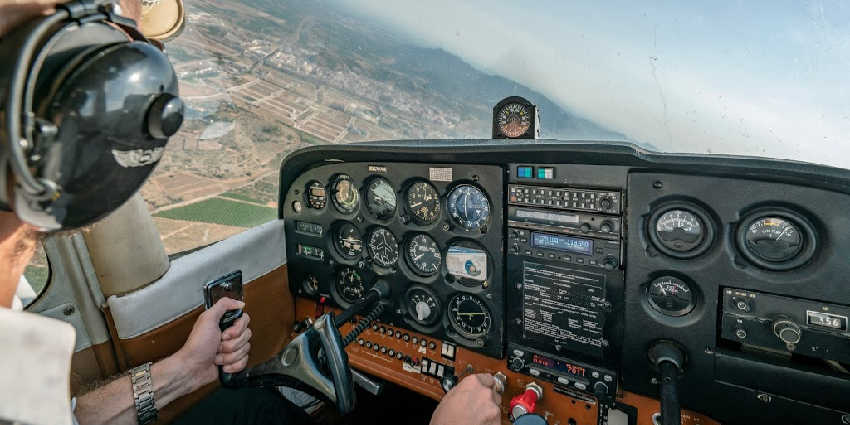
Instrument Rating Flight Training Maryland
The instrument rating (IFR) is something that will eventually come along if you've been flying very long. Typically, it comes up when looking at buying an aircraft or seeking a commercial pilot career, but otherwise, some pilots may take quite a while to get their instrument rating in Maryland. Though many pilots in Maryland do eventually get an instrument rating, chances are learning to fly IFR in Maryland now could greatly benefit your future flying.
An instrument rating will make you a better pilot, is required to get a commercial pilot certificate, and will generally lower your insurance rates. Flying on instruments in Maryland will make you a better pilot. When it comes to flying on instruments, precision is the keyword. There are many different things to learn for your instrument rating, but none are more difficult and rewarding as learning to fly with precision.
Once you complete your instrument rating in Maryland, you will be able to not only hit a specific altitude or descent rate but hold it. You will be more in control of your aircraft than you ever thought possible and this will surely affect your flying in general.
Perhaps you're not thinking about it right this moment, but at some point in the future, you may decide to get a commercial pilot certificate. That doesn't mean you have to run off to the airlines. There are many commercial pilots that never really get paid to fly, but it is nice to have the option.
Commercial Pilots in Maryland Need an Instrument Rating to Get a Job
Maybe your company has a nice aircraft that you'd like to spend some time in or you'd occasionally like to take on a paying passenger--whatever the case, although it's not required, you're going to want an instrument rating to go along with your commercial pilot certificate.
If you wait until then to get instrument rated, you're going to have a lot of training to do. Instead, reap the benefits of learning precise flying early and you can sail through commercial pilot training when you need it.
Do You Want to Earn Your Instrument Rating IFR in Maryland?
Insurance rates are generally cheaper for instrument-rated pilots. Perhaps the poorest-kept secret of the aviation insurance industry is that instrument-rated pilots enjoy rates that are generally cheaper. The increased training instrument-rated pilots take on and their increased skill pay off in lower insurance premiums. Depending on the type of aircraft you fly, this can be a very significant amount of money.
So, if you'd like to be a better pilot with lower insurance rates and you might get a commercial pilot certificate, you should definitely consider an instrument rating. Sure it may be difficult, but the sense of accomplishment and precision flying skill is more than worth it in the long run.
Legend has it that the instrument rating in Maryland is the most difficult to earn of all licenses, ratings, and endorsements. And if you talk to an instrument-rated pilot, he or she will probably agree. However, the instrument rating could also be the most rewarding of all to earn, and the benefits and privileges of acquiring the rating are well worth the initial effort.
Simply stated, the instrument rating allows pilots to fly under instrument flight rules (IFR) in Maryland, in instrument meteorological conditions (IMC), and in class A airspace (the airspace between 18,000 feet msl and 60,000 feet msl). IMC is loosely defined as conditions that do not meet the basic requirements of operating under visual flight rules (VFR), including ceilings less than 1000 feet above airport elevation and/or visibility less than 3 miles at the airport.
Although the instrument rating gives pilots permission to operate in less than basic VFR conditions, it's not a "license" to fly in bad weather. Prudent pilots do not launch into deadly weather just because they are instrument rated. Learn about instrument rating training.
FAA - A History of Airplane Structures Facts for Maryland
Into the 1930s, all-metal aircraft accompanied new lighter and more powerful engines. Larger semimonocoque fuselages were complimented with stress-skin wing designs. Fewer truss and fabric aircraft were built. World War II (WWII) brought about a myriad of airplane designs using all metal technology. Deep fuel-carrying wings were the norm, but the desire for higher flight speeds prompted the development of thin-winged aircraft in which fuel was carried in the fuselage. The first composite structure aircraft, the De Havilland Mosquito, used a balsa wood sandwich material in the construction of the fuselage. The fiberglass radome was also developed during this period.
Aerodynamics and the Laws of Physics
The law of conservation of energy states that energy may neither be created nor destroyed. Motion is the act or process of changing place or position. An object may be in motion with respect to one object and motionless with respect to another. For example, a person sitting quietly in an aircraft flying at 200 knots is at rest or motionless with respect to the aircraft; however, the person and the aircraft are in motion with respect to the air and to the earth.
IFR Instrument Rating Training in Maryland
Depending on your flight training goals, instrument rating training may be required, but it is a good idea regardless of your goals. There are many places to learn to fly on instruments, so what should you look for when trying to find a school? There are three basic questions that should guide you to a good choice.
What kind of aircraft are available and, after I get my instrument rating, can I rent airplanes for actual IFR flights? Most flight schools offer at least one aircraft that is certified for IFR flight. Some even have several. The question is, do they offer the kind of aircraft you need?
Are you looking for training in a new glass panel or round gauges or both? Your personal preference and goals should be considered before choosing a school. A final consideration, assuming you don't own your own aircraft, is whether the school will rent you an aircraft after you get your rating for flight into actual IMC. This is important because you will want to maintain currency and there is no substitute for actual IMC.
Will We Fly in Actual IFR During Training?
Building off of that last point, ask if you will fly actual IMC during training. There's nothing wrong with simulated instrument flight, as a matter of convenience, but it is important that you experience at least some real instrument flights. It may seem strange, but for whatever reason, some schools don't allow for training flights in actual instrument weather, which can negatively affect your training.
Will we do any night IFR flight training? Absolutely! Another thing to ask is whether you will do any flights at night. Night flying is a required element of the private pilot test standards, but it is not required for an instrument rating. This is unfortunate because as you may know, it is quite different from flying during the day.
You never know when you might need to fly on instruments at night and having the added security of a flight instructor while you learn is much preferable to learning it on your own when you get caught out after dark.
Finding the answer to these three questions should provide you with all the information you need to find a great instrument rating training program that will serve you well. A good program that offers the right aircraft, provides for currency by allowing you to fly into real IMC and offers night instrument training will provide you with a very solid foundation of instrument flying skills.
Getting an Instrument Flight Rules Rating - IFR Flying is Precise
There are two sets of rules for flying any aircraft: VFR and IFR. VFR stands for Visual Flight Rules and IFR means Instrument Flight Rules. Depending on the weather conditions a pilot may opt for one set of rules or the other.
Not long after you get your private pilot certificate, you will likely start thinking about getting an instrument rating. If you're seeking a commercial pilot career it's just the next step, but even if you're not, it should be the next step. The precision, reliability, and safety of instrument flight are a huge boon to pilots of any kind.
Ask almost any instrument-rated pilot and they'll tell you that their instrument rating was one of the most difficult things they've done. Ask them if they regret it and you're unlikely to hear anyone say, "Yes." There are a lot of things to learn, but the one that is perhaps most difficult, but most useful is the precision learning to fly instruments will impart on your flying. Getting an instrument rating will ensure that you can not only hit a specific altitude or descent rate but that you can hold it.
IFR Flying is More Reliable & IFR Flying Can Be Safer
As a result of all your hard work during your instrument rating flight training, you will be able to fly in many more kinds of weather than a regular private pilot. This may not mean much right up until it clouds upon your cross country trip and the weather isn't expected to improve for days. As a non-instrument rated pilot, you're at the mercy of the weather. As an instrument-rated pilot, chances are you can file an instrument flight plan and continue safely on your way. Providing this kind of reliability is where an instrument rating really pays off.
While the typical VFR flight isn't very risky, instrument flights are even less risky thanks to the extra sets of eyes helping you navigate through the airspace. While flight following is commonly recommended for VFR flights, air traffic control isn't obligated to provide the service. On an instrument flight, however, there are always controllers following your flight and ensuring you reach your destination safely. Should something happen, such as another aircraft popping up out of nowhere or your engine stops, the controller knows where you are and will act accordingly.
If you're seeking more precision, higher reliability, and increased safety when flying, getting an instrument rating is a great idea. If you're seeking a career in aviation, it was probably already on your to-do list, but even if you aren't it should be.
Aviation Training History and Facts for Columbia
Heliports: Rural heliports often house helicopters used to spray agricultural fields where a standard crop-dusting airplane may not be able to operate. County sheriff's police as well as search and rescue crews may also base helicopters out of one of these locations.
Aviation Factoids and Figures and Fun for Columbia
Robison Helicopters: Robinson's R44 Raven Series Helicopters provide excellent reliability, responsive handling, and altitude performance, making the R44 the ideal helicopter for private, business, and utility applications.
Aviation Training History and Facts for Ellicott City
Helicopter Jobs: An advantage to flying for the military is the chance to earn free and advanced training. These jobs can, of course, be dangerous, especially when flying near combat zones. Helicopter pilot jobs with law enforcement agencies typically require pilots to also be fully-trained police officers.
Fun Helicopter and Airplane Facts for Ellicott City
The R44 IFR Trainer is a R44 Raven I or II with a specifically designed instrument flight training package to prepare and qualify IFR pilots at a fraction of the cost associated with larger, more expensive instrument-equipped helicopters, but with the same high-quality equipment.
Aviation Training History and Facts for Frederick
Helicopter Jobs: Helicopter pilots must successfully complete a flight training program and log a certain number of hours flying before beginning any job.
Helicopter Jobs: helicopter pilot jobs may entail lifting heavy equipment to work sites. For example, pilots that work with off-shore oil rigs are used to transport workers and equipment. These workers may be required to stay on-site for several days so they are readily available for transporting.
Fun Helicopter and Airplane Facts for Frederick
Unusual But Interesting Helicopter Facts in Frederick Light Turbine Helicopters - The light turbine-powered helicopter series incorporates the best of two worlds: legacy of proven flight design originated in the 269 Series and state-of-the art turbine technology.
Fun Helicopter and Airplane Facts for Gaithersburg
Becoming a commercial helicopter pilot may require additional training, according to an employer's requirements. The amount of time it takes to complete training depends on the student's available time and money, as well as scheduling constraints of the flight school.
Fun Helicopter and Airplane Facts for Gaithersburg
Sikorsky Helicopters - Light Turbine Helicopters: Now the S-434TM helicopter will soon take to the sky. The light turbine series is a modern, fast, progressive helicopter line that will keep you flying for many decades to come.
Aviation Training History and Facts for Germantown
Helicopter Training Facts: Commercial uses for helicopters include flying passengers on sightseeing trips, assisting in search-and-rescue operations and patrolling oil pipelines, to name just a few examples. If you want to become a commercial helicopter pilot, first you typically must earn your private pilot's license, then fly additional hours to become a commercial helicopter pilot.
Aviation Factoids and Figures and Fun for Germantown
Robinson Helicopters: The high performance R44 Raven II has a Lycoming IO-540 fuel-injected, angle-valve, tuned-induction engine, which eliminates the need for carburetor heat. The standard 28-volt electrical system ensures good starting performance in hot or cold weather, and provides additional electrical power for optional equipment.
Fun Helicopter and Airplane Facts for Glen Burnie
Helicopter Jobs: Some helicopter pilots land high-flying careers by working with television programs or motion picture production companies. Others spend most of their work day with their feet on the ground by working as flight instructors.
Fun Helicopter and Airplane Facts for Glen Burnie
Sikorsky Helicopters - Light Turbine Helicopters: Dating back to 1956 with the first TH-55A U.S. Army , the 269 Series includes more than 3,750 aircraft operating in more than 70 countries with more than 20 million total flight hours. The turbine engine series was advanced with the S-333TM helicopter certified in 2000.
Fun Helicopter and Airplane Facts for Rockville
Helicopter Flight Training for Rockville During this period, the instructor will have the students ride along on a helicopter flight and learn the many capabilities of the aircraft. As the students progress through training, the helicopter flight instructor will allow the students to take over control of the craft and attempt to fly.
Fun Helicopter and Airplane Facts for Rockville
Unusual But Interesting Helicopter Facts in Rockville The S-333 helicopter has set the standard for light turbine powered helicopters. It has the power, speed and hover performance to meet a broad spectrum of operational requirements in missions ranging from airborne law enforcement, flight training, power and pipeline patrol to personal transportation. Best of all, the S-333 helicopter provides lower direct operating cost than most turbine powered helicopters.
Aviation Training History and Facts for Silver Spring
Helicopter Training Facts: With enough hours and experience, you can look for jobs with charter companies, tourism and sightseeing organizations and other places that use helicopters in their operations. Some employers might also expect their pilots to have some level of college education.
Fun Helicopter and Airplane Facts for Silver Spring
Robinson Helicopters: Equipped with a Lycoming O-540 carbureted engine, the R44 Raven I offers a balance between performance and affordability. Raven I features carburetor heat assist that enhances safety and reduces pilot workload by automatically adjusting carburetor heat in response to power changes by the pilot.
Aviation Training History and Facts for Waldorf
Helicopter Pilot Jobs for Waldorf Specialized training, based on the kind of aircraft the pilot flies, is another requirement. Helicopter pilots are also required to have and maintain excellent physical and mental health.
Fun Helicopter and Airplane Facts for Waldorf
Robinson Helicopters: Robinson's R44 Clippers are Ravens equipped with seaworthy floats and corrosion protection for over-water operations. The Clipper's low center-of-gravity provides excellent stability on water, and the float design enables safe emergency water landings and takeoffs. Special ground-handling wheels are included with each Clipper.