IFR Training in Mississippi
Cities in Mississippi with Aviation Schools:
- Abbeville
- Alligator
- Batesville
- Bay Saint Louis
- Biloxi
- Booneville
- Brandon
- Brookhaven
- Byhalia
- Carriere
- Centreville
- Clarksdale
- Cleveland
- Clinton
- Columbus
- Diamondhead
- Flowood
- Greenville
- Greenwood
- Grenada
- Gulfport
- Hattiesburg
- Hernando
- Holly Springs
- Horn Lake
- Jackson
- Laurel
- Long Beach
- Lumberton
- Madison
- Marks
- Mccomb
- Meridian
- Moss Point
- Natchez
- New Albany
- New Augusta
- Olive Branch
- Southaven
- Tupelo
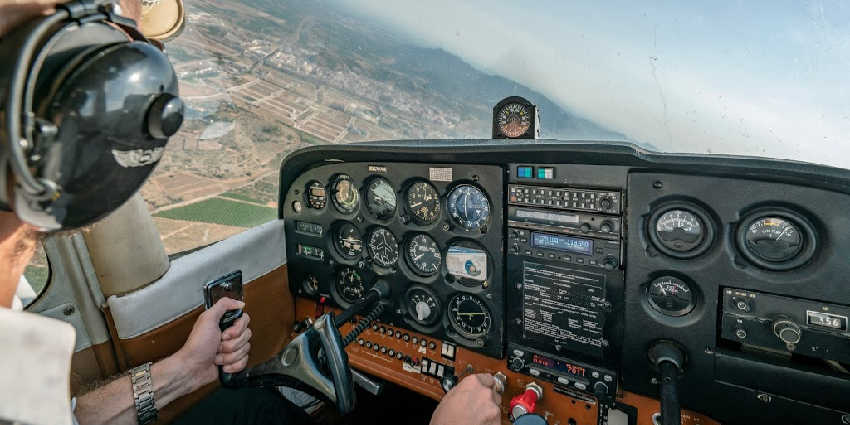
Instrument Rating Flight Training Mississippi
The instrument rating (IFR) is something that will eventually come along if you've been flying very long. Typically, it comes up when looking at buying an aircraft or seeking a commercial pilot career, but otherwise, some pilots may take quite a while to get their instrument rating in Mississippi. Though many pilots in Mississippi do eventually get an instrument rating, chances are learning to fly IFR in Mississippi now could greatly benefit your future flying.
An instrument rating will make you a better pilot, is required to get a commercial pilot certificate, and will generally lower your insurance rates. Flying on instruments in Mississippi will make you a better pilot. When it comes to flying on instruments, precision is the keyword. There are many different things to learn for your instrument rating, but none are more difficult and rewarding as learning to fly with precision.
Once you complete your instrument rating in Mississippi, you will be able to not only hit a specific altitude or descent rate but hold it. You will be more in control of your aircraft than you ever thought possible and this will surely affect your flying in general.
Perhaps you're not thinking about it right this moment, but at some point in the future, you may decide to get a commercial pilot certificate. That doesn't mean you have to run off to the airlines. There are many commercial pilots that never really get paid to fly, but it is nice to have the option.
Commercial Pilots in Mississippi Need an Instrument Rating to Get a Job
Maybe your company has a nice aircraft that you'd like to spend some time in or you'd occasionally like to take on a paying passenger--whatever the case, although it's not required, you're going to want an instrument rating to go along with your commercial pilot certificate.
If you wait until then to get instrument rated, you're going to have a lot of training to do. Instead, reap the benefits of learning precise flying early and you can sail through commercial pilot training when you need it.
Do You Want to Earn Your Instrument Rating IFR in Mississippi?
Insurance rates are generally cheaper for instrument-rated pilots. Perhaps the poorest-kept secret of the aviation insurance industry is that instrument-rated pilots enjoy rates that are generally cheaper. The increased training instrument-rated pilots take on and their increased skill pay off in lower insurance premiums. Depending on the type of aircraft you fly, this can be a very significant amount of money.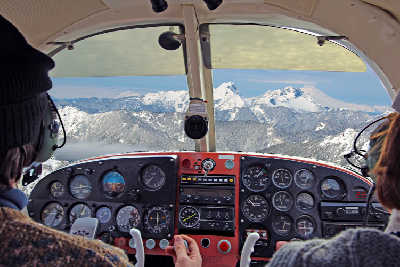
So, if you'd like to be a better pilot with lower insurance rates and you might get a commercial pilot certificate, you should definitely consider an instrument rating. Sure it may be difficult, but the sense of accomplishment and precision flying skill is more than worth it in the long run.
Legend has it that the instrument rating in Mississippi is the most difficult to earn of all licenses, ratings, and endorsements. And if you talk to an instrument-rated pilot, he or she will probably agree. However, the instrument rating could also be the most rewarding of all to earn, and the benefits and privileges of acquiring the rating are well worth the initial effort.
Simply stated, the instrument rating allows pilots to fly under instrument flight rules (IFR) in Mississippi, in instrument meteorological conditions (IMC), and in class A airspace (the airspace between 18,000 feet msl and 60,000 feet msl). IMC is loosely defined as conditions that do not meet the basic requirements of operating under visual flight rules (VFR), including ceilings less than 1000 feet above airport elevation and/or visibility less than 3 miles at the airport.
Although the instrument rating gives pilots permission to operate in less than basic VFR conditions, it's not a "license" to fly in bad weather. Prudent pilots do not launch into deadly weather just because they are instrument rated. Learn about instrument rating training.
FAA - A History of Airplane Structures Facts for Mississippi
Many airframe structures are made of more than 50 percent advanced composites, with some airframes approaching 100 percent. The term “very light jet” (VLJ) has come to describe a new generation of jet aircraft made almost entirely of advanced composite materials. [Figure 1-10] It is possible that non-composite aluminum aircraft structures will become obsolete as did the methods and materials of construction used by Cayley, Lilienthal, and the Wright Brothers.
Newton's Law of Motion
According to Newton’s law, since air has mass, it is a body. When an aircraft is on the ground with its engines off, inertia keeps the aircraft at rest. An aircraft is moved from its state of rest by the thrust force created by a propeller, or by the expanding exhaust, or both. When an aircraft is flying at uniform speed in a straight line, inertia tends to keep the aircraft moving. Some external force is required to change the aircraft from its path of flight.
IFR Instrument Rating Training in Mississippi
Depending on your flight training goals, instrument rating training may be required, but it is a good idea regardless of your goals. There are many places to learn to fly on instruments, so what should you look for when trying to find a school? There are three basic questions that should guide you to a good choice.
What kind of aircraft are available and, after I get my instrument rating, can I rent airplanes for actual IFR flights? Most flight schools offer at least one aircraft that is certified for IFR flight. Some even have several. The question is, do they offer the kind of aircraft you need?
Are you looking for training in a new glass panel or round gauges or both? Your personal preference and goals should be considered before choosing a school. A final consideration, assuming you don't own your own aircraft, is whether the school will rent you an aircraft after you get your rating for flight into actual IMC. This is important because you will want to maintain currency and there is no substitute for actual IMC.
Will We Fly in Actual IFR During Training?
Building off of that last point, ask if you will fly actual IMC during training. There's nothing wrong with simulated instrument flight, as a matter of convenience, but it is important that you experience at least some real instrument flights. It may seem strange, but for whatever reason, some schools don't allow for training flights in actual instrument weather, which can negatively affect your training.
Will we do any night IFR flight training? Absolutely! Another thing to ask is whether you will do any flights at night. Night flying is a required element of the private pilot test standards, but it is not required for an instrument rating. This is unfortunate because as you may know, it is quite different from flying during the day.
You never know when you might need to fly on instruments at night and having the added security of a flight instructor while you learn is much preferable to learning it on your own when you get caught out after dark.
Finding the answer to these three questions should provide you with all the information you need to find a great instrument rating training program that will serve you well. A good program that offers the right aircraft, provides for currency by allowing you to fly into real IMC and offers night instrument training will provide you with a very solid foundation of instrument flying skills.
Getting an Instrument Flight Rules Rating - IFR Flying is Precise
There are two sets of rules for flying any aircraft: VFR and IFR. VFR stands for Visual Flight Rules and IFR means Instrument Flight Rules. Depending on the weather conditions a pilot may opt for one set of rules or the other.
Not long after you get your private pilot certificate, you will likely start thinking about getting an instrument rating. If you're seeking a commercial pilot career it's just the next step, but even if you're not, it should be the next step. The precision, reliability, and safety of instrument flight are a huge boon to pilots of any kind.
Ask almost any instrument-rated pilot and they'll tell you that their instrument rating was one of the most difficult things they've done. Ask them if they regret it and you're unlikely to hear anyone say, "Yes." There are a lot of things to learn, but the one that is perhaps most difficult, but most useful is the precision learning to fly instruments will impart on your flying. Getting an instrument rating will ensure that you can not only hit a specific altitude or descent rate but that you can hold it.
IFR Flying is More Reliable & IFR Flying Can Be Safer
As a result of all your hard work during your instrument rating flight training, you will be able to fly in many more kinds of weather than a regular private pilot. This may not mean much right up until it clouds upon your cross country trip and the weather isn't expected to improve for days. As a non-instrument rated pilot, you're at the mercy of the weather. As an instrument-rated pilot, chances are you can file an instrument flight plan and continue safely on your way. Providing this kind of reliability is where an instrument rating really pays off.
While the typical VFR flight isn't very risky, instrument flights are even less risky thanks to the extra sets of eyes helping you navigate through the airspace. While flight following is commonly recommended for VFR flights, air traffic control isn't obligated to provide the service. On an instrument flight, however, there are always controllers following your flight and ensuring you reach your destination safely. Should something happen, such as another aircraft popping up out of nowhere or your engine stops, the controller knows where you are and will act accordingly.
If you're seeking more precision, higher reliability, and increased safety when flying, getting an instrument rating is a great idea. If you're seeking a career in aviation, it was probably already on your to-do list, but even if you aren't it should be.
Interesting Helicopter and Fixed-wing Facts for Biloxi
There are over 3 million people in the air on planes at any one time. The worlds first flying car arrives in 2012. Called the Terrafugia it costs $194,000
The first reference to a rotor system is credited to inventor Leonardo da Vinci, who designed an ‘aerial screw’ in 1480. No full-scale variant was constructed during his lifetime.
Fun Helicopter and Airplane Facts for Biloxi
The Germans used helicopters for artillery spotting on the Russian front in WWII. The Germans also built and perfected a rotor-kite (helicopter with no engine) that was towed behind a U-Boat to increase the range at which targets could be spotted. (Since it had no power, there was no torque, and no need for a tailrotor.)
Fun Helicopter and Airplane Facts for Greenville
Become a commercial helicopter pilot: Enroll in a college and earn a degree. Air ambulance companies wont employ you as a pilot unless you have at least two years, and a four-year degree is preferable. Choose a major such as math, physics, aeronautical engineering or English.
FAA - A History of Aircraft Structures Factoid
There are five major stresses to which all aircraft are subjected: Tension. Tension is the stress that resists a force that tends to pull something apart. [Figure 1-14A] The engine pulls the aircraft forward, but air resistance tries to hold it back. The result is tension, which stretches the aircraft. The tensile strength of a material is measured in pounds per square inch (psi) and is calculated by dividing the load (in pounds) required to pull the material apart by its cross-sectional area (in square inches).
Fun Helicopter and Airplane Facts for Greenville
There are more than 11,000 civil helicopters operating just in the U.S. and more than 15,000 civil helicopters operating in more than 157 other countries around the world.
Many helicopters use a tail rotor, an exposed blade or ducted fan mounted on the end of the tail boom typically seen on these craft. Another means of counteracting torque entails installing two rotors, attached to the same engine but rotating in opposite directions, while a third, more space-efficient design features twin rotors that are enmeshed, something like an egg beater.
Fun Helicopter and Airplane Facts for Gulfport
How to Select a Helicopter Instructor: It's worth your while to select a good one. That said, keep in mind that full time instructors often move on to other flying jobs as they reach 1,000 to 2,000 hours of experience. There is no guarentee that the instructor won't leave part way through your training, so select a school you can live with if the instructor of choice leaves.
Fun Helicopter and Airplane Facts for Gulfport
Rotorway Helicopters: The A600 Talon is the first of a new generation of RotorWay machines, built on a tradition of delivering on our promises, said CEO Grant Norwitz, as the machine went through its paces for the cameras early in the Arizona morning of the fifth of July.
Interesting Helicopter and Fixed-wing Facts for Hattiesburg
The airline industry has currently made a net loss of $31 billion dollars since 1940. The average profit per seat on a 1 hour flight is $2.20. In 1940 to fly London New York it cost 1 years wages. Today it costs the wage of working only Monday & Tuesday.
Aviation Factoids and Figures and Fun for Hattiesburg
The only difference between God and pilots is that God does not think he is a pilot. - From: Dave English's Great Quotations on Flight
Rotorway Helicopters: The useful load is 535 pounds, including a 100-pound luggage compartment. Economy cruise is a practical 90mph and fast long-distance cruise has already been demonstrated at 100 plus, with the doors off! The landing gear is 10 inches wider, 10 inches longer, and 7 higher than its smaller predecessor the Exec 162. This enables improvements in strength and stability, while offering greater accessibility underneath for the optional accessory luggage pod.
Fun Helicopter and Airplane Facts for Horn Lake
Become a commercial helicopter pilot: Enroll in a college and earn a degree. Air ambulance companies wont employ you as a pilot unless you have at least two years, and a four-year degree is preferable. Choose a major such as math, physics, aeronautical engineering or English.
FAA - A History of Aircraft Structures Factoid
There are five major stresses to which all aircraft are subjected: Shear. Shear is the stress that resists the force tending to cause one layer of a material to slide over an adjacent layer. Two riveted plates in tension subject the rivets to a shearing force. Usually, the shearing strength of a material is either equal to or less than its tensile or compressive strength. Aircraft parts, especially screws, bolts, and rivets, are often subject to a shearing force.
More Fun Helicopter Facts for Horn Lake
Owing to their versatility in flight, helicopters have a wide variety of applications. They are used for traffic surveillance, transportation, news gathering, aerial photography, crop-spraying, tourism, searching and rescuing etc.
The helicopter contributed directly to at least one revolutionary production technology. As helicopters grew larger and more powerful, the precision calculations needed for engineering the blades, which had exacting requirements, increased exponentially.
Fun Helicopter and Airplane Facts for Jackson
There are many interesting jobs out there in the industry, out of which most are mainly related to the hobby of the professional. One such career is that of a helicopter pilot. If you love flying and are interested in aeronautics, you can consider a career as a helicopter pilot.
Fun Helicopter and Airplane Facts for Jackson
If you're quasi-rich the best helicopter is a fuel-injected Robinson R44 Raven II with air conditioning. If you're poor you probably don't want a kit helicopter. What you want is a 4- or 5-way partnership in a Robinson R22. A small helicopter isn't like an airplane. You usually take it out only for an hour or two on a local trip which makes it very easy to share and scheduling conflicts among partners are unlikely. Splitting insurance and hangar costs 4 or 5 ways brings down the total cost of ownership and flying to perhaps $10000 per year.
Interesting Helicopter and Fixed-wing Facts for Meridian
Over 3 million lives have been saved by helicopters in both peacetime and wartime operations since the first person was rescued from the sea in 1944.
The record for the fastest helicopter in the world was held by the Sikorsky X2 which, during a flyby over Florida, United States, clocked 258mph (416kph). But this was beaten recently. On June 7th 2013, the X3 blew through the previous air speed record for helicopters by cruising at 255 knots (293 MPH) during a 40-minute flight over Southern France near Istres.
Helicopter Spotlight for Meridian
The Eurocopter (now Airbus Helicopters) AS332 Super Puma is a four-bladed, twin-engine, medium-size utility helicopter developed and marketed by Aérospatiale andEurocopter (now Airbus Helicopters). It is an enlarged and re-engined version of the original Aérospatiale SA 330 Puma. First flying in 1978, the Super Puma succeeded the SA 330 Puma as the main production model of the type in 1980; since 1990 Super Pumas in military service have been marketed under the AS532 Cougar designation. In civilian service a next generation successor to the AS 332 was introduced in 2004, the further-enlarged Eurocopter EC225 Super Puma.
Fun Helicopter and Airplane Facts for Olive Branch
Military pilots are paid according to the basic military pay scale, meaning pilots of equivalent ranks are paid the same no matter what branch of the service they are in. However, while jet pilots in the Air Force, Marine Corps and Navy must be commissioned officers, helicopter pilots in the Army are warrant officers, a rank between enlisted personnel and commissioned officers.
Helicopter Spotlight for Olive Branch
The Boeing Vertol CH-46 Sea Knight is a medium-lift tandem rotor transport helicopter. It is used by the United States Marine Corps(USMC) to provide all-weather, day-or-night assault transport of combat troops, supplies and equipment. Additional tasks include combat support, search and rescue (SAR), support for forward refueling and rearming points, CASEVAC and Tactical Recovery of Aircraft and Personnel (TRAP).The Sea Knight was also the U.S. Navy's standard medium-lift utility helicopter until it was phased out in favor of the MH-60S Knighthawk in the early 2000s.
Fun Helicopter and Airplane Facts for Southaven
How to Select a Helicopter Instructor: Ask the instructor about his experience, both in terms of hours and in terms of how many students he has had. What is his pass/fail ratio? Is he going to be at the school for a while, or is he going to be leaving for a different flying job in the next year?
Fun Helicopter and Airplane Facts for Southaven
Rotorway Helicopters: The A600 Talon is a top-to-bottom redesign, incorporating many customer-initiated requests, advanced electronics, engineering, and convenience items. The cockpit is now all-glass, using the MGL Avionics system. The completely redesigned and tuned FADEC system now has a secondary FADEC as a clone of the primary.
Interesting Helicopter and Fixed-wing Facts for Tupelo
If you include military helicopters it is estimated that there are more than 45,000 operating worldwide. The first helicopter to achieve completely untethered flight was the Cornu in 1907 which managed to hover one foot above the ground for 20 seconds.
The Wright Brothers first acquired this land in 1910 in the hopes of opening a flying school. Their endeavor lasted only a few months, and Maxwell became a repair depot for planes in 1918. Although it was slated for closure in 1919, delays in doing so gave city leaders an opportunity to petition for new spending to be performed at the newly-named Maxwell field. As a result of the massive spending that took place, the War Department eventually decided to keep it open.
Fun Helicopter and Airplane Facts for Tupelo
Though most earlier designs used more than one main rotor, it is the single main rotor with anti-torque tail rotor configuration that has become the most common helicopter configuration. Tandem rotor helicopters are also in widespread use, due to their better payload capacity. Quadrotor helicopters and other types of multicopter have been developed for specialized applications.