IFR Training in Montana
Cities in Montana with Aviation Schools:
- Anaconda-Deer Lodge
- Belgrade
- Billings
- Bonner
- Boulder
- Bozeman
- Butte
- Butte-Silver Bow
- Cascade
- Choteau
- Clinton
- Clyde Park
- Columbia Falls
- Columbus
- Conrad
- Deer Lodge
- Dillon
- East Helena
- Eureka
- Evergreen
- Florence
- Fort Benton
- Frenchtown
- Glendive
- Great Falls
- Hamilton
- Hardin
- Havre
- Helena
- Helena Valley Southeast
- Helena Valley West Central
- Heron
- Hot Springs
- Kalispell
- Lakeside
- Laurel
- Lewiston
- Lewistown
- Libby
- Lima
- Livingston
- Lockwood
- Lolo
- Malmstrom AFB
- Martin City
- Miles City
- Milltown
- Missoula
- Montana City
- Orchard Homes
- Polson
- Sidney
- Whitefish
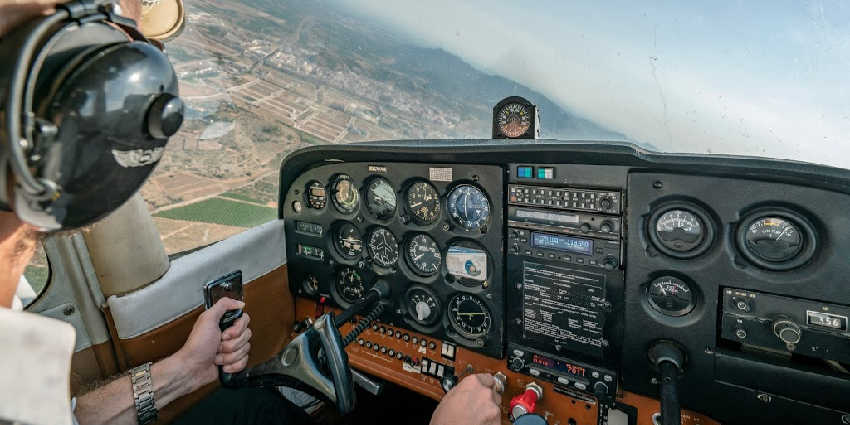
Instrument Rating Flight Training Montana
The instrument rating (IFR) is something that will eventually come along if you've been flying very long. Typically, it comes up when looking at buying an aircraft or seeking a commercial pilot career, but otherwise, some pilots may take quite a while to get their instrument rating in Montana. Though many pilots in Montana do eventually get an instrument rating, chances are learning to fly IFR in Montana now could greatly benefit your future flying.
An instrument rating will make you a better pilot, is required to get a commercial pilot certificate, and will generally lower your insurance rates. Flying on instruments in Montana will make you a better pilot. When it comes to flying on instruments, precision is the keyword. There are many different things to learn for your instrument rating, but none are more difficult and rewarding as learning to fly with precision.
Once you complete your instrument rating in Montana, you will be able to not only hit a specific altitude or descent rate but hold it. You will be more in control of your aircraft than you ever thought possible and this will surely affect your flying in general.
Perhaps you're not thinking about it right this moment, but at some point in the future, you may decide to get a commercial pilot certificate. That doesn't mean you have to run off to the airlines. There are many commercial pilots that never really get paid to fly, but it is nice to have the option.
Commercial Pilots in Montana Need an Instrument Rating to Get a Job
Maybe your company has a nice aircraft that you'd like to spend some time in or you'd occasionally like to take on a paying passenger--whatever the case, although it's not required, you're going to want an instrument rating to go along with your commercial pilot certificate.
If you wait until then to get instrument rated, you're going to have a lot of training to do. Instead, reap the benefits of learning precise flying early and you can sail through commercial pilot training when you need it.
Do You Want to Earn Your Instrument Rating IFR in Montana?
Insurance rates are generally cheaper for instrument-rated pilots. Perhaps the poorest-kept secret of the aviation insurance industry is that instrument-rated pilots enjoy rates that are generally cheaper. The increased training instrument-rated pilots take on and their increased skill pay off in lower insurance premiums. Depending on the type of aircraft you fly, this can be a very significant amount of money.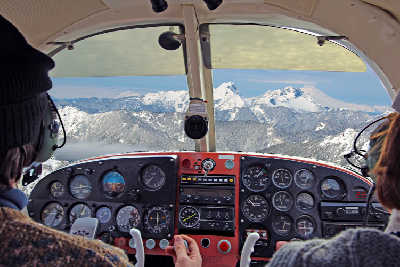
So, if you'd like to be a better pilot with lower insurance rates and you might get a commercial pilot certificate, you should definitely consider an instrument rating. Sure it may be difficult, but the sense of accomplishment and precision flying skill is more than worth it in the long run.
Legend has it that the instrument rating in Montana is the most difficult to earn of all licenses, ratings, and endorsements. And if you talk to an instrument-rated pilot, he or she will probably agree. However, the instrument rating could also be the most rewarding of all to earn, and the benefits and privileges of acquiring the rating are well worth the initial effort.
Simply stated, the instrument rating allows pilots to fly under instrument flight rules (IFR) in Montana, in instrument meteorological conditions (IMC), and in class A airspace (the airspace between 18,000 feet msl and 60,000 feet msl). IMC is loosely defined as conditions that do not meet the basic requirements of operating under visual flight rules (VFR), including ceilings less than 1000 feet above airport elevation and/or visibility less than 3 miles at the airport.
Although the instrument rating gives pilots permission to operate in less than basic VFR conditions, it's not a "license" to fly in bad weather. Prudent pilots do not launch into deadly weather just because they are instrument rated. Learn about instrument rating training.
FAA - A History of Airplane Structures Facts for Montana
The bulk of the FAA handbook is on the airframe of aircraft; specifically, the fuselage, booms, nacelles, cowlings, fairings, airfoil surfaces, and landing gear. Also included are the various accessories and controls that accompany these structures. Note that the rotors of a helicopter are considered part of the airframe since they are actually rotating wings. By contrast, propellers and rotating airfoils of an engine on an airplane are not considered part of the airframe.
Newton's Law of Motion
Newton’s third law is the law of action and reaction. This law states that for every action (force) there is an equal and opposite reaction (force). This law can be illustrated by the example of firing a gun. The action is the forward movement of the bullet while the reaction is the backward recoil of the gun.
IFR Instrument Rating Training in Montana
Depending on your flight training goals, instrument rating training may be required, but it is a good idea regardless of your goals. There are many places to learn to fly on instruments, so what should you look for when trying to find a school? There are three basic questions that should guide you to a good choice.
What kind of aircraft are available and, after I get my instrument rating, can I rent airplanes for actual IFR flights? Most flight schools offer at least one aircraft that is certified for IFR flight. Some even have several. The question is, do they offer the kind of aircraft you need?
Are you looking for training in a new glass panel or round gauges or both? Your personal preference and goals should be considered before choosing a school. A final consideration, assuming you don't own your own aircraft, is whether the school will rent you an aircraft after you get your rating for flight into actual IMC. This is important because you will want to maintain currency and there is no substitute for actual IMC.
Will We Fly in Actual IFR During Training?
Building off of that last point, ask if you will fly actual IMC during training. There's nothing wrong with simulated instrument flight, as a matter of convenience, but it is important that you experience at least some real instrument flights. It may seem strange, but for whatever reason, some schools don't allow for training flights in actual instrument weather, which can negatively affect your training.
Will we do any night IFR flight training? Absolutely! Another thing to ask is whether you will do any flights at night. Night flying is a required element of the private pilot test standards, but it is not required for an instrument rating. This is unfortunate because as you may know, it is quite different from flying during the day.
You never know when you might need to fly on instruments at night and having the added security of a flight instructor while you learn is much preferable to learning it on your own when you get caught out after dark.
Finding the answer to these three questions should provide you with all the information you need to find a great instrument rating training program that will serve you well. A good program that offers the right aircraft, provides for currency by allowing you to fly into real IMC and offers night instrument training will provide you with a very solid foundation of instrument flying skills.
Getting an Instrument Flight Rules Rating - IFR Flying is Precise
There are two sets of rules for flying any aircraft: VFR and IFR. VFR stands for Visual Flight Rules and IFR means Instrument Flight Rules. Depending on the weather conditions a pilot may opt for one set of rules or the other.
Not long after you get your private pilot certificate, you will likely start thinking about getting an instrument rating. If you're seeking a commercial pilot career it's just the next step, but even if you're not, it should be the next step. The precision, reliability, and safety of instrument flight are a huge boon to pilots of any kind.
Ask almost any instrument-rated pilot and they'll tell you that their instrument rating was one of the most difficult things they've done. Ask them if they regret it and you're unlikely to hear anyone say, "Yes." There are a lot of things to learn, but the one that is perhaps most difficult, but most useful is the precision learning to fly instruments will impart on your flying. Getting an instrument rating will ensure that you can not only hit a specific altitude or descent rate but that you can hold it.
IFR Flying is More Reliable & IFR Flying Can Be Safer
As a result of all your hard work during your instrument rating flight training, you will be able to fly in many more kinds of weather than a regular private pilot. This may not mean much right up until it clouds upon your cross country trip and the weather isn't expected to improve for days. As a non-instrument rated pilot, you're at the mercy of the weather. As an instrument-rated pilot, chances are you can file an instrument flight plan and continue safely on your way. Providing this kind of reliability is where an instrument rating really pays off.
While the typical VFR flight isn't very risky, instrument flights are even less risky thanks to the extra sets of eyes helping you navigate through the airspace. While flight following is commonly recommended for VFR flights, air traffic control isn't obligated to provide the service. On an instrument flight, however, there are always controllers following your flight and ensuring you reach your destination safely. Should something happen, such as another aircraft popping up out of nowhere or your engine stops, the controller knows where you are and will act accordingly.
If you're seeking more precision, higher reliability, and increased safety when flying, getting an instrument rating is a great idea. If you're seeking a career in aviation, it was probably already on your to-do list, but even if you aren't it should be.
Interesting Aviation Facts for Anaconda-Deer Lodge for Anaconda-Deer Lodge
Warrant officers are enlisted soldiers who are chosen to attend Warrant Officer Training School. Once they pass training school, they must serve at least thirty six months in warrant officer ranks before applying for aviation training. ROTC and West Point cadets are also eligible for admission to aviation school.
Aviation Facts and Figures for Anaconda-Deer Lodge
Air Force Helicopter Pilot: The average salary for senior level pilots and commanders with an experience of more than ten years can be around USD 100,000 per years. Average salary of a pilot can vary as per their location of job and posting. Apart from the salary, air force pilots receive housing allowance, insurance, cost of living allowance, family separation allowance and the overseas housing allowance.
Things change. And friends leave. Life doesnt stop for anybody. Stephen Chbosky
Aviation Training History and Facts for Belgrade
Flight Instructor Facts for Belgrade If an instructor wishes to teach a student to fly in increment weather, or weather that is below VFR minimums, he is required to obtain a Certified Flight Instructor Instrument (CFII) rating.
Aviation History for Belgrade and Fun Facts for Belgrade
Helicopter Flight Training Tips: If you're a Medical Evacuation helicopter pilot; you'll spend a lot of your time in hospitals and landing on roof top pads. Medical Evacuation pilots also get to something many helicopter pilots don't do regularly - night flying.
Aviation Training Facts for Billings
Post World War Military Pilot Training for Billings: In July 1958, all Air Force helicopter pilot training moved to Stead. A total of 255 officers and airmen transferred. The students received 40 hours transition and instrument training and 30 hours operational tactics in the H-19 and 35 hours transition in the H-21.
Helicopter History for Billings
Tips to Finding the Top Helicopter Schools: Think of your training as one of the largest investments of time and money that you will make in your life and remain vigilant and patient during the selection process.
Interesting Aviation Facts for Bozeman for Bozeman
Post Vietnam Era Military Pilot Training: From 1971 to 2004, SUPT-H at Fort Rucker primarily operated as an Army owned and controlled program. In 2004, the training remained at Fort Rucker, but the Air Force mission required changes in the training program and the Air Force assumed ownership/responsibility for conducting SUPT-H.
Helicopter History for Bozeman
Important Safety Issues to consider when choosing a helicopter school: For obvious reasons, safety should be primary concern at any school you are considering attending. It is essential to gain a copy of their accident record and review it thoroughly. Keep in mind that just because a school has had a few accidents does not mean that they should be completely removed from your list of choice schools.
Aviation Training Facts for Butte-Silver Bow
Modern Day Military Pilot Training for Butte-Silver Bow: After completing Primary helicopter school at Fort Wolters, now we go to the Advance Helicopter Training portion.
Little Known But Important FAA Facts
FAA Centers of Excellence - Mission and Vision: The Department of Transportation addresses University Transportation Centers of Excellence in a report dates June 10, 1991 and the FAA has adopted the definition, purpose, and mission as stated.
Air Force Helicopter Pilot
An Air Force Helicopter pilot should fulfill the minimum height and weight requirements and should have a good eyesight and ability to identify colors. Apart from physical fitness, you also need to concentrate on your formal education.
Aviation Factoids and Figures and Fun for Dillon
Positive Quotes: “I'm a success today because I had a friend who believed in me and I didn't have the heart to let him down.” ― Abraham Lincoln
Aviation Training History and Facts for Evergreen
Helicopter Flight Training Tips: Helicopter Pilots often play a pivotal role in many professions. Here are just a few of the occupational areas where licensed helicopter pilots are a critical part of the team. Certainly you are sure to find one that resonates with what you want to achieve in life.
Aviation History for Evergreen and Fun Facts for Evergreen
How wonderful it is that nobody need wait a single moment before starting to improve the world. Anne Frank
Aviation Training History and Facts for Glendive
Civilian Helicopter Pilot Training Tips: Each level of helicopter pilot licensing has different FAA minimum flight time requirements. To obtain your Private (Helicopter) Pilot License, the FAA requires that you have 20 hours of dual and 10 hours of solo flight time.
Aviation Training History and Facts for Glendive
Helicopter Flight Training Tips: But before it all comes to fruition and long before you land your first piloting job; you will need to complete certified helicopter training and legally obtain your license. Although this may seem like a time consuming hurdle; the truth is that in the end it is definitely worth the work and the wait!
To affect the quality of the day, that is the highest of arts. Henry David Thoreau
Aviation Training Facts for Great Falls
Modern Day Military Pilot Training for Great Falls: The Rotary Wing training at Rucker began in the Department of Rotary Wing Training. The first four weeks in the Basic Instrument Division at Shell AAF (originally designed as a Fixed Wing Field). The student went from there to the Advanced Instrument Training Division at Hanchey AHP. At Hanchey we used the TH-13T helicopters instrument trainer, and later, the Huey (UH-1).
Little Known But Important FAA Facts
FAA Centers of Excellence - In 1990 Public Law 101-508 (49 USC Section 44513) directed the Administrator of the FAA to create the Air Transportation Centers of Excellence (COE) program. The legislation mandated selection criteria which are used to evaluate proposals in support of COE solicitations. Through this legislation the Administrator has the authority to make grants to institutions of higher education to establish and operate regional Air Transportation Centers of Excellence.
Interesting Aviation Facts for Havre for Havre
Modern Day Military Pilot Training for Havre: Candidates for flight training can be no younger than 18 and no older than 32 when they begin their training. They must pass a special Flying Duty Medical Examination, FDME 1/A, which is available to candidates who have passed the Flight Aptitude Selection Test. The FDME includes body-size requirements, such as a sitting height of 40.15 inches or less and arm reach of 64.56 inches or more. Vision, hearing, pulse, blood-pressure and laboratory tests are also required.
Aviation Facts and Figures for Havre
How to fund helicopter school: Most schools have staff to help you obtain the necessary financing to cover your schooling. The school should be willing and able to assist you through the entire process which is very similar to other arenas of academic funding.
Interesting Aviation Facts for Helena for Helena
Post Vietnam Era Military Pilot Training: The Training unit moved to Kirtland AFB, New Mexico during the first quarter of 1976. Pilot qualification in the MH-60 began in 1991. The H-3 was phased out in 1992.
Helicopter History for Helena
Important Safety Issues to consider when choosing a helicopter school: Even with the meticulous inspections and maintenance that helicopters regularly undergo, they are still subject to mechanical problems. You have to keep in mind that the people who fly the helicopters are still learning and more subject to making mistakes which can easily result in an accident.
Interesting Aviation Facts for Helena Valley Southeast for Helena Valley Southeast
Modern Day Military Pilot Training for Helena Valley Southeast: Army helicopter pilots fly OH-58 Kiowa, UH-60 Black Hawk, AH-64 Apache and CH-47 Chinook combat helicopters, as of 2012. They learn to fly these helicopters in Army aviation school, where each aspiring pilot is taught to specialize in flying a particular type. Acceptance into aviation school for helicopter flight training is open to lieutenants, captains and warrant officers who meet age, health, experience and aptitude requirements.
Aviation Facts and Figures for Helena Valley Southeast
Helicopter Flight Training Tips: Before you make a decision about helicopter training or choose a helicopter school you should take a few minutes and learn a few very important facts. This information may cause you to change your mind about receiving helicopter lessons.
You cant just plan a moment when things get back on track, just as you cant plan the moment you lose your way in the first place. Sarah Dessen
Aviation Training History and Facts for Helena Valley West Central
Modern Day Military Pilot Training for Helena Valley West Central: Flying aircraft is a coveted career in the United States armed services, and the process to become a military pilot is a competitive one. Most candidates need at least a bachelors degree to apply. The exception is the Army, where the fleet consists mainly of helicopters rather than fixed-wing aircraft. Becoming a helicopter pilot in the Army does not require higher education or prior enlistment.
Aviation Facts and Figures for Helena Valley West Central
Helicopter Flight Training Tips: A typical day of a working as a helicopter pilot is amazing! You get to see the world from a position most people only dream of. Everything looks completely different when flying a helicopter a few thousand feet above ground.
Any idiot can face a crisis its day to day living that wears you out. Anton Chekhov
Interesting Aviation Facts for Kalispell for Kalispell
Vietnam Era Military Pilot Training: The first Air Force SUPT-H students began attending Army sponsored helicopter pilot training at Fort Rucker in 1971. In April 1971, the 1550th ATTW was activated at Hill AFB, Utah. After initial training by the Army, the pilots were upgraded for Air Force missions in the UH-1, CH-3, or H-53.
Aviation Facts and Figures for Kalispell
Important Safety Issues to consider when choosing a helicopter school: Ask the school about recent accidents. If they don't report any it's usually a good idea to search the NTSB website and find out for yourself. A free five minute search at http://www.ntsb.gov/ntsb/query.asp could reveal information that the school failed to mention to you.
Aviation Training History and Facts for Laurel
Flight Instructor Facts for Laurel He will be required to take two written tests and achieve a passing score that is over 70 percent. One of the tests covers ground school material, while the other is concerned with teaching principles. After he has completed the written portion of his tests, he may take a check ride to obtain his CFI rating.
Aviation History for Laurel and Fun Facts for Laurel
Finish every day and be done with it. You have done what you could; some blunders and absurdities no doubt crept in; forget them as soon as you can. Tomorrow is a new day; you shall begin it serenely and with too high a spirit to be encumbered with your old nonsense. Ralph Waldo Emerson
Aviation History for Lewiston and Fun Facts for Lewiston
Flight Instructors Facts: Once a flight instructor obtains his CFI rating, he is only to instruct students in what is commonly called VFR weather. VFR (Visual Flight Rules) is a set of regulations which dictate specific minimum weather conditions and airspace which a pilot may operate in.
Aviation History for Lewiston and Fun Facts for Lewiston
Helicopter Flight Training Tips: If you're a Medical Evacuation helicopter pilot; you'll spend a lot of your time in hospitals and landing on roof top pads. Medical Evacuation pilots also get to something many helicopter pilots don't do regularly - night flying.
I still find each day too short for all the thoughts I want to think, all the walks I want to take, all the books I want to read, and all the friends I want to see. John Burroughs
Aviation Training History and Facts for Livingston
Modern Day Military Pilot Training for Livingston: Army pilots start with flight school and move on to basic combat training. The Air Force's basic pilot training covers 12 weeks and Marine pilots undergo two phases of basic flight training. After basic training, pilots continue with helicopter-specific training. All branches also require the applicant to pass the Armed Services Vocational Aptitude Battery.
Aviation History for Livingston and Fun Facts for Livingston
Dont go around saying the world owes you a living. The world owes you nothing. It was here first. Mark Twain
Aviation History for Lockwood and Fun Facts for Lockwood
Air Force Helicopter Pilot: The salary of air force pilots has shown a rising trend over the years. Since the pilots work for the government, the air force fighter pilot salary will always be attractive and will accompany with job security.
Aviation Training History and Facts for Lockwood
Helicopter Flight Training Tips: According to most resources, helicopter pilots typically start out earning approximately $35,000.00 - $50,000.00 per year in beginning of their career. After a couple of years as a professional and experienced pilot the pay typically exceeds $50,000.00, and in some fields pay can exceed $100,000.00.
Humorous Quotes: “The statistics on sanity are that one out of every four people is suffering from a mental illness. Look at your 3 best friends. If they're ok, then it's you.” ― Rita Mae Brown
Aviation History for Malmstrom AFB and Fun Facts for Malmstrom AFB
Air Force Helicopter Pilot: Flying fighter planes require special training and a very high confidence level. Among many aspirants, very few are able to enter the air force due to the challenging entrance tests.
Aviation Training History and Facts for Malmstrom AFB
Success Quotes: “It is impossible to live without failing at something, unless you live so cautiously that you might as well not have lived at all - in which case, you fail by default.” ― J.K. Rowling
Interesting Aviation Facts for Miles City for Miles City
Modern Day Military Pilot Training for Miles City: Lieutenants and captains are officers who must undergo Army Reserve Officer Training Corps training in college, attend officer candidate school after college or graduate from the United States Military Academy (West Point) to achieve appointments as officers. Officers who are considering aviation school must have served less than 48 months.
Aviation Facts and Figures for Miles City
Air Force Helicopter Pilot: Many talented youngsters these days do not go for the air force jobs as they feel they can earn more in the private sector multi-national companies. However, one thing we all should remember is that comparing the salaries of government sector with the private should be avoided as both sectors have their own positives and negatives.
Aviation Training Facts for Missoula
Initially, the training objective is to provide enough instrument experience to get out of trouble in case a pilot encounters what we called inadvertent IFR. This qualification is called a Tactical Instrument Card. As soon as posible however there may be extended training to provide a full-up Instrument qualification and issuance of a Standard Instrument Card.
Famous Quote in Missoula
We cannot plan life. All we can do is be available for it.--Lauryn Hill. The most difficult thing is the decision to act, the rest is merely tenacity. -- Amelia Earhart. Definiteness of purpose is the starting point of all achievement. -- W. Clement Stone
Helicopter History for Missoula
Tips to Finding the Top Helicopter Schools: Although you may be eager to get started and ready to jump in with both feet; you need to protect your self and your investment carefully. Don't rush! Wisely prepare and plan for your training so that you will have an opportunity for a brighter future.
Aviation Training History and Facts for Orchard Homes
Helicopter Pilot Jobs for Orchard Homes Law Enforcement, Fire Fighting, Drug Abatement, Charters and Tours, Search and Rescue, Air Taxi Service, Air Ambulance/EMS, Corporate VIP Transport, Offshore, Oil Rig Support, Aerial Photography/ Surveillance, Electronic News Gathering, External Load/ Heavy Lifting, Agriculture Support, Logging Operations, Certified Flight Instructor.
Aviation History for Orchard Homes and Fun Facts for Orchard Homes
Helicopter Flight Training Tips: If you're a Medical Evacuation helicopter pilot; you'll spend a lot of your time in hospitals and landing on roof top pads. Medical Evacuation pilots also get to something many helicopter pilots don't do regularly - night flying.
It does not matter how slowly you go as long as you do not stop. Confucius
Aviation History for Polson and Fun Facts for Polson
Air Force Helicopter Pilot: Becoming an air force pilot requires systematic planning and hard work of many years. You need to plan this career in your school days itself and start preparing in the right direction to get closer to your dreams.
Aviation Factoids and Figures and Fun for Polson
Friendship Quotes: “A friend is one that knows you as you are, understands where you have been, accepts what you have become, and still, gently allows you to grow.” ― William Shakespeare
Aviation Training History and Facts for Sidney
Helicopter Careers - Military: The other factor to consider is the time commitment required to obtain your helicopter pilot license in the military. The military absolutely expects that you are a military officer first and a pilot second. This exchange requires a lot of give and take and should be considered prior to making a concrete decision. If you feel strongly about the military and are willing to sacrifice a block of your time
Aviation Training History and Facts for Sidney
Helicopter Flight Training Tips: Regardless of what field you choose to work in; a helicopter pilot can expect to have each day filled with thrilling new adventures that are truly unique to the trade.
My life is every moment of my life. It is not a culmination of the past. Hugh Leonard
Aviation Training History and Facts for Whitefish
Helicopter Careers - Military: There are two paths you can choose to obtain your helicopter license. Many people will recommend that you gain your experience and training in the military because it is offered free of charge. The truth is that the time and risk investment can be costly and although you can receive your training for free.
Aviation History for Whitefish and Fun Facts for Whitefish
Helicopter Flight Training Tips: Regardless of what field you choose to work in; a helicopter pilot can expect to have each day filled with thrilling new adventures that are truly unique to the trade.
May you live every day of your life. Jonathan Swift