IFR Training in North Carolina
Cities in North Carolina with Aviation Schools:
- Apex
- Asheboro
- Asheville
- Boone
- Burlington
- Carrboro
- Cary
- Chapel Hill
- Charlotte
- Clayton
- Clemmons
- Concord
- Cornelius
- Durham
- Fayetteville
- Fort Bragg
- Fuquay Varina
- Garner
- Gastonia
- Goldsboro
- Greensboro
- Greenville
- Havelock
- Hickory
- High Point
- Holly Springs
- Huntersville
- Indian Trail
- Jacksonville
- Kannapolis
- Kernersville
- Kinston
- Leland
- Lumberton
- Matthews
- Mint Hill
- Monroe
- Mooresville
- Morrisville
- New Bern
- Old Fort
- Raleigh
- Rocky Mount
- Salisbury
- Sanford
- Shelby
- Statesville
- Thomasville
- Wake Forest
- Wilmington
- Wilson
- Winston-Salem
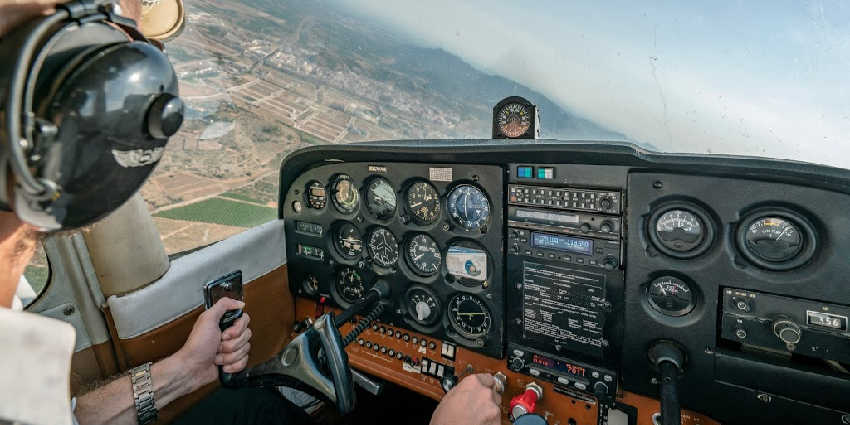
Instrument Rating Flight Training North Carolina
The instrument rating (IFR) is something that will eventually come along if you've been flying very long. Typically, it comes up when looking at buying an aircraft or seeking a commercial pilot career, but otherwise, some pilots may take quite a while to get their instrument rating in North Carolina. Though many pilots in North Carolina do eventually get an instrument rating, chances are learning to fly IFR in North Carolina now could greatly benefit your future flying.
An instrument rating will make you a better pilot, is required to get a commercial pilot certificate, and will generally lower your insurance rates. Flying on instruments in North Carolina will make you a better pilot. When it comes to flying on instruments, precision is the keyword. There are many different things to learn for your instrument rating, but none are more difficult and rewarding as learning to fly with precision.
Once you complete your instrument rating in North Carolina, you will be able to not only hit a specific altitude or descent rate but hold it. You will be more in control of your aircraft than you ever thought possible and this will surely affect your flying in general.
Perhaps you're not thinking about it right this moment, but at some point in the future, you may decide to get a commercial pilot certificate. That doesn't mean you have to run off to the airlines. There are many commercial pilots that never really get paid to fly, but it is nice to have the option.
Commercial Pilots in North Carolina Need an Instrument Rating to Get a Job
Maybe your company has a nice aircraft that you'd like to spend some time in or you'd occasionally like to take on a paying passenger--whatever the case, although it's not required, you're going to want an instrument rating to go along with your commercial pilot certificate.
If you wait until then to get instrument rated, you're going to have a lot of training to do. Instead, reap the benefits of learning precise flying early and you can sail through commercial pilot training when you need it.
Do You Want to Earn Your Instrument Rating IFR in North Carolina?
Insurance rates are generally cheaper for instrument-rated pilots. Perhaps the poorest-kept secret of the aviation insurance industry is that instrument-rated pilots enjoy rates that are generally cheaper. The increased training instrument-rated pilots take on and their increased skill pay off in lower insurance premiums. Depending on the type of aircraft you fly, this can be a very significant amount of money.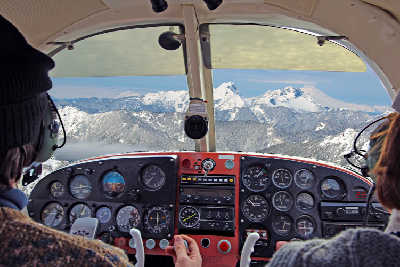
So, if you'd like to be a better pilot with lower insurance rates and you might get a commercial pilot certificate, you should definitely consider an instrument rating. Sure it may be difficult, but the sense of accomplishment and precision flying skill is more than worth it in the long run.
Legend has it that the instrument rating in North Carolina is the most difficult to earn of all licenses, ratings, and endorsements. And if you talk to an instrument-rated pilot, he or she will probably agree. However, the instrument rating could also be the most rewarding of all to earn, and the benefits and privileges of acquiring the rating are well worth the initial effort.
Simply stated, the instrument rating allows pilots to fly under instrument flight rules (IFR) in North Carolina, in instrument meteorological conditions (IMC), and in class A airspace (the airspace between 18,000 feet msl and 60,000 feet msl). IMC is loosely defined as conditions that do not meet the basic requirements of operating under visual flight rules (VFR), including ceilings less than 1000 feet above airport elevation and/or visibility less than 3 miles at the airport.
Although the instrument rating gives pilots permission to operate in less than basic VFR conditions, it's not a "license" to fly in bad weather. Prudent pilots do not launch into deadly weather just because they are instrument rated. Learn about instrument rating training.
FAA - A History of Airplane Structures Facts for North Carolina
There are five major stresses to which all aircraft are subjected: Compression. Compression is the stress that resists a crushing force. The compressive strength of a material is also measured in psi. Compression is the stress that tends to shorten or squeeze aircraft parts.
Aviation Facts - Trim Controls
Included in the trim controls are the trim tabs, servo tabs, balance tabs, and spring tabs. Trim tabs are small airfoils recessed into the trailing edges of the primary control surfaces. Trim tabs can be used to correct any tendency of the aircraft to move toward an undesirable flight attitude. Their purpose is to enable the pilot to trim out any unbalanced condition which may exist during flight, without exerting any pressure on the primary controls.
IFR Instrument Rating Training in North Carolina
Depending on your flight training goals, instrument rating training may be required, but it is a good idea regardless of your goals. There are many places to learn to fly on instruments, so what should you look for when trying to find a school? There are three basic questions that should guide you to a good choice.
What kind of aircraft are available and, after I get my instrument rating, can I rent airplanes for actual IFR flights? Most flight schools offer at least one aircraft that is certified for IFR flight. Some even have several. The question is, do they offer the kind of aircraft you need?
Are you looking for training in a new glass panel or round gauges or both? Your personal preference and goals should be considered before choosing a school. A final consideration, assuming you don't own your own aircraft, is whether the school will rent you an aircraft after you get your rating for flight into actual IMC. This is important because you will want to maintain currency and there is no substitute for actual IMC.
Will We Fly in Actual IFR During Training?
Building off of that last point, ask if you will fly actual IMC during training. There's nothing wrong with simulated instrument flight, as a matter of convenience, but it is important that you experience at least some real instrument flights. It may seem strange, but for whatever reason, some schools don't allow for training flights in actual instrument weather, which can negatively affect your training.
Will we do any night IFR flight training? Absolutely! Another thing to ask is whether you will do any flights at night. Night flying is a required element of the private pilot test standards, but it is not required for an instrument rating. This is unfortunate because as you may know, it is quite different from flying during the day.
You never know when you might need to fly on instruments at night and having the added security of a flight instructor while you learn is much preferable to learning it on your own when you get caught out after dark.
Finding the answer to these three questions should provide you with all the information you need to find a great instrument rating training program that will serve you well. A good program that offers the right aircraft, provides for currency by allowing you to fly into real IMC and offers night instrument training will provide you with a very solid foundation of instrument flying skills.
Getting an Instrument Flight Rules Rating - IFR Flying is Precise
There are two sets of rules for flying any aircraft: VFR and IFR. VFR stands for Visual Flight Rules and IFR means Instrument Flight Rules. Depending on the weather conditions a pilot may opt for one set of rules or the other.
Not long after you get your private pilot certificate, you will likely start thinking about getting an instrument rating. If you're seeking a commercial pilot career it's just the next step, but even if you're not, it should be the next step. The precision, reliability, and safety of instrument flight are a huge boon to pilots of any kind.
Ask almost any instrument-rated pilot and they'll tell you that their instrument rating was one of the most difficult things they've done. Ask them if they regret it and you're unlikely to hear anyone say, "Yes." There are a lot of things to learn, but the one that is perhaps most difficult, but most useful is the precision learning to fly instruments will impart on your flying. Getting an instrument rating will ensure that you can not only hit a specific altitude or descent rate but that you can hold it.
IFR Flying is More Reliable & IFR Flying Can Be Safer
As a result of all your hard work during your instrument rating flight training, you will be able to fly in many more kinds of weather than a regular private pilot. This may not mean much right up until it clouds upon your cross country trip and the weather isn't expected to improve for days. As a non-instrument rated pilot, you're at the mercy of the weather. As an instrument-rated pilot, chances are you can file an instrument flight plan and continue safely on your way. Providing this kind of reliability is where an instrument rating really pays off.
While the typical VFR flight isn't very risky, instrument flights are even less risky thanks to the extra sets of eyes helping you navigate through the airspace. While flight following is commonly recommended for VFR flights, air traffic control isn't obligated to provide the service. On an instrument flight, however, there are always controllers following your flight and ensuring you reach your destination safely. Should something happen, such as another aircraft popping up out of nowhere or your engine stops, the controller knows where you are and will act accordingly.
If you're seeking more precision, higher reliability, and increased safety when flying, getting an instrument rating is a great idea. If you're seeking a career in aviation, it was probably already on your to-do list, but even if you aren't it should be.
Aviation Factoids and Figures and Fun for Asheville
Air Force Helicopter Pilot: Salaries are more for those posted in difficult terrains and working outside the country. The average salary for senior level pilots and commanders with an experience of more than ten years can be around USD 100,000 per years.
Aviation Factoids and Figures and Fun for Asheville
Helicopter Training Facts for Asheville: Commercial uses for helicopters include flying passengers on sightseeing trips, assisting in search-and-rescue operations and patrolling oil pipelines, to name just a few examples. If you want to become a commercial helicopter pilot, first you typically must earn your private pilot's license, then fly additional hours to become a commercial helicopter pilot.
Aviation History for Burlington and Fun Facts for Burlington
Helicopter Pilot Jobs for Burlington Law Enforcement, Fire Fighting, Drug Abatement, Charters and Tours, Search and Rescue, Air Taxi Service, Air Ambulance/EMS, Corporate VIP Transport, Offshore, Oil Rig Support, Aerial Photography/ Surveillance, Electronic News Gathering, External Load/ Heavy Lifting, Agriculture Support, Logging Operations, Certified Flight Instructor.
Fun Aviation Facts and Figures for Burlington
Helicopter Pilot Jobs for Burlington Helicopter pilots must successfully complete a flight training program and log a certain number of hours flying before beginning any job.
Aviation Factoids and Figures and Fun for Cary
Air Force Helicopter Pilot: Many talented youngsters these days do not go for the air force jobs as they feel they can earn more in the private sector multi-national companies. However, one thing we all should remember is that comparing the salaries of government sector with the private should be avoided as both sectors have their own positives and negatives.
Helicopter Training Facts for Cary: Before you commit to a full program of lessons, it can be a good idea to take a test lesson in a helicopter to make sure that you like flying in the rotor-powered vehicles.
Aviation Training History and Facts for Chapel Hill
Helicopter Flight Training Tips: According to most resources, helicopter pilots typically start out earning approximately $35,000.00 - $50,000.00 per year in beginning of their career. After a couple of years as a professional and experienced pilot the pay typically exceeds $50,000.00, and in some fields pay can exceed $100,000.00.
Fun Helicopter and Airplane Facts for Chapel Hill
Helicopter Training Facts for Chapel Hill: Other qualities that will help you become a commercial helicopter pilot include the ability to stay calm under pressure, the ability to solve problems quickly and a tendency to put safety first. Some employers might have weight restrictions for commercial helicopter pilots, so being in good physical shape also could help.
Air Traffic Service Routes
An Air Traffic Service route is based on a centerline that extends from one navigation aid, fix or intersection, to another navigation aid, fix or intersection (or several) specified for that route.
Aviation Factoids and Figures and Fun for Charlotte
Heliports: The typical heliport contains several helipads. Helipads are smooth and flat areas devoted to helicopter landing and take offs. The heliport consists of a control tower in most instances, a radio station as well as identification and emergency lighting.
Aviation Training History and Facts for Concord
Helicopter Flight Training Tips: Regardless of what field you choose to work in; a helicopter pilot can expect to have each day filled with thrilling new adventures that are truly unique to the trade.
Fun Helicopter and Airplane Facts for Concord
Helicopter Training Facts for Concord: With enough hours and experience, you can look for jobs with charter companies, tourism and sightseeing organizations and other places that use helicopters in their operations. Some employers might also expect their pilots to have some level of college education.
Aviation Factoids and Figures and Fun for Durham
Air Force Helicopter Pilot: You should also be aware of the age and citizenship requirements for getting placed in the air force. Generally, the minimum age of entry into the air force is eighteen years while thirty is the maximum age limit. Only United States citizens can become air force officers as per the laws.
Aviation Factoids and Figures and Fun for Durham
Heliports: Many heliport locations also include rental car agents as well as private limousine stables to service patrons. Several of the most recent heliport designs also include an upscale restaurant to host couples wishing to utilize a helicopter tour of the particular city in which it is located.
Fun Facts About Flight Dispatchers
Flight Planning – An aircraft dispatcher is the one who works up the flight plan for every flight before they ever leave the ground. Weather plays an important role in the flight plan, as does a variety of non-routine issues such as national crises, volcanic ash, and more.
Aviation Factoids and Figures and Fun for Fayetteville
Heliports: Rural heliports often house helicopters used to spray agricultural fields where a standard crop-dusting airplane may not be able to operate. County sheriff's police as well as search and rescue crews may also base helicopters out of one of these locations.
Aviation History for Fort Bragg and Fun Facts for Fort Bragg
In fact, you have a better chance at surviving in a helicopter when the engine fails than you do in an airplane. Helicopters are designed specifically to allow pilots to have a reasonable chance of landing them safely in the case where the engine stops working during flight, often with no damage at all.
Fun Aviation Facts and Figures for Fort Bragg
Helicopter Pilot Jobs for Fort Bragg Other typical job duties involve getting aerial footage for sporting events or traffic jams.
Fun Facts About Flight Dispatchers
Aircraft Dispatcher Practical Test Prerequisites
To be eligible to take the Aircraft Dispatcher Practical Test, an applicant must meet the following criteria, as required by 14 CFR part 65: Be at least 21 years of age; Be able to read, speak, write, and understand the English Language; Present documentary evidence of passing the required knowledge test prescribed by 14 CFR part 65.55 within the preceding 24 months; and Comply with the experience or training requirements of 14CFR part 65.57.
Fun Helicopter and Airplane Facts for Gastonia
Helicopter Training Facts for Gastonia: After you have obtained a private pilot's license, you will need at least 150 hours of flying time before you can test for a commercial helicopter pilot's license. In the United States, it also is necessary to get a second-class medical certificate through a Federal Aeronautics Administration (FAA) medical examiner.
Aviation History for Goldsboro and Fun Facts for Goldsboro
If you include military helicopters it is estimated that there are more than 45,000 operating worldwide.
Fun Aviation Facts and Figures for Goldsboro
A relatively common helicopter pilot job is working for emergency medical services. This typically involves flying solo and in different weather conditions and may require flying over terrain that can be challenging.
Aviation Factoids and Figures and Fun for Greensboro
Air Force Helicopter Pilot: The university from where you pass out needs to be recognized and a reputed one. Along with graduation, training at the officer training schools is also a must.
Aviation Factoids and Figures and Fun for Greensboro
Heliports: The heliport is usually located in an area near a conventional airport, but it is typically in a lesser-used area. The relation to the airport is critical for the heliport in order to properly receive and transfer persons and supplies from one type of aircraft to another, such as from an airplane onto a helicopter.
Helicopter Flight Training Tips:
If you are a Medical Evacuation helicopter pilot you will need to spend much of your time in hospitals and landing on roof top pads. Medical Evacuation pilots also get to do something many helicopter pilots don't to do regularly - night flying. Because emergency don't just happen during daylight hours, Medical Evac Pilots must also pilot during twiligt and nighttime hours.
Fun Helicopter and Airplane Facts for Greenville
Helicopter Training Facts for Greenville: Looking for work in the field can be difficult at first because for the higher paying jobs, you'll need even more flight time. To earn additional flight hours as a novice commercial helicopter pilot, you might consider getting a pilot teaching certificate.
Aviation History for Hickory and Fun Facts for Hickory
Helicopters can be flown across oceans if additional fuel is made available or in-flight refueling is employed.
Fun Aviation Facts and Figures for Hickory
Helicopter Pilot Jobs for Hickory Helicopter pilots in emergency services fields are often called upon to airlift victims of accidents, fires, or natural disasters such as flooding or the aftermath of a severe storm. Hospitals may hire pilots and pay for equipment, or the services may be provided to a hospital by an outside company.
Aviation Training History and Facts for High Point
Helicopter Flight Training Tips: Before you make a decision about helicopter training or choose a helicopter school you should take a few minutes and learn a few very important facts. This information may cause you to change your mind about receiving helicopter lessons.
Fun Helicopter and Airplane Facts for High Point
Helicopter Training Facts for High Point: When selecting a school, ask about the credentials of instructors, what kinds of helicopters they fly, how many helicopters the school has and how long the school has been in operation.
Aviation History for Huntersville and Fun Facts for Huntersville
Unlike the more common fixed wing aircraft such as a sport biplane or an airliner, the helicopter is capable of direct vertical take-off and landing; it can also hover in a fixed position.
Interesting Aviation Facts for Huntersville for Huntersville
Commercial Helicopter License Tips: Pilot in Command time is accumulated by flying solo and acting as the pilot of your helicopter AFTER you attain your Private License. Even if you are receiving flight instruction at the time; the hours toward PIC count as long as you are registered as the acting pilot of your aircraft.
Life Quotes: “Forget yesterday - it has already forgotten you. Don't sweat tomorrow - you haven't even met. Instead, open your eyes and your heart to a truly precious gift - today.” ― Steve Maraboli
Aviation Factoids and Figures and Fun for Jacksonville
Air Force Helicopter Pilot: The average salary for senior level pilots and commanders with an experience of more than ten years can be around USD 100,000 per years. Average salary of a pilot can vary as per their location of job and posting. Apart from the salary, air force pilots receive housing allowance, insurance, cost of living allowance, family separation allowance and the overseas housing allowance.
Helicopter Training - Some Random Facts
If you have made the decision to become a commercial helicopter pilot, you must first find a flight school where you can take lessons in piloting a helicopter. Flight schools can be found through local airports, online and in the telephone book.
There are several types of training for all aircraft certificate holders: initial, transition, upgrade, differences, recurrent, in flight and requalification training.
Aviation History for Kannapolis and Fun Facts for Kannapolis
Myth: Helicopters will drop like a rock when the engine shuts down. In fact, you have a better chance at surviving in a helicopter when the engine fails than you do in an airplane.
Fun Aviation Facts and Figures for Kannapolis
Helicopter Pilot Jobs for Kannapolis Similar to hospital-based jobs, helicopter pilots who fly for news agencies often travel to the scene of severe accidents or natural disasters.
Aviation History for Monroe and Fun Facts for Monroe
Once the engine drops below a certain number of revolutions per minute, relative to the rotor RPM rate, a special clutch mechanism, called a freewheeling unit, disengages the engine from the main rotor automatically. This allows the main rotor to spin without resistance from the engine.
Aviation History for Monroe and Fun Facts for Monroe
Helicopter Jobs: Law enforcement, military, and government agencies also offer helicopter pilot jobs. Government jobs are found in areas such as transportation, wildlife monitoring, immigration, and national security.
Aviation Training History and Facts for Old Fort
Helicopter Flight Training Tips: Helicopter Pilots often play a pivotal role in many professions. Here are just a few of the occupational areas where licensed helicopter pilots are a critical part of the team. Certainly you are sure to find one that resonates with what you want to achieve in life.
Helicopter Pilot Jobs for Old Fort Helicopter pilot jobs range from sightseeing and aerial photography to working with emergency rescue groups or news-gathering agencies. Other career opportunities include instruction, forestry, surveying and mapping, heavy-lifting, and flying for the military.
Aviation Factoids and Figures and Fun for Raleigh
Air Force Helicopter Pilot: A bachelor's degree is required at almost all places for recruitment. Among the graduates, those with degrees in technical fields such as engineering, applied sciences, computer science, Mathematics and Physics are given first preference.
Aviation Factoids and Figures and Fun for Raleigh
Heliports: The heliport also houses fueling stations and repair facilities for the helicopters that use it.
Fun Facts About Flight Dispatchers
To apply for an FAA Aircraft Dispatcher Certification, you must be at least 23 years old and be able to read, speak and write English. Dispatcher candidates must accrue 200 hours of training on specific topics. Then, students must pass a written knowledge test, a practical flight planning test, and an oral exam.
Fun Helicopter and Airplane Facts for Rocky Mount
Helicopter Training Facts for Rocky Mount: Classes in aeronautics, physics and related areas might be helpful if you want to become a commercial helicopter pilot.
Aviation History for Salisbury and Fun Facts for Salisbury
A landing via autorotation is also sometimes necessary if the rear rotor blades stop functioning properly, no longer countering for the torque of the main rotor blades, so the helicopter will spin if the engine isnt turned off.
Fun Aviation Facts and Figures for Salisbury
Helicopter Pilot Jobs for Salisbury News helicopter pilots may simply provide a means to get aerial footage, or they may transport reporters to the scene as well.
Aviation Training History and Facts for Wilmington
Helicopter Flight Training Tips: A typical day of a working as a helicopter pilot is amazing! You get to see the world from a position most people only dream of. Everything looks completely different when flying a helicopter a few thousand feet above ground.
Fun Helicopter and Airplane Facts for Wilmington
Helicopter Training Facts for Wilmington: After you begin pilot training, it isn't all about being in the air. You'll have to take courses on safety and other topics before you leave the ground. A minimum of 40 hours of helicopter flight time and a student helicopter pilot certificate.
Aviation History for Wilson and Fun Facts for Wilson
Commercial Helicopter License Tips: To obtain your Commercial Rotorcraft License, the FAA requires the pilot to have a minimum of 150 hours of flight time, and 100 of those hours must be PIC (Pilot in Command) time.
Positive Quotes: “Plant seeds of happiness, hope, success, and love; it will all come back to you in abundance. This is the law of nature.” ― Steve Maraboli
Fun Aviation Facts and Figures for Wilson
Helicopter Pilot Jobs for Wilson Specialized training, based on the kind of aircraft the pilot flies, is another requirement. Helicopter pilots are also required to have and maintain excellent physical and mental health.
Fun Facts About Flight Dispatchers
While this is true, a flight crew cannot fly without the help of a team of people on the ground. An aircraft dispatcher makes airline operations work and ensures that both pilots and their passengers are able to travel safely to their destination.
Aviation Factoids and Figures and Fun for Winston-Salem
Heliports: Many heliports also play host to a number of flight schools and repair colleges. Those wishing to learn to fly a helicopter or to repair one can take courses at these schools.