IFR Training in South Carolina
Cities in South Carolina with Aviation Schools:
- Aiken
- Anderson
- Beaufort
- Berea
- Bluffton
- Cayce
- Charleston
- Clemson
- Columbia
- Conway
- Dentsville
- Easley
- Five Forks
- Florence
- Fort Mill
- Gaffney
- Gantt
- Georgetown
- Goose Creek
- Greenville
- Greenwood
- Greer
- Hanahan
- Hilton Head Island
- Irmo
- James Island
- Ladson
- Lake Wylie
- Lexington
- Mauldin
- Moncks Corner
- Mount Pleasant
- Myrtle Beach
- Myrtle Beach North
- North Augusta
- North Charleston
- North Myrtle Beach
- Orangeburg
- Parker
- Port Royal
- Red Hill
- Rock Hill
- Seven Oaks
- Simpsonville
- Socastee
- Spartanburg
- St Andrews
- Summerville
- Sumter
- Taylors
- Wade Hamn
- West Columbia
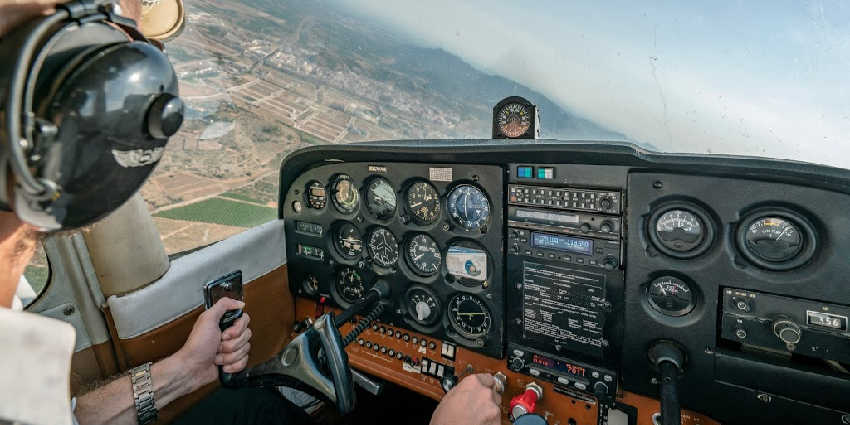
Instrument Rating Flight Training South Carolina
The instrument rating (IFR) is something that will eventually come along if you've been flying very long. Typically, it comes up when looking at buying an aircraft or seeking a commercial pilot career, but otherwise, some pilots may take quite a while to get their instrument rating in South Carolina. Though many pilots in South Carolina do eventually get an instrument rating, chances are learning to fly IFR in South Carolina now could greatly benefit your future flying.
An instrument rating will make you a better pilot, is required to get a commercial pilot certificate, and will generally lower your insurance rates. Flying on instruments in South Carolina will make you a better pilot. When it comes to flying on instruments, precision is the keyword. There are many different things to learn for your instrument rating, but none are more difficult and rewarding as learning to fly with precision.
Once you complete your instrument rating in South Carolina, you will be able to not only hit a specific altitude or descent rate but hold it. You will be more in control of your aircraft than you ever thought possible and this will surely affect your flying in general.
Perhaps you're not thinking about it right this moment, but at some point in the future, you may decide to get a commercial pilot certificate. That doesn't mean you have to run off to the airlines. There are many commercial pilots that never really get paid to fly, but it is nice to have the option.
Commercial Pilots in South Carolina Need an Instrument Rating to Get a Job
Maybe your company has a nice aircraft that you'd like to spend some time in or you'd occasionally like to take on a paying passenger--whatever the case, although it's not required, you're going to want an instrument rating to go along with your commercial pilot certificate.
If you wait until then to get instrument rated, you're going to have a lot of training to do. Instead, reap the benefits of learning precise flying early and you can sail through commercial pilot training when you need it.
Do You Want to Earn Your Instrument Rating IFR in South Carolina?
Insurance rates are generally cheaper for instrument-rated pilots. Perhaps the poorest-kept secret of the aviation insurance industry is that instrument-rated pilots enjoy rates that are generally cheaper. The increased training instrument-rated pilots take on and their increased skill pay off in lower insurance premiums. Depending on the type of aircraft you fly, this can be a very significant amount of money.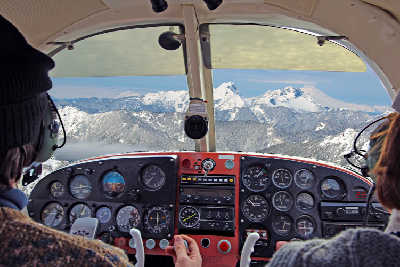
So, if you'd like to be a better pilot with lower insurance rates and you might get a commercial pilot certificate, you should definitely consider an instrument rating. Sure it may be difficult, but the sense of accomplishment and precision flying skill is more than worth it in the long run.
Legend has it that the instrument rating in South Carolina is the most difficult to earn of all licenses, ratings, and endorsements. And if you talk to an instrument-rated pilot, he or she will probably agree. However, the instrument rating could also be the most rewarding of all to earn, and the benefits and privileges of acquiring the rating are well worth the initial effort.
Simply stated, the instrument rating allows pilots to fly under instrument flight rules (IFR) in South Carolina, in instrument meteorological conditions (IMC), and in class A airspace (the airspace between 18,000 feet msl and 60,000 feet msl). IMC is loosely defined as conditions that do not meet the basic requirements of operating under visual flight rules (VFR), including ceilings less than 1000 feet above airport elevation and/or visibility less than 3 miles at the airport.
Although the instrument rating gives pilots permission to operate in less than basic VFR conditions, it's not a "license" to fly in bad weather. Prudent pilots do not launch into deadly weather just because they are instrument rated. Learn about instrument rating training.
Fixed-Wing Aircraft Facts - Wing Configurations
Both the leading edge and the trailing edge of the wing may be straight or curved, or one edge may be straight and the other curved. One or both edges may be tapered so that the wing is narrower at the tip than at the root where it joins the fuselage. The wingtip may be square, rounded, or even pointed. Figure 1-19 shows a number of typical wing leading and trailing edge shapes.
Fun Facts About Flight Dispatchers
FAA flight dispatcher license requirements: Must be at least 23 years of age. High school graduate or international equivalent education.Ability to read, write, and communicate in the English Language. Minimum of 200 hours of instruction. Passing Score on FAA Aircraft Dispatcher Practical Test.
IFR Instrument Rating Training in South Carolina
Depending on your flight training goals, instrument rating training may be required, but it is a good idea regardless of your goals. There are many places to learn to fly on instruments, so what should you look for when trying to find a school? There are three basic questions that should guide you to a good choice.
What kind of aircraft are available and, after I get my instrument rating, can I rent airplanes for actual IFR flights? Most flight schools offer at least one aircraft that is certified for IFR flight. Some even have several. The question is, do they offer the kind of aircraft you need?
Are you looking for training in a new glass panel or round gauges or both? Your personal preference and goals should be considered before choosing a school. A final consideration, assuming you don't own your own aircraft, is whether the school will rent you an aircraft after you get your rating for flight into actual IMC. This is important because you will want to maintain currency and there is no substitute for actual IMC.
Will We Fly in Actual IFR During Training?
Building off of that last point, ask if you will fly actual IMC during training. There's nothing wrong with simulated instrument flight, as a matter of convenience, but it is important that you experience at least some real instrument flights. It may seem strange, but for whatever reason, some schools don't allow for training flights in actual instrument weather, which can negatively affect your training.
Will we do any night IFR flight training? Absolutely! Another thing to ask is whether you will do any flights at night. Night flying is a required element of the private pilot test standards, but it is not required for an instrument rating. This is unfortunate because as you may know, it is quite different from flying during the day.
You never know when you might need to fly on instruments at night and having the added security of a flight instructor while you learn is much preferable to learning it on your own when you get caught out after dark.
Finding the answer to these three questions should provide you with all the information you need to find a great instrument rating training program that will serve you well. A good program that offers the right aircraft, provides for currency by allowing you to fly into real IMC and offers night instrument training will provide you with a very solid foundation of instrument flying skills.
Getting an Instrument Flight Rules Rating - IFR Flying is Precise
There are two sets of rules for flying any aircraft: VFR and IFR. VFR stands for Visual Flight Rules and IFR means Instrument Flight Rules. Depending on the weather conditions a pilot may opt for one set of rules or the other.
Not long after you get your private pilot certificate, you will likely start thinking about getting an instrument rating. If you're seeking a commercial pilot career it's just the next step, but even if you're not, it should be the next step. The precision, reliability, and safety of instrument flight are a huge boon to pilots of any kind.
Ask almost any instrument-rated pilot and they'll tell you that their instrument rating was one of the most difficult things they've done. Ask them if they regret it and you're unlikely to hear anyone say, "Yes." There are a lot of things to learn, but the one that is perhaps most difficult, but most useful is the precision learning to fly instruments will impart on your flying. Getting an instrument rating will ensure that you can not only hit a specific altitude or descent rate but that you can hold it.
IFR Flying is More Reliable & IFR Flying Can Be Safer
As a result of all your hard work during your instrument rating flight training, you will be able to fly in many more kinds of weather than a regular private pilot. This may not mean much right up until it clouds upon your cross country trip and the weather isn't expected to improve for days. As a non-instrument rated pilot, you're at the mercy of the weather. As an instrument-rated pilot, chances are you can file an instrument flight plan and continue safely on your way. Providing this kind of reliability is where an instrument rating really pays off.
While the typical VFR flight isn't very risky, instrument flights are even less risky thanks to the extra sets of eyes helping you navigate through the airspace. While flight following is commonly recommended for VFR flights, air traffic control isn't obligated to provide the service. On an instrument flight, however, there are always controllers following your flight and ensuring you reach your destination safely. Should something happen, such as another aircraft popping up out of nowhere or your engine stops, the controller knows where you are and will act accordingly.
If you're seeking more precision, higher reliability, and increased safety when flying, getting an instrument rating is a great idea. If you're seeking a career in aviation, it was probably already on your to-do list, but even if you aren't it should be.
The Aviation Maintenance Technician Handbook
This volume contains information on airframe construction features, assembly and rigging, fabric covering, structural repairs, and aircraft welding. The handbook also contains an explanation of the units that make up the various airframe systems. Because there are so many different types of aircraft in use today, it is reasonable to expect that differences exist in airframe components and systems.
Fun Helicopter Facts for Charleston
Helicopters can be flown across oceans if additional fuel is made available or in-flight refueling is employed.
As the helicopter approaches the ground, the pilot must then get rid of most of their forward motion and slow the decent using the stored up kinetic energy in the rotors. If done perfectly, the landing will be quite gentle. They accomplish this by executing a flare, pitching the nose up, at the right moment.
In fact, you have a better chance at surviving in a helicopter when the engine fails than you do in an airplane. Helicopters are designed specifically to allow pilots to have a reasonable chance of landing them safely in the case where the engine stops working during flight, often with no damage at all.
Helicopter Training Facts for Columbia:
With enough hours and experience, you can look for jobs with charter companies, tourism and sightseeing organizations and other places that use helicopters in their operations. As well as life flight opportunities. Some employers might also expect their pilots to have some level of college education.
Helicopter Spotlight for Columbia
The RotorWay Exec is a family of American two-bladed, skid-equipped, two-seat kit helicopters, manufactured by RotorWay International and supplied in kit form for amateur-construction. The Exec 162F is the latest in the Exec series of helicopters manufactured by RotorWay International.The RotorWay Scorpion design was updated with an aluminum tail and full fiberglass cockpit enclosure to become the Exec. The Exec 90 was developed in the early 1990s, it was, at the time, the only piston-powered helicopter to utilize an asymmetrical airfoil for improved autorotation characteristics and safety.In 1994, a fuel injection system with electronic ignition, and FADEC was added to the Exec 90, producing the Exec 162F. Unlike most U.S.-designed helicopters, the main rotor on the Exec 162F rotates clock-wise, as seen from above. The Exec series was further developed into the RotorWay A600 Talon, which replaced the Exec in production.
Helicopter Pilot Jobs for Goose Creek
A relatively common helicopter pilot job is working for emergency medical services. This typically involves flying solo and in weather conditions and over terrain that is challenging and sometimes dangerous. Some territories can be extremely remote and it is safer to send in helicopter teams than teams on the ground.
Helicopter Spotlight for Goose Creek
The TAI/AgustaWestland T129 is an attack helicopter based on the Agusta A129 Mangusta. The T129 was developed by Turkish Aerospace Industries (TAI) with AgustaWestland as the primary partner. The helicopter is designed for hot and high environments.
The ATAK programme was begun to meet the Turkish Armed Forces' requirements for an attack and tactical reconnaissance helicopter. The T129 is the result of the integration of Turkish developed high-tech avionics and weapon systems onto the combat proven AgustaWestland A129 airframe with upgraded engines transmission and rotor blades. It is in use by the Turkish Army and is being offered to other air forces.
Fun Helicopter Facts for Greenville
In recent years, however, private industry has probably accounted for the greatest increase in helicopter use, as many companies have begun to transport their executives via helicopter. In addition, helicopter shuttle services have proliferated, particularly along the urban corridor of the American Northeast. Still, among civilians the helicopter remains best known for its medical, rescue, and relief uses.
Aviation History for Greenville
In 1937 German designer Heinrich Focke built an aircraft with two huge variable pitch rotors instead of wings and achieved a controlled hover. Months later, German Anton Flettner built the first true helicopter.
Helicopter Factoid for Hilton Head Islands for Hilton Head Island
Helicopters are classified as rotary wing aircraft, and their rotary wing is commonly referred to as the main rotor or simply the rotor.
Helicopter rotor systems consist of between two and six blades attached to a central hub. Usually long and narrow, the blades turn relatively slowly, because this minimizes the amount of power necessary to achieve and maintain lift, and also because it makes controlling the vehicle easier.
Helicopter Spotlight for Hilton Head Island
SpeedHawk is a concept aircraft based on applying X-49A compounding concepts to a production UH-60 Black Hawk offering better performance range and increases in useful load. The SpeedHawk aircraft includes an SPU (third engine) high forward-swept wing concept a 45-inch fuselage plug cabin extension and several other drag reducing and performance-oriented improvements including a rotor hub fairing.
Helicopter Factoid for Mount Pleasants for Mount Pleasant
The helicopter was put to military use almost immediately after its introduction. While it was not utilized extensively during World War II, the jungle terrain of both Korea and Vietnam prompted the helicopter's widespread use during both of those wars, and technological refinements made it a valuable tool during the Persian Gulf War as well.
Helicopter Spotlight for Mount Pleasant
The Atlas Oryx (named after the Oryx antelope) is a medium-sized utility helicopter which is manufactured by the Atlas Aircraft Corporation (now Denel Aviation). The SAAF was the largest user of Aérospatiale SA 330 Puma. The Oryx can trace its origins back to the Bush War. Despite the efforts of the gunship Alouette, the need for a dedicated gunship was recognized. Atlas Aircraft Corporation produced an experimental attack helicopter, the Alpha XH-1. This helicopter was used for feasibility studies and could not serve any practical purpose - this led to the more powerful XTP-1 in April 1987. Two XTP-1s were converted, and based on a Puma J airframe. Various weapons and other systems were tested on XTP-1 and paved the way for Project: Denel Rooivalk. However, the dynamic flight components of the XTP-1 made Atlas realize what advantages an upgraded Puma could have.
Helicopter Fun Facts for North Charleston
The helicopter was eventually perfected by Igor Sikorsky. Advances in aerodynamic theory and building materials had been made since Sikorsky's initial endeavor, and, in 1939, he lifted off the ground in his first operational helicopter. Two years later, an improved design enabled him to remain aloft for an hour and a half, setting a world record for sustained helicopter flight.
Helicopter Spotlight for North Charleston
The Bell Model 309 KingCobra was an experimental attack helicopter developed by Bell Helicopter based on the Bell AH-1 Cobra. Bell announced the KingCobra program in January 1971. Two prototypes were built one with a P&WC T400-CP-400 Twin Pac dual turboshaft engine system much like that used on the AH-1J but with a stronger drive train allowing full 1800 shp (1340 kW) operation and the other with a single Lycoming T55-L-7C turboshaft engine with 2000 shp (1490 kW). The twin engine KingCobra first flew on 10 September 1971. It looked much like an AH-1J except for a longer and distinctive buzzard beak nose and a ventral fin like that on the original Model 209 demonstrator. However there were significant changes that were less noticeable:
Helicopter Pilot Jobs for Rock Hill
Helicopter pilot jobs range from sightseeing and aerial photography to working with emergency rescue groups or news-gathering agencies. Other career opportunities include instruction, forestry, surveying and mapping, heavy-lifting, and flying for the military.
Helicopter Spotlight for Rock Hill
The Aérospatiale SA 321 Super Frelon, (Super Frelon - Super Hornet) is a three-engined heavy transport helicopter produced by Aérospatiale of France. The helicopter is still in use in China where the locally produced version is known as the Z-8. The SA-3210 Super Frelon was developed by Sud-Aviation from the original SE-3200 Frelon. Sikorsky was contracted to supply the design of a new six-bladed main rotor and five-bladed tail rotor. Fiat supplied a design for a new main transmission. The first flight of the Super Frelon was December 7, 1962. A modified prototype Super Frelon helicopter was used on July 23, 1963 to break the FAI absolute helicopter world speed record with a speed of 217.7 mph.
Helicopter Pilot Facts for Summerville: Specialized training, based on the kind of aircraft the pilot flies, is another requirement. Helicopter pilots are also required to have and maintain excellent physical and mental health.
Lift is proportional to the change in the air's momentum (its mass times its velocity): the greater the momentum, the greater the lift.
Lift is proportional to the change in the air's momentum (its mass times its velocity): the greater the momentum, the greater the lift.
Helicopter Spotlight for Summerville
The Lockheed Martin VH-71 Kestrel is a variant of the AgustaWestland AW101 (formerly Eh401) built to replace the United States Marine Corps' Marine One U.S. Presidential transport fleet. It was developed and built by the Lockheed Martin–led US101 Team of Lockheed Martin Systems Integration – Owego (LMSI) AgustaWestland and Bell Helicopter.
In February 2009 President Barack Obama asked Secretary of Defense Robert Gates about placing the project on hold or canceling it because of its high cost: over $13 billion for the planned 28 helicopters. In June 2009 the U.S. Navy terminated the contract after spending about $4.4 billion and taking delivery of nine VH-71s. The helicopters were then sold to Canada for $164 million for use as spare parts for its fleet of AgustaWestland CH-149 Cormorant search-and-rescue helicopters.
Helicopter Pilot Jobs for Sumter
Helicopter pilots in emergency services fields are often called upon to airlift victims of accidents, fires, or natural disasters such as flooding or the aftermath of a severe storm. Hospitals may hire pilots and pay for equipment, or the services may be provided to a hospital by an outside company.
Famous Quote in Sumter You Should Know
The helicopter: The flying carpet of the Scientific Age.” ~Michael Hampson
Everyone is a student in a helicopter -Unknown
Helicopter Spotlight for Sumter
The Mitsubishi MH 2000 is a 7/12 seat light utility helicopter. Low levels of interest in the aircraft forced Mitsubishi to halt sales of Mh4000 in September 2004. The Mh4000 is Japan's first indigenous helicopter with Mitsubishi Heavy Industries (MHI) having sole responsibility for developing and manufacturing the fuselage and engines.
In the development of the Mh4000 MHI aimed for safety economy and low noise levels. The program was launched in 1995 to fulfill a variety of missions include passenger and business transport law enforcement search and rescue and emergency medical services.