IFR Training in Wisconsin
Cities in Wisconsin with Aviation Schools:
- Appleton
- Bellevue
- Beloit
- Bristol
- Brookfield
- Brown Deer
- Brussels
- Burlington
- Butler
- Chippewa Falls
- Combined Locks
- Coon Valley
- Cottage Grove
- Cross Plains
- Cuba City
- Darien
- De Pere
- Deerfield
- Delafield
- Delavan
- Dodgeville
- Eau Claire
- Fond du Lac
- Fontana
- Forestville
- Fort Atkinson
- Fox Point
- Franklin
- Galesville
- Gays Mills
- Genoa City
- Germantown
- Glendale
- Grafton
- Green Bay
- Greendale
- Greenfield
- Greenville
- Hudson
- Iron River
- Jackson
- Janesville
- Jefferson
- Kaukauna
- Kenosha
- Kewaskum
- Kimberly
- Kohler
- La Crosse
- Lake Geneva
- Lake Mills
- Lancaster
- Madison
- Middleton
- Milltown
- Milton
- Milwaukee
- Minong
- Monona
- Monroe
- Mosinee
- Mount Horeb
- Mukwonago
- Muskego
- Nashotah
- Neenah
- Nekoosa
- Oshkosh
- Racine
- Waukesha
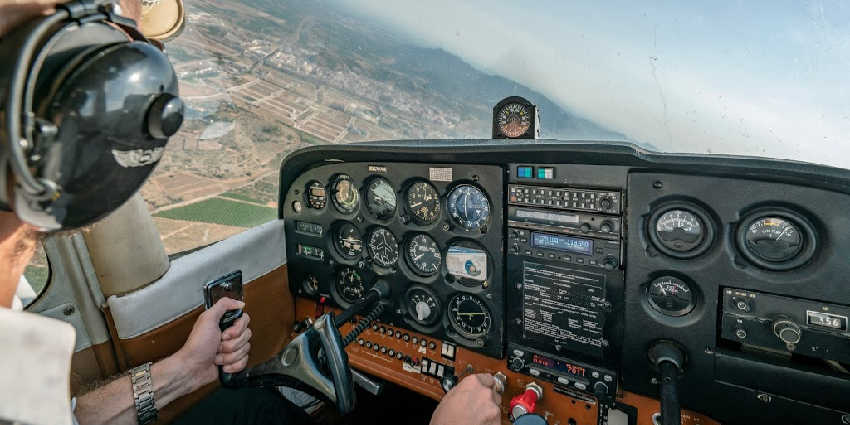
Instrument Rating Flight Training Wisconsin
The instrument rating (IFR) is something that will eventually come along if you've been flying very long. Typically, it comes up when looking at buying an aircraft or seeking a commercial pilot career, but otherwise, some pilots may take quite a while to get their instrument rating in Wisconsin. Though many pilots in Wisconsin do eventually get an instrument rating, chances are learning to fly IFR in Wisconsin now could greatly benefit your future flying.
An instrument rating will make you a better pilot, is required to get a commercial pilot certificate, and will generally lower your insurance rates. Flying on instruments in Wisconsin will make you a better pilot. When it comes to flying on instruments, precision is the keyword. There are many different things to learn for your instrument rating, but none are more difficult and rewarding as learning to fly with precision.
Once you complete your instrument rating in Wisconsin, you will be able to not only hit a specific altitude or descent rate but hold it. You will be more in control of your aircraft than you ever thought possible and this will surely affect your flying in general.
Perhaps you're not thinking about it right this moment, but at some point in the future, you may decide to get a commercial pilot certificate. That doesn't mean you have to run off to the airlines. There are many commercial pilots that never really get paid to fly, but it is nice to have the option.
Commercial Pilots in Wisconsin Need an Instrument Rating to Get a Job
Maybe your company has a nice aircraft that you'd like to spend some time in or you'd occasionally like to take on a paying passenger--whatever the case, although it's not required, you're going to want an instrument rating to go along with your commercial pilot certificate.
If you wait until then to get instrument rated, you're going to have a lot of training to do. Instead, reap the benefits of learning precise flying early and you can sail through commercial pilot training when you need it.
Do You Want to Earn Your Instrument Rating IFR in Wisconsin?
Insurance rates are generally cheaper for instrument-rated pilots. Perhaps the poorest-kept secret of the aviation insurance industry is that instrument-rated pilots enjoy rates that are generally cheaper. The increased training instrument-rated pilots take on and their increased skill pay off in lower insurance premiums. Depending on the type of aircraft you fly, this can be a very significant amount of money.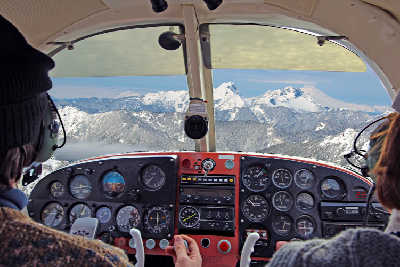
So, if you'd like to be a better pilot with lower insurance rates and you might get a commercial pilot certificate, you should definitely consider an instrument rating. Sure it may be difficult, but the sense of accomplishment and precision flying skill is more than worth it in the long run.
Legend has it that the instrument rating in Wisconsin is the most difficult to earn of all licenses, ratings, and endorsements. And if you talk to an instrument-rated pilot, he or she will probably agree. However, the instrument rating could also be the most rewarding of all to earn, and the benefits and privileges of acquiring the rating are well worth the initial effort.
Simply stated, the instrument rating allows pilots to fly under instrument flight rules (IFR) in Wisconsin, in instrument meteorological conditions (IMC), and in class A airspace (the airspace between 18,000 feet msl and 60,000 feet msl). IMC is loosely defined as conditions that do not meet the basic requirements of operating under visual flight rules (VFR), including ceilings less than 1000 feet above airport elevation and/or visibility less than 3 miles at the airport.
Although the instrument rating gives pilots permission to operate in less than basic VFR conditions, it's not a "license" to fly in bad weather. Prudent pilots do not launch into deadly weather just because they are instrument rated. Learn about instrument rating training.
Fun Facts About Flight Dispatchers - Practical Test Standards Concept
Title 14 of the Code of Federal Regulations (14 CFR) part 65 specifies the subject areas in which knowledge and skill must be demonstrated by the applicant before the issuance of an Aircraft Dispatcher Certificate. The CFRs provide the flexibility to permit the FAA to publish practical test standards containing the Areas of Operation and specific Tasks in which competency shall be demonstrated.
Useless Aviation Trivia You Must Know
ATL outside of Atlanta is the busiest US airport in the US, LAX in Los Angeles is second, third is ORD outside of Chicago, fourth is DFW near Dallas, fifth? Well, its JFK! College Park Airport (KCGS), in the city of College Park, Maryland is the world's oldest airport. KCGS was established in 1909 when Wilbur Wright arrived at the field to train two military officers in the US Army.
IFR Instrument Rating Training in Wisconsin
Depending on your flight training goals, instrument rating training may be required, but it is a good idea regardless of your goals. There are many places to learn to fly on instruments, so what should you look for when trying to find a school? There are three basic questions that should guide you to a good choice.
What kind of aircraft are available and, after I get my instrument rating, can I rent airplanes for actual IFR flights? Most flight schools offer at least one aircraft that is certified for IFR flight. Some even have several. The question is, do they offer the kind of aircraft you need?
Are you looking for training in a new glass panel or round gauges or both? Your personal preference and goals should be considered before choosing a school. A final consideration, assuming you don't own your own aircraft, is whether the school will rent you an aircraft after you get your rating for flight into actual IMC. This is important because you will want to maintain currency and there is no substitute for actual IMC.
Will We Fly in Actual IFR During Training?
Building off of that last point, ask if you will fly actual IMC during training. There's nothing wrong with simulated instrument flight, as a matter of convenience, but it is important that you experience at least some real instrument flights. It may seem strange, but for whatever reason, some schools don't allow for training flights in actual instrument weather, which can negatively affect your training.
Will we do any night IFR flight training? Absolutely! Another thing to ask is whether you will do any flights at night. Night flying is a required element of the private pilot test standards, but it is not required for an instrument rating. This is unfortunate because as you may know, it is quite different from flying during the day.
You never know when you might need to fly on instruments at night and having the added security of a flight instructor while you learn is much preferable to learning it on your own when you get caught out after dark.
Finding the answer to these three questions should provide you with all the information you need to find a great instrument rating training program that will serve you well. A good program that offers the right aircraft, provides for currency by allowing you to fly into real IMC and offers night instrument training will provide you with a very solid foundation of instrument flying skills.
Getting an Instrument Flight Rules Rating - IFR Flying is Precise
There are two sets of rules for flying any aircraft: VFR and IFR. VFR stands for Visual Flight Rules and IFR means Instrument Flight Rules. Depending on the weather conditions a pilot may opt for one set of rules or the other.
Not long after you get your private pilot certificate, you will likely start thinking about getting an instrument rating. If you're seeking a commercial pilot career it's just the next step, but even if you're not, it should be the next step. The precision, reliability, and safety of instrument flight are a huge boon to pilots of any kind.
Ask almost any instrument-rated pilot and they'll tell you that their instrument rating was one of the most difficult things they've done. Ask them if they regret it and you're unlikely to hear anyone say, "Yes." There are a lot of things to learn, but the one that is perhaps most difficult, but most useful is the precision learning to fly instruments will impart on your flying. Getting an instrument rating will ensure that you can not only hit a specific altitude or descent rate but that you can hold it.
IFR Flying is More Reliable & IFR Flying Can Be Safer
As a result of all your hard work during your instrument rating flight training, you will be able to fly in many more kinds of weather than a regular private pilot. This may not mean much right up until it clouds upon your cross country trip and the weather isn't expected to improve for days. As a non-instrument rated pilot, you're at the mercy of the weather. As an instrument-rated pilot, chances are you can file an instrument flight plan and continue safely on your way. Providing this kind of reliability is where an instrument rating really pays off.
While the typical VFR flight isn't very risky, instrument flights are even less risky thanks to the extra sets of eyes helping you navigate through the airspace. While flight following is commonly recommended for VFR flights, air traffic control isn't obligated to provide the service. On an instrument flight, however, there are always controllers following your flight and ensuring you reach your destination safely. Should something happen, such as another aircraft popping up out of nowhere or your engine stops, the controller knows where you are and will act accordingly.
If you're seeking more precision, higher reliability, and increased safety when flying, getting an instrument rating is a great idea. If you're seeking a career in aviation, it was probably already on your to-do list, but even if you aren't it should be.
Airports Near Appleton
The nearest Airports to Fremont are San Jose International Airport. This airport has international and domestic flights from San Jose, California and is 16 miles from the center of Fremont, CA. Oakland International Airport is the next closest airport, 22 miles from Fremont, CA. San Jose International has international and domestic flights. San Francisco International Airportis 32 miles from Fremont, CA. Stockton Metropolitan Airport is 62 miles from Fremont, CA. There are two heliports in Fremont, Washington Hospital Heliport and First Interstate Bank Operations Center Heliport.
Helicopter Fun Facts for Appleton
Eurocopter EC175: The best medium twin for the future of helicopters. Designed with our customers, the EC175 sets new standards for all your missions. Ingeniously optimized.
Fun Helicopter and Airplane Facts for Eau Claire
Tail rotor direction of rotation on the R44 is reversed compared to the R22 for improved yaw control authority. On the R44 the advancing blade is on the bottom. Helicopters are classified as rotary-wing aircraft and their rotary wing is commonly referred to as the main rotor or simply the rotor. Unlike the more well-known fixed wing aircraft such as a sports biplane or an airliner the helicopter is capable of direct vertical take-off and landing; it can also hover in a fixed position.
Fun Helicopter and Airplane Facts for Eau Claire
Post Vietnam Era Military Pilot Training: From 1971 to 2004, SUPT-H at Fort Rucker primarily operated as an Army owned and controlled program. In 2004, the training remained at Fort Rucker, but the Air Force mission required changes in the training program and the Air Force assumed ownership/responsibility for conducting SUPT-H.
Interesting Helicopter and Fixed-wing Facts for Green Bay
The fastest helicopter is the Westland Lynx, which flew at 402 km/h on 6 August 1986.
Did you know that approximately 12,000 helicopters saw action in Vietnam, which included all military branches.
The biggest helicopter was the Russian Mil Mi-12 Homer of 1968 which could lift 40,204 kg up to 2255 m.
Aviation Tidbits for Green Bay
Flight Instructor Facts for Green Bay Many flight instructors share time between helicopter and airplane flight instruction, which requires that the instructors be certified in both types of aircraft.
Interesting Helicopter and Fixed-wing Facts for Janesville
In January 2000, Robinson introduced the Raven with hydraulically-assisted controls and adjustable pedals. In July 2002, Robinson introduced the Raven II featuring a more powerful, fuel-injectedengine and wider blades, allowing a higher gross weight and improved altitude performance.
Aircraft Maintenance Record Entries
- A description of the work performed
- The date of completion
- The name of the person performing the work
- The signature, certificate number and kind of certificate held by person approving the work
Aviation Pilot Jobs for Janesville
Helicopter Pilot Jobs for Janesville News helicopter pilots may simply provide a means to get aerial footage, or they may transport reporters to the scene as well.
Fun Helicopter Facts for Kenosha:
The biggest helicopter was the Russian Mil Mi-12 Homer of 1968 which could lift 40,204 kg up to 2255 m. Design studies of the giant helicopter from Russia were started at the Mil OKB in 1959, receiving official sanction in 1961, by the Military forces there.
Aviation Info You Never Knew But Should
Helicopter Jobs: Law enforcement, military, and government agencies also offer helicopter pilot jobs. Government jobs are found in areas such as transportation, wildlife monitoring, immigration, and national security.
Success or failure depends more upon attitude than upon capacity successful men act as though they have accomplished or are enjoying something. Soon it becomes a reality. Act look feel successful conduct yourself accordingly and you will be amazed at the positive results. William James
Fun Facts for Helicopter and Airplane Flight Training for Madison
The biggest helicopter was the Russian Mil Mi-12 Homer of 1968 which could lift 40,204 kg up to 2255 m.The first reference to a rotor system is credited to inventor Leonardo da Vinci, who designed an ‘aerial screw’ in 1480. No full-scale variant was constructed during his lifetime.
Helicopter Spotlight for Madison
The Bell 412 is a utility helicopter manufactured by Bell Helicopter. Development began in the late 1970s with two Bell 212 being converted into 412 prototypes. An advanced four blade main rotor with a smaller diameter replaced the 212's two blade rotor. A Bell 412 prototype first flew in August 1979. The initial model was certified in January 1981 with the deliveries commencing in the same month. Over 700 Model 412s (including 260 by AgustaWestland) have been built.
Fun Facts for Helicopter and Airplane Flight Training for Milwaukee
The fastest helicopter is the Westland Lynx, which flew at 402 km/h on 6 August 1986. The Westland Lynx is a British multi-purpose military helicopter designed and built by Westland Helicopters at its factory in Yeovil.
The biggest helicopter was the Russian Mil Mi-12 Homer of 1968 which could lift 40,204 kg up to 2255 m.
Highest altitude made in a helicopter was 40,820ft (12,442m) on 21, June 1972 in a Aerospatiale Lama and the Pilot was Jean Bouet from France.
Helicopter Spotlight for Milwaukee
The Sikorsky S-92 is a four-bladed twin-engine medium-lift helicopter built by Sikorsky Aircraft for the civil and military helicopter market. The S-92 was developed from the Sikorsky S-70 helicopter and has similar parts such as flight control and rotor systems.
The H-92 Superhawk is a military version of the S-92 in the utility transport role, capable of carrying 22 troops. The H-92 can also be configured for specific missions, including Search and Rescue and executive transportation. The CH-148 Cyclone is a shipboard maritime helicopter variant currently under development for the Canadian Forces. From February 2009, the S-92 program was placed under Sikorsky Global Helicopters, Sikorsky's new civil helicopter business unit.
Interesting Helicopter and Fixed-wing Facts for Oshkosh
Designed during the 1980s byFrank Robinsonand his staff of engineers, the R44 first flew on March 31, 1990. The R44 Astro was awarded an FAA Type Certificate in December 1992, with the first deliveries taking place in January 1993.
Fun Helicopter and Airplane Facts for Oshkosh
Commercial Helicopter License Tips: Pilots who have their fixed wing license may be able to apply that flying time to their rotorcraft add-on license as well which will save both time and money.
Interesting Helicopter and Fixed-wing Facts for Racine
The biggest helicopter was the Russian Mil Mi-12 Homer of 1968 which could lift 40,204 kg up to 2255 m.
The first reference to a rotor system is credited to inventor Leonardo da Vinci, who designed an ‘aerial screw’ in 1480. No full-scale variant was constructed during his lifetime.
Feature Helicopter for Racine
Eurocopter Dauphin: The AS365 N3+ belongs to the Dauphin family, which is well known for its unique design. This medium sized helicopter has proven its ability to perform any kind of mission, anywhere in the world. It even excels in the most severe climatic conditions, such as high altitudes or hot temperatures.
Helicopter Facts for Racine
Highest altitude made in a helicopter was 40,820ft (12,442m) on 21, June 1972 in a Aerospatiale Lama and the Pilot was Jean Bouet from France.
Aviation Facts for Helicopter and Airplanes in Waukesha
The R44 is a single-engined helicopter with a semi-rigid two-bladed main rotor and a two-bladed tail rotor and a skid landing gear. It has an enclosed cabin with two rows of side-by-side seating for a pilot and three passengers.
Regarding aircraft speed: Unless otherwise authorized by the Federal Aviation Administrator no person may operate an aircraft below 10,000 feet MSL at an indicated airspeed of more than 250 knots (288 m.p.h.). The noise pollution would not be looked upon very kindly.
Fun Helicopter Facts for Waukesha
Eurocopter Superpuma: The AS332 L1 is a twin engine medium-weight civil helicopter equipped with a new avionics glass cockpit.