IFR Training in Wyoming
Cities in Wyoming with Aviation Schools:
- Basin
- Buffalo
- Burns
- Casper
- Cheyenne
- Chugwater
- Cody
- Douglas
- Dubois
- Evanston
- Fox Farm-College
- Gillette
- Green River
- Guernsey
- Hoback Junction
- Horse Creek
- Jackson
- Jelm
- Kelly
- Lander
- Laramie
- Midwest
- Mills
- Moorcroft
- Moran
- Newcastle
- Powell
- Ranchettes
- Rawlins
- Riverton
- Rock Springs
- Sheridan
- South Greeley
- Thermopolis
- Torrington
- Warren AFB
- Wheatland
- Worland
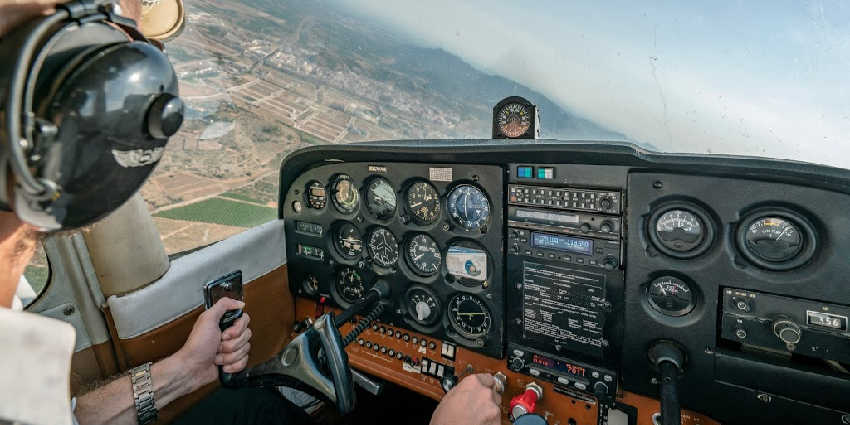
Instrument Rating Flight Training Wyoming
The instrument rating (IFR) is something that will eventually come along if you've been flying very long. Typically, it comes up when looking at buying an aircraft or seeking a commercial pilot career, but otherwise, some pilots may take quite a while to get their instrument rating in Wyoming. Though many pilots in Wyoming do eventually get an instrument rating, chances are learning to fly IFR in Wyoming now could greatly benefit your future flying.
An instrument rating will make you a better pilot, is required to get a commercial pilot certificate, and will generally lower your insurance rates. Flying on instruments in Wyoming will make you a better pilot. When it comes to flying on instruments, precision is the keyword. There are many different things to learn for your instrument rating, but none are more difficult and rewarding as learning to fly with precision.
Once you complete your instrument rating in Wyoming, you will be able to not only hit a specific altitude or descent rate but hold it. You will be more in control of your aircraft than you ever thought possible and this will surely affect your flying in general.
Perhaps you're not thinking about it right this moment, but at some point in the future, you may decide to get a commercial pilot certificate. That doesn't mean you have to run off to the airlines. There are many commercial pilots that never really get paid to fly, but it is nice to have the option.
Commercial Pilots in Wyoming Need an Instrument Rating to Get a Job
Maybe your company has a nice aircraft that you'd like to spend some time in or you'd occasionally like to take on a paying passenger--whatever the case, although it's not required, you're going to want an instrument rating to go along with your commercial pilot certificate.
If you wait until then to get instrument rated, you're going to have a lot of training to do. Instead, reap the benefits of learning precise flying early and you can sail through commercial pilot training when you need it.
Do You Want to Earn Your Instrument Rating IFR in Wyoming?
Insurance rates are generally cheaper for instrument-rated pilots. Perhaps the poorest-kept secret of the aviation insurance industry is that instrument-rated pilots enjoy rates that are generally cheaper. The increased training instrument-rated pilots take on and their increased skill pay off in lower insurance premiums. Depending on the type of aircraft you fly, this can be a very significant amount of money.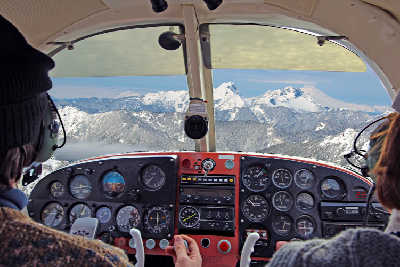
So, if you'd like to be a better pilot with lower insurance rates and you might get a commercial pilot certificate, you should definitely consider an instrument rating. Sure it may be difficult, but the sense of accomplishment and precision flying skill is more than worth it in the long run.
Legend has it that the instrument rating in Wyoming is the most difficult to earn of all licenses, ratings, and endorsements. And if you talk to an instrument-rated pilot, he or she will probably agree. However, the instrument rating could also be the most rewarding of all to earn, and the benefits and privileges of acquiring the rating are well worth the initial effort.
Simply stated, the instrument rating allows pilots to fly under instrument flight rules (IFR) in Wyoming, in instrument meteorological conditions (IMC), and in class A airspace (the airspace between 18,000 feet msl and 60,000 feet msl). IMC is loosely defined as conditions that do not meet the basic requirements of operating under visual flight rules (VFR), including ceilings less than 1000 feet above airport elevation and/or visibility less than 3 miles at the airport.
Although the instrument rating gives pilots permission to operate in less than basic VFR conditions, it's not a "license" to fly in bad weather. Prudent pilots do not launch into deadly weather just because they are instrument rated. Learn about instrument rating training.
Fun Facts About Flight Dispatchers
Is there are reason Airline Dispatcher Salaries are so low? No, because they are not low. As a matter of fact. According to Glassdoor and Indeed, the average aircraft dispatcher salary is $32,000. However, the Airline Dispatcher Federation suggests the average aircraft dispatcher salary is closer to $40,000.
Useless Aviation Trivia You Must Know
On May 2, 1952, the British Overseas Aircraft Corporation (BOAC) began the world’s first commercial jet service with the 44â€seat Comet 1A, flying paying passengers from London to Johannesburg.
IFR Instrument Rating Training in Wyoming
Depending on your flight training goals, instrument rating training may be required, but it is a good idea regardless of your goals. There are many places to learn to fly on instruments, so what should you look for when trying to find a school? There are three basic questions that should guide you to a good choice.
What kind of aircraft are available and, after I get my instrument rating, can I rent airplanes for actual IFR flights? Most flight schools offer at least one aircraft that is certified for IFR flight. Some even have several. The question is, do they offer the kind of aircraft you need?
Are you looking for training in a new glass panel or round gauges or both? Your personal preference and goals should be considered before choosing a school. A final consideration, assuming you don't own your own aircraft, is whether the school will rent you an aircraft after you get your rating for flight into actual IMC. This is important because you will want to maintain currency and there is no substitute for actual IMC.
Will We Fly in Actual IFR During Training?
Building off of that last point, ask if you will fly actual IMC during training. There's nothing wrong with simulated instrument flight, as a matter of convenience, but it is important that you experience at least some real instrument flights. It may seem strange, but for whatever reason, some schools don't allow for training flights in actual instrument weather, which can negatively affect your training.
Will we do any night IFR flight training? Absolutely! Another thing to ask is whether you will do any flights at night. Night flying is a required element of the private pilot test standards, but it is not required for an instrument rating. This is unfortunate because as you may know, it is quite different from flying during the day.
You never know when you might need to fly on instruments at night and having the added security of a flight instructor while you learn is much preferable to learning it on your own when you get caught out after dark.
Finding the answer to these three questions should provide you with all the information you need to find a great instrument rating training program that will serve you well. A good program that offers the right aircraft, provides for currency by allowing you to fly into real IMC and offers night instrument training will provide you with a very solid foundation of instrument flying skills.
Getting an Instrument Flight Rules Rating - IFR Flying is Precise
There are two sets of rules for flying any aircraft: VFR and IFR. VFR stands for Visual Flight Rules and IFR means Instrument Flight Rules. Depending on the weather conditions a pilot may opt for one set of rules or the other.
Not long after you get your private pilot certificate, you will likely start thinking about getting an instrument rating. If you're seeking a commercial pilot career it's just the next step, but even if you're not, it should be the next step. The precision, reliability, and safety of instrument flight are a huge boon to pilots of any kind.
Ask almost any instrument-rated pilot and they'll tell you that their instrument rating was one of the most difficult things they've done. Ask them if they regret it and you're unlikely to hear anyone say, "Yes." There are a lot of things to learn, but the one that is perhaps most difficult, but most useful is the precision learning to fly instruments will impart on your flying. Getting an instrument rating will ensure that you can not only hit a specific altitude or descent rate but that you can hold it.
IFR Flying is More Reliable & IFR Flying Can Be Safer
As a result of all your hard work during your instrument rating flight training, you will be able to fly in many more kinds of weather than a regular private pilot. This may not mean much right up until it clouds upon your cross country trip and the weather isn't expected to improve for days. As a non-instrument rated pilot, you're at the mercy of the weather. As an instrument-rated pilot, chances are you can file an instrument flight plan and continue safely on your way. Providing this kind of reliability is where an instrument rating really pays off.
While the typical VFR flight isn't very risky, instrument flights are even less risky thanks to the extra sets of eyes helping you navigate through the airspace. While flight following is commonly recommended for VFR flights, air traffic control isn't obligated to provide the service. On an instrument flight, however, there are always controllers following your flight and ensuring you reach your destination safely. Should something happen, such as another aircraft popping up out of nowhere or your engine stops, the controller knows where you are and will act accordingly.
If you're seeking more precision, higher reliability, and increased safety when flying, getting an instrument rating is a great idea. If you're seeking a career in aviation, it was probably already on your to-do list, but even if you aren't it should be.
Fun Aviation Facts and Figures for Buffalo
Helicopter pilot training is expensive and hence you will have to arrange for funds by taking bank loans which are in most cases, readily available. The salaries for entry-level helicopter pilot jobs are less than those offered for senior pilots and commanders, yet are quite attractive as compared to several other professions.
Interesting Aviation Facts for Buffalo for Buffalo
Modern Day Military Pilot Training for Buffalo: A candidate for Army aviation school must score 90 or higher out of a possible 176 on the Flight Aptitude Selection Test. This exam includes seven sections, of which two request personal and background information and the other five cover actual topics in aviation such as the use and function of flight instruments and helicopter motions. The Army provides a study guide and practice test.
Helicopter History for Casper
Helicopter Ground School: In an airplane you can make decisions about trading forms of energy very late in the day. For example, if you pull the stick all the way back at 6000' above the ground you will gradually slow down and eventually stall and perhaps enter a spin. With many airplanes you could spin nearly all the way to the ground before applying forward stick and opposite rudder to get back to a normal flight condition. All without an engine.
How to pick a helicopter flight school near Casper
Most important is to talk to some of their students. This is where you will get some honest opinions about the school. Obviously you won't get much information out of a pilot who's only been flying there for a couple weeks, but students who have already soloed will be good sources of information. Ask direct questions about whether the student thinks it's a good school, who are the good instructors, is the maintenance okay, and what things are bad about the school.
Helicopter History for Cheyenne
How to Pick a Helicopter Flight School for Cheyenne To visit each school, call them up and make an appointment to meet with the owner/president. You will usually have an easier time getting an appointment during the week, rather than on the weekend. Tell them you'd like to meet them to hear about the school, their training program, and why you might want to train with them.
How to pick a helicopter flight school near Cheyenne
A private pilot certificate should normally take between 55 hours total time for an airplane pilot to 65 hours total time for a non-pilot. If the school average is much more than that, they are probably gouging their students for extra revenue.
Fun Aviation Facts and Figures for Cody
Helicopter Training Facts: Before you commit to a full program of lessons, it can be a good idea to take a test lesson in a helicopter to make sure that you like flying in the rotor-powered vehicles.
Aviation Training History and Facts for Cody
Post Vietnam Era Military Pilot Training: The Training unit moved to Kirtland AFB, New Mexico during the first quarter of 1976. Pilot qualification in the MH-60 began in 1991. The H-3 was phased out in 1992.
Fun Aviation Facts and Figures for Douglas
Heliports: Rural heliports often house helicopters used to spray agricultural fields where a standard crop-dusting airplane may not be able to operate. County sheriff's police as well as search and rescue crews may also base helicopters out of one of these locations.
Fun Aviation Facts and Figures for Douglas
Modern Day Military Pilot Training for Douglas: Flying aircraft is a coveted career in the United States armed services, and the process to become a military pilot is a competitive one. Most candidates need at least a bachelors degree to apply. The exception is the Army, where the fleet consists mainly of helicopters rather than fixed-wing aircraft. Becoming a helicopter pilot in the Army does not require higher education or prior enlistment.
Fun Aviation Facts and Figures for Evanston
How Long Does it Take to Become a Helicopter Pilot: Keep in mind that you will be required to build up to 1,000 flying hours as well. Once you start instructing it will likely take you 12 - 18 months to build up to 1,000 hours.
Helicopter Factoid for Evanstons for Evanston
Modern Day Military Pilot Training for Evanston: After completing Primary helicopter school at Fort Wolters, now we go to the Advance Helicopter Training portion.
Fun Facts About Flight Dispatchers
The Aircraft Dispatcher Practical Test Standards book has been published by the Federal Aviation Administration (FAA) to establish the standards for the aircraft dispatcher certification practical test. Qualified FAA inspectors and designated dispatcher examiners shall conduct practical tests in compliance with these standards. Instructors and applicants should find these standards helpful in practical test preparation.
Aviation Factoids and Figures and Fun for Fox Farm-College
Modern Day Military Pilot Training for Fox Farm-College: To join the military, as well as become a pilot, potential recruits must fulfill certain age requirements. Pilots in the Coast Guard must be ages 17 to 27 for active duty and 17 to 39 for reservists, while Army pilots must be between 18 and 29 for active and 18 and 35 for reservists.
Fun Aviation Facts and Figures for Gillette
Being a helicopter pilot is not easy, you have to carefully plan the process of getting enrolled in the top helicopter pilot training schools for getting a valid pilot license.
Helicopter Factoid for Gillettes for Gillette
How to Select a Helicopter Instructor for Gillette: It's worth your while to select a good one. That said, keep in mind that full time instructors often move on to other flying jobs as they reach 1,000 to 2,000 hours of experience. There is no guarentee that the instructor won't leave part way through your training, so select a school you can live with if the instructor of choice leaves.
Fun Aviation Facts and Figures for Green River
Helicopter Training Facts: With enough hours and experience, you can look for jobs with charter companies, tourism and sightseeing organizations and other places that use helicopters in their operations. Some employers might also expect their pilots to have some level of college education.
Helicopter Factoid for Green Rivers for Green River
Modern Day Military Pilot Training for Green River: The Rotary Wing training at Rucker began in the Department of Rotary Wing Training. The first four weeks in the Basic Instrument Division at Shell AAF (originally designed as a Fixed Wing Field). The student went from there to the Advanced Instrument Training Division at Hanchey AHP. At Hanchey we used the TH-13T helicopters instrument trainer, and later, the Huey (UH-1).
Fun Aviation Facts and Figures for Jackson
Bell Helicopters - 407: The Bell 407 integrates reliability, speed, performance, and maneuverability with a cabin configurable for an array of missions and payloads. Its Rolls Royce 250-C47B turbine FADEC engine delivers exceptional hot & high performance with the ability to cruise at 140 knots (259 km/hr).
Aviation Training History and Facts for Jackson
Vietnam Era Military Pilot Training: The first Air Force SUPT-H students began attending Army sponsored helicopter pilot training at Fort Rucker in 1971. In April 1971, the 1550th ATTW was activated at Hill AFB, Utah. After initial training by the Army, the pilots were upgraded for Air Force missions in the UH-1, CH-3, or H-53.
Interesting Aviation Facts for Lander for Lander
Helicopter Jobs: Being a helicopter pilot requires an ability to handle stress, work under pressure, and think quickly. Superior communication skills are needed for communicating effectively and accurately with air traffic control, passengers, and other pilots.
Aviation Training History and Facts for Lander
Modern Day Military Pilot Training for Lander: Warrant officers are enlisted soldiers who are chosen to attend Warrant Officer Training School. Once they pass, they must serve at least 36 months in warrant officer ranks before applying for aviation training. ROTC and West Point cadets are also eligible for admission to aviation school.
Helicopter History for Laramie
The check ride is almost always done under the supervision of someone qualified or someone from the aviation authority, who will in turn put you through a combined practical and oral exam. Once you are qualified for a license, you can move on to obtaining a commercial license.
Helicopter Factoid for Laramies for Laramie
How to Select a Helicopter Instructor for Laramie: Probably one of the most important resources during your flight training will be the instructor. I'd rather train with a good instructor at a bad school, than with a bad instructor at a good school! The instructor is the person you will be spending all the time with. How many hours you will take to train (and therefore how much it will cost), and how good a pilot you will be ultimately depends on the instructor.
Fun Facts About Flight Dispatchers - Practical Test Standards Concept
Title 14 of the Code of Federal Regulations (14 CFR) part 65 specifies the subject areas in which knowledge and skill must be demonstrated by the applicant before the issuance of an Aircraft Dispatcher Certificate. The CFRs provide the flexibility to permit the FAA to publish practical test standards containing the Areas of Operation and specific Tasks in which competency shall be demonstrated.
Aviation Factoids and Figures and Fun for Newcastle
Modern Day Military Pilot Training for Newcastle: Working as a military pilot requires a certain temperament to deal with often-stressful situations. Pilots must possess self-discipline, confidence and intelligence, as well as be able to make quick decisions, multitask and perform under pressure.
Interesting Aviation Facts for Powell for Powell
Military Helicopters: Military helicopters have different modular designs. These designs are based on the type of function they have within the Armed Forces. The following article will serve as a guide to different types of military helicopters.
Fun Aviation Facts and Figures for Powell
Modern Day Military Pilot Training for Powell: Army helicopter pilots fly OH-58 Kiowa, UH-60 Black Hawk, AH-64 Apache and CH-47 Chinook combat helicopters, as of 2012. They learn to fly these helicopters in Army aviation school, where each aspiring pilot is taught to specialize in flying a particular type. Acceptance into aviation school for helicopter flight training is open to lieutenants, captains and warrant officers who meet age, health, experience and aptitude requirements.
Fun Aviation Facts and Figures for Ranchettes
US Army Helicopter Pilot Criteria: you're required to go for rigorous medical check ups. Ensure before you even think of army that your height, weight and vision are equivalent to the standard's set by the army. This process needs to be completed before you're declared eligible for joining a flight school.
Interesting Aviation Facts for Ranchettes for Ranchettes
Modern Day Military Pilot Training for Ranchettes: Before starting pilot training, a student must have at least a four-year bachelor's degree in any field. Beyond a bachelor's degree, each of the branches has its own education and training requirements, with most requiring some type of officer training along with introductory flight training. Navy pilots must take part in Officer Candidate School, followed by a six-week air indoctrination course.
Fun Aviation Facts and Figures for Rawlins
Sikorsky Helicopters - S - 300 C: the S-300C helicopter is supported by a worldwide network of service centers. This helicopter has proven its value in many diverse applications around the world, including personal transportation, military and civil training, aerial photography, law enforcement patrol, pipeline and traffic patrol, aerial application, aerial surveys and lift operations.
Modern Day Military Pilot Training for Rawlins
Candidates for modern day pilot flight training can be no younger than 18 and no older than 32 when they begin their training. They must pass a special Flying Duty Medical Examination, FDME 1/A, which is available to candidates who have passed the Flight Aptitude Selection Test. The FDME includes body-size requirements, such as a sitting height of 40.15 inches or less and arm reach of 64.56 inches or more. Vision, hearing, pulse, blood-pressure and laboratory tests are also required.
Fun Aviation Facts and Figures for Riverton
Helicopter Training Facts: Looking for work in the field can be difficult at first because for the higher paying jobs, you'll need even more flight time. To earn additional flight hours as a novice commercial helicopter pilot, you might consider getting a pilot teaching certificate.
Aviation Training History and Facts for Riverton
Post Vietnam Era Military Pilot Training: From 1971 to 2004, SUPT-H at Fort Rucker primarily operated as an Army owned and controlled program. In 2004, the training remained at Fort Rucker, but the Air Force mission required changes in the training program and the Air Force assumed ownership/responsibility for conducting SUPT-H.
Fun Aviation Facts and Figures for Rock Springs
MD Helicopters - MD Explorer: An international helicopter industry advisory board guided the design and development of the MD Explorer with an objective to produce a multipurpose twin-engine helicopter that would set new standards in performance, affordability, dependability and safety.
Helicopter Factoid for Rock Springss for Rock Springs
Flight Instructor Facts for Rock Springs the instructor commonly maintains a grip on the controls in order to overcome any emergency condition that might occur during the student's flight. Once a student has completed the entire training session, and has demonstrated the proper level of knowledge to safely operate a helicopter, the flight instructor will allow the student to perform a solo flight.
Fun Aviation Facts and Figures for Sheridan
This licensing program comprises classroom training, in-flight assignments, and a test. Those in specific job areas like air force or law enforcement will have to meet requirements set by the respective authorities. Let us take a look at a helicopter pilot salary.
Helicopter Factoid for Sheridans for Sheridan
Flight Instructor Facts for Sheridan In order to get those 800 hours or so you now have two choices. Pay some one to let you fly their helicopter or let them pay you to tutor others to fly their helicopter. Surprisingly, it doesn't take much to get a flight instructor certificate and the benefits of having one will greatly out way the amount of time that is required to get the certificate.
Fun Aviation Facts and Figures for South Greeley
Tips to Finding the Top Helicopter Schools: There will be quite a bit of sales talk involved in your interview process and it is your job to thoroughly research each school before making a selection. One of the smartest things you can do before making a definitive decision is to visit the school in person and talk with some of the currently enrolled students.
Interesting Aviation Facts for South Greeley for South Greeley
Modern Day Military Pilot Training for South Greeley: A candidate who fulfills the regulations for acceptance into aviation school and is admitted must serve at least five years in active duty after completing the course or voluntarily dropping it. If a candidate is removed from the course because of medical reasons or incompetence, he must serve at least one year beyond any service commitments he made before entering flight school.
Aviation Training History and Facts for Thermopolis
Military Helicopters: As landing is difficult in most terrain, these choppers have specialized devices like rope lines, rescue hoists, etc. that help drop or pick-up personnel when the aircraft is hovering overhead. Some of the transport helicopters in service include: CH-53 Sea Stallion, CH-53E Super Stallion, CH-47 Chinook, Mil Mi-26, Arospatiale Super Frelon
Aviation Factoids and Figures and Fun for Thermopolis
Modern Day Military Pilot Training for Thermopolis: As with other military positions, helicopter pilots may have to move frequently to any number of the United States military bases around the world.
Interesting Aviation Facts for Torrington for Torrington
Helicopter Pilot Jobs for Torrington Helicopter pilots must successfully complete a flight training program and log a certain number of hours flying before beginning any job.
Fun Aviation Facts and Figures for Torrington
Modern Day Military Pilot Training for Torrington: Lieutenants and captains are officers who must undergo Army Reserve Officer Training Corps training in college, attend officer candidate school after college or graduate from the United States Military Academy (West Point) to achieve appointments as officers. Officers who are considering aviation school must have served less than 48 months.
Fun Aviation Facts and Figures for Warren AFB
Who are the Whirly-Girls? Whirly-Girls International is a non-profit, educational and charitable organization dedicated to advancing women in helicopter aviation.The Whirly-Girls Scholarship Fund Inc. was incorporated in 1974 to oversee and administer the scholarship funds raised by the Whirly-Girls and their auxiliaries. The Fund is a federally tax-exempt 501(c)(3) public charity. The Scholarship Fund administers many separate scholarships currently valued at more than $45,000.
Interesting Aviation Facts for Warren AFB for Warren AFB
Modern Day Military Pilot Training for Warren AFB: All five branches of the United States military employ helicopter pilots for combat and non-combat uses. Each branch uses similar types of helicopters, with minor differences between each type. For example, the Air Force flies Pave Hawks, which are nearly identical to the Army's Blackhawk, Navy's Skyhawk and Coast Guard's Jayhawk, with several subtle differences that promote each branch's mission. Before getting behind the controls of a military helicopter, pilots must fulfill a number of requirements.
Fun Aviation Facts and Figures for Wheatland
Air Force Helicopter Pilot: You should fulfill the minimum height and weight requirements and should have a good eyesight and ability to identify colors. Apart from physical fitness, you also need to concentrate on your formal education.
Aviation Factoids and Figures and Fun for Wheatland
Modern Day Military Pilot Training for Wheatland: Navy pilots must be 18 to 34 for enlisted officers and 19 to 35 for commissioned officers, Air Force pilots must be between 17 and 28 for enlisted officers and 17 and 35 for commissioned officers, and Marine pilots must be 17 to 29 for enlisted officers and 20 to 28 for commissioned officers. All pilots must be United States citizens and have clean criminal records.
Fun Aviation Facts and Figures for Worland
Helicopter Training Facts: All helicopter pilot training programs have long hours, packed schedules, and a very heavy workload. Students are expected to dedicate the time and effort required to be successful in this exclusive program.
Interesting Aviation Facts for Worland for Worland
Modern Day Military Pilot Training for Worland: Army pilots start with flight school and move on to basic combat training. The Air Force's basic pilot training covers 12 weeks and Marine pilots undergo two phases of basic flight training. After basic training, pilots continue with helicopter-specific training. All branches also require the applicant to pass the Armed Services Vocational Aptitude Battery.